What is Tax?
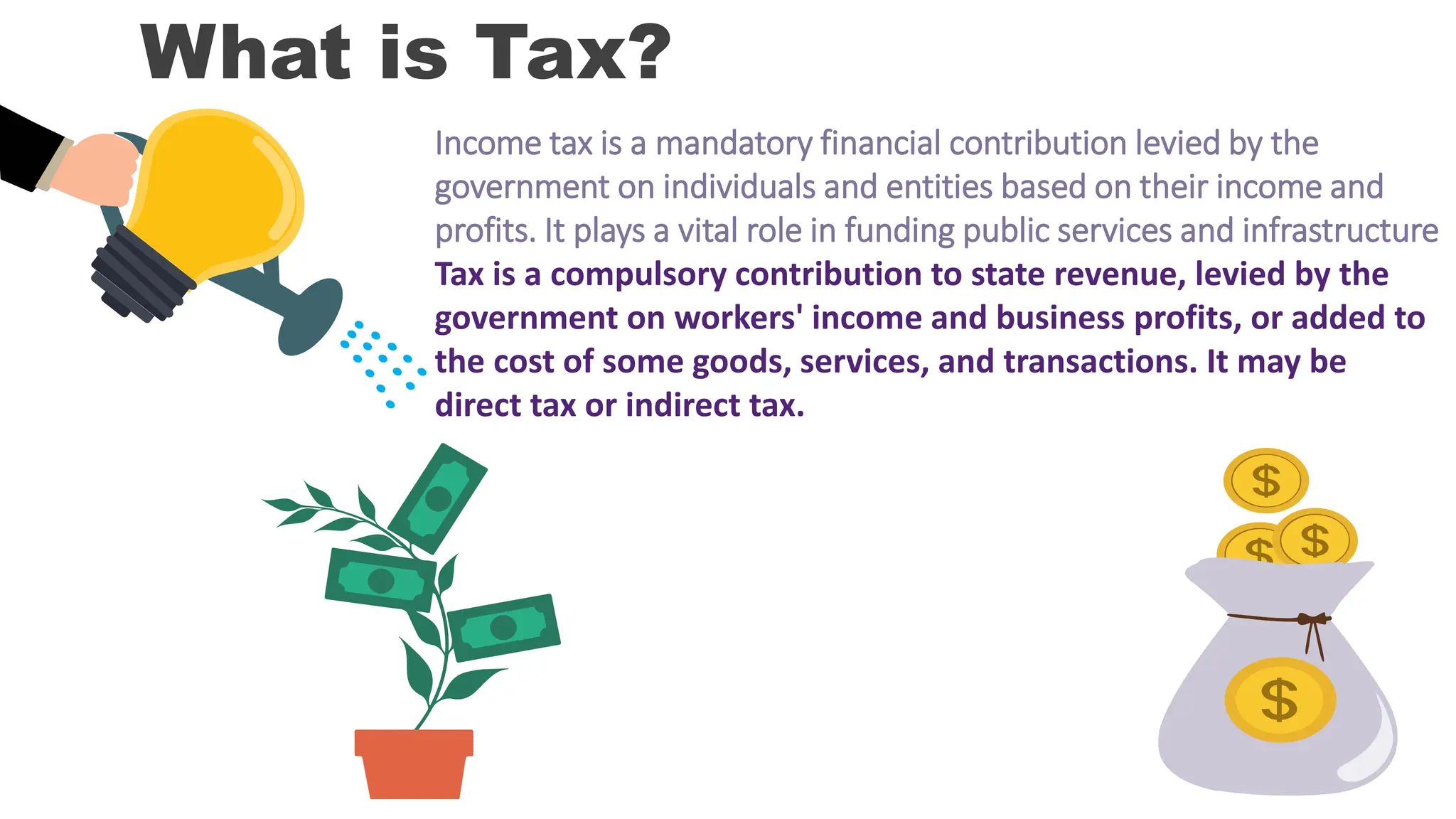
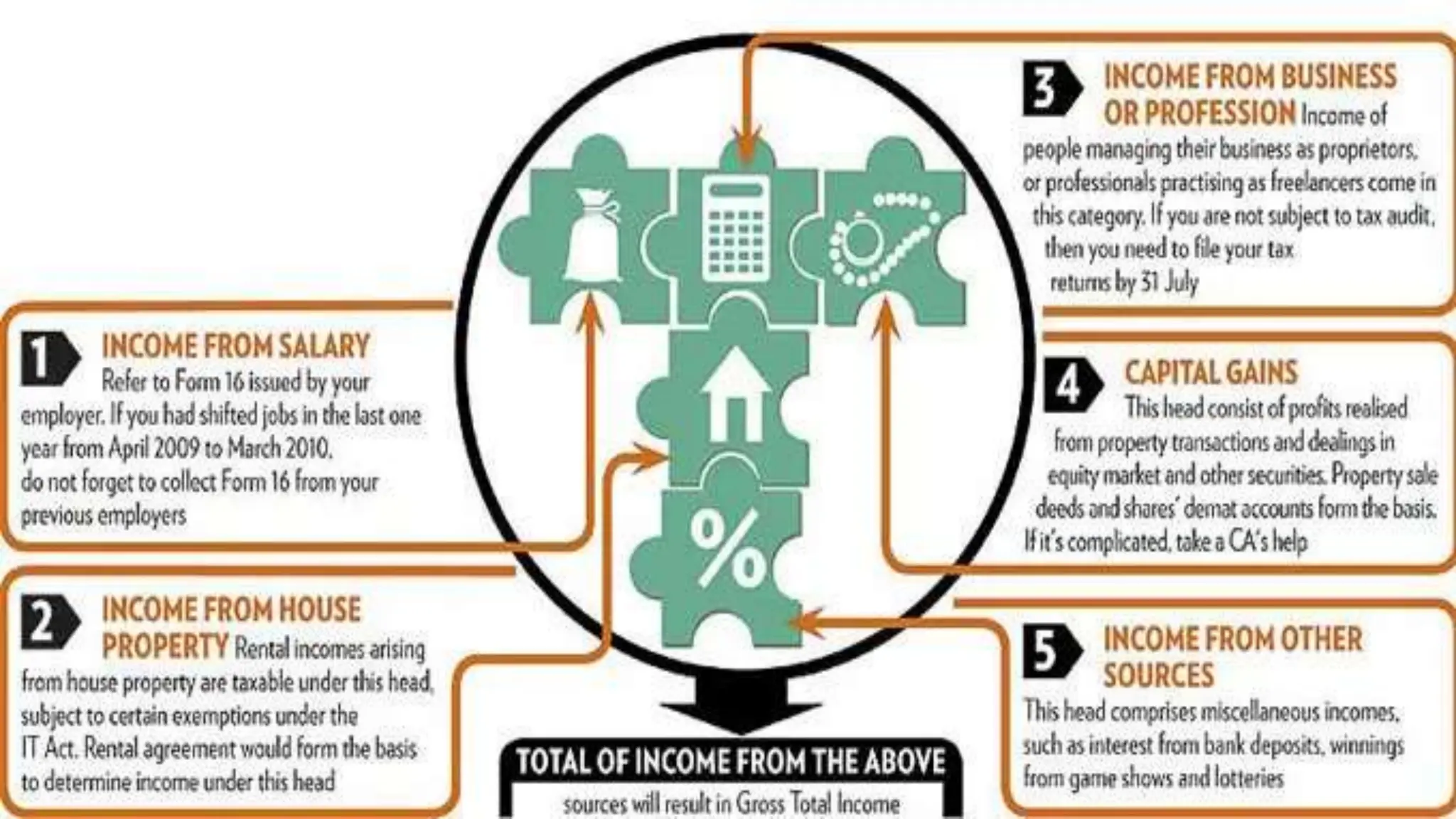
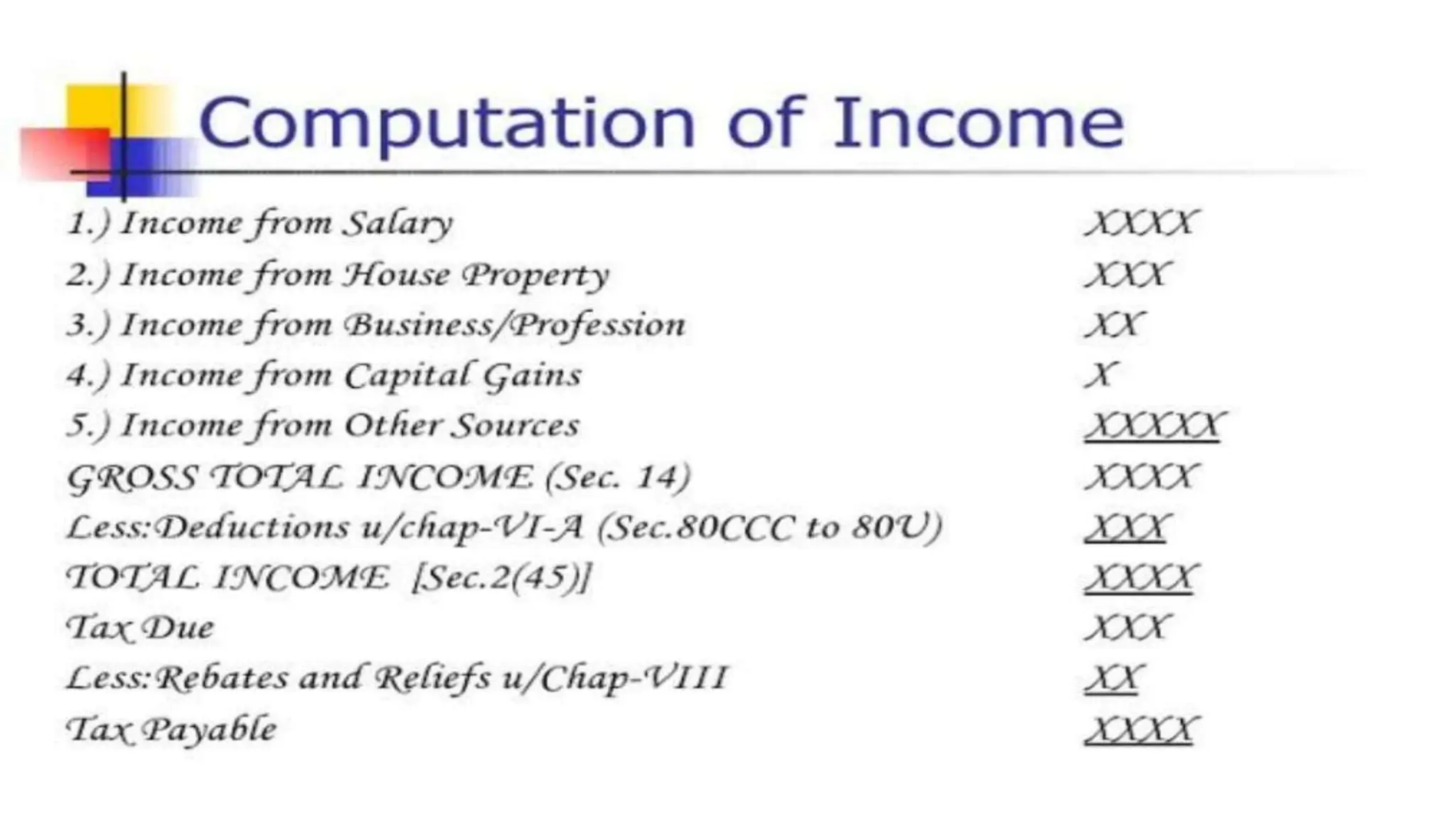
Income tax is a mandatory financial contribution levied by the
government on individuals and entities based on their income and
profits. It plays a vital role in funding public services and infrastructure
Tax is a compulsory contribution to state revenue, levied by the
government on workers' income and business profits, or added to
the cost of some goods, services, and transactions. It may be
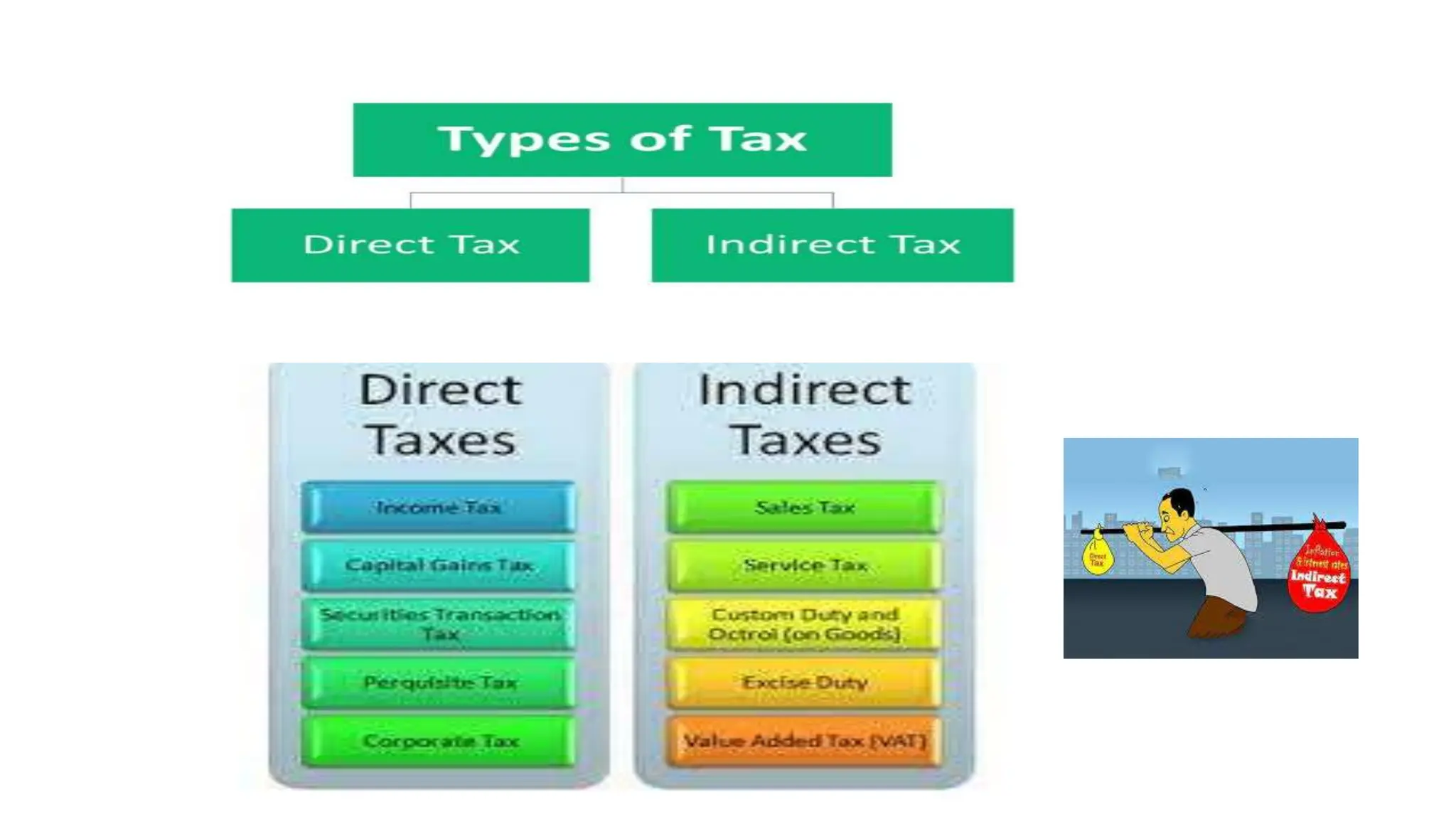
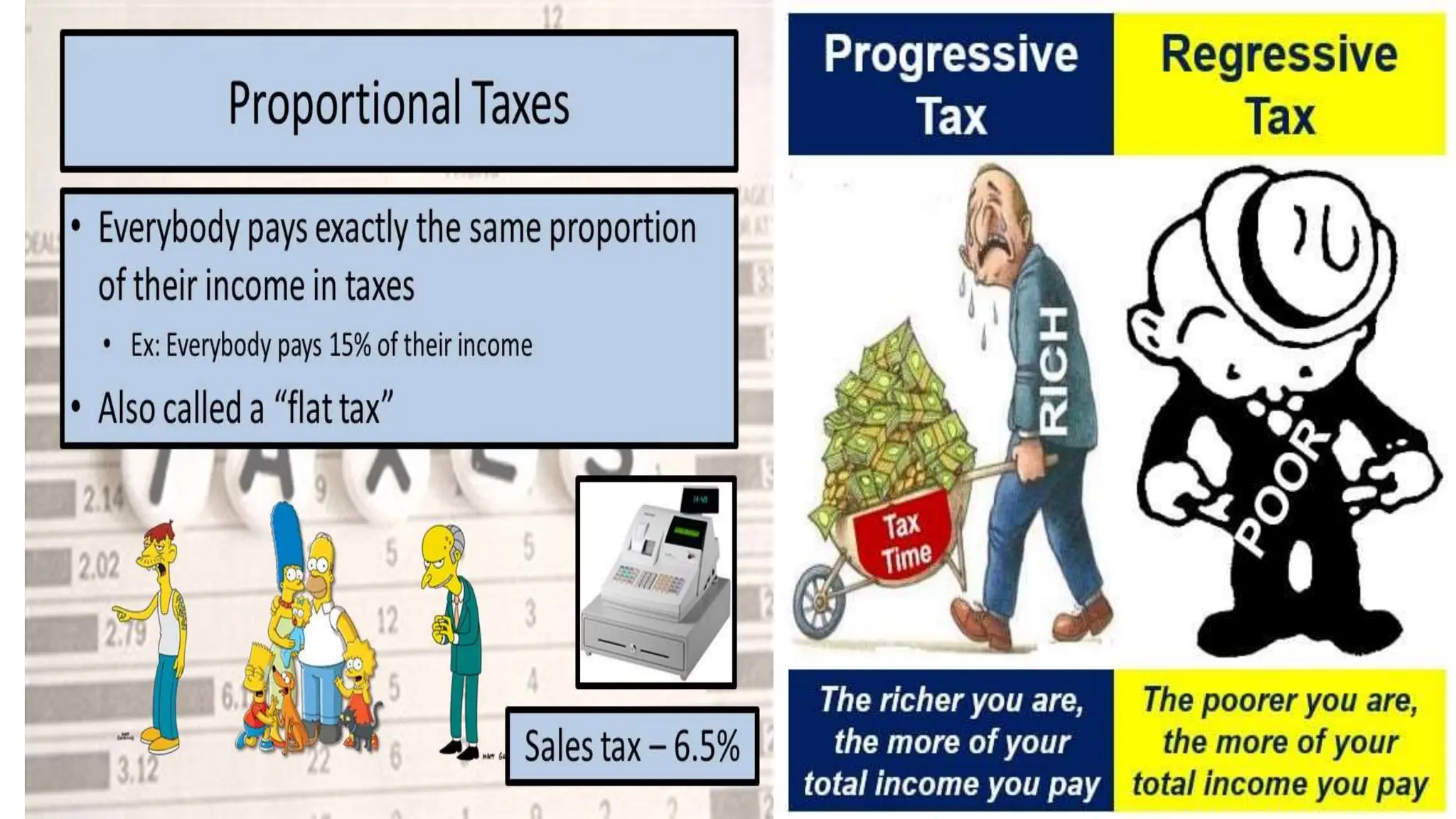
direct tax or indirect tax.
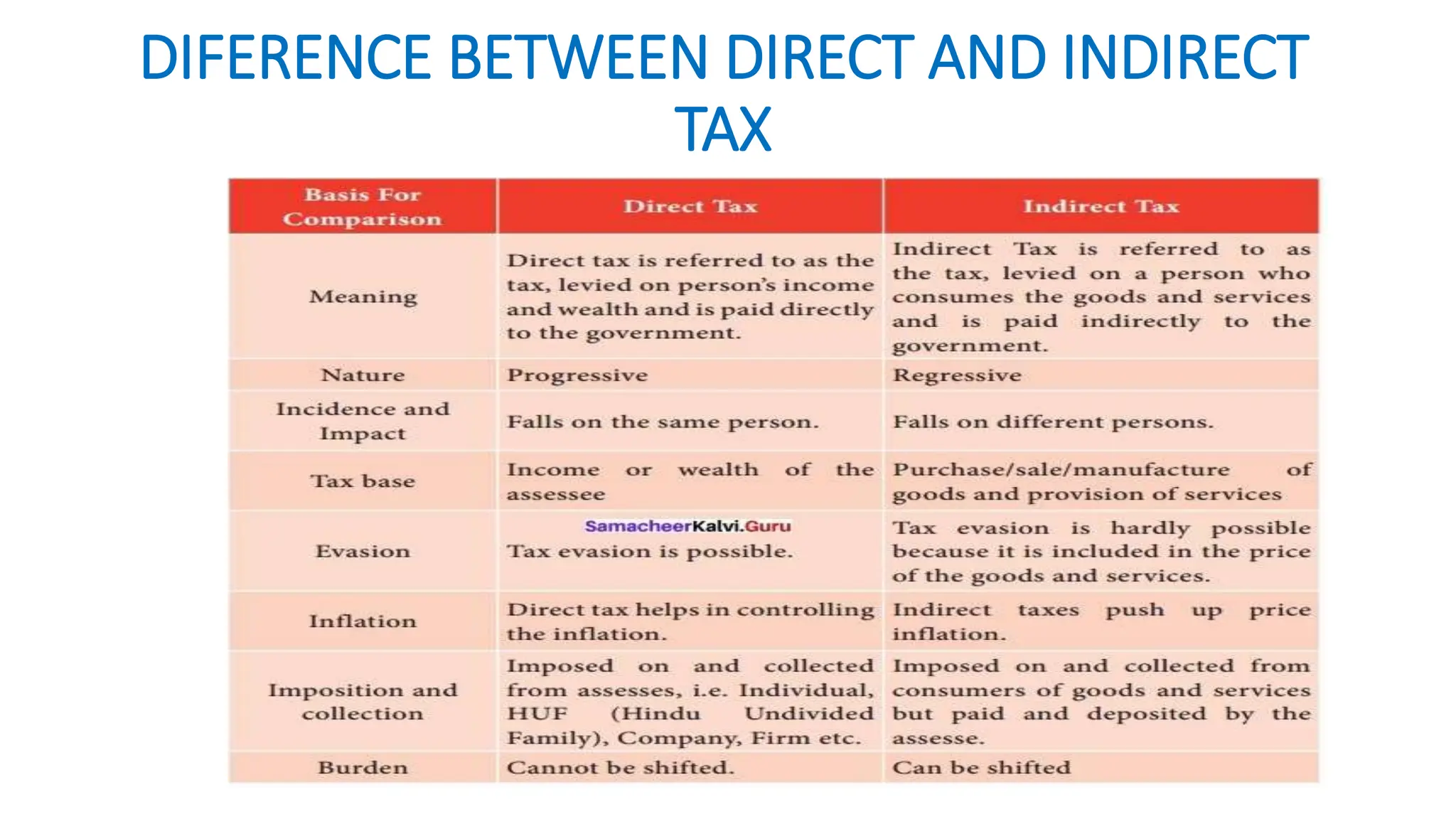
DIFERENCE BETWEEN DIRECT AND INDIRECT
TAX
INCOME TAX
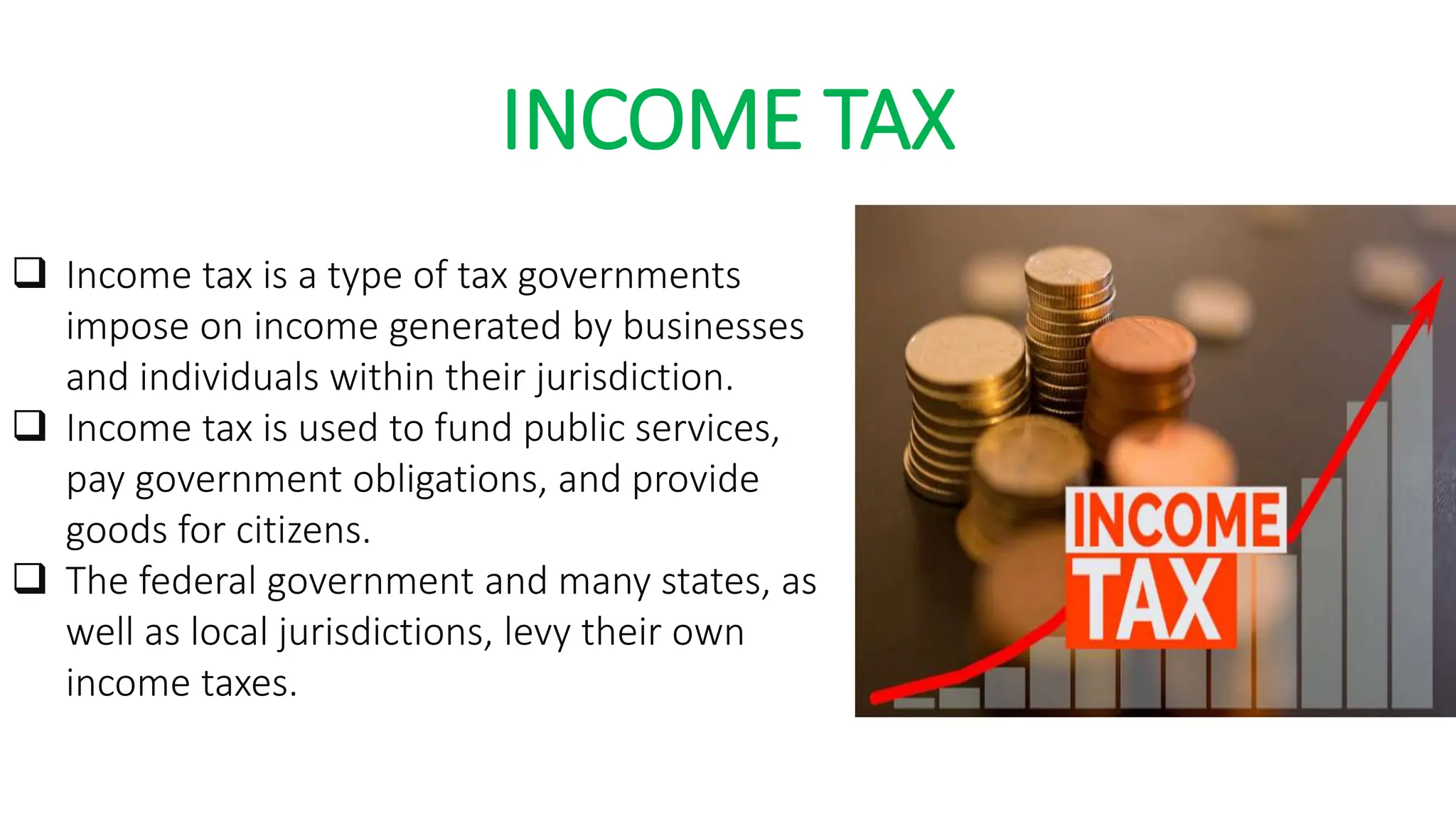
 Income tax is a type of tax governments
impose on income generated by businesses
and individuals within their jurisdiction.
 Income tax is used to fund public services,
pay government obligations, and provide
goods for citizens.
 The federal government and many states, as
well as local jurisdictions, levy their own
income taxes.
New Income Tax Slabs FY23-24
In India, income tax is calculated using income tax slabs and rates for the applicable financial year
(FY) and assessment year (AY). The income tax slab for AY 2023-24 was published as part of the
Union Budget 2022-23.
Income Tax Slab
Individual taxpayers must pay income tax based on the slab system into which they fall.
Individuals may fall into a different tax bracket depending on their Income. As a result, persons
with higher incomes will have to pay more taxes.
The slab system was implemented to keep the country's tax system equitable. The slabs change
with each budget announcement.
Income Tax Slab for FY 2023-24 (AY 2024-25)
The following tables show the Revised Income Tax Slabs, not the old tax regime. These new tax
slabs in India were presented in the Budget 2023.
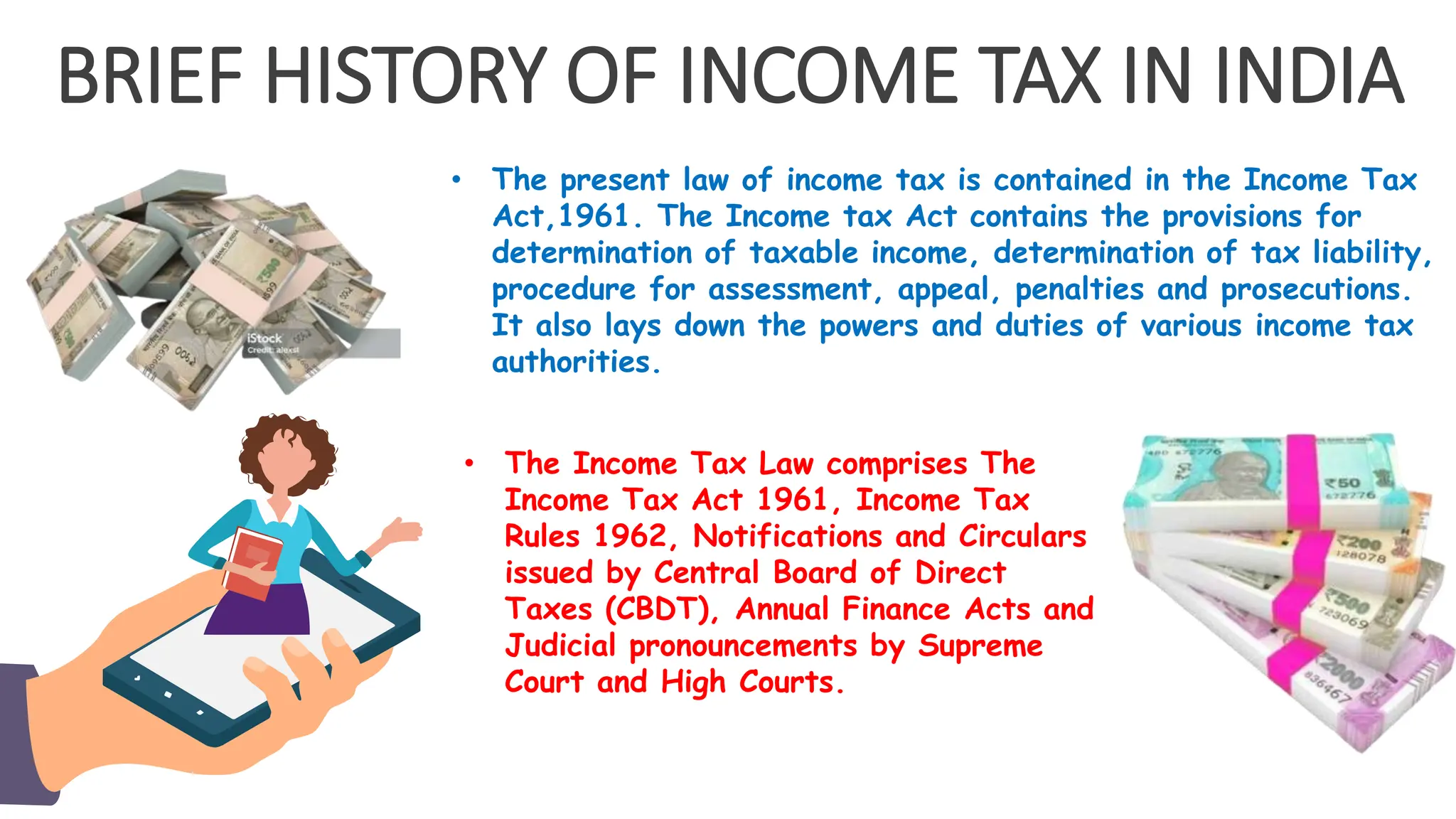
BRIEF HISTORY OF INCOME TAX IN INDIA
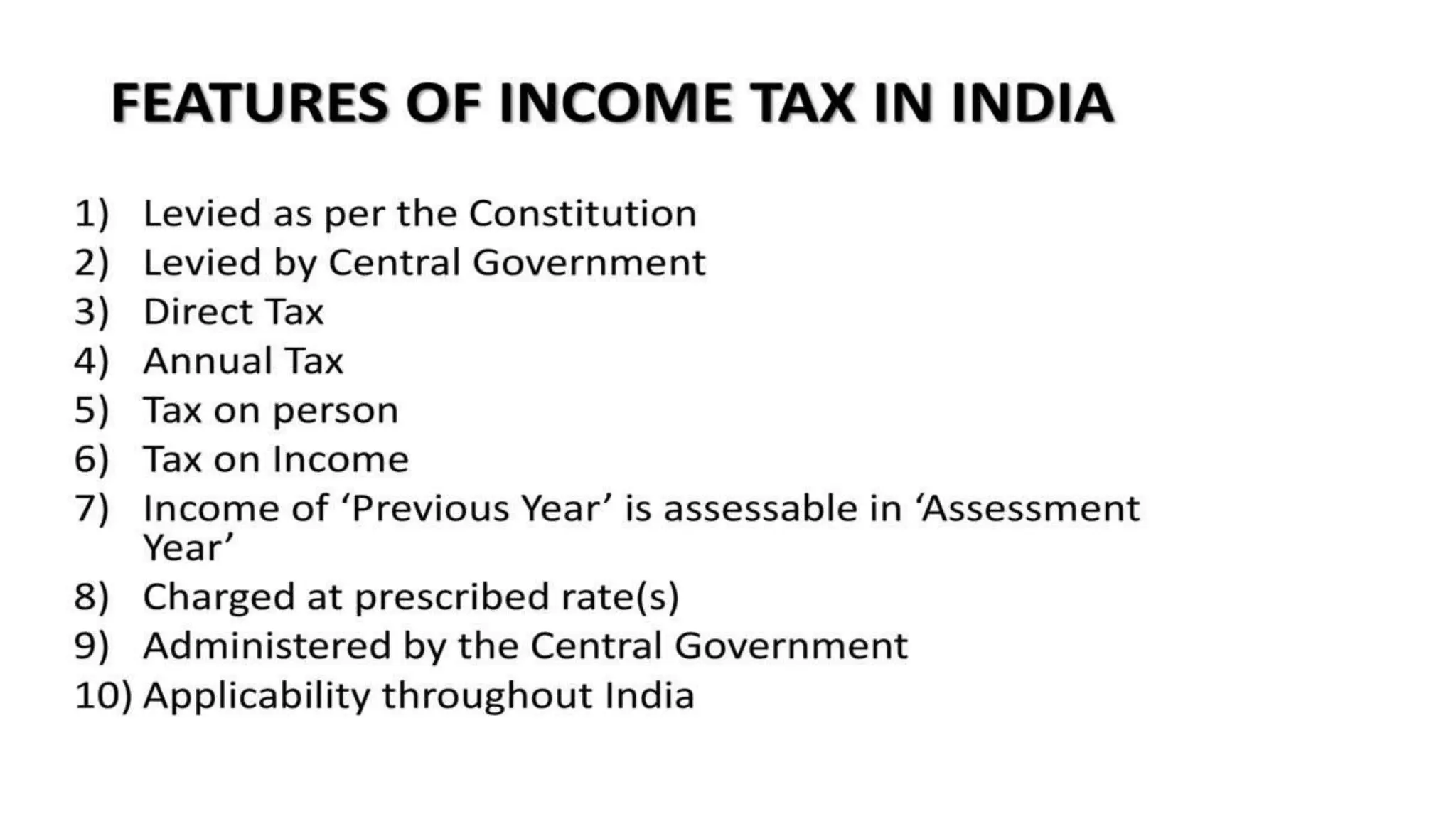
• The present law of income tax is contained in the Income Tax
Act,1961. The Income tax Act contains the provisions for
determination of taxable income, determination of tax liability,
procedure for assessment, appeal, penalties and prosecutions.
It also lays down the powers and duties of various income tax
authorities.
• The Income Tax Law comprises The
Income Tax Act 1961, Income Tax
Rules 1962, Notifications and Circulars
issued by Central Board of Direct
Taxes (CBDT), Annual Finance Acts and
Judicial pronouncements by Supreme
Court and High Courts.
Basics of Income
Tax
Understand the fundamental concepts
and principles of income tax.
01 Taxable income calculation
02 Filing status and Tax brackets and
rates
03 Deductions and exemptions
Importance Of Why
Individuals Should Pay
Income Tax In India
01 Financial Responsibility
02 Supporting Welfare Programs
03 Infrastructure Development
04 Reduction of Income Inequality
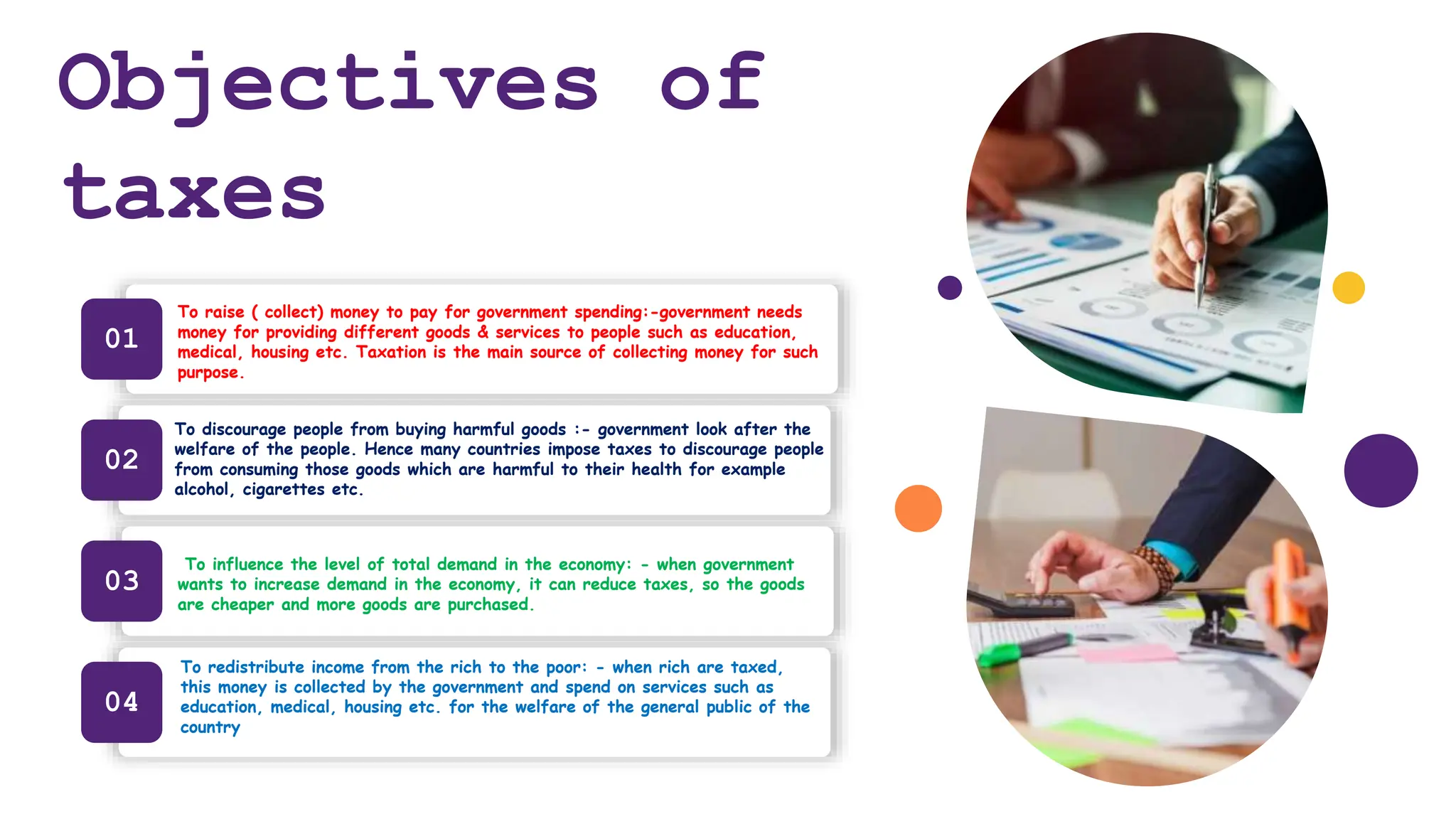
Objectives of
taxes
01
To raise ( collect) money to pay for government spending:-government needs
money for providing different goods & services to people such as education,
medical, housing etc. Taxation is the main source of collecting money for such
purpose.
02
03
04
To discourage people from buying harmful goods :- government look after the
welfare of the people. Hence many countries impose taxes to discourage people
from consuming those goods which are harmful to their health for example
alcohol, cigarettes etc.
To redistribute income from the rich to the poor: - when rich are taxed,
this money is collected by the government and spend on services such as
education, medical, housing etc. for the welfare of the general public of the
country
To influence the level of total demand in the economy: - when government
wants to increase demand in the economy, it can reduce taxes, so the goods
are cheaper and more goods are purchased.
Basics of Income
Tax
Understand the fundamental concepts
and principles of income tax.
01 Taxable income calculation
02 Filing status and Tax brackets and
rates
03 Deductions and exemptions
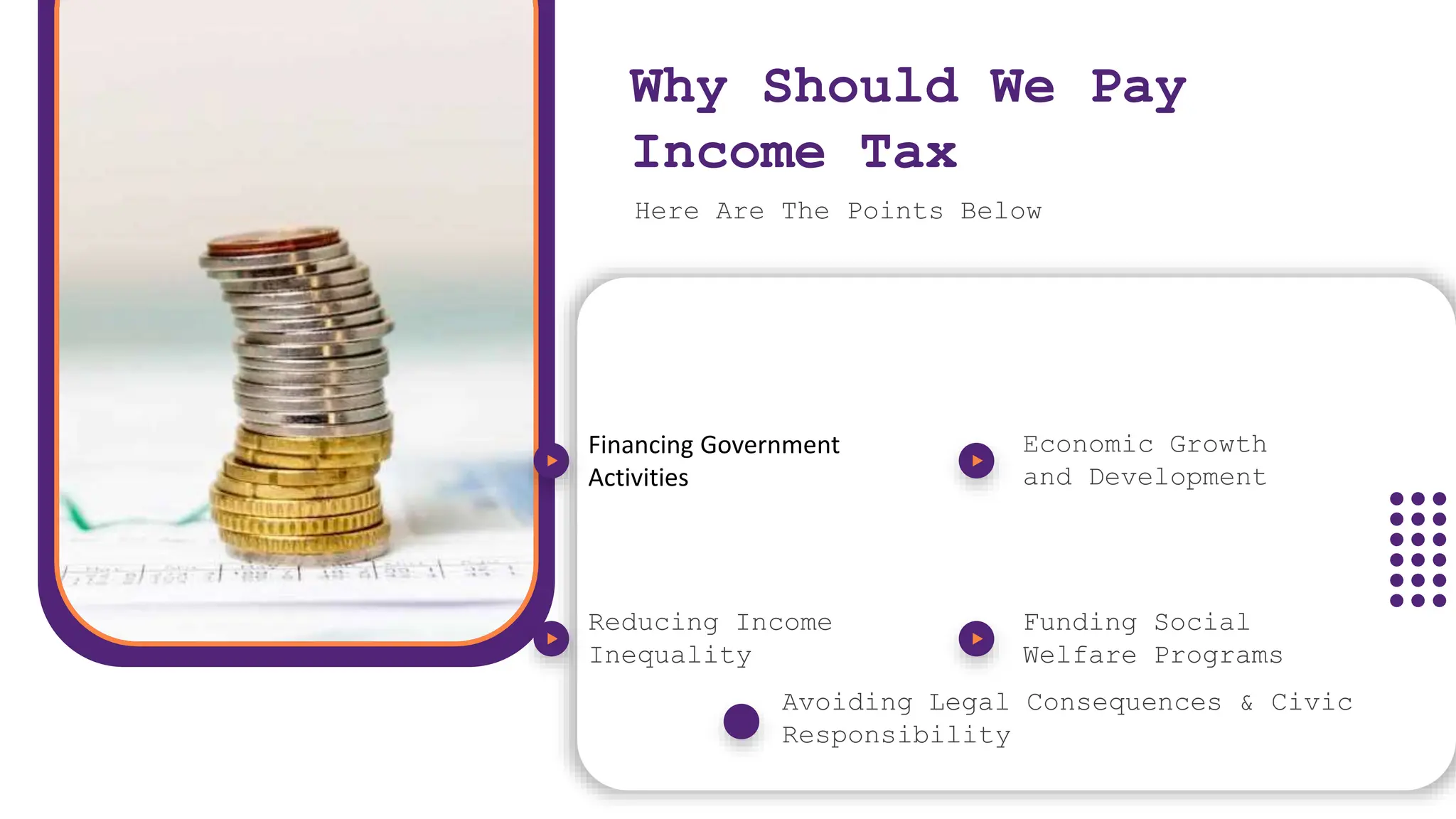
Why Should We Pay
Income Tax
Here Are The Points Below
Financing Government
Activities
Reducing Income
Inequality
Economic Growth
and Development
Funding Social
Welfare Programs
Avoiding Legal Consequences & Civic
Responsibility
•Economic Growth and Development
Income tax plays a pivotal role in fueling economic
growth and development.
The government utilizes tax revenue to invest in
critical infrastructure projects such as roads,
bridges, and airports. These investments, in turn,
boost economic activity, create jobs, and
stimulate overall economic growth.
Reducing Income Inequality
Another vital aspect of income tax is its role
in reducing income inequality. India, like many
countries, faces a significant gap between the
rich and the poor.
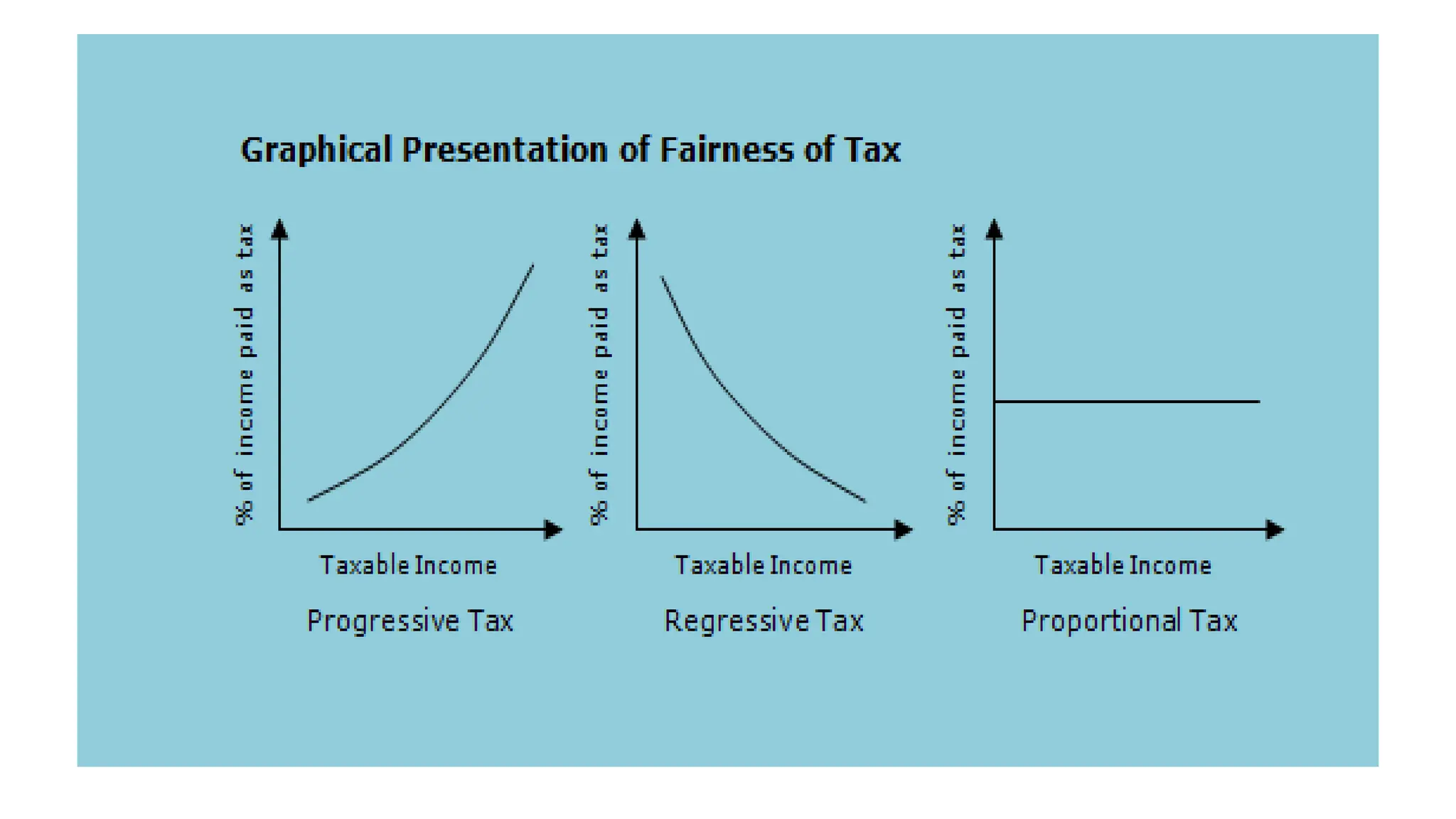
Through progressive taxation, individuals with
higher incomes pay a higher percentage of
their earnings in taxes. The revenue
generated is then used to fund welfare
programs and initiatives that benefit
marginalized and disadvantaged sections of
society
Funding Social Welfare
Programs
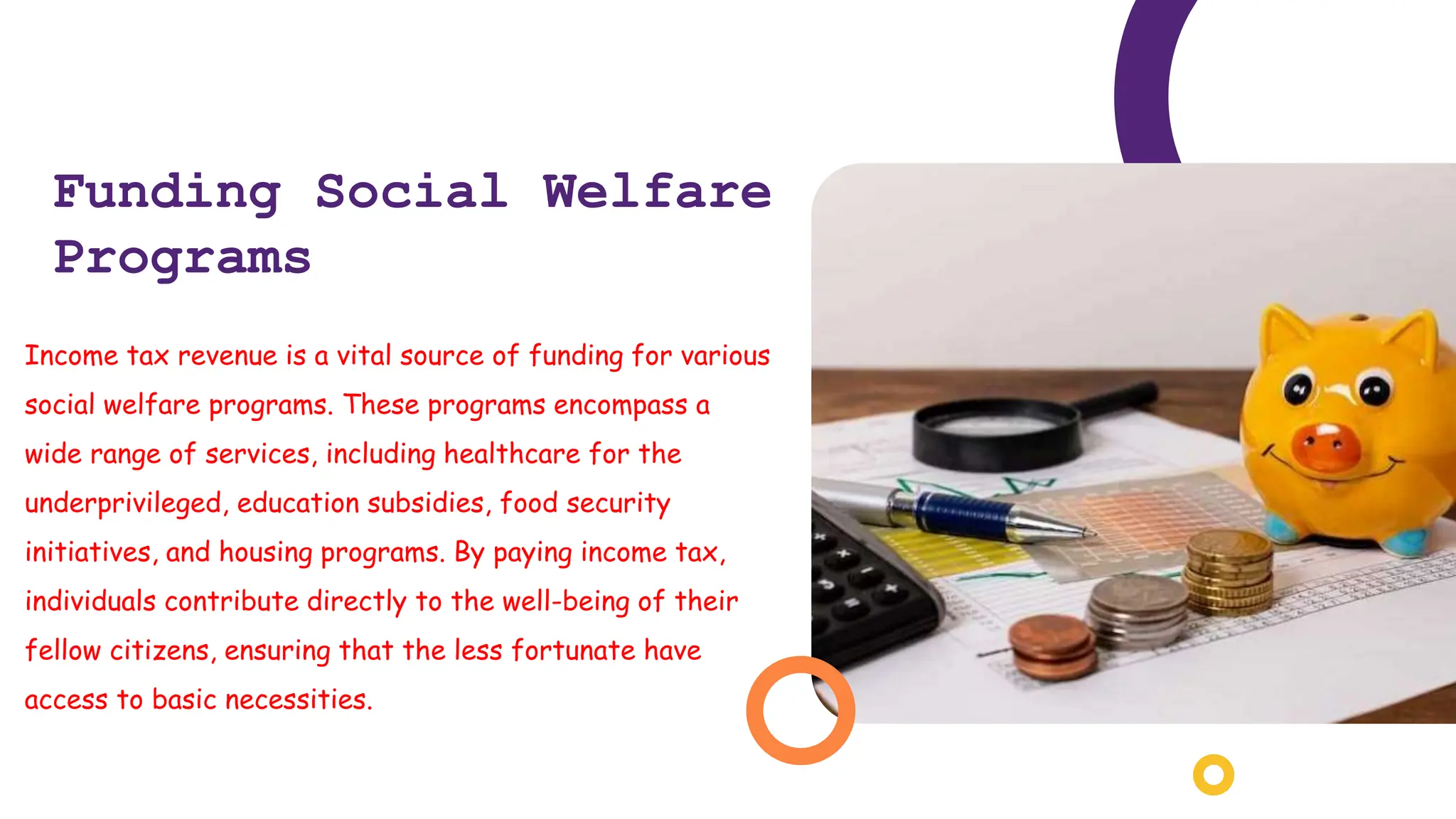
Income tax revenue is a vital source of funding for various
social welfare programs. These programs encompass a
wide range of services, including healthcare for the
underprivileged, education subsidies, food security
initiatives, and housing programs. By paying income tax,
individuals contribute directly to the well-being of their
fellow citizens, ensuring that the less fortunate have
access to basic necessities.
Avoiding Legal
Consequences
Civic Responsibility
Paying income tax is not just a legal requirement; it is a
civic responsibility. Taxes are the lifeblood of a nation's
governance, and every citizen has a duty to contribute to
the nation's progress and development. Tax compliance is
a fundamental aspect of a democratic society, where
individuals collectively share the financial burden of
governance.
Civic
Responsibility
&
Avoiding Legal
Consequences
Avoiding Legal Consequences
Failure to pay income tax or tax evasion can result in
severe legal consequences. The Income Tax Department in
India has stringent measures in place to detect and
penalize tax evaders. Penalties, fines, and legal
proceedings can have long-lasting negative effects on an
individual's financial and personal life. Paying taxes on time
and in the correct manner helps individuals avoid legal
troubles.
Civic
Responsibility
&
Conclusion
Paying income tax is not merely an obligation
imposed by the government; it is a fundamental
part of being a responsible and contributing
member of society.
By fulfilling their tax obligations, individuals in
India play a vital role in financing the
government's activities, promoting economic
growth, reducing income inequality, and supporting
social welfare programs. Ultimately, paying income
tax is an investment in the collective future and
prosperity of the nation.
www.slideegg.com
Thank You!
We respect your valuable time with Team Tax Skechers
If you have any questions, please reach us
CREDIT: To All Team Member’s
Team Skechers

PPT ON INCOME TAX.pptx

  • 2.
    What is Tax? Incometax is a mandatory financial contribution levied by the government on individuals and entities based on their income and profits. It plays a vital role in funding public services and infrastructure Tax is a compulsory contribution to state revenue, levied by the government on workers' income and business profits, or added to the cost of some goods, services, and transactions. It may be direct tax or indirect tax.
  • 4.
    DIFERENCE BETWEEN DIRECTAND INDIRECT TAX
  • 8.
    INCOME TAX  Incometax is a type of tax governments impose on income generated by businesses and individuals within their jurisdiction.  Income tax is used to fund public services, pay government obligations, and provide goods for citizens.  The federal government and many states, as well as local jurisdictions, levy their own income taxes.
  • 9.
    New Income TaxSlabs FY23-24 In India, income tax is calculated using income tax slabs and rates for the applicable financial year (FY) and assessment year (AY). The income tax slab for AY 2023-24 was published as part of the Union Budget 2022-23. Income Tax Slab Individual taxpayers must pay income tax based on the slab system into which they fall. Individuals may fall into a different tax bracket depending on their Income. As a result, persons with higher incomes will have to pay more taxes. The slab system was implemented to keep the country's tax system equitable. The slabs change with each budget announcement. Income Tax Slab for FY 2023-24 (AY 2024-25) The following tables show the Revised Income Tax Slabs, not the old tax regime. These new tax slabs in India were presented in the Budget 2023.
  • 12.
    BRIEF HISTORY OFINCOME TAX IN INDIA • The present law of income tax is contained in the Income Tax Act,1961. The Income tax Act contains the provisions for determination of taxable income, determination of tax liability, procedure for assessment, appeal, penalties and prosecutions. It also lays down the powers and duties of various income tax authorities. • The Income Tax Law comprises The Income Tax Act 1961, Income Tax Rules 1962, Notifications and Circulars issued by Central Board of Direct Taxes (CBDT), Annual Finance Acts and Judicial pronouncements by Supreme Court and High Courts.
  • 13.
    Basics of Income Tax Understandthe fundamental concepts and principles of income tax. 01 Taxable income calculation 02 Filing status and Tax brackets and rates 03 Deductions and exemptions
  • 21.
    Importance Of Why IndividualsShould Pay Income Tax In India 01 Financial Responsibility 02 Supporting Welfare Programs 03 Infrastructure Development 04 Reduction of Income Inequality
  • 22.
    Objectives of taxes 01 To raise( collect) money to pay for government spending:-government needs money for providing different goods & services to people such as education, medical, housing etc. Taxation is the main source of collecting money for such purpose. 02 03 04 To discourage people from buying harmful goods :- government look after the welfare of the people. Hence many countries impose taxes to discourage people from consuming those goods which are harmful to their health for example alcohol, cigarettes etc. To redistribute income from the rich to the poor: - when rich are taxed, this money is collected by the government and spend on services such as education, medical, housing etc. for the welfare of the general public of the country To influence the level of total demand in the economy: - when government wants to increase demand in the economy, it can reduce taxes, so the goods are cheaper and more goods are purchased.
  • 23.
    Basics of Income Tax Understandthe fundamental concepts and principles of income tax. 01 Taxable income calculation 02 Filing status and Tax brackets and rates 03 Deductions and exemptions
  • 24.
    Why Should WePay Income Tax Here Are The Points Below Financing Government Activities Reducing Income Inequality Economic Growth and Development Funding Social Welfare Programs Avoiding Legal Consequences & Civic Responsibility
  • 25.
    •Economic Growth andDevelopment Income tax plays a pivotal role in fueling economic growth and development. The government utilizes tax revenue to invest in critical infrastructure projects such as roads, bridges, and airports. These investments, in turn, boost economic activity, create jobs, and stimulate overall economic growth.
  • 26.
    Reducing Income Inequality Anothervital aspect of income tax is its role in reducing income inequality. India, like many countries, faces a significant gap between the rich and the poor. Through progressive taxation, individuals with higher incomes pay a higher percentage of their earnings in taxes. The revenue generated is then used to fund welfare programs and initiatives that benefit marginalized and disadvantaged sections of society
  • 27.
    Funding Social Welfare Programs Incometax revenue is a vital source of funding for various social welfare programs. These programs encompass a wide range of services, including healthcare for the underprivileged, education subsidies, food security initiatives, and housing programs. By paying income tax, individuals contribute directly to the well-being of their fellow citizens, ensuring that the less fortunate have access to basic necessities.
  • 28.
    Avoiding Legal Consequences Civic Responsibility Payingincome tax is not just a legal requirement; it is a civic responsibility. Taxes are the lifeblood of a nation's governance, and every citizen has a duty to contribute to the nation's progress and development. Tax compliance is a fundamental aspect of a democratic society, where individuals collectively share the financial burden of governance. Civic Responsibility &
  • 29.
    Avoiding Legal Consequences Avoiding LegalConsequences Failure to pay income tax or tax evasion can result in severe legal consequences. The Income Tax Department in India has stringent measures in place to detect and penalize tax evaders. Penalties, fines, and legal proceedings can have long-lasting negative effects on an individual's financial and personal life. Paying taxes on time and in the correct manner helps individuals avoid legal troubles. Civic Responsibility &
  • 31.
    Conclusion Paying income taxis not merely an obligation imposed by the government; it is a fundamental part of being a responsible and contributing member of society. By fulfilling their tax obligations, individuals in India play a vital role in financing the government's activities, promoting economic growth, reducing income inequality, and supporting social welfare programs. Ultimately, paying income tax is an investment in the collective future and prosperity of the nation.
  • 32.
    www.slideegg.com Thank You! We respectyour valuable time with Team Tax Skechers If you have any questions, please reach us CREDIT: To All Team Member’s Team Skechers