ANDROID 
Presented By:- 
Ajit Kumar Bhagat IT/11/33 
Pritam Guchhait 
Abhay Kumar Abhay 
IT/11/39 
IT/11/01 
Pankaj Kumar IT/10/41 
Arnab Pual IT/10/40
Contents 
• What is Android 
• Feauters Of Android 
• Commonly Used Packages 
• Latest Versions of Android 
• Limitations 
• Conclusions
What is Android 
• Android is an open source operating system, created 
by Google specifically for use on mobile devices (cell 
phones and tablets). 
• Linux based (2.6 kernel). 
• Can be programmed in C/C++ but most app 
development is done in Java (Java access to C 
Libraries via JNI (Java Native Interface). 
• Supports Bluetooth, Wi-Fi, and 3G and 4G 
networking.
FEATURES OF ANDROID 
• Android is not a single piece of hardware. 
• Android supports wireless communication using:- 
 3G Networks 
 4G Networks 
 802.11 Wi-Fi Networks 
 Bluetooth Connectivity 
• Android is a multi-process system, in which each 
application (and parts of the system) runs in its own 
process.
Commonly Used Packages 
• User interface layout. 
• Secure networking and web browsing. 
• Audio and visual media support. 
• Access to optional hardware (GPS).
Latest Versions of Android 
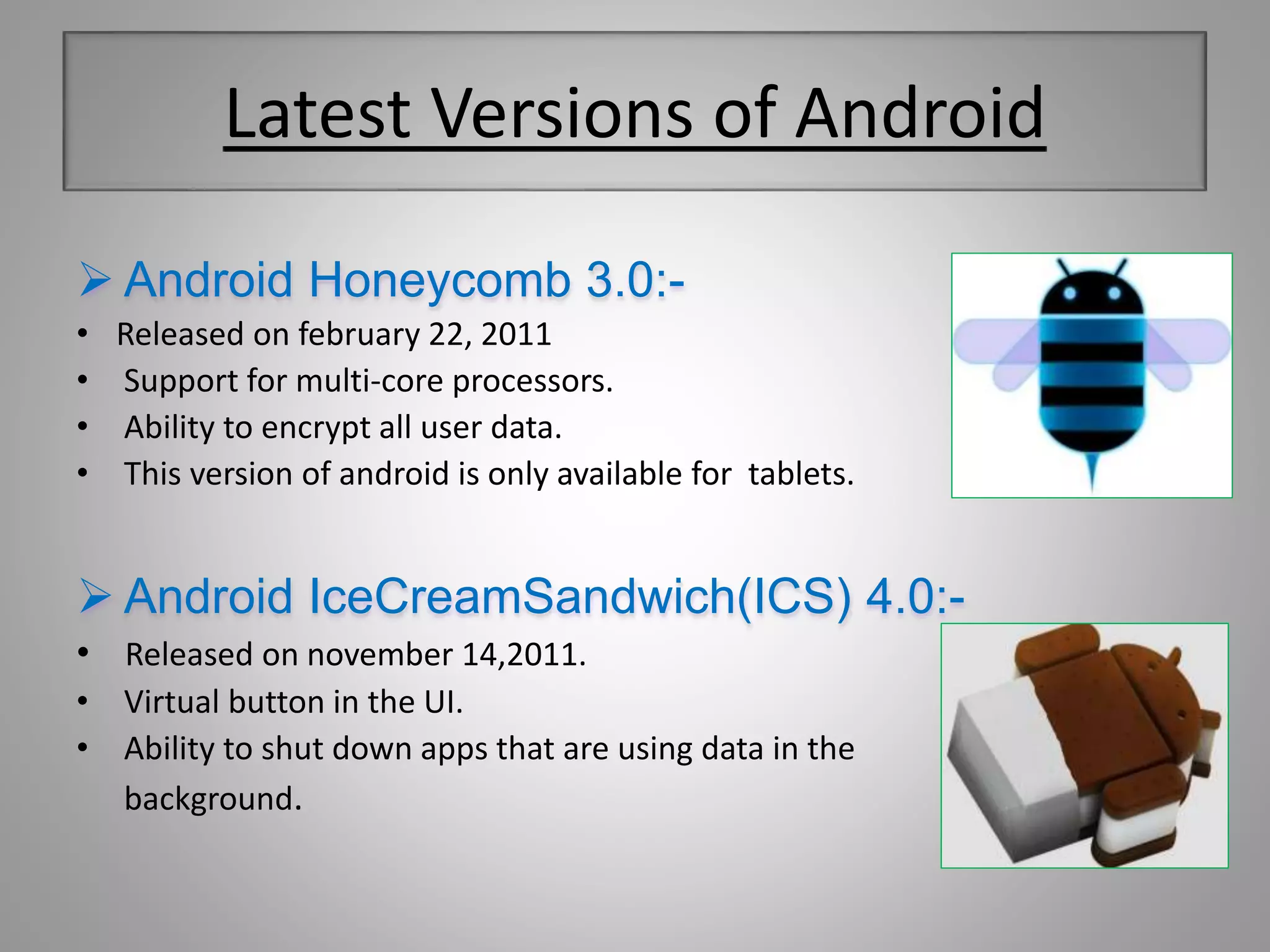
 Android Honeycomb 3.0:- 
• Released on february 22, 2011 
• Support for multi-core processors. 
• Ability to encrypt all user data. 
• This version of android is only available for tablets. 
 Android IceCreamSandwich(ICS) 4.0:- 
• Released on november 14,2011. 
• Virtual button in the UI. 
• Ability to shut down apps that are using data in the 
background.
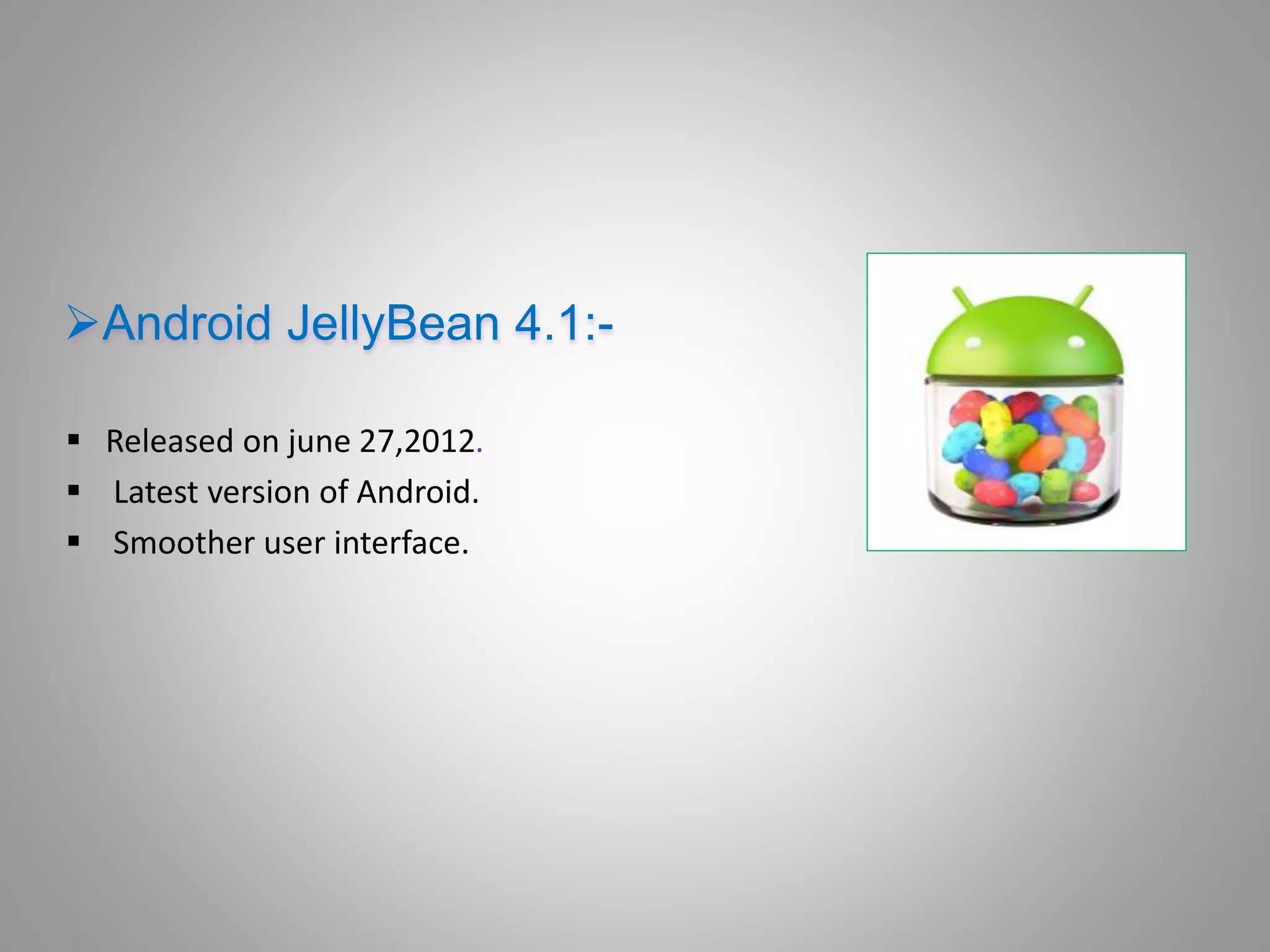
Android JellyBean 4.1:- 
 Released on june 27,2012. 
 Latest version of Android. 
 Smoother user interface.
Limitations 
• Making source code available to everyone inevitably 
invites the attention of hackers. 
• Android operating system uses more amount of 
battery as compared to normal mobile phones. 
• As there are so many user sometimes it becomes 
difficult to connect all the users.
CONCLUSIONS 
• Android’s influence has penetrated into the mobile 
space outside. 
• Android operating system in the global mobile 
market share is increased significantly. 
• Now days more than half (52.5%) of the smartphone 
sales belonged to Android. 
• Google said that 550,000 new Android devices were 
being activated every day.
Ppt on android

Ppt on android

  • 1.
    ANDROID Presented By:- Ajit Kumar Bhagat IT/11/33 Pritam Guchhait Abhay Kumar Abhay IT/11/39 IT/11/01 Pankaj Kumar IT/10/41 Arnab Pual IT/10/40
  • 2.
    Contents • Whatis Android • Feauters Of Android • Commonly Used Packages • Latest Versions of Android • Limitations • Conclusions
  • 3.
    What is Android • Android is an open source operating system, created by Google specifically for use on mobile devices (cell phones and tablets). • Linux based (2.6 kernel). • Can be programmed in C/C++ but most app development is done in Java (Java access to C Libraries via JNI (Java Native Interface). • Supports Bluetooth, Wi-Fi, and 3G and 4G networking.
  • 4.
    FEATURES OF ANDROID • Android is not a single piece of hardware. • Android supports wireless communication using:-  3G Networks  4G Networks  802.11 Wi-Fi Networks  Bluetooth Connectivity • Android is a multi-process system, in which each application (and parts of the system) runs in its own process.
  • 5.
    Commonly Used Packages • User interface layout. • Secure networking and web browsing. • Audio and visual media support. • Access to optional hardware (GPS).
  • 6.
    Latest Versions ofAndroid  Android Honeycomb 3.0:- • Released on february 22, 2011 • Support for multi-core processors. • Ability to encrypt all user data. • This version of android is only available for tablets.  Android IceCreamSandwich(ICS) 4.0:- • Released on november 14,2011. • Virtual button in the UI. • Ability to shut down apps that are using data in the background.
  • 7.
    Android JellyBean 4.1:-  Released on june 27,2012.  Latest version of Android.  Smoother user interface.
  • 8.
    Limitations • Makingsource code available to everyone inevitably invites the attention of hackers. • Android operating system uses more amount of battery as compared to normal mobile phones. • As there are so many user sometimes it becomes difficult to connect all the users.
  • 9.
    CONCLUSIONS • Android’sinfluence has penetrated into the mobile space outside. • Android operating system in the global mobile market share is increased significantly. • Now days more than half (52.5%) of the smartphone sales belonged to Android. • Google said that 550,000 new Android devices were being activated every day.