Marketing Environment,
Customer Satisfaction,
Customer Value,
Concept of value chain
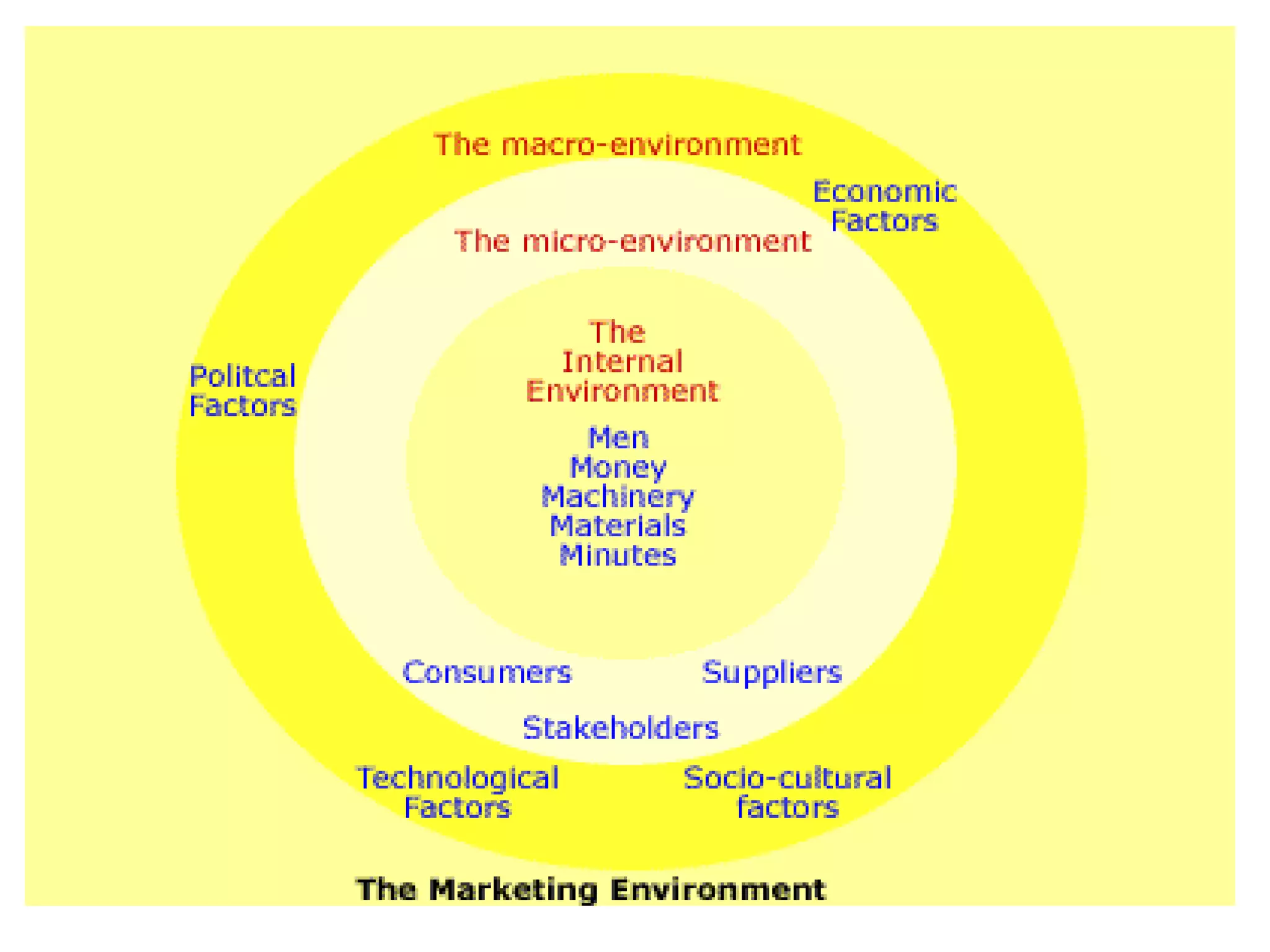
• The marketing environment consists of the task
environment and the broad environment.
• The task environment includes the actors engaged in
producing, distributing and promoting the offering. These are
the company suppliers, distributors, dealers and the target
costumers.
• The broad environment consists of six components:
• Demographic
• Economic
• Physical
• Technological
• Political-Legal
• Social-Cultural
PEST Analysis
• The Political Environment
Laws, government agencies and pressure groups that
influence and limit various organizations and
individuals in a given society.
• The Economic Environment
The factors that affect consumer buying power and
spending patterns.
Nations vary greatly in their level of distribution of
income (subsistence or agricultural Vs industrial
economies).
PEST Analysis Contd..
• Technological Environment
Forces that create new technologies, creating new
product and market opportunities
• The Social Environment
Institutions and other forces that affect society’s basic
values, perceptions, preferences and behaviors.
SWOT Analysis
• A final and necessary step of the strategic analysis
involves bringing together the critical strengths,
Weaknesses, Opportunities and Threats in such a way
that strategy options are immediately obvious.
• To discover strengths and weaknesses we look at the
internal analysis (managerial processes). Similarly we
can obtain a good indication of opportunities and
threats by looking at PEST analysis.
• The SWOT is a valuable tool in visualizing strategic
options and searching possible alternative strategies for
the company.
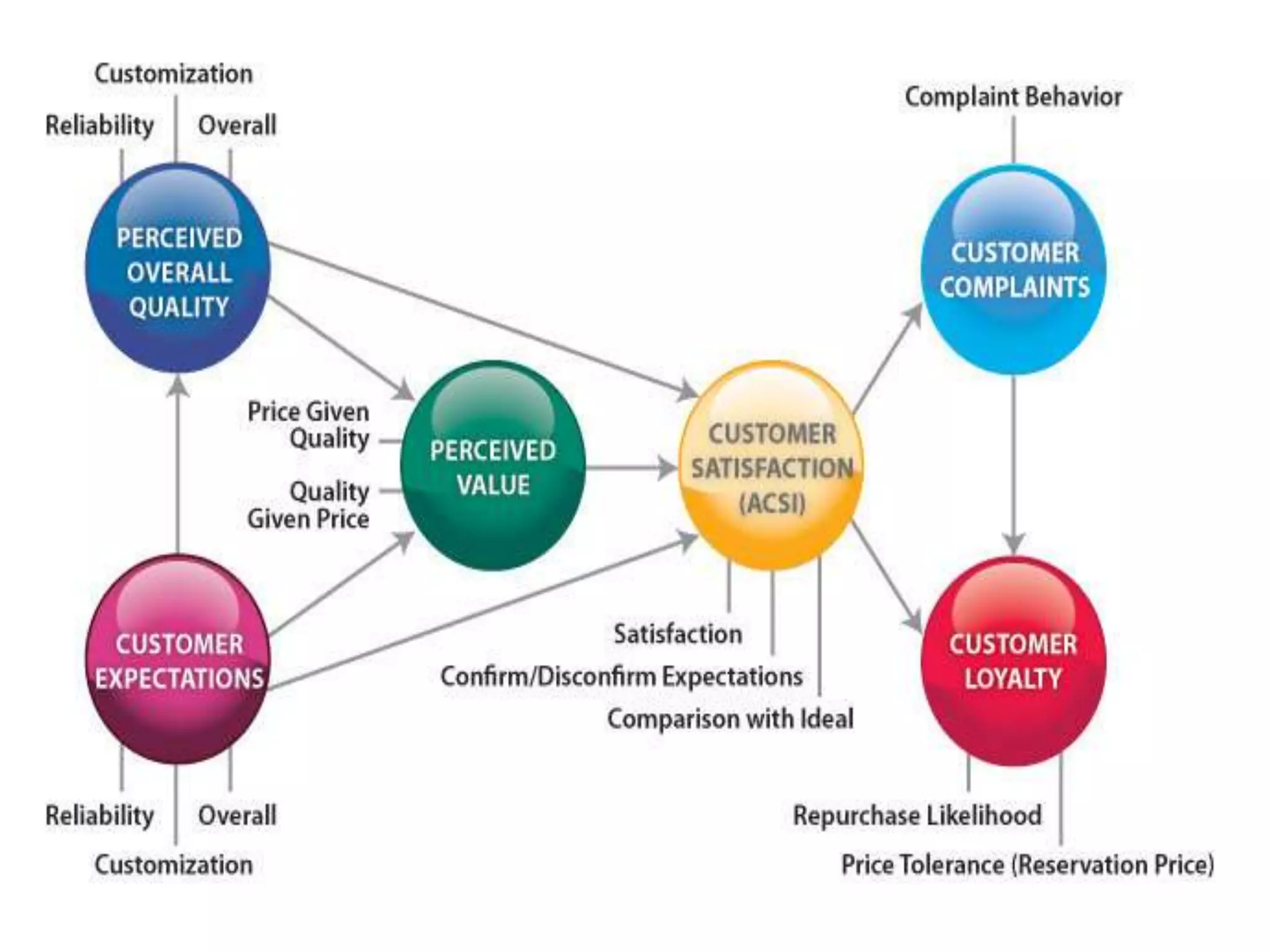
Customer Satisfaction
• Satisfaction reflects a person’s judgements of a
product’s perceived performance (or outcome) in
relationship to expectations. If the performance falls
short of expectations, the customer is dissatisfied
and disappointed. If it matches expectations, the
customer is satisfied. If it exceeds then, the
customer is delighted.
Customer Value
• Value reflects the sum of the perceived tangible and
in tangible benefits and costs to customers. It’s
primarily a combination of quality, service, and price
(“qsp”), called the customer value triad.
Value Chain Concept
• A value chain is a chain of activities that a firm
operating in a specific industry performs in order to
deliver a valuable product or service to the market.
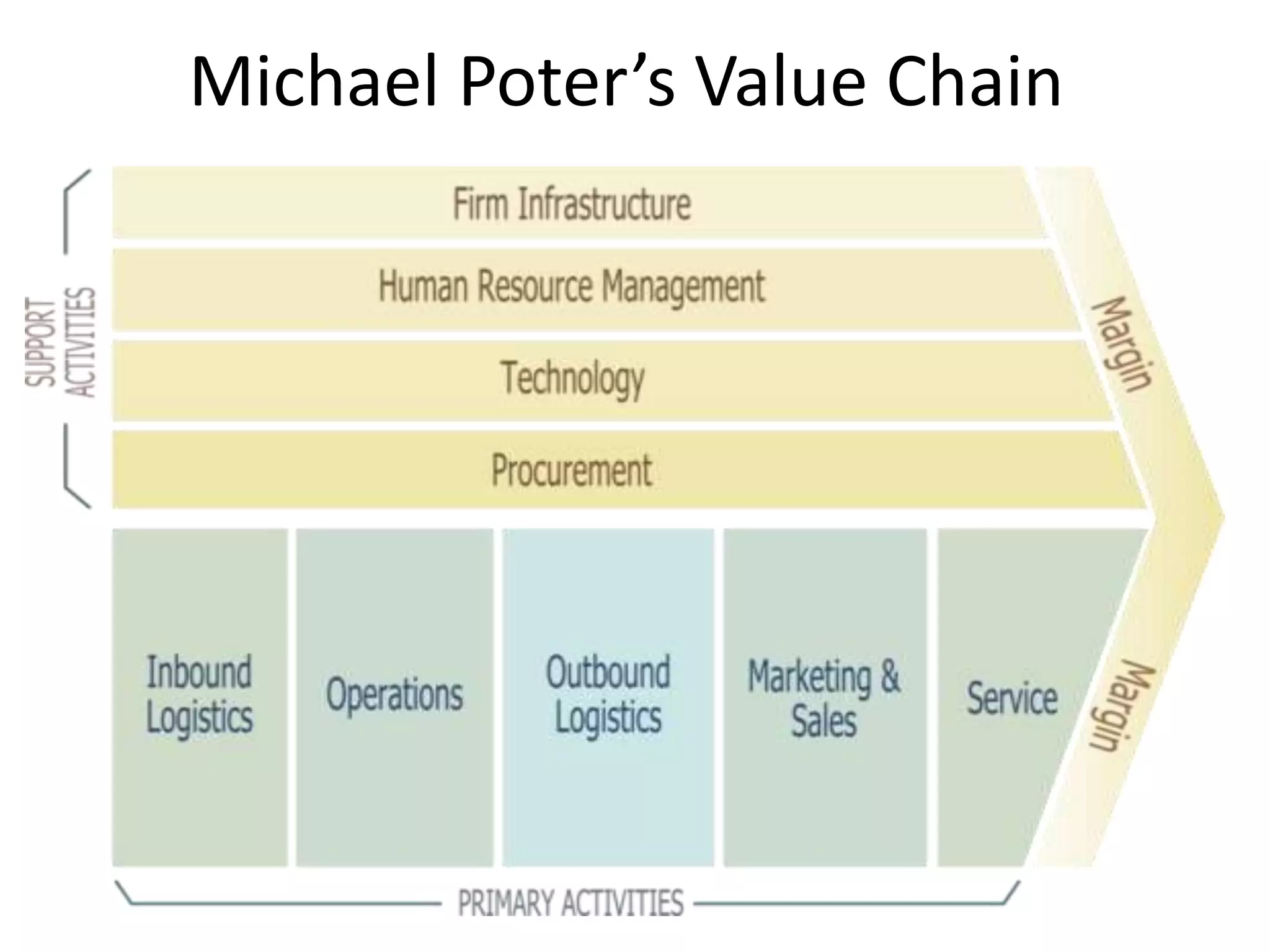
Michael Poter’s Value Chain
Assignment-2
1. PEST analysis and SWOT analysis of any
company of your choice.

Marketing environment by Neeraj Bhandari ( Surkhet.Nepal )

  • 1.
  • 2.
    • The marketingenvironment consists of the task environment and the broad environment. • The task environment includes the actors engaged in producing, distributing and promoting the offering. These are the company suppliers, distributors, dealers and the target costumers. • The broad environment consists of six components: • Demographic • Economic • Physical • Technological • Political-Legal • Social-Cultural
  • 4.
    PEST Analysis • ThePolitical Environment Laws, government agencies and pressure groups that influence and limit various organizations and individuals in a given society. • The Economic Environment The factors that affect consumer buying power and spending patterns. Nations vary greatly in their level of distribution of income (subsistence or agricultural Vs industrial economies).
  • 5.
    PEST Analysis Contd.. •Technological Environment Forces that create new technologies, creating new product and market opportunities • The Social Environment Institutions and other forces that affect society’s basic values, perceptions, preferences and behaviors.
  • 6.
    SWOT Analysis • Afinal and necessary step of the strategic analysis involves bringing together the critical strengths, Weaknesses, Opportunities and Threats in such a way that strategy options are immediately obvious. • To discover strengths and weaknesses we look at the internal analysis (managerial processes). Similarly we can obtain a good indication of opportunities and threats by looking at PEST analysis. • The SWOT is a valuable tool in visualizing strategic options and searching possible alternative strategies for the company.
  • 7.
    Customer Satisfaction • Satisfactionreflects a person’s judgements of a product’s perceived performance (or outcome) in relationship to expectations. If the performance falls short of expectations, the customer is dissatisfied and disappointed. If it matches expectations, the customer is satisfied. If it exceeds then, the customer is delighted.
  • 9.
    Customer Value • Valuereflects the sum of the perceived tangible and in tangible benefits and costs to customers. It’s primarily a combination of quality, service, and price (“qsp”), called the customer value triad.
  • 10.
    Value Chain Concept •A value chain is a chain of activities that a firm operating in a specific industry performs in order to deliver a valuable product or service to the market.
  • 11.
  • 12.
    Assignment-2 1. PEST analysisand SWOT analysis of any company of your choice.