What happens if we break the law? By the end of the lesson you should be able to… Recognise the basic differences between criminal and civil law Discuss and explain the reasons why we punish. Link types of punishment with their intended outcomes
In this picture there are several people who are breaking the law. How many can you see?
The answers were………. Parking on zigzag lines near a zebra crossing    Dropping litter    Being drunk and disorderly    Cycling on the pavement    Criminal damage to traffic light pole    Not stopping at a zebra crossing    Breaking into a car and stealing    Drinking and driving    Allowing a dog to mess on the pavement Which of these offences do you think is more serious? And why?
This is all about your rights and responsibilities with regards to other people. These include contracts, borrowing and lending money, disputes with neighbours, and marriage . This deals with matters such as stealing, vandalism, misuse of drugs, violence, rape, assault and murder. Criminal offences are regarded as offences against society, not just between individuals. Civil law Criminal law
Civil and Criminal Law Draw two columns with the headings civil and criminal CIVIL CRIMINAL
Is it Criminal or Civil? Work in a pair to sort the following Murder Theft Manslaughter Drink driving Speeding Divorce Wills Fraud Negligence Mortgage Contract Employment Drugs Burglary Rioting Privacy Rape
Criminal or Civil- were you right? Criminal Murder Theft Burglary Drink driving Speeding Rape Rioting Manslaughter Drugs Fraud Negligence Civil Contract Wills Divorce Employment Privacy Mortgage Negligence
Recognise this picture? Do you recognise this picture?
CRIMINAL Magistrate’s Court (youth court) CRIMINAL AND CIVIL Crown Court Serious criminal cases County Court – small claims cases and divorce, custody etc Small Claims Court High Court Claims over £10,000 Court of Appeal Supreme Court How do all the courts fit together? Civil
Magistrates – Justice of the Peace Criminal Examples Speeding ticket Refusal to pay parking ticket Parent of truant Drink driving Pub licence Casino licence Less serious cases. 95% criminal cases Who decides? 3 lay magistrates – not professional. Part time, unpaid. There are 30,000 magistrates Limited sanctions. 6 months in prison. £5,000 fine.
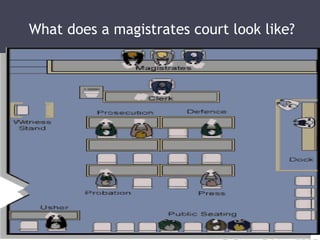
What does a magistrates court look like?
WHY DO WE  PUNISH?
Retribution Reform Reparation Deterrence ‘’ an eye for an eye’’- proportional to the crime - harsher for more serious crimes rehabilitate the wrong doer so they will not recommit the crime - see that their behaviour was wrong dissuade someone from wrong doing repay society for wrong doing -e.g. clean up mess made Protection ensure the safety of the public
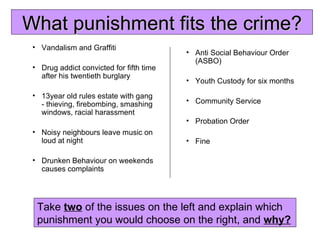
What punishment fits the crime? Vandalism and Graffiti Drug addict convicted for fifth time after his twentieth burglary 13year old rules estate with gang - thieving, firebombing, smashing windows, racial harassment Noisy neighbours leave music on loud at night Drunken Behaviour on weekends causes complaints Anti Social Behaviour Order (ASBO) Youth Custody for six months Community Service Probation Order Fine Take  two  of the issues on the left and explain which punishment you would choose on the right, and  why?
Checking aims Recognise the basic differences between criminal and civil law Discuss and explain the reasons why we punish. Link types of punishment with their intended outcomes

PPT Lesson 3.ppt

  • 1.
    What happens ifwe break the law? By the end of the lesson you should be able to… Recognise the basic differences between criminal and civil law Discuss and explain the reasons why we punish. Link types of punishment with their intended outcomes
  • 2.
    In this picturethere are several people who are breaking the law. How many can you see?
  • 3.
    The answers were……….Parking on zigzag lines near a zebra crossing   Dropping litter   Being drunk and disorderly   Cycling on the pavement   Criminal damage to traffic light pole   Not stopping at a zebra crossing   Breaking into a car and stealing   Drinking and driving   Allowing a dog to mess on the pavement Which of these offences do you think is more serious? And why?
  • 4.
    This is allabout your rights and responsibilities with regards to other people. These include contracts, borrowing and lending money, disputes with neighbours, and marriage . This deals with matters such as stealing, vandalism, misuse of drugs, violence, rape, assault and murder. Criminal offences are regarded as offences against society, not just between individuals. Civil law Criminal law
  • 5.
    Civil and CriminalLaw Draw two columns with the headings civil and criminal CIVIL CRIMINAL
  • 6.
    Is it Criminalor Civil? Work in a pair to sort the following Murder Theft Manslaughter Drink driving Speeding Divorce Wills Fraud Negligence Mortgage Contract Employment Drugs Burglary Rioting Privacy Rape
  • 7.
    Criminal or Civil-were you right? Criminal Murder Theft Burglary Drink driving Speeding Rape Rioting Manslaughter Drugs Fraud Negligence Civil Contract Wills Divorce Employment Privacy Mortgage Negligence
  • 8.
    Recognise this picture?Do you recognise this picture?
  • 9.
    CRIMINAL Magistrate’s Court(youth court) CRIMINAL AND CIVIL Crown Court Serious criminal cases County Court – small claims cases and divorce, custody etc Small Claims Court High Court Claims over £10,000 Court of Appeal Supreme Court How do all the courts fit together? Civil
  • 10.
    Magistrates – Justiceof the Peace Criminal Examples Speeding ticket Refusal to pay parking ticket Parent of truant Drink driving Pub licence Casino licence Less serious cases. 95% criminal cases Who decides? 3 lay magistrates – not professional. Part time, unpaid. There are 30,000 magistrates Limited sanctions. 6 months in prison. £5,000 fine.
  • 11.
    What does amagistrates court look like?
  • 12.
    WHY DO WE PUNISH?
  • 13.
    Retribution Reform ReparationDeterrence ‘’ an eye for an eye’’- proportional to the crime - harsher for more serious crimes rehabilitate the wrong doer so they will not recommit the crime - see that their behaviour was wrong dissuade someone from wrong doing repay society for wrong doing -e.g. clean up mess made Protection ensure the safety of the public
  • 14.
    What punishment fitsthe crime? Vandalism and Graffiti Drug addict convicted for fifth time after his twentieth burglary 13year old rules estate with gang - thieving, firebombing, smashing windows, racial harassment Noisy neighbours leave music on loud at night Drunken Behaviour on weekends causes complaints Anti Social Behaviour Order (ASBO) Youth Custody for six months Community Service Probation Order Fine Take two of the issues on the left and explain which punishment you would choose on the right, and why?
  • 15.
    Checking aims Recognisethe basic differences between criminal and civil law Discuss and explain the reasons why we punish. Link types of punishment with their intended outcomes