FUNDAMENTALS OF IOT
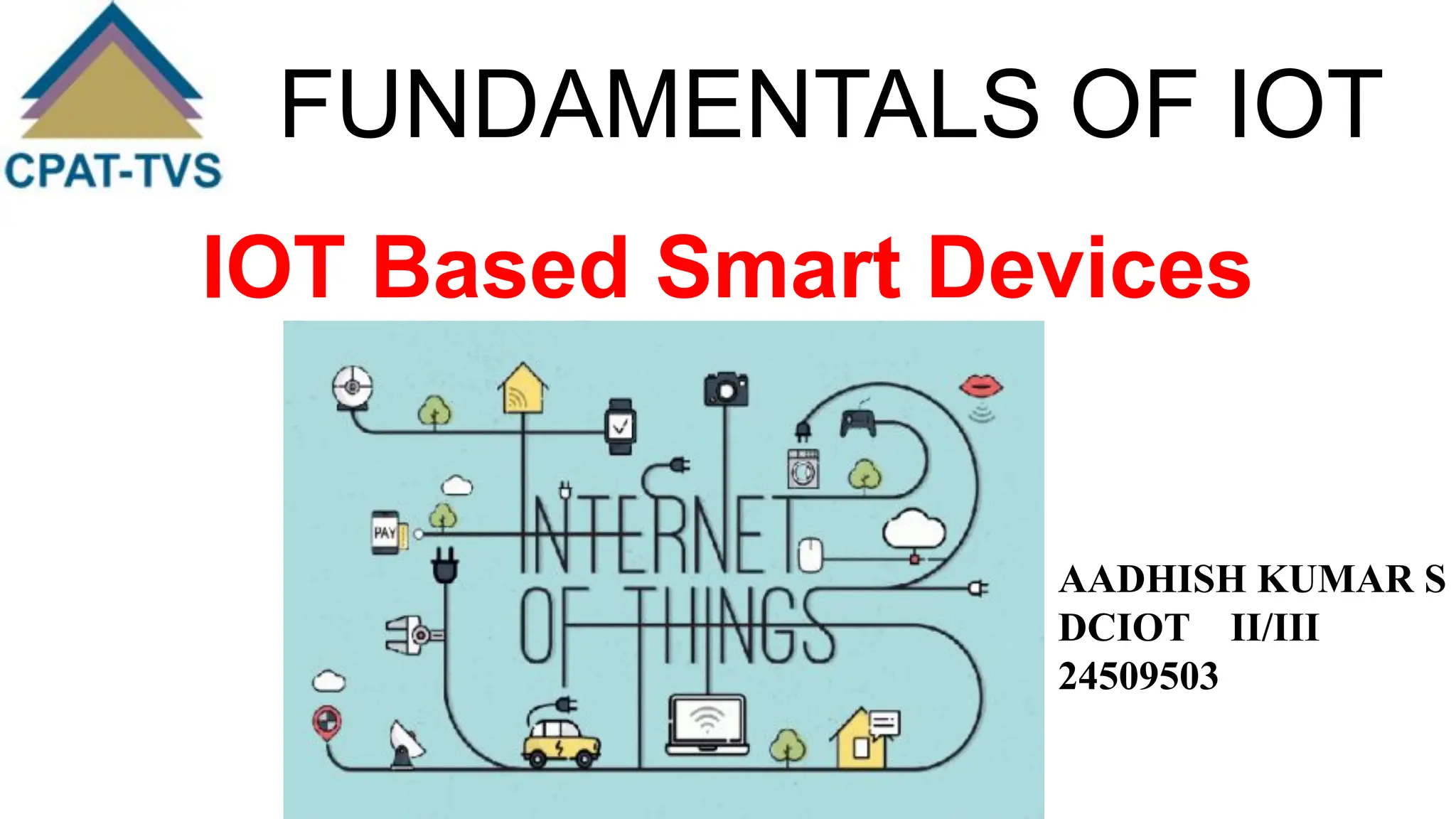
IOT Based Smart Devices
AADHISH KUMAR S
DCIOT II/III
24509503
WHAT IS IOT
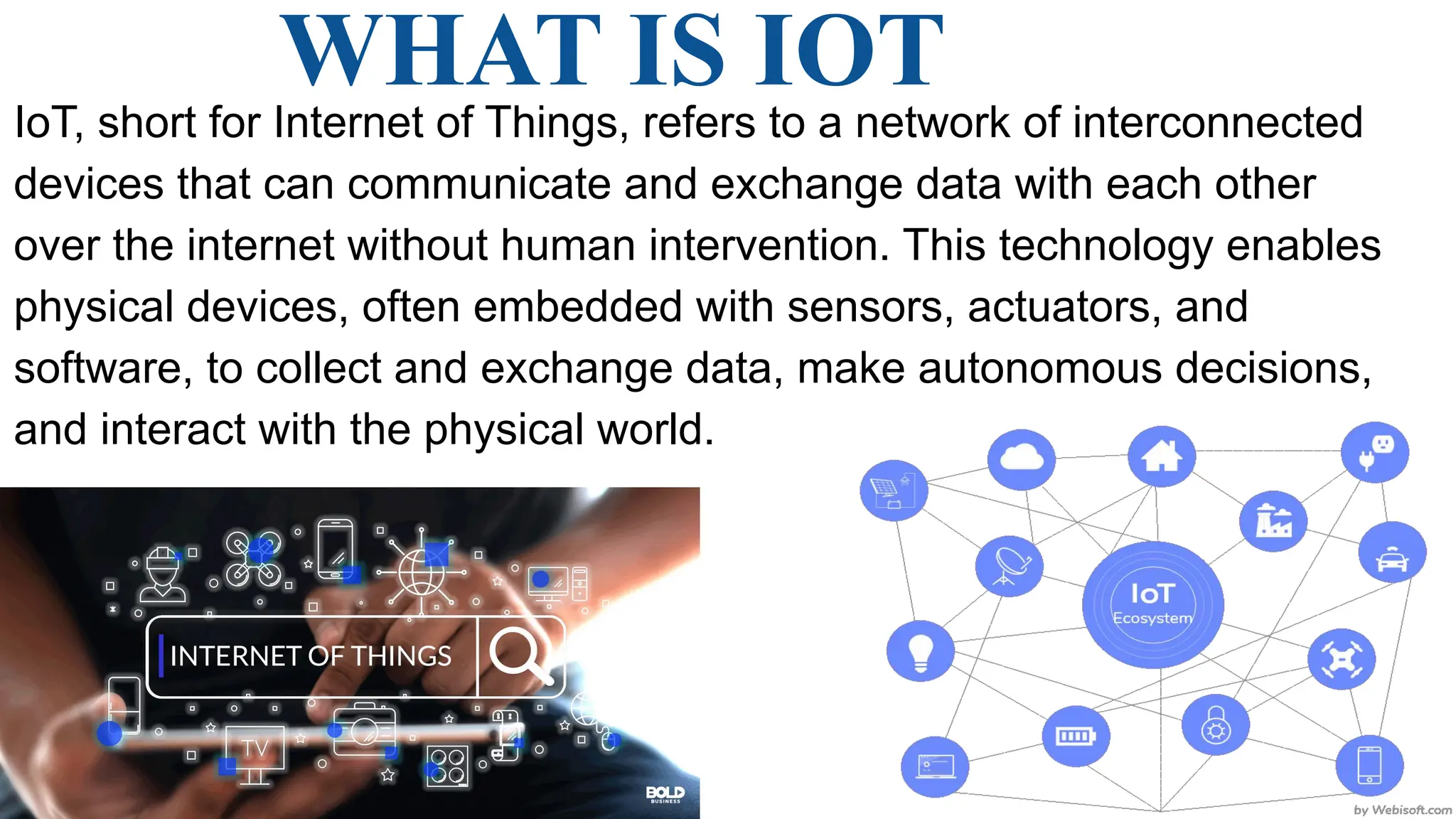
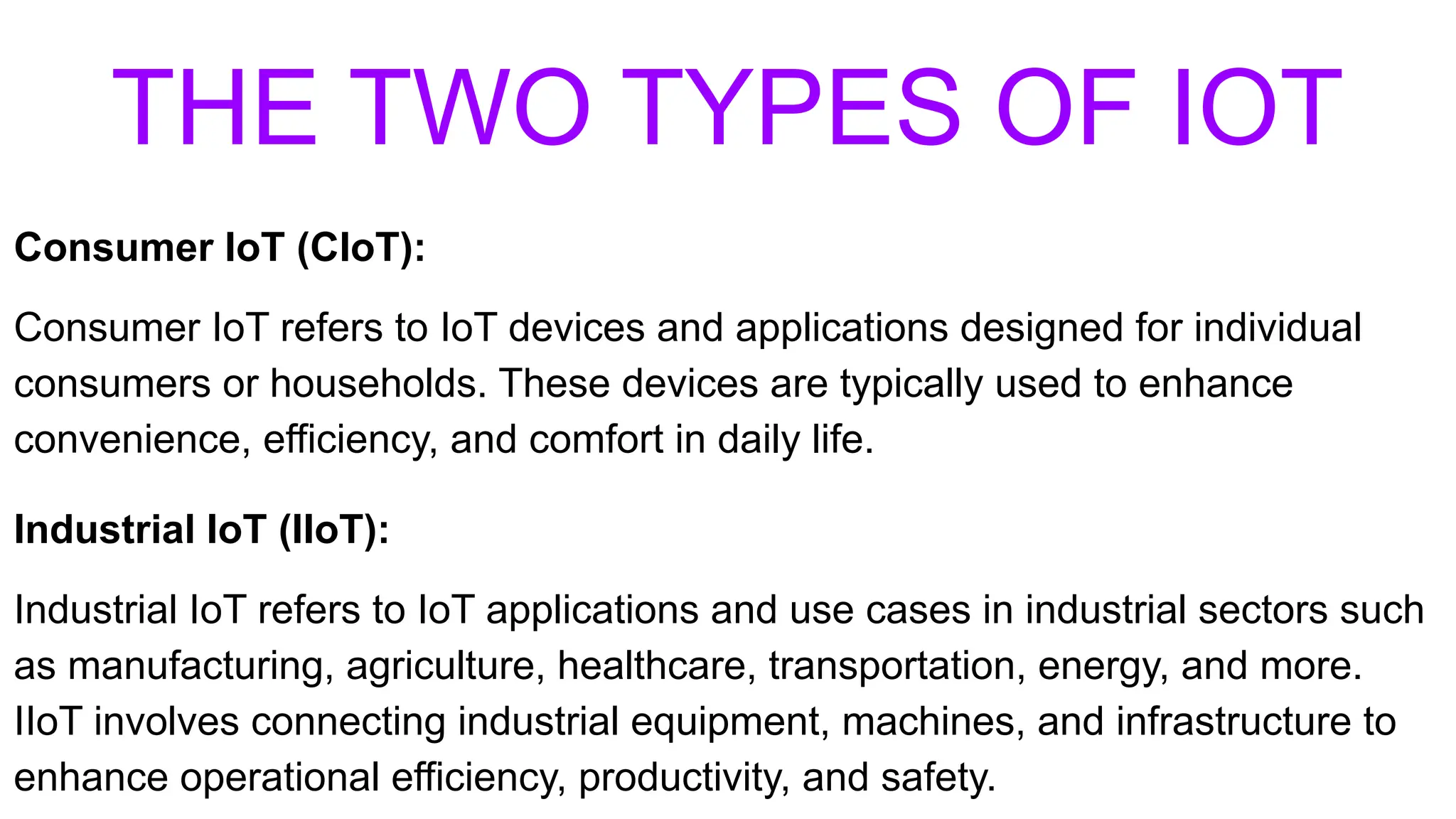
IoT, short for Internet of Things, refers to a network of interconnected
devices that can communicate and exchange data with each other
over the internet without human intervention. This technology enables
physical devices, often embedded with sensors, actuators, and
software, to collect and exchange data, make autonomous decisions,
and interact with the physical world.
THE TWO TYPES OF IOT
Consumer IoT (CIoT):
Consumer IoT refers to IoT devices and applications designed for individual
consumers or households. These devices are typically used to enhance
convenience, efficiency, and comfort in daily life.
Industrial IoT (IIoT):
Industrial IoT refers to IoT applications and use cases in industrial sectors such
as manufacturing, agriculture, healthcare, transportation, energy, and more.
IIoT involves connecting industrial equipment, machines, and infrastructure to
enhance operational efficiency, productivity, and safety.
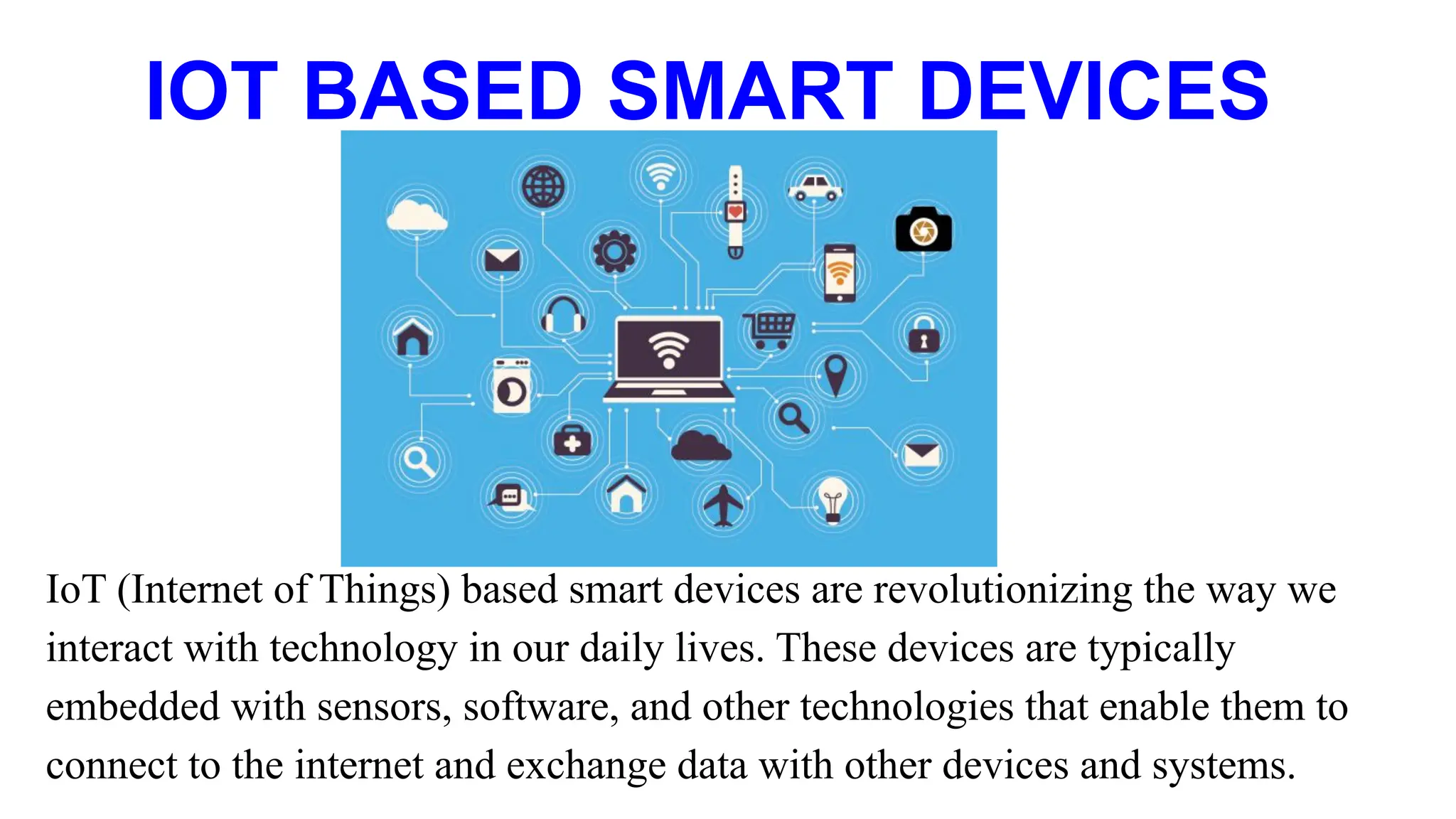
IoT (Internet of Things) based smart devices are revolutionizing the way we
interact with technology in our daily lives. These devices are typically
embedded with sensors, software, and other technologies that enable them to
connect to the internet and exchange data with other devices and systems.
IOT BASED SMART DEVICES
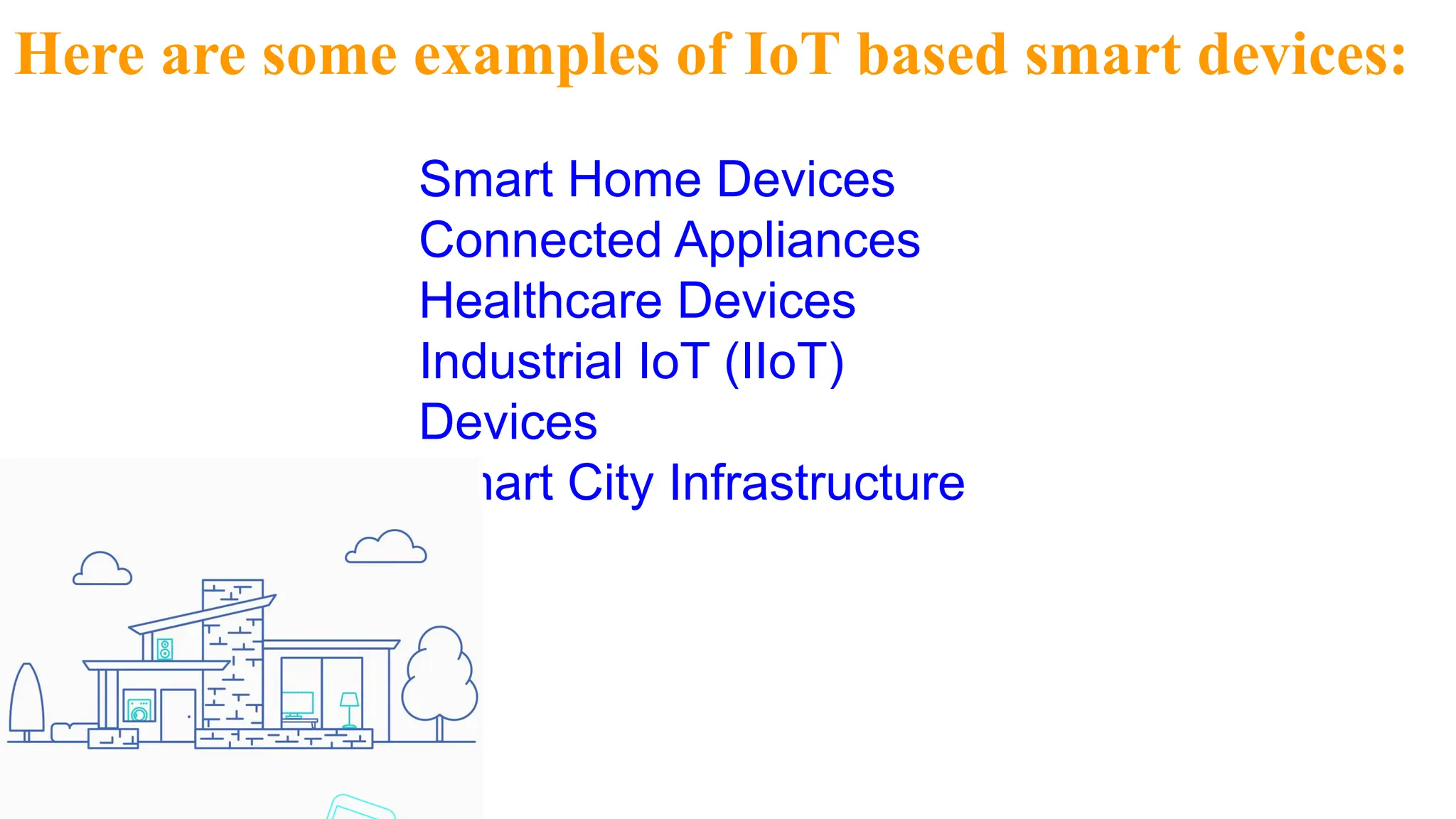
Here are some examples of IoT based smart devices:
Smart Home Devices
Connected Appliances
Healthcare Devices
Industrial IoT (IIoT)
Devices
Smart City Infrastructure
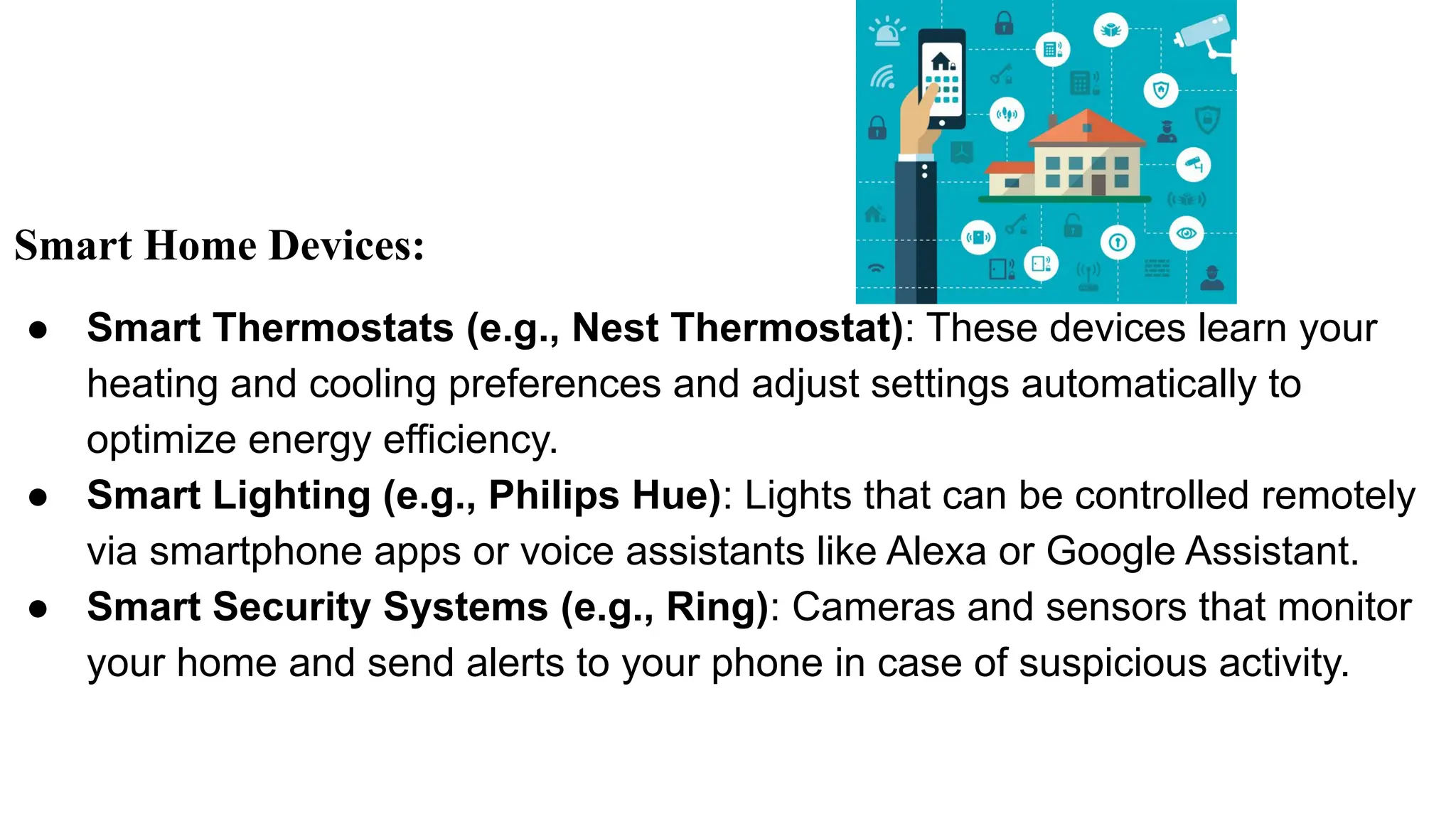
Smart Home Devices:
● Smart Thermostats (e.g., Nest Thermostat): These devices learn your
heating and cooling preferences and adjust settings automatically to
optimize energy efficiency.
● Smart Lighting (e.g., Philips Hue): Lights that can be controlled remotely
via smartphone apps or voice assistants like Alexa or Google Assistant.
● Smart Security Systems (e.g., Ring): Cameras and sensors that monitor
your home and send alerts to your phone in case of suspicious activity.
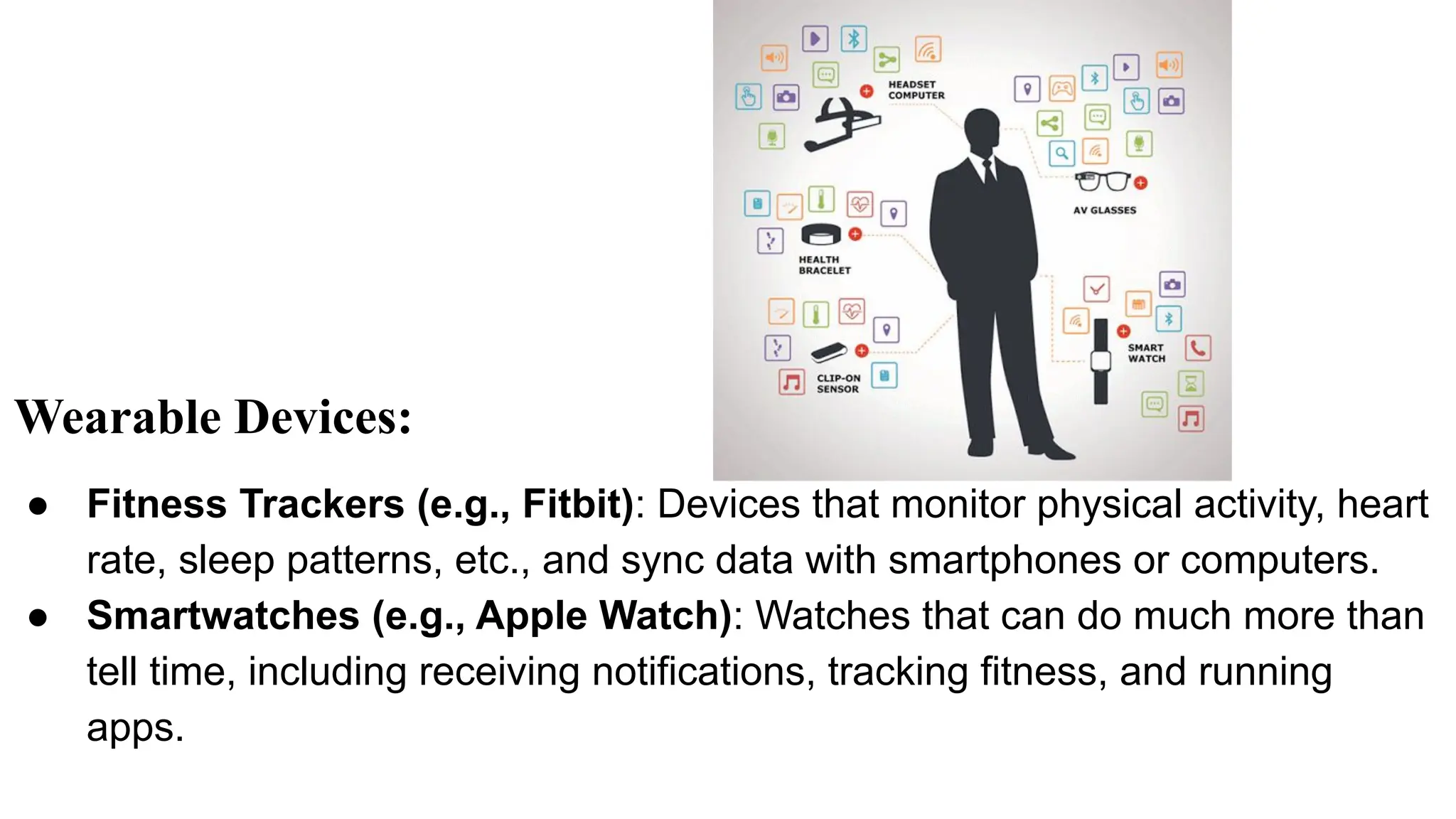
Wearable Devices:
● Fitness Trackers (e.g., Fitbit): Devices that monitor physical activity, heart
rate, sleep patterns, etc., and sync data with smartphones or computers.
● Smartwatches (e.g., Apple Watch): Watches that can do much more than
tell time, including receiving notifications, tracking fitness, and running
apps.
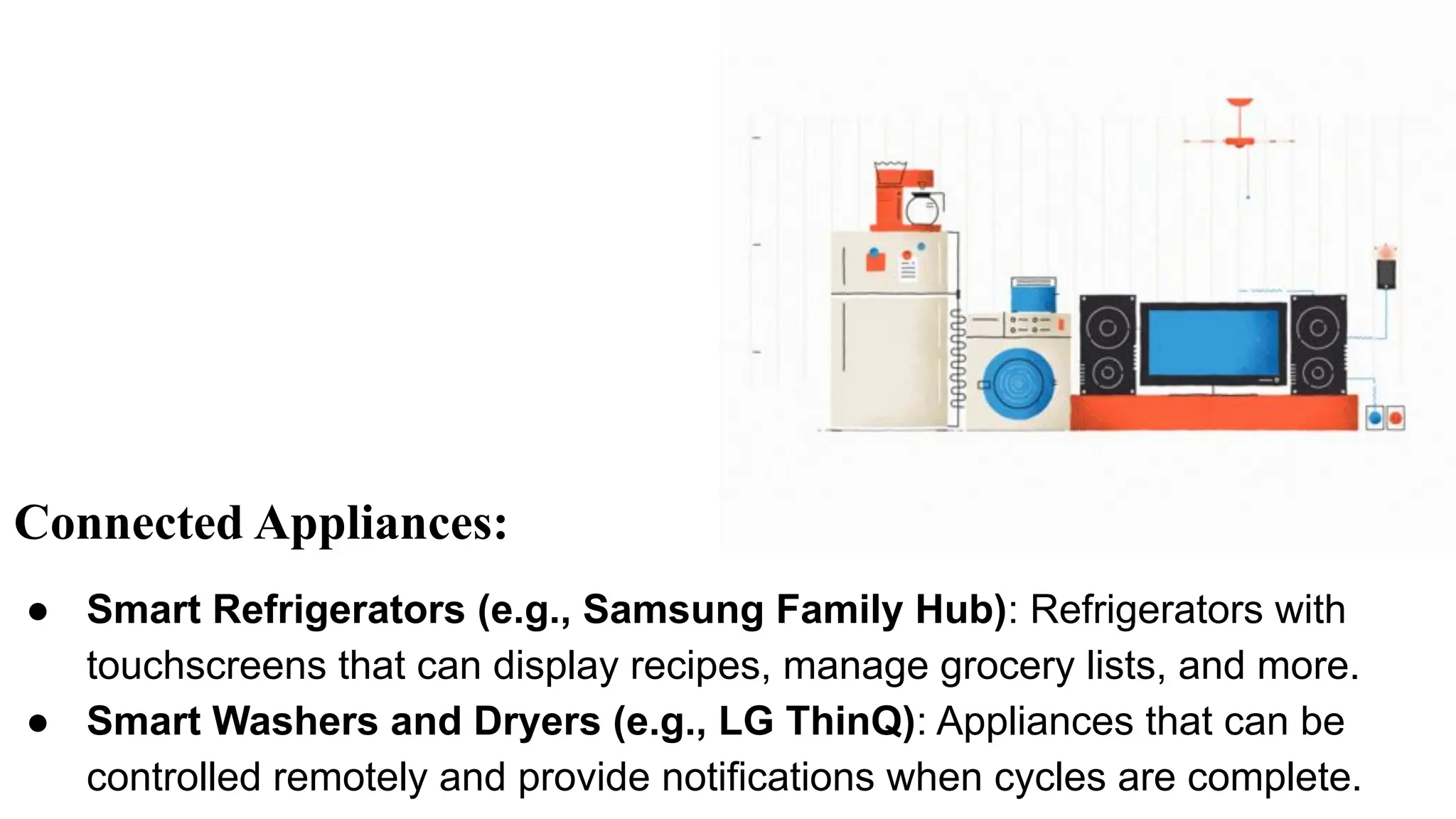
Connected Appliances:
● Smart Refrigerators (e.g., Samsung Family Hub): Refrigerators with
touchscreens that can display recipes, manage grocery lists, and more.
● Smart Washers and Dryers (e.g., LG ThinQ): Appliances that can be
controlled remotely and provide notifications when cycles are complete.
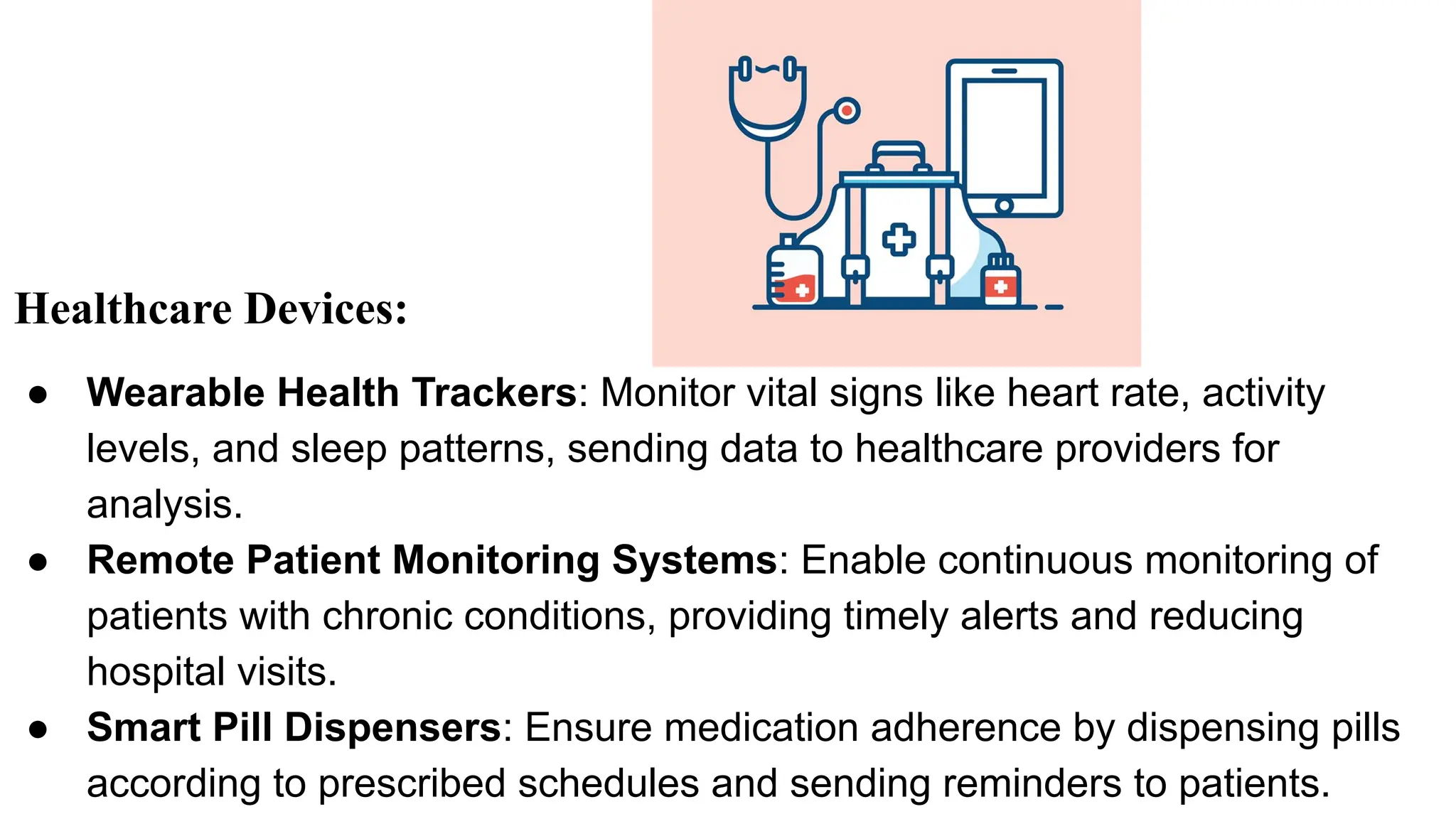
Healthcare Devices:
● Wearable Health Trackers: Monitor vital signs like heart rate, activity
levels, and sleep patterns, sending data to healthcare providers for
analysis.
● Remote Patient Monitoring Systems: Enable continuous monitoring of
patients with chronic conditions, providing timely alerts and reducing
hospital visits.
● Smart Pill Dispensers: Ensure medication adherence by dispensing pills
according to prescribed schedules and sending reminders to patients.
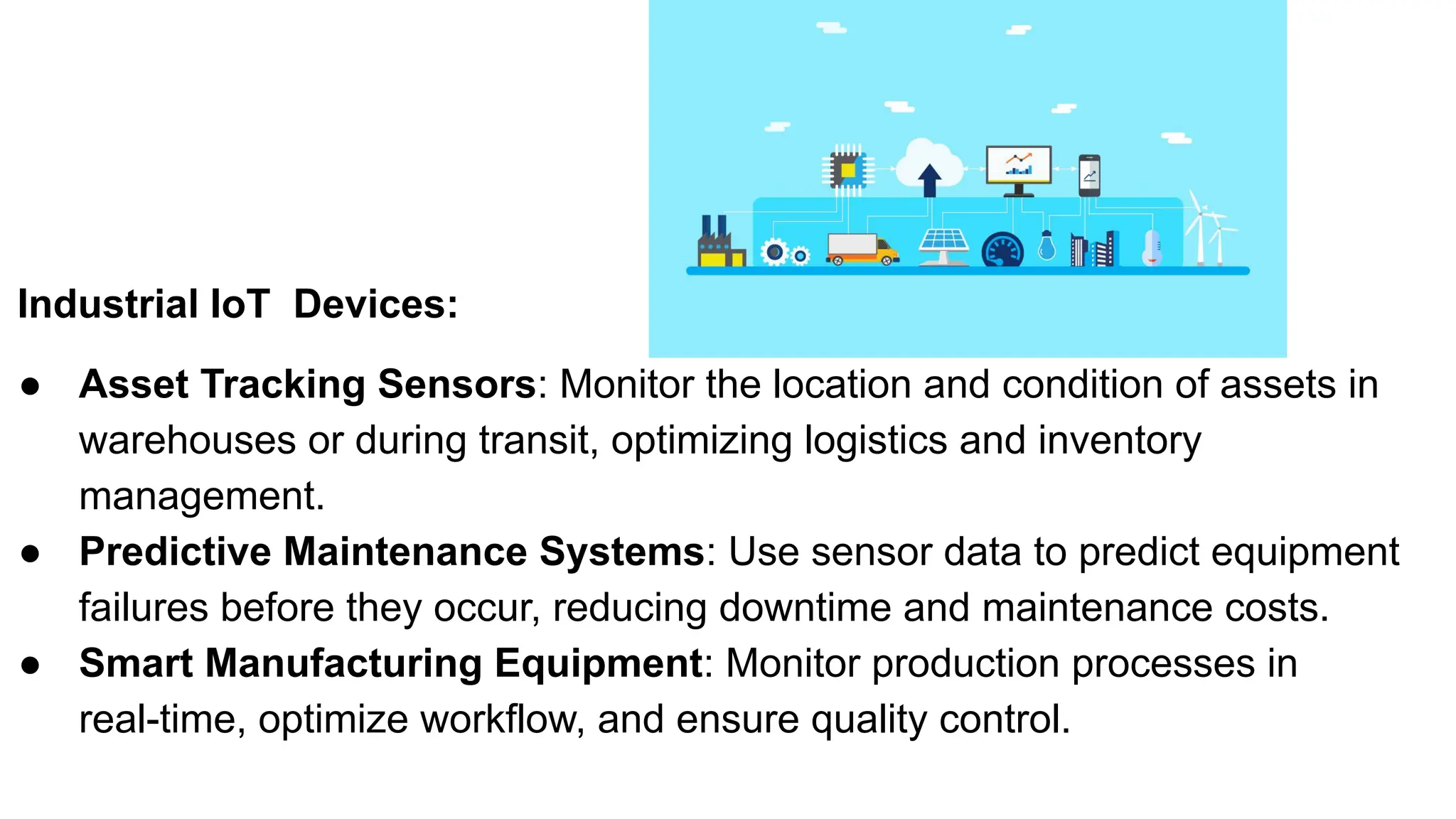
Industrial IoT Devices:
● Asset Tracking Sensors: Monitor the location and condition of assets in
warehouses or during transit, optimizing logistics and inventory
management.
● Predictive Maintenance Systems: Use sensor data to predict equipment
failures before they occur, reducing downtime and maintenance costs.
● Smart Manufacturing Equipment: Monitor production processes in
real-time, optimize workflow, and ensure quality control.
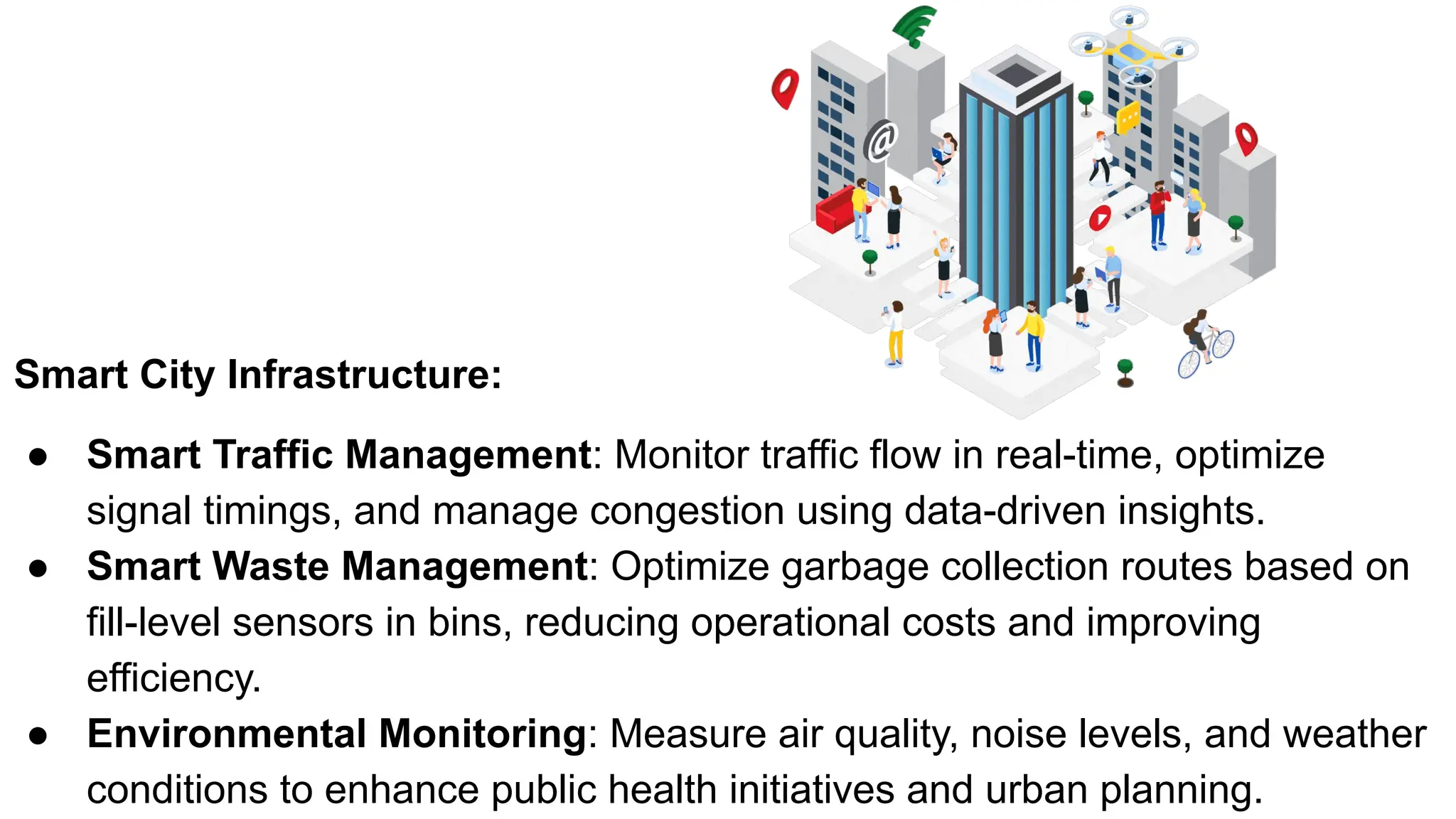
Smart City Infrastructure:
● Smart Traffic Management: Monitor traffic flow in real-time, optimize
signal timings, and manage congestion using data-driven insights.
● Smart Waste Management: Optimize garbage collection routes based on
fill-level sensors in bins, reducing operational costs and improving
efficiency.
● Environmental Monitoring: Measure air quality, noise levels, and weather
conditions to enhance public health initiatives and urban planning.
Future Trends
Edge Computing
Artificial Intelligence (AI) and Machine Learning (ML)
5G Connectivity
Enhanced Security Measures
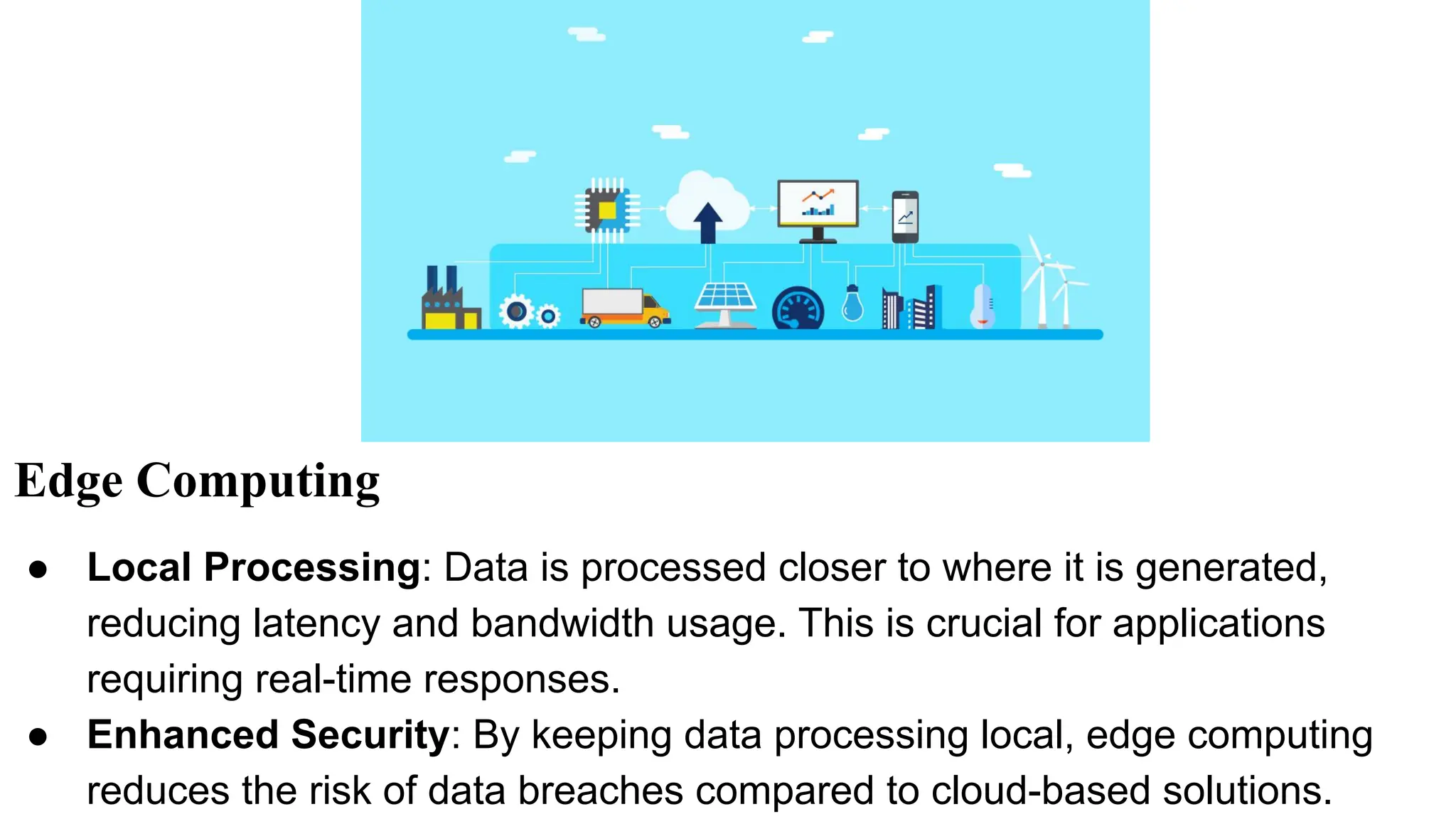
Edge Computing
● Local Processing: Data is processed closer to where it is generated,
reducing latency and bandwidth usage. This is crucial for applications
requiring real-time responses.
● Enhanced Security: By keeping data processing local, edge computing
reduces the risk of data breaches compared to cloud-based solutions.
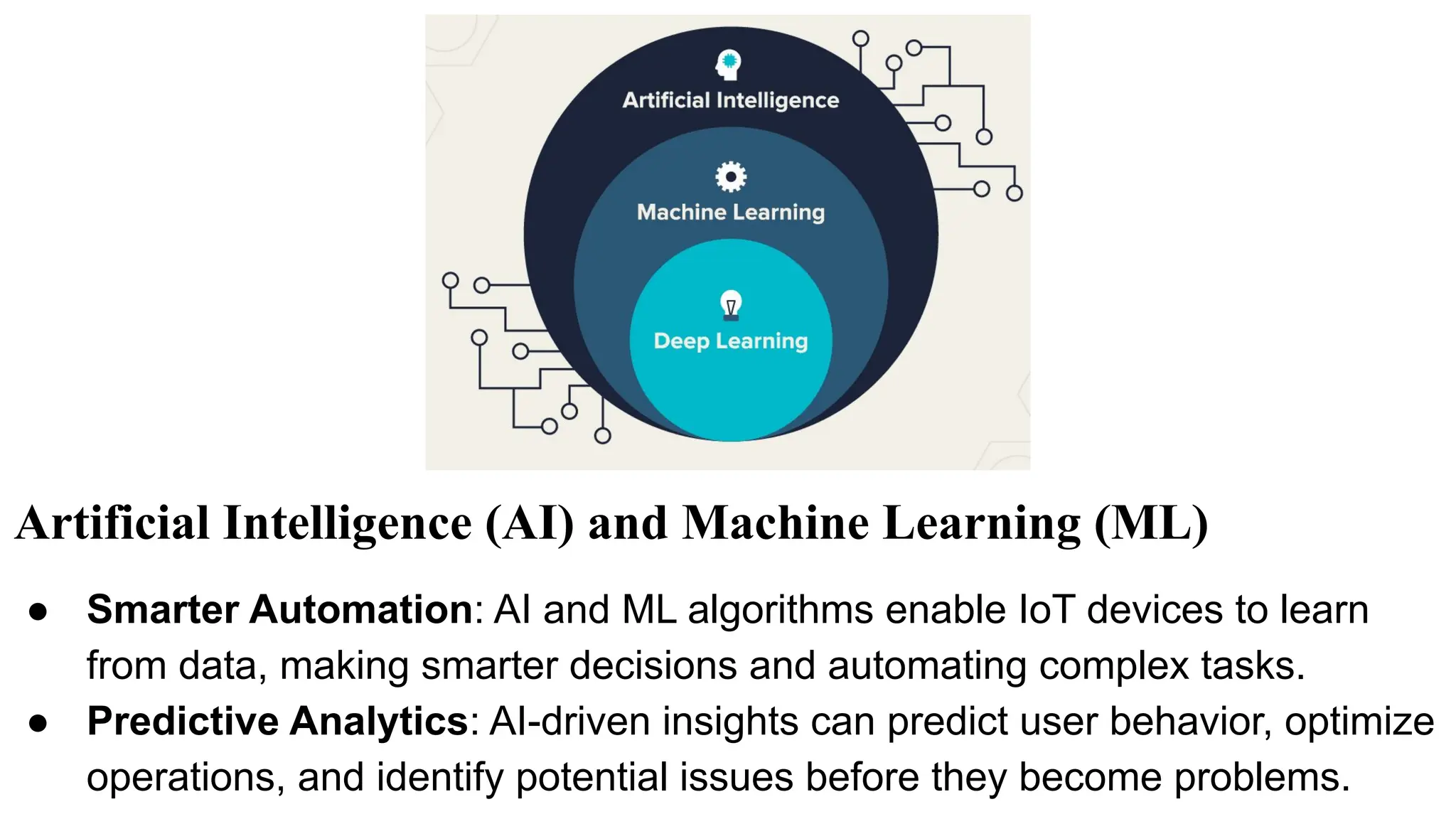
Artificial Intelligence (AI) and Machine Learning (ML)
● Smarter Automation: AI and ML algorithms enable IoT devices to learn
from data, making smarter decisions and automating complex tasks.
● Predictive Analytics: AI-driven insights can predict user behavior, optimize
operations, and identify potential issues before they become problems.
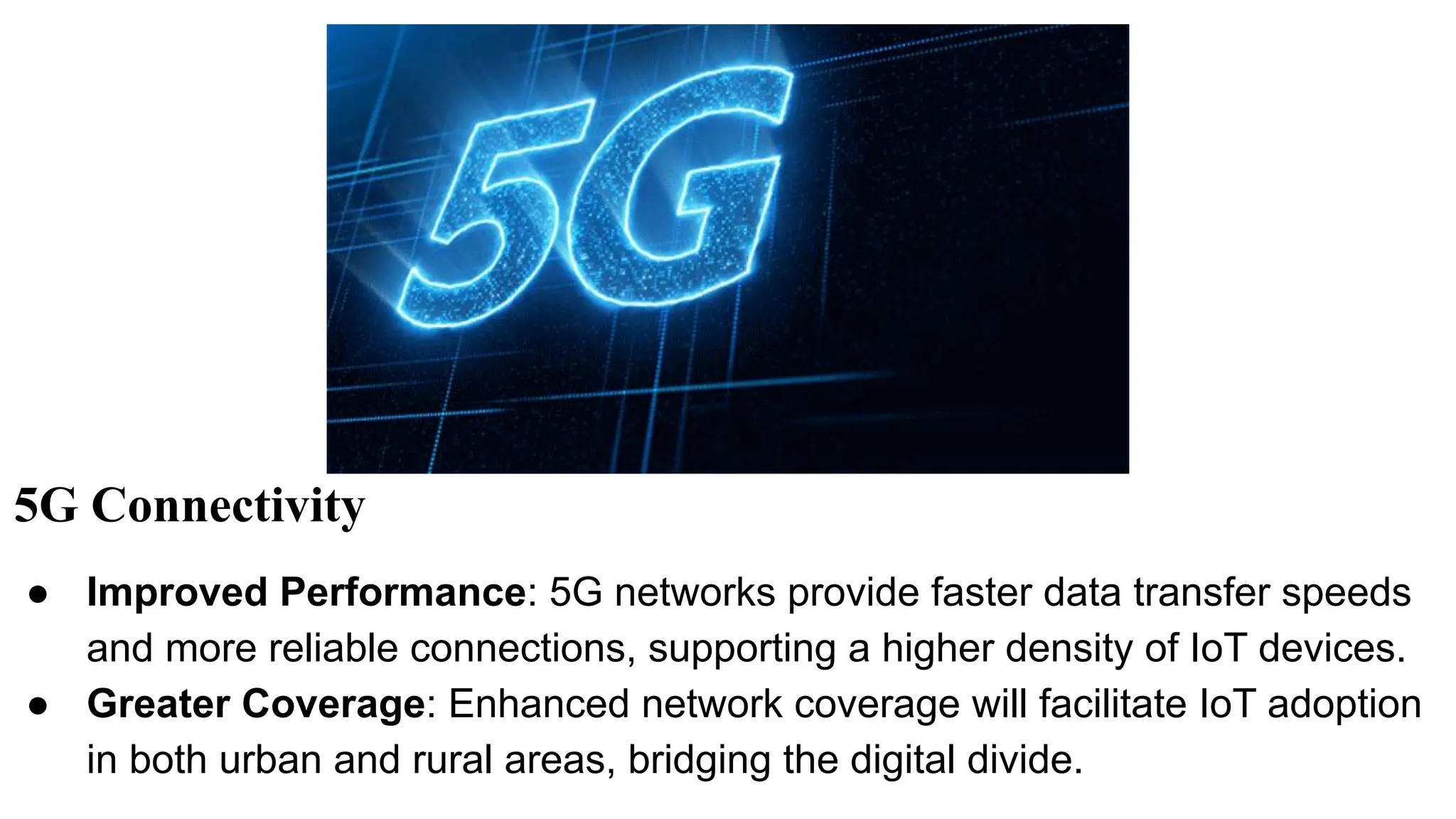
5G Connectivity
● Improved Performance: 5G networks provide faster data transfer speeds
and more reliable connections, supporting a higher density of IoT devices.
● Greater Coverage: Enhanced network coverage will facilitate IoT adoption
in both urban and rural areas, bridging the digital divide.
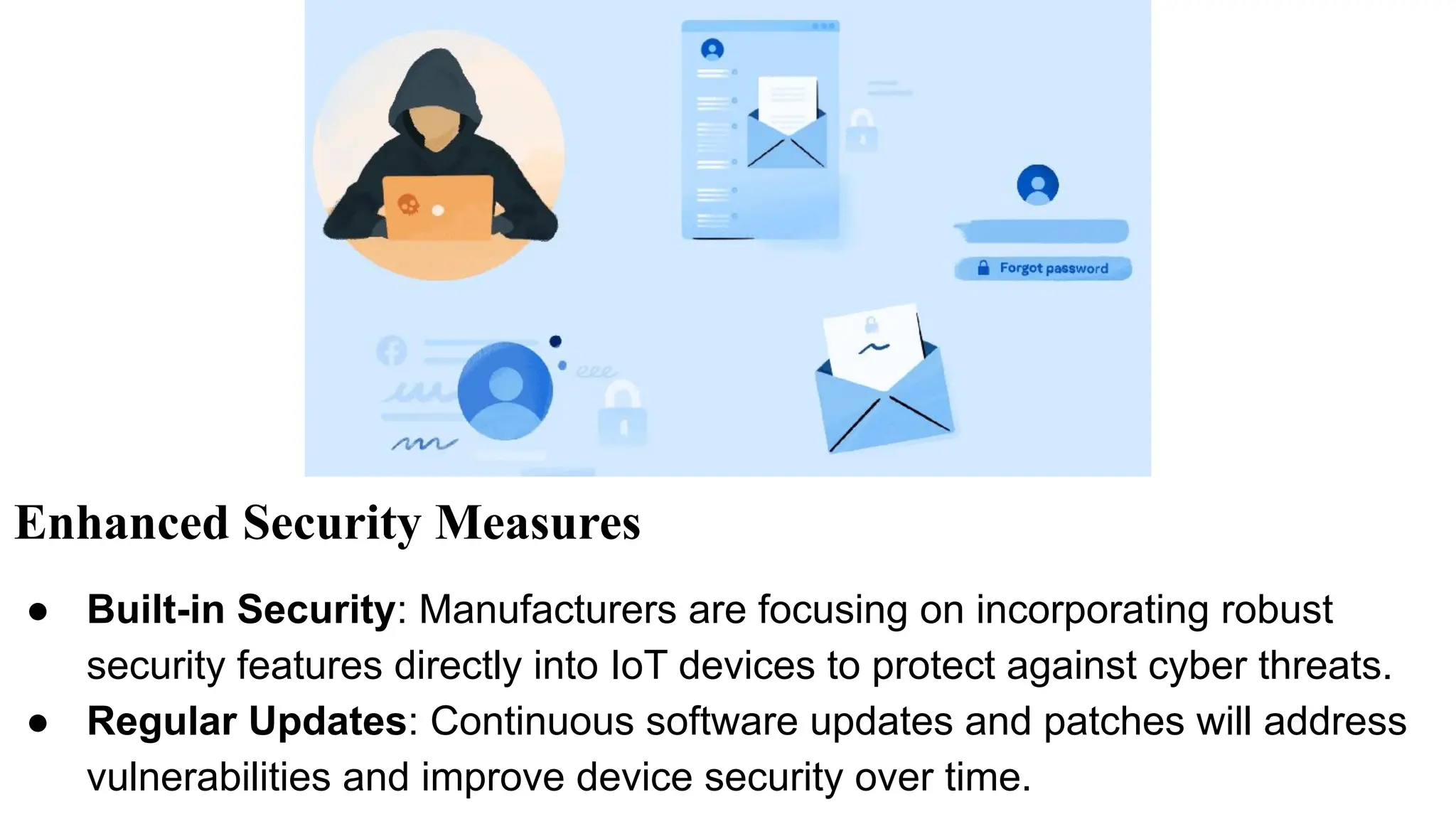
Enhanced Security Measures
● Built-in Security: Manufacturers are focusing on incorporating robust
security features directly into IoT devices to protect against cyber threats.
● Regular Updates: Continuous software updates and patches will address
vulnerabilities and improve device security over time.
PPT in FUNDAMENTALS OF IOT FOR IOT BASED SMART HOMES

PPT in FUNDAMENTALS OF IOT FOR IOT BASED SMART HOMES

  • 1.
    FUNDAMENTALS OF IOT IOTBased Smart Devices AADHISH KUMAR S DCIOT II/III 24509503
  • 2.
    WHAT IS IOT IoT,short for Internet of Things, refers to a network of interconnected devices that can communicate and exchange data with each other over the internet without human intervention. This technology enables physical devices, often embedded with sensors, actuators, and software, to collect and exchange data, make autonomous decisions, and interact with the physical world.
  • 3.
    THE TWO TYPESOF IOT Consumer IoT (CIoT): Consumer IoT refers to IoT devices and applications designed for individual consumers or households. These devices are typically used to enhance convenience, efficiency, and comfort in daily life. Industrial IoT (IIoT): Industrial IoT refers to IoT applications and use cases in industrial sectors such as manufacturing, agriculture, healthcare, transportation, energy, and more. IIoT involves connecting industrial equipment, machines, and infrastructure to enhance operational efficiency, productivity, and safety.
  • 4.
    IoT (Internet ofThings) based smart devices are revolutionizing the way we interact with technology in our daily lives. These devices are typically embedded with sensors, software, and other technologies that enable them to connect to the internet and exchange data with other devices and systems. IOT BASED SMART DEVICES
  • 5.
    Here are someexamples of IoT based smart devices: Smart Home Devices Connected Appliances Healthcare Devices Industrial IoT (IIoT) Devices Smart City Infrastructure
  • 6.
    Smart Home Devices: ●Smart Thermostats (e.g., Nest Thermostat): These devices learn your heating and cooling preferences and adjust settings automatically to optimize energy efficiency. ● Smart Lighting (e.g., Philips Hue): Lights that can be controlled remotely via smartphone apps or voice assistants like Alexa or Google Assistant. ● Smart Security Systems (e.g., Ring): Cameras and sensors that monitor your home and send alerts to your phone in case of suspicious activity.
  • 7.
    Wearable Devices: ● FitnessTrackers (e.g., Fitbit): Devices that monitor physical activity, heart rate, sleep patterns, etc., and sync data with smartphones or computers. ● Smartwatches (e.g., Apple Watch): Watches that can do much more than tell time, including receiving notifications, tracking fitness, and running apps.
  • 8.
    Connected Appliances: ● SmartRefrigerators (e.g., Samsung Family Hub): Refrigerators with touchscreens that can display recipes, manage grocery lists, and more. ● Smart Washers and Dryers (e.g., LG ThinQ): Appliances that can be controlled remotely and provide notifications when cycles are complete.
  • 9.
    Healthcare Devices: ● WearableHealth Trackers: Monitor vital signs like heart rate, activity levels, and sleep patterns, sending data to healthcare providers for analysis. ● Remote Patient Monitoring Systems: Enable continuous monitoring of patients with chronic conditions, providing timely alerts and reducing hospital visits. ● Smart Pill Dispensers: Ensure medication adherence by dispensing pills according to prescribed schedules and sending reminders to patients.
  • 10.
    Industrial IoT Devices: ●Asset Tracking Sensors: Monitor the location and condition of assets in warehouses or during transit, optimizing logistics and inventory management. ● Predictive Maintenance Systems: Use sensor data to predict equipment failures before they occur, reducing downtime and maintenance costs. ● Smart Manufacturing Equipment: Monitor production processes in real-time, optimize workflow, and ensure quality control.
  • 11.
    Smart City Infrastructure: ●Smart Traffic Management: Monitor traffic flow in real-time, optimize signal timings, and manage congestion using data-driven insights. ● Smart Waste Management: Optimize garbage collection routes based on fill-level sensors in bins, reducing operational costs and improving efficiency. ● Environmental Monitoring: Measure air quality, noise levels, and weather conditions to enhance public health initiatives and urban planning.
  • 12.
    Future Trends Edge Computing ArtificialIntelligence (AI) and Machine Learning (ML) 5G Connectivity Enhanced Security Measures
  • 13.
    Edge Computing ● LocalProcessing: Data is processed closer to where it is generated, reducing latency and bandwidth usage. This is crucial for applications requiring real-time responses. ● Enhanced Security: By keeping data processing local, edge computing reduces the risk of data breaches compared to cloud-based solutions.
  • 14.
    Artificial Intelligence (AI)and Machine Learning (ML) ● Smarter Automation: AI and ML algorithms enable IoT devices to learn from data, making smarter decisions and automating complex tasks. ● Predictive Analytics: AI-driven insights can predict user behavior, optimize operations, and identify potential issues before they become problems.
  • 15.
    5G Connectivity ● ImprovedPerformance: 5G networks provide faster data transfer speeds and more reliable connections, supporting a higher density of IoT devices. ● Greater Coverage: Enhanced network coverage will facilitate IoT adoption in both urban and rural areas, bridging the digital divide.
  • 16.
    Enhanced Security Measures ●Built-in Security: Manufacturers are focusing on incorporating robust security features directly into IoT devices to protect against cyber threats. ● Regular Updates: Continuous software updates and patches will address vulnerabilities and improve device security over time.