preencoded.png
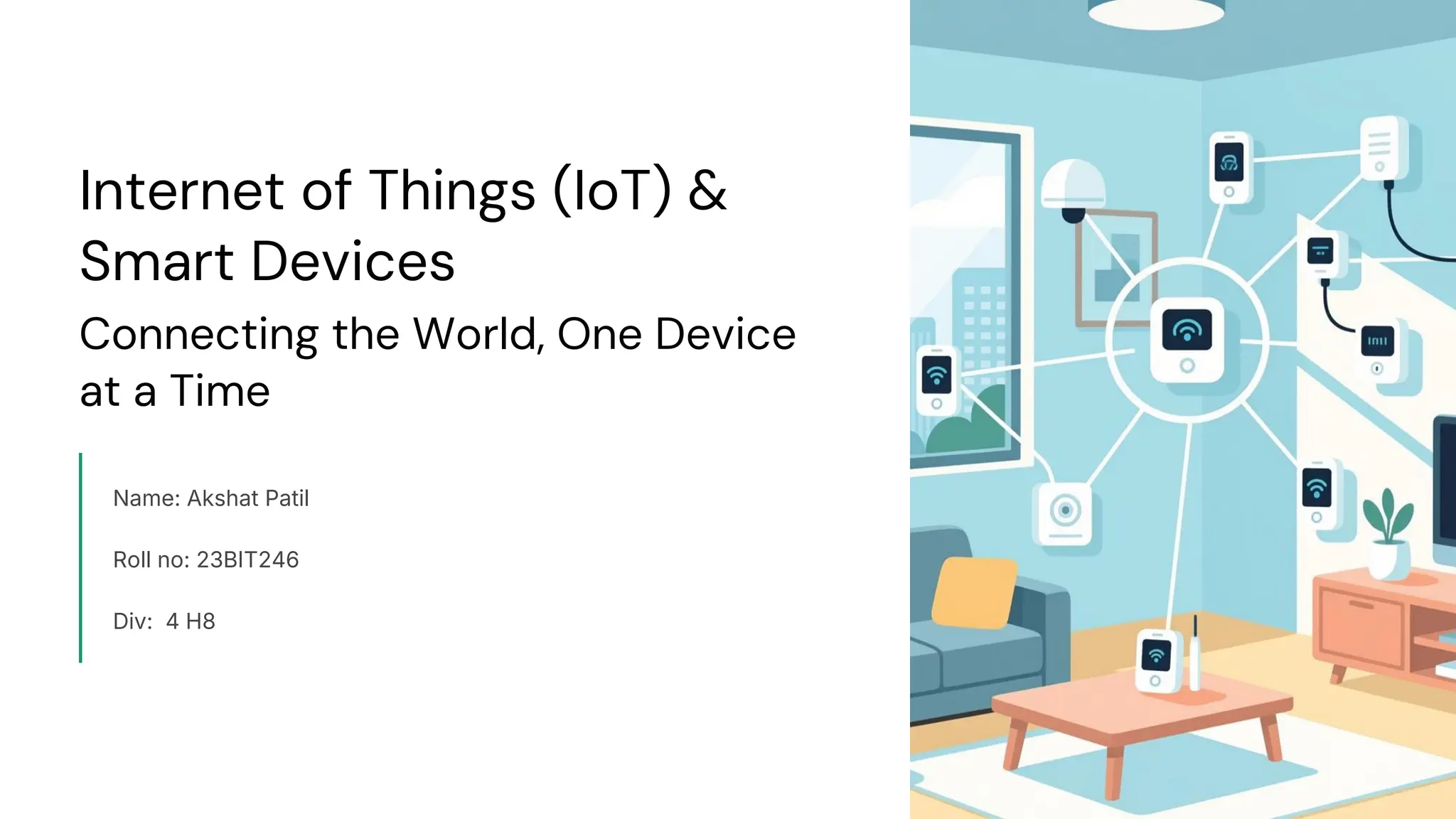
Internet of Things (IoT) &
Smart Devices
Connecting the World, One Device
at a Time
Name: Akshat Patil
Roll no: 23BIT246
Div: 4 H8
preencoded.png
Introduction to the Internet of Things (IoT)
Definition
The Internet of Things (IoT) refers to a vast network of interconnected physical
devices that communicate and exchange data seamlessly over the Internet.
Core Aim
To make devices "smart" by enabling complex data-driven automation, enhancing
interaction, and improving efficiency in various environments.
•The Internet of Things (IoT) is a network of physical objects (“things”)
embedded with sensors, software, and connectivity.
•These devices collect and exchange data over the internet with minimal
human intervention.
•IoT enables automation, smarter decision-making, and real-time
monitoring in homes, industries, healthcare, and more.
•Key features: connectivity, data processing, and intelligence for
enhanced efficiency and convenience
preencoded.png
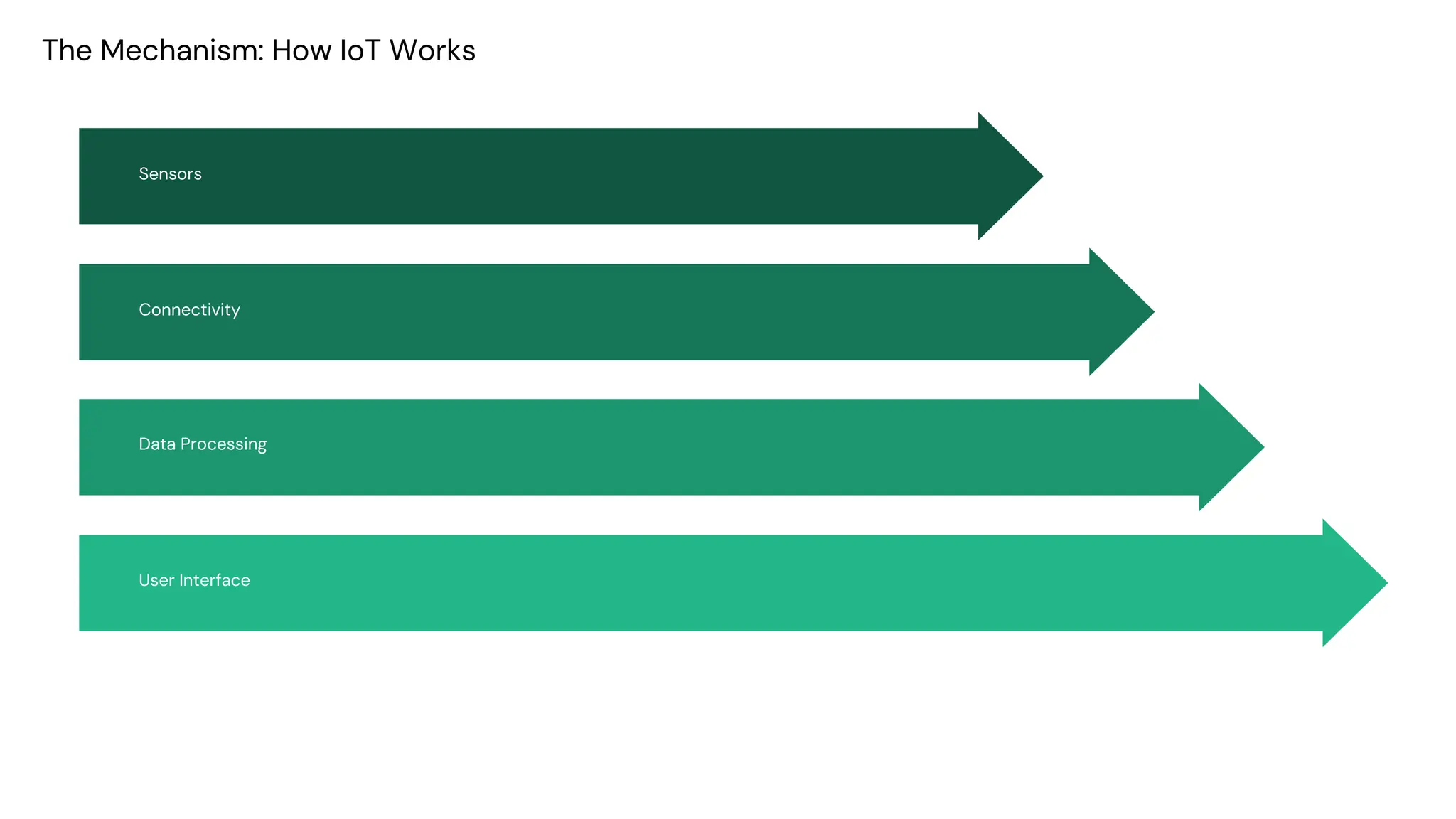
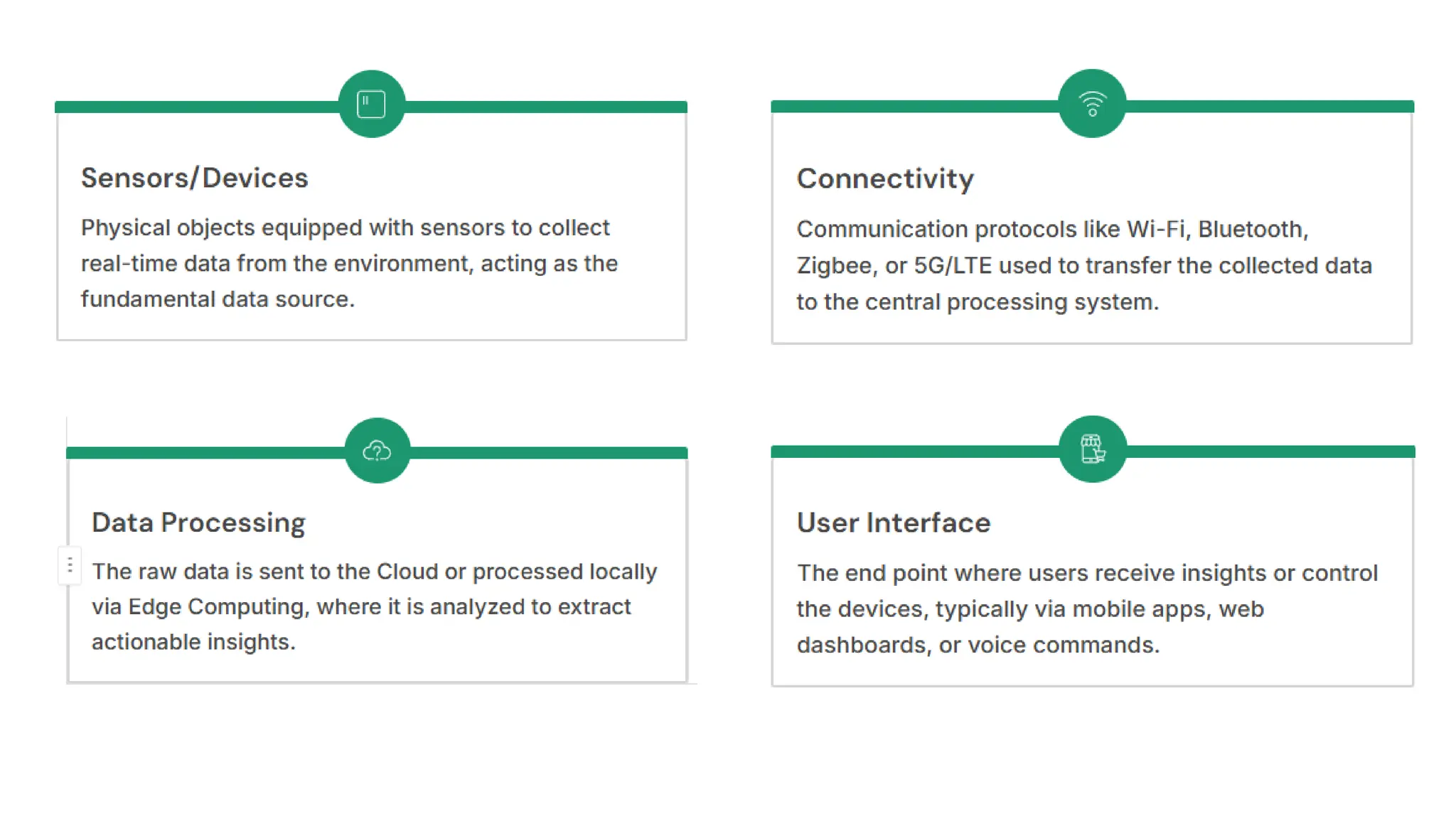
The Mechanism: How IoT Works
User Interface
Data Processing
Connectivity
Sensors
preencoded.png
preencoded.png
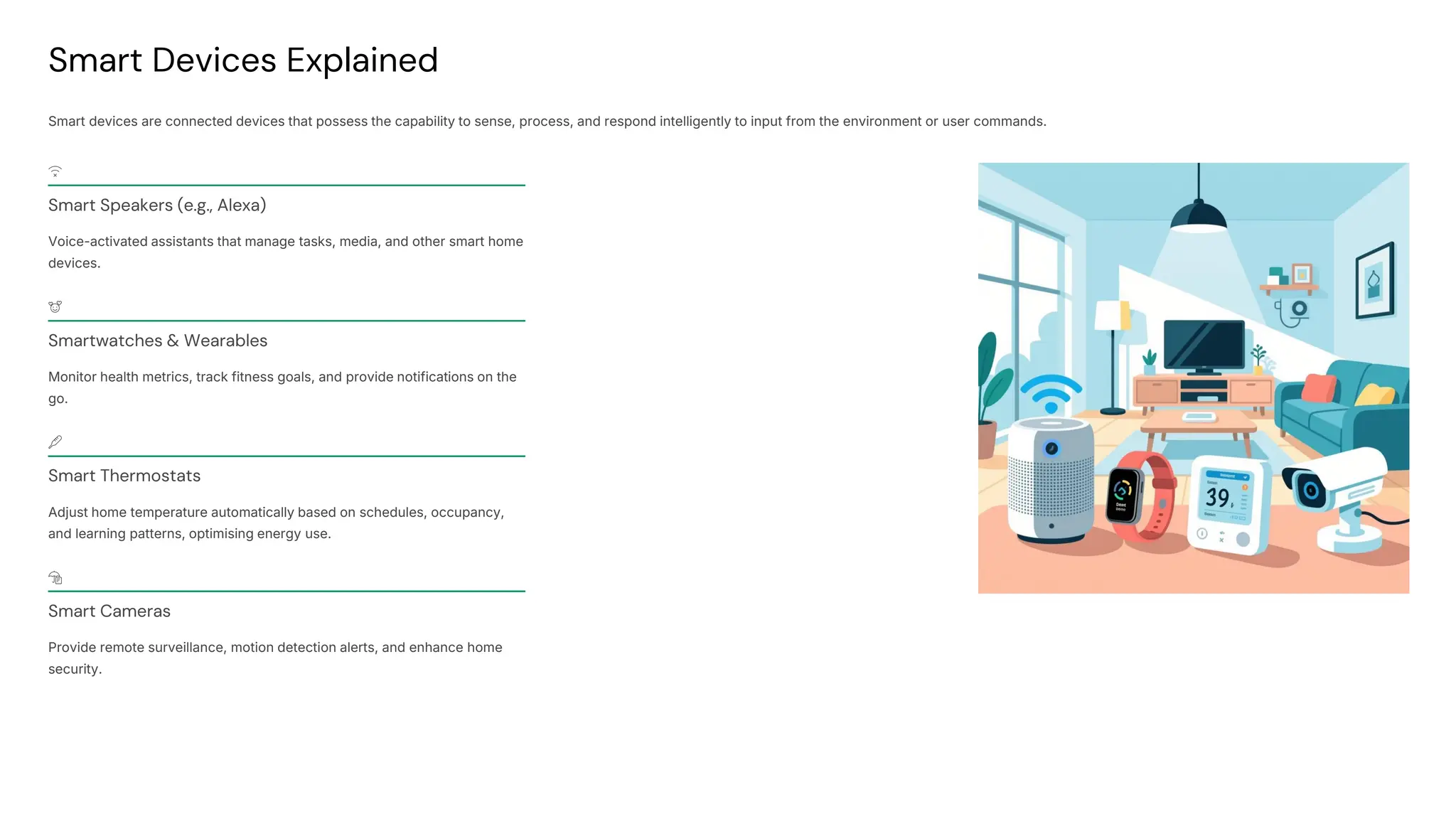
Smart Devices Explained
Smart devices are connected devices that possess the capability to sense, process, and respond intelligently to input from the environment or user commands.
Smart Speakers (e.g., Alexa)
Voice-activated assistants that manage tasks, media, and other smart home
devices.
Smartwatches & Wearables
Monitor health metrics, track fitness goals, and provide notifications on the
go.
Smart Thermostats
Adjust home temperature automatically based on schedules, occupancy,
and learning patterns, optimising energy use.
Smart Cameras
Provide remote surveillance, motion detection alerts, and enhance home
security.
preencoded.png
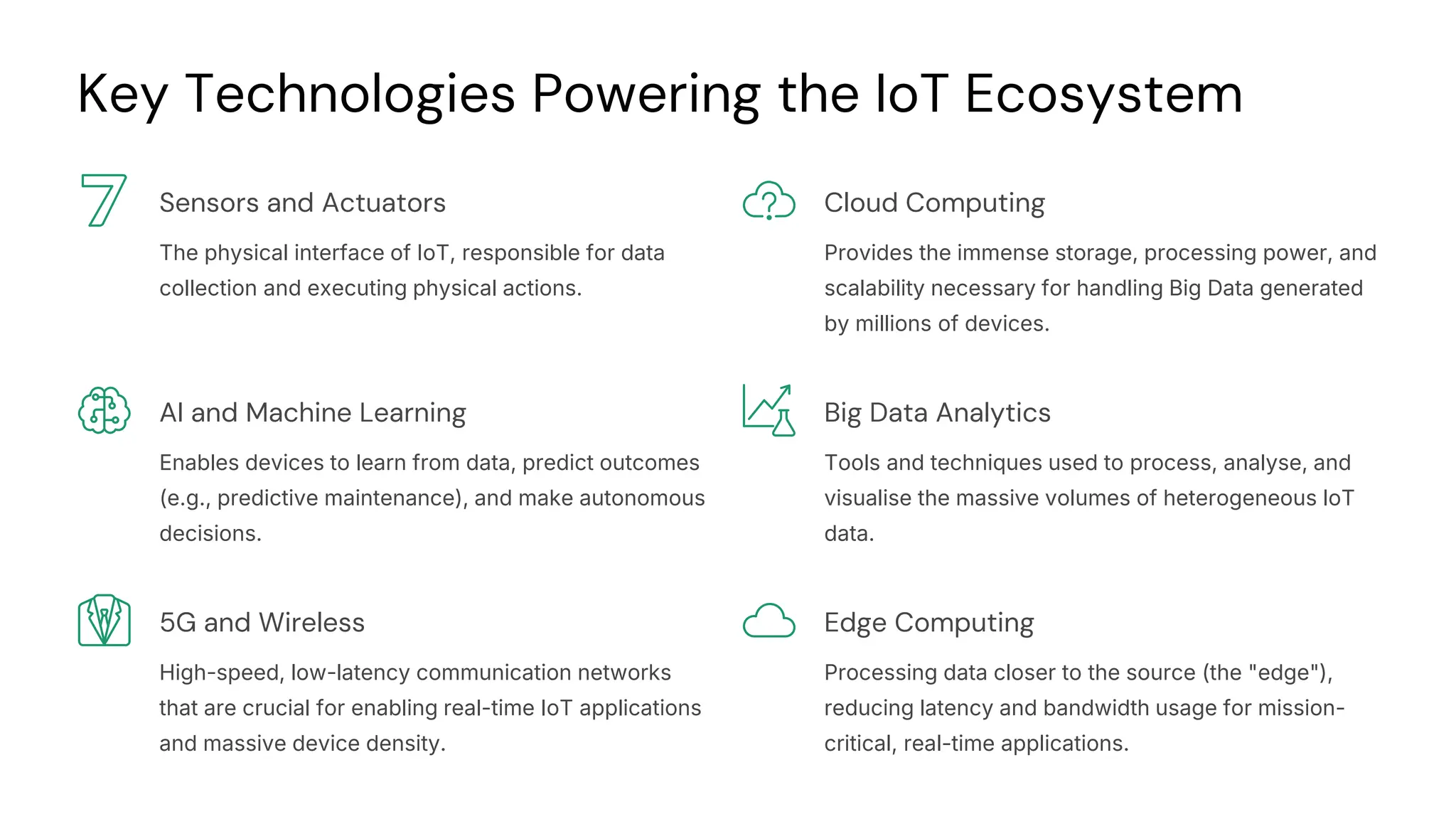
Key Technologies Powering the IoT Ecosystem
Sensors and Actuators
The physical interface of IoT, responsible for data
collection and executing physical actions.
Cloud Computing
Provides the immense storage, processing power, and
scalability necessary for handling Big Data generated
by millions of devices.
AI and Machine Learning
Enables devices to learn from data, predict outcomes
(e.g., predictive maintenance), and make autonomous
decisions.
Big Data Analytics
Tools and techniques used to process, analyse, and
visualise the massive volumes of heterogeneous IoT
data.
5G and Wireless
High-speed, low-latency communication networks
that are crucial for enabling real-time IoT applications
and massive device density.
Edge Computing
Processing data closer to the source (the "edge"),
reducing latency and bandwidth usage for mission-
critical, real-time applications.
preencoded.png
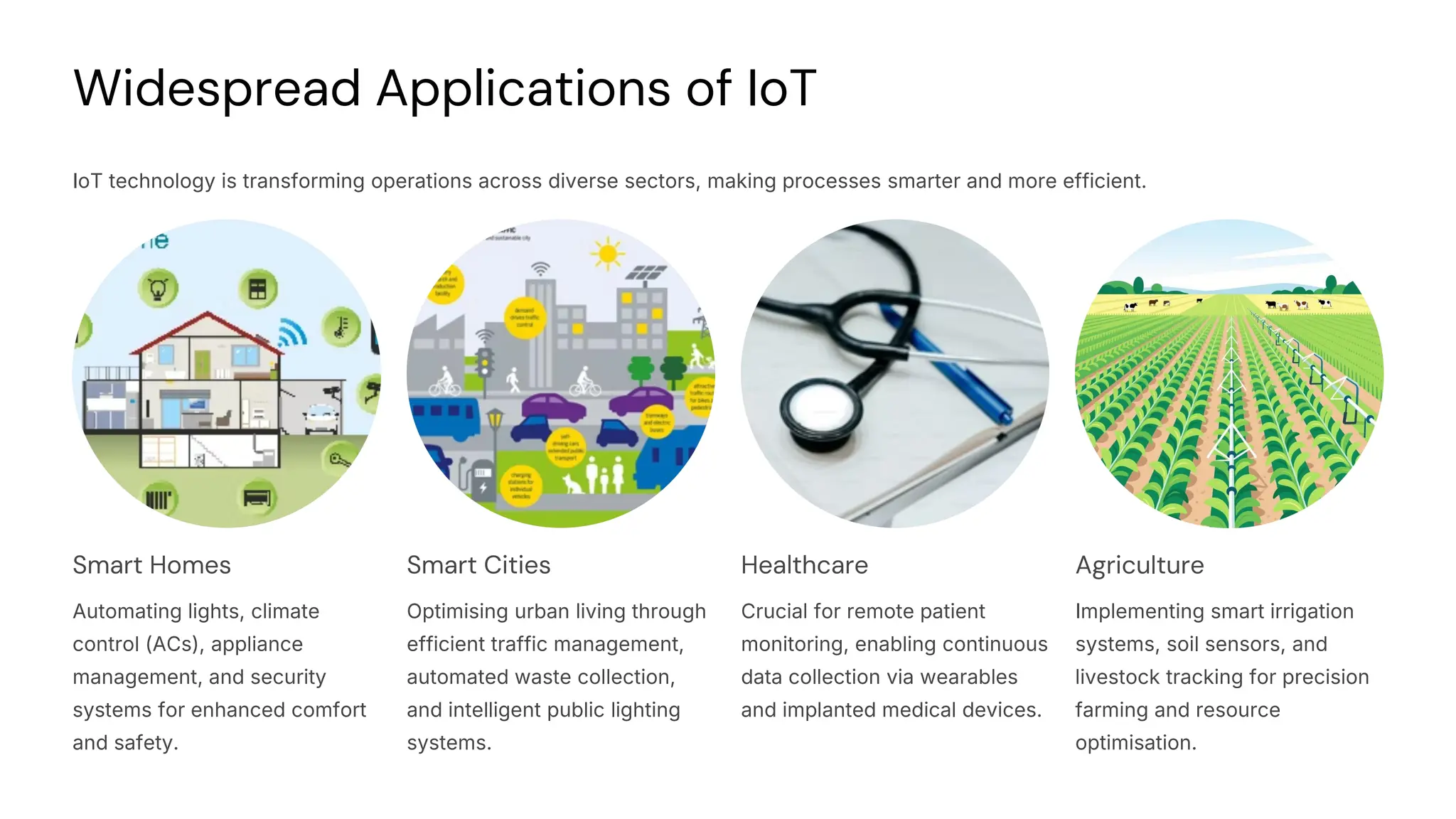
Widespread Applications of IoT
IoT technology is transforming operations across diverse sectors, making processes smarter and more efficient.
Smart Homes
Automating lights, climate
control (ACs), appliance
management, and security
systems for enhanced comfort
and safety.
Smart Cities
Optimising urban living through
efficient traffic management,
automated waste collection,
and intelligent public lighting
systems.
Healthcare
Crucial for remote patient
monitoring, enabling continuous
data collection via wearables
and implanted medical devices.
Agriculture
Implementing smart irrigation
systems, soil sensors, and
livestock tracking for precision
farming and resource
optimisation.
preencoded.png
Transformative Benefits of IoT Connectivity
Automation and Convenience
Tasks are executed automatically (e.g., turning off lights), freeing up human effort and enhancing daily comfort.
Real-Time Monitoring and Control
Users gain immediate visibility and control over distant assets, crucial for critical infrastructure and remote management.
Energy Efficiency and Cost Savings
Intelligent resource management (e.g., smart thermostats) significantly reduces unnecessary consumption and operational expenses.
Better Decision-Making
The wealth of data collected provides actionable insights, leading to optimised business strategies and improved system performance.
Improved Quality of Life
From enhanced security to personalized health monitoring, IoT positively impacts well-being and personal safety.
preencoded.png
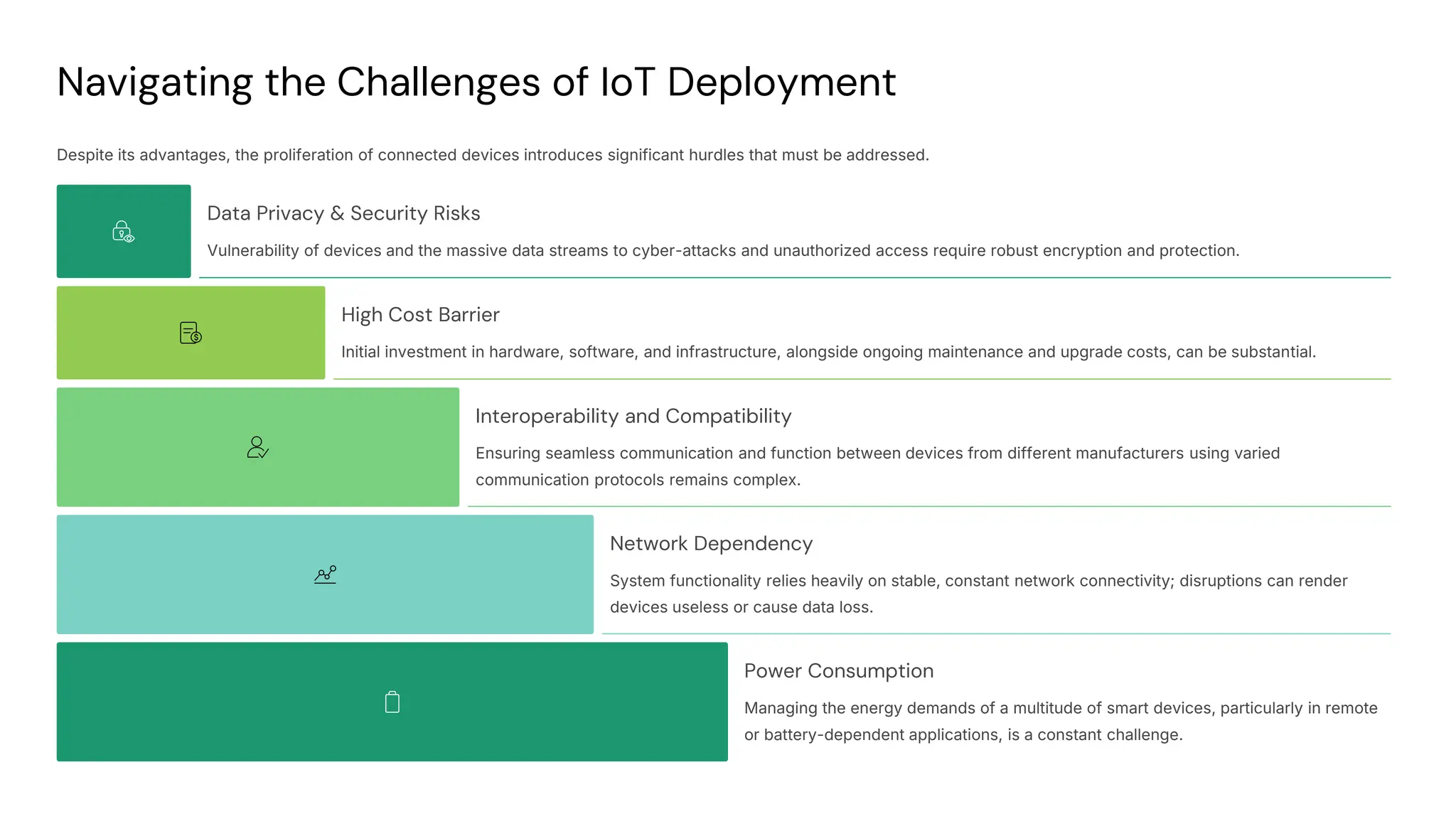
Navigating the Challenges of IoT Deployment
Despite its advantages, the proliferation of connected devices introduces significant hurdles that must be addressed.
Data Privacy & Security Risks
Vulnerability of devices and the massive data streams to cyber-attacks and unauthorized access require robust encryption and protection.
High Cost Barrier
Initial investment in hardware, software, and infrastructure, alongside ongoing maintenance and upgrade costs, can be substantial.
Interoperability and Compatibility
Ensuring seamless communication and function between devices from different manufacturers using varied
communication protocols remains complex.
Network Dependency
System functionality relies heavily on stable, constant network connectivity; disruptions can render
devices useless or cause data loss.
Power Consumption
Managing the energy demands of a multitude of smart devices, particularly in remote
or battery-dependent applications, is a constant challenge.
preencoded.png
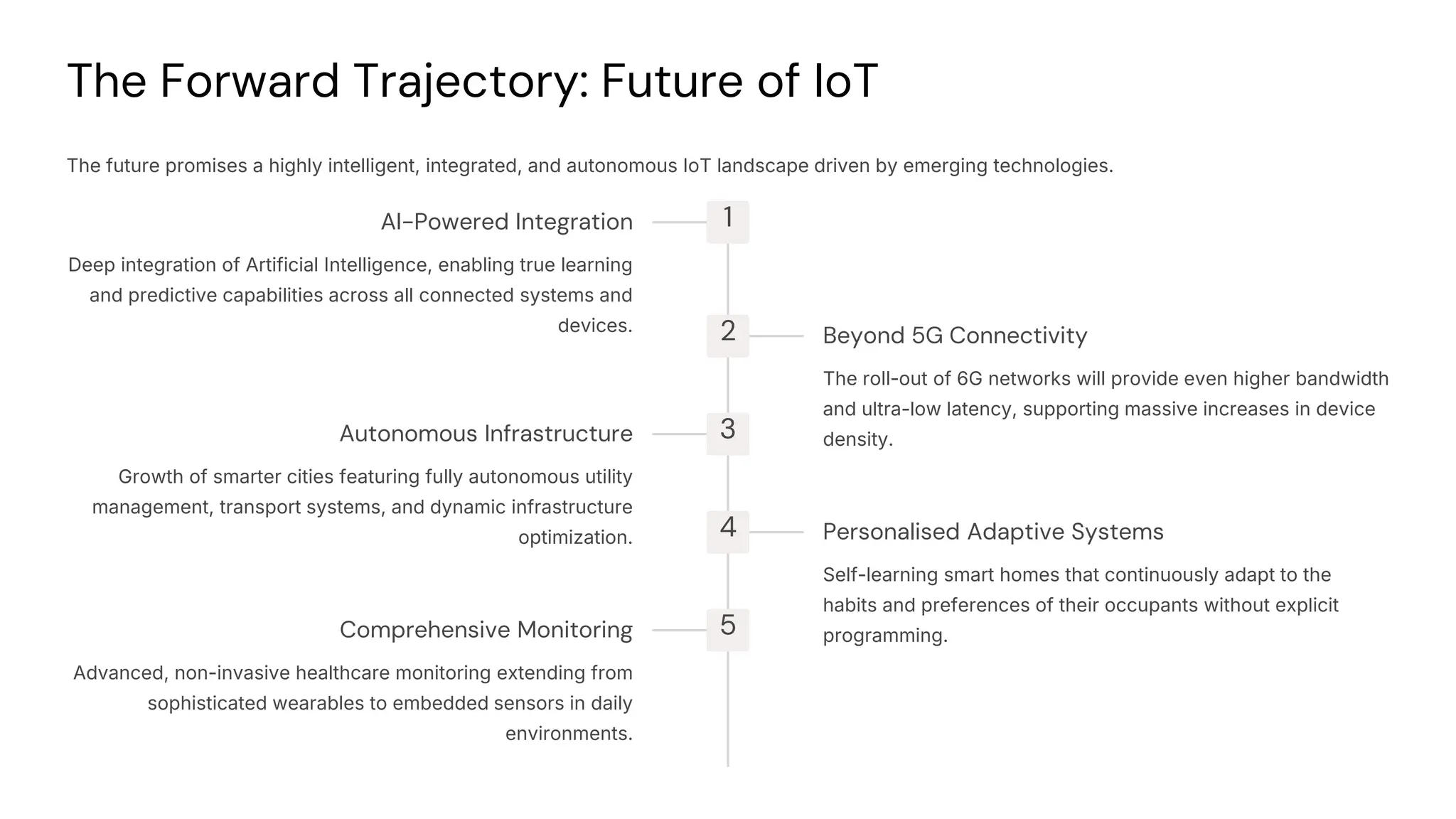
The Forward Trajectory: Future of IoT
The future promises a highly intelligent, integrated, and autonomous IoT landscape driven by emerging technologies.
1
AI-Powered Integration
Deep integration of Artificial Intelligence, enabling true learning
and predictive capabilities across all connected systems and
devices. 2 Beyond 5G Connectivity
The roll-out of 6G networks will provide even higher bandwidth
and ultra-low latency, supporting massive increases in device
density.
3
Autonomous Infrastructure
Growth of smarter cities featuring fully autonomous utility
management, transport systems, and dynamic infrastructure
optimization. 4 Personalised Adaptive Systems
Self-learning smart homes that continuously adapt to the
habits and preferences of their occupants without explicit
programming.
5
Comprehensive Monitoring
Advanced, non-invasive healthcare monitoring extending from
sophisticated wearables to embedded sensors in daily
environments.
preencoded.png
Conclusion: The Connected Future
Key Takeaways
• IoT and Smart Devices fundamentally reshape daily life and industrial
operations through intelligent connectivity.
• They drive efficiency by making complex systems responsive, transparent,
and highly data-driven.
• Addressing security and interoperability challenges is crucial for unlocking the
full potential of this technology.
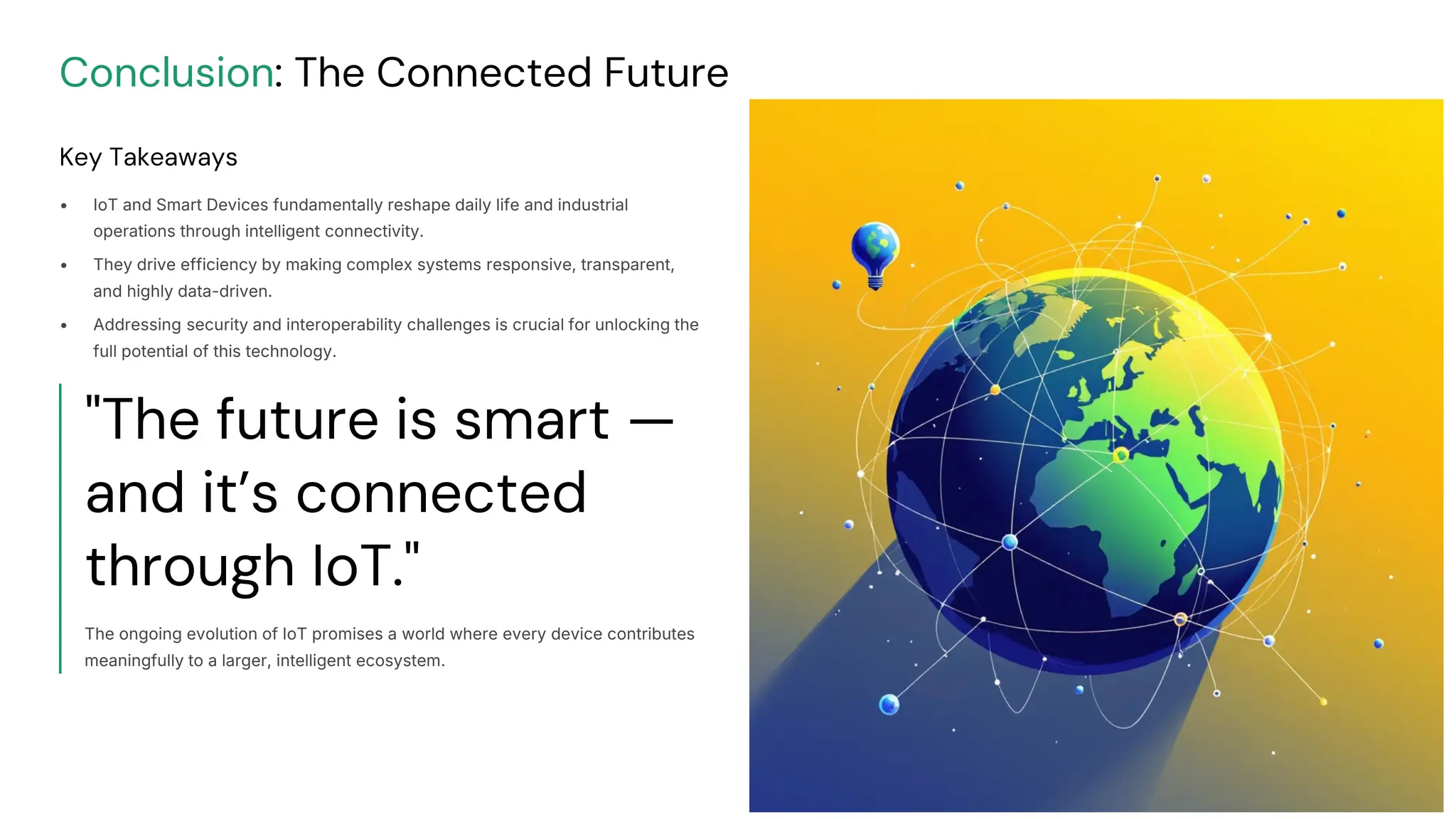
"The future is smart —
and it’s connected
through IoT."
The ongoing evolution of IoT promises a world where every device contributes
meaningfully to a larger, intelligent ecosystem.

Internet of Things (IoT) & Smart Devices Connecting the World, One Device at a Time

  • 1.
    preencoded.png Internet of Things(IoT) & Smart Devices Connecting the World, One Device at a Time Name: Akshat Patil Roll no: 23BIT246 Div: 4 H8
  • 2.
    preencoded.png Introduction to theInternet of Things (IoT) Definition The Internet of Things (IoT) refers to a vast network of interconnected physical devices that communicate and exchange data seamlessly over the Internet. Core Aim To make devices "smart" by enabling complex data-driven automation, enhancing interaction, and improving efficiency in various environments. •The Internet of Things (IoT) is a network of physical objects (“things”) embedded with sensors, software, and connectivity. •These devices collect and exchange data over the internet with minimal human intervention. •IoT enables automation, smarter decision-making, and real-time monitoring in homes, industries, healthcare, and more. •Key features: connectivity, data processing, and intelligence for enhanced efficiency and convenience
  • 3.
    preencoded.png The Mechanism: HowIoT Works User Interface Data Processing Connectivity Sensors
  • 4.
  • 5.
    preencoded.png Smart Devices Explained Smartdevices are connected devices that possess the capability to sense, process, and respond intelligently to input from the environment or user commands. Smart Speakers (e.g., Alexa) Voice-activated assistants that manage tasks, media, and other smart home devices. Smartwatches & Wearables Monitor health metrics, track fitness goals, and provide notifications on the go. Smart Thermostats Adjust home temperature automatically based on schedules, occupancy, and learning patterns, optimising energy use. Smart Cameras Provide remote surveillance, motion detection alerts, and enhance home security.
  • 6.
    preencoded.png Key Technologies Poweringthe IoT Ecosystem Sensors and Actuators The physical interface of IoT, responsible for data collection and executing physical actions. Cloud Computing Provides the immense storage, processing power, and scalability necessary for handling Big Data generated by millions of devices. AI and Machine Learning Enables devices to learn from data, predict outcomes (e.g., predictive maintenance), and make autonomous decisions. Big Data Analytics Tools and techniques used to process, analyse, and visualise the massive volumes of heterogeneous IoT data. 5G and Wireless High-speed, low-latency communication networks that are crucial for enabling real-time IoT applications and massive device density. Edge Computing Processing data closer to the source (the "edge"), reducing latency and bandwidth usage for mission- critical, real-time applications.
  • 7.
    preencoded.png Widespread Applications ofIoT IoT technology is transforming operations across diverse sectors, making processes smarter and more efficient. Smart Homes Automating lights, climate control (ACs), appliance management, and security systems for enhanced comfort and safety. Smart Cities Optimising urban living through efficient traffic management, automated waste collection, and intelligent public lighting systems. Healthcare Crucial for remote patient monitoring, enabling continuous data collection via wearables and implanted medical devices. Agriculture Implementing smart irrigation systems, soil sensors, and livestock tracking for precision farming and resource optimisation.
  • 8.
    preencoded.png Transformative Benefits ofIoT Connectivity Automation and Convenience Tasks are executed automatically (e.g., turning off lights), freeing up human effort and enhancing daily comfort. Real-Time Monitoring and Control Users gain immediate visibility and control over distant assets, crucial for critical infrastructure and remote management. Energy Efficiency and Cost Savings Intelligent resource management (e.g., smart thermostats) significantly reduces unnecessary consumption and operational expenses. Better Decision-Making The wealth of data collected provides actionable insights, leading to optimised business strategies and improved system performance. Improved Quality of Life From enhanced security to personalized health monitoring, IoT positively impacts well-being and personal safety.
  • 9.
    preencoded.png Navigating the Challengesof IoT Deployment Despite its advantages, the proliferation of connected devices introduces significant hurdles that must be addressed. Data Privacy & Security Risks Vulnerability of devices and the massive data streams to cyber-attacks and unauthorized access require robust encryption and protection. High Cost Barrier Initial investment in hardware, software, and infrastructure, alongside ongoing maintenance and upgrade costs, can be substantial. Interoperability and Compatibility Ensuring seamless communication and function between devices from different manufacturers using varied communication protocols remains complex. Network Dependency System functionality relies heavily on stable, constant network connectivity; disruptions can render devices useless or cause data loss. Power Consumption Managing the energy demands of a multitude of smart devices, particularly in remote or battery-dependent applications, is a constant challenge.
  • 10.
    preencoded.png The Forward Trajectory:Future of IoT The future promises a highly intelligent, integrated, and autonomous IoT landscape driven by emerging technologies. 1 AI-Powered Integration Deep integration of Artificial Intelligence, enabling true learning and predictive capabilities across all connected systems and devices. 2 Beyond 5G Connectivity The roll-out of 6G networks will provide even higher bandwidth and ultra-low latency, supporting massive increases in device density. 3 Autonomous Infrastructure Growth of smarter cities featuring fully autonomous utility management, transport systems, and dynamic infrastructure optimization. 4 Personalised Adaptive Systems Self-learning smart homes that continuously adapt to the habits and preferences of their occupants without explicit programming. 5 Comprehensive Monitoring Advanced, non-invasive healthcare monitoring extending from sophisticated wearables to embedded sensors in daily environments.
  • 11.
    preencoded.png Conclusion: The ConnectedFuture Key Takeaways • IoT and Smart Devices fundamentally reshape daily life and industrial operations through intelligent connectivity. • They drive efficiency by making complex systems responsive, transparent, and highly data-driven. • Addressing security and interoperability challenges is crucial for unlocking the full potential of this technology. "The future is smart — and it’s connected through IoT." The ongoing evolution of IoT promises a world where every device contributes meaningfully to a larger, intelligent ecosystem.