T A IW A N M E D I C A L J O U R N A L
學術
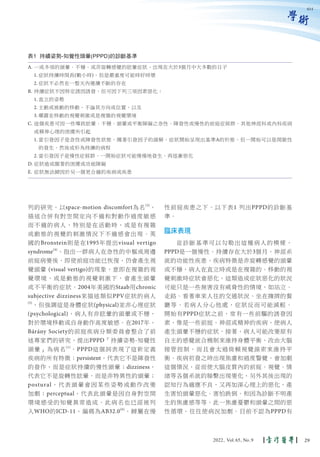
為PPPD重要的加重因素,但不是形成PPPD的基
本原因。因此PPPD被現今國際專家歸類為病因
較不明確的功能性疾病。話雖如此,焦慮症、
憂鬱症確實為PPPD常見的共病,在治療上,處
理病人的情緒問題,確實也有利於阻斷焦慮和頭
暈之間的惡性循環,對改善PPPD病人的頭暈症
狀很有幫助。另一方面,PPPD也不被歸類為自
律神經疾患。雖然病人在直立的姿勢時,頭暈
常會加重,但此時並不伴隨明顯的心跳、血壓
等自律神經變化;近期有一研究顯示,讓PPPD
病人接受動態視覺刺激時,其心率變異性 (heat
rate variability [HRV],為一常用的自律神經檢測
儀,運用心率變異分析自律神經系統的狀態)有
明顯下降,但此一現象和頭暈的因果關係並不清
楚。
治 療
在治療的部分,教育病人應該是最重要的,
如同其他的功能性疾病,如果診斷已經確立,應
該讓病人知道病名,可能成因,並理解這是常見
而且可以治療的病,如此的溝通也可為其後的復
健治療、藥物治療和心理治療埋下伏筆。前庭復
健可以重新訓練病人的平衡感,加強前庭覺、視
覺、和本體感覺的感覺統合,並調整病人的姿勢
控制策略。若再配上視覺刺激的訓練,可以改善
視覺依賴,減少視覺頭暈症狀。前庭復健也可以
在治療中建立病人信心,減少焦慮、過度警覺等
導致惡性循環的因素。可惜在台灣此項專業並不
普及,尚待推廣。
藥物的部分,抗憂鬱藥物(SSRI和SNRI)在慢
性頭暈的研究中都被認為可能有效果(15)
,當然,
目前仍只有一些open-label的藥物效果觀察,而
沒有randomized controlled的藥物試驗發表過。
根據幾篇文獻報告可以得出一些結論(7)
,65%的
病人在開始治療後可以獲得緩解,而用於PPPD
時,藥物劑量可能只需標準劑量的一半,另外若
有憂鬱焦慮的共病,治療後也可同時改善,但是
PPPD症狀的改善並非來自憂鬱焦慮的改善。藥
物使用時間可能要8到12周才可見效果,而且可
能需使用長達一年(11)
。預先告知得長期服藥和各
種藥物的可能副作用,如噁心、口乾、嗜睡等,
可提高服藥順從性。
認知行為治療也被使用於PPPD,有部分研
究認為有效,而且有助於減少焦慮。早期診斷,
與病人溝通病情,再合併上述三種治療方式,目
前被認為是治療PPPD的有效方法。
結 語
PPPD雖然是一個新定義的頭暈疾病,但其
實存在已久,也是慢性頭暈最常見的原因之一。
臨床醫師如果能更深入地認識、理解它,並應用
於臨床,將有機會讓長期受頭暈所苦的眾多病人
獲得更好的照顧及治療。
參考文獻
1. Staab JP, Eckhardt-Henn A, Horii A, et al.:
Diagnostic criteria for persistent postural-
perceptual dizziness (PPPD): Consensus document
of the committee for the classification of vestibular
disorders of the bárány society. J Vestib Res
Equilib Orientat 2017; 27: 191-208.
2. Brandt T: Phobic postural vertigo. Neurology 1996;
46: 1515-1519.
3. Jacob RG, Lilienfeld SO, Furman JMR, et al.: Panic
disorder with vestibular dysfunction: Further clinical
observations and description of space and motion
phobic stimuli. J Anxiety Disord 1989; 3: 117-130.
4. Bronstein AM: Visual vertigo syndrome: clinical
and posturography findings. J Neurol Neurosurg
Psychiatry 1995; 59: 472-476.
5. Staab JP, Ruckenstein MJ, Amsterdam JD: A
prospective trial of sertraline for chronic subjective
dizziness. Laryngoscope 2004; 114: 1637-1641.
6. ICD-11 - ICD-11 for Mortality and Morbidity
Statistics, https://icd.who.int/browse11/l-m/en#/
http://id.who.int/icd/entity/2005792829. accessed
2021/8/5.
7. Staab JP: Persistent postural-perceptual dizziness.
Semin Neurol 2020; 40: 130-137.
8. Brandt T, Dieterich M, Strupp M: Vertigo and
dizziness: common complaints. Springer Science &
Business Media, 2nd ed, London, Elsevier Science,
2013.
617
32 2022, Vol.65, No.9
6.
學術
9. Beh SC,Masrour S, Smith SV, et al.: The spectrum
of vestibular migraine: clinical features, triggers,
and examination findings. Headache 2019; 59:
727-740.
10. Huppert D, Strupp M, Rettinger N, et al.: Phobic
postural vertigo: A long-term follow–up (5 to 15
years) of 106 patients. J Neurol 2005; 252: 564-
569.
11. Popkirov S, Staab JP, Stone J: Persistent
postural-perceptual dizziness (PPPD): a common,
characteristic and treatable cause of chronic
dizziness. Pract Neurol 2018; 18: 5-13.
12. Schniepp R, Wuehr M, Huth S, et al.: Gait
characteristics of patients with phobic postural
vertigo: effects of fear of falling, attention, and
visual input. J Neurol 2014; 261: 738-746.
13. Lee JO, Lee ES, Kim JS, et al.: Altered brain
function in persistent postural perceptual
dizziness: A study on resting state functional
connectivity. Hum Brain Mapp 2018; 39: 3340-
3353.
14. Wurthmann S, Naegel S, Schulte Steinberg B, et
al.: Cerebral gray matter changes in persistent
postural perceptual dizziness. J Psychosom Res
2017; 103: 95-101.
15. Staab JP: Chronic subjective dizziness. Contin
Minneap Minn 2012; 18: 1118-1141.
618
33
2022, Vol.65, No.9

![T A I W A N M E D I C A L J O U R N A L
學術
為PPPD重要的加重因素,但不是形成PPPD的基
本原因。因此PPPD被現今國際專家歸類為病因
較不明確的功能性疾病。話雖如此,焦慮症、
憂鬱症確實為PPPD常見的共病,在治療上,處
理病人的情緒問題,確實也有利於阻斷焦慮和頭
暈之間的惡性循環,對改善PPPD病人的頭暈症
狀很有幫助。另一方面,PPPD也不被歸類為自
律神經疾患。雖然病人在直立的姿勢時,頭暈
常會加重,但此時並不伴隨明顯的心跳、血壓
等自律神經變化;近期有一研究顯示,讓PPPD
病人接受動態視覺刺激時,其心率變異性 (heat
rate variability [HRV],為一常用的自律神經檢測
儀,運用心率變異分析自律神經系統的狀態)有
明顯下降,但此一現象和頭暈的因果關係並不清
楚。
治 療
在治療的部分,教育病人應該是最重要的,
如同其他的功能性疾病,如果診斷已經確立,應
該讓病人知道病名,可能成因,並理解這是常見
而且可以治療的病,如此的溝通也可為其後的復
健治療、藥物治療和心理治療埋下伏筆。前庭復
健可以重新訓練病人的平衡感,加強前庭覺、視
覺、和本體感覺的感覺統合,並調整病人的姿勢
控制策略。若再配上視覺刺激的訓練,可以改善
視覺依賴,減少視覺頭暈症狀。前庭復健也可以
在治療中建立病人信心,減少焦慮、過度警覺等
導致惡性循環的因素。可惜在台灣此項專業並不
普及,尚待推廣。
藥物的部分,抗憂鬱藥物(SSRI和SNRI)在慢
性頭暈的研究中都被認為可能有效果(15)
,當然,
目前仍只有一些open-label的藥物效果觀察,而
沒有randomized controlled的藥物試驗發表過。
根據幾篇文獻報告可以得出一些結論(7)
,65%的
病人在開始治療後可以獲得緩解,而用於PPPD
時,藥物劑量可能只需標準劑量的一半,另外若
有憂鬱焦慮的共病,治療後也可同時改善,但是
PPPD症狀的改善並非來自憂鬱焦慮的改善。藥
物使用時間可能要8到12周才可見效果,而且可
能需使用長達一年(11)
。預先告知得長期服藥和各
種藥物的可能副作用,如噁心、口乾、嗜睡等,
可提高服藥順從性。
認知行為治療也被使用於PPPD,有部分研
究認為有效,而且有助於減少焦慮。早期診斷,
與病人溝通病情,再合併上述三種治療方式,目
前被認為是治療PPPD的有效方法。
結 語
PPPD雖然是一個新定義的頭暈疾病,但其
實存在已久,也是慢性頭暈最常見的原因之一。
臨床醫師如果能更深入地認識、理解它,並應用
於臨床,將有機會讓長期受頭暈所苦的眾多病人
獲得更好的照顧及治療。
參考文獻
1. Staab JP, Eckhardt-Henn A, Horii A, et al.:
Diagnostic criteria for persistent postural-
perceptual dizziness (PPPD): Consensus document
of the committee for the classification of vestibular
disorders of the bárány society. J Vestib Res
Equilib Orientat 2017; 27: 191-208.
2. Brandt T: Phobic postural vertigo. Neurology 1996;
46: 1515-1519.
3. Jacob RG, Lilienfeld SO, Furman JMR, et al.: Panic
disorder with vestibular dysfunction: Further clinical
observations and description of space and motion
phobic stimuli. J Anxiety Disord 1989; 3: 117-130.
4. Bronstein AM: Visual vertigo syndrome: clinical
and posturography findings. J Neurol Neurosurg
Psychiatry 1995; 59: 472-476.
5. Staab JP, Ruckenstein MJ, Amsterdam JD: A
prospective trial of sertraline for chronic subjective
dizziness. Laryngoscope 2004; 114: 1637-1641.
6. ICD-11 - ICD-11 for Mortality and Morbidity
Statistics, https://icd.who.int/browse11/l-m/en#/
http://id.who.int/icd/entity/2005792829. accessed
2021/8/5.
7. Staab JP: Persistent postural-perceptual dizziness.
Semin Neurol 2020; 40: 130-137.
8. Brandt T, Dieterich M, Strupp M: Vertigo and
dizziness: common complaints. Springer Science &
Business Media, 2nd ed, London, Elsevier Science,
2013.
617
32 2022, Vol.65, No.9](https://image.slidesharecdn.com/pppd-220920082528-7cf02a23/85/PPPD-pdf-5-320.jpg)