Power Supply Systems
(MEPCO)
Power Supply Systems
• The conveyance of electric power from a power station to consumers’
premises is known as electric supply system.
• Three Components
Power Stations
Transmission Lines
Distribution Systems
Power Supply Systems
• Classification of Electric Supply System
DC or AC System
Overhead and Underground System
• Universal Adoption of 3 phase 3 wire System for generation and
transmission
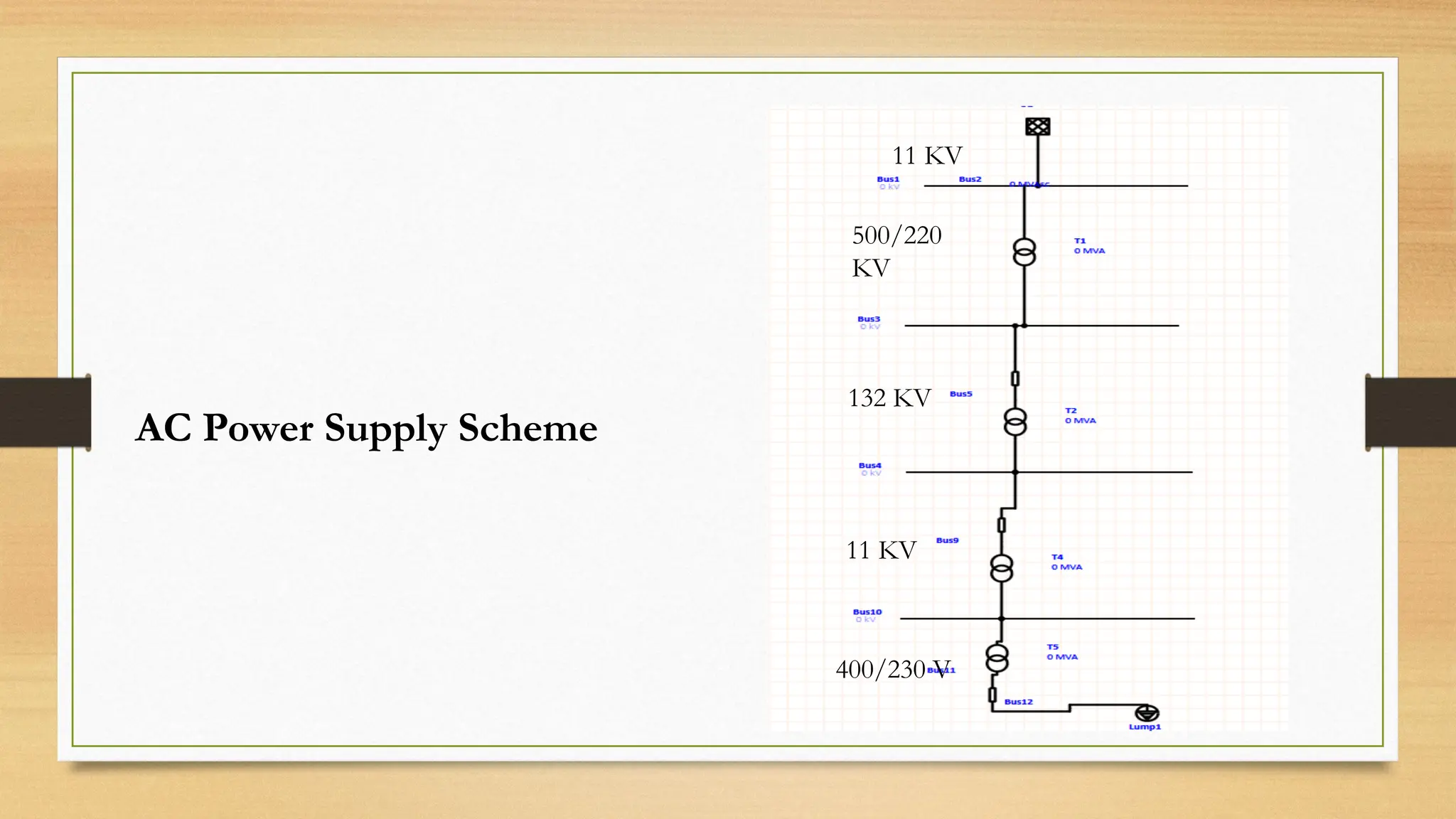
500/220
KV
132 KV
11 KV
400/230 V
11 KV
AC Power Supply Scheme
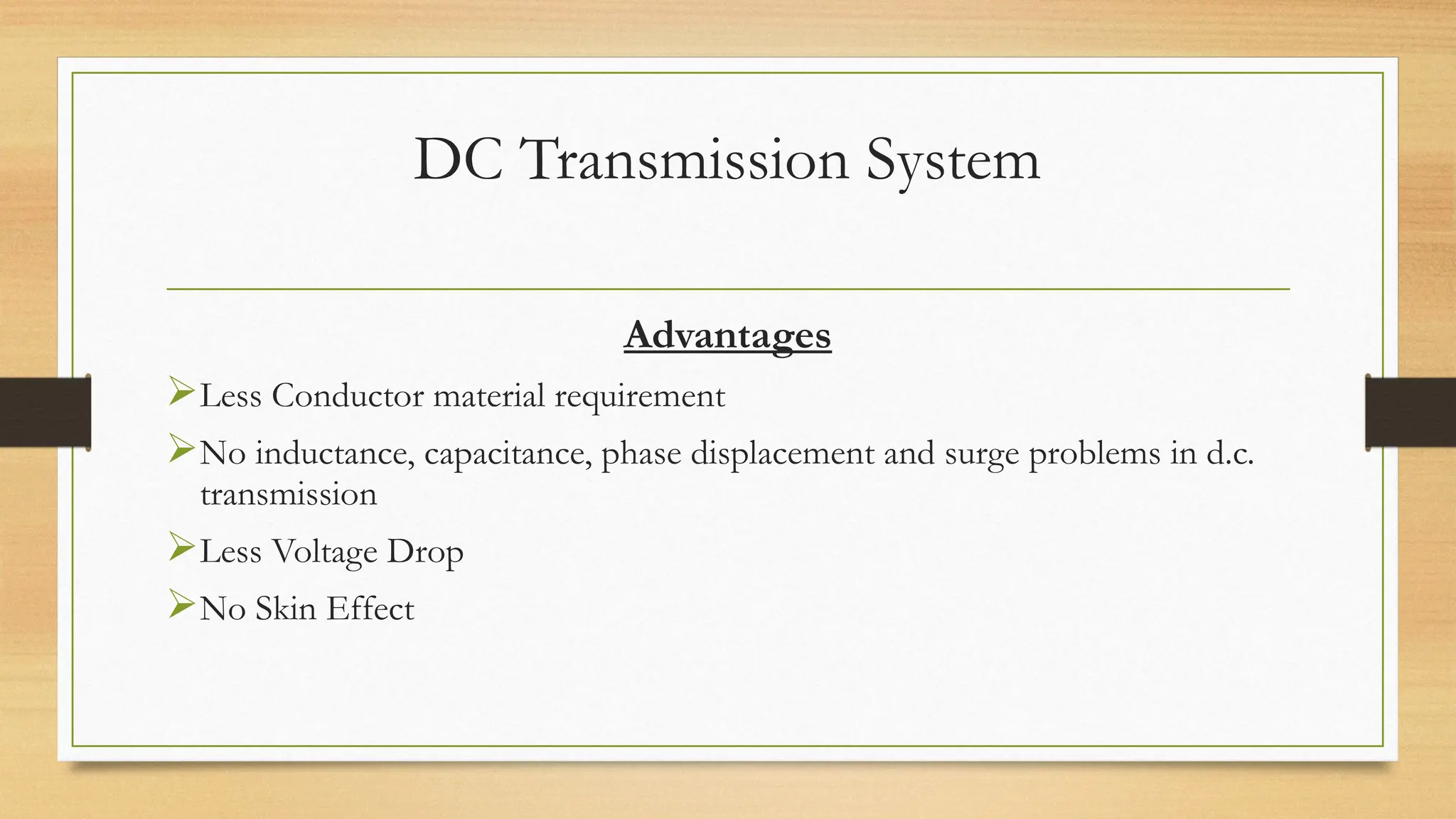
DC Transmission System
Advantages
Less Conductor material requirement
No inductance, capacitance, phase displacement and surge problems in d.c.
transmission
Less Voltage Drop
No Skin Effect
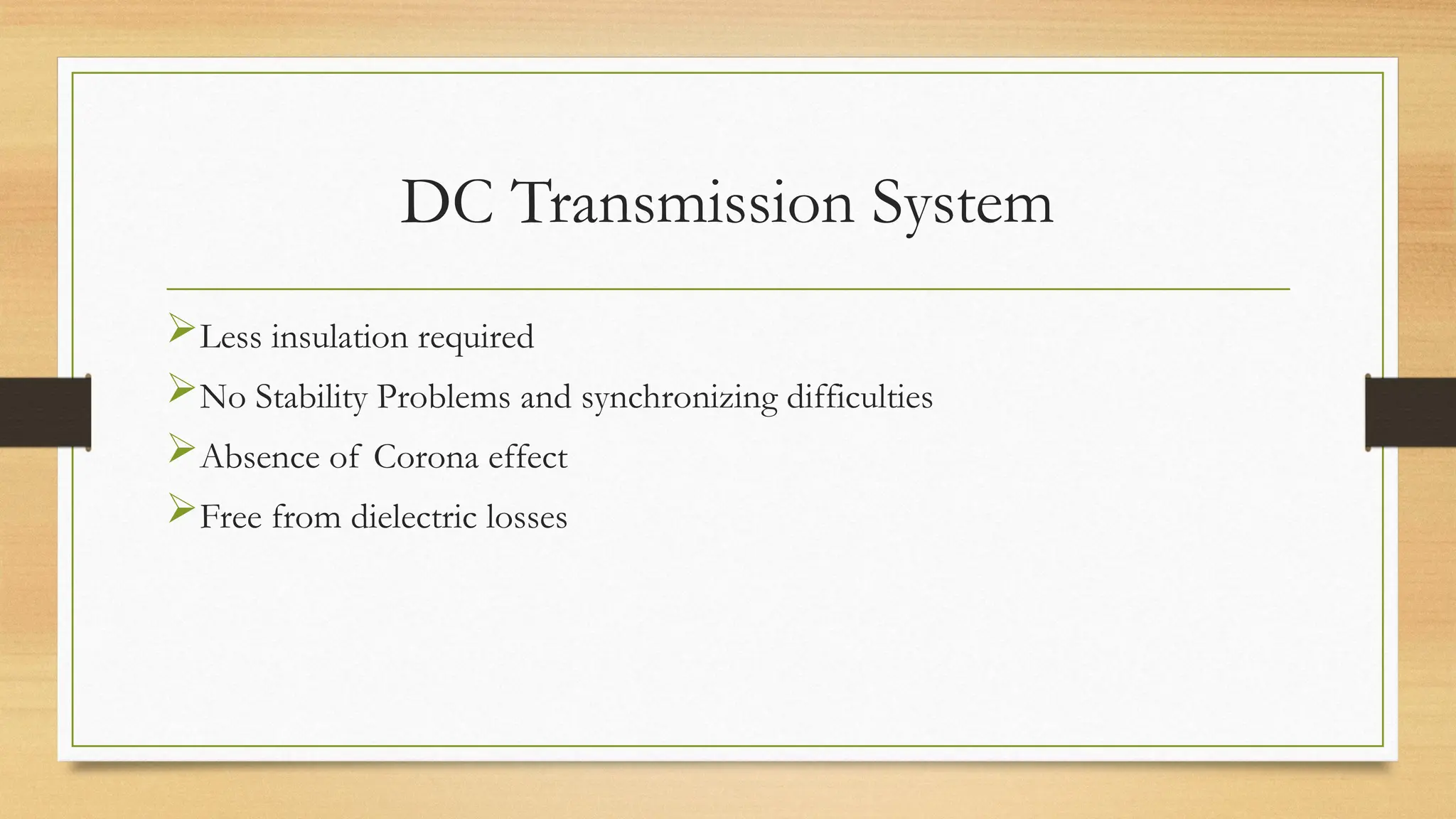
DC Transmission System
Less insulation required
No Stability Problems and synchronizing difficulties
Absence of Corona effect
Free from dielectric losses
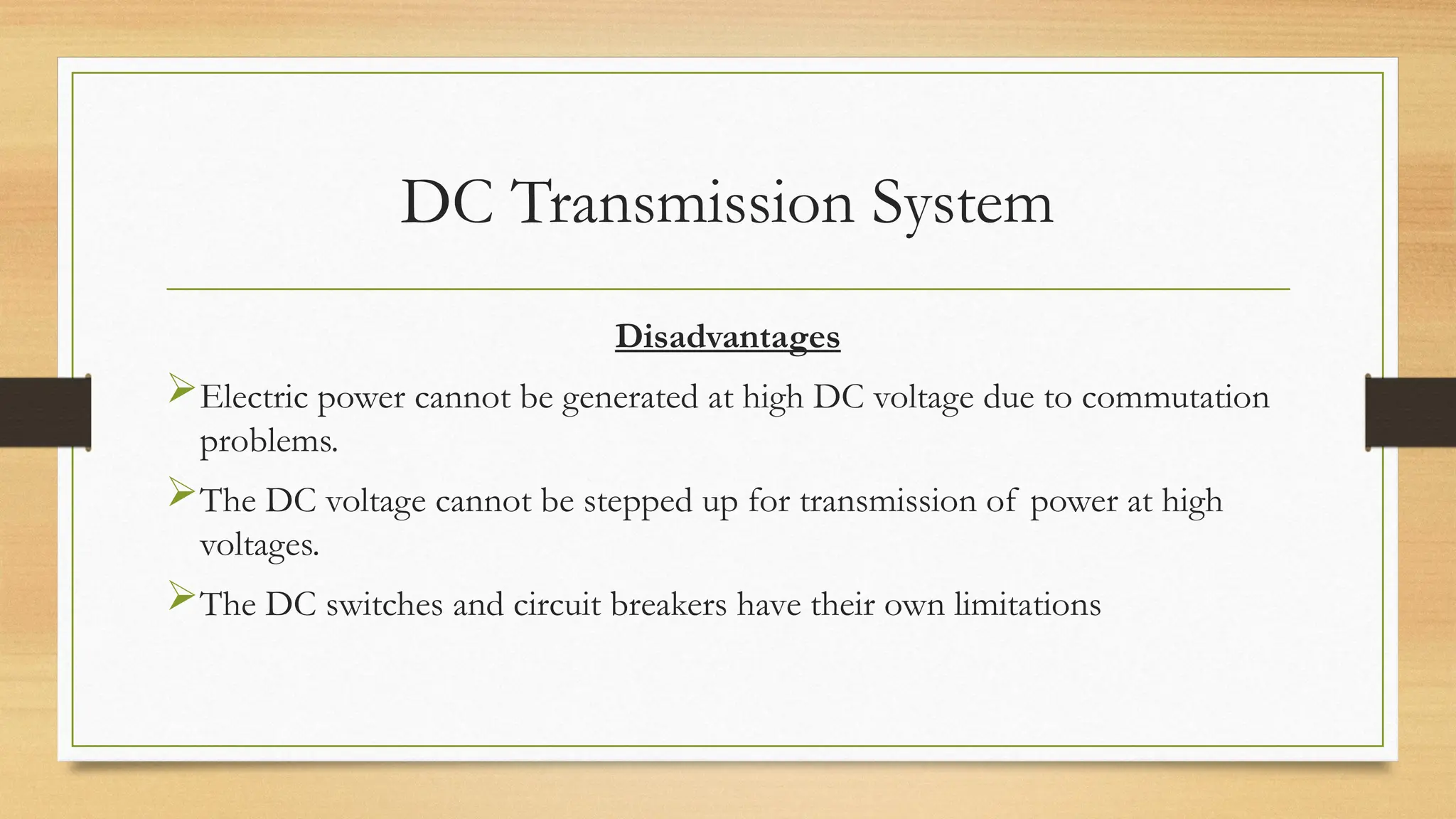
DC Transmission System
Disadvantages
Electric power cannot be generated at high DC voltage due to commutation
problems.
The DC voltage cannot be stepped up for transmission of power at high
voltages.
The DC switches and circuit breakers have their own limitations
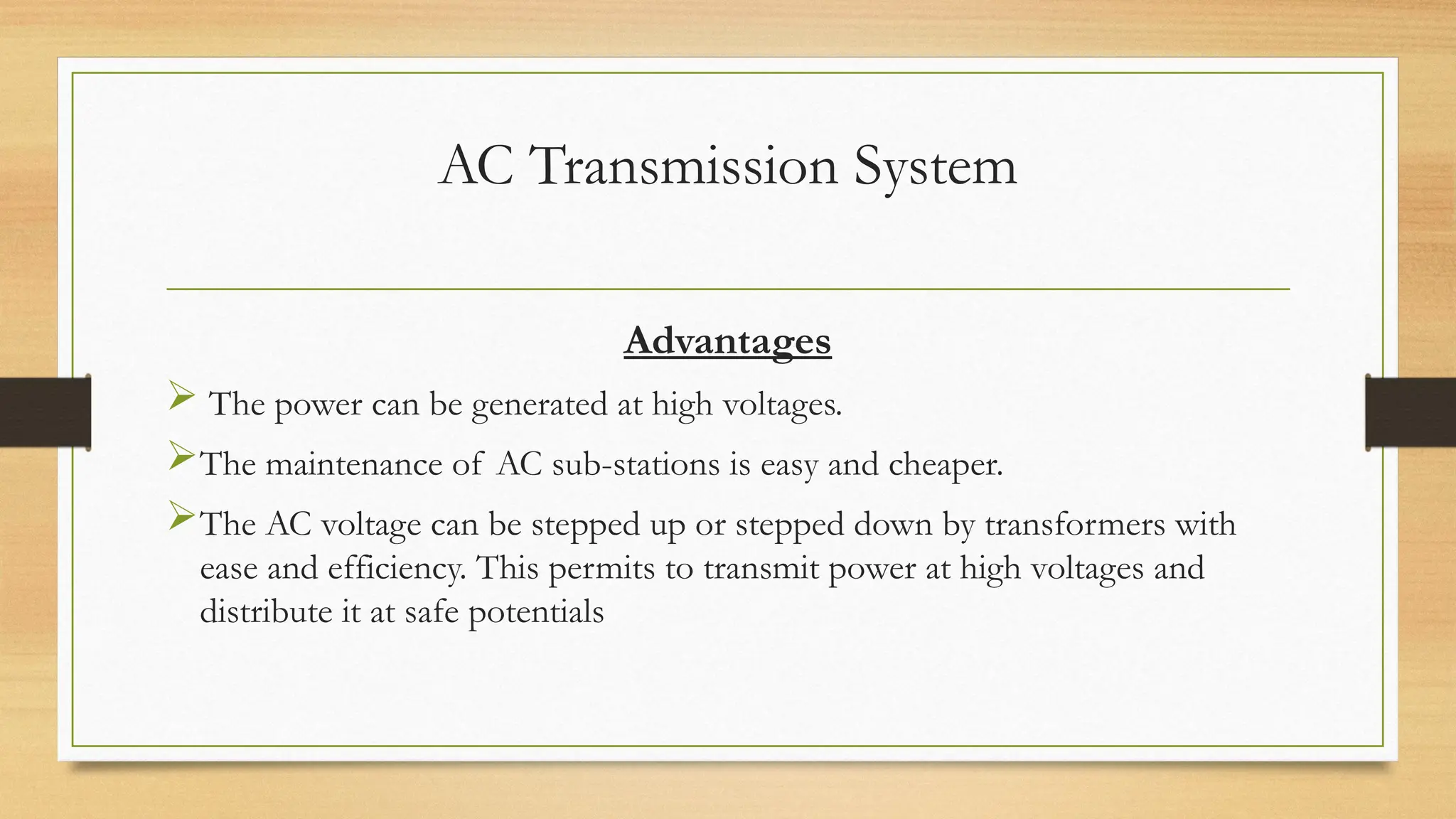
AC Transmission System
Advantages
 The power can be generated at high voltages.
The maintenance of AC sub-stations is easy and cheaper.
The AC voltage can be stepped up or stepped down by transformers with
ease and efficiency. This permits to transmit power at high voltages and
distribute it at safe potentials
AC Transmission System
Disadvantages
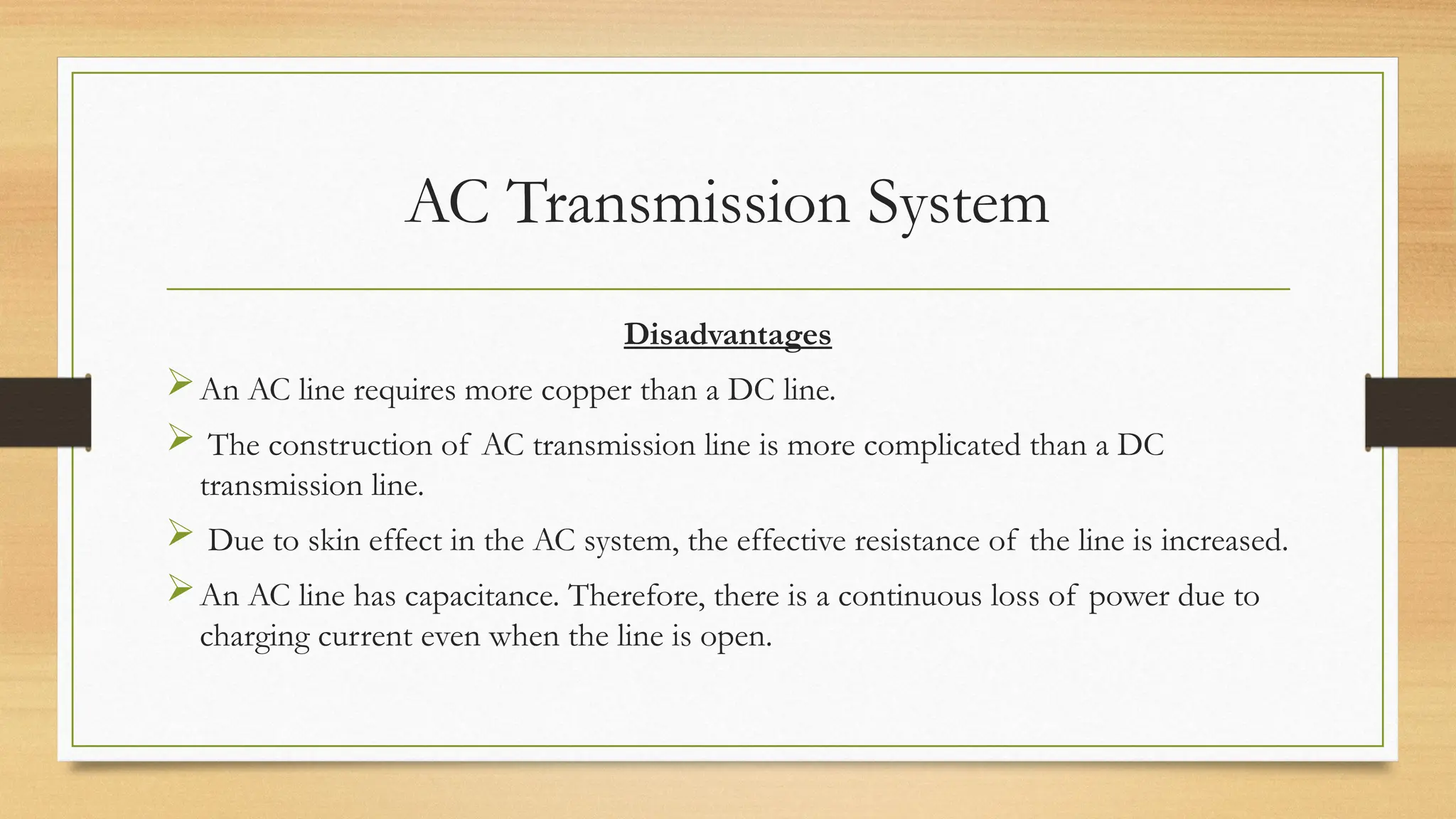
An AC line requires more copper than a DC line.
 The construction of AC transmission line is more complicated than a DC
transmission line.
 Due to skin effect in the AC system, the effective resistance of the line is increased.
An AC line has capacitance. Therefore, there is a continuous loss of power due to
charging current even when the line is open.
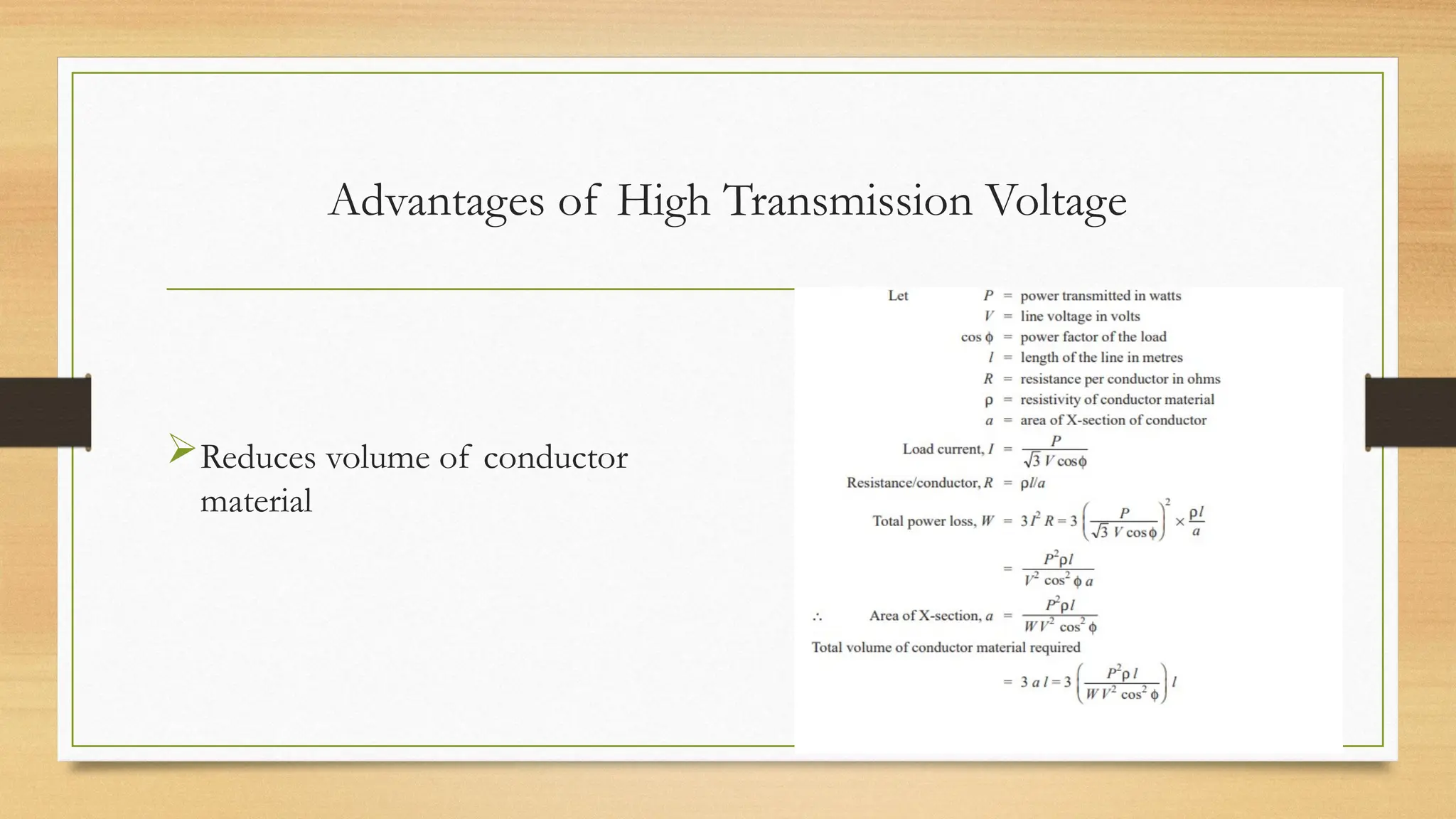
Advantages of High Transmission Voltage
Reduces volume of conductor
material
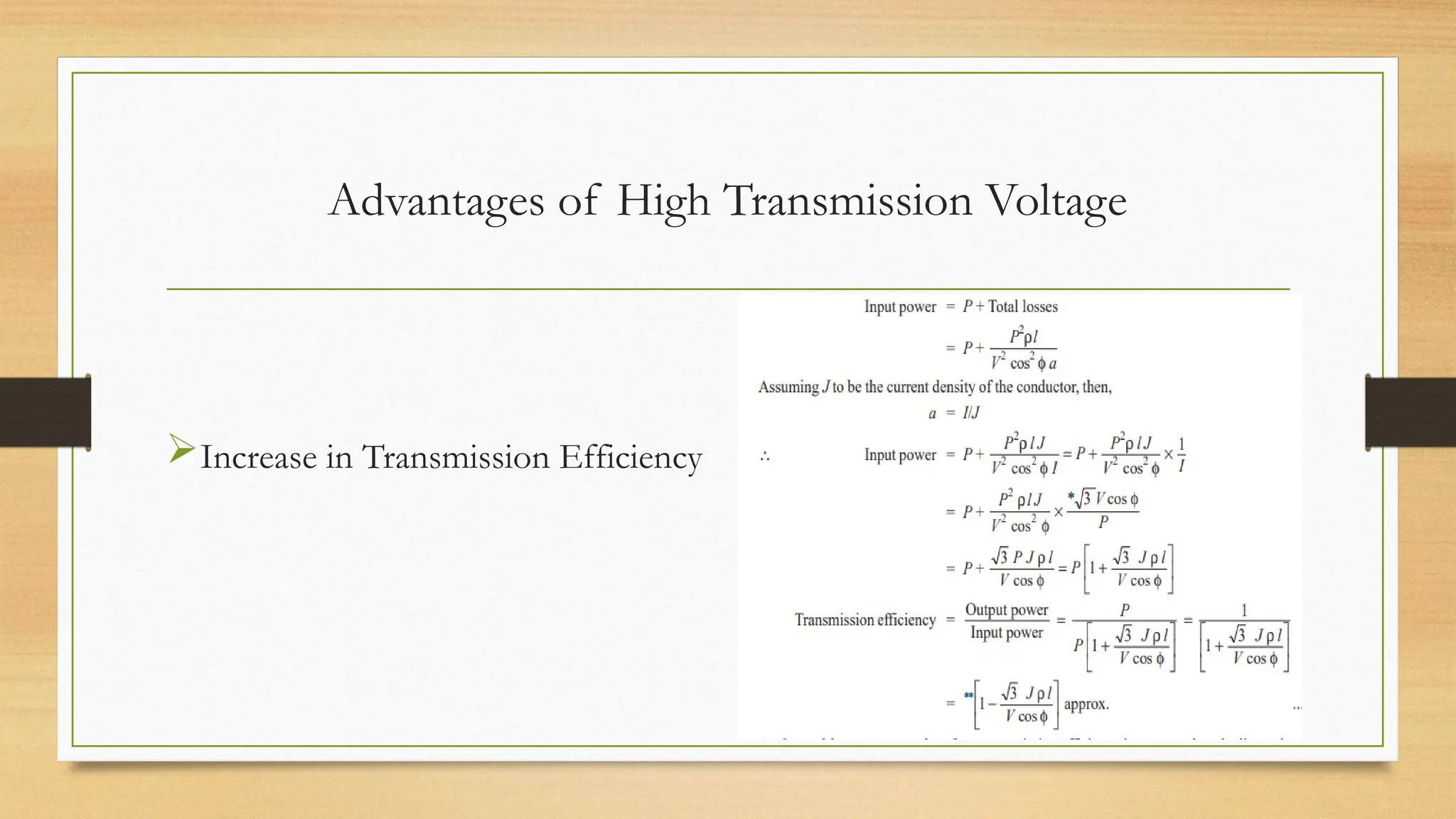
Advantages of High Transmission Voltage
Increase in Transmission Efficiency
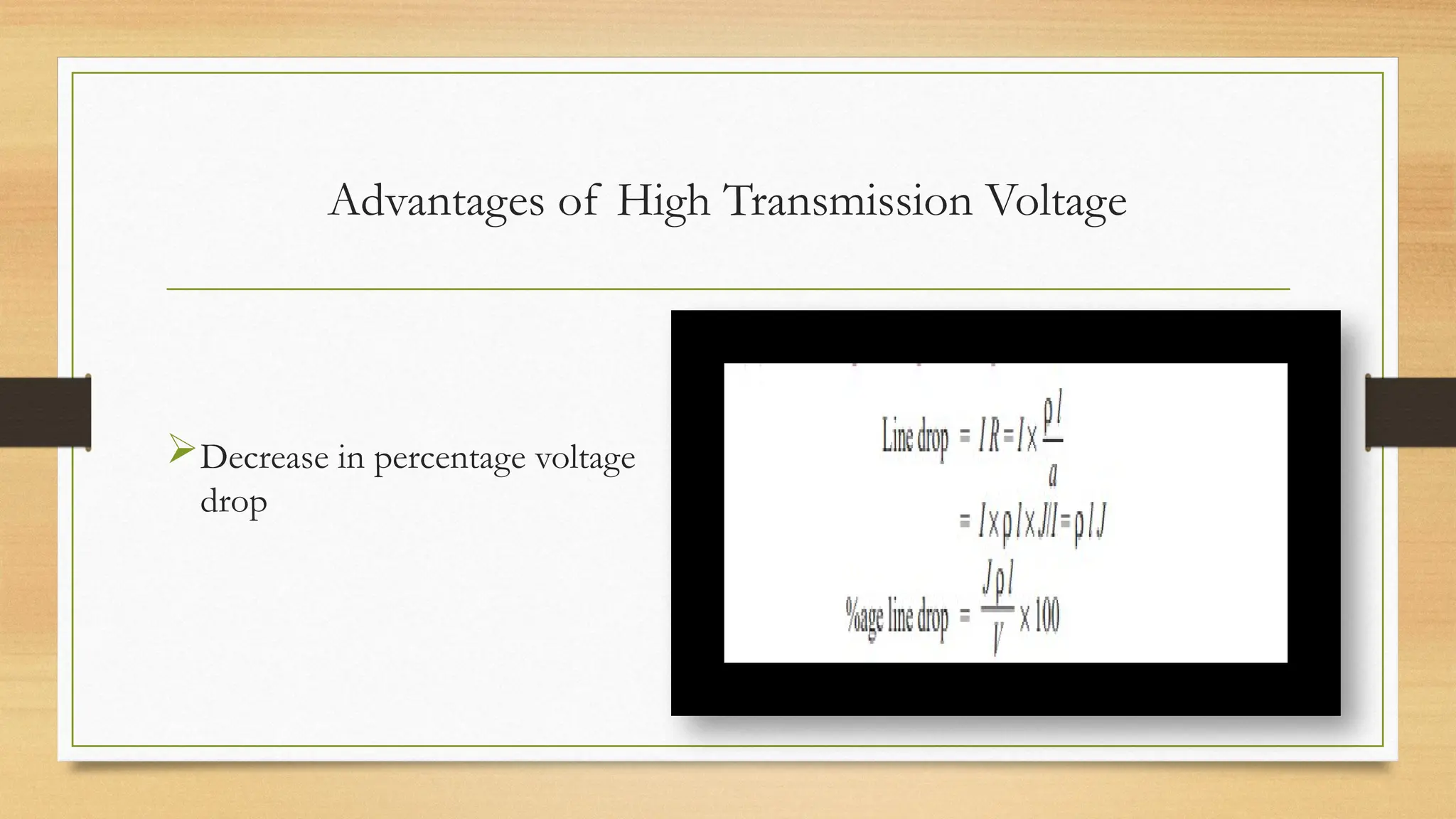
Advantages of High Transmission Voltage
Decrease in percentage voltage
drop
Limitations of High Voltage Transmission
 The increased cost of insulating the conductors
The increased cost of transformers, switchgear and other
terminal apparatus
THANKS

power system , transmission, distribution .pptx

  • 1.
  • 2.
    Power Supply Systems •The conveyance of electric power from a power station to consumers’ premises is known as electric supply system. • Three Components Power Stations Transmission Lines Distribution Systems
  • 3.
    Power Supply Systems •Classification of Electric Supply System DC or AC System Overhead and Underground System • Universal Adoption of 3 phase 3 wire System for generation and transmission
  • 4.
    500/220 KV 132 KV 11 KV 400/230V 11 KV AC Power Supply Scheme
  • 5.
    DC Transmission System Advantages LessConductor material requirement No inductance, capacitance, phase displacement and surge problems in d.c. transmission Less Voltage Drop No Skin Effect
  • 6.
    DC Transmission System Lessinsulation required No Stability Problems and synchronizing difficulties Absence of Corona effect Free from dielectric losses
  • 7.
    DC Transmission System Disadvantages Electricpower cannot be generated at high DC voltage due to commutation problems. The DC voltage cannot be stepped up for transmission of power at high voltages. The DC switches and circuit breakers have their own limitations
  • 8.
    AC Transmission System Advantages The power can be generated at high voltages. The maintenance of AC sub-stations is easy and cheaper. The AC voltage can be stepped up or stepped down by transformers with ease and efficiency. This permits to transmit power at high voltages and distribute it at safe potentials
  • 9.
    AC Transmission System Disadvantages AnAC line requires more copper than a DC line.  The construction of AC transmission line is more complicated than a DC transmission line.  Due to skin effect in the AC system, the effective resistance of the line is increased. An AC line has capacitance. Therefore, there is a continuous loss of power due to charging current even when the line is open.
  • 10.
    Advantages of HighTransmission Voltage Reduces volume of conductor material
  • 11.
    Advantages of HighTransmission Voltage Increase in Transmission Efficiency
  • 12.
    Advantages of HighTransmission Voltage Decrease in percentage voltage drop
  • 13.
    Limitations of HighVoltage Transmission  The increased cost of insulating the conductors The increased cost of transformers, switchgear and other terminal apparatus
  • 14.