RECRUITMENT VARIABLES IN
THE EMPLOYMENT OF LIBRARY
AND INFORMATION
PROFESSIONALS IN
ACADEMIC AND RESEARCH
LIBRARIES IN NIGERIA
Chimezie P. Uzuegbu (CLN, ACIA, MNIM)
&
Uche Arua
Maiden conference of the Nigerian Library Association, Abia State Chapter @ National Root Crops
Research Institute, Umudike. Dec.11-13, 2012
INTRODUCTION
It is common knowledge that staff
is the very important element of
every organisation.
The success of any kind of library
in her provision of maximum
satisfaction to its clientele is
indisputably dependent on
competent and trained personnel.
Consequent to this, internal and
external job recruitment
advertisements for librarians
positions in academic and research
institutions in Nigeria lay emphasis on
certain variables as requirements for
employment of applicants.
Some of the requirements include
qualification, experience, age, et
cetera.
But, there is a problem -
PROBLEM
The problem is that:
No one knows the extent to which the
recruitment variables are employed to weigh
the suitability of librarian applicants in
academic and research libraries.
Besides, the view of practicing library and
information professionals in the context of
what or to what extent some of these variables
should be considered in recruitment exercise
for librarians in Nigeria is scarcely available in
the literature.
Thus, these necessitated the study -
As a PURPOSE therefore,
the researchers sought:
To find out from practicing librarians
what employers should consider as
requirements for the employment of
librarians
To find out the level of importance to
be attached to each recruitment variable
To make suggestions that will aid the
consideration and recruitment of library
and information professionals in Nigeria.

To get answers to the purpose of
the study, the researchers
employed – METHODOLOGY:
A survey research design
 Librarians (professionals) working in
academic and research institutions libraries
in Abia State consisted the population.
 By a purposive sampling, 27 librarians
from 5 libraries were surveyed.
24 librarians completed the four-point-
scale (modified Likert) instrument and the
24 copies was found valid for analysis.
FINDINGS
Based on the purpose of the study,
the list below shows the recruitment
variables as given by respondents,
exactly in the order of their priority:
1. Educational qualifications:
respondents say that librarian
applicants must possess degrees in
librarianship.
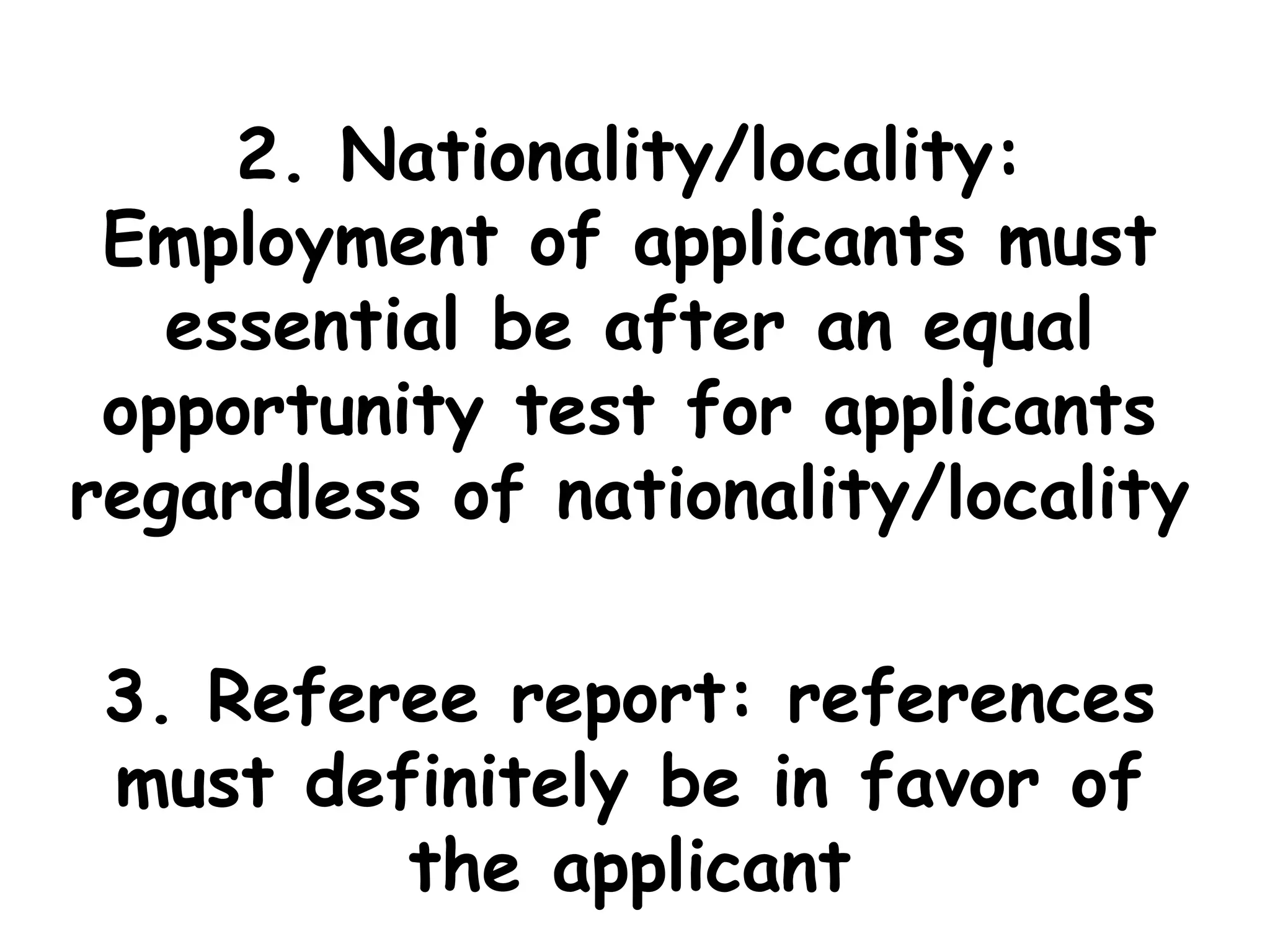
2. Nationality/locality:
Employment of applicants must
essential be after an equal
opportunity test for applicants
regardless of nationality/locality
3. Referee report: references
must definitely be in favor of
the applicant
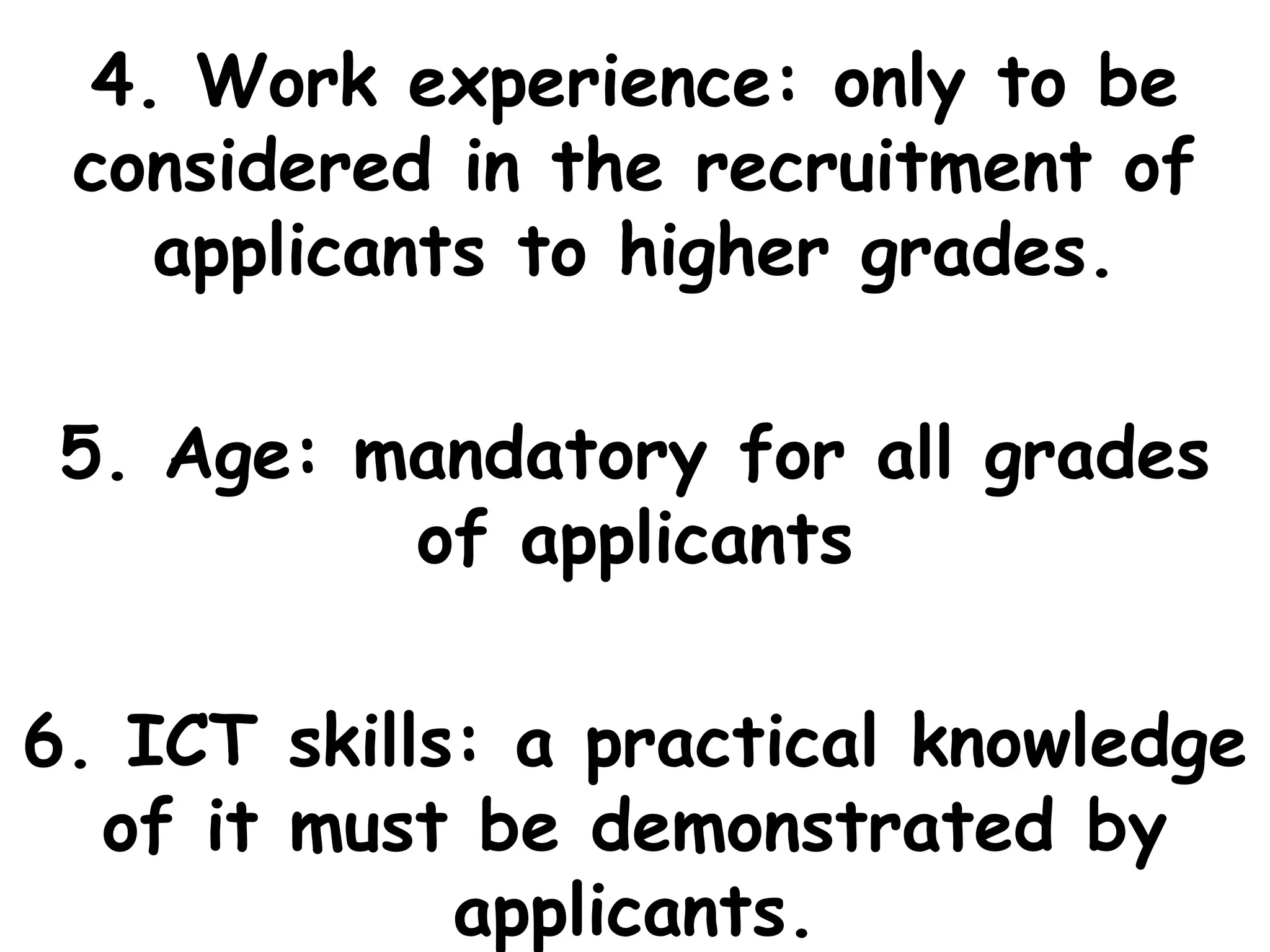
4. Work experience: only to be
considered in the recruitment of
applicants to higher grades.
5. Age: mandatory for all grades
of applicants
6. ICT skills: a practical knowledge
of it must be demonstrated by
applicants.
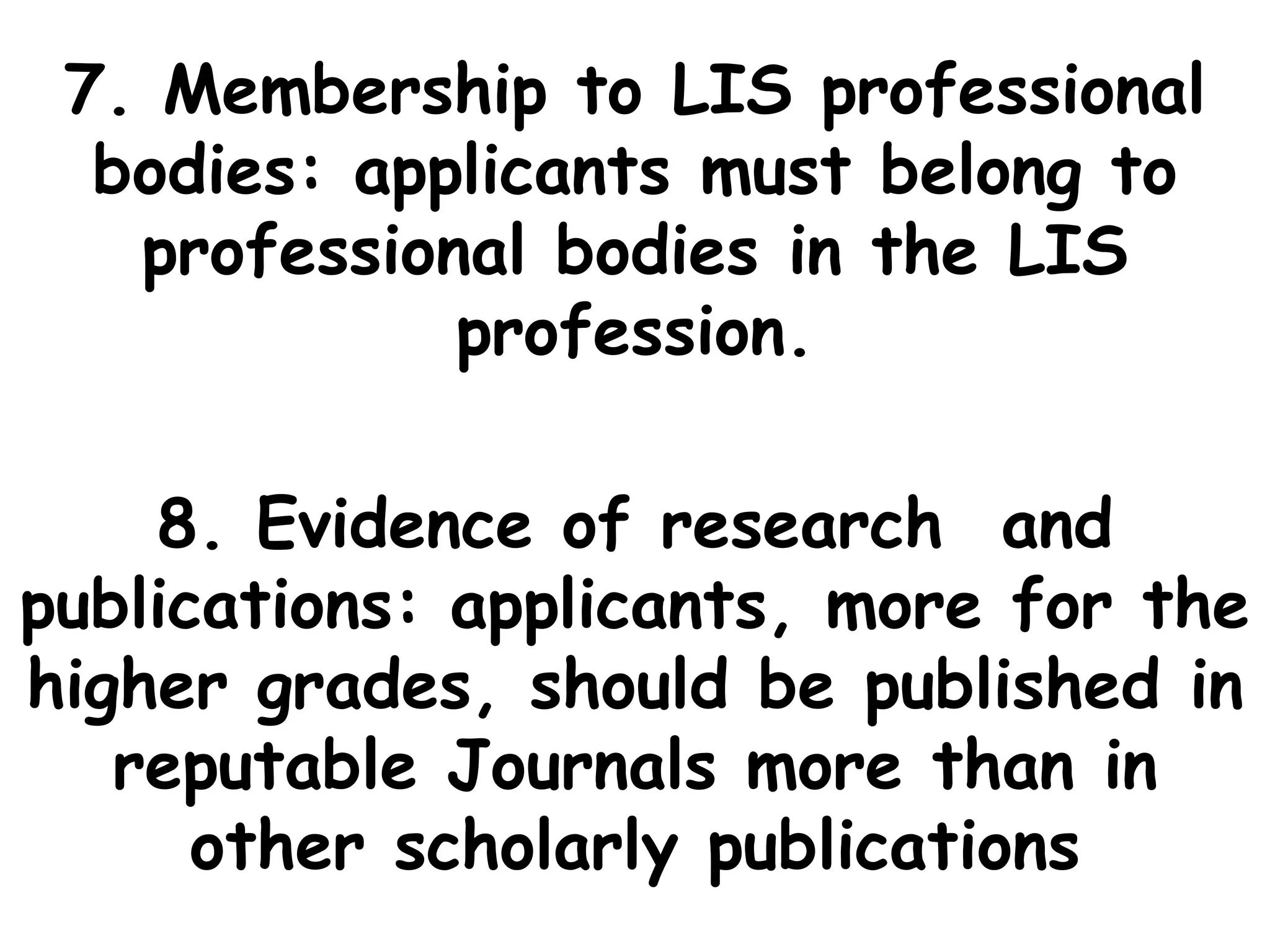
7. Membership to LIS professional
bodies: applicants must belong to
professional bodies in the LIS
profession.
8. Evidence of research and
publications: applicants, more for the
higher grades, should be published in
reputable Journals more than in
other scholarly publications
9. Sex of applicant: it should not
matter.
10. Marital status: not
necessarily important for
applicants.
RECOMMENDATIONS
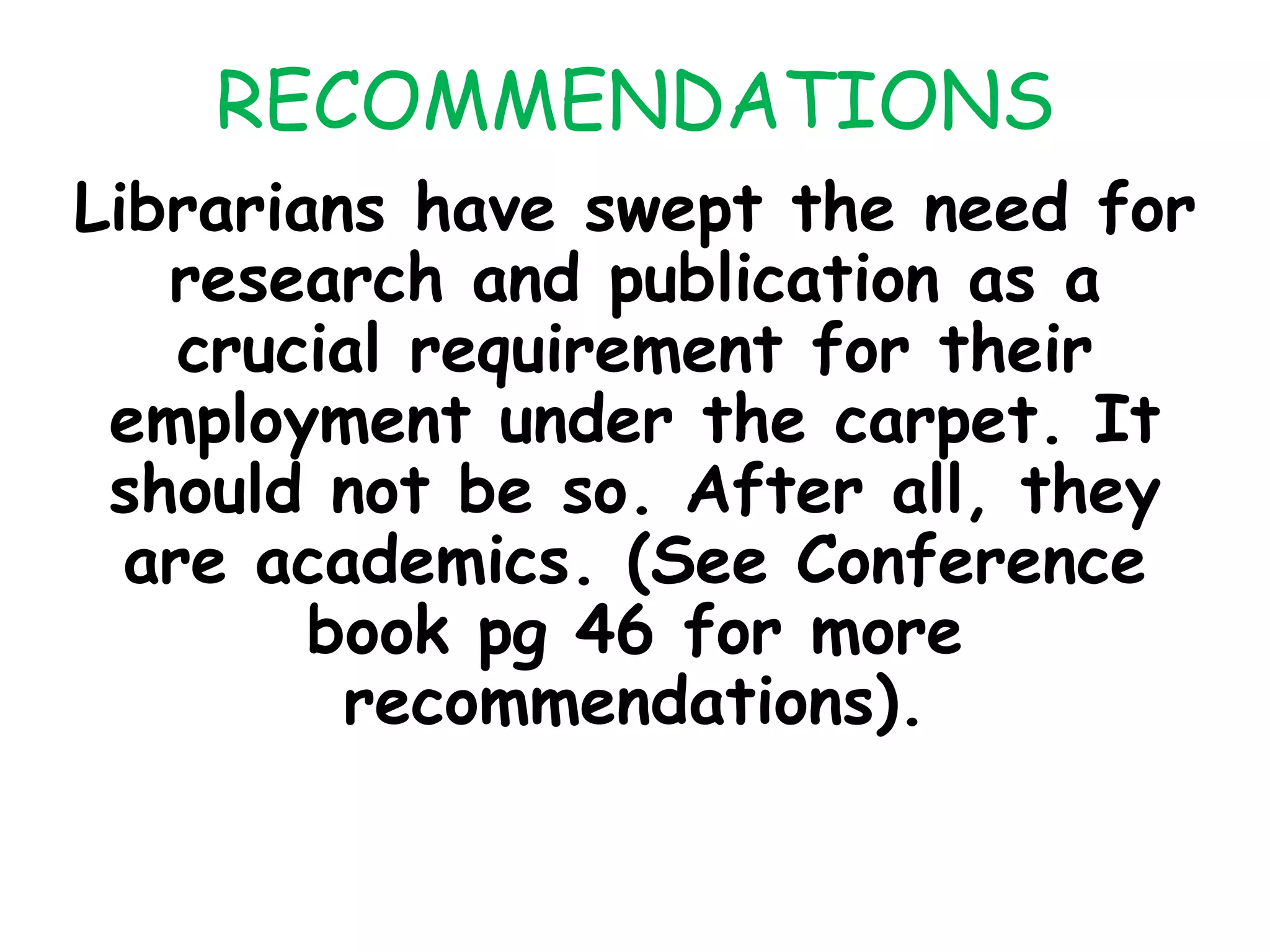
Librarians have swept the need for
research and publication as a
crucial requirement for their
employment under the carpet. It
should not be so. After all, they
are academics. (See Conference
book pg 46 for more
recommendations).
CONCLUSION
Manpower is the most vital and powerful of all
the resources of any organization. A library
can have an excellent collection of documents,
plenty of online resources and a beautiful and
comfortable building, but if it does not have a
well-trained, competent staff, it will lose its
value, given the fact that the users using the
library will not be served properly. This
research has identified ten recruitment
variables which are recurrently listed in
Nigerian job advertisements for librarians as
key areas of consideration for employment.
THANK YOU ALL FOR
LISTENING

rECRUITMENT VARIABLES IN THE EMPLOYMENT OF LIBRARY AND INFORMATION PROFESSIONALS

  • 1.
    RECRUITMENT VARIABLES IN THEEMPLOYMENT OF LIBRARY AND INFORMATION PROFESSIONALS IN ACADEMIC AND RESEARCH LIBRARIES IN NIGERIA Chimezie P. Uzuegbu (CLN, ACIA, MNIM) & Uche Arua Maiden conference of the Nigerian Library Association, Abia State Chapter @ National Root Crops Research Institute, Umudike. Dec.11-13, 2012
  • 2.
    INTRODUCTION It is commonknowledge that staff is the very important element of every organisation. The success of any kind of library in her provision of maximum satisfaction to its clientele is indisputably dependent on competent and trained personnel.
  • 3.
    Consequent to this,internal and external job recruitment advertisements for librarians positions in academic and research institutions in Nigeria lay emphasis on certain variables as requirements for employment of applicants. Some of the requirements include qualification, experience, age, et cetera. But, there is a problem -
  • 4.
    PROBLEM The problem isthat: No one knows the extent to which the recruitment variables are employed to weigh the suitability of librarian applicants in academic and research libraries. Besides, the view of practicing library and information professionals in the context of what or to what extent some of these variables should be considered in recruitment exercise for librarians in Nigeria is scarcely available in the literature. Thus, these necessitated the study -
  • 5.
    As a PURPOSEtherefore, the researchers sought: To find out from practicing librarians what employers should consider as requirements for the employment of librarians To find out the level of importance to be attached to each recruitment variable To make suggestions that will aid the consideration and recruitment of library and information professionals in Nigeria.
  • 6.
    To get answersto the purpose of the study, the researchers employed – METHODOLOGY: A survey research design  Librarians (professionals) working in academic and research institutions libraries in Abia State consisted the population.  By a purposive sampling, 27 librarians from 5 libraries were surveyed. 24 librarians completed the four-point- scale (modified Likert) instrument and the 24 copies was found valid for analysis.
  • 7.
    FINDINGS Based on thepurpose of the study, the list below shows the recruitment variables as given by respondents, exactly in the order of their priority: 1. Educational qualifications: respondents say that librarian applicants must possess degrees in librarianship.
  • 8.
    2. Nationality/locality: Employment ofapplicants must essential be after an equal opportunity test for applicants regardless of nationality/locality 3. Referee report: references must definitely be in favor of the applicant
  • 9.
    4. Work experience:only to be considered in the recruitment of applicants to higher grades. 5. Age: mandatory for all grades of applicants 6. ICT skills: a practical knowledge of it must be demonstrated by applicants.
  • 10.
    7. Membership toLIS professional bodies: applicants must belong to professional bodies in the LIS profession. 8. Evidence of research and publications: applicants, more for the higher grades, should be published in reputable Journals more than in other scholarly publications
  • 11.
    9. Sex ofapplicant: it should not matter. 10. Marital status: not necessarily important for applicants.
  • 12.
    RECOMMENDATIONS Librarians have sweptthe need for research and publication as a crucial requirement for their employment under the carpet. It should not be so. After all, they are academics. (See Conference book pg 46 for more recommendations).
  • 13.
    CONCLUSION Manpower is themost vital and powerful of all the resources of any organization. A library can have an excellent collection of documents, plenty of online resources and a beautiful and comfortable building, but if it does not have a well-trained, competent staff, it will lose its value, given the fact that the users using the library will not be served properly. This research has identified ten recruitment variables which are recurrently listed in Nigerian job advertisements for librarians as key areas of consideration for employment.
  • 14.
    THANK YOU ALLFOR LISTENING