1


    "THE BIGGEST ENEMY OF HEALTH IN
              THE DEVELOPING WORLD IS POVERTY."


UGP/09-12   IIPM AHMEDABAD                   5/16/2010
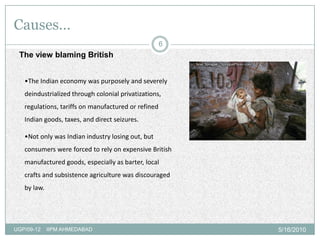
WHAT IS POVERTY???
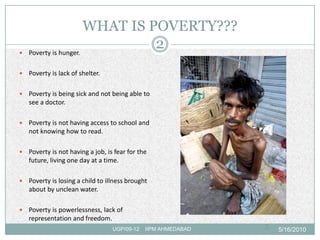
   Poverty is hunger.
                                2
   Poverty is lack of shelter.

   Poverty is being sick and not being able to
    see a doctor.

   Poverty is not having access to school and
    not knowing how to read.

   Poverty is not having a job, is fear for the
    future, living one day at a time.

   Poverty is losing a child to illness brought
    about by unclean water.

   Poverty is powerlessness, lack of
    representation and freedom.
                                   UGP/09-12   IIPM AHMEDABAD   2   5/16/2010
Facts & Figures….
                                                    3
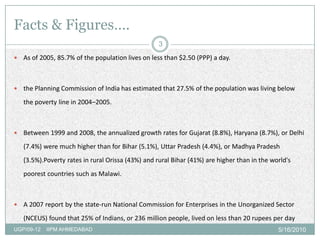
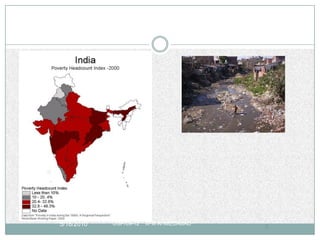
   As of 2005, 85.7% of the population lives on less than $2.50 (PPP) a day.


   the Planning Commission of India has estimated that 27.5% of the population was living below
    the poverty line in 2004–2005.


   Between 1999 and 2008, the annualized growth rates for Gujarat (8.8%), Haryana (8.7%), or Delhi
    (7.4%) were much higher than for Bihar (5.1%), Uttar Pradesh (4.4%), or Madhya Pradesh
    (3.5%).Poverty rates in rural Orissa (43%) and rural Bihar (41%) are higher than in the world's
    poorest countries such as Malawi.


   A 2007 report by the state-run National Commission for Enterprises in the Unorganized Sector
    (NCEUS) found that 25% of Indians, or 236 million people, lived on less than 20 rupees per day
UGP/09-12   IIPM AHMEDABAD                                                                    5/16/2010
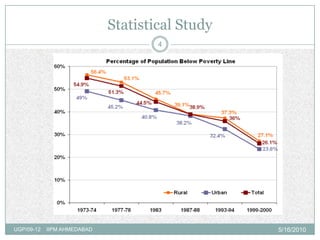
Statistical Study
                                     4


UGP/09-12   IIPM AHMEDABAD                       5/16/2010
5/16/2010   UGP/09-12   IIPM AHMEDABAD
                                         5
Causes…
                                                     6
 The view blaming British


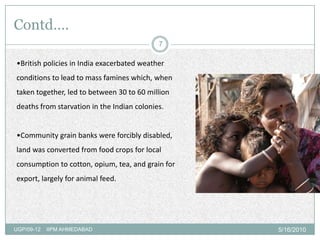
   •The Indian economy was purposely and severely
   deindustrialized through colonial privatizations,
   regulations, tariffs on manufactured or refined
   Indian goods, taxes, and direct seizures.

   •Not only was Indian industry losing out, but
   consumers were forced to rely on expensive British
   manufactured goods, especially as barter, local
   crafts and subsistence agriculture was discouraged
   by law.


UGP/09-12    IIPM AHMEDABAD                              5/16/2010
Contd….
                                            7

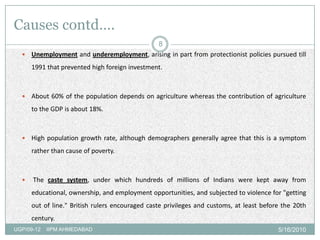
•British policies in India exacerbated weather
conditions to lead to mass famines which, when
taken together, led to between 30 to 60 million
deaths from starvation in the Indian colonies.


•Community grain banks were forcibly disabled,
land was converted from food crops for local
consumption to cotton, opium, tea, and grain for
export, largely for animal feed.


UGP/09-12   IIPM AHMEDABAD                         5/16/2010
Causes contd….
                                         8
   Unemployment and underemployment, arising in part from protectionist policies pursued till

      1991 that prevented high foreign investment.


     About 60% of the population depends on agriculture whereas the contribution of agriculture
      to the GDP is about 18%.


     High population growth rate, although demographers generally agree that this is a symptom
      rather than cause of poverty.


     The caste system, under which hundreds of millions of Indians were kept away from
      educational, ownership, and employment opportunities, and subjected to violence for "getting
      out of line." British rulers encouraged caste privileges and customs, at least before the 20th
      century.
UGP/09-12   IIPM AHMEDABAD                                                                5/16/2010
Outlook for Poverty alleviation
                                                  9
 Poverty alleviation is expected to make better progress in the next 50 years than in the past, as a

    trickle-down effect of the growing middle class.


   Increasing stress on education, reservation of seats in government jobs and the increasing
    empowerment of women and the economically weaker sections of society, are also expected to
    contribute to the alleviation of poverty. It is incorrect to say that all poverty reduction
    programmes have failed.


   The growth of the middle class indicates that economic prosperity has indeed been very
    impressive in India, but the distribution of wealth is not at all even.


   After the liberalization process and moving away from the socialist model, India is adding 60-70
    million people to its middle class every year. At the current rate of growth, a majority of Indians
    will be middle-class by 2025.
UGP/09-12   IIPM AHMEDABAD                                                                        5/16/2010
10


Thank You all for being cooperative and patient.
                                              - Jonty Mohta
     5/16/2010   UGP/09-12   IIPM AHMEDABAD

Poverty In India

  • 1.
    1 "THE BIGGEST ENEMY OF HEALTH IN THE DEVELOPING WORLD IS POVERTY." UGP/09-12 IIPM AHMEDABAD 5/16/2010
  • 2.
    WHAT IS POVERTY???  Poverty is hunger. 2  Poverty is lack of shelter.  Poverty is being sick and not being able to see a doctor.  Poverty is not having access to school and not knowing how to read.  Poverty is not having a job, is fear for the future, living one day at a time.  Poverty is losing a child to illness brought about by unclean water.  Poverty is powerlessness, lack of representation and freedom. UGP/09-12 IIPM AHMEDABAD 2 5/16/2010
  • 3.
    Facts & Figures…. 3  As of 2005, 85.7% of the population lives on less than $2.50 (PPP) a day.  the Planning Commission of India has estimated that 27.5% of the population was living below the poverty line in 2004–2005.  Between 1999 and 2008, the annualized growth rates for Gujarat (8.8%), Haryana (8.7%), or Delhi (7.4%) were much higher than for Bihar (5.1%), Uttar Pradesh (4.4%), or Madhya Pradesh (3.5%).Poverty rates in rural Orissa (43%) and rural Bihar (41%) are higher than in the world's poorest countries such as Malawi.  A 2007 report by the state-run National Commission for Enterprises in the Unorganized Sector (NCEUS) found that 25% of Indians, or 236 million people, lived on less than 20 rupees per day UGP/09-12 IIPM AHMEDABAD 5/16/2010
  • 4.
    Statistical Study 4 UGP/09-12 IIPM AHMEDABAD 5/16/2010
  • 5.
    5/16/2010 UGP/09-12 IIPM AHMEDABAD 5
  • 6.
    Causes… 6 The view blaming British •The Indian economy was purposely and severely deindustrialized through colonial privatizations, regulations, tariffs on manufactured or refined Indian goods, taxes, and direct seizures. •Not only was Indian industry losing out, but consumers were forced to rely on expensive British manufactured goods, especially as barter, local crafts and subsistence agriculture was discouraged by law. UGP/09-12 IIPM AHMEDABAD 5/16/2010
  • 7.
    Contd…. 7 •British policies in India exacerbated weather conditions to lead to mass famines which, when taken together, led to between 30 to 60 million deaths from starvation in the Indian colonies. •Community grain banks were forcibly disabled, land was converted from food crops for local consumption to cotton, opium, tea, and grain for export, largely for animal feed. UGP/09-12 IIPM AHMEDABAD 5/16/2010
  • 8.
    Causes contd…. 8  Unemployment and underemployment, arising in part from protectionist policies pursued till 1991 that prevented high foreign investment.  About 60% of the population depends on agriculture whereas the contribution of agriculture to the GDP is about 18%.  High population growth rate, although demographers generally agree that this is a symptom rather than cause of poverty.  The caste system, under which hundreds of millions of Indians were kept away from educational, ownership, and employment opportunities, and subjected to violence for "getting out of line." British rulers encouraged caste privileges and customs, at least before the 20th century. UGP/09-12 IIPM AHMEDABAD 5/16/2010
  • 9.
    Outlook for Povertyalleviation 9  Poverty alleviation is expected to make better progress in the next 50 years than in the past, as a trickle-down effect of the growing middle class.  Increasing stress on education, reservation of seats in government jobs and the increasing empowerment of women and the economically weaker sections of society, are also expected to contribute to the alleviation of poverty. It is incorrect to say that all poverty reduction programmes have failed.  The growth of the middle class indicates that economic prosperity has indeed been very impressive in India, but the distribution of wealth is not at all even.  After the liberalization process and moving away from the socialist model, India is adding 60-70 million people to its middle class every year. At the current rate of growth, a majority of Indians will be middle-class by 2025. UGP/09-12 IIPM AHMEDABAD 5/16/2010
  • 10.
    10 Thank You allfor being cooperative and patient. - Jonty Mohta 5/16/2010 UGP/09-12 IIPM AHMEDABAD