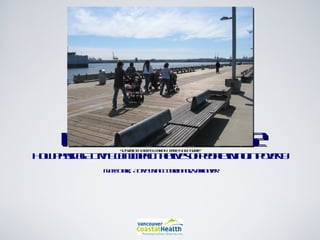
Movement For Change How Physical Activity can Impact the lives of people living in Poverty  MAry Clark,  Active Living Coordinator, Vancouver So-Sah-latch Mom’s Walking Group, North Shore
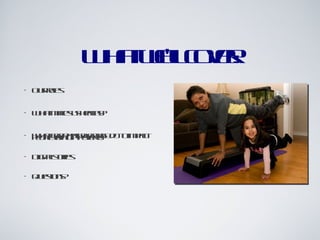
What we’ll cover: Our roles What makes us healthy? What can physical activity do to impact people living in poverty? Digital stories Questions?
Active Living Coordinators Part of  VCH support to“Core Programs” North Shore: Healthy Living and Community Development Vancouver: Healthy Living Program Social Inclusion Framework/Approach: Building relationships Building bridges Building community
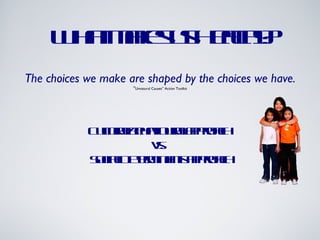
What makes us Healthy? The choices we make are shaped by the choices we have.  “ Unnatural Causes” Action Toolkit Cultural/Behavioural   approach  vs.  Social Determinants approach
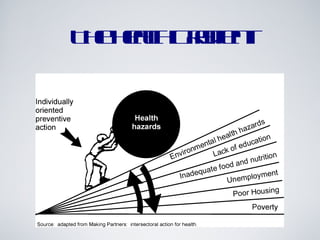
The health Gradient
Poverty and Health Poverty is a  more reliable predictor  of poor health than smoking, obesity, stress, or high cholesterol  Dr. Dennis Raphael Poverty reliably predicts  most major chronic diseases , death from injury, use of health services, life expectancy, personal perception of health  Dr. Dennis Raphael
Understanding Poverty no consensus on how to measure poverty ie. LICO regardless of measurement, BC has a significant poverty problem BC has the highest poverty rate in Canada - 5 years in a row  Vancouver Stats: 27% of households North Vancouver Stats: 16% of households Poverty is a situation that makes the achievement of human potential  difficult, if not impossible.  Dennis Raphael, PhD Dennis Raphael, PhD Dennis Raphael, PhD
Why Poverty Impacts Health Material Deprivation Excessive Negative Stress Building of Health Threatening Behaviours  Dr. ennis Raphael Poverty is like punishment for a crime you didn’t commit. Eli Khamarov
 
poverty = social exclusion poverty = social exclusion having and maintaining good health lies in feeling included within society involvement in recreation and physical activity can mitigate some of the effects of poverty
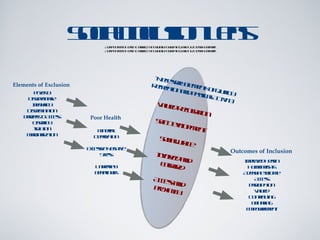
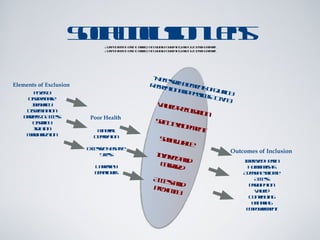
Social Inclusion Lens   Adapted from Health Canada, the Laidlaw Foundation, and Dr. Dennis Raphael Adapted from Health Canada, the Laidlaw Foundation, and Dr. Dennis Raphael Elements of Exclusion Poverty Disadvantage Inequality Discrimination Barriers to Access Disability Isolation Marginalization Outcomes of Inclusion Improved Health Human rights Adequate Income Access Participation Valued Contributing Belonging Empowerment Valued Recognition Self-Development Social Justice Involved and Engaged Access and Proximity Poor Health Material Deprivation Excessive Negative Stress Unhealthy Behaviours -Necessary Elements of Quality Recreation and Physical Activity-
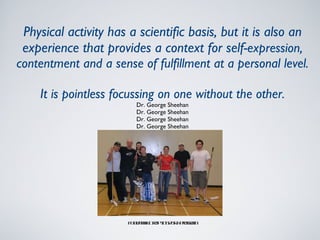
Physical activity has a scientific basis, but it is also an experience that provides a context for self- expression, contentment and a sense of fulfillment at a personal level. It is pointless focussing on one without the other. Dr. George Sheehan Dr. George Sheehan Dr. George Sheehan Dr. George Sheehan Foodbank Drop In Sports Program
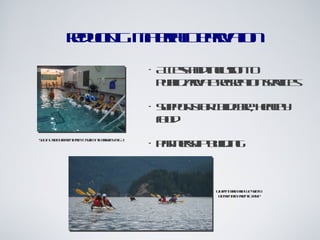
reducING Material Deprivation Access and inclusion to public/private recreation services Supports for childcare, healthy food Partnership building South Asian women learn to swim at Langara YMCA Queen Mary and Westview  Elementary Parent Group
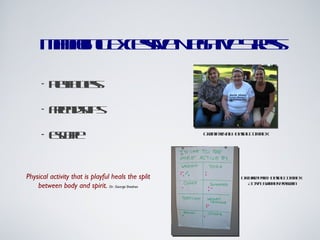
managing Excessive Negative Stress Playfulness Friendships Escape Grant McNeil Housing Complex Orchard Park Housing Complex  Activity Sampler Program Physical activity that is playful heals the split between body and spirit.  Dr. George Sheehan
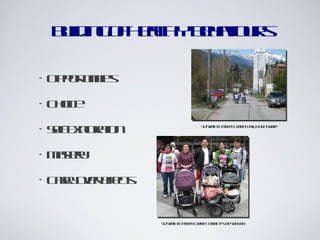
Building of Health Y BehaviouRs Opportunities Choice Self-Exploration Mastery Carry over effects So-Sah-latch Mom’s Group Walk, North Shore So-Sah-latch Mom’s Group Completes the Sun Run
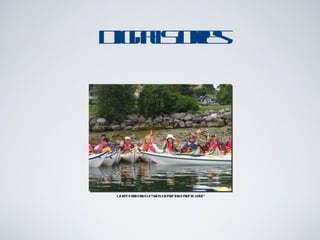
Digital Stories Queen Mary and Westview Elementary Parent Group
Lessons Learned Sustainability approach Public recreation and public health working together Increasing awareness about poverty, health and recreation/physical activity Time spent on relationship building is money well spent Engagement and community development
Social Inclusion Lens   Adapted from Health Canada, the Laidlaw Foundation, and Dr. Dennis Raphael Adapted from Health Canada, the Laidlaw Foundation, and Dr. Dennis Raphael Elements of Exclusion Poverty Disadvantage Inequality Discrimination Barriers to Access Disability Isolation Marginalization Outcomes of Inclusion Improved Health Human rights Adequate Income Access Participation Valued Contributing Belonging Empowerment Valued Recognition Self-Development Social Justice Involved and Engaged Access and Proximity Poor Health Material Deprivation Excessive Negative Stress Unhealthy Behaviours -Necessary Elements of Quality Recreation and Physical Activity-
Thank You! [email_address] [email_address] a.org

Poverty and Physical Activity: Presentation to Human Kinetics Class

  • 1.
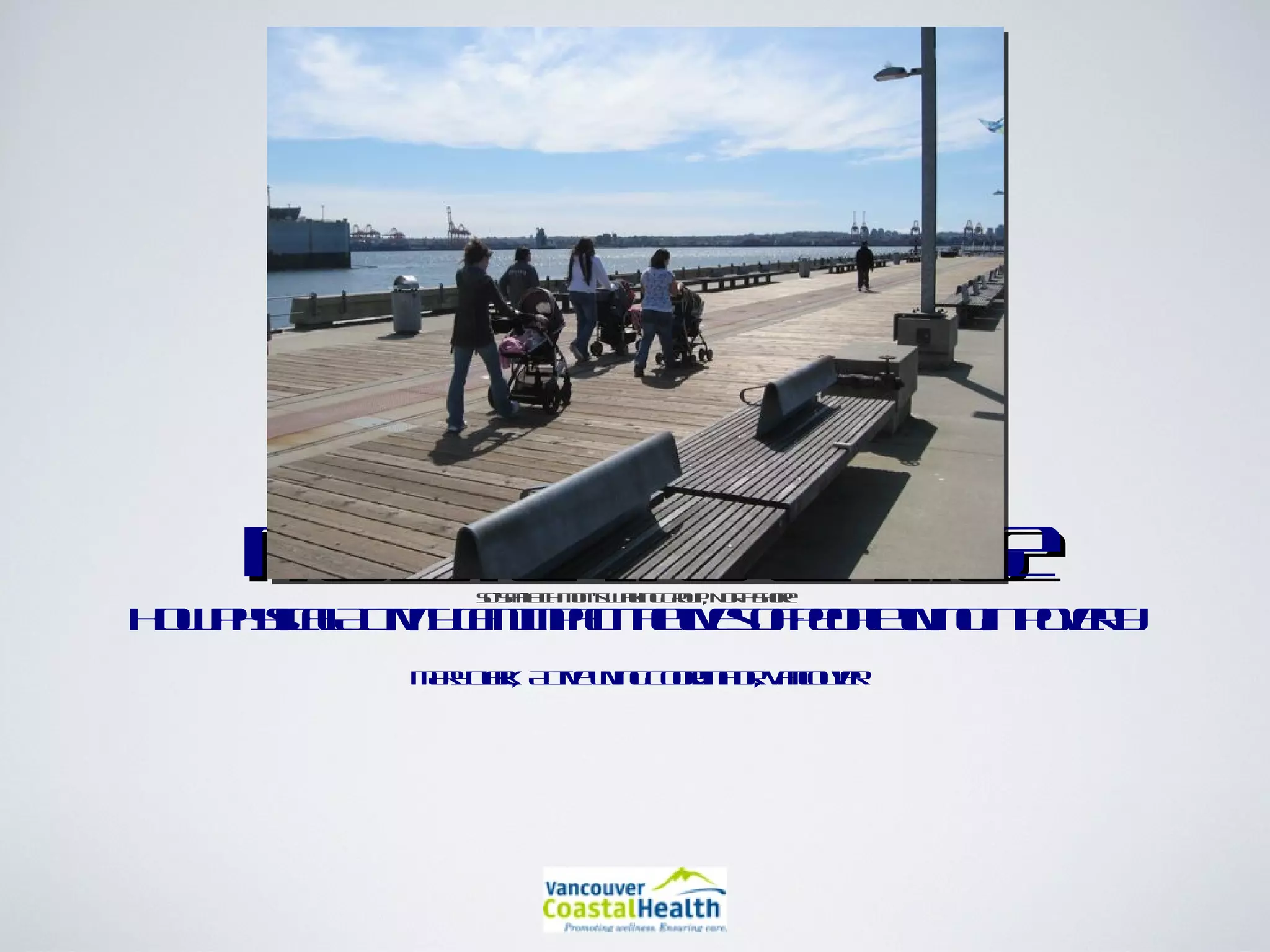
    Movement For ChangeHow Physical Activity can Impact the lives of people living in Poverty MAry Clark, Active Living Coordinator, Vancouver So-Sah-latch Mom’s Walking Group, North Shore
  • 2.
    What we’ll cover:Our roles What makes us healthy? What can physical activity do to impact people living in poverty? Digital stories Questions?
  • 3.
    Active Living CoordinatorsPart of VCH support to“Core Programs” North Shore: Healthy Living and Community Development Vancouver: Healthy Living Program Social Inclusion Framework/Approach: Building relationships Building bridges Building community
  • 4.
    What makes usHealthy? The choices we make are shaped by the choices we have. “ Unnatural Causes” Action Toolkit Cultural/Behavioural approach vs. Social Determinants approach
  • 5.
  • 6.
    Poverty and HealthPoverty is a more reliable predictor of poor health than smoking, obesity, stress, or high cholesterol Dr. Dennis Raphael Poverty reliably predicts most major chronic diseases , death from injury, use of health services, life expectancy, personal perception of health Dr. Dennis Raphael
  • 7.
    Understanding Poverty noconsensus on how to measure poverty ie. LICO regardless of measurement, BC has a significant poverty problem BC has the highest poverty rate in Canada - 5 years in a row Vancouver Stats: 27% of households North Vancouver Stats: 16% of households Poverty is a situation that makes the achievement of human potential difficult, if not impossible. Dennis Raphael, PhD Dennis Raphael, PhD Dennis Raphael, PhD
  • 8.
    Why Poverty ImpactsHealth Material Deprivation Excessive Negative Stress Building of Health Threatening Behaviours Dr. ennis Raphael Poverty is like punishment for a crime you didn’t commit. Eli Khamarov
  • 9.
  • 10.
    poverty = socialexclusion poverty = social exclusion having and maintaining good health lies in feeling included within society involvement in recreation and physical activity can mitigate some of the effects of poverty
  • 11.
    Social Inclusion Lens Adapted from Health Canada, the Laidlaw Foundation, and Dr. Dennis Raphael Adapted from Health Canada, the Laidlaw Foundation, and Dr. Dennis Raphael Elements of Exclusion Poverty Disadvantage Inequality Discrimination Barriers to Access Disability Isolation Marginalization Outcomes of Inclusion Improved Health Human rights Adequate Income Access Participation Valued Contributing Belonging Empowerment Valued Recognition Self-Development Social Justice Involved and Engaged Access and Proximity Poor Health Material Deprivation Excessive Negative Stress Unhealthy Behaviours -Necessary Elements of Quality Recreation and Physical Activity-
  • 12.
    Physical activity hasa scientific basis, but it is also an experience that provides a context for self- expression, contentment and a sense of fulfillment at a personal level. It is pointless focussing on one without the other. Dr. George Sheehan Dr. George Sheehan Dr. George Sheehan Dr. George Sheehan Foodbank Drop In Sports Program
  • 13.
    reducING Material DeprivationAccess and inclusion to public/private recreation services Supports for childcare, healthy food Partnership building South Asian women learn to swim at Langara YMCA Queen Mary and Westview Elementary Parent Group
  • 14.
    managing Excessive NegativeStress Playfulness Friendships Escape Grant McNeil Housing Complex Orchard Park Housing Complex Activity Sampler Program Physical activity that is playful heals the split between body and spirit. Dr. George Sheehan
  • 15.
    Building of HealthY BehaviouRs Opportunities Choice Self-Exploration Mastery Carry over effects So-Sah-latch Mom’s Group Walk, North Shore So-Sah-latch Mom’s Group Completes the Sun Run
  • 16.
    Digital Stories QueenMary and Westview Elementary Parent Group
  • 17.
    Lessons Learned Sustainabilityapproach Public recreation and public health working together Increasing awareness about poverty, health and recreation/physical activity Time spent on relationship building is money well spent Engagement and community development
  • 18.
    Social Inclusion Lens Adapted from Health Canada, the Laidlaw Foundation, and Dr. Dennis Raphael Adapted from Health Canada, the Laidlaw Foundation, and Dr. Dennis Raphael Elements of Exclusion Poverty Disadvantage Inequality Discrimination Barriers to Access Disability Isolation Marginalization Outcomes of Inclusion Improved Health Human rights Adequate Income Access Participation Valued Contributing Belonging Empowerment Valued Recognition Self-Development Social Justice Involved and Engaged Access and Proximity Poor Health Material Deprivation Excessive Negative Stress Unhealthy Behaviours -Necessary Elements of Quality Recreation and Physical Activity-
  • 19.
    Thank You! [email_address][email_address] a.org

Editor's Notes

  • #3 Mary - More on our specific roles as Active Living Coordinators What makes us healthy and a brief overview of poverty and health The role of Physical activity - beyond the traditional beliefs of lowering blood pressure and cholesterol We’re going to share 2 digital stories from 2 different projects Lessons learned and quesitons
  • #4 Jo-Anne - (insert picture) Where the positions came from/ Core programs: special funding to support the “Core Programs” to health authorities. Target populations: 35-64, marginalized groups, potential for chronic diseas NS/Vancouver differences: NS-Healthy Living and Community Development Elements of our roles: Use a Social Inclusion framework/Approach
  • #5 Jo-Anne- The choices we make are shaped by the choices we have. The social determinants are things like: the availability of resources, gender, ethnicity, living and working conditions, quality of available food, access to play and recreation, and affordable housing. All health evidence points towards SDOH approach to explain health inequities. cultural/behavioural: health is a reflection of personal choices around eating, activity, smoking, etc. social determinants: health is developed from the conditions in which people are born, work, play, and live their lives health is developed from the conditions in which people are born, work, play, and live their lives Making healthy choices isn’t just about self-discipline. Some neighborhoods have easy access to fresh, affordable produce; others have only fast food joints, liquor outlets and convenience stores. Some have nice homes, clean parks, safe places to walk, jog, bike or play, and well-financed schools offering gym, art, music and after-school programs, while others don’t. What public policies and business practices can better ensure healthy spaces and places for everyone?
  • #7 Jo-Anne - Chronic diseases: A recent Canadian study revealed that: Cardiovascular disease is 3x more likely for men who are living in poor neighbourhoods. Type 2 diabetes is 4x greater for women who are living in poor neighbourhoods. “ Canadians at the bottom of the economic ladder were more likely to die from just about every disease from which people can die from than the more well-off, including cancers, heart disease, diabetes, and respiratory diseases among others.” Wilkins, Adams, & Brancker (2000)
  • #8 Jo-Anne_ 3 common ways to measure poverty: 1. Using a measurement of income - like LICO - STATS Canada never intended for this measurement to be used a measurement of poverty, unfortunately it is used in many places to determine qualifications for benefits. Poor people and those on government assistance earn far less than the minimum on LICO tables 2. Relative poverty: the most accurate way to measure poverty in developed countries - feeling that you do not have enough to get along in society 3. Multi-dimensional model: not just a lack of financial resources, but the lack of access to power and conditions of life - for example: lack of access to health services, recreation services, dietary needs, participate in relationships, follow customary behaviours, not able to meet societal role expectations In BC, 13% of individuals, 1 in 5 children Groups most affected by poverty: women, lone parents, new immigrants, visible minorities and aboriginals. These are also the same groups who have the lowest rates of physical activity participation in our society. If people who live in poverty had access to power and influence, Canada would not have a poverty issue.
  • #9 Mary- Material Deprivation Examples: access to healthy food, not able to purchase books, medicine, go out on a date, not join a group, program, or take a class.Basically having the $$$ to participate as a member of society and the expectations that come with that. Children come first. Excessive Negative stress Example: discrimination, barriers to access, dealing with a disability, managing life, isolation, marginalization, making difficult choices, deameaning of asking for help and prove that you are poor all the time, constantly living in a state of seeking. Single mom in Pop Health video re: son that loses his jacket. Health threatening behaviours examples: sedentary - 70% of kids living in poverty never play any organized sports. TV becomes a cheap friend. Coping with stress through smoking, alcohol.
  • #11 Mary: (insert picture) having and maintaining good health lies in feeling included within societyinvolvement in recreation and physical activity can mitigate some of the effects of poverty
  • #12 Mary-Imagine these dimensions as making up a lens . When recreation and leisure services apply a social inclusion lens , the process and the outcome results in:
  • #13 Mary Dr. George Sheehan from Australia: Physical activity has a scientific basis, but it is also an experience that provides a context for self-expression, contentment and a sense of fulfillment at a personal level.It is pointless focussing on one without the other.
  • #14 Jo-Anne: Material Deprivation Examples: fee subsidy program, $$ always goes to kids programs first (jo tell her story about kayaking), YMCA partnership, For parents who have limited incomes, $$$ typically first go to their kids being involved in activities. Adults may need financial incentives to participate. Research shows that when recreation service providers require people who are poor to prove income, it is a major barrier. The City of Delta and Kelowna are examples of public recreation service providers who trust public health and social service agencies to administer “Leisure Access”.
  • #15 Jo-Anne: Managing Excessive Negative stress Example: Playfulness, escape, enjoyment, opportunity for self development, building friendships.
  • #16 Mary: Building Healthy behaviours examples: Opportunities: skill development, friendship building, not knowing you could do something and finding out that you can Carry over effects: leadership, role modeling, family life - parents can be be proud to tell their kids they did something
  • #17 2 pictures here while we load video
  • #18 Sustainability: we try to build skills, leadership abilities, etc. “Work ourselves out of a job” - Jo’s example of Housing and Cap susp. bridge Second point: historically - the focus on Active Living has been primarily driven by a pathological perspective ie. avoid ill health, and ignored the social and cultural conditions that shape and constrain health-particularly for those with limited resources. Public health and public recreation have the same goals for wellbeing. We need to work together. Increasing awareness: Literature shows that many recreation professionals underestimate the amount of poverty in their neighbourhoods - because that’s not the typical user of public recreation services. We all need to build our awareness and look for other outcomes to our services rather than “Did we meet the budget”. Relationship building Engagement and Community development
  • #19 In summary, we’ll review the model...any questions