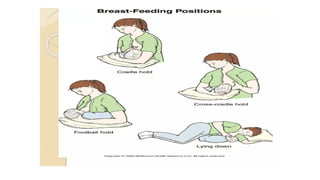
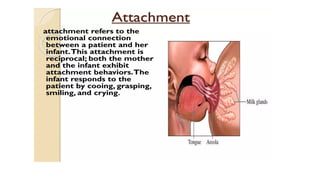
Normal Puerperium
• Definition
• It is the period following childbirth during which the body tissues, especially the pelvic organs revert back
approximately to the prepregnant state both anatomically and physiologically ( it commences from the
end of third stage (fourth stage) of labor to 6 weeks)
• The return changes are mostly confined to the reproductive organs with the exception of the mammary
glands which in fact show features of activity.
• Is the process whereby the genital organs revert back approximately to the state as they were before
pregnancy
 The woman is termed as a puerpera
Puerperium features
2
• The reproductive organs return to their pre-gravida state
• Lactation starts
• The mother recuperates from the physical and emotional stress of labor
• Adjustment to the new baby
Involution
It is the process whereby the genital organs revert approximately to the state
they were before pregnancy.
Stages of peurperium
3
• Puerperium starts as soon as the placenta is expelled (2hrs post delivery) and lasts for
approximately 6 weeks when the uterus becomes regressed almost to the non-pregnant
size.
• The period is arbitrarily divided into:-
• Immediate- The first 24 hours after parturition
• Early- Extends until the first week of postpartum
• Remote- Up to 6 weeks (Actual involution period)
• Similar changes occur following abortion but takes a shorter period for the
involution to complete.
Involution of the uterus
• I. ANATOMICAL CIRCUMSTANCE
• Uterus:-
• Lower Uterine segment
• Cervix
• II. PHYSIOLOGICAL CIRCUMSTANCE
• Muscles
• Blood vessels
• Endometrium
5
I. ANATOMICAL CONDITION
UTERUS
• Immediately following delivery, the uterus becomes firm and retract with
alternate hardening and softening (the uterus can be palpated at or near the
woman’s umbilicus, as it contracts to expel the placenta and fetal membranes.
• The uterus measures about 20 x 12 x 7.5 cm (length, width and thickness) and
weighs about 1000 gm. At the end of 6 weeks, its measurement is almost similar
to that of the non-pregnant state and weighs about 60 gm.
• The placental site contracts rapidly presenting a raised surface with measures
about 7.5 cm and remains elevated even at 6 weeks when it measures about 1.5
cm...
(the average diameter of placental attachement site is 18cm but immediately
shrinks and become 9cm after expulsion)
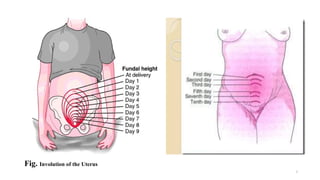
Fig. Involution of the Uterus
6
cont...
• At the end of third stage of labor- it weights 1000gm and 2cm below the
umblicus
• At one week, it weighs 500gm, 300gm (2wks) and 50gm (6wks)...
the latter is normal size
• Return back to pelvic cavity within the first 2weeks post birth
• The endometrium is regenerated by the 10th day, except at the
Two factors that bring involution:
8
1.Autolysis or the Self-Digestion
• Cause by an enzyme (ACID CYTOSOLIC PROTEASE) which acts on the
protoplasm.
• These broken-down substances are got rid of via the blood stream and kidneys.
• Autolysis is enzymatic digestion of excess cytoplasm and thrombosis and hyaline
degeneration of vessels
• This reduction in size is achieved partly by the removal of blood and blood
vessels, and partly by digestion of a large part of the cell cytoplasm.
2. Ischemia
9
• This is a localized anemia, caused by the abjuration of the uterine muscle on
the blood vessels.
• The blood vessels are obliterated by thrombosis and become degenerated while its
remnants are transformed into elastic tissues.
• Lining of the uterus is cast off and is replaced first by granular tissue and then
by endometrium.
• CERVIX
• The cervix contracts slowly, the external os admits two fingers for a few days but by the
end of first week, narrows down to admit the tip of a finger only.
• The contour of the cervix takes a longer time (6 weeks) and the external os never
reverts back to the nulliparous state. (round VS slit)
• The cervix may also appear swollen and bruised from the delivery, and it may have
small breaks where the tissue was torn as the baby passed through. But within
the first day the cervix has usually narrowed and regained its normal muscular
consistency.
• By the end of the first week, the external os is closed to the extent that a finger
could not be easily introduced, and it is converted to a transverse slit around 2
weeks after delivery.
II. PHYSIOLOGICAL CONDITION
• The physiological process of involution is mostly marked in the body of the uterus.
MUSCLES
• There is a marked hypertrophy and hyperplasia of muscle fibres during
pregnancy and the individual muscle fibre enlarges to the extent of 10 times in
length and 5 times in breadth.
• During puerperium, the number of muscle fibres is not decreased but there is
substantial reduction of the myomatrial cell size.
• Withdrawal of the steroid hormone such as estrogen and progesterone, may
lead to increase in the activity of the uterine collagenase and the release of
proteolytic enzyme.
• BLOOD VESSELS
• The changes of the blood vessels are pronounced at the placental site.
• The arteries are constricted by contraction of its wall and thickening of the
intima followed by thrombosis.
• During the first week, the arteries undergo thrombosis, hyalinization and
fibrinoid end arteritis.
• The veins are obliterated by thrombosis, hyalinization and endophlebitis.
ENDOMETRIUM
• Following delivery, the major part of the decidua is cast off with the
expulsion of the placenta and the membranes, more at the placental
site.
• The endometrium left behind varies in the thickness from 2-3 mm.
• The superficial part containing the degenerated decidua, blood cells and
bits of fetal membranes becomes necrotic and is cast off in the lochia
• Regeneration starts by 7th
day.
• Regeneration of the epithelium is completed by 10th
day and the entire
endomatrium is restored by the 16th
, except at the placental site where it takes
about 6 weeks
CLINICALASSESSMENT OF INVOLUTION OF UTERUS
• The rate of involution of the uterus clinically assessed by noting the height
of the fundus of the uterus in relation to the symphysis pubis.
• The measurement should be taken carefully at a fixed time every day,
preferbly by the same observer.
• Bladder must be emptied before hand and preferably the bowel too, as the
full bladder and the loaded bowel may arise the level of the fundus of the
uterus
Erroneousness conditions
• Autolysis--it is a self distruction of excess hypertrophied tissue
• Subinvolution--is the failure of uterus to return to pre-pregnancy
state most commonly due to infection or retained tissue
• Oxytocin= maintain uterus to become firm and contracted (lactation
helps)
LOCHIA
• It is the vaginal discharge for the first fortnight during puerperim.
• The discharge originates from the uterine body, cervix and vagina.
• It consists of blood, sloughed-off tissue from the lining of the uterus, and
bacteria.
Odor and reaction
• It has got a peculiar offensive fishy smell.
• It’s reaction is akaline tending to become acid towards the end.
Cont. …
17
• Maternal age, parity, infant weight, and breast feeding do not
influence the duration of lochia.
• Moreover, routine administration of oxytocic agents beyond the
immediate postpartum period neither diminishes blood loss nor
hastens uterine involution.
Types of Lochia and it’s discription
18
• The lochia undergo sequential change as involution progresses. These are:
1. Lochia Rubra: Red in colour that lasts 1- 3 days consists of blood, chorion,
decidua, amniotic fluid, lanugo (fetal hair), vernix caseosa (varnish cheesy like
matter) and meconium.
2. Lochia Serosa: Pink in colour, lasts 4-9 days contains less blood more serum
as well as leukocytes & organisms.
3. Lochia Alba: Creamish pale /white/discharge lasts 10-15days. Consists
mainly of leukocytes and mucus. May continue for up to and beyond 6 weeks
• Amount
• The average amount of discharge for the first 5-6 days is estimated to be 250 ml.
Normal duration
• The normal duration may extend up to 3 weeks.The red lochia may persist for longer
duration especially in women who get up from the bed for the first time in later
period.The discharge may be scanty, especially following premature labours or may
be excessive in twin delivery or hydramnios.
• Clinical importance
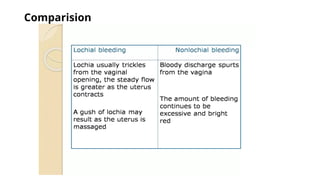
• The character of the lochia discharge gives useful information about
the abnormal puerperal state. The vulval pads are to be inspected daily
to get information
• Ordor
• If malodorous, indicates infection.
• Retained plug or cotton piece inside the vagina should be kept in mind.
• Amount
• Scanty or absent- signifies infection or lochiometra (distention of
uterus).
• If excessive-indicates infection
• Color
Comparision
Involution of other pevic structures
22
Vagina
• The vagina, which was stretched widely to allow the passage of the baby,
gradually shrinks to its non-pregnant state over a period of about three
weeks
• The distensible vagina, noticed soon after birth takes a long time (4-8 weeks)
to involute.
• It regains its tone but never to the virginal state.
• The mucosa remains delicate for the first few weeks and submucous venous
congestion persists even longer.
• Rugae (internal folding) partially reappear at the third week but never to the
same degree as in prepregnant state.
Cont. ...
23
• By this date, the third week, increased blood flow and swelling of the
vagina and vulva, which was visible immediately after delivery, should
have disappeared.
• Sexual intercourse may resume when the lochia ceases, the vagina and
vulva are healed, and the woman is physically comfortable and
emotionally ready.
Involution of the Perineum
24
• The perineum has been stretched and traumatized, and sometimes torn or cut,
during the process of labor and delivery.
• The swollen and engorged vulva rapidly resolves, completely gone within 1-2 weeks.
• Most of the muscle tone is regained by 6 weeks, with more improvement over the
following few months. The muscle tone may or may not return to normal,
depending on the extent of injury.
Involution of the Abdominal Wall
25
• The abdominal wall remains soft and relatively poorly toned for
many weeks after the birth, but it gradually becomes stronger over
time.
•The extent of return to the muscular tone of the pre-pregnant
abdomen depends greatly on the amount of exercise the woman
takes as she returns to full fitness.
Placental Site Involution
26
• Complete extrusion of the placental site takes up to 6-8 weeks.
• Immediately after delivery, the placental site is about the size of the
palm, but it rapidly decreases thereafter.
• Within hours of delivery, the placental site normally consists of many
thrombosed vessels that ultimately undergo organization. By the end of
the second week, it is 3 to 4 cm in diameter.
Urinary Tract Involution
27
• The bladder mucosa becomes edematous and often shows evidence of
submucous extravasation of blood.
• The bladder capacity is increased.
• The bladder may be overdistended without any desire to pass urine
• The urinary tract is revived from the pressure of delivery.
•Enlargement of the kidneys persists for months. The glomerular filtration
rate returns to normal in weeks. Ureteric dilatation persists for 12 weeks.
Cont. ...
28
• The common urinary problems are: over distension, incomplete emptying and
presence of residual urine.
• Urinary stasis is seen in more than 50 % of women.
• The risk of urinary tract infection is therefore high.
• Dilated ureters and renal pelves return to normal size within 8 weeks.
• There is pronounced diuresis on the second or third day of the peurperium.
• Only 'clean catch' sample of urine should be collected and sent for examination,
with lochia should be avoided.
Involution in the Alimentary Canal
29
• Heartburn improves due to hormonal fall and release pressure on the sphincter.
•Constipation presents for a few days (2-3 days) because the painful perineum
•Appetite: feels hungry shortly after parturition
Involution of the Circulatory System
• Blood volume decreases to pre-gravid level & blood regains its normal viscosity.
• Muscle tone of blood vessels improves cardiac output returns to normal and blood pressure
returns to its usual level.
• There is rapid consumption of clotting factors in the first few hours after delivery.
• There is a rapid increase in clotting factors which reaches maximum days 3-5 and is maintained
for 2 weeks.
Involution of the Respiratory System
30
• Experience full ventilation because lungs are no longer compressed by the enlarged uterus
Endocrine; Oxytocin
• Oxytocin is secreted by the posterior pituitary gland and acts up on uterine muscles &
breast tissue.
• It continuously acts upon uterine muscle fibers that maintain their contractions
reducing the placental site & preventing hemorrhage.
• Secretion of oxytocin aids the continuing involution of the uterus and expulsion of milk.
Prolactin:
31
• Prolactin is secreted by the anterior lobe of the pituitary gland.
• Its amount increases by the frequency of breastfeeding and it is important for breast
milk production.
• In a nonlactating mother, prolactin level returns to a non-pregnant level by weeks.
• In lactating mothers, it remains above the nonpregnant level with a dramatic increase
during suckling.
• Depending on the frequency of feeding, this response gradually declines over a
period of 3-6 months.
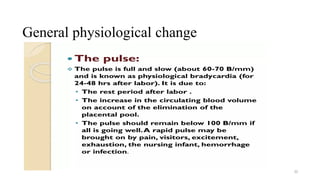
General physiological change
32
Temperature
• The temperature should not be above 37.2 ℃ within the first 24
hours. There might be a slight reactionary rise following delivery
by 0.5 ℉ ( 0 . 0 2 - 0 - 5 C e l s i u s ) but comes down to normal
within 12 hours. On the 3rd day, there may be a slight rise in
temperature due to breast engorgement which should not last for
more than 24 hours.
• This transient temperature rise is due to engorgement, excitation,
infection (genitourinary) or constipation.
Weight Loss
35
• In addition to the weight loss (5-6 kg) because of the expulsion of
the fetus, placenta, liquor, and blood loss, a further loss of about 2
kg occurs during puerperium chiefly caused by diuresis.
• This weight loss may continue up to 6 months of delivery
Fluid loss
36
• During the pregnancy, the woman’s body contains more body fluids than in the non-pregnant
state.
• Some of this additional water is held in her tissues, some in her increased volume of blood,
and some in the uterus. This excess water is rapidly eliminated after the birth.
• There is a net fluid loss of at least 2 liters during the first week and an additional 1.5 liters
during the next 5 weeks.
• The amount of loss depends on the amount retained during pregnancy, dehydration during labor,
and blood loss during delivery.
• The loss of salt and water is larger in women with preeclampsia and eclampsia (excess
accumulation)
Blood Values
37
• Immediately following delivery, there is a slight decrease in blood
volume due to blood loss and dehydration. Blood volume returns to
non-pregnant level by the second week.
• Cardiac output rises soon after delivery to about 80 % above the pre-
labor value but slowly returns to normal within one week
• RBCs volume and hematocrit values return to normal by 8 weeks
postpartum after the hydremia (excess water in the blood) disappears.
• Platelet count decreases soon after the separation of the placenta but
secondary elevation occurs with an increase in platelet adhesiveness
between 4-10 days
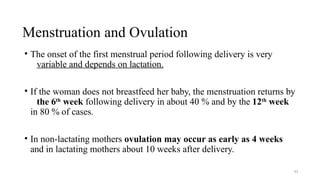
Menstruation and Ovulation
43
• The onset of the first menstrual period following delivery is very
variable and depends on lactation.
• If the woman does not breastfeed her baby, the menstruation returns by
the 6th
week following delivery in about 40 % and by the 12th
week
in 80 % of cases.
• In non-lactating mothers ovulation may occur as early as 4 weeks
and in lactating mothers about 10 weeks after delivery.
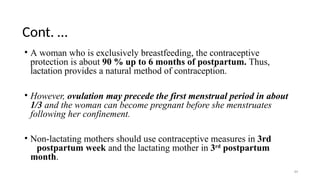
Cont. …
44
• A woman who is exclusively breastfeeding, the contraceptive
protection is about 90 % up to 6 months of postpartum. Thus,
lactation provides a natural method of contraception.
• However, ovulation may precede the first menstrual period in about
1/3 and the woman can become pregnant before she menstruates
following her confinement.
• Non-lactating mothers should use contraceptive measures in 3rd
postpartum week and the lactating mother in 3rd
postpartum
month.
Emotional Changes
45
• Emotional liability /sucking of mood/ is very common during the
early days of the puerperium.
• After delivery most women experience mood elation but a few days
later they may be depressed and tearful.
• It is probably a reaction to the physical and mental stress of
childbirth.
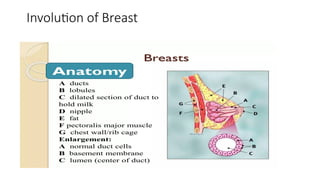
Involution of Breast
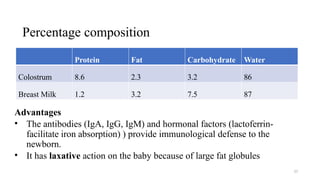
Percentage composition
57
Protein Fat Carbohydrate Water
Colostrum 8.6 2.3 3.2 86
Breast Milk 1.2 3.2 7.5 87
Advantages
• The antibodies (IgA, IgG, IgM) and hormonal factors (lactoferrin-
facilitate iron absorption) ) provide immunological defense to the
newborn.
• It has laxative action on the baby because of large fat globules
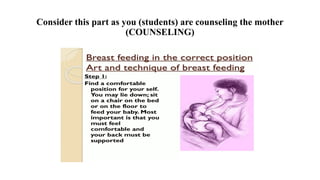
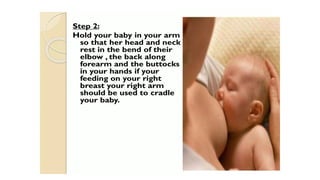
Consider this part as you (students) are counseling the mother
(COUNSELING)
Physiology of Lactation
68
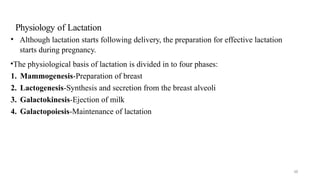
• Although lactation starts following delivery, the preparation for effective lactation
starts during pregnancy.
•The physiological basis of lactation is divided in to four phases:
1. Mammogenesis-Preparation of breast
2. Lactogenesis-Synthesis and secretion from the breast alveoli
3. Galactokinesis-Ejection of milk
4. Galactopoiesis-Maintenance of lactation
Postnatal Assessment
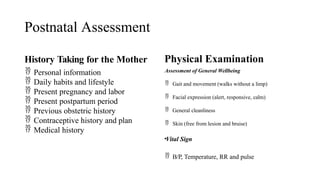
History Taking for the Mother
 Personal information
 Daily habits and lifestyle
 Present pregnancy and labor
 Present postpartum period
 Previous obstetric history
 Contraceptive history and plan
 Medical history
Physical Examination
Assessment of General Wellbeing
 Gait and movement (walks without a limp)
 Facial expression (alert, responsive, calm)
 General cleanliness
 Skin (free from lesion and bruise)
•Vital Sign
 B/P, Temperature, RR and pulse
Cont. …
70
Conjunctiva and Sclera
 Conjunctiva (pink or pale)
 Sclera (yellow or white)
Breast Exam
 Inspection (puckering, scaliness, thickening, sores and rashes)
 Palpation (soft, tender, lump, swelling for engorgement)
 Nipples (colostrums, pus, cracks, fissure, lesions, inversion)
Cont…
Abdomen (Uterus)
 Firmness, soft and measure fundal height
Bladder
 Check for full bladder
Vaginal Exam
 Lochia: Amount, color, consistency, odor
 Bleeding
Cont. …
72
Vulva
 Vulval inspection for edema
 Varicose veins or hemorrhoids
 Perineum stitches there? = Clean? Infected? Edematous if so give salt sitz bath
Lower extremities Exam
 Lower extremities for varicose veins, venous thrombosis, or edema
 Calves (pain in the calf when the foot is forcibly dorsiflexed)
Laboratory Investigations
73
• HIV testing
• VDRL/RPR
• Hemoglobin (if necessary)
Abnormal Peurperium
• Puerperal fever
• A temperature of 38.0°C or higher during the first 10 days
postpartum. Fever in the first 24 hours after delivery often resolves
spontaneously and cannot be explained by an identifiable infection.
Most persistent fevers after childbirth are caused by genital tract
infection.
• Other causes of puerperal fever include breast engorgement, urinary
infections, infections of episiotomy, abdominal incisions and perineal
lacerations, and respiratory complications after caesarean delivery
and septic thrombophlebitis
Risk Factors
• PROM, Prolonged labor, insistent digital examination, retained tissue,
anemia and poor nutrition during pregnancy, immunocompromised
and etc...
Investigations
• Blood film
• CBC including ESR
• Urinalysis
• Stool exam
• U/S
Puerperal Sepsis
• Puerperal sepsis is an infection of the genital tract at any time between the
onset of rupture of membranes or labour and the 42nd day following
delivery or abortion in which any two or more of the
• following signs and symptoms are present
Sign and Symptoms
• Sub involution and offensive lochia this is the first sign of puerperal sepsis
• Fever - 38.5 ºC or higher,
• Rapid and weak pulse over 120/min
• Foul smelling of the vaginal discharge
• Severe abdominal pain and tenderness
• Raised WBC count
Causes of Puerperal Sepsis
• Due to colonization of the genital tract by microorganisms: some of the most
common bacteria are streptococci, staphylococci, escherichia coli (E.coli),
clostridium tetani, clostridium welchii, chlamydia and gonococci. More than one
type of bacteria may be involved when a woman develops puerperal sepsis.
• Endogenous Infections--bacteria that normally live in the vagina and rectum
(commensaly) and brought to uterus
• Exogenous Infections---Introduced into the vagina from outside the body
Types of Puereperal Sepsis
1. Localized
• Involving the vulva, vagina or episiotomy site or an endometritis
(meteritis)
2. Generalized
Spreading to the tubes, ovaries, peritoneum and blood stream
Risk Factors for Puerperal Sepsis
Poor patient hygiene, Pre-existing anaemia and malnutrition, Pre-
existing sexually transmitted infections (STIs), Not immunized
against tetanus, Pre-existing diabetes
Failure to follow aseptic techniques, Frequent vaginal
examinations, Manipulations high in the birth canal, PROM,
Prolonged/obstructed labour etc
Lack of necessary resources, e.g., staff, equipment, drugs (most
effective antibiotics) etc
Metritis
• • It is infection of the uterus, inflamation involving all layers of the
uterus (endometrial mucosa and submucosa, muscularis ans
serosa), after delivery, major cause of maternal death.
• • Delayed or inadequate treatment of metritis may result in
Pelvic abscess, peritonitis, septic shock, deep vein thrombosis,
pulmonary embolism, chronic pelvic infection with recurrent pelvic
pain and dyspareunia, tubal blockage and infertility.
• Sign and symptoms
• Fever / Chills
• Lower abdominal pain
• Purulent foul-smelling lochia
Management of Uterine Infection
• Antibiotics
• Give the woman a combination of antibiotics starting from
presentation up to 24–48 hours after complete resolution of clinical
signs and symptoms (fever, uterine tenderness, purulent lochia and
leukocytosis).
• • Clindamycin phosphate 600 mg IV every eight hours + Gentamicin 5
mg/kg body weight IV
• every 24 hours.
• • If Clindamycin is not available administer Ampicillin 2 g IV every 6
hours + gentamicin 5 mg/kg body weight IV every 24 hours.
• • NOTE: Oral antibiotics are not necessary after stopping IV antibiotics.
Management of persistent fever
• If fever is still present 72 hours after starting antibiotics, re-evaluate
and revise the diagnosis
• Possible differential diagnosis for persistent fever includes
peritonitis, pelvic abscess and septic thrombophlebitis
• Abdomino-pelvic ultrasound to assess for retained tissue and to
check for other complications like abscess collection.
• If retained placental fragments are suspected, perform a digital
exploration of the uterus to remove clots and large pieces. Use
ovum forceps, aspiration with large cannula (12-14) or a wide
curette if necessary (avoid sharp curette).
• If there are signs of general peritonitis (fever, rebound tenderness,
general abdominal pain), perform laparotomy to drain the pus
(Note that abdominal tenderness in the postpartum period may be
Pelvic Abscess
• A life-threatening collection of infected fluid in the pouch of
Douglas, fallopian tube, ovary, or parametric tissue. A pelvic abscess
occurs as a complication after operative procedures. It starts as
pelvic cellulitis or hematoma spreads to parametrial tissue.
Sign and symptoms
• Lower abdominal pain and distension
• Spiking fever / Chills
• Tender uterus
• Poor response for antibiotics
• Swelling in adnexa or pouch of Douglas
• Management
• Give a combination of antibiotics before draining the abscess; continue
antibiotics until the woman is fever-free for 48 hours.
• Ampicillin 2 g IV every six hours PLUS Gentamicin 5 mg/kg body weight IV
every 24 hours PLUS Metronidazole 500 mg IV every eight hours.
• If the abscess is fluctuant in the cul-de-sac, drain the pus through the cul-
de-sac. If the spiking fever continues, perform laparotomy.
• Peritonitis
• Generalized peritonitis is inflammation of the peritoneum.
• This means both the parietal peritoneum, and the visceral peritoneum
are inflamed.
• Sign and Symptoms
• Fever / chills
• Lower abdominal pain
• Absent bowel sound
• Abdominal tenderness
• Management
• Provide nasogastric suction
• Start an IV infusion and infuse IV fluids
• Give the woman a combination of antibiotics until she is fever-free for 48 hours
• Ampicillin 2 g IV every six hours PLUS Gentamicin 5 mg/kg body weight IV every
24 hours PLUS Metronidazole 500 mg IV every eight hours
• Identify and treat the underlying cause of the peritonitis. The type of surgical
intervention needed depends on the diagnosis of the cause of the peritonitis.
Forexample, closure may need to be performed for an intestinal or uterine
Breast complications
• Breast complication in puerperium
• Cracked Nipples
• Engorged Breast
• Mastitis
• Abscess
• Cracked Nipples
• When the nipples get a cut in them caused by the baby while
sucking and predisposed to by lack of proper breast hygiene in
prenatal time and while baby is feeding.
• Management
• Take baby off breasts, baby must be spoon fed.
• Analgesics for pain
• Prevention
• Rolling the nipples during pregnancy and puerperium
• Not allowing baby to suck too long at the breast or to suck at any
empty breast.
Breast Engorgement
• This is where the ducts become blocked - usually occurs between 3rd
and 5th day and the milk cannot pass, the lymphatic become engorged,
and the breasts become edematous. Breast engorgement is an
exaggeration of the lymphatic and venous engorgement that occurs
prior to lactation. It is not the result of over distension of the breast
with milk.
• Sign and Symptom
• Common presentation
• Fever, bilaterally and diffusely swollen painful breasts, tense, warm and tender
breasts on
• palpation in the first three postpartum days
• Management
• If the woman is breastfeeding and the baby is able to suckle
• Encourage the woman to breastfeed more frequently, without
restrictions, using both breasts at each feeding. Show the woman how
to hold the baby and help the baby attach.
• If the woman is breastfeeding and the baby is not able to suckle,
encourage the woman to express milk by hand or with a pump.
• Relief measures before feeding or expression may include:
• Applying warm compresses to the breasts just before breastfeeding or
encouraging
• the woman to take a warm shower.
• • Massaging the woman’s neck and back.
• Cont. …
• Relief measures after feeding or expression may include:
• • Supporting breasts with a binder or bra.
• • Applying cold compresses to the breasts.
• • Paracetamol 500–1000 mg every six to eight hours orally as analgesic
• (maximum 4000 mg in 24 hours).
• • Follow up in three days to ensure response.
• If the woman is not breastfeeding
• • Encourage her to support breasts with a binder or bra.
• • Apply cold compresses to the breasts to reduce swelling and pain.
• • Avoid massaging or applying heat to the breasts.
• • Avoid stimulating the nipples.
• • Give Ibuprofen 200–400 mg every six to eight hours (maximum dose 1200 mg in 24
• hours) OR Paracetamol 500–1000 mg every six to eight hours orally as an appropriate
• alternative (maximum dose 4000 mg in 24 hours).
• • Follow up in three days to ensure response
• 59
• Prevention
• • Express the breast during pregnancy, so that the colostrum comes out.
• • This is done from the 36th week, and it clears the ducts.
• Breast Mastitis
• • This is where the breasts become infected; it is usually caused by
• either cracked nipples or engorged breasts.
• 61
• Sign and Symptom
• Common presentation
• • Fever, unilateral breast swelling
• and/or pain, unilateral erythema,
• warmth, swelling and tenderness
• Less common presentation
• • Nipple excoriations/ cracking,
• shock
• 62
• Management
• Treat with antibiotics
• • Cloxacillin 500 mg by mouth every six hours for 10 days OR Erythromycin 250 mg every eight
• hours for 10 days.
• • Encourage the woman to continue breastfeeding
• • Support the breasts with a binder or bra, and
• • Apply cold compresses to the breasts between feedings to reduce swelling and pain.
• • Paracetamol 500–1000 mg every six to eight hours as an appropriate alternative (maximum
dose
• 4000 mg in 24 hours).
• • Follow up in three days to ensure response 63
• Prevention
• • Treat cracked nipples and engorged breasts.
• Breast Abscess
• • This is where there is pus formation in the breasts, is usually
• recognized by a triangular red area with fluctuates when you press it, it
• is caused by neglected mastitis.
• 65
• Sign and Symptom
• Common presentation
• • Fever, unilateral breast swelling
• and pain, localized and fluctuant
• mass with erythema of overlying
• skin
• Less common presentation
• • Draining pus, pus discharge per
• nipple
• Management
• Antibiotic Treatment:
• • Cloxacillin 500 mg PO every six hours for 10 days OR Erythromycin
• 250 mg every eight hours for 10 days.
• Surgical Treatment:
• • Pus must be drained either by incision and drainage or ultrasound
• guided needle aspiration (aspiration may need to be repeated).
• 67
• Supportive Treatment
• • Encourage her to continue breastfeeding even when there is collection of
• pus.
• • Support breasts with a binder or bra.
• • Apply cold compresses breasts between feedings to reduce swelling and
• pain.
• Cont. …
• • Mid-stream milk culture and sensitivity studies when there is poor response
• is needed to tailor the antibiotic of choice.
• • Breast ultrasound should be employed when there is poor response to rule
• out recollection of abscess or other mass lesion.
• • There may be a need to hospitalize and manage patients with parenteral
• antibiotics in severe infections.
• Breast Abscess Drainage
• • General anesthesia (e.g. ketamine) is usually required. Make the incision
• radially, extending from near the areolar margin toward the periphery of the
• breast to avoid injury to the milk ducts.
• • Wearing sterile gloves use a finger or tissue forceps to break up the pockets
• of pus. Loosely pack the cavity with gauze.
• • Remove the gauze pack after 24 hours and replace with a smaller gauze
• pack.
• 70
• Cont. …
• • If there is still pus in the cavity: Place a gauze pack in the cavity and
• bring the edge out through the wound as a wick to facilitate drainage
• of any remaining pus or perform ultrasound-guided aspiration for
• abscesses in which overlying skin is intact and the abscess is less than
• 5 cm in diameter.
• Urinary Tract Infection
• • An infection that involves any part of the urinary system (kidney,
• ureters, bladder and urethra).
• 87
• Classification
• • Asymptomatic bacteriuria (ASB): A true bacteriuria (>105
• bacteria/ml of midstream clean catch urine) in the absence of specific
• symptoms of acute UTI.
• • Cystitis: Infection of the bladder.
• • Acute pyelonephritis: An infection of the upper urinary tract, mainly
• of the renal pelvis, which may also involve the renal parenchyma.
• 88
• Cystitis
• • Cystitis is an inflammation of the urinary bladder.
• • Cystitis is seen more commonly in women because of the shortness of
• the urethra and its anatomical proximity to the vaginal and periurethral
• glands and rectum.
• Causes of cystitis
• • Urethrovesical reflux ( flowing back of urine from urethra in to the
• bladder )
• • Fecal contamination
• • Use of various instruments (catheter , cystosope)
• 90
• Sign and symptoms of cystitis
• • Frequent painful and burning urination (urgency and dysuria)
• • Bearing down sensation during micturation
• • Pain at suprapubic area
• • Hematuria
• • Back pain and fever
• Pyelonephritis
• • Pyelonephritis is a bacterial infection (acute or chronic) of
• renal pelvis, tubules and interstitial tissue of one or both
• kidneys.
• • This is a more serious condition than cystitis.
• 92
• Causes of pyelonephritis
• • Bacteria which ascends from the urethra
• • Secondary to urethrovesical reflux
• • Urinary tract obstruction (which renders the kidneys more susceptible
• to infection).
• • Renal diseases
• Sign and symptoms of pyelonephritis
• • Chills
• • Fever
• • Flank pain
• • Costo vertebral angle tenderness (CVAT)
• • leukocytosis, bacteria and pus in the urine,
• • Dysuria and frequency
• 94
• Diagnosis
• • History and physical examination:
• Asymptomatic bacteriuria
• • No symptoms and signs
• Cystitis
• • Dysuria
• • Increased frequency and urgency of urination
• Management for Cystitis
• Treat with antibiotics
• • Amoxicillin 500 mg orally three times a day for seven days; OR
• • Cephalexin 500 mg orally two times a day for seven to ten days.
• • Repeat urine analysis after the completing the antibiotics to check that the
• infection has resolved.
• • If the client is not responding to the treatment or develops systemic
• manifestations refer for further management
Management for Acute pyelonephritis
• • Provide supportive care (anti-pain / antipyretics not contraindicated in
• pregnancy) and refer immediately.
• • Pre-referral care: Before referral take the following measures:-
• • If shock is present or suspected, initiate immediate treatment.
• • Start an IV infusion and infuse IV fluids at 150 mL per hour.
• • Give first dose of IV antibiotics:-
• • Ampicillin 2 g IV every six hours; PLUS, Gentamicin 5 mg/kg body
weight
• IV every 24 hours.

Normal_Puerperium [1].pptx

  • 1.
    Normal Puerperium • Definition •It is the period following childbirth during which the body tissues, especially the pelvic organs revert back approximately to the prepregnant state both anatomically and physiologically ( it commences from the end of third stage (fourth stage) of labor to 6 weeks) • The return changes are mostly confined to the reproductive organs with the exception of the mammary glands which in fact show features of activity. • Is the process whereby the genital organs revert back approximately to the state as they were before pregnancy  The woman is termed as a puerpera
  • 2.
    Puerperium features 2 • Thereproductive organs return to their pre-gravida state • Lactation starts • The mother recuperates from the physical and emotional stress of labor • Adjustment to the new baby Involution It is the process whereby the genital organs revert approximately to the state they were before pregnancy.
  • 3.
    Stages of peurperium 3 •Puerperium starts as soon as the placenta is expelled (2hrs post delivery) and lasts for approximately 6 weeks when the uterus becomes regressed almost to the non-pregnant size. • The period is arbitrarily divided into:- • Immediate- The first 24 hours after parturition • Early- Extends until the first week of postpartum • Remote- Up to 6 weeks (Actual involution period) • Similar changes occur following abortion but takes a shorter period for the involution to complete.
  • 4.
    Involution of theuterus • I. ANATOMICAL CIRCUMSTANCE • Uterus:- • Lower Uterine segment • Cervix • II. PHYSIOLOGICAL CIRCUMSTANCE • Muscles • Blood vessels • Endometrium
  • 5.
    5 I. ANATOMICAL CONDITION UTERUS •Immediately following delivery, the uterus becomes firm and retract with alternate hardening and softening (the uterus can be palpated at or near the woman’s umbilicus, as it contracts to expel the placenta and fetal membranes. • The uterus measures about 20 x 12 x 7.5 cm (length, width and thickness) and weighs about 1000 gm. At the end of 6 weeks, its measurement is almost similar to that of the non-pregnant state and weighs about 60 gm. • The placental site contracts rapidly presenting a raised surface with measures about 7.5 cm and remains elevated even at 6 weeks when it measures about 1.5 cm... (the average diameter of placental attachement site is 18cm but immediately shrinks and become 9cm after expulsion)
  • 6.
    Fig. Involution ofthe Uterus 6
  • 7.
    cont... • At theend of third stage of labor- it weights 1000gm and 2cm below the umblicus • At one week, it weighs 500gm, 300gm (2wks) and 50gm (6wks)... the latter is normal size • Return back to pelvic cavity within the first 2weeks post birth • The endometrium is regenerated by the 10th day, except at the
  • 8.
    Two factors thatbring involution: 8 1.Autolysis or the Self-Digestion • Cause by an enzyme (ACID CYTOSOLIC PROTEASE) which acts on the protoplasm. • These broken-down substances are got rid of via the blood stream and kidneys. • Autolysis is enzymatic digestion of excess cytoplasm and thrombosis and hyaline degeneration of vessels • This reduction in size is achieved partly by the removal of blood and blood vessels, and partly by digestion of a large part of the cell cytoplasm.
  • 9.
    2. Ischemia 9 • Thisis a localized anemia, caused by the abjuration of the uterine muscle on the blood vessels. • The blood vessels are obliterated by thrombosis and become degenerated while its remnants are transformed into elastic tissues. • Lining of the uterus is cast off and is replaced first by granular tissue and then by endometrium.
  • 10.
    • CERVIX • Thecervix contracts slowly, the external os admits two fingers for a few days but by the end of first week, narrows down to admit the tip of a finger only. • The contour of the cervix takes a longer time (6 weeks) and the external os never reverts back to the nulliparous state. (round VS slit) • The cervix may also appear swollen and bruised from the delivery, and it may have small breaks where the tissue was torn as the baby passed through. But within the first day the cervix has usually narrowed and regained its normal muscular consistency. • By the end of the first week, the external os is closed to the extent that a finger could not be easily introduced, and it is converted to a transverse slit around 2 weeks after delivery.
  • 11.
    II. PHYSIOLOGICAL CONDITION •The physiological process of involution is mostly marked in the body of the uterus. MUSCLES • There is a marked hypertrophy and hyperplasia of muscle fibres during pregnancy and the individual muscle fibre enlarges to the extent of 10 times in length and 5 times in breadth. • During puerperium, the number of muscle fibres is not decreased but there is substantial reduction of the myomatrial cell size. • Withdrawal of the steroid hormone such as estrogen and progesterone, may lead to increase in the activity of the uterine collagenase and the release of proteolytic enzyme.
  • 12.
    • BLOOD VESSELS •The changes of the blood vessels are pronounced at the placental site. • The arteries are constricted by contraction of its wall and thickening of the intima followed by thrombosis. • During the first week, the arteries undergo thrombosis, hyalinization and fibrinoid end arteritis. • The veins are obliterated by thrombosis, hyalinization and endophlebitis.
  • 13.
    ENDOMETRIUM • Following delivery,the major part of the decidua is cast off with the expulsion of the placenta and the membranes, more at the placental site. • The endometrium left behind varies in the thickness from 2-3 mm. • The superficial part containing the degenerated decidua, blood cells and bits of fetal membranes becomes necrotic and is cast off in the lochia • Regeneration starts by 7th day.
  • 14.
    • Regeneration ofthe epithelium is completed by 10th day and the entire endomatrium is restored by the 16th , except at the placental site where it takes about 6 weeks CLINICALASSESSMENT OF INVOLUTION OF UTERUS • The rate of involution of the uterus clinically assessed by noting the height of the fundus of the uterus in relation to the symphysis pubis. • The measurement should be taken carefully at a fixed time every day, preferbly by the same observer. • Bladder must be emptied before hand and preferably the bowel too, as the full bladder and the loaded bowel may arise the level of the fundus of the uterus
  • 15.
    Erroneousness conditions • Autolysis--itis a self distruction of excess hypertrophied tissue • Subinvolution--is the failure of uterus to return to pre-pregnancy state most commonly due to infection or retained tissue • Oxytocin= maintain uterus to become firm and contracted (lactation helps)
  • 16.
    LOCHIA • It isthe vaginal discharge for the first fortnight during puerperim. • The discharge originates from the uterine body, cervix and vagina. • It consists of blood, sloughed-off tissue from the lining of the uterus, and bacteria. Odor and reaction • It has got a peculiar offensive fishy smell. • It’s reaction is akaline tending to become acid towards the end.
  • 17.
    Cont. … 17 • Maternalage, parity, infant weight, and breast feeding do not influence the duration of lochia. • Moreover, routine administration of oxytocic agents beyond the immediate postpartum period neither diminishes blood loss nor hastens uterine involution.
  • 18.
    Types of Lochiaand it’s discription 18 • The lochia undergo sequential change as involution progresses. These are: 1. Lochia Rubra: Red in colour that lasts 1- 3 days consists of blood, chorion, decidua, amniotic fluid, lanugo (fetal hair), vernix caseosa (varnish cheesy like matter) and meconium. 2. Lochia Serosa: Pink in colour, lasts 4-9 days contains less blood more serum as well as leukocytes & organisms. 3. Lochia Alba: Creamish pale /white/discharge lasts 10-15days. Consists mainly of leukocytes and mucus. May continue for up to and beyond 6 weeks
  • 19.
    • Amount • Theaverage amount of discharge for the first 5-6 days is estimated to be 250 ml. Normal duration • The normal duration may extend up to 3 weeks.The red lochia may persist for longer duration especially in women who get up from the bed for the first time in later period.The discharge may be scanty, especially following premature labours or may be excessive in twin delivery or hydramnios.
  • 20.
    • Clinical importance •The character of the lochia discharge gives useful information about the abnormal puerperal state. The vulval pads are to be inspected daily to get information • Ordor • If malodorous, indicates infection. • Retained plug or cotton piece inside the vagina should be kept in mind. • Amount • Scanty or absent- signifies infection or lochiometra (distention of uterus). • If excessive-indicates infection • Color
  • 21.
  • 22.
    Involution of otherpevic structures 22 Vagina • The vagina, which was stretched widely to allow the passage of the baby, gradually shrinks to its non-pregnant state over a period of about three weeks • The distensible vagina, noticed soon after birth takes a long time (4-8 weeks) to involute. • It regains its tone but never to the virginal state. • The mucosa remains delicate for the first few weeks and submucous venous congestion persists even longer. • Rugae (internal folding) partially reappear at the third week but never to the same degree as in prepregnant state.
  • 23.
    Cont. ... 23 • Bythis date, the third week, increased blood flow and swelling of the vagina and vulva, which was visible immediately after delivery, should have disappeared. • Sexual intercourse may resume when the lochia ceases, the vagina and vulva are healed, and the woman is physically comfortable and emotionally ready.
  • 24.
    Involution of thePerineum 24 • The perineum has been stretched and traumatized, and sometimes torn or cut, during the process of labor and delivery. • The swollen and engorged vulva rapidly resolves, completely gone within 1-2 weeks. • Most of the muscle tone is regained by 6 weeks, with more improvement over the following few months. The muscle tone may or may not return to normal, depending on the extent of injury.
  • 25.
    Involution of theAbdominal Wall 25 • The abdominal wall remains soft and relatively poorly toned for many weeks after the birth, but it gradually becomes stronger over time. •The extent of return to the muscular tone of the pre-pregnant abdomen depends greatly on the amount of exercise the woman takes as she returns to full fitness.
  • 26.
    Placental Site Involution 26 •Complete extrusion of the placental site takes up to 6-8 weeks. • Immediately after delivery, the placental site is about the size of the palm, but it rapidly decreases thereafter. • Within hours of delivery, the placental site normally consists of many thrombosed vessels that ultimately undergo organization. By the end of the second week, it is 3 to 4 cm in diameter.
  • 27.
    Urinary Tract Involution 27 •The bladder mucosa becomes edematous and often shows evidence of submucous extravasation of blood. • The bladder capacity is increased. • The bladder may be overdistended without any desire to pass urine • The urinary tract is revived from the pressure of delivery. •Enlargement of the kidneys persists for months. The glomerular filtration rate returns to normal in weeks. Ureteric dilatation persists for 12 weeks.
  • 28.
    Cont. ... 28 • Thecommon urinary problems are: over distension, incomplete emptying and presence of residual urine. • Urinary stasis is seen in more than 50 % of women. • The risk of urinary tract infection is therefore high. • Dilated ureters and renal pelves return to normal size within 8 weeks. • There is pronounced diuresis on the second or third day of the peurperium. • Only 'clean catch' sample of urine should be collected and sent for examination, with lochia should be avoided.
  • 29.
    Involution in theAlimentary Canal 29 • Heartburn improves due to hormonal fall and release pressure on the sphincter. •Constipation presents for a few days (2-3 days) because the painful perineum •Appetite: feels hungry shortly after parturition Involution of the Circulatory System • Blood volume decreases to pre-gravid level & blood regains its normal viscosity. • Muscle tone of blood vessels improves cardiac output returns to normal and blood pressure returns to its usual level. • There is rapid consumption of clotting factors in the first few hours after delivery. • There is a rapid increase in clotting factors which reaches maximum days 3-5 and is maintained for 2 weeks.
  • 30.
    Involution of theRespiratory System 30 • Experience full ventilation because lungs are no longer compressed by the enlarged uterus Endocrine; Oxytocin • Oxytocin is secreted by the posterior pituitary gland and acts up on uterine muscles & breast tissue. • It continuously acts upon uterine muscle fibers that maintain their contractions reducing the placental site & preventing hemorrhage. • Secretion of oxytocin aids the continuing involution of the uterus and expulsion of milk.
  • 31.
    Prolactin: 31 • Prolactin issecreted by the anterior lobe of the pituitary gland. • Its amount increases by the frequency of breastfeeding and it is important for breast milk production. • In a nonlactating mother, prolactin level returns to a non-pregnant level by weeks. • In lactating mothers, it remains above the nonpregnant level with a dramatic increase during suckling. • Depending on the frequency of feeding, this response gradually declines over a period of 3-6 months.
  • 32.
  • 33.
    Temperature • The temperatureshould not be above 37.2 ℃ within the first 24 hours. There might be a slight reactionary rise following delivery by 0.5 ℉ ( 0 . 0 2 - 0 - 5 C e l s i u s ) but comes down to normal within 12 hours. On the 3rd day, there may be a slight rise in temperature due to breast engorgement which should not last for more than 24 hours. • This transient temperature rise is due to engorgement, excitation, infection (genitourinary) or constipation.
  • 35.
    Weight Loss 35 • Inaddition to the weight loss (5-6 kg) because of the expulsion of the fetus, placenta, liquor, and blood loss, a further loss of about 2 kg occurs during puerperium chiefly caused by diuresis. • This weight loss may continue up to 6 months of delivery
  • 36.
    Fluid loss 36 • Duringthe pregnancy, the woman’s body contains more body fluids than in the non-pregnant state. • Some of this additional water is held in her tissues, some in her increased volume of blood, and some in the uterus. This excess water is rapidly eliminated after the birth. • There is a net fluid loss of at least 2 liters during the first week and an additional 1.5 liters during the next 5 weeks. • The amount of loss depends on the amount retained during pregnancy, dehydration during labor, and blood loss during delivery. • The loss of salt and water is larger in women with preeclampsia and eclampsia (excess accumulation)
  • 37.
    Blood Values 37 • Immediatelyfollowing delivery, there is a slight decrease in blood volume due to blood loss and dehydration. Blood volume returns to non-pregnant level by the second week. • Cardiac output rises soon after delivery to about 80 % above the pre- labor value but slowly returns to normal within one week • RBCs volume and hematocrit values return to normal by 8 weeks postpartum after the hydremia (excess water in the blood) disappears. • Platelet count decreases soon after the separation of the placenta but secondary elevation occurs with an increase in platelet adhesiveness between 4-10 days
  • 43.
    Menstruation and Ovulation 43 •The onset of the first menstrual period following delivery is very variable and depends on lactation. • If the woman does not breastfeed her baby, the menstruation returns by the 6th week following delivery in about 40 % and by the 12th week in 80 % of cases. • In non-lactating mothers ovulation may occur as early as 4 weeks and in lactating mothers about 10 weeks after delivery.
  • 44.
    Cont. … 44 • Awoman who is exclusively breastfeeding, the contraceptive protection is about 90 % up to 6 months of postpartum. Thus, lactation provides a natural method of contraception. • However, ovulation may precede the first menstrual period in about 1/3 and the woman can become pregnant before she menstruates following her confinement. • Non-lactating mothers should use contraceptive measures in 3rd postpartum week and the lactating mother in 3rd postpartum month.
  • 45.
    Emotional Changes 45 • Emotionalliability /sucking of mood/ is very common during the early days of the puerperium. • After delivery most women experience mood elation but a few days later they may be depressed and tearful. • It is probably a reaction to the physical and mental stress of childbirth.
  • 47.
  • 57.
    Percentage composition 57 Protein FatCarbohydrate Water Colostrum 8.6 2.3 3.2 86 Breast Milk 1.2 3.2 7.5 87 Advantages • The antibodies (IgA, IgG, IgM) and hormonal factors (lactoferrin- facilitate iron absorption) ) provide immunological defense to the newborn. • It has laxative action on the baby because of large fat globules
  • 58.
    Consider this partas you (students) are counseling the mother (COUNSELING)
  • 68.
    Physiology of Lactation 68 •Although lactation starts following delivery, the preparation for effective lactation starts during pregnancy. •The physiological basis of lactation is divided in to four phases: 1. Mammogenesis-Preparation of breast 2. Lactogenesis-Synthesis and secretion from the breast alveoli 3. Galactokinesis-Ejection of milk 4. Galactopoiesis-Maintenance of lactation
  • 69.
    Postnatal Assessment History Takingfor the Mother  Personal information  Daily habits and lifestyle  Present pregnancy and labor  Present postpartum period  Previous obstetric history  Contraceptive history and plan  Medical history Physical Examination Assessment of General Wellbeing  Gait and movement (walks without a limp)  Facial expression (alert, responsive, calm)  General cleanliness  Skin (free from lesion and bruise) •Vital Sign  B/P, Temperature, RR and pulse
  • 70.
    Cont. … 70 Conjunctiva andSclera  Conjunctiva (pink or pale)  Sclera (yellow or white) Breast Exam  Inspection (puckering, scaliness, thickening, sores and rashes)  Palpation (soft, tender, lump, swelling for engorgement)  Nipples (colostrums, pus, cracks, fissure, lesions, inversion)
  • 71.
    Cont… Abdomen (Uterus)  Firmness,soft and measure fundal height Bladder  Check for full bladder Vaginal Exam  Lochia: Amount, color, consistency, odor  Bleeding
  • 72.
    Cont. … 72 Vulva  Vulvalinspection for edema  Varicose veins or hemorrhoids  Perineum stitches there? = Clean? Infected? Edematous if so give salt sitz bath Lower extremities Exam  Lower extremities for varicose veins, venous thrombosis, or edema  Calves (pain in the calf when the foot is forcibly dorsiflexed)
  • 73.
    Laboratory Investigations 73 • HIVtesting • VDRL/RPR • Hemoglobin (if necessary)
  • 74.
    Abnormal Peurperium • Puerperalfever • A temperature of 38.0°C or higher during the first 10 days postpartum. Fever in the first 24 hours after delivery often resolves spontaneously and cannot be explained by an identifiable infection. Most persistent fevers after childbirth are caused by genital tract infection. • Other causes of puerperal fever include breast engorgement, urinary infections, infections of episiotomy, abdominal incisions and perineal lacerations, and respiratory complications after caesarean delivery and septic thrombophlebitis
  • 75.
    Risk Factors • PROM,Prolonged labor, insistent digital examination, retained tissue, anemia and poor nutrition during pregnancy, immunocompromised and etc... Investigations • Blood film • CBC including ESR • Urinalysis • Stool exam • U/S
  • 76.
    Puerperal Sepsis • Puerperalsepsis is an infection of the genital tract at any time between the onset of rupture of membranes or labour and the 42nd day following delivery or abortion in which any two or more of the • following signs and symptoms are present Sign and Symptoms • Sub involution and offensive lochia this is the first sign of puerperal sepsis • Fever - 38.5 ºC or higher, • Rapid and weak pulse over 120/min • Foul smelling of the vaginal discharge • Severe abdominal pain and tenderness • Raised WBC count
  • 77.
    Causes of PuerperalSepsis • Due to colonization of the genital tract by microorganisms: some of the most common bacteria are streptococci, staphylococci, escherichia coli (E.coli), clostridium tetani, clostridium welchii, chlamydia and gonococci. More than one type of bacteria may be involved when a woman develops puerperal sepsis. • Endogenous Infections--bacteria that normally live in the vagina and rectum (commensaly) and brought to uterus • Exogenous Infections---Introduced into the vagina from outside the body
  • 78.
    Types of PuereperalSepsis 1. Localized • Involving the vulva, vagina or episiotomy site or an endometritis (meteritis) 2. Generalized Spreading to the tubes, ovaries, peritoneum and blood stream
  • 79.
    Risk Factors forPuerperal Sepsis Poor patient hygiene, Pre-existing anaemia and malnutrition, Pre- existing sexually transmitted infections (STIs), Not immunized against tetanus, Pre-existing diabetes Failure to follow aseptic techniques, Frequent vaginal examinations, Manipulations high in the birth canal, PROM, Prolonged/obstructed labour etc Lack of necessary resources, e.g., staff, equipment, drugs (most effective antibiotics) etc
  • 80.
    Metritis • • Itis infection of the uterus, inflamation involving all layers of the uterus (endometrial mucosa and submucosa, muscularis ans serosa), after delivery, major cause of maternal death. • • Delayed or inadequate treatment of metritis may result in Pelvic abscess, peritonitis, septic shock, deep vein thrombosis, pulmonary embolism, chronic pelvic infection with recurrent pelvic pain and dyspareunia, tubal blockage and infertility. • Sign and symptoms • Fever / Chills • Lower abdominal pain • Purulent foul-smelling lochia
  • 81.
    Management of UterineInfection • Antibiotics • Give the woman a combination of antibiotics starting from presentation up to 24–48 hours after complete resolution of clinical signs and symptoms (fever, uterine tenderness, purulent lochia and leukocytosis). • • Clindamycin phosphate 600 mg IV every eight hours + Gentamicin 5 mg/kg body weight IV • every 24 hours. • • If Clindamycin is not available administer Ampicillin 2 g IV every 6 hours + gentamicin 5 mg/kg body weight IV every 24 hours. • • NOTE: Oral antibiotics are not necessary after stopping IV antibiotics.
  • 82.
    Management of persistentfever • If fever is still present 72 hours after starting antibiotics, re-evaluate and revise the diagnosis • Possible differential diagnosis for persistent fever includes peritonitis, pelvic abscess and septic thrombophlebitis • Abdomino-pelvic ultrasound to assess for retained tissue and to check for other complications like abscess collection. • If retained placental fragments are suspected, perform a digital exploration of the uterus to remove clots and large pieces. Use ovum forceps, aspiration with large cannula (12-14) or a wide curette if necessary (avoid sharp curette). • If there are signs of general peritonitis (fever, rebound tenderness, general abdominal pain), perform laparotomy to drain the pus (Note that abdominal tenderness in the postpartum period may be
  • 83.
    Pelvic Abscess • Alife-threatening collection of infected fluid in the pouch of Douglas, fallopian tube, ovary, or parametric tissue. A pelvic abscess occurs as a complication after operative procedures. It starts as pelvic cellulitis or hematoma spreads to parametrial tissue. Sign and symptoms • Lower abdominal pain and distension • Spiking fever / Chills • Tender uterus • Poor response for antibiotics • Swelling in adnexa or pouch of Douglas
  • 84.
    • Management • Givea combination of antibiotics before draining the abscess; continue antibiotics until the woman is fever-free for 48 hours. • Ampicillin 2 g IV every six hours PLUS Gentamicin 5 mg/kg body weight IV every 24 hours PLUS Metronidazole 500 mg IV every eight hours. • If the abscess is fluctuant in the cul-de-sac, drain the pus through the cul- de-sac. If the spiking fever continues, perform laparotomy.
  • 85.
    • Peritonitis • Generalizedperitonitis is inflammation of the peritoneum. • This means both the parietal peritoneum, and the visceral peritoneum are inflamed. • Sign and Symptoms • Fever / chills • Lower abdominal pain • Absent bowel sound • Abdominal tenderness
  • 86.
    • Management • Providenasogastric suction • Start an IV infusion and infuse IV fluids • Give the woman a combination of antibiotics until she is fever-free for 48 hours • Ampicillin 2 g IV every six hours PLUS Gentamicin 5 mg/kg body weight IV every 24 hours PLUS Metronidazole 500 mg IV every eight hours • Identify and treat the underlying cause of the peritonitis. The type of surgical intervention needed depends on the diagnosis of the cause of the peritonitis. Forexample, closure may need to be performed for an intestinal or uterine
  • 87.
    Breast complications • Breastcomplication in puerperium • Cracked Nipples • Engorged Breast • Mastitis • Abscess
  • 88.
    • Cracked Nipples •When the nipples get a cut in them caused by the baby while sucking and predisposed to by lack of proper breast hygiene in prenatal time and while baby is feeding. • Management • Take baby off breasts, baby must be spoon fed. • Analgesics for pain • Prevention • Rolling the nipples during pregnancy and puerperium • Not allowing baby to suck too long at the breast or to suck at any empty breast.
  • 89.
    Breast Engorgement • Thisis where the ducts become blocked - usually occurs between 3rd and 5th day and the milk cannot pass, the lymphatic become engorged, and the breasts become edematous. Breast engorgement is an exaggeration of the lymphatic and venous engorgement that occurs prior to lactation. It is not the result of over distension of the breast with milk. • Sign and Symptom • Common presentation • Fever, bilaterally and diffusely swollen painful breasts, tense, warm and tender breasts on • palpation in the first three postpartum days
  • 90.
    • Management • Ifthe woman is breastfeeding and the baby is able to suckle • Encourage the woman to breastfeed more frequently, without restrictions, using both breasts at each feeding. Show the woman how to hold the baby and help the baby attach. • If the woman is breastfeeding and the baby is not able to suckle, encourage the woman to express milk by hand or with a pump. • Relief measures before feeding or expression may include: • Applying warm compresses to the breasts just before breastfeeding or encouraging • the woman to take a warm shower. • • Massaging the woman’s neck and back.
  • 91.
    • Cont. … •Relief measures after feeding or expression may include: • • Supporting breasts with a binder or bra. • • Applying cold compresses to the breasts. • • Paracetamol 500–1000 mg every six to eight hours orally as analgesic • (maximum 4000 mg in 24 hours). • • Follow up in three days to ensure response.
  • 92.
    • If thewoman is not breastfeeding • • Encourage her to support breasts with a binder or bra. • • Apply cold compresses to the breasts to reduce swelling and pain. • • Avoid massaging or applying heat to the breasts. • • Avoid stimulating the nipples. • • Give Ibuprofen 200–400 mg every six to eight hours (maximum dose 1200 mg in 24 • hours) OR Paracetamol 500–1000 mg every six to eight hours orally as an appropriate • alternative (maximum dose 4000 mg in 24 hours). • • Follow up in three days to ensure response • 59 • Prevention • • Express the breast during pregnancy, so that the colostrum comes out. • • This is done from the 36th week, and it clears the ducts.
  • 93.
    • Breast Mastitis •• This is where the breasts become infected; it is usually caused by • either cracked nipples or engorged breasts. • 61 • Sign and Symptom • Common presentation • • Fever, unilateral breast swelling • and/or pain, unilateral erythema, • warmth, swelling and tenderness • Less common presentation • • Nipple excoriations/ cracking, • shock • 62
  • 94.
    • Management • Treatwith antibiotics • • Cloxacillin 500 mg by mouth every six hours for 10 days OR Erythromycin 250 mg every eight • hours for 10 days. • • Encourage the woman to continue breastfeeding • • Support the breasts with a binder or bra, and • • Apply cold compresses to the breasts between feedings to reduce swelling and pain. • • Paracetamol 500–1000 mg every six to eight hours as an appropriate alternative (maximum dose • 4000 mg in 24 hours). • • Follow up in three days to ensure response 63 • Prevention • • Treat cracked nipples and engorged breasts.
  • 95.
    • Breast Abscess •• This is where there is pus formation in the breasts, is usually • recognized by a triangular red area with fluctuates when you press it, it • is caused by neglected mastitis. • 65 • Sign and Symptom • Common presentation • • Fever, unilateral breast swelling • and pain, localized and fluctuant • mass with erythema of overlying • skin • Less common presentation • • Draining pus, pus discharge per • nipple
  • 96.
    • Management • AntibioticTreatment: • • Cloxacillin 500 mg PO every six hours for 10 days OR Erythromycin • 250 mg every eight hours for 10 days. • Surgical Treatment: • • Pus must be drained either by incision and drainage or ultrasound • guided needle aspiration (aspiration may need to be repeated). • 67 • Supportive Treatment • • Encourage her to continue breastfeeding even when there is collection of • pus. • • Support breasts with a binder or bra. • • Apply cold compresses breasts between feedings to reduce swelling and • pain.
  • 97.
    • Cont. … •• Mid-stream milk culture and sensitivity studies when there is poor response • is needed to tailor the antibiotic of choice. • • Breast ultrasound should be employed when there is poor response to rule • out recollection of abscess or other mass lesion. • • There may be a need to hospitalize and manage patients with parenteral • antibiotics in severe infections.
  • 98.
    • Breast AbscessDrainage • • General anesthesia (e.g. ketamine) is usually required. Make the incision • radially, extending from near the areolar margin toward the periphery of the • breast to avoid injury to the milk ducts. • • Wearing sterile gloves use a finger or tissue forceps to break up the pockets • of pus. Loosely pack the cavity with gauze. • • Remove the gauze pack after 24 hours and replace with a smaller gauze • pack. • 70 • Cont. … • • If there is still pus in the cavity: Place a gauze pack in the cavity and • bring the edge out through the wound as a wick to facilitate drainage • of any remaining pus or perform ultrasound-guided aspiration for • abscesses in which overlying skin is intact and the abscess is less than • 5 cm in diameter.
  • 99.
    • Urinary TractInfection • Urinary Tract Infection • • An infection that involves any part of the urinary system (kidney, • ureters, bladder and urethra). • 87 • Classification • • Asymptomatic bacteriuria (ASB): A true bacteriuria (>105 • bacteria/ml of midstream clean catch urine) in the absence of specific • symptoms of acute UTI.
  • 100.
    • • Cystitis:Infection of the bladder. • • Acute pyelonephritis: An infection of the upper urinary tract, mainly • of the renal pelvis, which may also involve the renal parenchyma. • 88 • Cystitis • • Cystitis is an inflammation of the urinary bladder. • • Cystitis is seen more commonly in women because of the shortness of • the urethra and its anatomical proximity to the vaginal and periurethral • glands and rectum.
  • 101.
    • Causes ofcystitis • • Urethrovesical reflux ( flowing back of urine from urethra in to the • bladder ) • • Fecal contamination • • Use of various instruments (catheter , cystosope) • 90 • Sign and symptoms of cystitis • • Frequent painful and burning urination (urgency and dysuria) • • Bearing down sensation during micturation • • Pain at suprapubic area • • Hematuria • • Back pain and fever
  • 102.
    • Pyelonephritis • •Pyelonephritis is a bacterial infection (acute or chronic) of • renal pelvis, tubules and interstitial tissue of one or both • kidneys. • • This is a more serious condition than cystitis. • 92 • Causes of pyelonephritis • • Bacteria which ascends from the urethra • • Secondary to urethrovesical reflux • • Urinary tract obstruction (which renders the kidneys more susceptible • to infection). • • Renal diseases
  • 103.
    • Sign andsymptoms of pyelonephritis • • Chills • • Fever • • Flank pain • • Costo vertebral angle tenderness (CVAT) • • leukocytosis, bacteria and pus in the urine, • • Dysuria and frequency • 94 • Diagnosis • • History and physical examination: • Asymptomatic bacteriuria • • No symptoms and signs • Cystitis • • Dysuria • • Increased frequency and urgency of urination
  • 104.
    • Management forCystitis • Treat with antibiotics • • Amoxicillin 500 mg orally three times a day for seven days; OR • • Cephalexin 500 mg orally two times a day for seven to ten days. • • Repeat urine analysis after the completing the antibiotics to check that the • infection has resolved. • • If the client is not responding to the treatment or develops systemic • manifestations refer for further management
  • 105.
    Management for Acutepyelonephritis • • Provide supportive care (anti-pain / antipyretics not contraindicated in • pregnancy) and refer immediately. • • Pre-referral care: Before referral take the following measures:- • • If shock is present or suspected, initiate immediate treatment. • • Start an IV infusion and infuse IV fluids at 150 mL per hour. • • Give first dose of IV antibiotics:- • • Ampicillin 2 g IV every six hours; PLUS, Gentamicin 5 mg/kg body weight • IV every 24 hours.