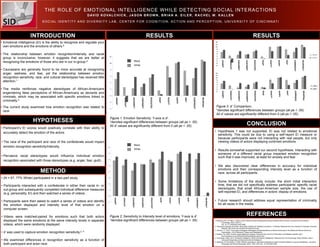
The study examined how emotion recognition is related to race. Sixty-seven participants interacted with a confederate of either their same or different race and then watched videos to identify emotions. The participant's emotional intelligence did not correlate with emotion recognition accuracy. Results showed that interacting with someone of a different racial group improved recognition of anxiety and fear. Recognition accuracy varied by emotion and intensity level depending on the participant and actor's race. Limitations included a small sample size and using acted emotions rather than real interactions. Future research should address equal media representation of criminality across races.