Honeycomb Farm
(Culinary Tourism and Sustainable Local Production)
Enhancing the Food and Tourism landscapes of the Great
Lakes
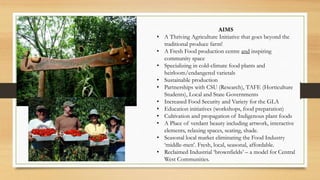
AIMS
• A Thriving Agriculture Initiative that goes beyond the
traditional produce farm!
• A Fresh Food production centre and inspiring
community space
• Specializing in cold-climate food plants and
heirloom/endangered varietals
• Sustainable production
• Partnerships with CSU (Research), TAFE (Horticulture
Students), Local and State Governments
• Increased Food Security and Variety for the GLA
• Education initiatives (workshops, food preparation)
• Cultivation and propagation of Indigenous plant foods
• A Place of verdant beauty including artwork, interactive
elements, relaxing spaces, seating, shade.
• Seasonal local market eliminating the Food Industry
‘middle-men’. Fresh, local, seasonal, affordable.
• Reclaimed Industrial ‘brownfields’ – a model for Central
West Communities.
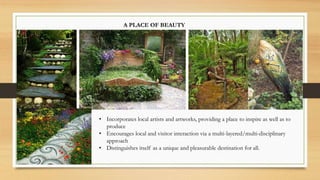
A PLACE OF BEAUTY
• Incorporates local artists and artworks, providing a place to inspire as well as to
produce
• Encourages local and visitor interaction via a multi-layered/multi-disciplinary
approach
• Distinguishes itself as a unique and pleasurable destination for all.
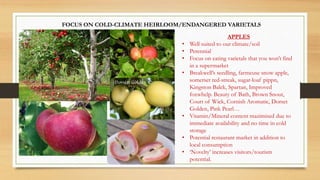
FOCUS ON COLD-CLIMATE HEIRLOOM/ENDANGERED VARIETALS
APPLES
• Well suited to our climate/soil
• Perennial
• Focus on eating varietals that you won’t find
in a supermarket
• Breakwell’s seedling, farmeuse snow apple,
somerset red-streak, sugar-loaf pippn,
Kingston Balck, Spartan, Improved
foxwhelp. Beauty of Bath, Brown Snout,
Court of Wick, Cornish Aromatic, Dorset
Golden, Pink Pearl…
• Vitamin/Mineral content mazimised due to
immediate availability and no time in cold
storage
• Potential restaurant market in addition to
local consumption
• ‘Novelty’ increases visitors/tourism
potential.
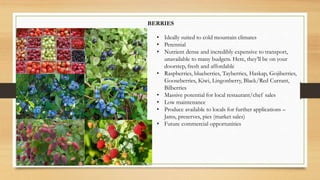
BERRIES
• Ideally suited to cold mountain climates
• Perennial
• Nutrient dense and incredibly expensive to transport,
unavailable to many budgets. Here, they’ll be on your
doorstep, fresh and affordable
• Raspberries, blueberries, Tayberries, Haskap, Gojiberries,
Gooseberries, Kiwi, Lingonberry, Black/Red Currant,
Bilberries
• Massive potential for local restaurant/chef sales
• Low maintenance
• Produce available to locals for further applications –
Jams, preserves, pies (market sales)
• Future commercial opportunities
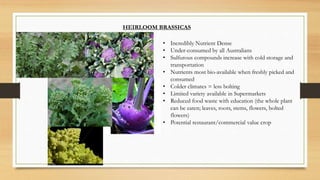
HEIRLOOM BRASSICAS
• Incredibly Nutrient Dense
• Under-consumed by all Australians
• Sulfurous compounds increase with cold storage and
transportation
• Nutrients most bio-available when freshly picked and
consumed
• Colder climates = less bolting
• Limited variety available in Supermarkets
• Reduced food waste with education (the whole plant
can be eaten; leaves, roots, stems, flowers, bolted
flowers)
• Potential restaurant/commercial value crop
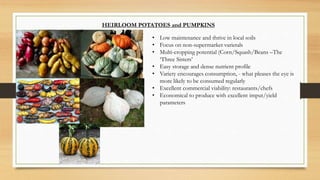
HEIRLOOM POTATOES and PUMPKINS
• Low maintenance and thrive in local soils
• Focus on non-supermarket varietals
• Multi-cropping potential (Corn/Squash/Beans –The
‘Three Sisters’
• Easy storage and dense nutrient profile
• Variety encourages consumption, - what pleases the eye is
more likely to be consumed regularly
• Excellent commercial viability: restaurants/chefs
• Economical to produce with excellent imput/yield
parameters
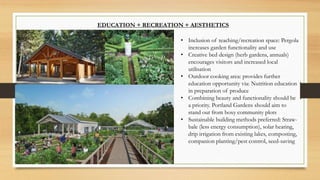
EDUCATION + RECREATION + AESTHETICS
• Inclusion of teaching/recreation space: Pergola
increases garden functionality and use
• Creative bed design (herb gardens, annuals)
encourages visitors and increased local
utilisation
• Outdoor cooking area: provides further
education opportunity via: Nutrition education
in preparation of produce
• Combining beauty and functionality should be
a priority. Portland Gardens should aim to
stand out from boxy community plots
• Sustainable building methods preferred: Straw-
bale (less energy consumption), solar heating,
drip irrigation from existing lakes, composting,
companion planting/pest control, seed-saving
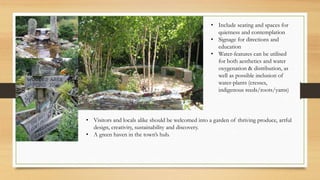
• Include seating and spaces for
quietness and contemplation
• Signage for directions and
education
• Water-features can be utilised
for both aesthetics and water
oxygenation & distribution, as
well as possible inclusion of
water-plants (cresses,
indigenous reeds/roots/yams)
• Visitors and locals alike should be welcomed into a garden of thriving produce, artful
design, creativity, sustainability and discovery.
• A green haven in the town’s hub.
PRODUCE DISTRIBUTION
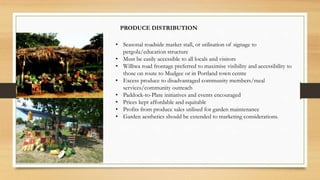
• Seasonal roadside market stall, or utilisation of signage to
pergola/education structure
• Must be easily accessible to all locals and visitors
• Williwa road frontage preferred to maximise visibility and accessibility to
those on route to Mudgee or in Portland town centre
• Excess produce to disadvantaged community members/meal
services/community outreach
• Paddock-to-Plate initiatives and events encouraged
• Prices kept affordable and equitable
• Profits from produce sales utilised for garden maintenance
• Garden aesthetics should be extended to marketing considerations.

Portland csai copy

  • 1.
    Honeycomb Farm (Culinary Tourismand Sustainable Local Production) Enhancing the Food and Tourism landscapes of the Great Lakes
  • 2.
    AIMS • A ThrivingAgriculture Initiative that goes beyond the traditional produce farm! • A Fresh Food production centre and inspiring community space • Specializing in cold-climate food plants and heirloom/endangered varietals • Sustainable production • Partnerships with CSU (Research), TAFE (Horticulture Students), Local and State Governments • Increased Food Security and Variety for the GLA • Education initiatives (workshops, food preparation) • Cultivation and propagation of Indigenous plant foods • A Place of verdant beauty including artwork, interactive elements, relaxing spaces, seating, shade. • Seasonal local market eliminating the Food Industry ‘middle-men’. Fresh, local, seasonal, affordable. • Reclaimed Industrial ‘brownfields’ – a model for Central West Communities.
  • 3.
    A PLACE OFBEAUTY • Incorporates local artists and artworks, providing a place to inspire as well as to produce • Encourages local and visitor interaction via a multi-layered/multi-disciplinary approach • Distinguishes itself as a unique and pleasurable destination for all.
  • 4.
    FOCUS ON COLD-CLIMATEHEIRLOOM/ENDANGERED VARIETALS APPLES • Well suited to our climate/soil • Perennial • Focus on eating varietals that you won’t find in a supermarket • Breakwell’s seedling, farmeuse snow apple, somerset red-streak, sugar-loaf pippn, Kingston Balck, Spartan, Improved foxwhelp. Beauty of Bath, Brown Snout, Court of Wick, Cornish Aromatic, Dorset Golden, Pink Pearl… • Vitamin/Mineral content mazimised due to immediate availability and no time in cold storage • Potential restaurant market in addition to local consumption • ‘Novelty’ increases visitors/tourism potential.
  • 5.
    BERRIES • Ideally suitedto cold mountain climates • Perennial • Nutrient dense and incredibly expensive to transport, unavailable to many budgets. Here, they’ll be on your doorstep, fresh and affordable • Raspberries, blueberries, Tayberries, Haskap, Gojiberries, Gooseberries, Kiwi, Lingonberry, Black/Red Currant, Bilberries • Massive potential for local restaurant/chef sales • Low maintenance • Produce available to locals for further applications – Jams, preserves, pies (market sales) • Future commercial opportunities
  • 6.
    HEIRLOOM BRASSICAS • IncrediblyNutrient Dense • Under-consumed by all Australians • Sulfurous compounds increase with cold storage and transportation • Nutrients most bio-available when freshly picked and consumed • Colder climates = less bolting • Limited variety available in Supermarkets • Reduced food waste with education (the whole plant can be eaten; leaves, roots, stems, flowers, bolted flowers) • Potential restaurant/commercial value crop
  • 7.
    HEIRLOOM POTATOES andPUMPKINS • Low maintenance and thrive in local soils • Focus on non-supermarket varietals • Multi-cropping potential (Corn/Squash/Beans –The ‘Three Sisters’ • Easy storage and dense nutrient profile • Variety encourages consumption, - what pleases the eye is more likely to be consumed regularly • Excellent commercial viability: restaurants/chefs • Economical to produce with excellent imput/yield parameters
  • 8.
    EDUCATION + RECREATION+ AESTHETICS • Inclusion of teaching/recreation space: Pergola increases garden functionality and use • Creative bed design (herb gardens, annuals) encourages visitors and increased local utilisation • Outdoor cooking area: provides further education opportunity via: Nutrition education in preparation of produce • Combining beauty and functionality should be a priority. Portland Gardens should aim to stand out from boxy community plots • Sustainable building methods preferred: Straw- bale (less energy consumption), solar heating, drip irrigation from existing lakes, composting, companion planting/pest control, seed-saving
  • 9.
    • Include seatingand spaces for quietness and contemplation • Signage for directions and education • Water-features can be utilised for both aesthetics and water oxygenation & distribution, as well as possible inclusion of water-plants (cresses, indigenous reeds/roots/yams) • Visitors and locals alike should be welcomed into a garden of thriving produce, artful design, creativity, sustainability and discovery. • A green haven in the town’s hub.
  • 10.
    PRODUCE DISTRIBUTION • Seasonalroadside market stall, or utilisation of signage to pergola/education structure • Must be easily accessible to all locals and visitors • Williwa road frontage preferred to maximise visibility and accessibility to those on route to Mudgee or in Portland town centre • Excess produce to disadvantaged community members/meal services/community outreach • Paddock-to-Plate initiatives and events encouraged • Prices kept affordable and equitable • Profits from produce sales utilised for garden maintenance • Garden aesthetics should be extended to marketing considerations.