Polymerase Chain
Reaction
What is PCR?
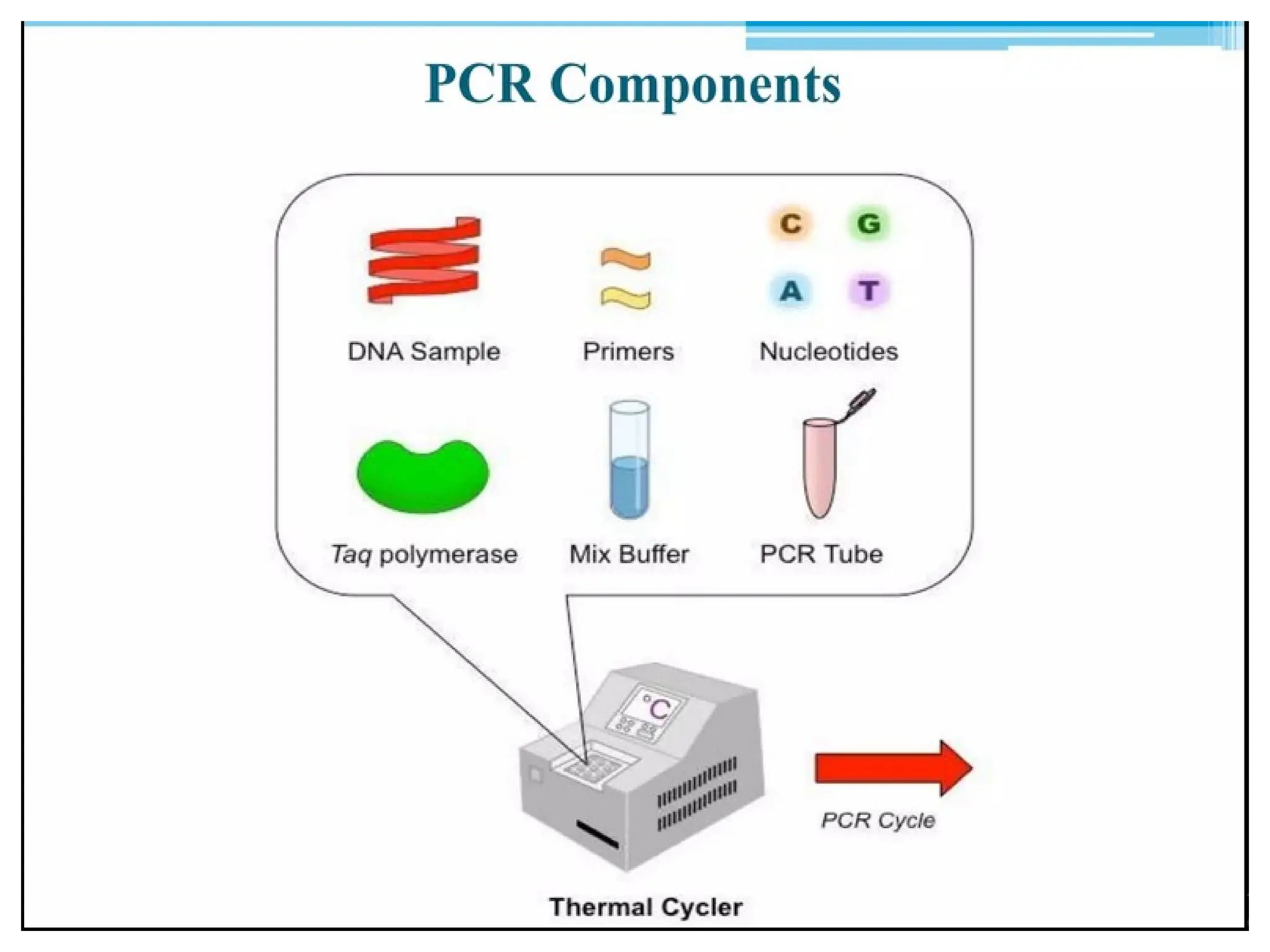
•PCR is a technique that takes specific
sequence of DNA of small amount and
amplifies it to be used for further testing.
•In vitro technique
Purpose
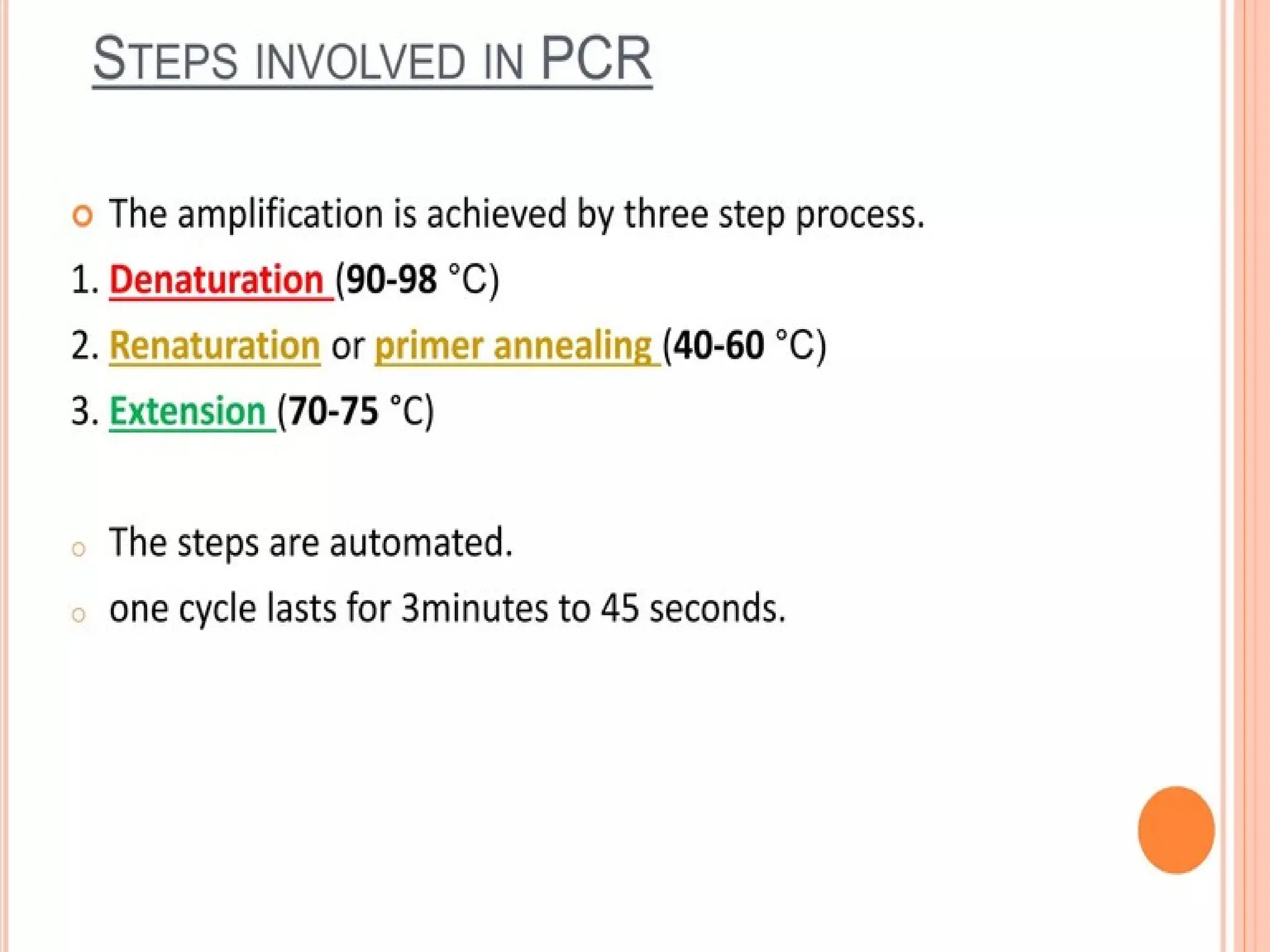
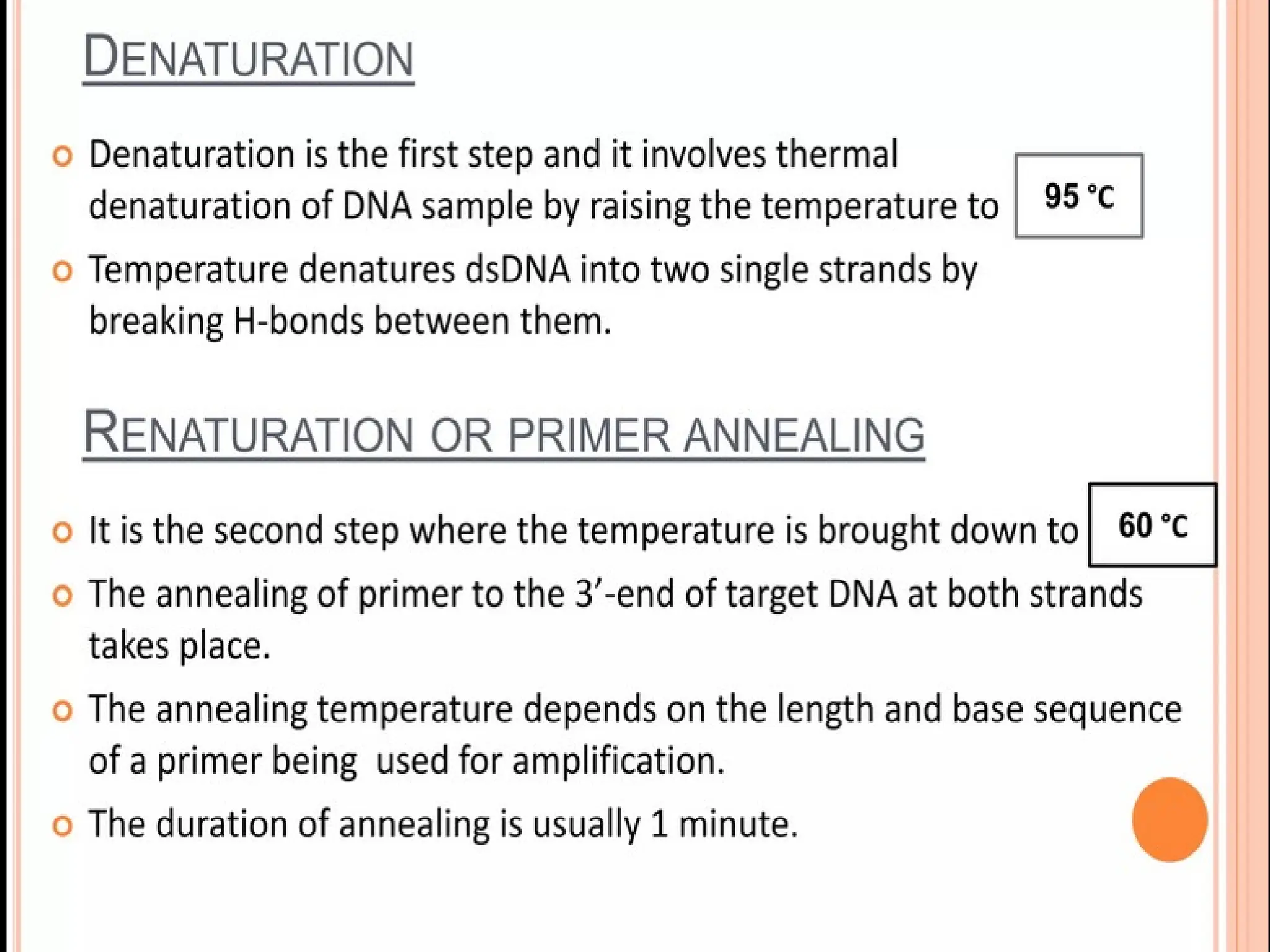
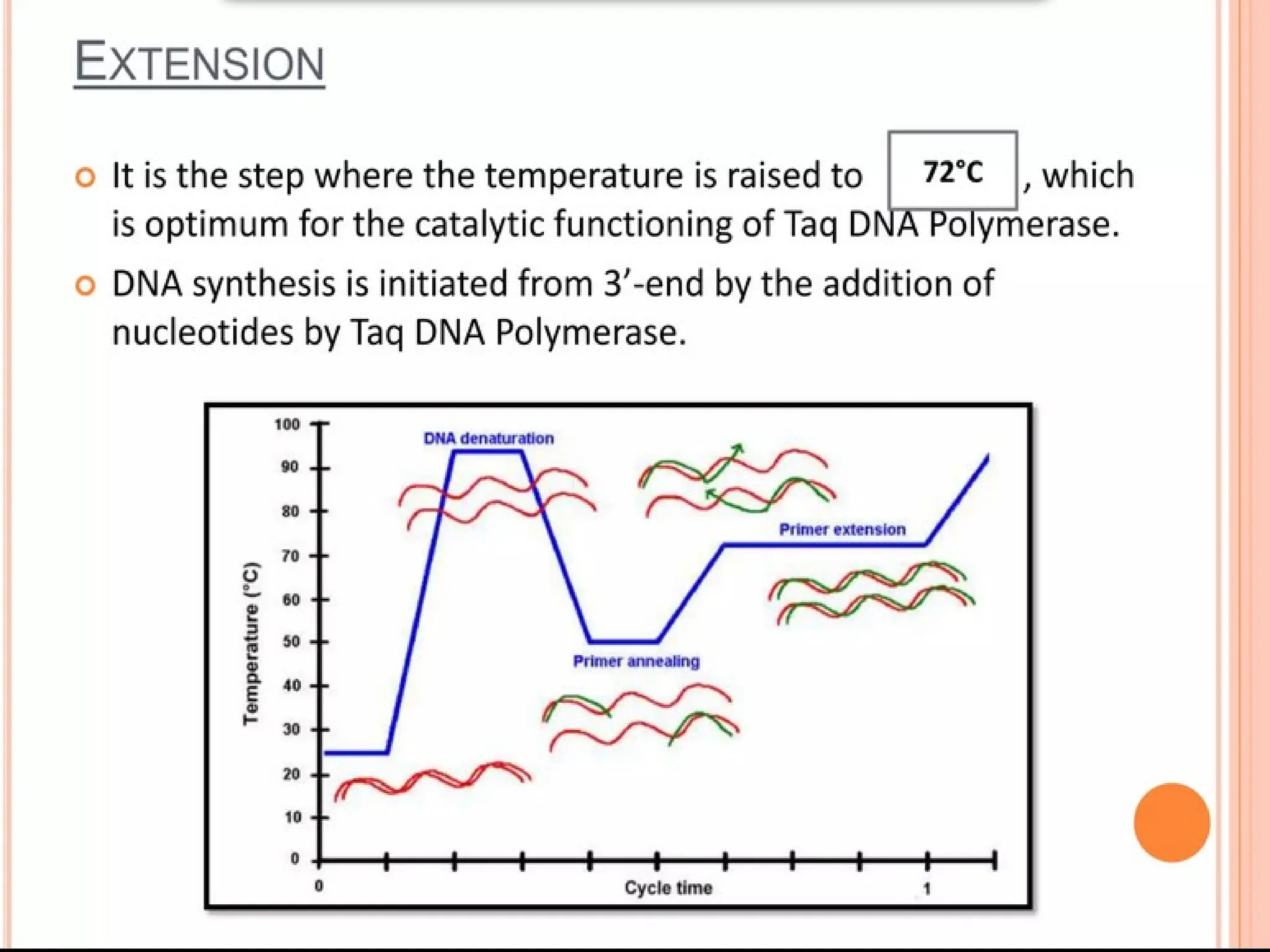
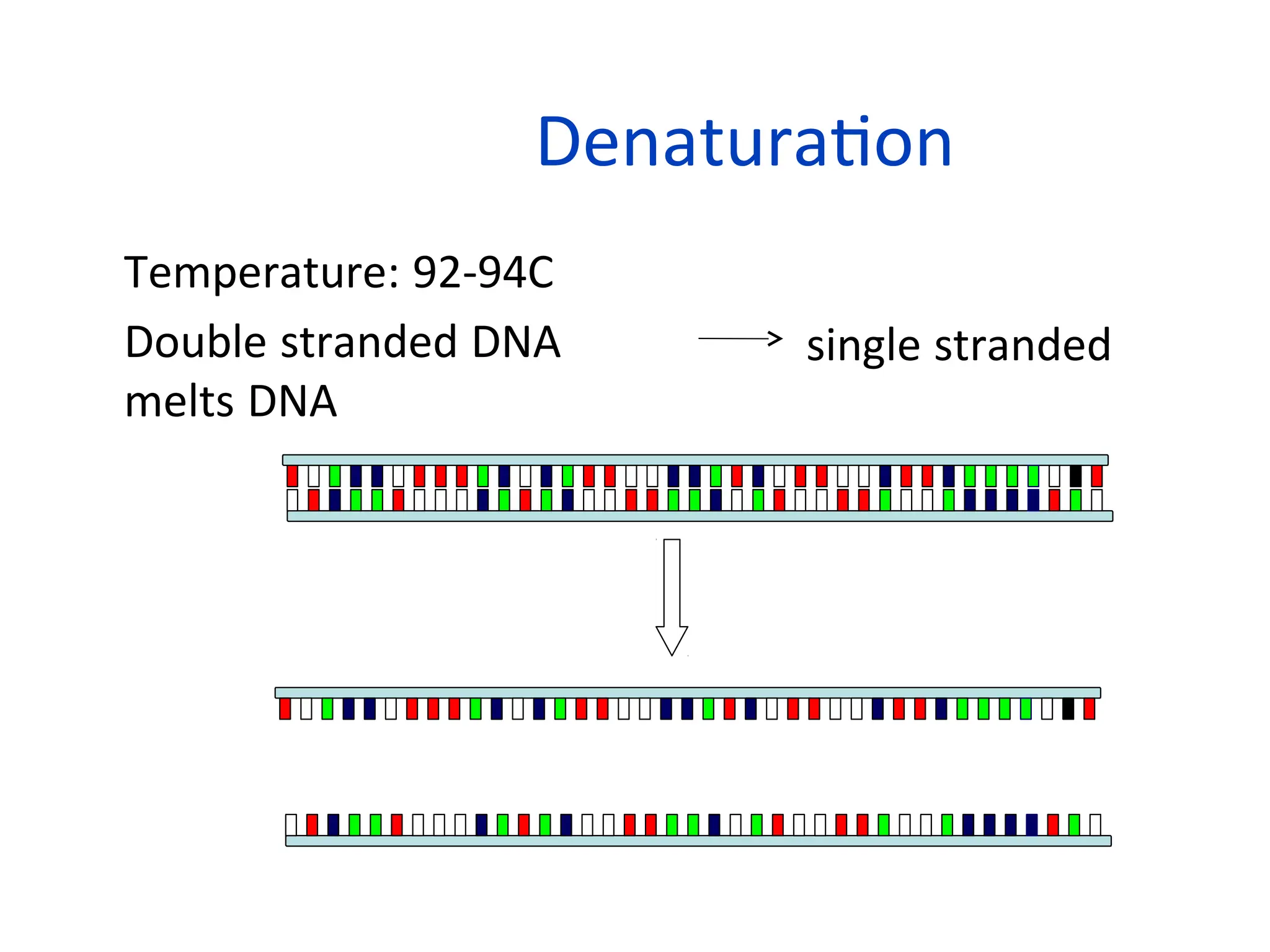
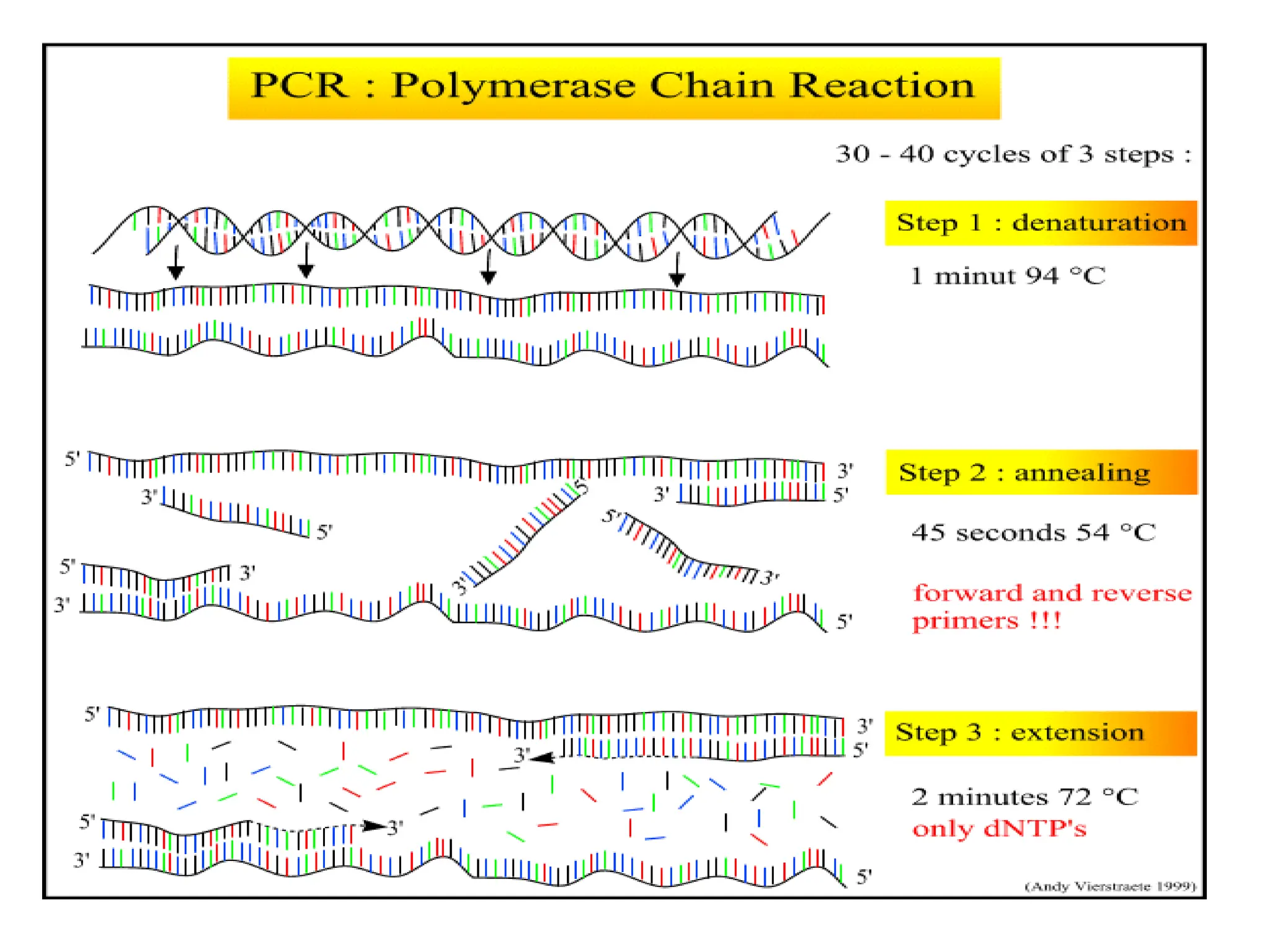
Denaturation
• Temperature: 92-94C
• Double stranded DNA
melts DNA
5’
single stranded
92C
3’
3’ 5’
+
5’
3’
5’ 3’
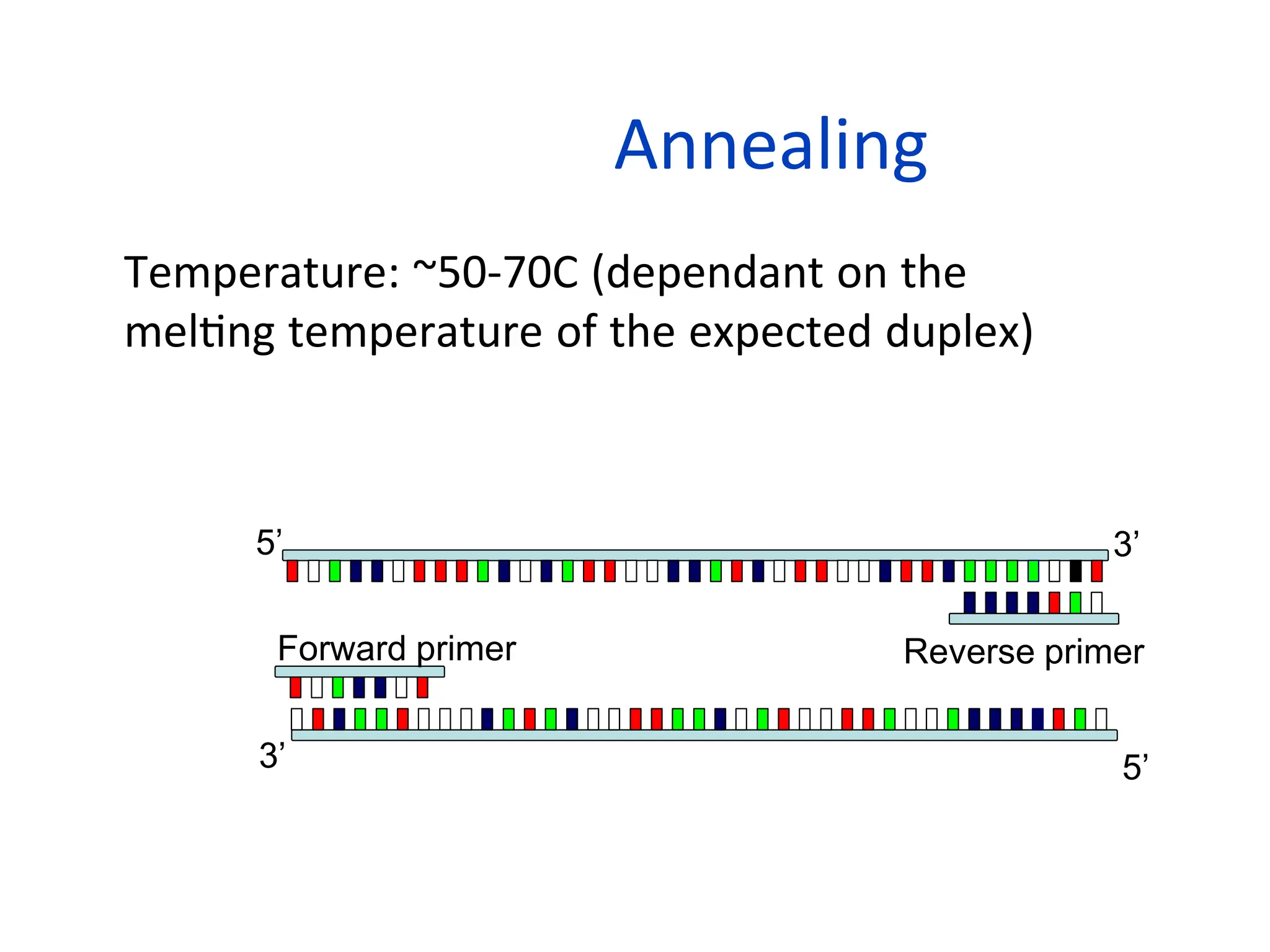
Annealing
• Temperature: ~50-70C (dependant on the
melting temperature of the expected duplex)
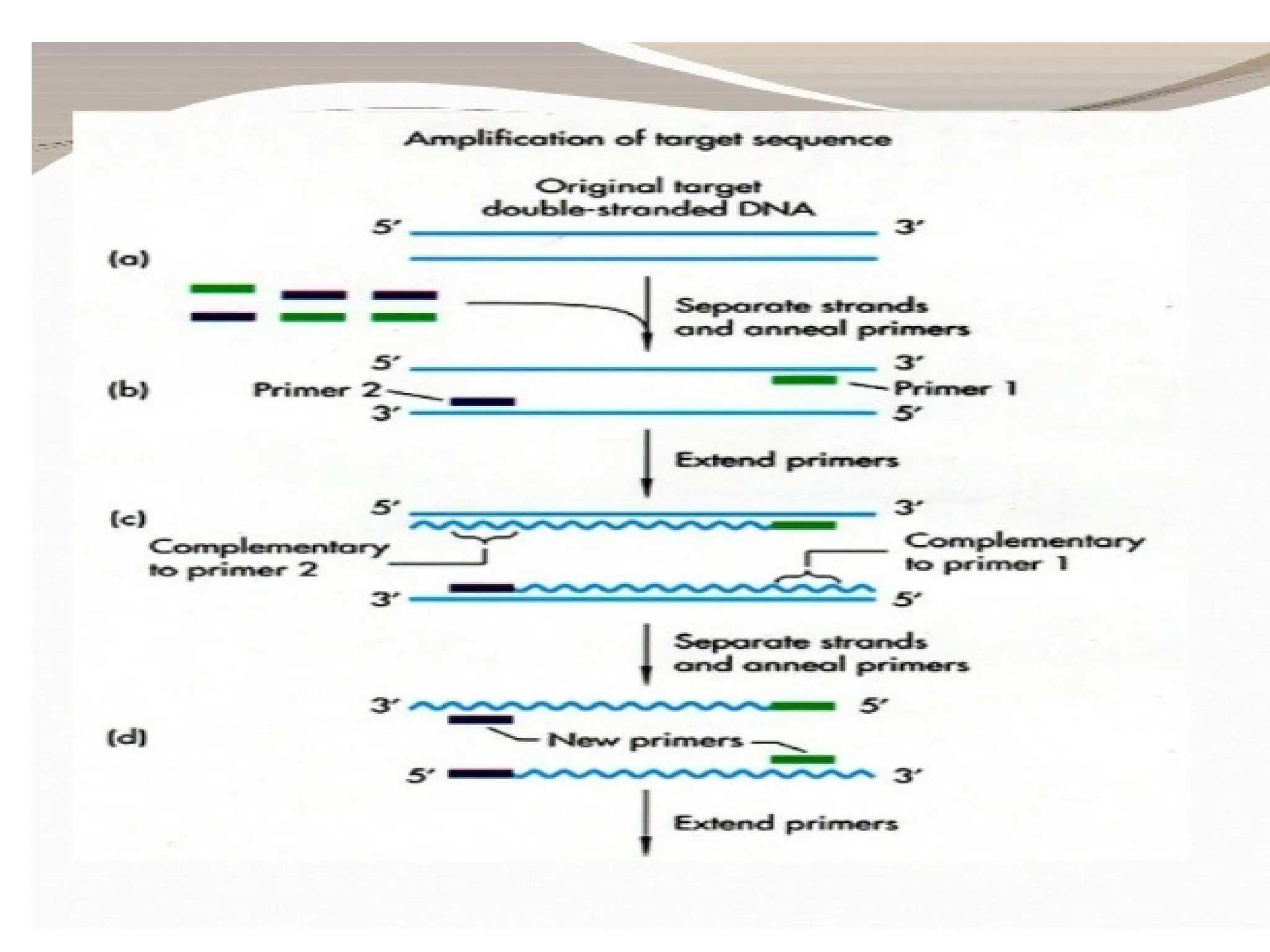
• Primers bind to their complementary sequences
5’
3’
5’ 3’
Forward primer Reverse primer
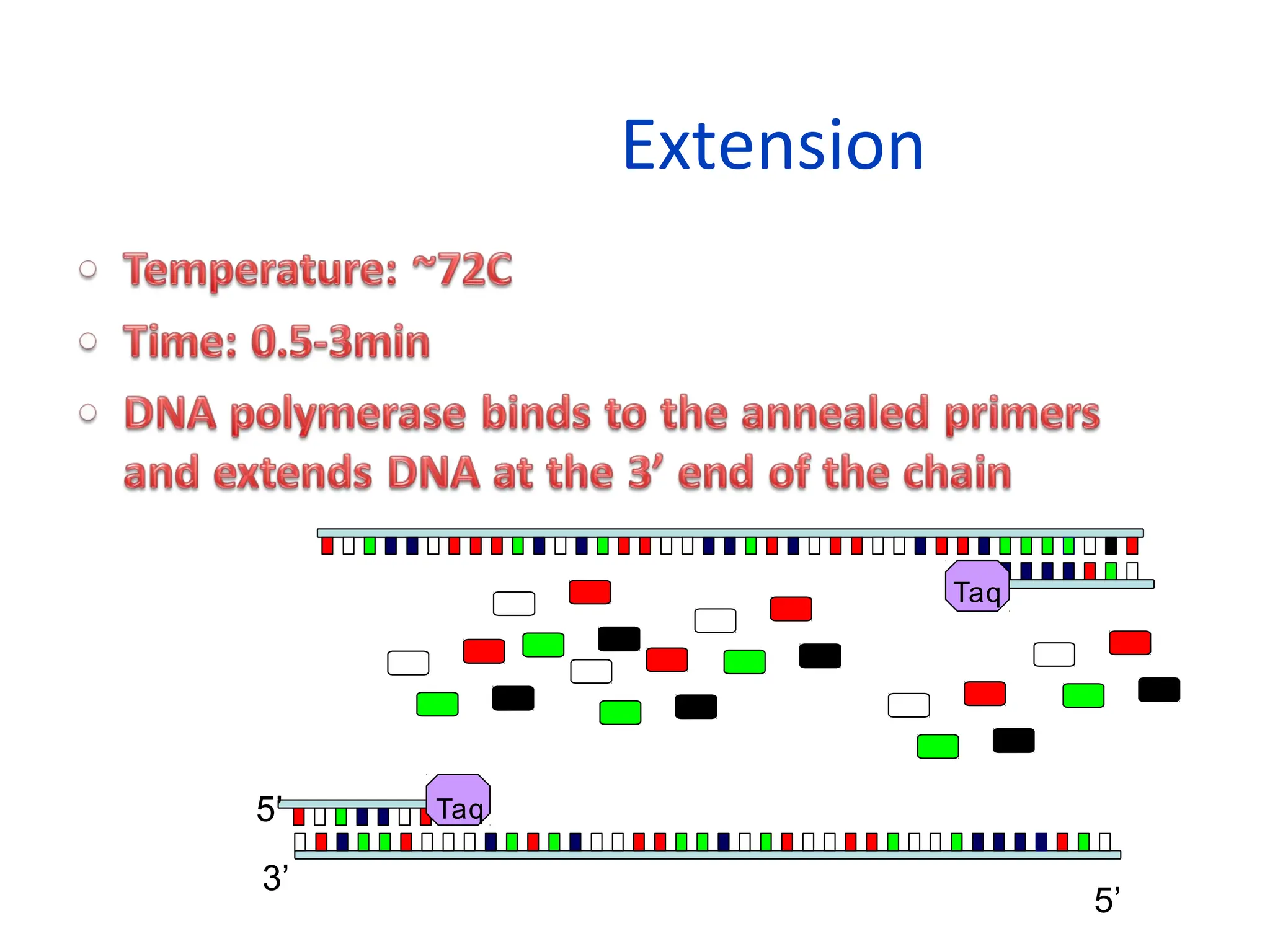
Extension
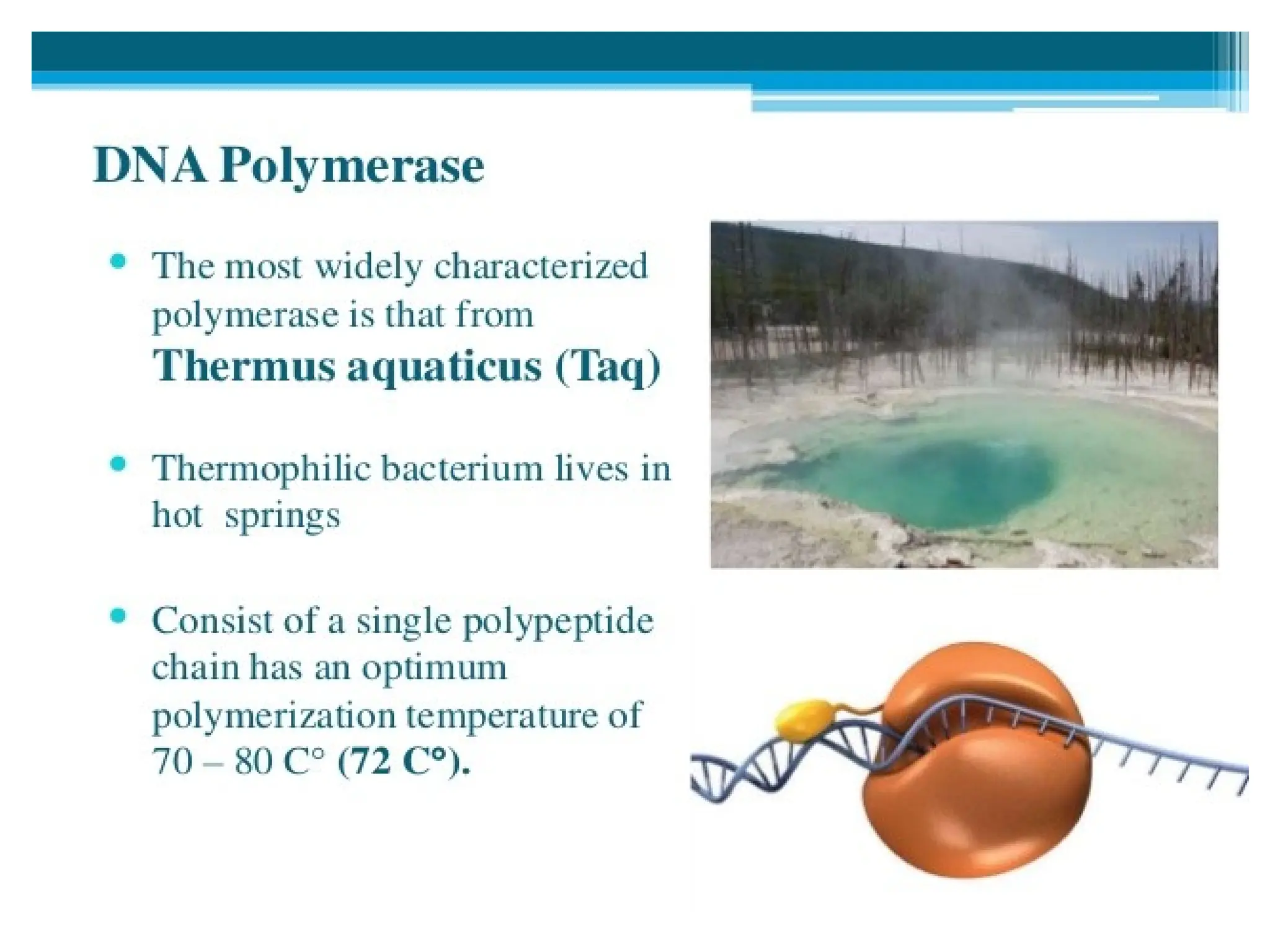
Taq
5’
3’
Taq
5’
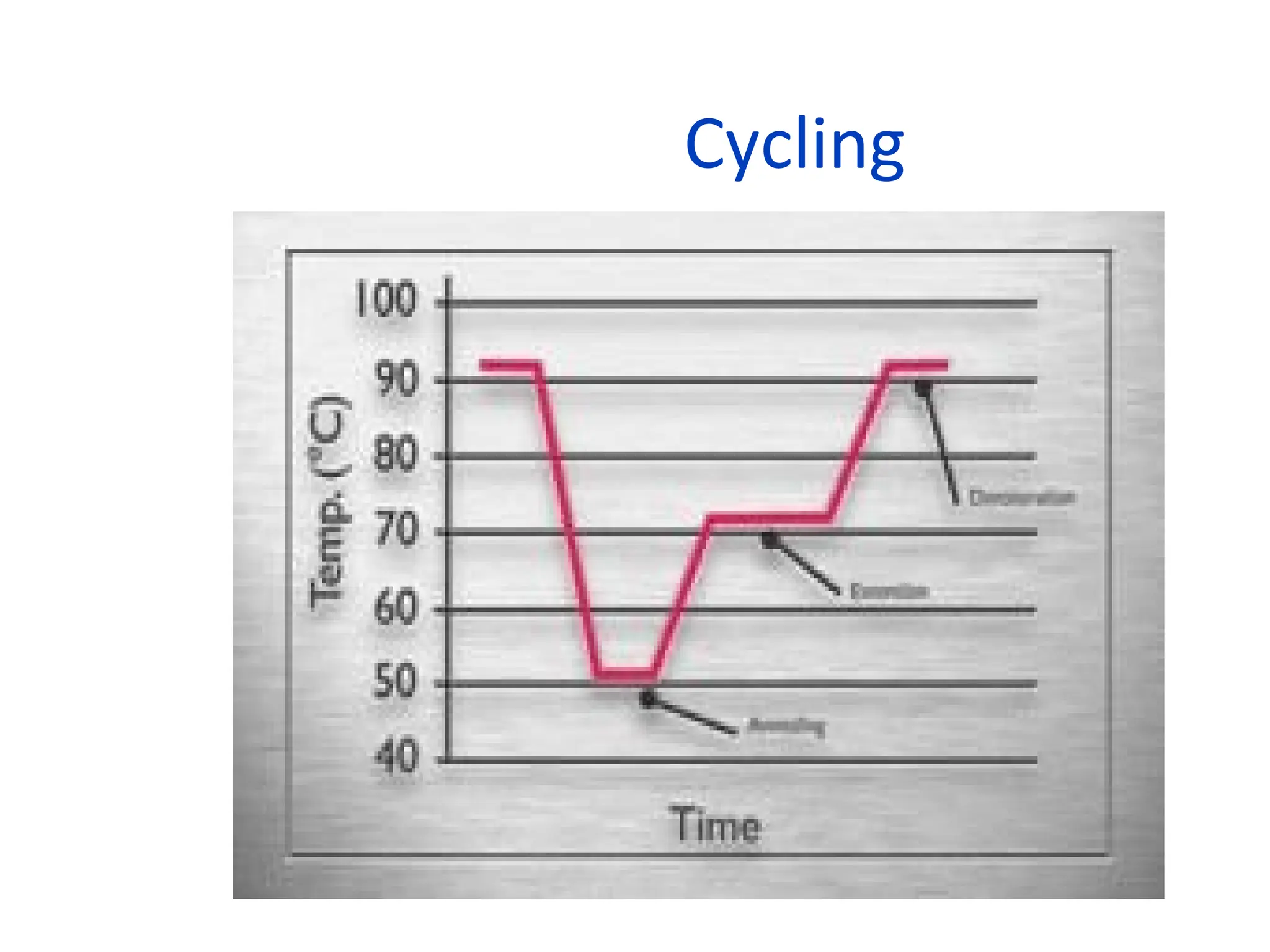
Cycling
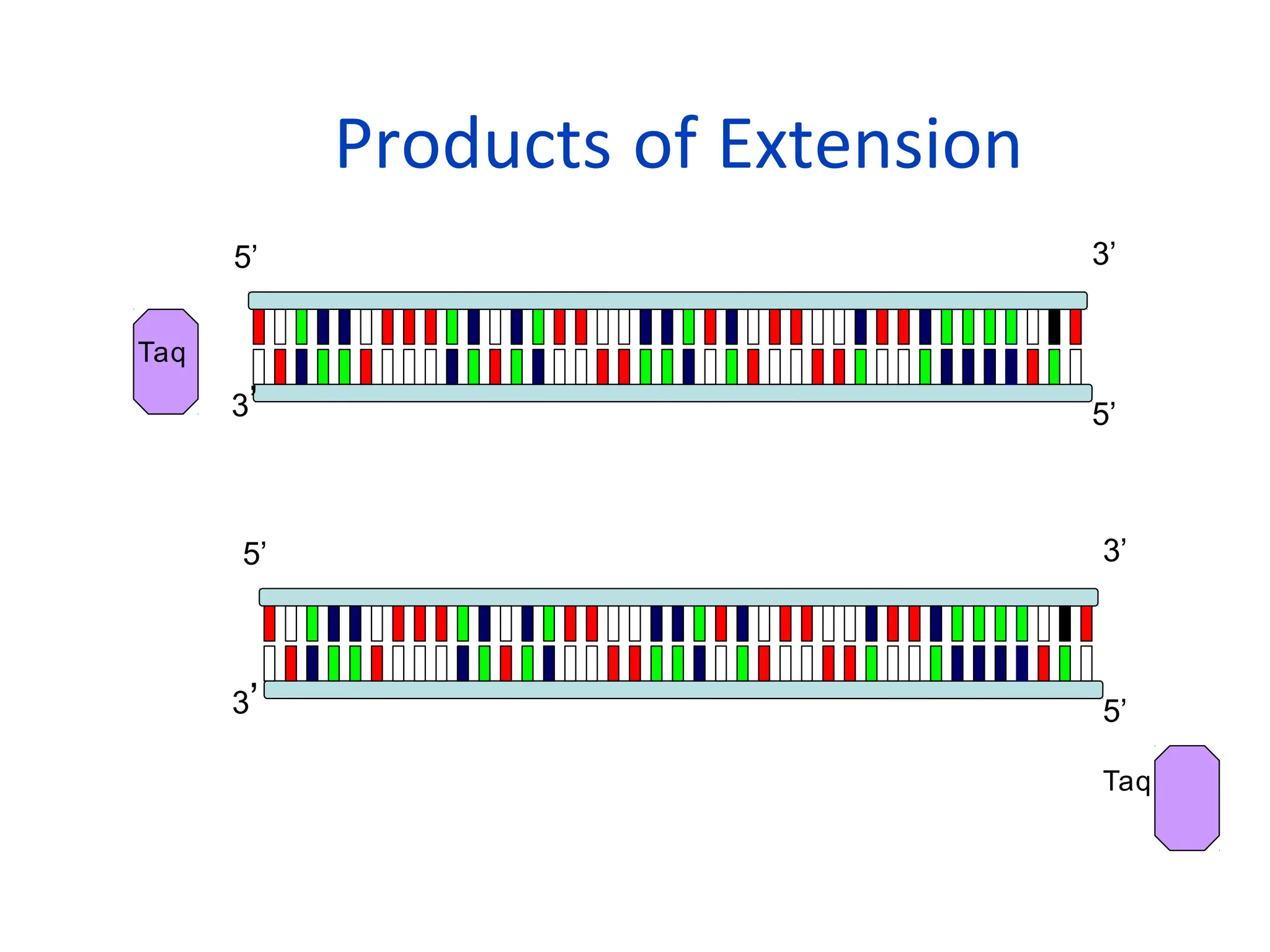
Products of Extension
3’
5’
3’
5’
3’
5’
Taq
3’
5’
Taq
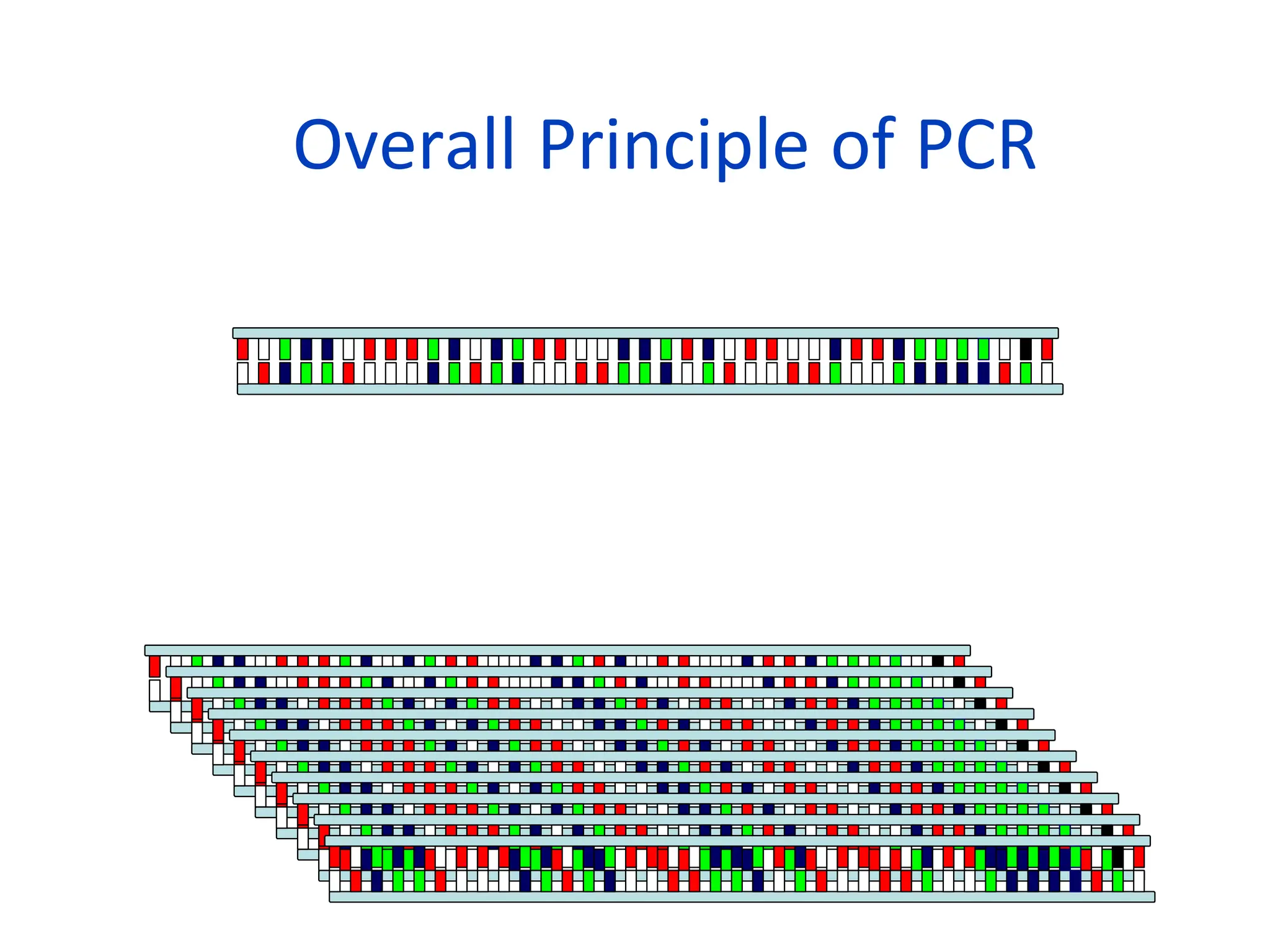
Overall Principle of PCR
• DNA – 1
copy
• Known sequence Sequence of interest Known sequence
• PCR
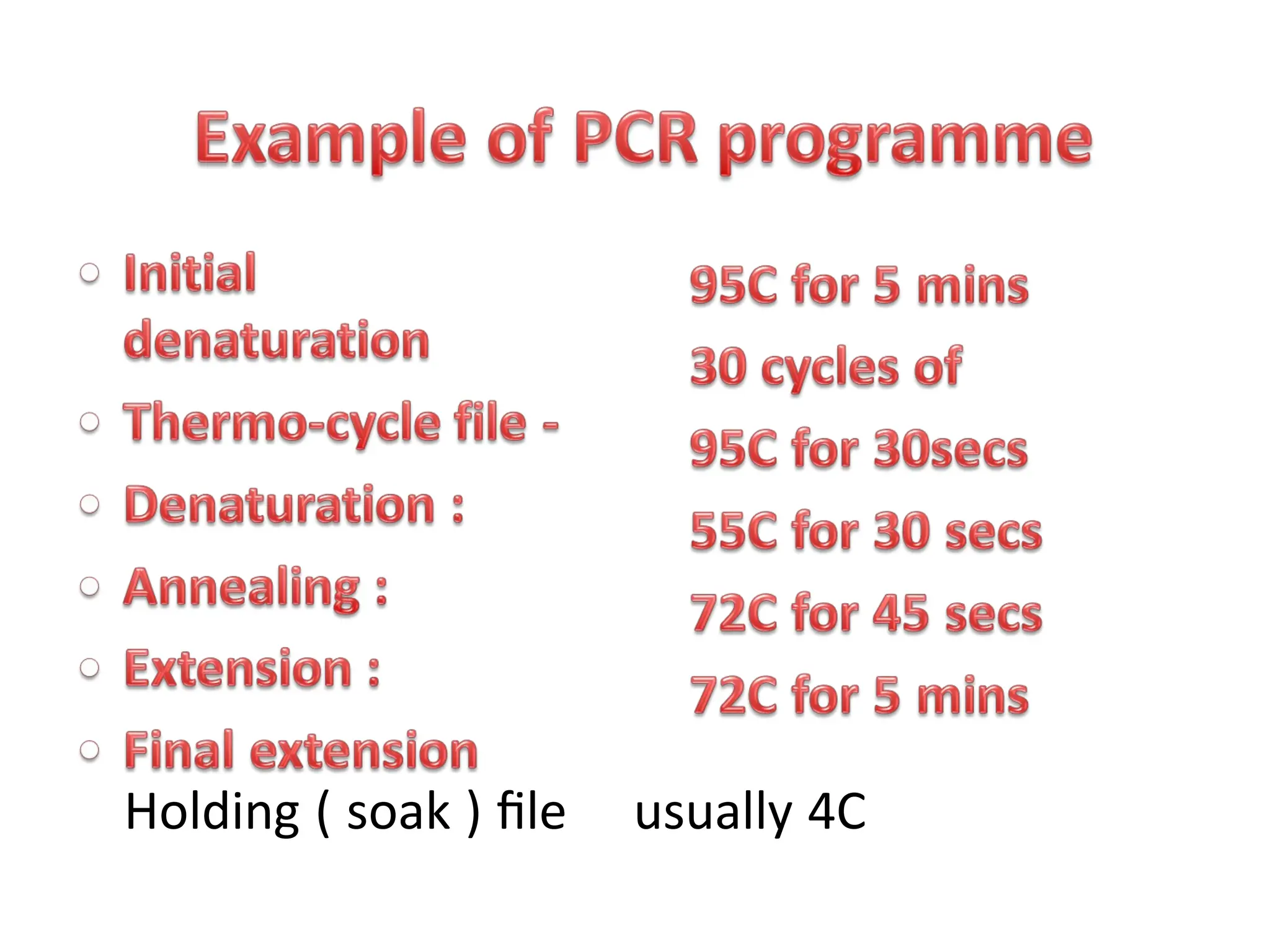
• Holding ( soak ) file usually 4C
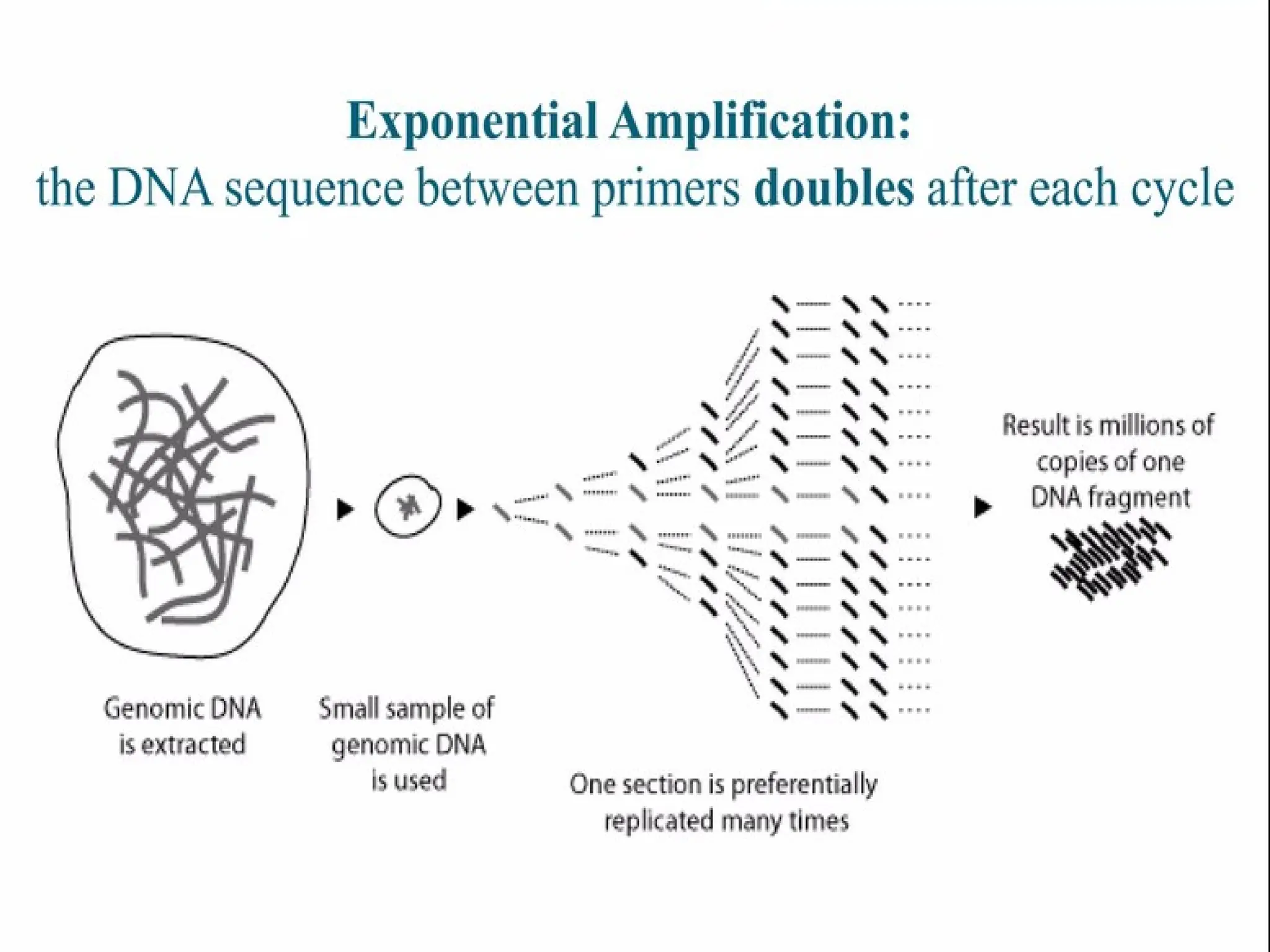
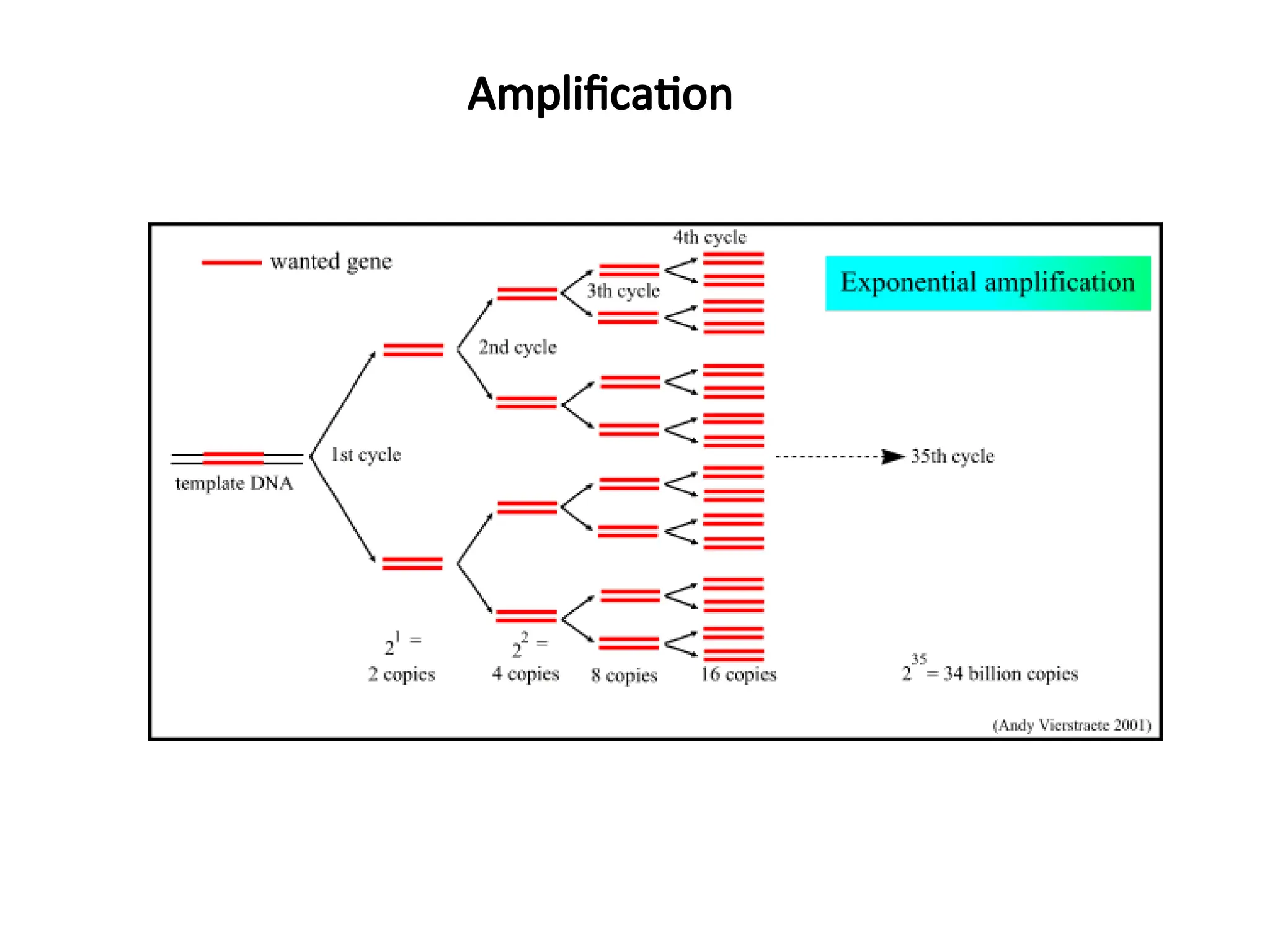
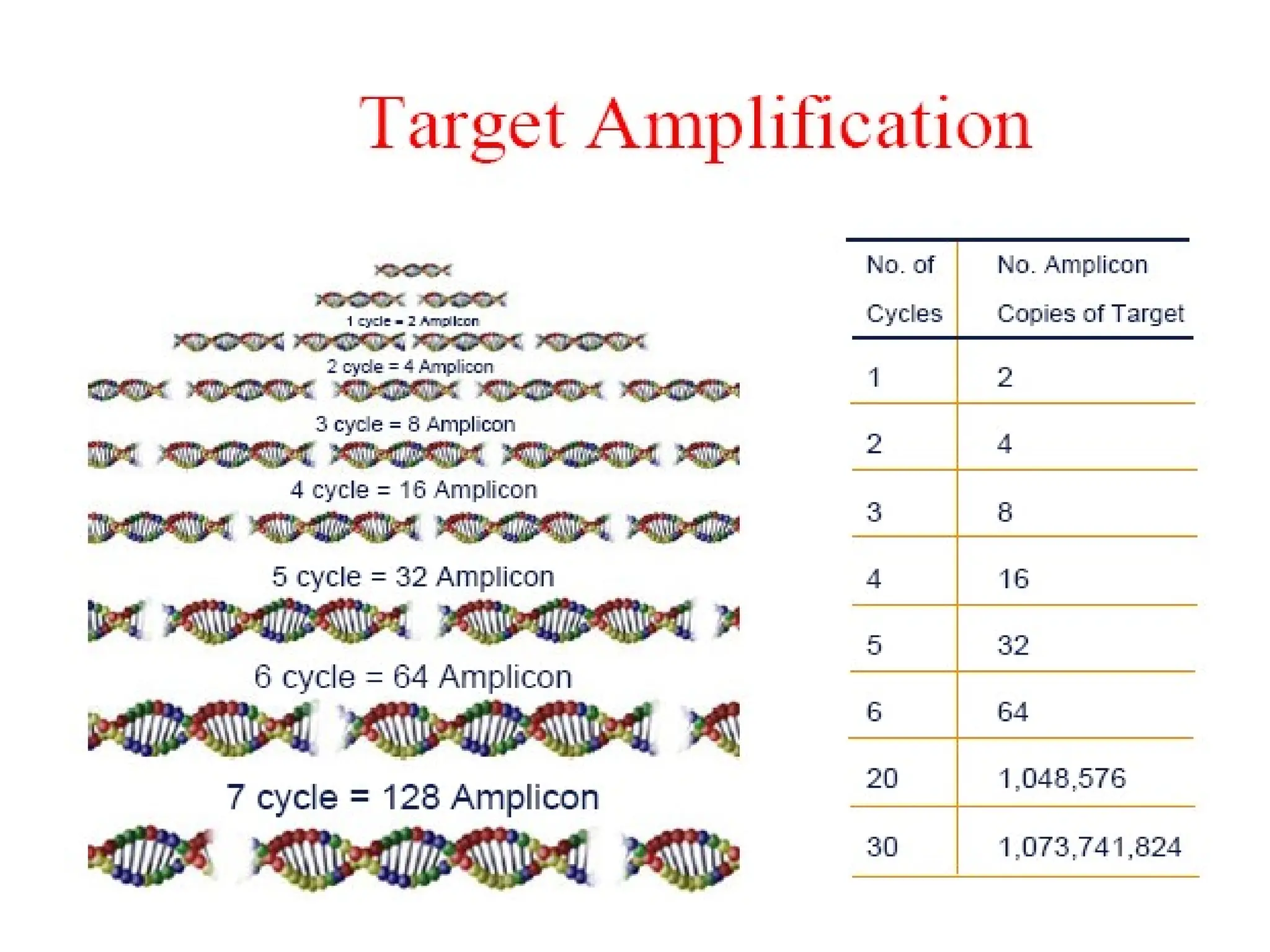
Amplification
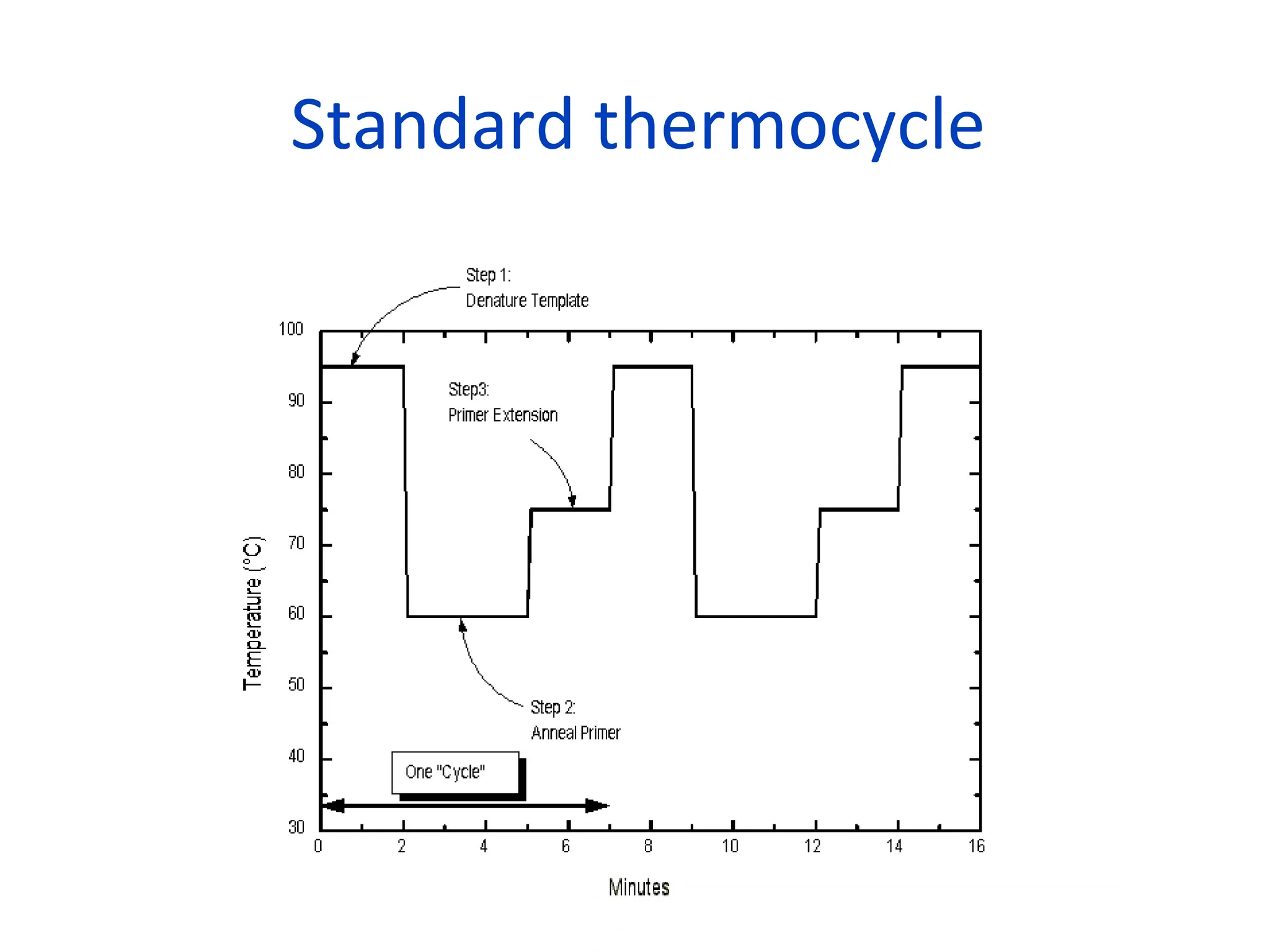
Standard thermocycle
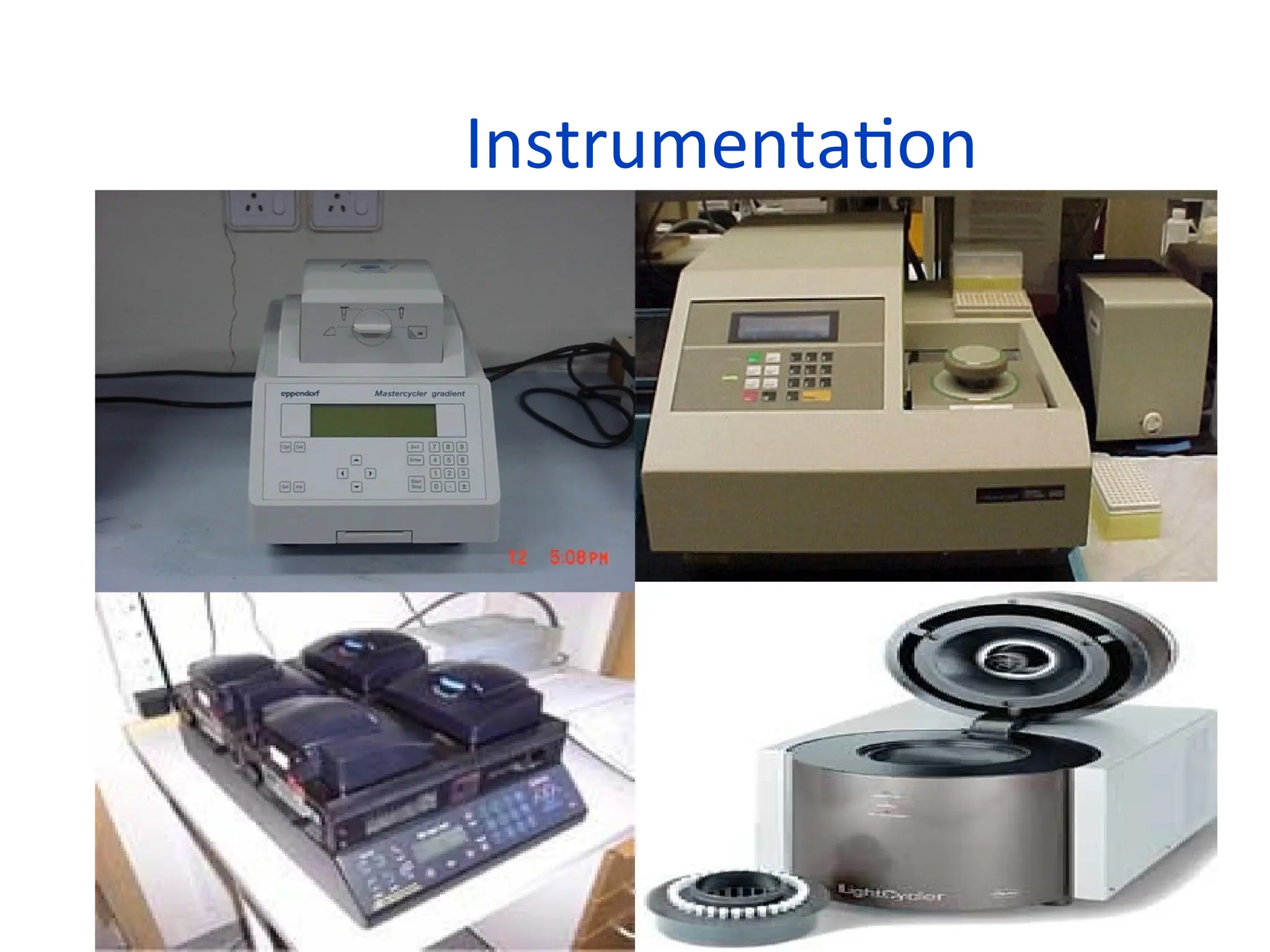
Instrumentation
Applications of PCR
Molecular Identification
Molecular Archaeology
Molecular Epidemiology
Sequencing
Bioinformatics Genomic
Cloning
Genetic Engineering
Site-directed mutagenesis
Gene Expression Studies
Molecular Ecology DNA
fingerprinting
Classification of organisms
Human Genome Project
Genotyping
Pre-natal diagnosis
Mutation screening Drug
discovery Genetic matching
Detection of pathogens
62
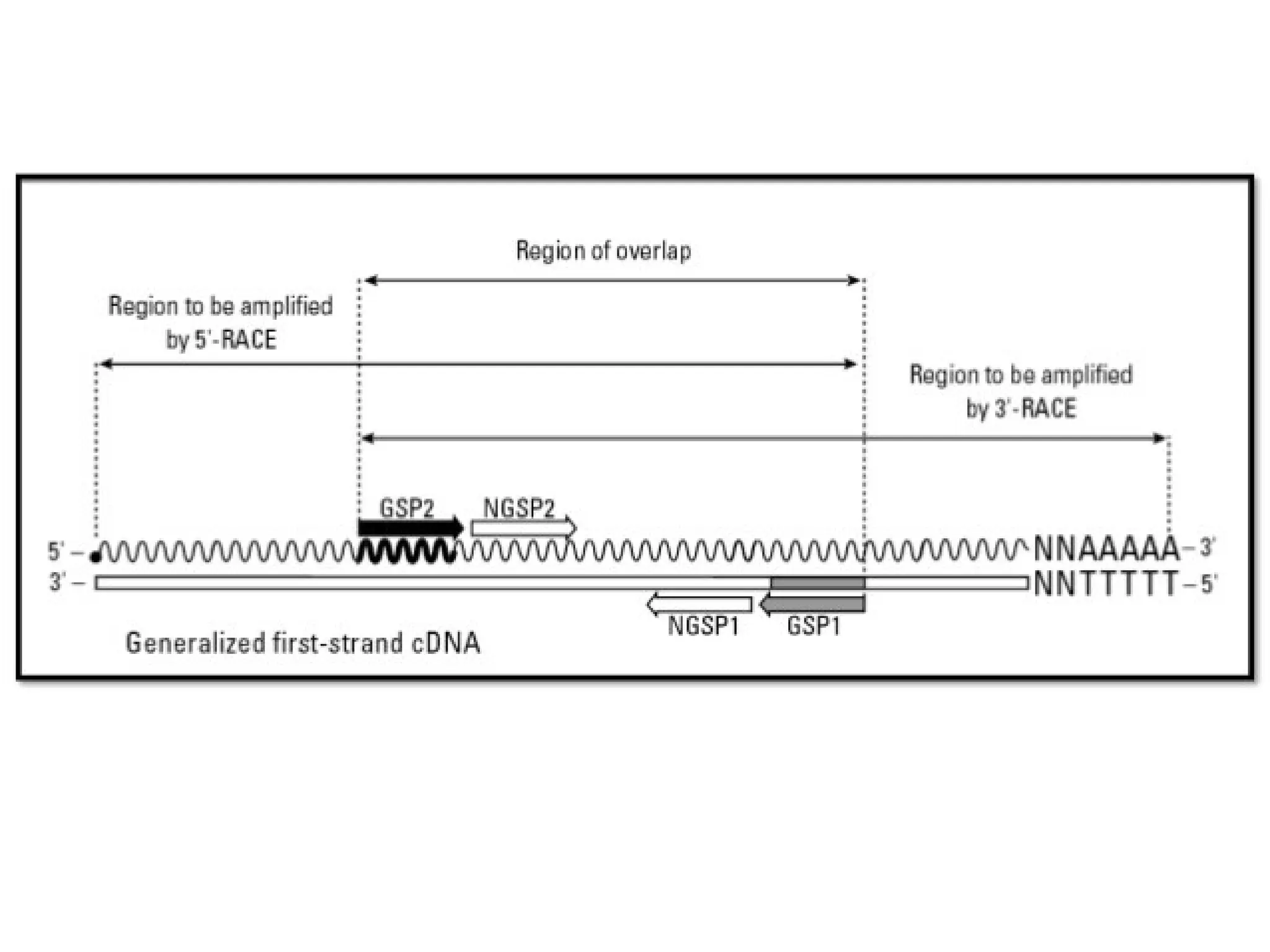
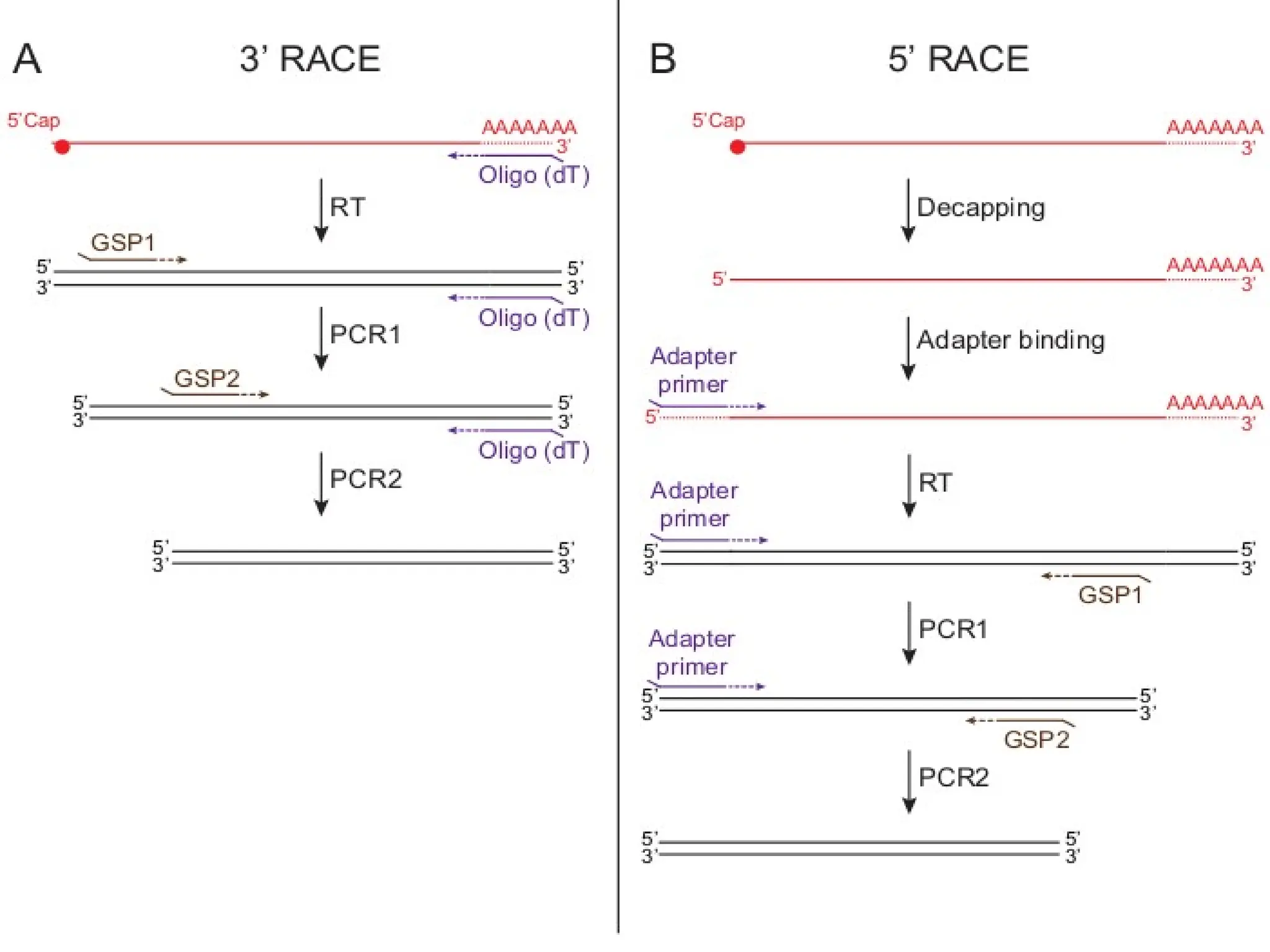
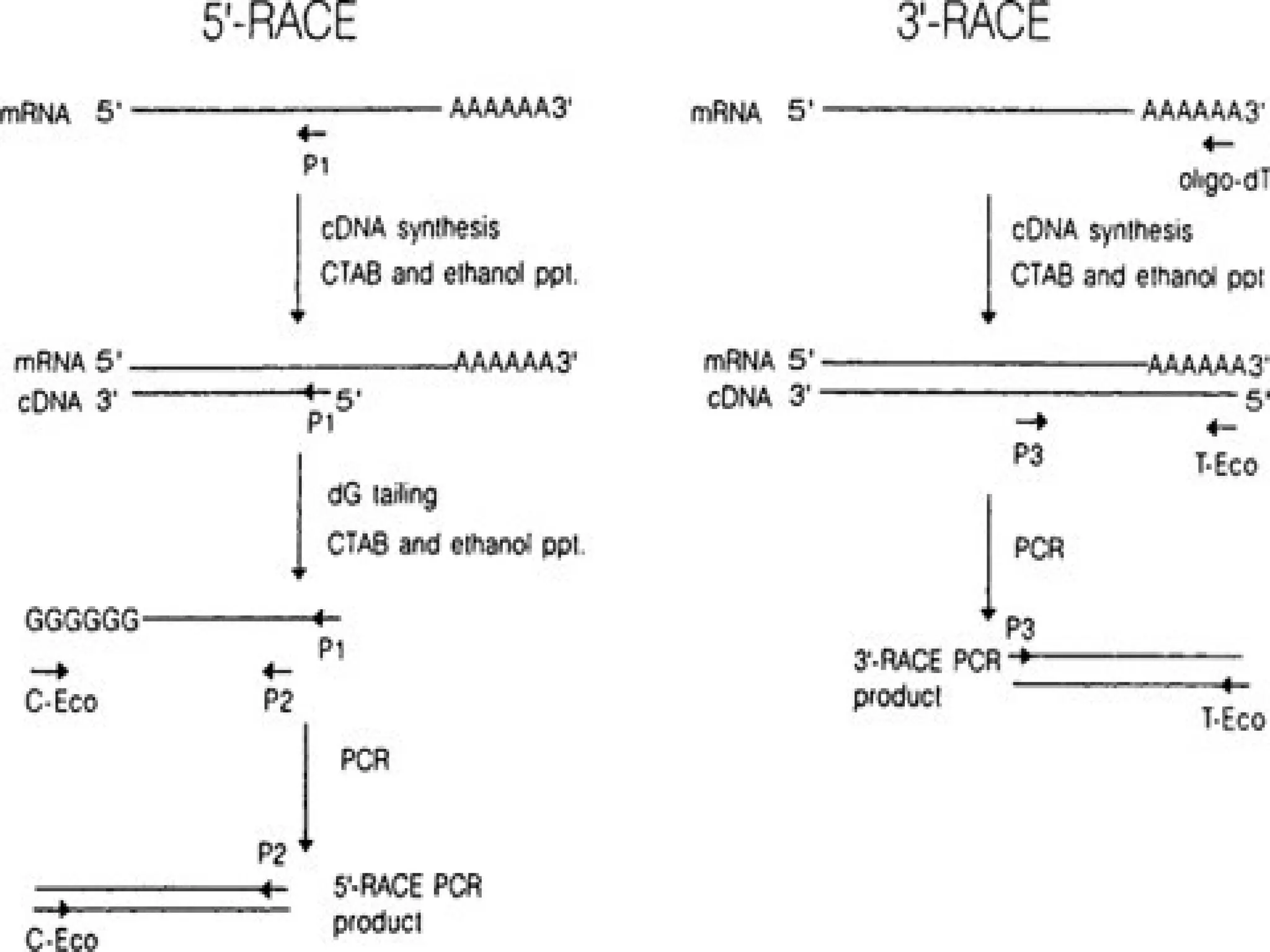
Procedure of 5’ RACE
• Total or poly (A) RNA is reverse transcribed and first strand of cDNA is
synthesized by using a reverse gene-specific primer termed GSP 1 and
SuperScript™ II, a derivative of Mo-MLV RT with reduced RNase H
activity.
• After first cDNA strand synthesis, the original mRNA template is removed
by treatment with the RNase Mix (mixture of RNase H, which is specific
for RNA:DNA heteroduplex molecules and RNase Tl).
• cDNA is purified to get rid of unincorporated dNTPs, GSP 1, and proteins.
• A poly-A tail is then added to the 3'-end of the cDNA using TdT (terminal
deoxynucleotidyl transferase) and a dATP.
• A PCR reaction is then carried out using a second gene specific
primer (GSP2) that binds to the known sequence and a forward dT
primer that binds the homopolymeric tail added to the 3' ends of
the cDNAs to amplify a cDNA product from the 5' end of mRNA.
63
65
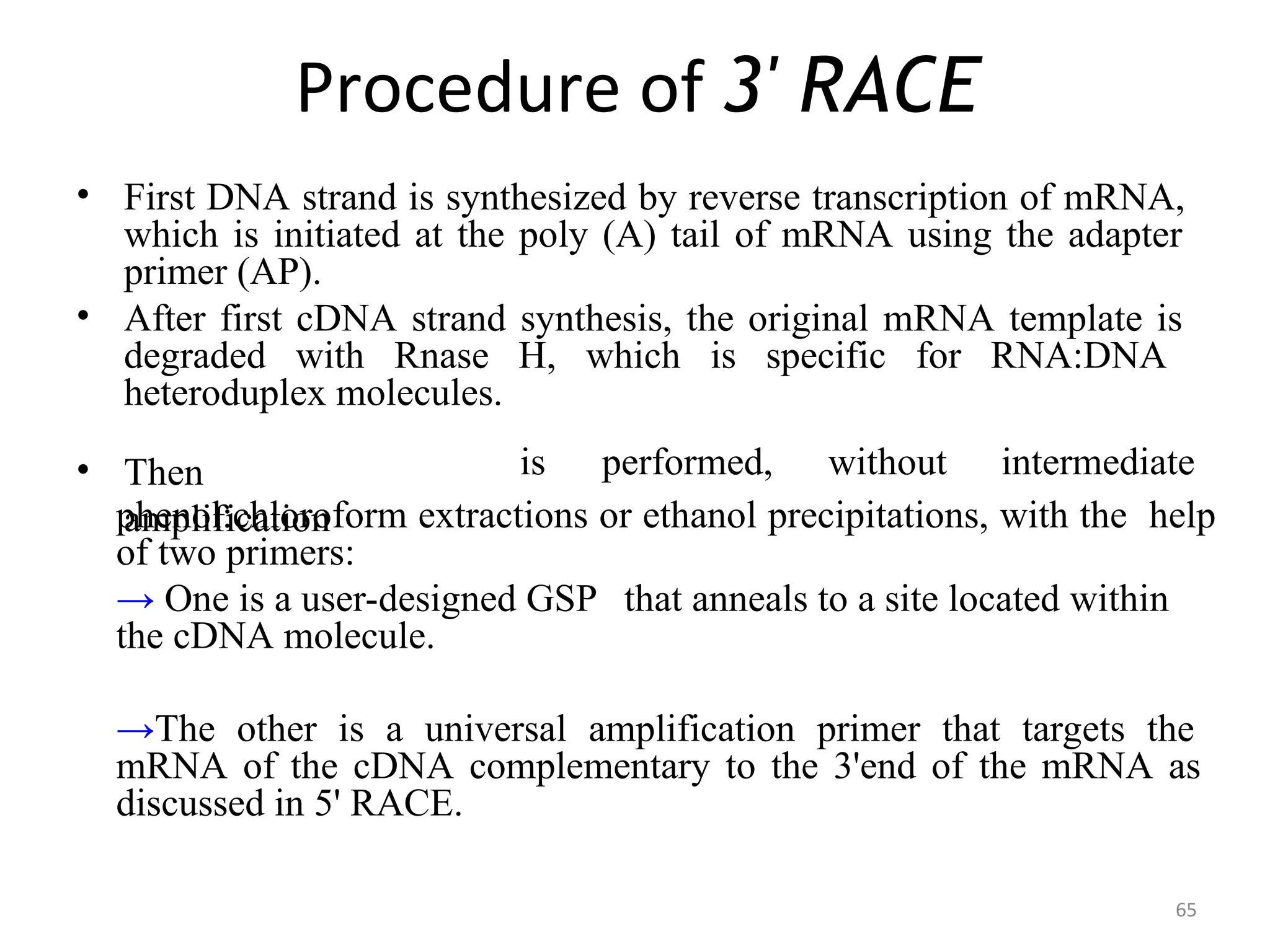
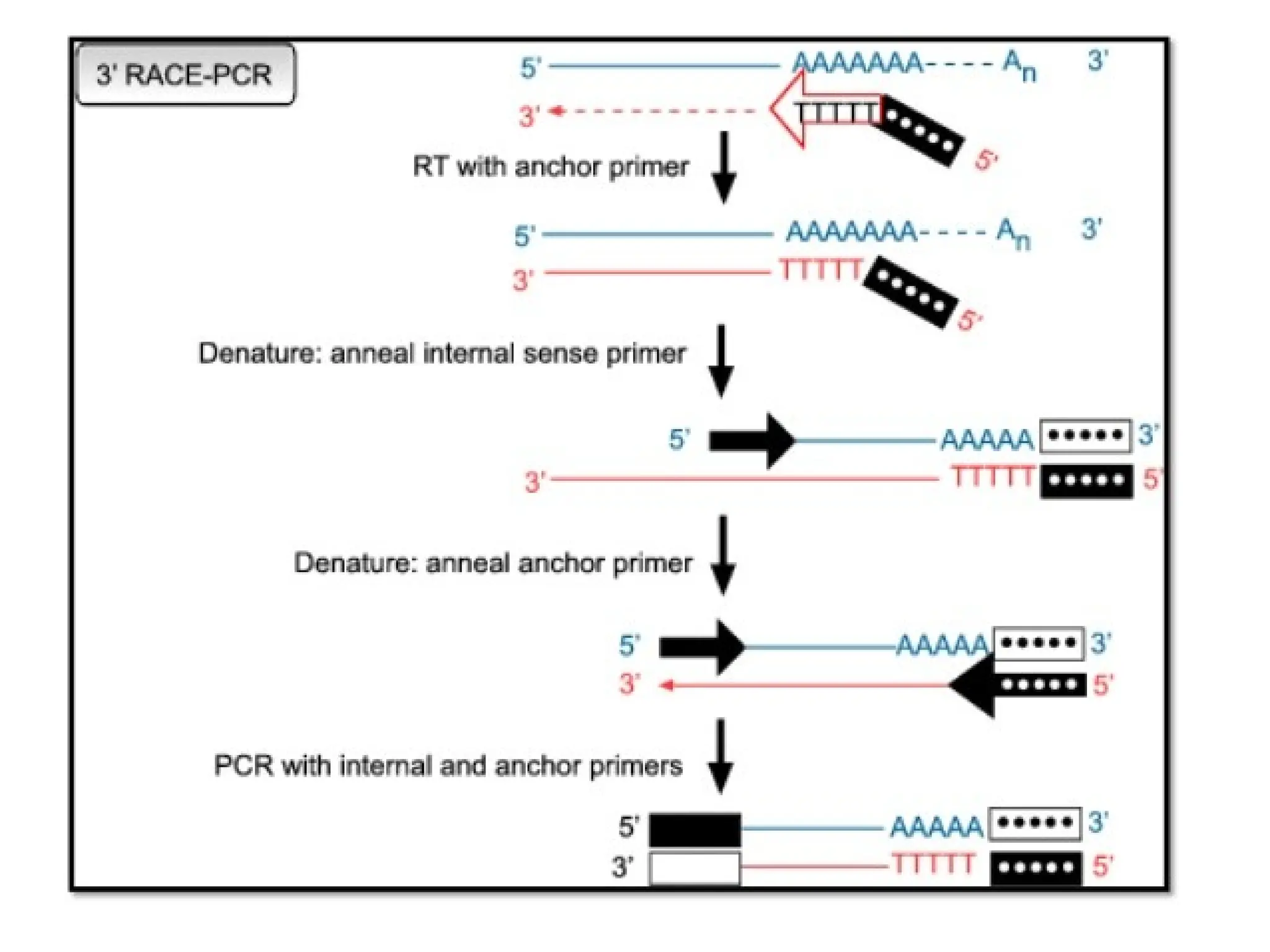
Procedure of 3' RACE
• First DNA strand is synthesized by reverse transcription of mRNA,
which is initiated at the poly (A) tail of mRNA using the adapter
primer (AP).
• After first cDNA strand synthesis, the original mRNA template is
degraded with Rnase H, which is specific for RNA:DNA
heteroduplex molecules.
• Then
amplification
is performed, without intermediate
phenol:chloroform extractions or ethanol precipitations, with the help
of two primers:
→ One is a user-designed GSP that anneals to a site located within
the cDNA molecule.
→The other is a universal amplification primer that targets the
mRNA of the cDNA complementary to the 3'end of the mRNA as
discussed in 5' RACE.
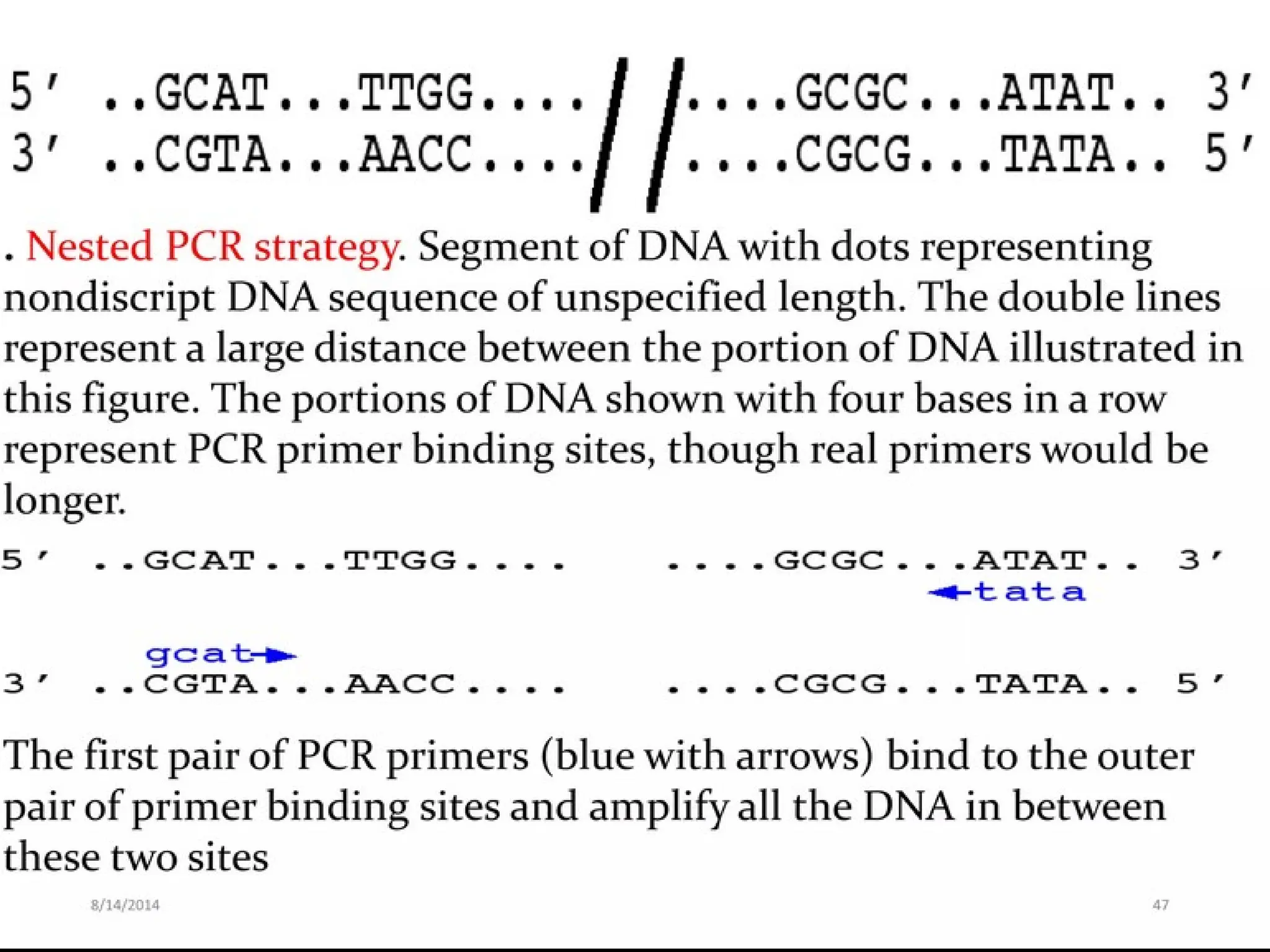
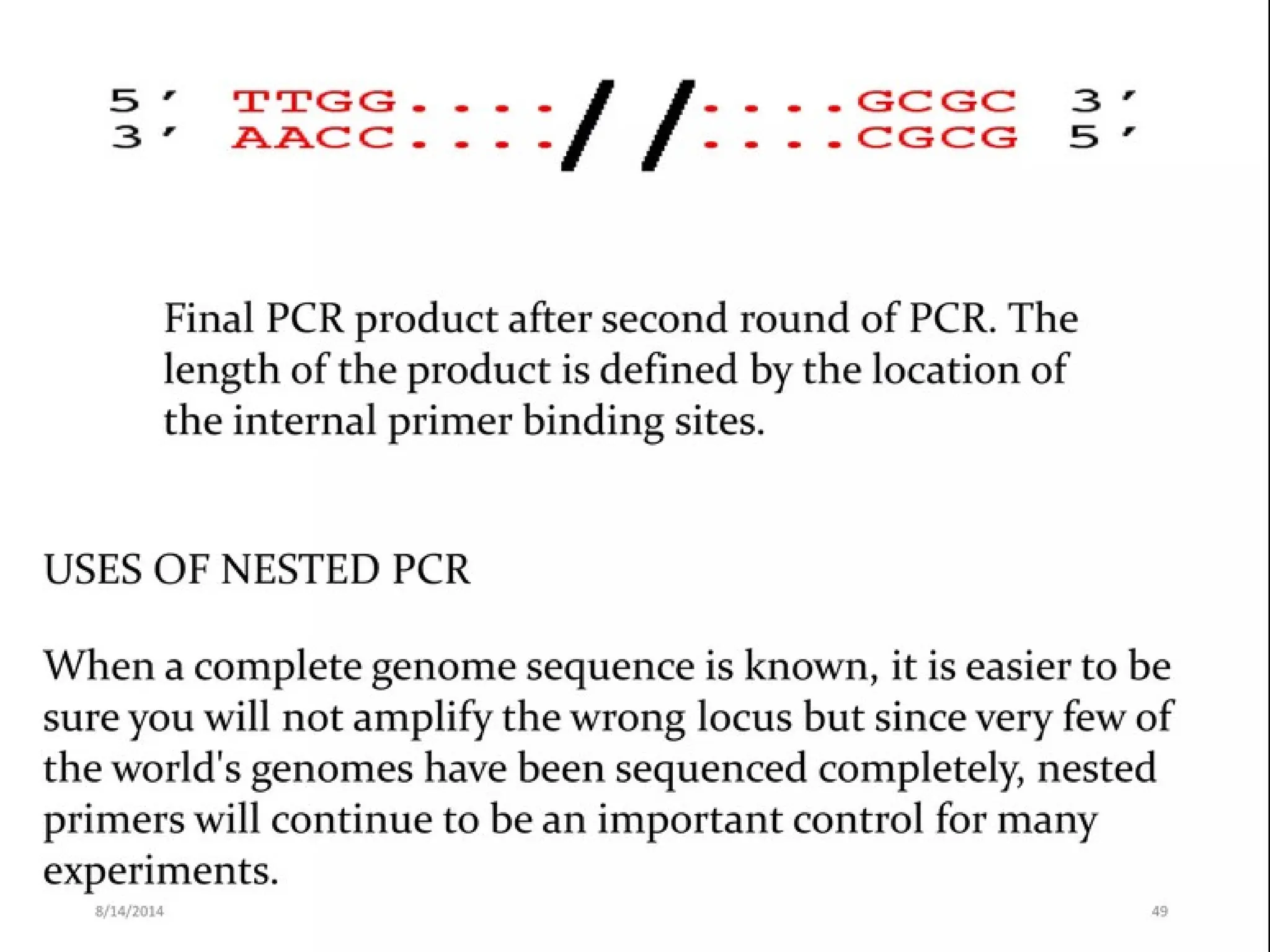
Nested PCR
How it Works ?
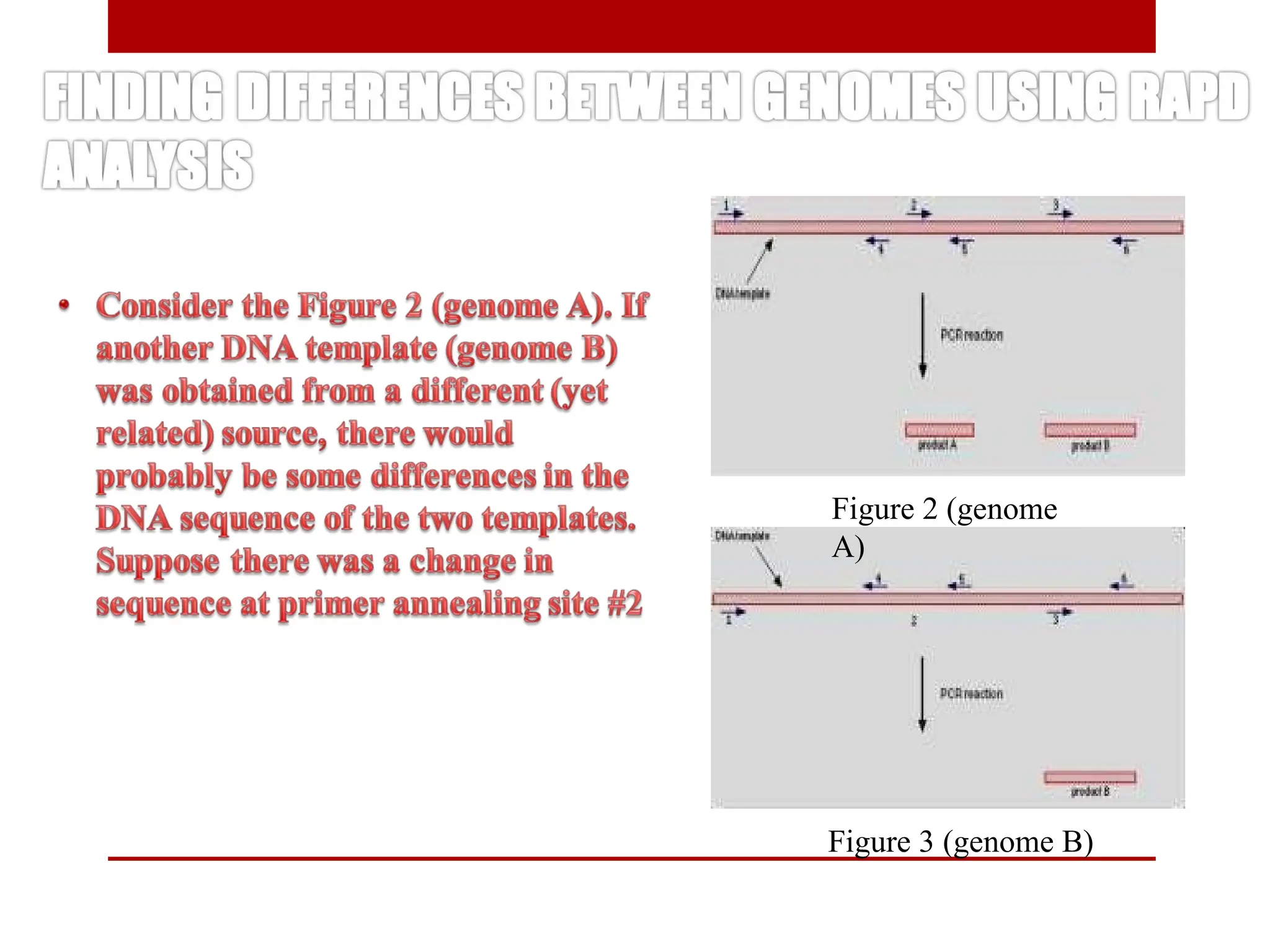
Figure 2 (genome
A)
Figure 3 (genome B)
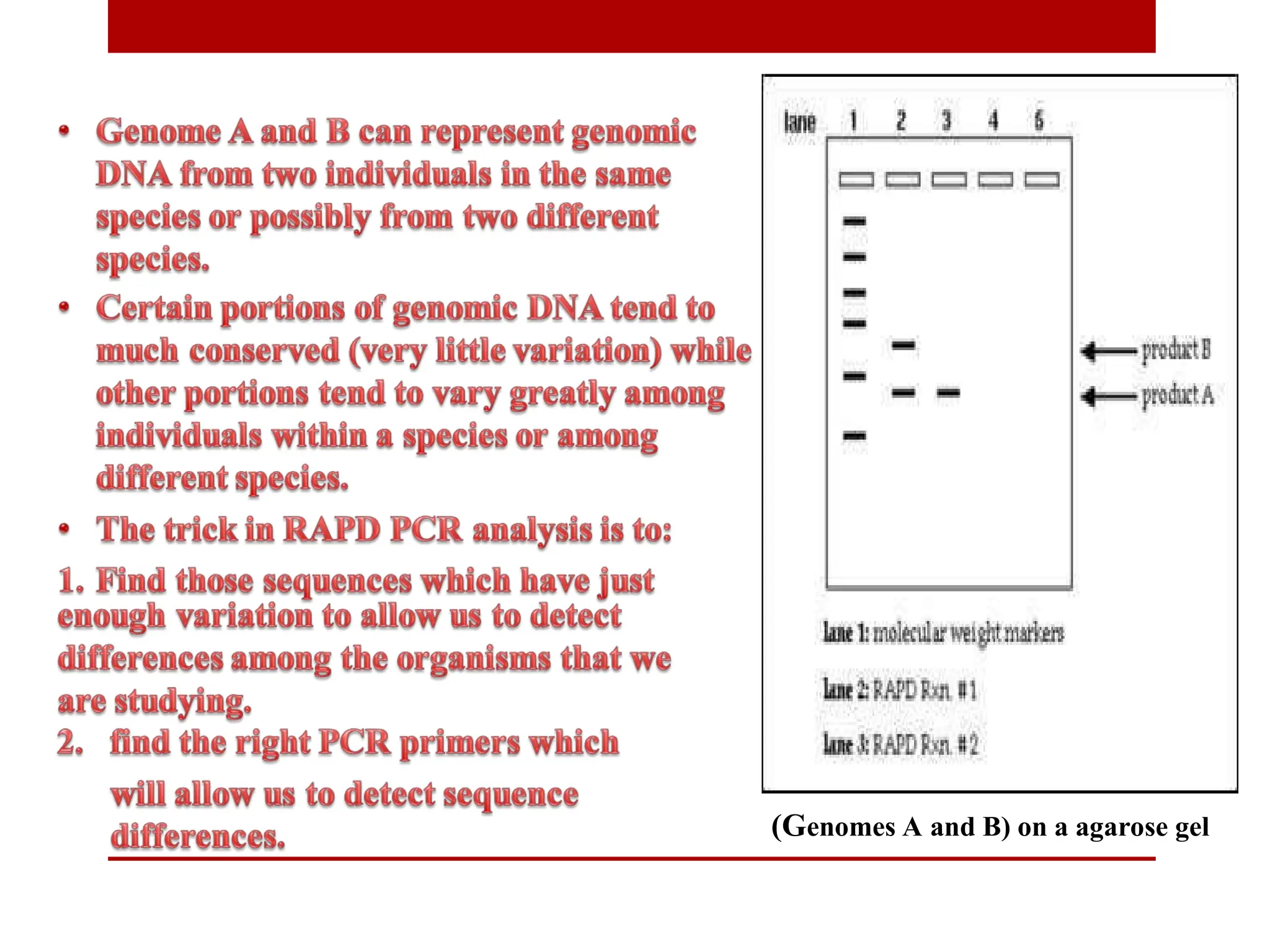
(Genomes A and B) on a agarose gel
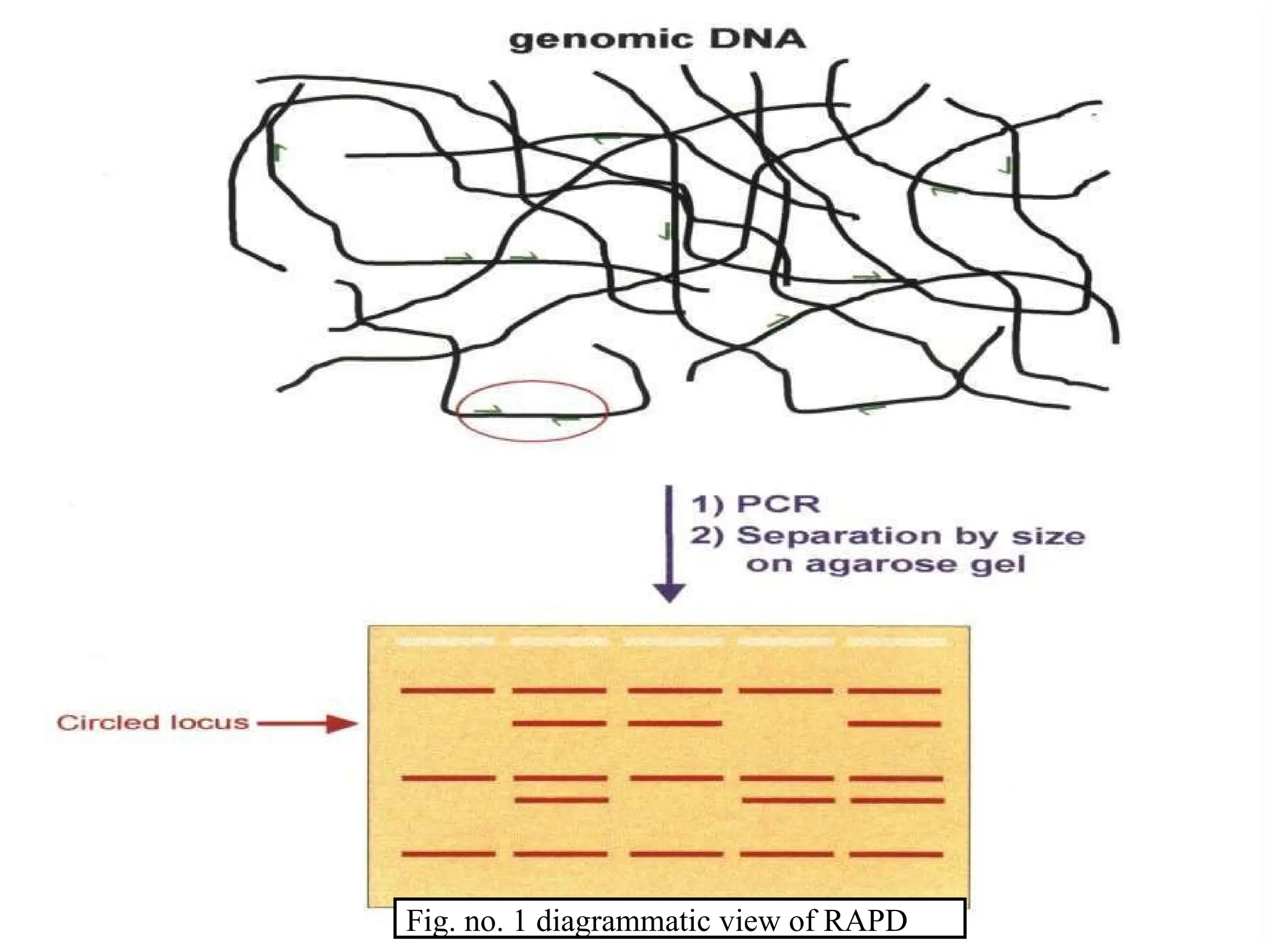
Fig. no. 1 diagrammatic view of RAPD
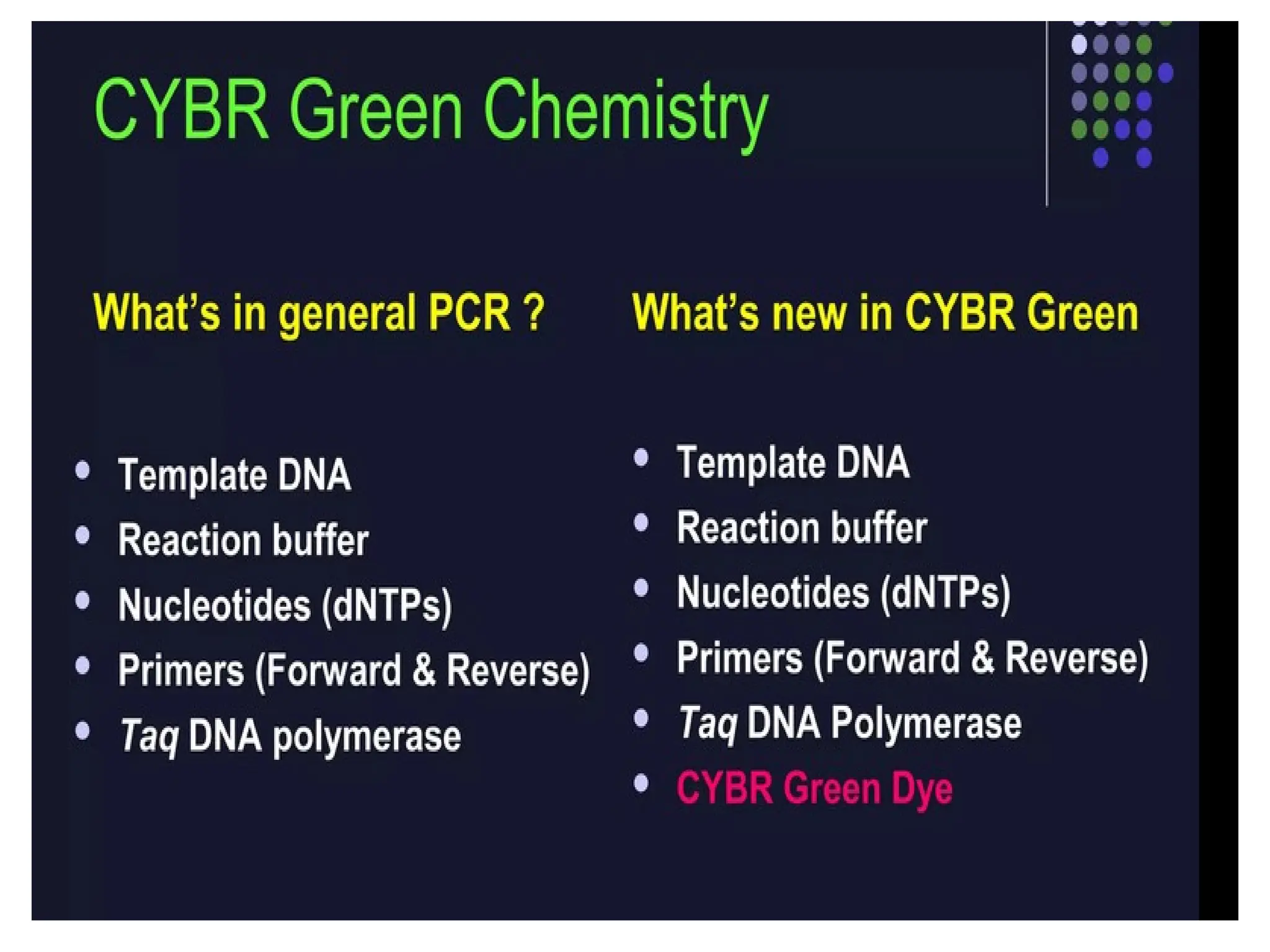
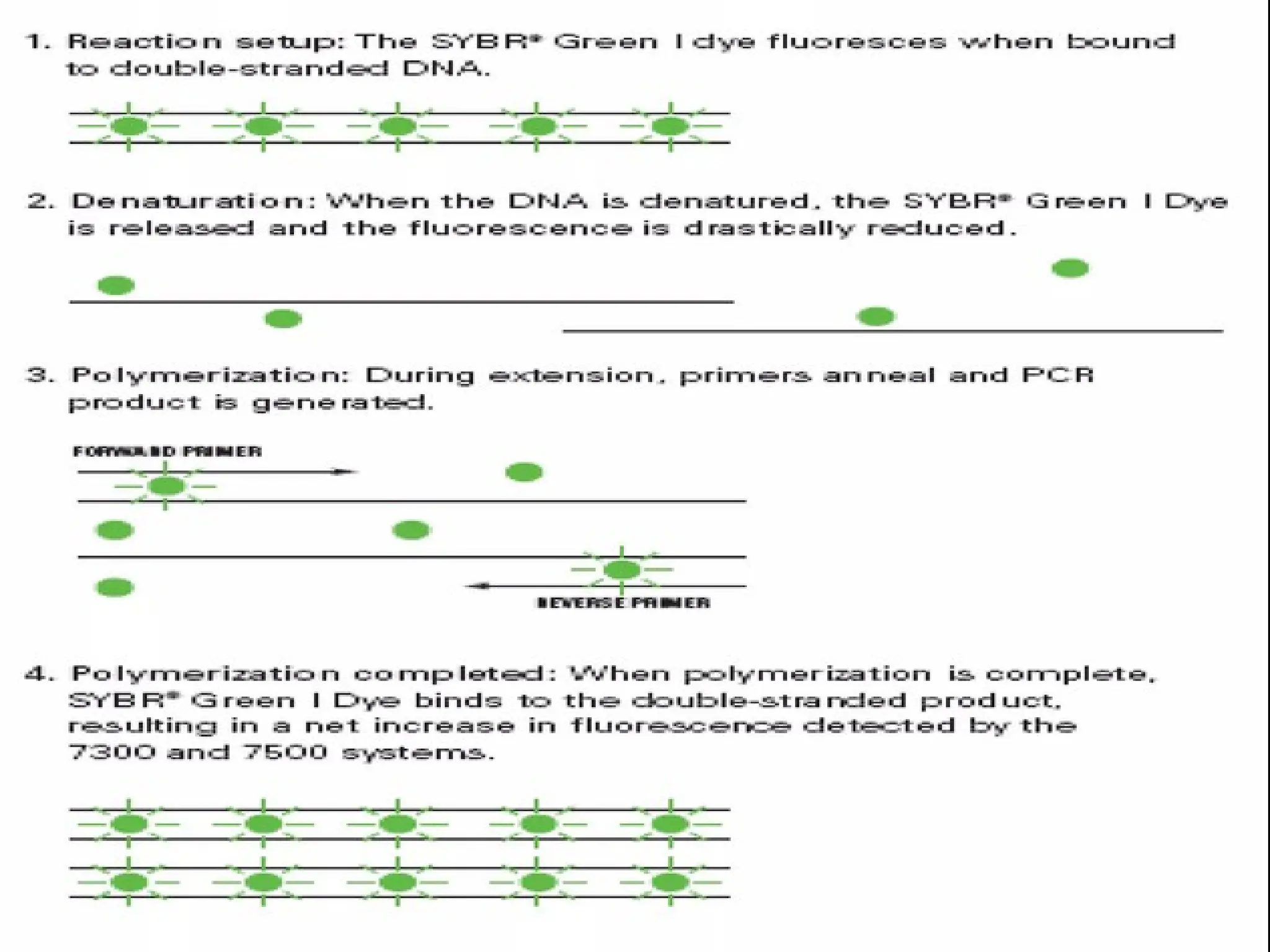
RealTime-PCR
What is Real Time PCR?
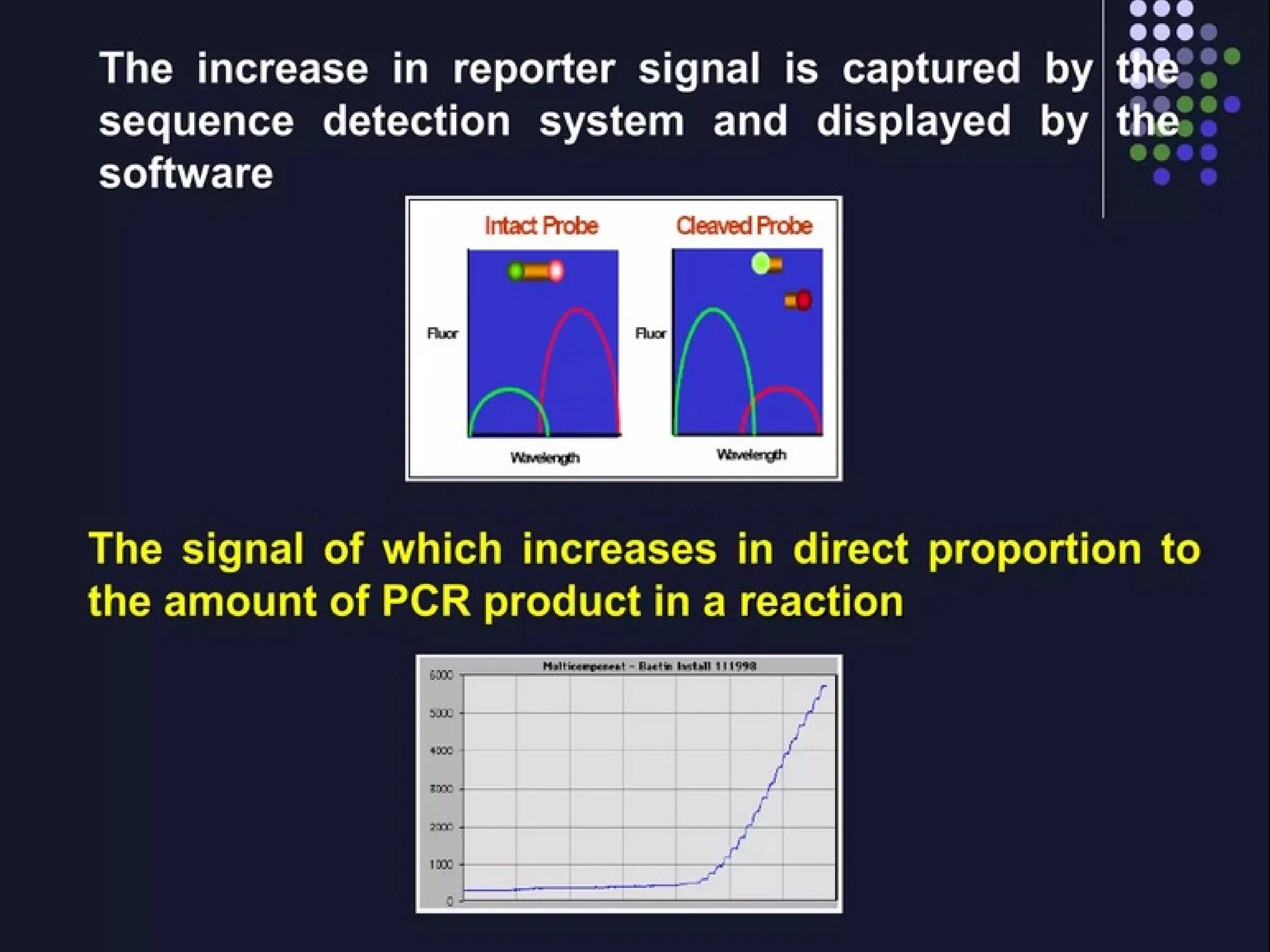
amplicons to produce fluorescence during PCR.
The fluorescence, measured in Real Time, is
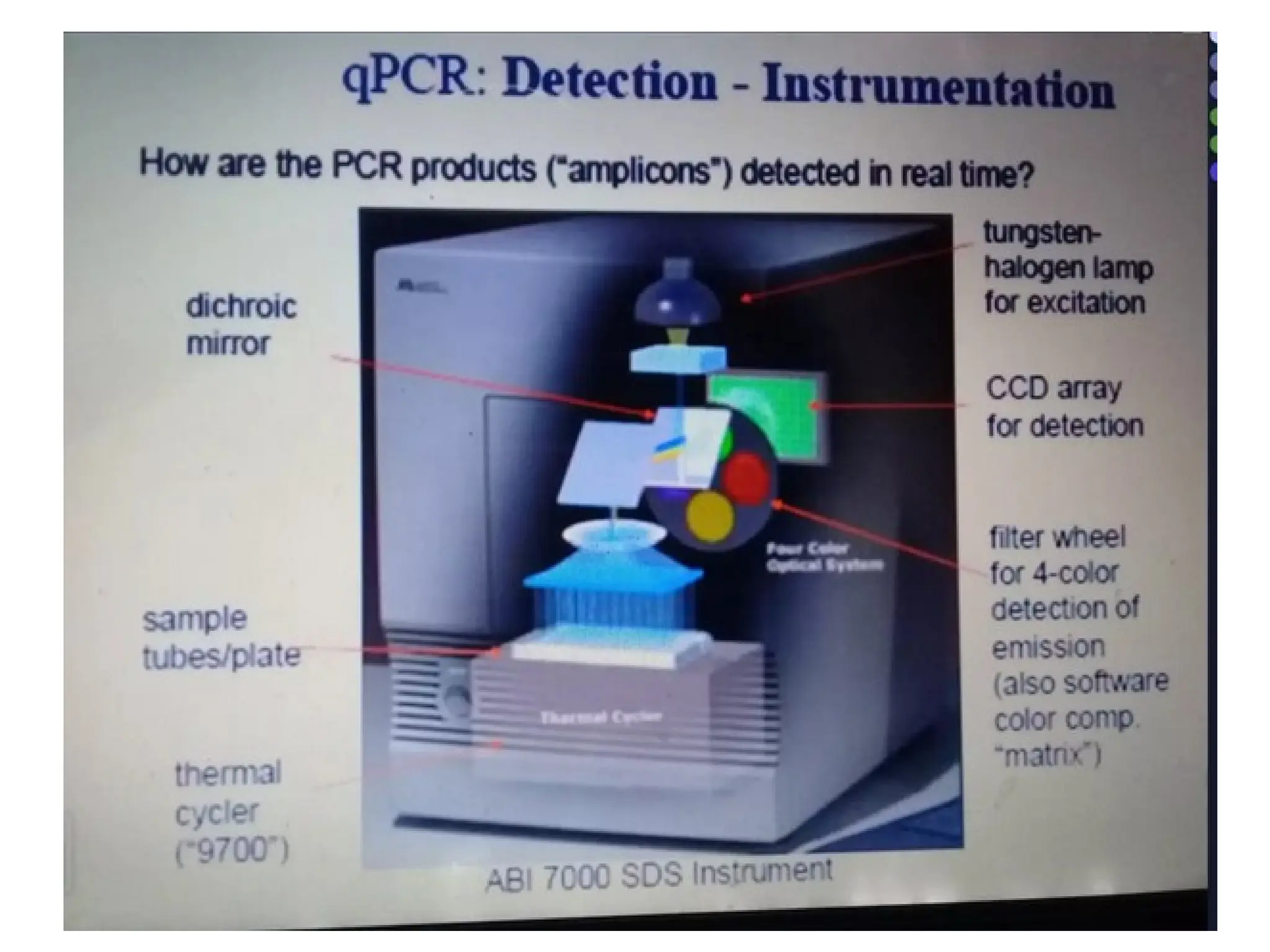
detected in a PCR cycler with an inbuilt filter
flurometer.
Real Time PCR is a
technique
in
which
fluoroprobes bind to specific target regions
of
What are Fluorescent dyes?
When a population of fluorochrome molecules is excited by light of an
appropriate wavelength, fluorescent light is emitted. The light intensity
can be measured by flurometer or a pixel-by-pixel digital image of the
sample.
Excitation and Emission: Fluorodyes absorb light at one wavelength &
thereby boosts an electron to a higher energy shell.
•The excited electron falls back to the ground state and the flurophore re-
emits light but at longer wavelength.
•This shift makes it possible to separate excitation light from emission light
with the use of optical filters.
•The wavelength (nm) where photon energy is most efficiently captured is
defined as the Absorbancemax & the wavelength (nm) where light is most
efficiently released is defined as the Emissionmax.
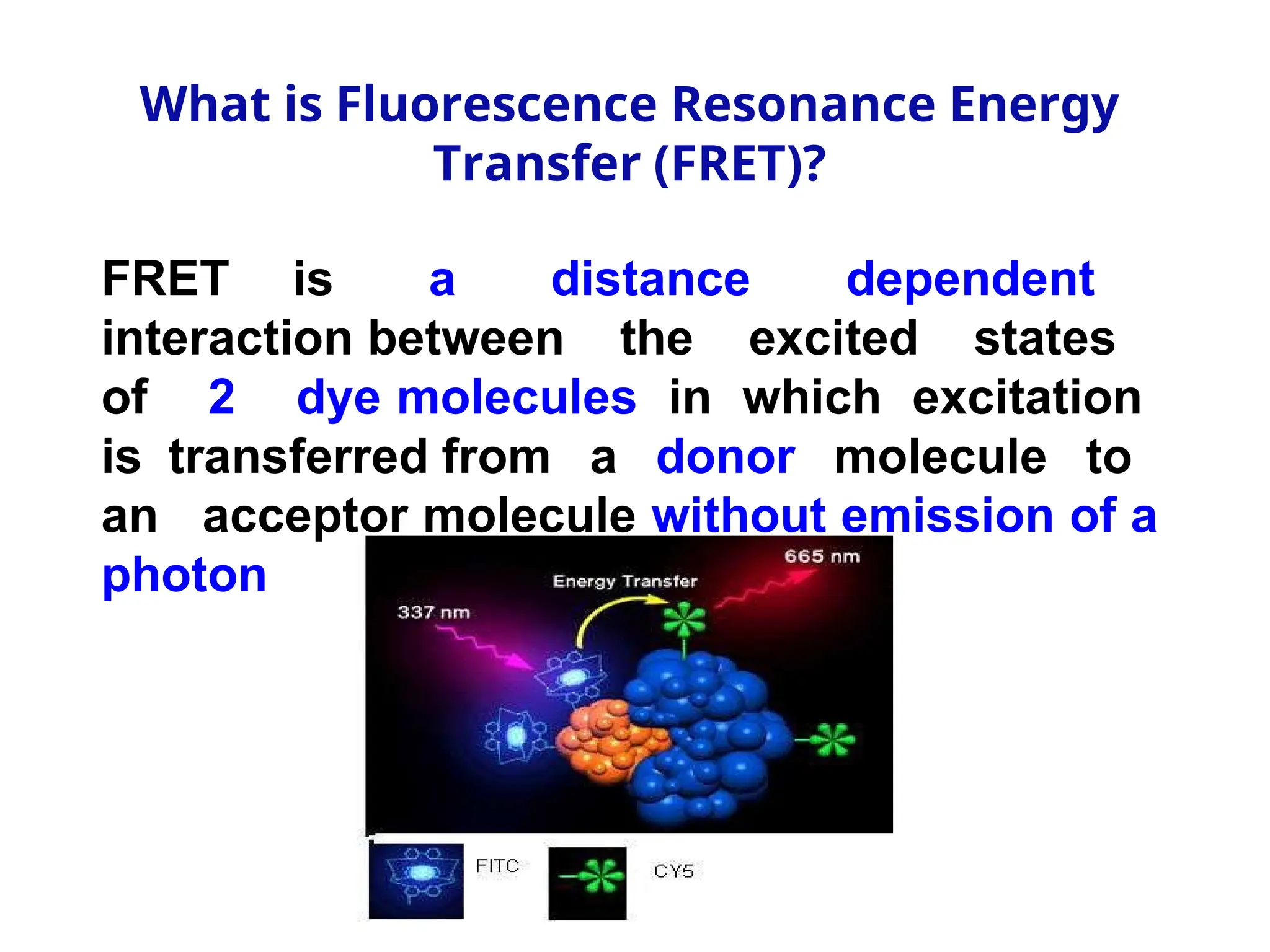
What is Fluorescence Resonance Energy
Transfer (FRET)?
FRET is a distance dependent
interaction between the excited states
of 2 dye molecules in which excitation
is transferred from a donor molecule to
an acceptor molecule without emission of a
photon
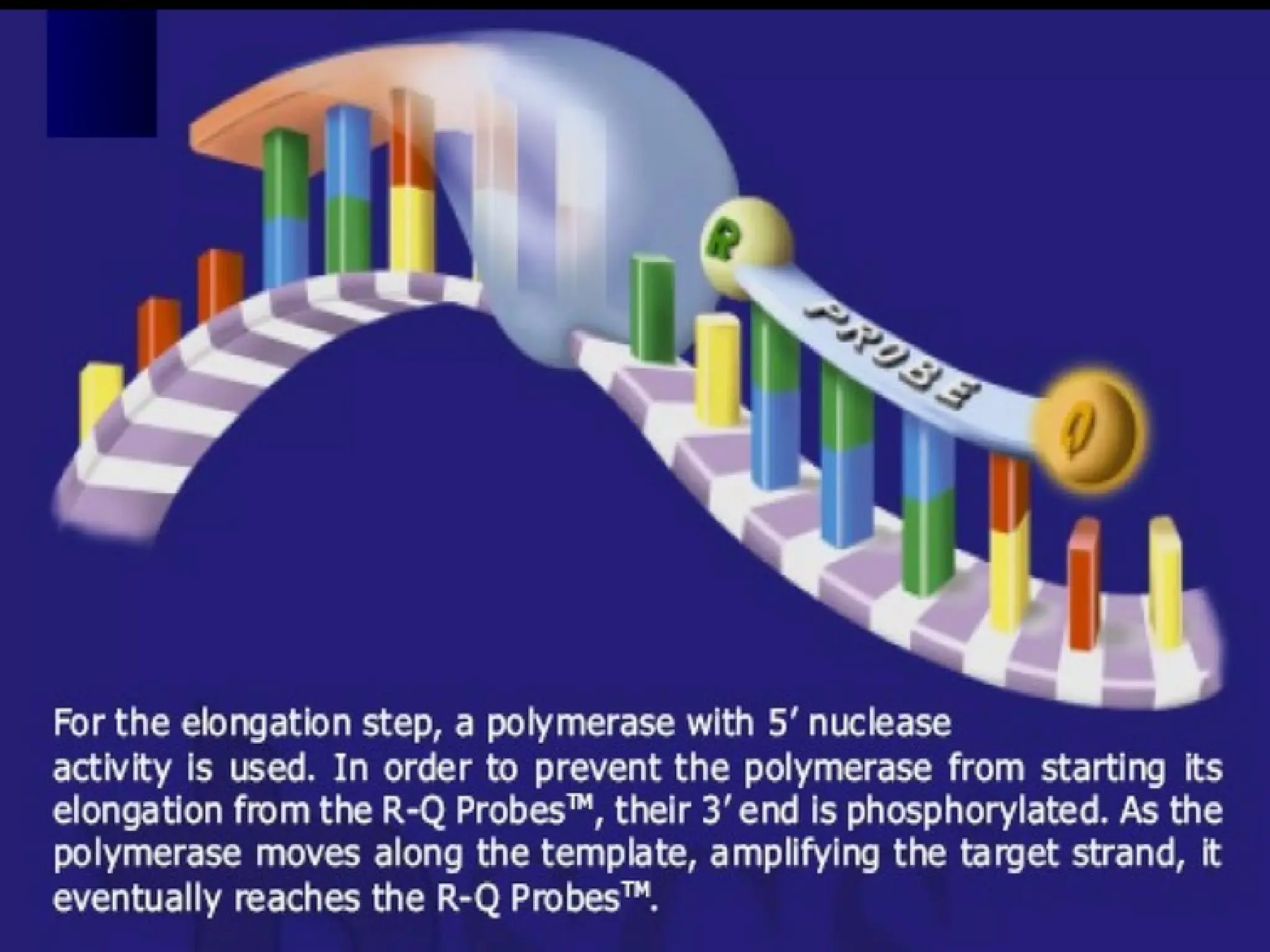
Hydrolysis Probes (TaqMan)
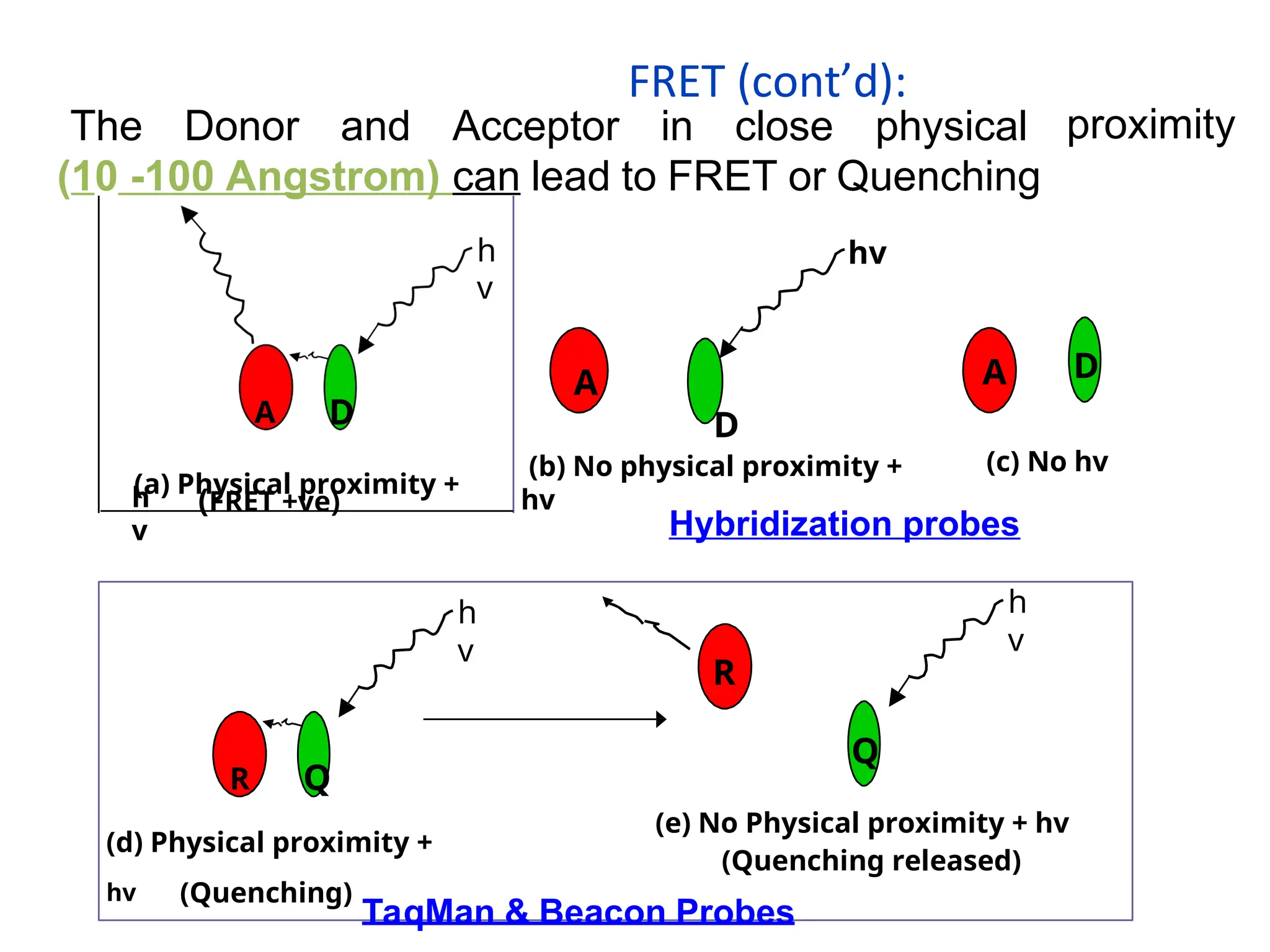
The Donor and Acceptor in close physical
(10 -100 Angstrom) can lead to FRET or Quenching
proximity
hv
D
(b) No physical proximity +
hv
D
(c) No hv
R Q
(d) Physical proximity +
hv (Quenching)
h
v
(e) No Physical proximity + hv
(Quenching released)
R
h
v
Q
h
v
A D
(a) Physical proximity +
h
v
(FRET +ve)
Hybridization probes
TaqMan & Beacon Probes
A A
FRET (cont’d):
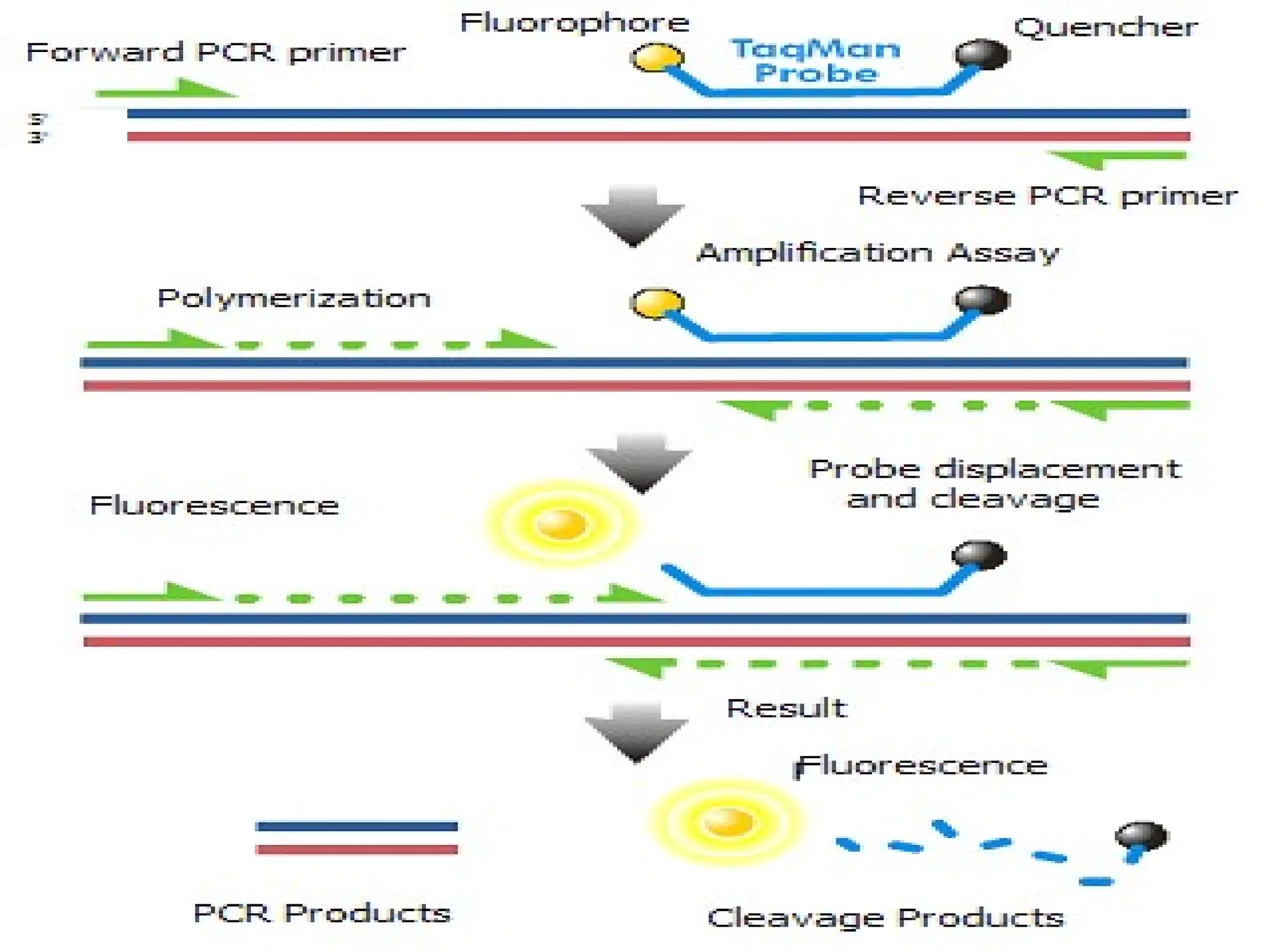
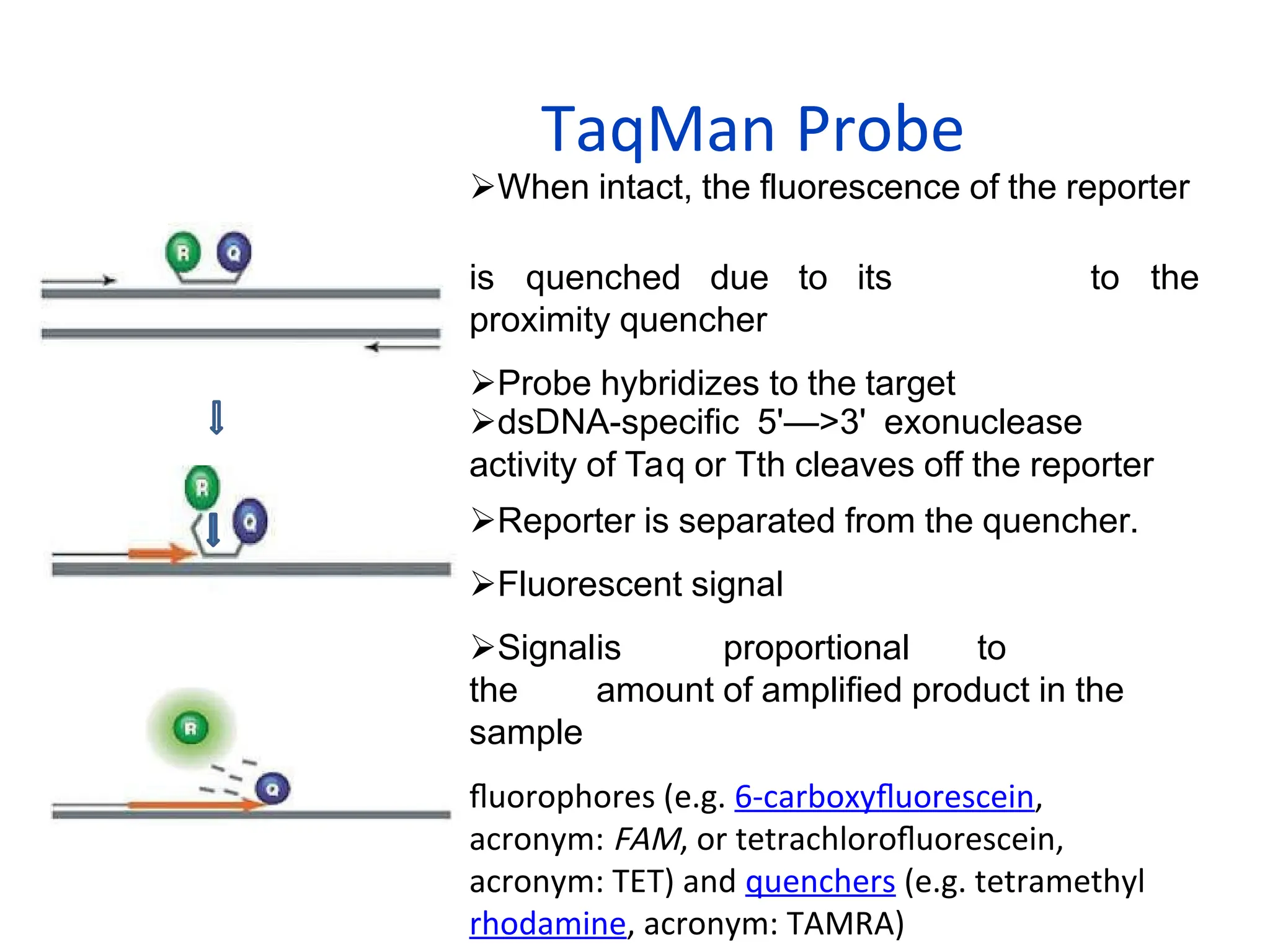
When intact, the fluorescence of the reporter
is quenched due to its
proximity quencher
Probe hybridizes to the target
to the
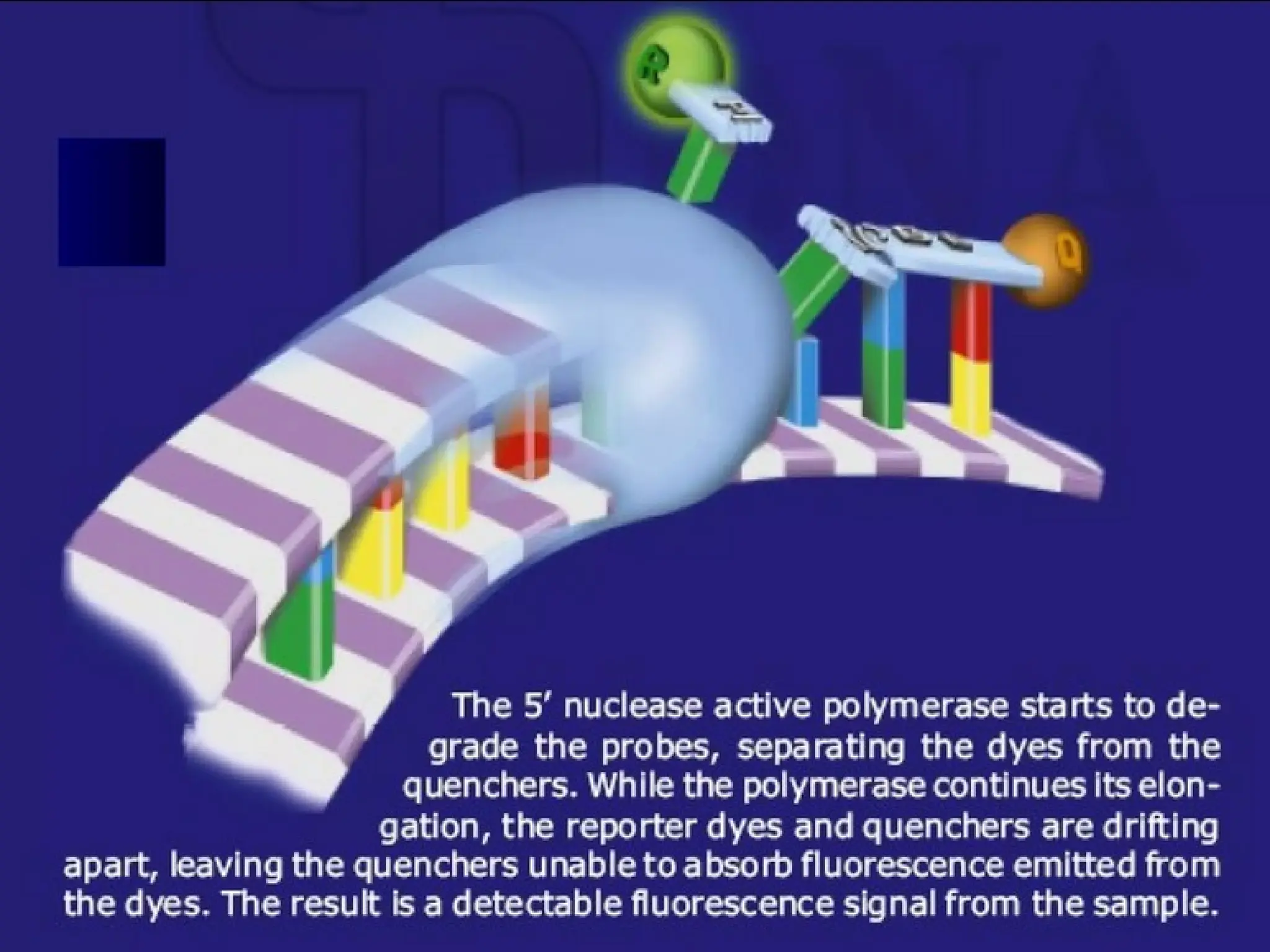
dsDNA-specific 5'—>3' exonuclease
activity of Taq or Tth cleaves off the reporter
Reporter is separated from the quencher.
Fluorescent signal
Signalis proportional to
the amount of amplified product in the
sample
fluorophores (e.g. 6-carboxyfluorescein,
acronym: FAM, or tetrachlorofluorescein,
acronym: TET) and quenchers (e.g. tetramethyl
rhodamine, acronym: TAMRA)
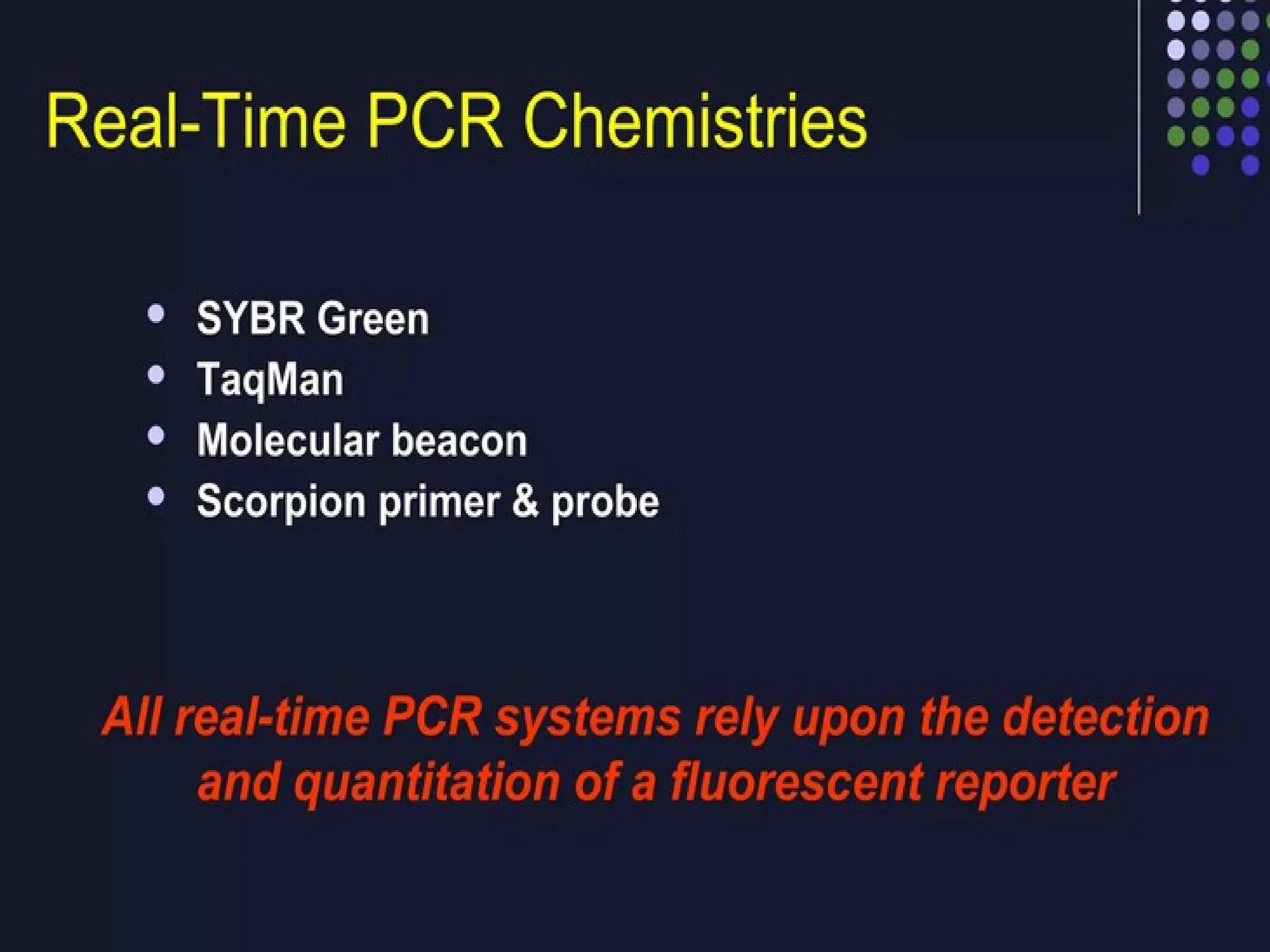
TaqMan Probe
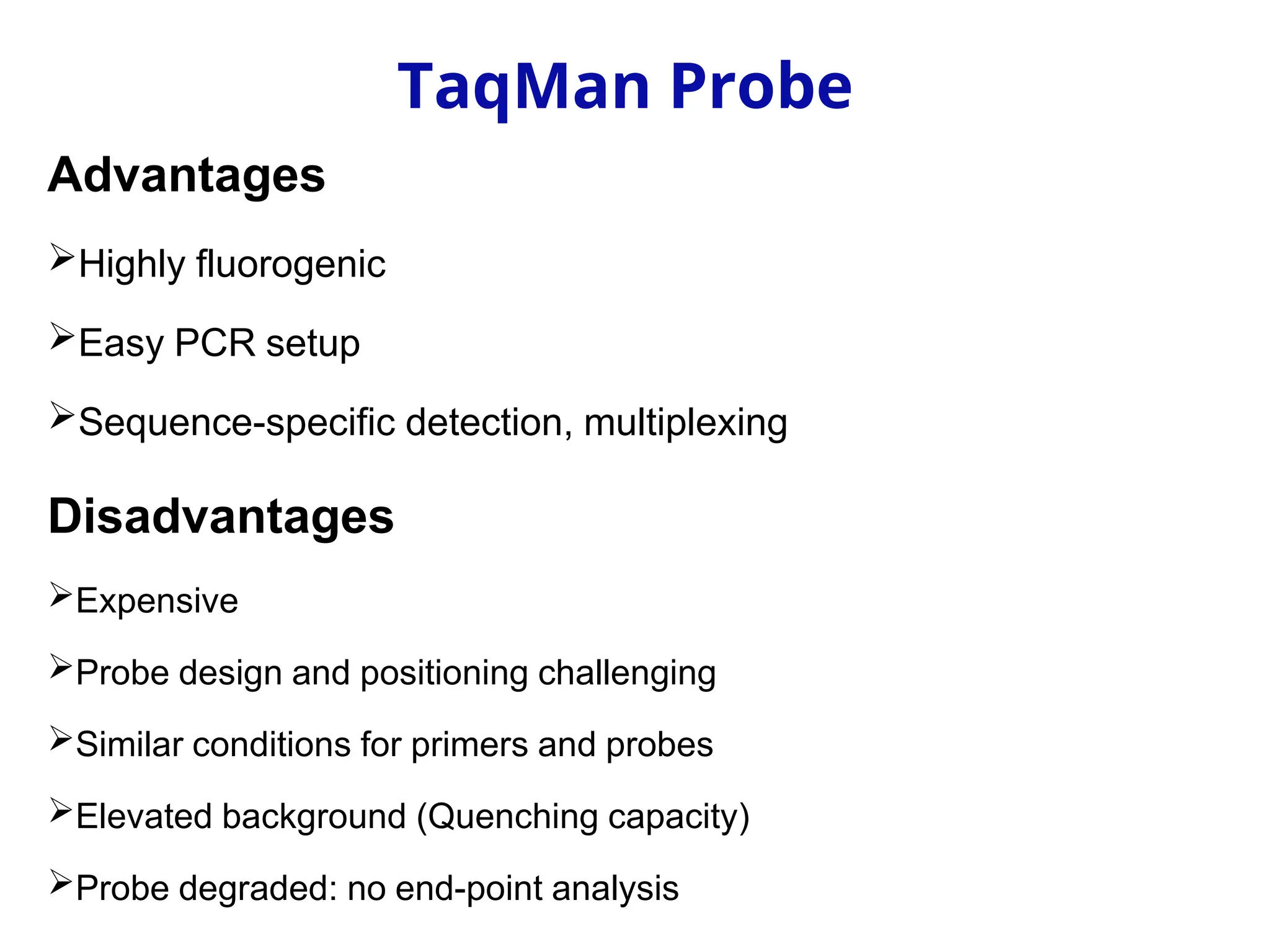
Advantages
Highly fluorogenic
Easy PCR setup
Sequence-specific detection, multiplexing
Disadvantages
Expensive
Probe design and positioning challenging
Similar conditions for primers and probes
Elevated background (Quenching capacity)
Probe degraded: no end-point analysis
TaqMan Probe
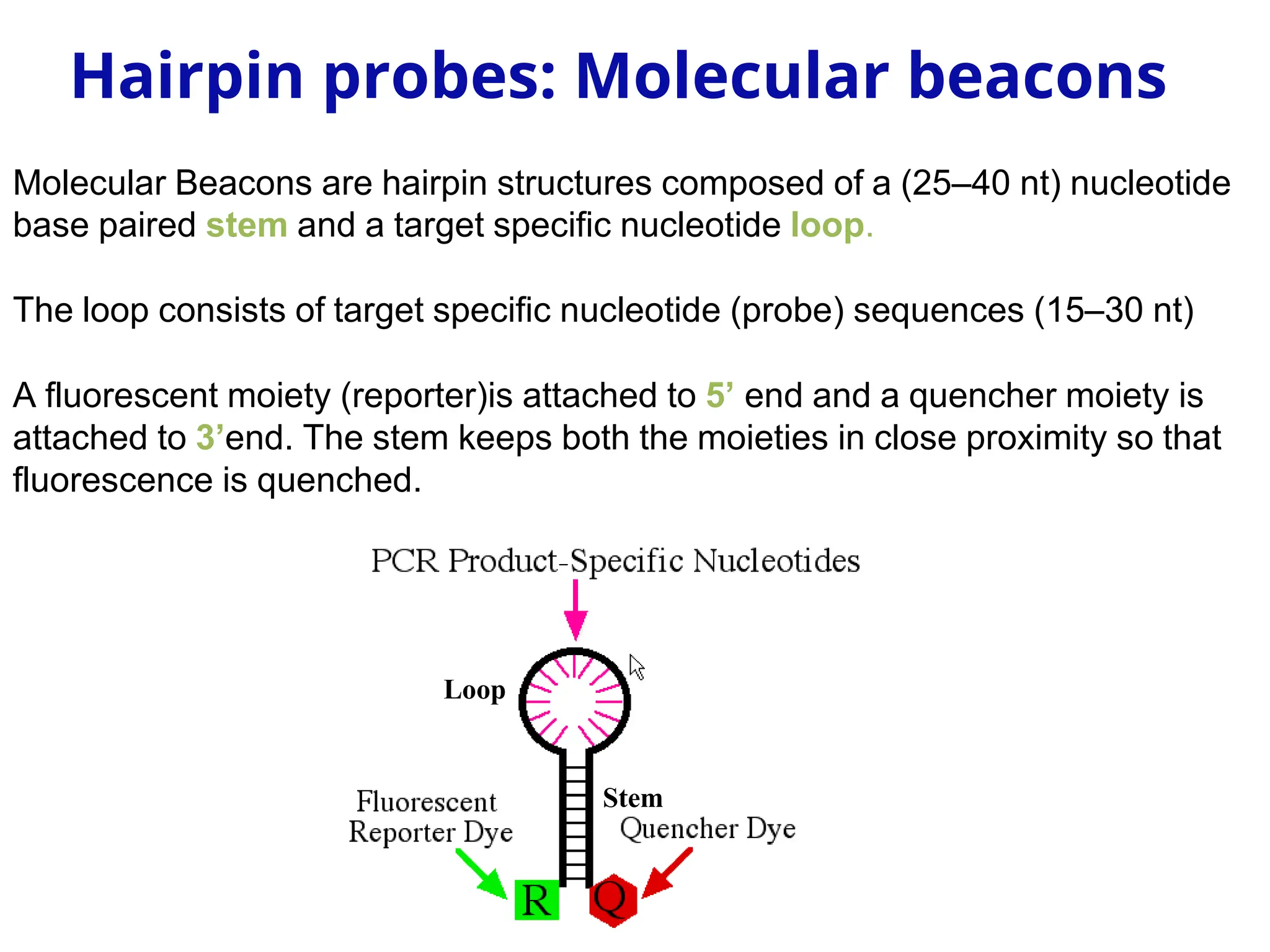
Loop
Stem
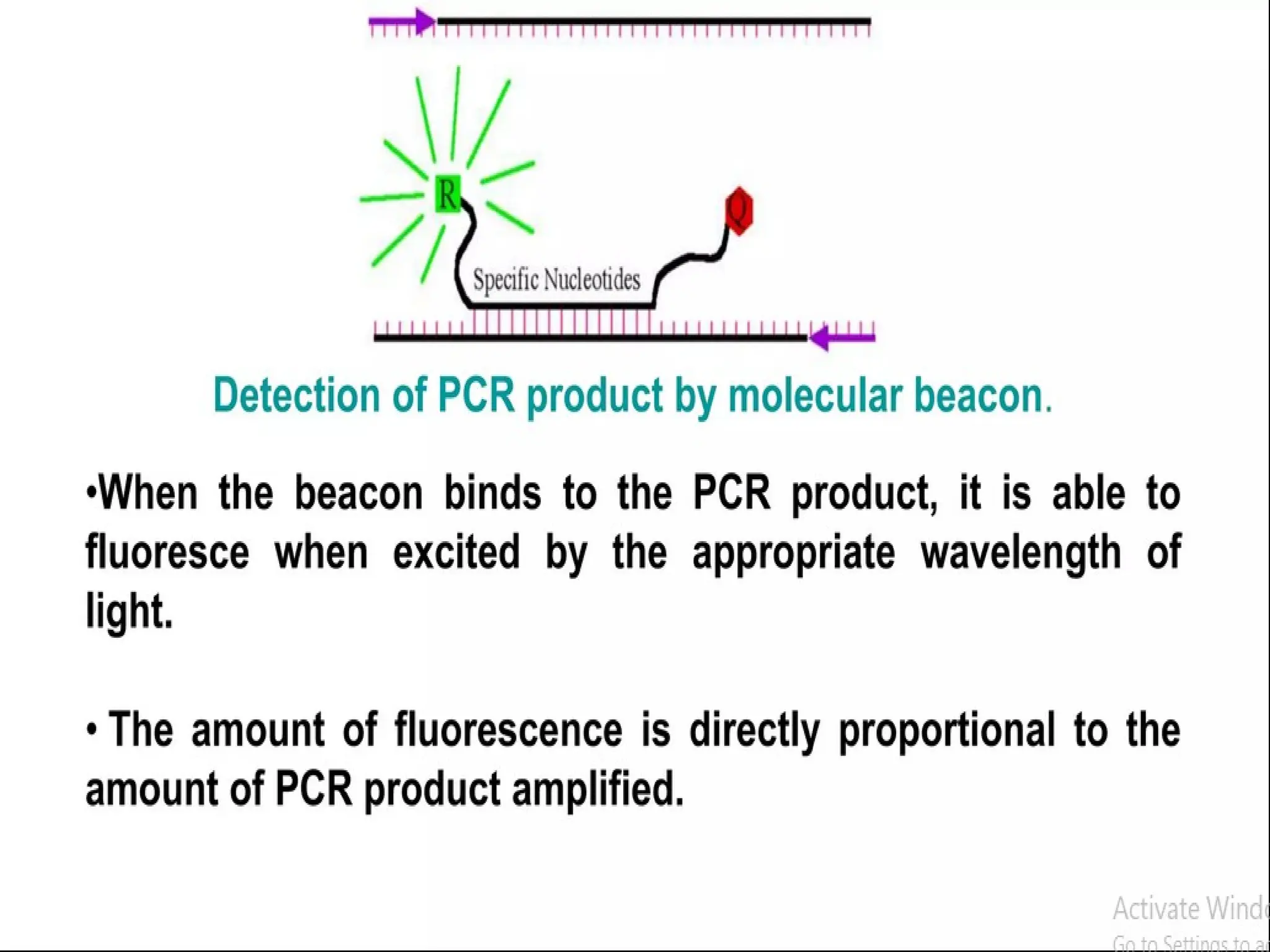
Molecular Beacons are hairpin structures composed of a (25–40 nt) nucleotide
base paired stem and a target specific nucleotide loop.
The loop consists of target specific nucleotide (probe) sequences (15–30 nt)
A fluorescent moiety (reporter)is attached to 5’ end and a quencher moiety is
attached to 3’end. The stem keeps both the moieties in close proximity so that
fluorescence is quenched.
Hairpin probes: Molecular beacons
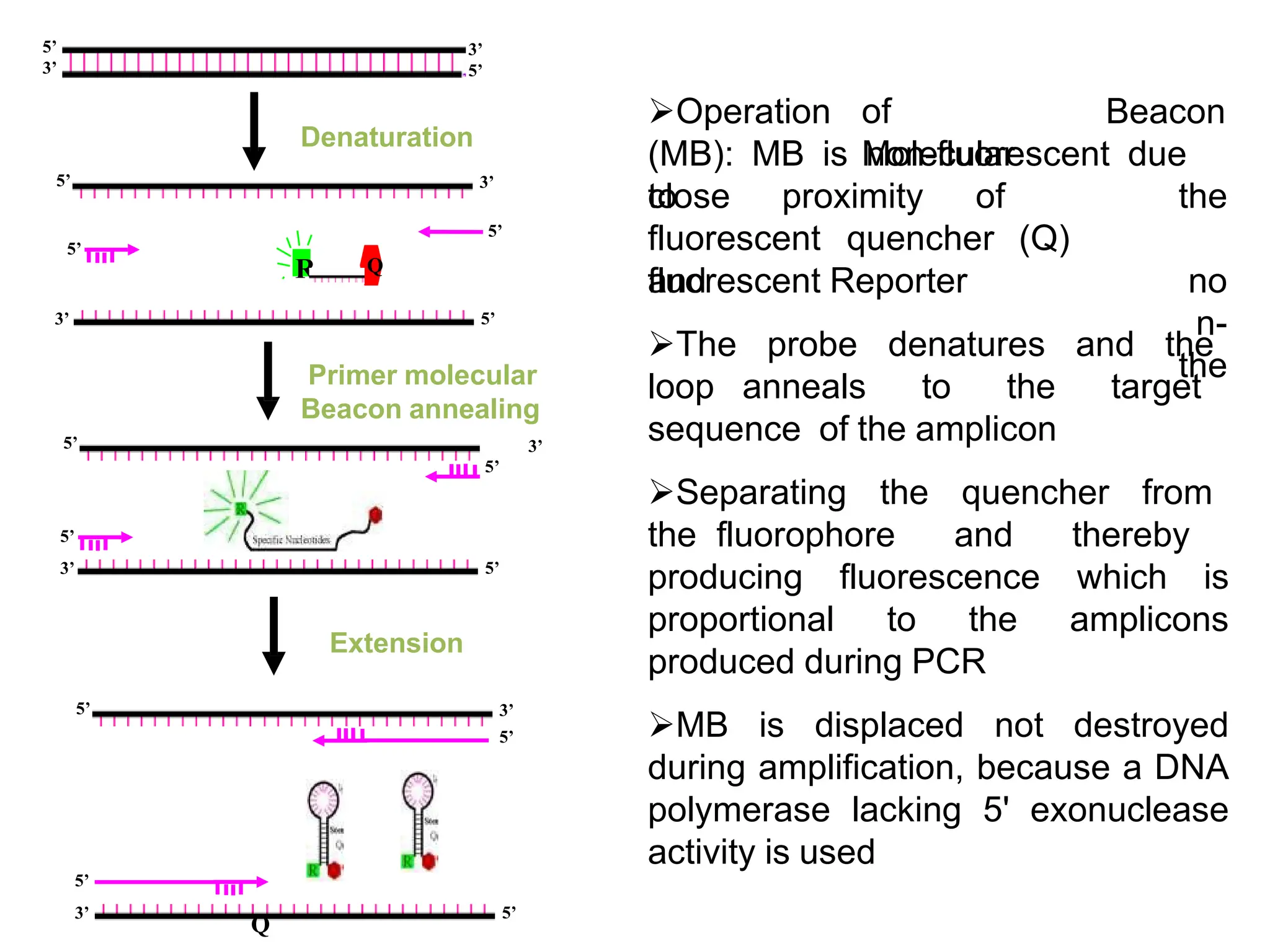
Denaturation
Primer molecular
Beacon annealing
3’
Extension
5’
5’
3’
Q
3’
5’
5’
5’
3’
3’
5’
5’
3’
3’
5’
5’
5’
5’
5’
3’
5’
Q
R
Operation of
Molecular
Beacon
(MB): MB is non-fluorescent due
to
close proximity of the
no
n-
the
fluorescent quencher (Q)
and
fluorescent Reporter
The probe denatures and the
loop anneals to the target
sequence of the amplicon
Separating the quencher from
the fluorophore and thereby
producing fluorescence which is
proportional to the amplicons
produced during PCR
MB is displaced not destroyed
during amplification, because a DNA
polymerase lacking 5' exonuclease
activity is used
Molecular Beacons
Advantages
High specificity, low background
Post PCR analysis
PCR multiplex
Allelic discrimination (greater specificity than linear probes)
Disadvantages
Challenging design
Long probes – less yield
Intramolecular competitive binding
Low signal levels (proximity of reporter and quencher)
• The Kunkel method for site-directed mutagenesis is a classic method
for introducing mutations (either single base pairs or larger
insertions, deletions, or substitutions) into a DNA sequence.
• There are three main steps to performing Kunkel mutagenesis.
• The dut gene encodes dUTPase which normally degrades dUTP.
An elevated concentration of dUTP accumulates in dut strains,
resulting in incorporation of U in place T at some positions during
DNA replication. The ung gene encodes uracil N-glycosylase which
normally removes U from DNA. Thus, in the double mutant U is
occasionally incorporated into DNA and this error is not repaired.
Because U has the same base pairing properties and the same coding
properties as T, incorporation of U into DNA in place of T is not
mutagenic.
• In Vivo Process
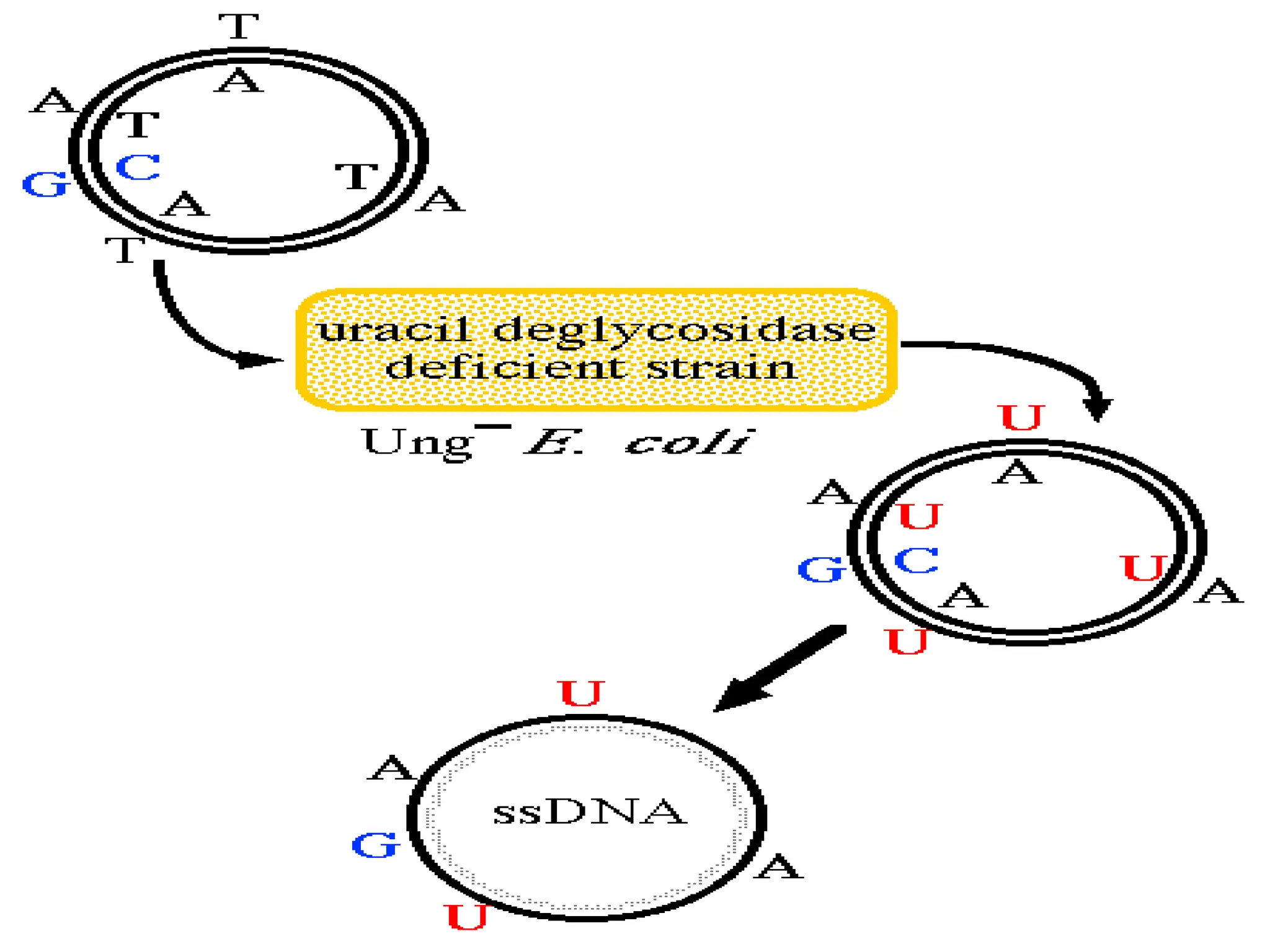
1) Place the plasmid that contains your target
sequence to be mutated into an ung-
dut-
strain
of E. coli bacteria. dut-
(lacking dUTPase) bacteria
accumulate dUTP. ung-
(lacking uracil
deglycosidase) bacteria cannot remove dUTP that
gets incorporated into new DNA strands. The end
result is that your plasmid is converted to DNA that
lacks T's and contains U's instead:
In Vitro Process
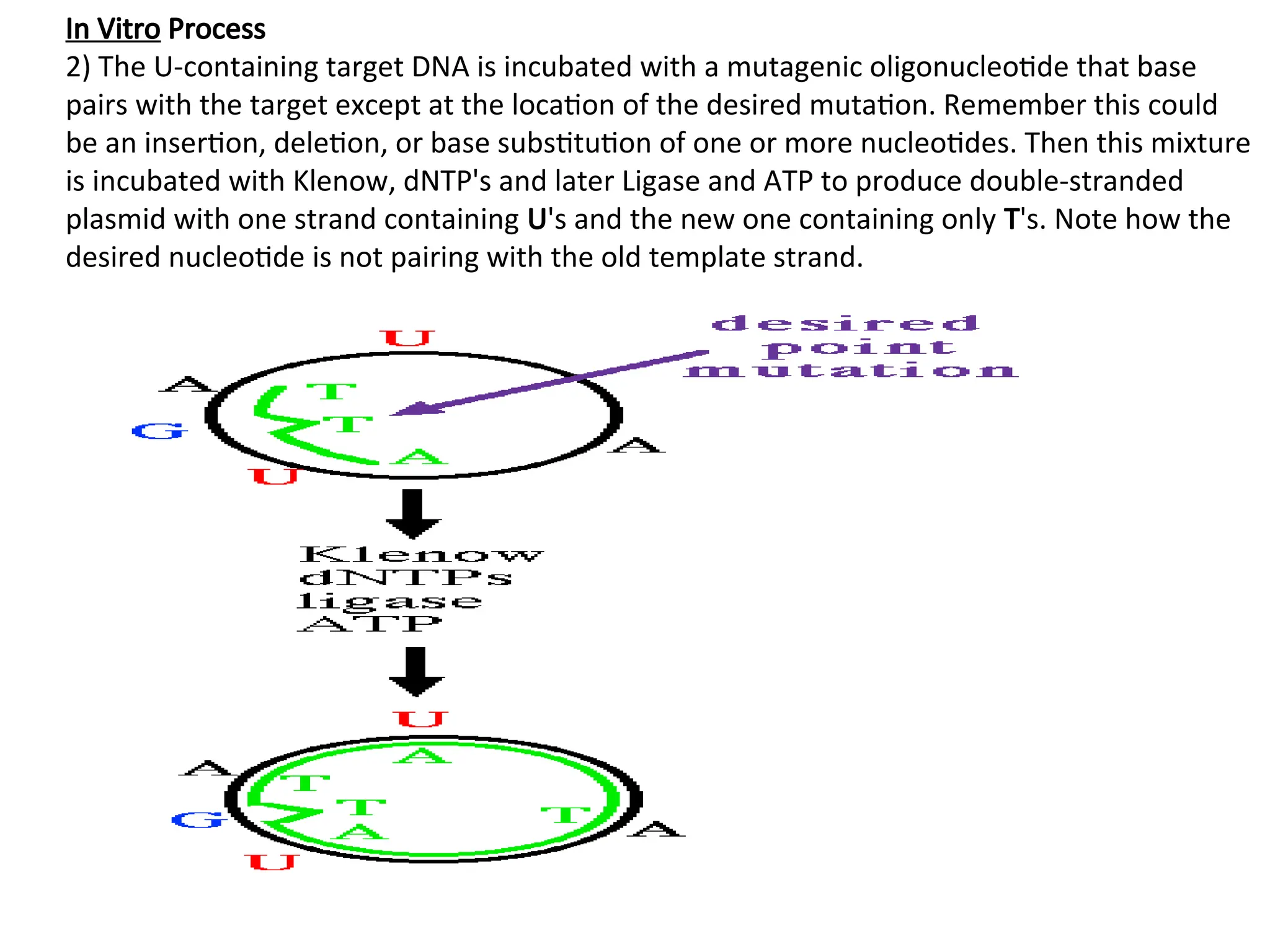
2) The U-containing target DNA is incubated with a mutagenic oligonucleotide that base
pairs with the target except at the location of the desired mutation. Remember this could
be an insertion, deletion, or base substitution of one or more nucleotides. Then this mixture
is incubated with Klenow, dNTP's and later Ligase and ATP to produce double-stranded
plasmid with one strand containing U's and the new one containing only T's. Note how the
desired nucleotide is not pairing with the old template strand.
In Vivo Process
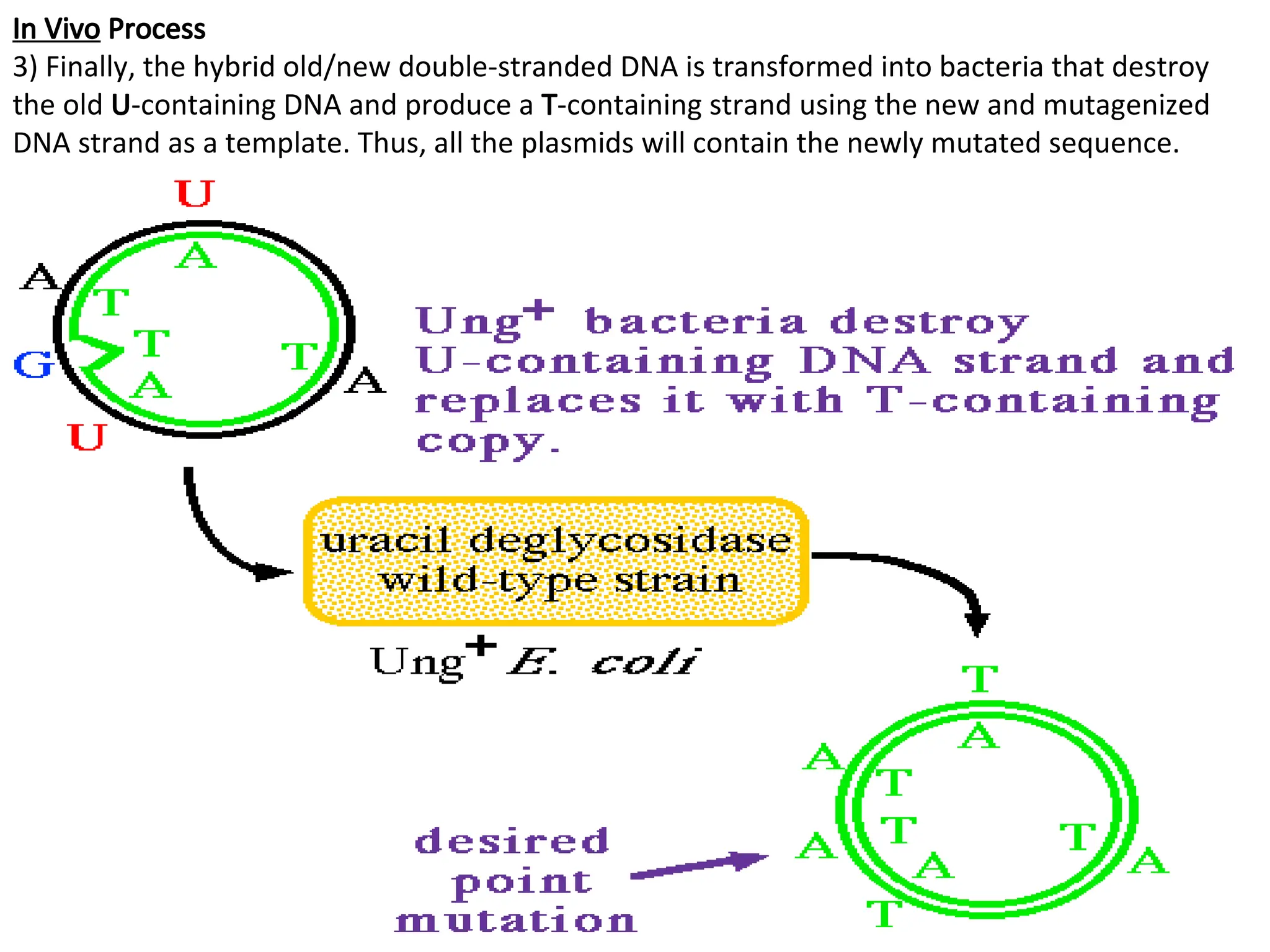
3) Finally, the hybrid old/new double-stranded DNA is transformed into bacteria that destroy
the old U-containing DNA and produce a T-containing strand using the new and mutagenized
DNA strand as a template. Thus, all the plasmids will contain the newly mutated sequence.

polymerase chain reaction and so on .ppt

polymerase chain reaction and so on .ppt

  • 1.
  • 2.
    What is PCR? •PCRis a technique that takes specific sequence of DNA of small amount and amplifies it to be used for further testing. •In vitro technique
  • 4.
  • 11.
    Denaturation • Temperature: 92-94C •Double stranded DNA melts DNA 5’ single stranded 92C 3’ 3’ 5’ + 5’ 3’ 5’ 3’
  • 12.
    Annealing • Temperature: ~50-70C(dependant on the melting temperature of the expected duplex) • Primers bind to their complementary sequences 5’ 3’ 5’ 3’ Forward primer Reverse primer
  • 13.
  • 14.
  • 15.
  • 16.
    Overall Principle ofPCR • DNA – 1 copy • Known sequence Sequence of interest Known sequence • PCR
  • 17.
    • Holding (soak ) file usually 4C
  • 21.
  • 23.
  • 39.
  • 52.
    Applications of PCR MolecularIdentification Molecular Archaeology Molecular Epidemiology Sequencing Bioinformatics Genomic Cloning Genetic Engineering Site-directed mutagenesis Gene Expression Studies Molecular Ecology DNA fingerprinting Classification of organisms Human Genome Project Genotyping Pre-natal diagnosis Mutation screening Drug discovery Genetic matching Detection of pathogens
  • 62.
    62 Procedure of 5’RACE • Total or poly (A) RNA is reverse transcribed and first strand of cDNA is synthesized by using a reverse gene-specific primer termed GSP 1 and SuperScript™ II, a derivative of Mo-MLV RT with reduced RNase H activity. • After first cDNA strand synthesis, the original mRNA template is removed by treatment with the RNase Mix (mixture of RNase H, which is specific for RNA:DNA heteroduplex molecules and RNase Tl). • cDNA is purified to get rid of unincorporated dNTPs, GSP 1, and proteins. • A poly-A tail is then added to the 3'-end of the cDNA using TdT (terminal deoxynucleotidyl transferase) and a dATP. • A PCR reaction is then carried out using a second gene specific primer (GSP2) that binds to the known sequence and a forward dT primer that binds the homopolymeric tail added to the 3' ends of the cDNAs to amplify a cDNA product from the 5' end of mRNA.
  • 63.
  • 65.
    65 Procedure of 3'RACE • First DNA strand is synthesized by reverse transcription of mRNA, which is initiated at the poly (A) tail of mRNA using the adapter primer (AP). • After first cDNA strand synthesis, the original mRNA template is degraded with Rnase H, which is specific for RNA:DNA heteroduplex molecules. • Then amplification is performed, without intermediate phenol:chloroform extractions or ethanol precipitations, with the help of two primers: → One is a user-designed GSP that anneals to a site located within the cDNA molecule. →The other is a universal amplification primer that targets the mRNA of the cDNA complementary to the 3'end of the mRNA as discussed in 5' RACE.
  • 74.
  • 80.
  • 82.
  • 83.
    (Genomes A andB) on a agarose gel
  • 84.
    Fig. no. 1diagrammatic view of RAPD
  • 85.
  • 86.
    What is RealTime PCR? amplicons to produce fluorescence during PCR. The fluorescence, measured in Real Time, is detected in a PCR cycler with an inbuilt filter flurometer. Real Time PCR is a technique in which fluoroprobes bind to specific target regions of
  • 87.
    What are Fluorescentdyes? When a population of fluorochrome molecules is excited by light of an appropriate wavelength, fluorescent light is emitted. The light intensity can be measured by flurometer or a pixel-by-pixel digital image of the sample. Excitation and Emission: Fluorodyes absorb light at one wavelength & thereby boosts an electron to a higher energy shell. •The excited electron falls back to the ground state and the flurophore re- emits light but at longer wavelength. •This shift makes it possible to separate excitation light from emission light with the use of optical filters. •The wavelength (nm) where photon energy is most efficiently captured is defined as the Absorbancemax & the wavelength (nm) where light is most efficiently released is defined as the Emissionmax.
  • 90.
    What is FluorescenceResonance Energy Transfer (FRET)? FRET is a distance dependent interaction between the excited states of 2 dye molecules in which excitation is transferred from a donor molecule to an acceptor molecule without emission of a photon
  • 91.
  • 92.
    The Donor andAcceptor in close physical (10 -100 Angstrom) can lead to FRET or Quenching proximity hv D (b) No physical proximity + hv D (c) No hv R Q (d) Physical proximity + hv (Quenching) h v (e) No Physical proximity + hv (Quenching released) R h v Q h v A D (a) Physical proximity + h v (FRET +ve) Hybridization probes TaqMan & Beacon Probes A A FRET (cont’d):
  • 98.
    When intact, thefluorescence of the reporter is quenched due to its proximity quencher Probe hybridizes to the target to the dsDNA-specific 5'—>3' exonuclease activity of Taq or Tth cleaves off the reporter Reporter is separated from the quencher. Fluorescent signal Signalis proportional to the amount of amplified product in the sample fluorophores (e.g. 6-carboxyfluorescein, acronym: FAM, or tetrachlorofluorescein, acronym: TET) and quenchers (e.g. tetramethyl rhodamine, acronym: TAMRA) TaqMan Probe
  • 100.
    Advantages Highly fluorogenic Easy PCRsetup Sequence-specific detection, multiplexing Disadvantages Expensive Probe design and positioning challenging Similar conditions for primers and probes Elevated background (Quenching capacity) Probe degraded: no end-point analysis TaqMan Probe
  • 101.
    Loop Stem Molecular Beacons arehairpin structures composed of a (25–40 nt) nucleotide base paired stem and a target specific nucleotide loop. The loop consists of target specific nucleotide (probe) sequences (15–30 nt) A fluorescent moiety (reporter)is attached to 5’ end and a quencher moiety is attached to 3’end. The stem keeps both the moieties in close proximity so that fluorescence is quenched. Hairpin probes: Molecular beacons
  • 102.
    Denaturation Primer molecular Beacon annealing 3’ Extension 5’ 5’ 3’ Q 3’ 5’ 5’ 5’ 3’ 3’ 5’ 5’ 3’ 3’ 5’ 5’ 5’ 5’ 5’ 3’ 5’ Q R Operationof Molecular Beacon (MB): MB is non-fluorescent due to close proximity of the no n- the fluorescent quencher (Q) and fluorescent Reporter The probe denatures and the loop anneals to the target sequence of the amplicon Separating the quencher from the fluorophore and thereby producing fluorescence which is proportional to the amplicons produced during PCR MB is displaced not destroyed during amplification, because a DNA polymerase lacking 5' exonuclease activity is used
  • 107.
    Molecular Beacons Advantages High specificity,low background Post PCR analysis PCR multiplex Allelic discrimination (greater specificity than linear probes) Disadvantages Challenging design Long probes – less yield Intramolecular competitive binding Low signal levels (proximity of reporter and quencher)
  • 113.
    • The Kunkelmethod for site-directed mutagenesis is a classic method for introducing mutations (either single base pairs or larger insertions, deletions, or substitutions) into a DNA sequence. • There are three main steps to performing Kunkel mutagenesis. • The dut gene encodes dUTPase which normally degrades dUTP. An elevated concentration of dUTP accumulates in dut strains, resulting in incorporation of U in place T at some positions during DNA replication. The ung gene encodes uracil N-glycosylase which normally removes U from DNA. Thus, in the double mutant U is occasionally incorporated into DNA and this error is not repaired. Because U has the same base pairing properties and the same coding properties as T, incorporation of U into DNA in place of T is not mutagenic.
  • 115.
    • In VivoProcess 1) Place the plasmid that contains your target sequence to be mutated into an ung- dut- strain of E. coli bacteria. dut- (lacking dUTPase) bacteria accumulate dUTP. ung- (lacking uracil deglycosidase) bacteria cannot remove dUTP that gets incorporated into new DNA strands. The end result is that your plasmid is converted to DNA that lacks T's and contains U's instead:
  • 117.
    In Vitro Process 2)The U-containing target DNA is incubated with a mutagenic oligonucleotide that base pairs with the target except at the location of the desired mutation. Remember this could be an insertion, deletion, or base substitution of one or more nucleotides. Then this mixture is incubated with Klenow, dNTP's and later Ligase and ATP to produce double-stranded plasmid with one strand containing U's and the new one containing only T's. Note how the desired nucleotide is not pairing with the old template strand.
  • 118.
    In Vivo Process 3)Finally, the hybrid old/new double-stranded DNA is transformed into bacteria that destroy the old U-containing DNA and produce a T-containing strand using the new and mutagenized DNA strand as a template. Thus, all the plasmids will contain the newly mutated sequence.