1
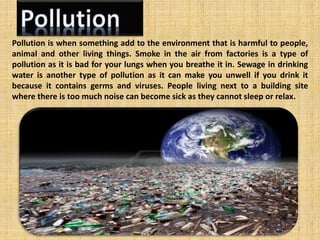
Pollution is when something add to the environment that is harmful to people,
animal and other living things. Smoke in the air from factories is a type of
pollution as it is bad for your lungs when you breathe it in. Sewage in drinking
water is another type of pollution as it can make you unwell if you drink it
because it contains germs and viruses. People living next to a building site
where there is too much noise can become sick as they cannot sleep or relax.
2
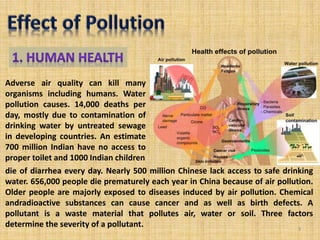
Adverse air quality can kill many
organisms including humans. Water
pollution causes. 14,000 deaths per
day, mostly due to contamination of
drinking water by untreated sewage
in developing countries. An estimate
700 million Indian have no access to
proper toilet and 1000 Indian children
die of diarrhea every day. Nearly 500 million Chinese lack access to safe drinking
water. 656,000 people die prematurely each year in China because of air pollution.
Older people are majorly exposed to diseases induced by air pollution. Chemical
andradioactive substances can cause cancer and as well as birth defects. A
pollutant is a waste material that pollutes air, water or soil. Three factors
determine the severity of a pollutant. 3
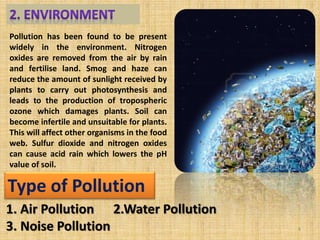
Pollution has been found to be present
widely in the environment. Nitrogen
oxides are removed from the air by rain
and fertilise land. Smog and haze can
reduce the amount of sunlight received by
plants to carry out photosynthesis and
leads to the production of tropospheric
ozone which damages plants. Soil can
become infertile and unsuitable for plants.
This will affect other organisms in the food
web. Sulfur dioxide and nitrogen oxides
can cause acid rain which lowers the pH
value of soil.
Type of Pollution
1. Air Pollution 2.Water Pollution
3. Noise Pollution 4
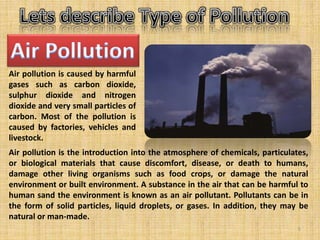
Air pollution is caused by harmful
gases such as carbon dioxide,
sulphur dioxide and nitrogen
dioxide and very small particles of
carbon. Most of the pollution is
caused by factories, vehicles and
livestock.
Air pollution is the introduction into the atmosphere of chemicals, particulates,
or biological materials that cause discomfort, disease, or death to humans,
damage other living organisms such as food crops, or damage the natural
environment or built environment. A substance in the air that can be harmful to
human sand the environment is known as an air pollutant. Pollutants can be in
the form of solid particles, liquid droplets, or gases. In addition, they may be
natural or man-made.
5
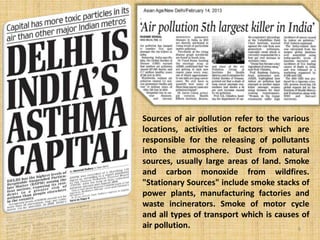
Sources of air pollution refer to the various
locations, activities or factors which are
responsible for the releasing of pollutants
into the atmosphere. Dust from natural
sources, usually large areas of land. Smoke
and carbon monoxide from wildfires.
"Stationary Sources" include smoke stacks of
power plants, manufacturing factories and
waste incinerators. Smoke of motor cycle
and all types of transport which is causes of
air pollution. 6
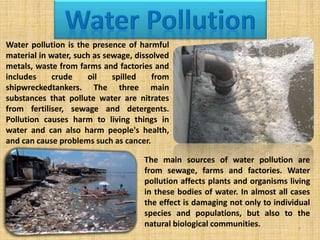
Water pollution is the presence of harmful
material in water, such as sewage, dissolved
metals, waste from farms and factories and
includes crude oil spilled from
shipwreckedtankers. The three main
substances that pollute water are nitrates
from fertiliser, sewage and detergents.
Pollution causes harm to living things in
water and can also harm people's health,
and can cause problems such as cancer.
The main sources of water pollution are
from sewage, farms and factories. Water
pollution affects plants and organisms living
in these bodies of water. In almost all cases
the effect is damaging not only to individual
species and populations, but also to the
natural biological communities. 7
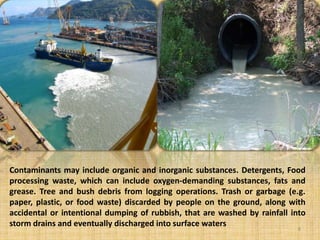
Contaminants may include organic and inorganic substances. Detergents, Food
processing waste, which can include oxygen-demanding substances, fats and
grease. Tree and bush debris from logging operations. Trash or garbage (e.g.
paper, plastic, or food waste) discarded by people on the ground, along with
accidental or intentional dumping of rubbish, that are washed by rainfall into
storm drains and eventually discharged into surface waters
8
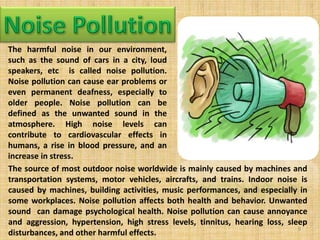
The harmful noise in our environment,
such as the sound of cars in a city, loud
speakers, etc is called noise pollution.
Noise pollution can cause ear problems or
even permanent deafness, especially to
older people. Noise pollution can be
defined as the unwanted sound in the
atmosphere. High noise levels can
contribute to cardiovascular effects in
humans, a rise in blood pressure, and an
increase in stress.
The source of most outdoor noise worldwide is mainly caused by machines and
transportation systems, motor vehicles, aircrafts, and trains. Indoor noise is
caused by machines, building activities, music performances, and especially in
some workplaces. Noise pollution affects both health and behavior. Unwanted
sound can damage psychological health. Noise pollution can cause annoyance
and aggression, hypertension, high stress levels, tinnitus, hearing loss, sleep
disturbances, and other harmful effects.
9
All three pollution are major problems of entire world. If we want to reduce
the ratio of the pollution so we have to do something. We have to do some
other work which is helpful for the reducing the ratio of the pollution.
Some work which is helpful in reducing the ration of pollution like as :-
1. Recycling and reusing the waste material.
2. Sewage treatment implement in entire country.
3. Industries waste water treatment it should be implement in entire industries
which is establish in our country.
4. If we use government transportation which is very helpful to reducing the
ratio in air pollution.
These are the few points which is very helpful to reducing the ratio of pollution
as well as remove the problem of pollution from entire world.
10

POLLUTION

  • 1.
  • 2.
    Pollution is whensomething add to the environment that is harmful to people, animal and other living things. Smoke in the air from factories is a type of pollution as it is bad for your lungs when you breathe it in. Sewage in drinking water is another type of pollution as it can make you unwell if you drink it because it contains germs and viruses. People living next to a building site where there is too much noise can become sick as they cannot sleep or relax. 2
  • 3.
    Adverse air qualitycan kill many organisms including humans. Water pollution causes. 14,000 deaths per day, mostly due to contamination of drinking water by untreated sewage in developing countries. An estimate 700 million Indian have no access to proper toilet and 1000 Indian children die of diarrhea every day. Nearly 500 million Chinese lack access to safe drinking water. 656,000 people die prematurely each year in China because of air pollution. Older people are majorly exposed to diseases induced by air pollution. Chemical andradioactive substances can cause cancer and as well as birth defects. A pollutant is a waste material that pollutes air, water or soil. Three factors determine the severity of a pollutant. 3
  • 4.
    Pollution has beenfound to be present widely in the environment. Nitrogen oxides are removed from the air by rain and fertilise land. Smog and haze can reduce the amount of sunlight received by plants to carry out photosynthesis and leads to the production of tropospheric ozone which damages plants. Soil can become infertile and unsuitable for plants. This will affect other organisms in the food web. Sulfur dioxide and nitrogen oxides can cause acid rain which lowers the pH value of soil. Type of Pollution 1. Air Pollution 2.Water Pollution 3. Noise Pollution 4
  • 5.
    Air pollution iscaused by harmful gases such as carbon dioxide, sulphur dioxide and nitrogen dioxide and very small particles of carbon. Most of the pollution is caused by factories, vehicles and livestock. Air pollution is the introduction into the atmosphere of chemicals, particulates, or biological materials that cause discomfort, disease, or death to humans, damage other living organisms such as food crops, or damage the natural environment or built environment. A substance in the air that can be harmful to human sand the environment is known as an air pollutant. Pollutants can be in the form of solid particles, liquid droplets, or gases. In addition, they may be natural or man-made. 5
  • 6.
    Sources of airpollution refer to the various locations, activities or factors which are responsible for the releasing of pollutants into the atmosphere. Dust from natural sources, usually large areas of land. Smoke and carbon monoxide from wildfires. "Stationary Sources" include smoke stacks of power plants, manufacturing factories and waste incinerators. Smoke of motor cycle and all types of transport which is causes of air pollution. 6
  • 7.
    Water pollution isthe presence of harmful material in water, such as sewage, dissolved metals, waste from farms and factories and includes crude oil spilled from shipwreckedtankers. The three main substances that pollute water are nitrates from fertiliser, sewage and detergents. Pollution causes harm to living things in water and can also harm people's health, and can cause problems such as cancer. The main sources of water pollution are from sewage, farms and factories. Water pollution affects plants and organisms living in these bodies of water. In almost all cases the effect is damaging not only to individual species and populations, but also to the natural biological communities. 7
  • 8.
    Contaminants may includeorganic and inorganic substances. Detergents, Food processing waste, which can include oxygen-demanding substances, fats and grease. Tree and bush debris from logging operations. Trash or garbage (e.g. paper, plastic, or food waste) discarded by people on the ground, along with accidental or intentional dumping of rubbish, that are washed by rainfall into storm drains and eventually discharged into surface waters 8
  • 9.
    The harmful noisein our environment, such as the sound of cars in a city, loud speakers, etc is called noise pollution. Noise pollution can cause ear problems or even permanent deafness, especially to older people. Noise pollution can be defined as the unwanted sound in the atmosphere. High noise levels can contribute to cardiovascular effects in humans, a rise in blood pressure, and an increase in stress. The source of most outdoor noise worldwide is mainly caused by machines and transportation systems, motor vehicles, aircrafts, and trains. Indoor noise is caused by machines, building activities, music performances, and especially in some workplaces. Noise pollution affects both health and behavior. Unwanted sound can damage psychological health. Noise pollution can cause annoyance and aggression, hypertension, high stress levels, tinnitus, hearing loss, sleep disturbances, and other harmful effects. 9
  • 10.
    All three pollutionare major problems of entire world. If we want to reduce the ratio of the pollution so we have to do something. We have to do some other work which is helpful for the reducing the ratio of the pollution. Some work which is helpful in reducing the ration of pollution like as :- 1. Recycling and reusing the waste material. 2. Sewage treatment implement in entire country. 3. Industries waste water treatment it should be implement in entire industries which is establish in our country. 4. If we use government transportation which is very helpful to reducing the ratio in air pollution. These are the few points which is very helpful to reducing the ratio of pollution as well as remove the problem of pollution from entire world. 10