POINTS FOR SUCCESSFUL
IMPLEMENTATION OF ERP
DHYEY CONSULTING SERVICES PVT. LTD.
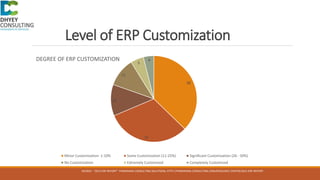
Level of ERP Customization
38
32
12
11
5
4DEGREE OF ERP CUSTOMIZATION
Minor Customization- 1-10% Some Customization (11-25%) Significant Customization (26 - 50%)
No Customization Extremely Customized Completely Customized
SOURCE : “2012 ERP REPORT” PANORAMA CONSULTING SOLUTIONS, HTTP://PANORAMA-CONSULTING.COM/RESOURCE-CENTER/2012-ERP-REPORT
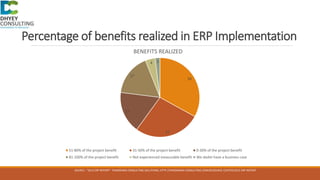
Percentage of benefits realized in ERP Implementation
33
27
17
17
4 2
BENEFITS REALIZED
51-80% of the project benefit 31-50% of the project benefit 0-30% of the project benefit
81-100% of the project benefit Not experienced measurable benefit We dodnt have a business case
SOURCE : “2012 ERP REPORT” PANORAMA CONSULTING SOLUTIONS, HTTP://PANORAMA-CONSULTING.COM/RESOURCE-CENTER/2012-ERP-REPORT
Best Practices of ERP Implementation
Understanding Business Process and Key Requirement
Complete understanding of business process flow
Identify ,define and prioritize key business requirement
Develop prioritized requirement based on satisfying immediate business needs , the one that affect
normal business process followed by longer term strategic objectives
Build a business case for ERP with positive ROI
Making of A business case that anticipate potential problems or objections of the organization
A compelling business case assessing current system performance against expected post-
implementation process. Establishing key - performance indicator
Ensure Proper Project Management and resource commitment
A Pre-requisite for successful ERP Implementation is a dedicated project manager who is involved in
both planning and ongoing smanagement
A Steering Committee with senior business executives representing from the business area affected
by the implementation
Don’t rely only on internal resource because you need people who are expert in ERP and who know
how to do business process re-engineering
Gain Executive and organizational commitment
A distinguished trait of best - in - class ERP Implementation is that they have the full support and
commitment of the company executives
Executive Level People can provide input and be responsible for setting corporate business
strategy and direction
The broad scope and duration of most ERP Implementations can also cause change in familiar
work flows or business process for people throughout the organization, Thus Management
Guidance helps.
Focusing on the Data Migration early in the
implementation process
An Attribute of successful ERP Implementations is that data migration is put into the Project plan as
early as possible.
If data migrated early then work on forms, reports, can be conducted without relying on the rest of
the Implementation
Analyzing How much historical data should be brought onto the new system
Filtering Corrupted data as even a new system wont fix corrupted data
Invest in training and change management
ERP Implementation don’t just affect systems and business processes; they also involve people
who may find it difficult to change roles, processes and behavior that they may have learned
over many years of work.
Neglecting this aspect of implementation or putting it of until late in the project may result in
organizational resistance to the new system, even to the point of operational risk
Managing change should be constant ongoing process that need to start from day one and
continue through out the implementation to the end user training at the close of the project
Technical Infrastructure and Custom Development
Network and service-level issues associated with upgrading or outsourcing of data centers
Stressed network or insufficient bandwidth, especially at remote sites, due to inadequate
volume and stress testing to the infrastructure
Ineffective technical change management process
Inadequate or unproven business continuity and disaster recovery plan
THANK YOU
Dhyey Consulting Services Pvt. Ltd – Microsoft Gold Partner
Contact us at – 0265-2373990
E-Mail – enquiry@dhyey.com

Points for successful implementation of erp

  • 2.
    POINTS FOR SUCCESSFUL IMPLEMENTATIONOF ERP DHYEY CONSULTING SERVICES PVT. LTD.
  • 3.
    Level of ERPCustomization 38 32 12 11 5 4DEGREE OF ERP CUSTOMIZATION Minor Customization- 1-10% Some Customization (11-25%) Significant Customization (26 - 50%) No Customization Extremely Customized Completely Customized SOURCE : “2012 ERP REPORT” PANORAMA CONSULTING SOLUTIONS, HTTP://PANORAMA-CONSULTING.COM/RESOURCE-CENTER/2012-ERP-REPORT
  • 4.
    Percentage of benefitsrealized in ERP Implementation 33 27 17 17 4 2 BENEFITS REALIZED 51-80% of the project benefit 31-50% of the project benefit 0-30% of the project benefit 81-100% of the project benefit Not experienced measurable benefit We dodnt have a business case SOURCE : “2012 ERP REPORT” PANORAMA CONSULTING SOLUTIONS, HTTP://PANORAMA-CONSULTING.COM/RESOURCE-CENTER/2012-ERP-REPORT
  • 5.
    Best Practices ofERP Implementation
  • 6.
    Understanding Business Processand Key Requirement Complete understanding of business process flow Identify ,define and prioritize key business requirement Develop prioritized requirement based on satisfying immediate business needs , the one that affect normal business process followed by longer term strategic objectives
  • 7.
    Build a businesscase for ERP with positive ROI Making of A business case that anticipate potential problems or objections of the organization A compelling business case assessing current system performance against expected post- implementation process. Establishing key - performance indicator
  • 8.
    Ensure Proper ProjectManagement and resource commitment A Pre-requisite for successful ERP Implementation is a dedicated project manager who is involved in both planning and ongoing smanagement A Steering Committee with senior business executives representing from the business area affected by the implementation Don’t rely only on internal resource because you need people who are expert in ERP and who know how to do business process re-engineering
  • 9.
    Gain Executive andorganizational commitment A distinguished trait of best - in - class ERP Implementation is that they have the full support and commitment of the company executives Executive Level People can provide input and be responsible for setting corporate business strategy and direction The broad scope and duration of most ERP Implementations can also cause change in familiar work flows or business process for people throughout the organization, Thus Management Guidance helps.
  • 10.
    Focusing on theData Migration early in the implementation process An Attribute of successful ERP Implementations is that data migration is put into the Project plan as early as possible. If data migrated early then work on forms, reports, can be conducted without relying on the rest of the Implementation Analyzing How much historical data should be brought onto the new system Filtering Corrupted data as even a new system wont fix corrupted data
  • 11.
    Invest in trainingand change management ERP Implementation don’t just affect systems and business processes; they also involve people who may find it difficult to change roles, processes and behavior that they may have learned over many years of work. Neglecting this aspect of implementation or putting it of until late in the project may result in organizational resistance to the new system, even to the point of operational risk Managing change should be constant ongoing process that need to start from day one and continue through out the implementation to the end user training at the close of the project
  • 12.
    Technical Infrastructure andCustom Development Network and service-level issues associated with upgrading or outsourcing of data centers Stressed network or insufficient bandwidth, especially at remote sites, due to inadequate volume and stress testing to the infrastructure Ineffective technical change management process Inadequate or unproven business continuity and disaster recovery plan
  • 13.
    THANK YOU Dhyey ConsultingServices Pvt. Ltd – Microsoft Gold Partner Contact us at – 0265-2373990 E-Mail – enquiry@dhyey.com