POETRY
Poetic Terms
 Stanza:   a group of two or more lines in a
  poem ( a paragraph within a poem)
 Verse: a line
 Rhyme:The similarity of ending sounds
  existing between two words
 Rhyme Scheme: The sequence in which
  the rhyme occurs. The first end sound is
  represented as the letter "a", the second is
  "b", etc.
Poetic Devices - Language
 Figurative   Language
     Simile
     Metaphor
     Alliteration
     Hyperbole
     Imagery
     Personification
Poetic Devices – Language & Style
   Tone
   Voice
   Repetition
   Symbol
   Theme
Simile
A   comparison between two objects using
 a specific word or comparison such as
 "like", "as", or "than".
Metaphor
A comparison between two objects with
 the intent of giving clearer meaning to
 one of them
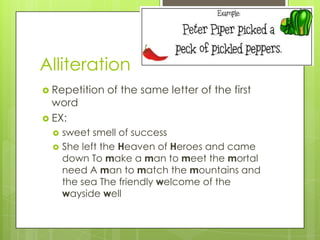
Alliteration
 Repetition   of the same letter of the first
  word
 EX:
     sweet smell of success
     She left the Heaven of Heroes and came
      down To make a man to meet the mortal
      need A man to match the mountains and
      the sea The friendly welcome of the
      wayside well
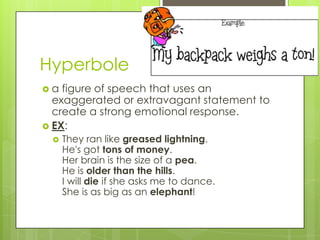
Hyperbole
a  figure of speech that uses an
  exaggerated or extravagant statement to
  create a strong emotional response.
 EX:
    They ran like greased lightning.
     He's got tons of money.
     Her brain is the size of a pea.
     He is older than the hills.
     I will die if she asks me to dance.
     She is as big as an elephant!
Imagery
 Imagery  is the use of vivid description,
 usually rich in sensory words, to create
 pictures, or images, in the reader's mind.
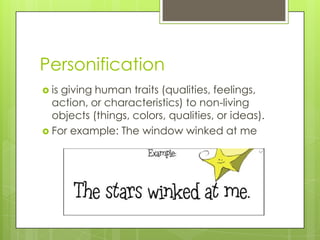
Personification
 isgiving human traits (qualities, feelings,
  action, or characteristics) to non-living
  objects (things, colors, qualities, or ideas).
 For example: The window winked at me
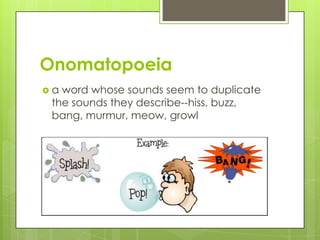
Onomatopoeia
a word whose sounds seem to duplicate
 the sounds they describe--hiss, buzz,
 bang, murmur, meow, growl
Allusion
 Reference  to an event, place, or
  character from history.
 EX
     Waters of Babylon
Oxymoron
a statement with two parts which seem
 contradictory;
 examples: sad joy, a wise fool, the sound
 of silence, or Hamlet's saying, "I must be
 cruel only to be kind"
Tone
 thewriter's attitude toward the material
 and/or readers. Tone may be playful,
 formal, intimate, angry, serious, ironic,
 outraged, baffled, tender, serene,
 depressed, etc.
Repetition
 therepeating of words, phrases, lines, or
 stanzas.
Symbolism
 anything   that stands for something else
Theme
  the abstract concept explored in a
  literary work;
 frequently recurring ideas, such as enjoy-
  life while-you-can;

Poetry 101

  • 1.
  • 2.
    Poetic Terms  Stanza: a group of two or more lines in a poem ( a paragraph within a poem)  Verse: a line  Rhyme:The similarity of ending sounds existing between two words  Rhyme Scheme: The sequence in which the rhyme occurs. The first end sound is represented as the letter "a", the second is "b", etc.
  • 3.
    Poetic Devices -Language  Figurative Language  Simile  Metaphor  Alliteration  Hyperbole  Imagery  Personification
  • 4.
    Poetic Devices –Language & Style  Tone  Voice  Repetition  Symbol  Theme
  • 5.
    Simile A comparison between two objects using a specific word or comparison such as "like", "as", or "than".
  • 6.
    Metaphor A comparison betweentwo objects with the intent of giving clearer meaning to one of them
  • 7.
    Alliteration  Repetition of the same letter of the first word  EX:  sweet smell of success  She left the Heaven of Heroes and came down To make a man to meet the mortal need A man to match the mountains and the sea The friendly welcome of the wayside well
  • 8.
    Hyperbole a figureof speech that uses an exaggerated or extravagant statement to create a strong emotional response.  EX:  They ran like greased lightning. He's got tons of money. Her brain is the size of a pea. He is older than the hills. I will die if she asks me to dance. She is as big as an elephant!
  • 9.
    Imagery  Imagery is the use of vivid description, usually rich in sensory words, to create pictures, or images, in the reader's mind.
  • 10.
    Personification  isgiving humantraits (qualities, feelings, action, or characteristics) to non-living objects (things, colors, qualities, or ideas).  For example: The window winked at me
  • 11.
    Onomatopoeia a word whosesounds seem to duplicate the sounds they describe--hiss, buzz, bang, murmur, meow, growl
  • 12.
    Allusion  Reference to an event, place, or character from history.  EX  Waters of Babylon
  • 13.
    Oxymoron a statement withtwo parts which seem contradictory;  examples: sad joy, a wise fool, the sound of silence, or Hamlet's saying, "I must be cruel only to be kind"
  • 14.
    Tone  thewriter's attitudetoward the material and/or readers. Tone may be playful, formal, intimate, angry, serious, ironic, outraged, baffled, tender, serene, depressed, etc.
  • 15.
    Repetition  therepeating ofwords, phrases, lines, or stanzas.
  • 16.
    Symbolism  anything that stands for something else
  • 17.
    Theme  theabstract concept explored in a literary work;  frequently recurring ideas, such as enjoy- life while-you-can;