25’

20’

15’

10’

5’

0’

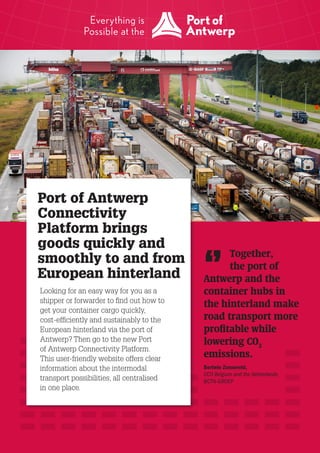
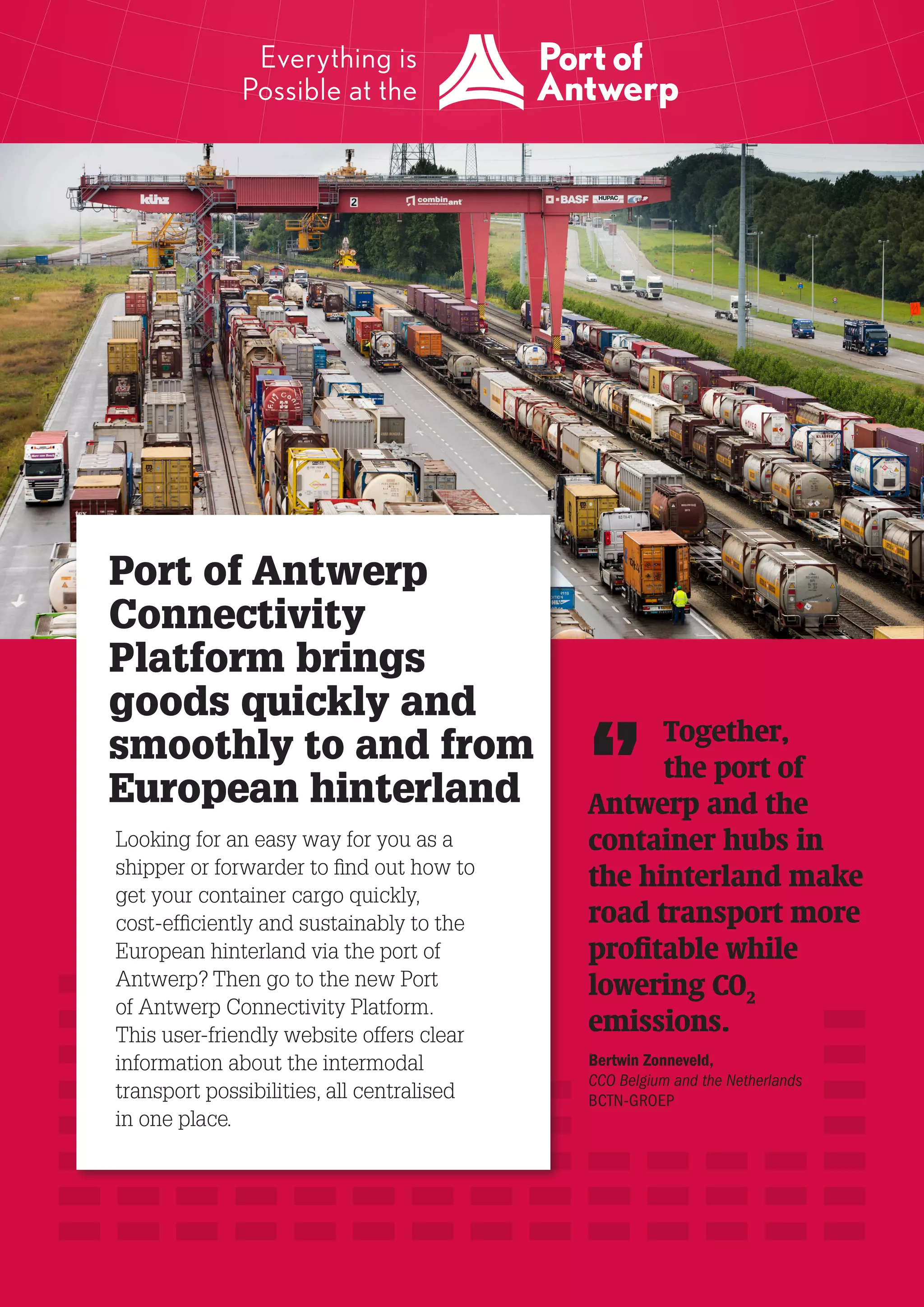
Port of Antwerp
Connectivity
Platform brings
goods quickly and
smoothly to and from
European hinterland
Looking for an easy way for you as a
shipper or forwarder to find out how to
get your container cargo quickly,
cost-efficiently and sustainably to the
European hinterland via the port of
Antwerp? Then go to the new Port
of Antwerp Connectivity Platform.
This user-friendly website offers clear
information about the intermodal
transport possibilities, all centralised
in one place.

5’

10’

15’

‘’

20’

Together,
the port of
Antwerp and the
container hubs in
the hinterland make
road transport more
profitable while
lowering CO2
emissions.
Bertwin Zonneveld,
CCO Belgium and the Netherlands
BCTN-GROEP
Port of Antwerp Connectivity Platform
brings goods quickly and smoothly to
and from European hinterland

E

ver larger ships from all over
the world are finding their
way across the oceans and
up the Scheldt to Antwerp. In 2012
the Antwerp container volume
amounted to 8,635,169 TEU.
The port has two important advantages when it comes to receiving
these goods and carrying them
to the European market. The first
of these is Antwerp’s excellent
geographical location in the heart
of Europe, enabling seagoing ships
to get very close to the European
customer. A good 60% of European
purchasing power lies within a
radius of 500 km around Antwerp.
But at least as important is the
highly developed and diversified
range of intermodal transport
available, including road, barge,
rail and pipeline. These regular
hinterland connections bring the
freight quickly and efficiently to
the main European centres of production and consumption.

The port helps you save time
To keep its customers better informed about the various transport
possibilities and how to get goods
quicker and easier to their European destination, the port of Antwerp has developed a new website.
This Port of Antwerp Connectivity
Platform tells you all about the pos-

sibilities available within the port.
The interactive map enables you to
search for specific container terminals on the basis of various criteria.
For each terminal you will not only
find the contact details and the
exact location in the port but also
the particular services it offers.
The Connectivity Platform’s hinterland tool describes the intermodal connections to and from
the European hinterland. But what
makes the website unique is the
transparent overview of the inland
terminals in the European hinterland, with details of how they can
be most easily reached, by which
operator. So in a minimum of time
you can find the best way to get the
goods to the right destination, even
down the level of individual towns.
“Together, the port of Antwerp and
the container hubs in the hinterland make inland transport more
profitable while lowering CO2 emissions” says Bertwin Zonneveld
of the BCTN group, explaining his
decision to become a member
of the Port of Antwerp Connectivity Platform as an entry to the
hinterland.

a unique and clear overview of
the European hinterland. So far
some 185 container terminals
in 15 European countries have
joined the platform. But the port
of Antwerp has much greater
ambitions, with plans to offer
connections to and from 300 or so
European inland terminals.
USEFUL WEBLINKS
• www.portofantwerp.com/en/connectivity
• E connectivityplatform@portofantwerp.com
• www.portofantwerp.com/en/figures2012
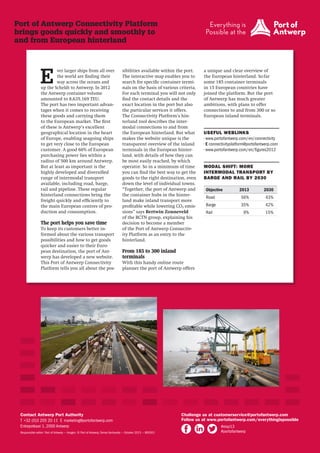
MODAL SHIFT: MORE
INTERMODAL TRANSPORT BY
BARGE AND RAIL BY 2030
Objective

2013

2030

Road

56%

43%

Barge

35%

42%

9%

15%

Rail

From 185 to 300 inland
terminals
With this handy online route
planner the port of Antwerp offers

Contact Antwerp Port Authority
T  +32 (0)3 205 20 11 E  marketing@portofantwerp.com
Entrepotkaai 1, 2000 Antwerp
Responsible editor: Port of Antwerp — Images: © Port of Antwerp, Tomas Vanhautte — October 2013 — 800301

Challenge us at customerservice@portofantwerp.com
Follow us at www.portofantwerp.com/everythingispossible
#eisp13
#portofantwerp
Antwerp as
a multimodal port

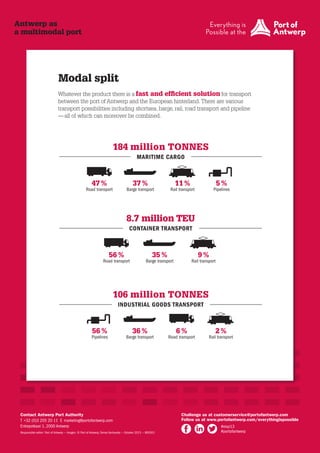
Modal split
Whatever the product there is a fast and efficient solution for transport
between the port of Antwerp and the European hinterland. There are various
transport possibilities including shortsea, barge, rail, road transport and pipeline
— all of which can moreover be combined.

184 million TONNES
MARITIME CARGO

47 %

37 %

Road transport

Barge transport

11 %

5 %

Rail transport

Pipelines

8.7 million TEU
CONTAINER TRANSPORT

56 %

Road transport

35 %

9 %

Barge transport

Rail transport

106 million TONNES
INDUSTRIAL GOODS TRANSPORT

56 %

Pipelines

36 %

Barge transport

Contact Antwerp Port Authority
T  +32 (0)3 205 20 11 E  marketing@portofantwerp.com
Entrepotkaai 1, 2000 Antwerp
Responsible editor: Port of Antwerp — Images: © Port of Antwerp, Tomas Vanhautte — October 2013 — 800301

6 %

Road transport

2 %

Rail transport

Challenge us at customerservice@portofantwerp.com
Follow us at www.portofantwerp.com/everythingispossible
#eisp13
#portofantwerp

Poa 1179 bereikbaarheidswebsite-uk_hi

  • 1.
    25’ 20’ 15’ 10’ 5’ 0’ Port of Antwerp Connectivity Platformbrings goods quickly and smoothly to and from European hinterland Looking for an easy way for you as a shipper or forwarder to find out how to get your container cargo quickly, cost-efficiently and sustainably to the European hinterland via the port of Antwerp? Then go to the new Port of Antwerp Connectivity Platform. This user-friendly website offers clear information about the intermodal transport possibilities, all centralised in one place. 5’ 10’ 15’ ‘’ 20’ Together, the port of Antwerp and the container hubs in the hinterland make road transport more profitable while lowering CO2 emissions. Bertwin Zonneveld, CCO Belgium and the Netherlands BCTN-GROEP
  • 2.
    Port of AntwerpConnectivity Platform brings goods quickly and smoothly to and from European hinterland E ver larger ships from all over the world are finding their way across the oceans and up the Scheldt to Antwerp. In 2012 the Antwerp container volume amounted to 8,635,169 TEU. The port has two important advantages when it comes to receiving these goods and carrying them to the European market. The first of these is Antwerp’s excellent geographical location in the heart of Europe, enabling seagoing ships to get very close to the European customer. A good 60% of European purchasing power lies within a radius of 500 km around Antwerp. But at least as important is the highly developed and diversified range of intermodal transport available, including road, barge, rail and pipeline. These regular hinterland connections bring the freight quickly and efficiently to the main European centres of production and consumption. The port helps you save time To keep its customers better informed about the various transport possibilities and how to get goods quicker and easier to their European destination, the port of Antwerp has developed a new website. This Port of Antwerp Connectivity Platform tells you all about the pos- sibilities available within the port. The interactive map enables you to search for specific container terminals on the basis of various criteria. For each terminal you will not only find the contact details and the exact location in the port but also the particular services it offers. The Connectivity Platform’s hinterland tool describes the intermodal connections to and from the European hinterland. But what makes the website unique is the transparent overview of the inland terminals in the European hinterland, with details of how they can be most easily reached, by which operator. So in a minimum of time you can find the best way to get the goods to the right destination, even down the level of individual towns. “Together, the port of Antwerp and the container hubs in the hinterland make inland transport more profitable while lowering CO2 emissions” says Bertwin Zonneveld of the BCTN group, explaining his decision to become a member of the Port of Antwerp Connectivity Platform as an entry to the hinterland. a unique and clear overview of the European hinterland. So far some 185 container terminals in 15 European countries have joined the platform. But the port of Antwerp has much greater ambitions, with plans to offer connections to and from 300 or so European inland terminals. USEFUL WEBLINKS • www.portofantwerp.com/en/connectivity • E connectivityplatform@portofantwerp.com • www.portofantwerp.com/en/figures2012 MODAL SHIFT: MORE INTERMODAL TRANSPORT BY BARGE AND RAIL BY 2030 Objective 2013 2030 Road 56% 43% Barge 35% 42% 9% 15% Rail From 185 to 300 inland terminals With this handy online route planner the port of Antwerp offers Contact Antwerp Port Authority T  +32 (0)3 205 20 11 E  marketing@portofantwerp.com Entrepotkaai 1, 2000 Antwerp Responsible editor: Port of Antwerp — Images: © Port of Antwerp, Tomas Vanhautte — October 2013 — 800301 Challenge us at customerservice@portofantwerp.com Follow us at www.portofantwerp.com/everythingispossible #eisp13 #portofantwerp
  • 3.
    Antwerp as a multimodalport Modal split Whatever the product there is a fast and efficient solution for transport between the port of Antwerp and the European hinterland. There are various transport possibilities including shortsea, barge, rail, road transport and pipeline — all of which can moreover be combined. 184 million TONNES MARITIME CARGO 47 % 37 % Road transport Barge transport 11 % 5 % Rail transport Pipelines 8.7 million TEU CONTAINER TRANSPORT 56 % Road transport 35 % 9 % Barge transport Rail transport 106 million TONNES INDUSTRIAL GOODS TRANSPORT 56 % Pipelines 36 % Barge transport Contact Antwerp Port Authority T  +32 (0)3 205 20 11 E  marketing@portofantwerp.com Entrepotkaai 1, 2000 Antwerp Responsible editor: Port of Antwerp — Images: © Port of Antwerp, Tomas Vanhautte — October 2013 — 800301 6 % Road transport 2 % Rail transport Challenge us at customerservice@portofantwerp.com Follow us at www.portofantwerp.com/everythingispossible #eisp13 #portofantwerp