PACIFIC COLLEGE OF
AGRICULTURE, UDAIPUR
SUBJECT:- WEED
MANAGEMENT
TOPIC :- INTEGRATED WEED
MANAGEMENT
SUBMITTED TO :- DR. G.L.
SHARMA SIR
SUBMITTED BY :- PULKIT
MITTAL
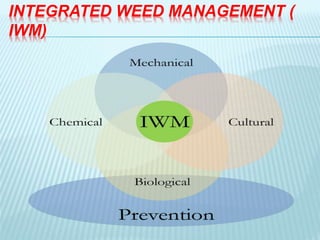
INTEGRATED WEED MANAGEMENT (
IWM)
INTRODUCTION
 INTEGRATED WEED MANAGEMENT (IWM) is a
diversified approach to agricultural weed
management that aims to more effectively target
problem weeds by incorporating multiple
strategies together.
 INTEGRATED WEED MANAGEMENT (IWM) is an
approach to managing weeds using multiple control
tactics. The purpose of IWM is to include many
methods in a growing season to allow producers the
best chance to control troublesome weeds.
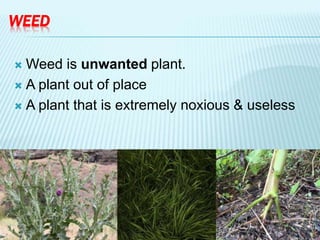
WEED
 Weed is unwanted plant.
 A plant out of place
 A plant that is extremely noxious & useless
WHY IWM IS NECESSARY ?
 For many years, the availability of convenient,
effective, affordable herbicides and tolerant
crop genetics has allowed producers to
streamline weed control.
 But the rapid rise in herbicide resistant weeds in
the US has led to problematic weed populations
that can no longer be managed with simple
herbicide programs. Increasingly, stubborn
weeds demand a diversified approach for
effective management.
 As a result, herbicides are in need of extra help
to continue to ensure adequate weed control.
IWM PLAN :
 As using the same herbicide again and
again can lead to resistance, reliance on
any one of the weed.
 Two major factors to consider when
developing an IWM plan are :-
 (1) target weed species
(2) time, resources, and capabilities
necessary to implement these tactics.
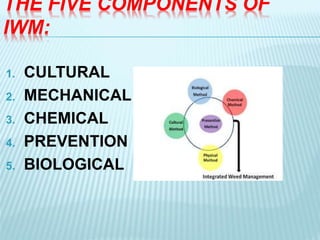
THE FIVE COMPONENTS OF
IWM:
1. CULTURAL
2. MECHANICAL
3. CHEMICAL
4. PREVENTION
5. BIOLOGICAL
CULTURAL:-
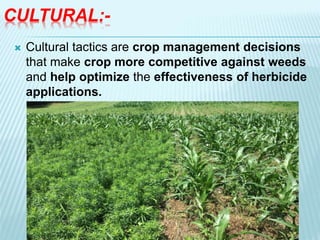
 Cultural tactics are crop management decisions
that make crop more competitive against weeds
and help optimize the effectiveness of herbicide
applications.
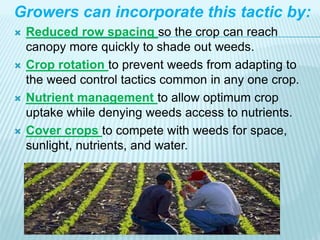
Growers can incorporate this tactic by:
 Reduced row spacing so the crop can reach
canopy more quickly to shade out weeds.
 Crop rotation to prevent weeds from adapting to
the weed control tactics common in any one crop.
 Nutrient management to allow optimum crop
uptake while denying weeds access to nutrients.
 Cover crops to compete with weeds for space,
sunlight, nutrients, and water.
MECHANICAL:-
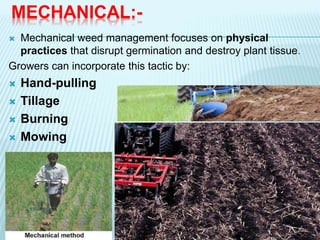
 Mechanical weed management focuses on physical
practices that disrupt germination and destroy plant tissue.
Growers can incorporate this tactic by:
 Hand-pulling
 Tillage
 Burning
 Mowing
CHEMICAL:
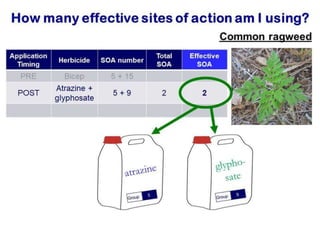
 Herbicides are a key part of IWM in conventional
and some organic systems. In conventional
crops, using multiple effective herbicide modes
of action (MOA) is essential for effective control of
resistant weeds.
Good management practices for applying herbicides
include:
 Timely scouting.
 Proper weed identification and awareness of what
herbicide-resistant weeds are in the area.
 Correct herbicide application, meaning applying
the appropriate product at the right rate and at the
right time.
PREVENTION:
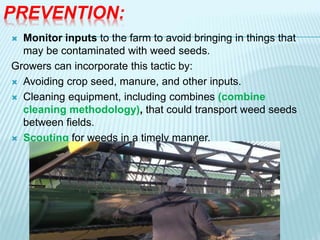
 Monitor inputs to the farm to avoid bringing in things that
may be contaminated with weed seeds.
Growers can incorporate this tactic by:
 Avoiding crop seed, manure, and other inputs.
 Cleaning equipment, including combines (combine
cleaning methodology), that could transport weed seeds
between fields.
 Scouting for weeds in a timely manner.
BIOLOGICAL : -
 A less common IWM strategy is the use of
living organisms, including livestock,
insects, nematodes, fungi, and bacteria, to
target weeds.
 This tactic is arguably the least used of all
tactics but is the subject of much research.
THANK
YOU

Pm pulkit agron 224

  • 1.
    PACIFIC COLLEGE OF AGRICULTURE,UDAIPUR SUBJECT:- WEED MANAGEMENT TOPIC :- INTEGRATED WEED MANAGEMENT SUBMITTED TO :- DR. G.L. SHARMA SIR SUBMITTED BY :- PULKIT MITTAL
  • 2.
  • 3.
    INTRODUCTION  INTEGRATED WEEDMANAGEMENT (IWM) is a diversified approach to agricultural weed management that aims to more effectively target problem weeds by incorporating multiple strategies together.  INTEGRATED WEED MANAGEMENT (IWM) is an approach to managing weeds using multiple control tactics. The purpose of IWM is to include many methods in a growing season to allow producers the best chance to control troublesome weeds.
  • 4.
    WEED  Weed isunwanted plant.  A plant out of place  A plant that is extremely noxious & useless
  • 5.
    WHY IWM ISNECESSARY ?  For many years, the availability of convenient, effective, affordable herbicides and tolerant crop genetics has allowed producers to streamline weed control.  But the rapid rise in herbicide resistant weeds in the US has led to problematic weed populations that can no longer be managed with simple herbicide programs. Increasingly, stubborn weeds demand a diversified approach for effective management.  As a result, herbicides are in need of extra help to continue to ensure adequate weed control.
  • 7.
    IWM PLAN : As using the same herbicide again and again can lead to resistance, reliance on any one of the weed.  Two major factors to consider when developing an IWM plan are :-  (1) target weed species (2) time, resources, and capabilities necessary to implement these tactics.
  • 8.
    THE FIVE COMPONENTSOF IWM: 1. CULTURAL 2. MECHANICAL 3. CHEMICAL 4. PREVENTION 5. BIOLOGICAL
  • 9.
    CULTURAL:-  Cultural tacticsare crop management decisions that make crop more competitive against weeds and help optimize the effectiveness of herbicide applications.
  • 10.
    Growers can incorporatethis tactic by:  Reduced row spacing so the crop can reach canopy more quickly to shade out weeds.  Crop rotation to prevent weeds from adapting to the weed control tactics common in any one crop.  Nutrient management to allow optimum crop uptake while denying weeds access to nutrients.  Cover crops to compete with weeds for space, sunlight, nutrients, and water.
  • 11.
    MECHANICAL:-  Mechanical weedmanagement focuses on physical practices that disrupt germination and destroy plant tissue. Growers can incorporate this tactic by:  Hand-pulling  Tillage  Burning  Mowing
  • 12.
    CHEMICAL:  Herbicides area key part of IWM in conventional and some organic systems. In conventional crops, using multiple effective herbicide modes of action (MOA) is essential for effective control of resistant weeds. Good management practices for applying herbicides include:  Timely scouting.  Proper weed identification and awareness of what herbicide-resistant weeds are in the area.  Correct herbicide application, meaning applying the appropriate product at the right rate and at the right time.
  • 14.
    PREVENTION:  Monitor inputsto the farm to avoid bringing in things that may be contaminated with weed seeds. Growers can incorporate this tactic by:  Avoiding crop seed, manure, and other inputs.  Cleaning equipment, including combines (combine cleaning methodology), that could transport weed seeds between fields.  Scouting for weeds in a timely manner.
  • 15.
    BIOLOGICAL : - A less common IWM strategy is the use of living organisms, including livestock, insects, nematodes, fungi, and bacteria, to target weeds.  This tactic is arguably the least used of all tactics but is the subject of much research.
  • 16.