Introduction to
Integrated Weed
Management
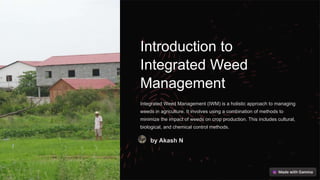
Integrated Weed Management (IWM) is a holistic approach to managing
weeds in agriculture. It involves using a combination of methods to
minimize the impact of weeds on crop production. This includes cultural,
biological, and chemical control methods.
by Akash N
Importance of Weed Management
in Sunflower Production
Threat to Sunflower
Yield
Weeds compete with
sunflower plants for
nutrients, water, and light,
leading to reduced yield
and quality of the crop.
Economic Impact
Uncontrolled weed growth
can result in increased
production costs and
reduced profitability for
sunflower farmers.
Biotic Stress
Weed infestations can
create favorable conditions
for pests and diseases,
impacting sunflower health.
Traditional Weed Control Methods
1 Cultural Methods
Includes practices like crop rotation, intercropping, and use of cover crops to
suppress weed growth.
2 Mechanical Methods
Involves physical weed removal through techniques such as hand weeding,
hoeing, and plowing.
3 Chemical Methods
Relies on herbicides to control weed populations, but may lead to resistance
and environmental concerns.
Limitations of Traditional Methods
Resistance Development
Weeds may develop resistance to
herbicides, reducing the effectiveness
of chemical control.
Labor-Intensive
Mechanical and manual methods
require significant labor input,
increasing production costs.
Environmental Impact
Chemical methods can have negative effects on non-target organisms and soil health.
Principles of Integrated Weed
Management
1 Diversity
Utilize a variety of control tactics to
prevent weed adaptation.
2 Prevention
Focus on minimizing the
establishment and spread of weeds
through proactive measures.
3 Integration
Integrate multiple approaches to create synergistic interactions for better weed
management.
Components of an Integrated
Weed Management Program
Cultural Controls
Includes practices like
crop rotation, mulching,
and crop competition to
manage weed growth.
Biological Controls
Utilizes natural enemies
of weeds such as insects,
pathogens, and
allelopathic plants for
suppression.
Chemical Controls
Incorporates herbicides
as part of an integrated
approach with reduced
reliance on single-mode
action.
Benefits of Integrated Weed
Management in Sunflower
Enhanced Crop Health
Improves sunflower growth and vigor by reducing competition from invasive
weeds.
Cost Efficiency
Leads to reduced production costs and increased economic returns for
sunflower farmers.
Environmental Sustainability
Promotes a balanced ecosystem by minimizing the impact of chemical inputs
on the environment.
Integrated Weed Management in
Sunflower
Increased Yield Through effective weed control,
sunflower yield can be significantly
enhanced.
Weed Suppression An integrated approach helps in
effectively suppressing weed growth
throughout the sunflower growth cycle.
Improved Soil Health Reduced dependence on chemical
herbicides leads to better soil ecosystem
health.
Conclusion
Integrated Weed Management offers a sustainable and effective solution for controlling
weeds in sunflower production. By integrating various control methods, it ensures improved
crop health, reduced costs, and minimal environmental impact, benefitting both farmers and
the ecosystem.

Introduction-to-Integrated-Weed-Management.pptx

  • 1.
    Introduction to Integrated Weed Management IntegratedWeed Management (IWM) is a holistic approach to managing weeds in agriculture. It involves using a combination of methods to minimize the impact of weeds on crop production. This includes cultural, biological, and chemical control methods. by Akash N
  • 2.
    Importance of WeedManagement in Sunflower Production Threat to Sunflower Yield Weeds compete with sunflower plants for nutrients, water, and light, leading to reduced yield and quality of the crop. Economic Impact Uncontrolled weed growth can result in increased production costs and reduced profitability for sunflower farmers. Biotic Stress Weed infestations can create favorable conditions for pests and diseases, impacting sunflower health.
  • 3.
    Traditional Weed ControlMethods 1 Cultural Methods Includes practices like crop rotation, intercropping, and use of cover crops to suppress weed growth. 2 Mechanical Methods Involves physical weed removal through techniques such as hand weeding, hoeing, and plowing. 3 Chemical Methods Relies on herbicides to control weed populations, but may lead to resistance and environmental concerns.
  • 4.
    Limitations of TraditionalMethods Resistance Development Weeds may develop resistance to herbicides, reducing the effectiveness of chemical control. Labor-Intensive Mechanical and manual methods require significant labor input, increasing production costs. Environmental Impact Chemical methods can have negative effects on non-target organisms and soil health.
  • 5.
    Principles of IntegratedWeed Management 1 Diversity Utilize a variety of control tactics to prevent weed adaptation. 2 Prevention Focus on minimizing the establishment and spread of weeds through proactive measures. 3 Integration Integrate multiple approaches to create synergistic interactions for better weed management.
  • 6.
    Components of anIntegrated Weed Management Program Cultural Controls Includes practices like crop rotation, mulching, and crop competition to manage weed growth. Biological Controls Utilizes natural enemies of weeds such as insects, pathogens, and allelopathic plants for suppression. Chemical Controls Incorporates herbicides as part of an integrated approach with reduced reliance on single-mode action.
  • 7.
    Benefits of IntegratedWeed Management in Sunflower Enhanced Crop Health Improves sunflower growth and vigor by reducing competition from invasive weeds. Cost Efficiency Leads to reduced production costs and increased economic returns for sunflower farmers. Environmental Sustainability Promotes a balanced ecosystem by minimizing the impact of chemical inputs on the environment.
  • 8.
    Integrated Weed Managementin Sunflower Increased Yield Through effective weed control, sunflower yield can be significantly enhanced. Weed Suppression An integrated approach helps in effectively suppressing weed growth throughout the sunflower growth cycle. Improved Soil Health Reduced dependence on chemical herbicides leads to better soil ecosystem health.
  • 9.
    Conclusion Integrated Weed Managementoffers a sustainable and effective solution for controlling weeds in sunflower production. By integrating various control methods, it ensures improved crop health, reduced costs, and minimal environmental impact, benefitting both farmers and the ecosystem.