PLC & SCADA: A
Comprehensive Overview
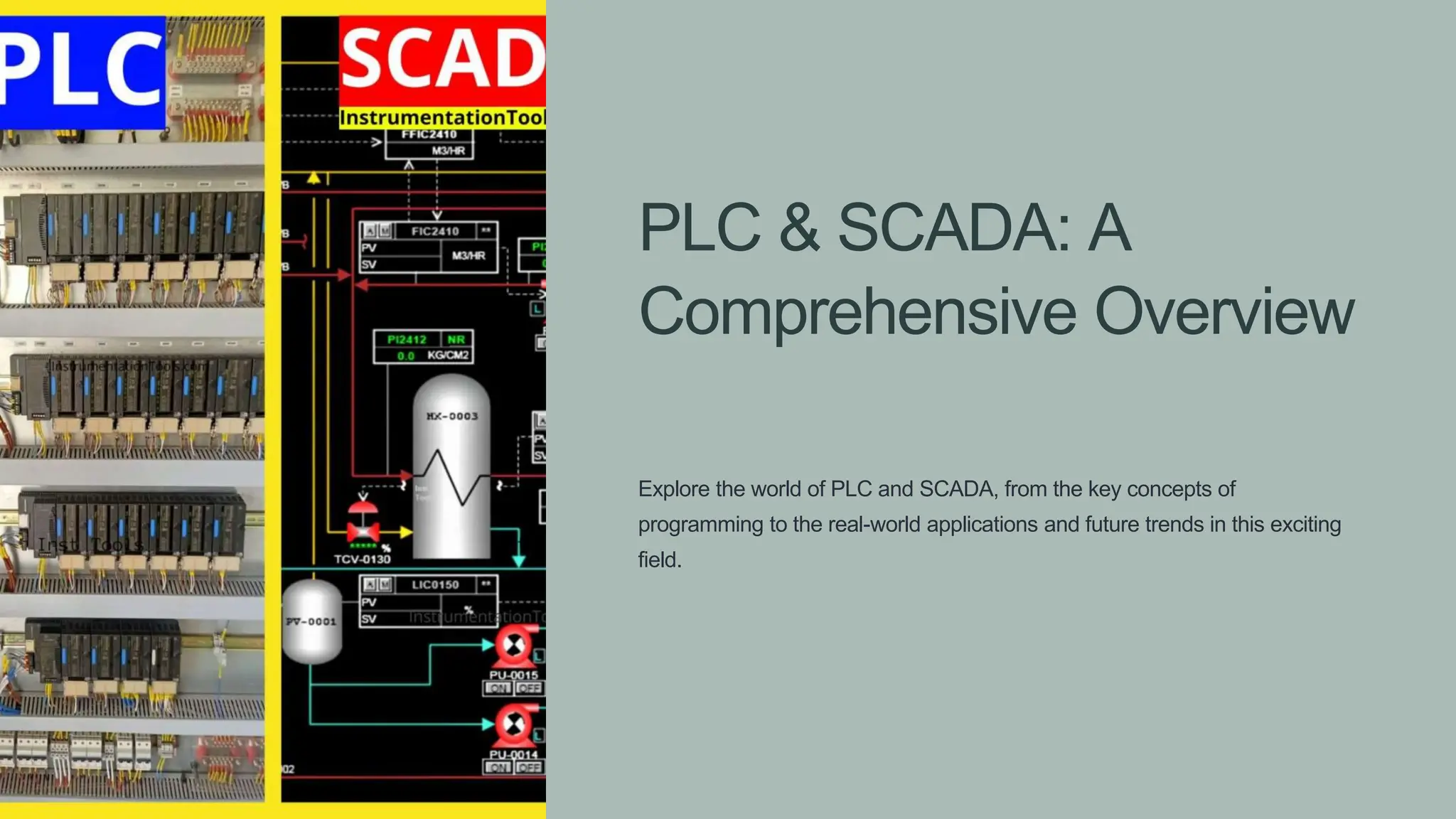
Explore the world of PLC and SCADA, from the key concepts of
programming to the real-world applications and future trends in this exciting
field.
Introduction to PLC Programming
1 Logical Control
Understand the
fundamental principles of
PLC programming and
how it enables logical
control of industrial
processes.
2 Programmable Logic
Controllers
Learn about the
components and
architecture of PLCs, and
how they are
programmed to automate
complex tasks.
3 Programming
Languages
Discover the different
programming languages
used in PLC
programming, such as
ladder logic and
structured text.
Exploring SCADA Systems
Supervisory Control
Gain insights into the structure and
functionality of SCADA systems, which
provide supervisory control over
industrial processes.
Human-Machine Interface
Explore the user interfaces of SCADA
systems and how they enable operators
to monitor and control industrial
processes.
Data Acquisition
Learn how SCADA systems collect and process data from sensors and other devices to
facilitate real-time decision-making.
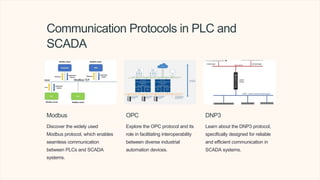
Communication Protocols in PLC and
SCADA
Modbus
Discover the widely used
Modbus protocol, which enables
seamless communication
between PLCs and SCADA
systems.
OPC
Explore the OPC protocol and its
role in facilitating interoperability
between diverse industrial
automation devices.
DNP3
Learn about the DNP3 protocol,
specifically designed for reliable
and efficient communication in
SCADA systems.
Advantages and Limitations of PLC and
SCADA
1 Advantages
Uncover the benefits of using PLCs and
SCADA systems, such as increased
efficiency, reduced downtime, and
improved safety.
2
Limitations
Understand the challenges and
limitations of these systems, including
cybersecurity risks and complex
integration processes. 3 Future Trends
Explore emerging technologies and
trends shaping the future of PLC and
SCADA, such as cloud computing and
edge computing.
Real-World Applications of PLC and SCADA
1 Manufacturing
Industry
Discover how PLC and
SCADA systems
revolutionize production
lines, ensuring precise
control and efficient
operations.
2 Energy Sector
Explore how these
technologies support the
monitoring and control of
power plants and
distribution networks.
3 Water and
Wastewater
Management
Learn how PLC and
SCADA systems optimize
the management of water
supply, treatment, and
distribution processes.
Conclusion and Future Trends
In conclusion, PLC & SCADA technologies have transformed various
industries with efficient control and monitoring systems. As technology
advances, we can expect further integration, real-time analytics, and the
adoption of AI in these fields.

PLC-and-SCADA-A-Comprehensive-Overview.pptx

  • 1.
    PLC & SCADA:A Comprehensive Overview Explore the world of PLC and SCADA, from the key concepts of programming to the real-world applications and future trends in this exciting field.
  • 2.
    Introduction to PLCProgramming 1 Logical Control Understand the fundamental principles of PLC programming and how it enables logical control of industrial processes. 2 Programmable Logic Controllers Learn about the components and architecture of PLCs, and how they are programmed to automate complex tasks. 3 Programming Languages Discover the different programming languages used in PLC programming, such as ladder logic and structured text.
  • 3.
    Exploring SCADA Systems SupervisoryControl Gain insights into the structure and functionality of SCADA systems, which provide supervisory control over industrial processes. Human-Machine Interface Explore the user interfaces of SCADA systems and how they enable operators to monitor and control industrial processes. Data Acquisition Learn how SCADA systems collect and process data from sensors and other devices to facilitate real-time decision-making.
  • 4.
    Communication Protocols inPLC and SCADA Modbus Discover the widely used Modbus protocol, which enables seamless communication between PLCs and SCADA systems. OPC Explore the OPC protocol and its role in facilitating interoperability between diverse industrial automation devices. DNP3 Learn about the DNP3 protocol, specifically designed for reliable and efficient communication in SCADA systems.
  • 5.
    Advantages and Limitationsof PLC and SCADA 1 Advantages Uncover the benefits of using PLCs and SCADA systems, such as increased efficiency, reduced downtime, and improved safety. 2 Limitations Understand the challenges and limitations of these systems, including cybersecurity risks and complex integration processes. 3 Future Trends Explore emerging technologies and trends shaping the future of PLC and SCADA, such as cloud computing and edge computing.
  • 6.
    Real-World Applications ofPLC and SCADA 1 Manufacturing Industry Discover how PLC and SCADA systems revolutionize production lines, ensuring precise control and efficient operations. 2 Energy Sector Explore how these technologies support the monitoring and control of power plants and distribution networks. 3 Water and Wastewater Management Learn how PLC and SCADA systems optimize the management of water supply, treatment, and distribution processes.
  • 7.
    Conclusion and FutureTrends In conclusion, PLC & SCADA technologies have transformed various industries with efficient control and monitoring systems. As technology advances, we can expect further integration, real-time analytics, and the adoption of AI in these fields.