Electronic Systems Research
Supporting excellent research and impactful ideas

Dr. Derek Gillespie
Senior Portfolio Manager
@DAGillespie
The Transistor and the Integrated Circuit
• First transistor invented in 1947.
• Miniaturization of the technology, in line with Moore’s Law, is
astounding – fast approaching the point whereby quantum
considerations need to be taken into account.
• Complexity of integrated circuits has increased more than a billionfold since the 1960s.
• The price of an individual transistor is now less than one millionth
of the cost in the late 1960s.
o Had the cost of automobiles fallen at the same rate, a new car
today would cost less than one pence.
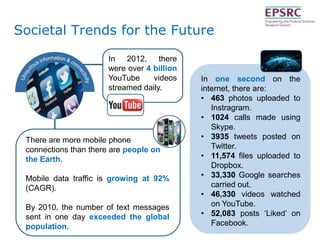
Societal Trends for the Future
In 2012, there
were over 4 billion
YouTube
videos
streamed daily.

There are more mobile phone
connections than there are people on
the Earth.

Mobile data traffic is growing at 92%
(CAGR).
By 2010, the number of text messages
sent in one day exceeded the global
population.

In one second on the
internet, there are:
• 463 photos uploaded to
Instragram.
• 1024 calls made using
Skype.
• 3935 tweets posted on
Twitter.
• 11,574 files uploaded to
Dropbox.
• 33,330 Google searches
carried out.
• 46,330 videos watched
on YouTube.
• 52,083 posts ‘Liked’ on
Facebook.
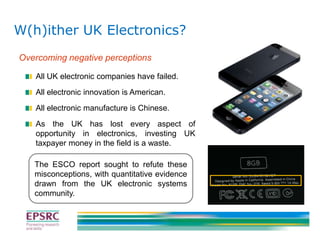
W(h)ither UK Electronics?
Overcoming negative perceptions
All UK electronic companies have failed.
All electronic innovation is American.
All electronic manufacture is Chinese.
As the UK has lost every aspect of
opportunity in electronics, investing UK
taxpayer money in the field is a waste.
The ESCO report sought to refute these
misconceptions, with quantitative evidence
drawn from the UK electronic systems
community.
The UK Electronic Systems Community

850,000
People working on electronic
systems in UK industry

£80Bn
Contribution to the UK
economy, or 5.4% UK GDP

“At the heart of many societal
advancements are the enabling
technologies of electronic systems”
Warren East
ESCO Executive Steering Group
k
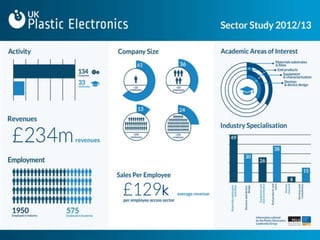
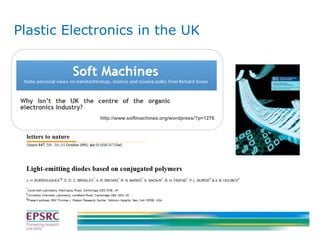
Plastic Electronics in the UK

http://www.softmachines.org/wordpress/?p=1276
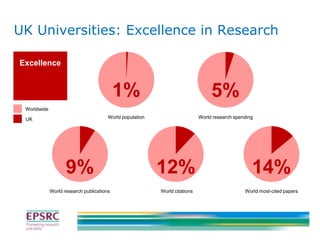
UK Universities: Excellence in Research
Excellence

1%

5%

World population

World research spending

Worldwide
UK

9%

12%

14%

World research publications

World citations

World most-cited papers
Societal
Drivers

The Research System

System
Requirements

System Integration

Enabling
Technology

Technology Base

Fundamental
Knowledge

Societal Requirement

Knowledge Base
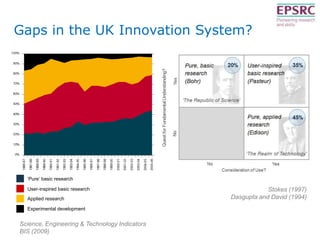
Gaps in the UK Innovation System?

‘Pure’ basic research
User-inspired basic research
Applied research
Experimental development

Science, Engineering & Technology Indicators
BIS (2009)

Stokes (1997)
Dasgupta and David (1994)
Gaps in the UK Innovation System?

Business R&D/%GDP

Value of R&D performed in the business sector

The UK trend runs contrary to our international peers or competitors.
The UK Innovation System
Discover

Understand

Integrate

Validate

EPSRC

Technology Strategy Board

Charities or Intermediate Bodies

Overseas Bodies

Industrial Companies

Universities

Deploy
The UK Innovation System
Discover

Understand

Integrate

Validate

Deploy

5

Knowledge & Technology ‘Push’

Challenge & Application ‘Pull’
EPSRC
Technology Strategy Board
Industrial Companies
Productive steps in our current system
Academia, industry and the public sector working together
Academia

Public Bodies

Industry

Knowledge, people &
technological capability

Facilitating knowledge,
impact & skills

Innovation, market
perspective & new products

Pathways to Impact

Targeted Support

 Public engagement

 Appropriate models

 Long-term plans

 KT secondments

 Strategic discussion

 Increased commitment

 Staff training
 Realistic IP

 Consolidated evidence

Strategic R&D

 People support
 Realistic IP!
What Can We Do Together?
There are challenges to be tackled
Where does the UK electronic systems research community ‘want to go’?
What are the technologies of the future that need electronics at their
heart?

Who needs to be engaged outside of the (plastic) electronics
community for the UK to take a lead?
Support the work of the Plastic Electronics Leadership Group.
Work in partnership with the ESCO team to make the importance of
electronic systems in the UK clear to government.
Partner with EPSRC – planning for the future starts now.
www.epsrc.ac.uk
: 01793 44 4301
: derek.gillespie@epsrc.ac.uk

@DAGillespie

@EPSRC

EPSRC ICT Theme
Grant Funding: Pathways to Impact
Funding to Facilitate Potential Impacts
Since 2009, applicants can ask for project-specific, impact-related costs as
part of a grant proposal.
Applicants can ask for funding at the point of application, in order to
provide the opportunities or required skills that allow the team to promote
the potential impacts of their research.
To make use of this, applicants have to consider which impact activities or
training they might require when planning the research proposal.
All costs must be outlined and justified, as with other requests for funding.
Grant Funding: Pathways to Impact
Funding to Facilitate Potential Impacts
Some specific examples of activities that could be requested are:
Secondments
Increased investigator time

Training activities
Employment of specialist staff
Marketing and publicity
Workshops, seminars and networking
Public engagement
Early-stage commercialisation exploration

Evidence shows that these resources are heavily under-used by applicants!
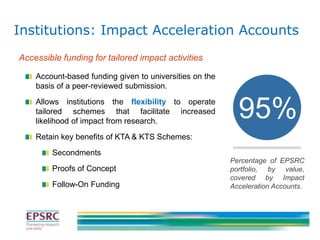
Institutions: Impact Acceleration Accounts
Accessible funding for tailored impact activities
Account-based funding given to universities on the
basis of a peer-reviewed submission.
Allows institutions the flexibility to operate
tailored schemes that facilitate increased
likelihood of impact from research.

95%

Retain key benefits of KTA & KTS Schemes:
Secondments
Proofs of Concept
Follow-On Funding

Percentage of EPSRC
portfolio, by value,
covered by Impact
Acceleration Accounts.

Plastic Electronic Systems Research & EPSRC

  • 1.
    Electronic Systems Research Supportingexcellent research and impactful ideas Dr. Derek Gillespie Senior Portfolio Manager @DAGillespie
  • 2.
    The Transistor andthe Integrated Circuit • First transistor invented in 1947. • Miniaturization of the technology, in line with Moore’s Law, is astounding – fast approaching the point whereby quantum considerations need to be taken into account. • Complexity of integrated circuits has increased more than a billionfold since the 1960s. • The price of an individual transistor is now less than one millionth of the cost in the late 1960s. o Had the cost of automobiles fallen at the same rate, a new car today would cost less than one pence.
  • 3.
    Societal Trends forthe Future In 2012, there were over 4 billion YouTube videos streamed daily. There are more mobile phone connections than there are people on the Earth. Mobile data traffic is growing at 92% (CAGR). By 2010, the number of text messages sent in one day exceeded the global population. In one second on the internet, there are: • 463 photos uploaded to Instragram. • 1024 calls made using Skype. • 3935 tweets posted on Twitter. • 11,574 files uploaded to Dropbox. • 33,330 Google searches carried out. • 46,330 videos watched on YouTube. • 52,083 posts ‘Liked’ on Facebook.
  • 4.
    W(h)ither UK Electronics? Overcomingnegative perceptions All UK electronic companies have failed. All electronic innovation is American. All electronic manufacture is Chinese. As the UK has lost every aspect of opportunity in electronics, investing UK taxpayer money in the field is a waste. The ESCO report sought to refute these misconceptions, with quantitative evidence drawn from the UK electronic systems community.
  • 5.
    The UK ElectronicSystems Community 850,000 People working on electronic systems in UK industry £80Bn Contribution to the UK economy, or 5.4% UK GDP “At the heart of many societal advancements are the enabling technologies of electronic systems” Warren East ESCO Executive Steering Group
  • 6.
  • 7.
    Plastic Electronics inthe UK http://www.softmachines.org/wordpress/?p=1276
  • 8.
    UK Universities: Excellencein Research Excellence 1% 5% World population World research spending Worldwide UK 9% 12% 14% World research publications World citations World most-cited papers
  • 9.
    Societal Drivers The Research System System Requirements SystemIntegration Enabling Technology Technology Base Fundamental Knowledge Societal Requirement Knowledge Base
  • 10.
    Gaps in theUK Innovation System? ‘Pure’ basic research User-inspired basic research Applied research Experimental development Science, Engineering & Technology Indicators BIS (2009) Stokes (1997) Dasgupta and David (1994)
  • 11.
    Gaps in theUK Innovation System? Business R&D/%GDP Value of R&D performed in the business sector The UK trend runs contrary to our international peers or competitors.
  • 12.
    The UK InnovationSystem Discover Understand Integrate Validate EPSRC Technology Strategy Board Charities or Intermediate Bodies Overseas Bodies Industrial Companies Universities Deploy
  • 13.
    The UK InnovationSystem Discover Understand Integrate Validate Deploy 5 Knowledge & Technology ‘Push’ Challenge & Application ‘Pull’ EPSRC Technology Strategy Board Industrial Companies
  • 14.
    Productive steps inour current system Academia, industry and the public sector working together Academia Public Bodies Industry Knowledge, people & technological capability Facilitating knowledge, impact & skills Innovation, market perspective & new products Pathways to Impact Targeted Support  Public engagement  Appropriate models  Long-term plans  KT secondments  Strategic discussion  Increased commitment  Staff training  Realistic IP  Consolidated evidence Strategic R&D  People support  Realistic IP!
  • 15.
    What Can WeDo Together? There are challenges to be tackled Where does the UK electronic systems research community ‘want to go’? What are the technologies of the future that need electronics at their heart? Who needs to be engaged outside of the (plastic) electronics community for the UK to take a lead? Support the work of the Plastic Electronics Leadership Group. Work in partnership with the ESCO team to make the importance of electronic systems in the UK clear to government. Partner with EPSRC – planning for the future starts now.
  • 16.
    www.epsrc.ac.uk : 01793 444301 : derek.gillespie@epsrc.ac.uk @DAGillespie @EPSRC EPSRC ICT Theme
  • 17.
    Grant Funding: Pathwaysto Impact Funding to Facilitate Potential Impacts Since 2009, applicants can ask for project-specific, impact-related costs as part of a grant proposal. Applicants can ask for funding at the point of application, in order to provide the opportunities or required skills that allow the team to promote the potential impacts of their research. To make use of this, applicants have to consider which impact activities or training they might require when planning the research proposal. All costs must be outlined and justified, as with other requests for funding.
  • 18.
    Grant Funding: Pathwaysto Impact Funding to Facilitate Potential Impacts Some specific examples of activities that could be requested are: Secondments Increased investigator time Training activities Employment of specialist staff Marketing and publicity Workshops, seminars and networking Public engagement Early-stage commercialisation exploration Evidence shows that these resources are heavily under-used by applicants!
  • 19.
    Institutions: Impact AccelerationAccounts Accessible funding for tailored impact activities Account-based funding given to universities on the basis of a peer-reviewed submission. Allows institutions the flexibility to operate tailored schemes that facilitate increased likelihood of impact from research. 95% Retain key benefits of KTA & KTS Schemes: Secondments Proofs of Concept Follow-On Funding Percentage of EPSRC portfolio, by value, covered by Impact Acceleration Accounts.

Editor's Notes

  • #10 This slide, modified from a model used by the NSF Engineering Research Centres (ERCs), makes clear that we understand that research activities are not a linear process (which is a common criticism of the Technology Readiness Level descriptors), but rather that the process of moving from fundamental knowledge to ultimate societal impact is full of feedback loops that influence the transition from knowledge – technology/discrete device – integrated system – societal application.