PLASMA MEMBRANE
By,
S. Sachin,
BP221512,
I-M.Sc., Microbiology,
Sacred Heart College
(Autonomous), Tirupattur.
What is Plasma membrane ?
• The Plasma membrane, also called the Cell
membrane, is the membrane found in all cells that
separates the interior of the cell from the outside
environment.
• In bacterial and plant cells, a cell wall is attached to
the plasma membrane on its outside surface.
History
• The term ‘plasma membrane’ was coined by
C. Nageli and C. Cramer in 1855.
• In 1895, Charles Overton suggested that plasma
membrane is composed of lipids.
• In 1900-1920, further studies on plasma membrane
state that lipid must be a phospholipid.
• In 1925, E. Gorter and G. Grendel proposed that
plasma membrane is composed of phospholipid
bilayer.
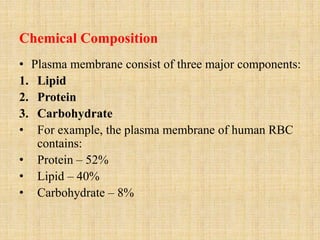
Chemical Composition
• Plasma membrane consist of three major components:
1. Lipid
2. Protein
3. Carbohydrate
• For example, the plasma membrane of human RBC
contains:
• Protein – 52%
• Lipid – 40%
• Carbohydrate – 8%
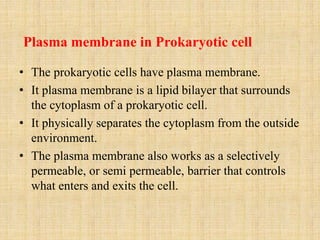
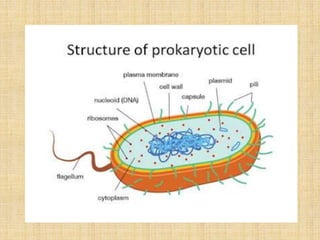
Plasma membrane in Prokaryotic cell
• The prokaryotic cells have plasma membrane.
• It plasma membrane is a lipid bilayer that surrounds
the cytoplasm of a prokaryotic cell.
• It physically separates the cytoplasm from the outside
environment.
• The plasma membrane also works as a selectively
permeable, or semi permeable, barrier that controls
what enters and exits the cell.
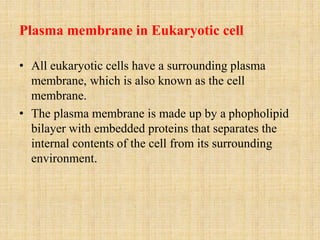
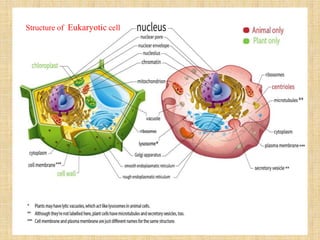
Plasma membrane in Eukaryotic cell
• All eukaryotic cells have a surrounding plasma
membrane, which is also known as the cell
membrane.
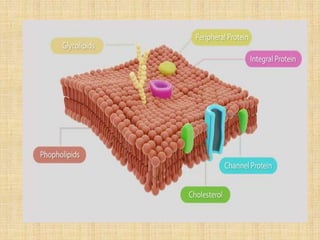
• The plasma membrane is made up by a phopholipid
bilayer with embedded proteins that separates the
internal contents of the cell from its surrounding
environment.
Structure of Eukaryotic cell
Difference between prokaryotic and
eukaryotic plasma membrane
• In eukaryotic cells, which have a nucleus, the
cytoplasm is everything between the plasma
membrane and the nuclear envelope.
• In prokaryotes, which lack a nucleus, cytoplasm
simply means everything found inside the plasma
membrane.
Functions of plasma membrane
• Keeps a cell interact.
• Protective barrier.
• Regulate transport in & out of cell (selectively
permeable)
• Maintains integrity of the cell – size and shape
• Maintains the ionic concentration of the cell &
osmotic pressure of the cytosol.
• Sensitivity.
• Regulates biochemical reactions.
•Creates attachments within and between other
cells.
•Identification
•Regulation of solute exchange through the
membrane.
•Isolation of the cytoplasm from the extrnal
environment.
Thank you

PLASMA MEMBRANE.pptx

  • 1.
    PLASMA MEMBRANE By, S. Sachin, BP221512, I-M.Sc.,Microbiology, Sacred Heart College (Autonomous), Tirupattur.
  • 2.
    What is Plasmamembrane ? • The Plasma membrane, also called the Cell membrane, is the membrane found in all cells that separates the interior of the cell from the outside environment. • In bacterial and plant cells, a cell wall is attached to the plasma membrane on its outside surface.
  • 4.
    History • The term‘plasma membrane’ was coined by C. Nageli and C. Cramer in 1855. • In 1895, Charles Overton suggested that plasma membrane is composed of lipids. • In 1900-1920, further studies on plasma membrane state that lipid must be a phospholipid. • In 1925, E. Gorter and G. Grendel proposed that plasma membrane is composed of phospholipid bilayer.
  • 5.
    Chemical Composition • Plasmamembrane consist of three major components: 1. Lipid 2. Protein 3. Carbohydrate • For example, the plasma membrane of human RBC contains: • Protein – 52% • Lipid – 40% • Carbohydrate – 8%
  • 6.
    Plasma membrane inProkaryotic cell • The prokaryotic cells have plasma membrane. • It plasma membrane is a lipid bilayer that surrounds the cytoplasm of a prokaryotic cell. • It physically separates the cytoplasm from the outside environment. • The plasma membrane also works as a selectively permeable, or semi permeable, barrier that controls what enters and exits the cell.
  • 8.
    Plasma membrane inEukaryotic cell • All eukaryotic cells have a surrounding plasma membrane, which is also known as the cell membrane. • The plasma membrane is made up by a phopholipid bilayer with embedded proteins that separates the internal contents of the cell from its surrounding environment.
  • 9.
  • 10.
    Difference between prokaryoticand eukaryotic plasma membrane • In eukaryotic cells, which have a nucleus, the cytoplasm is everything between the plasma membrane and the nuclear envelope. • In prokaryotes, which lack a nucleus, cytoplasm simply means everything found inside the plasma membrane.
  • 11.
    Functions of plasmamembrane • Keeps a cell interact. • Protective barrier. • Regulate transport in & out of cell (selectively permeable) • Maintains integrity of the cell – size and shape • Maintains the ionic concentration of the cell & osmotic pressure of the cytosol. • Sensitivity. • Regulates biochemical reactions.
  • 12.
    •Creates attachments withinand between other cells. •Identification •Regulation of solute exchange through the membrane. •Isolation of the cytoplasm from the extrnal environment.
  • 13.