Plasma Membrane
 The cytoplasmic membrane of both gram-
positive and gram-negative cells is a lipid bilayer
composed of phospholipids, glycolipids, and a
variety of proteins.
 The proteins in the cytoplasmic membrane may
extend through its entire thickness.
 Some of these proteins provide structural
support to the membrane while others function in
the transport of sugars, amino acids, and other
metabolites
 Gram-positive and gram-negative cells have somewhat
different strategies for transporting materials across the
membrane and into the cell
 The cytoplasmic membrane of gram-positive organisms has
immediate access to media components
 However, chemicals and nutrients must first traverse the outer
membrane of gram negative organisms before encountering
the cytoplasmic membrane
 Gram-negative cells have pores formed by protein triplets in
their outer membrane that will permit passage of fairly large
molecules into the periplasmic space
 Subsequent transport across the inner or cytoplasmic
membrane is similar in both gram-positive and gramnegative
cells
 Membranes are an absolute requirement for all living
organisms
 Cells must interact in a selective fashion with their
environment, whether it is the internal environment of a
multicellular organism or a less protected and more variable
external environment.

 Cells must not only be able to acquire nutrients and eliminate
wastes, but they also have to maintain their interior in a
constant, highly organized state in the face of external
changes.
 The plasma membrane encompasses the cytoplasm of both
procaryotic and eucaryotic cells.
 Chief point of contact with the cell’s environment and thus is
responsible for much of its relationship with the outside world.
 Membranes contain both proteins and lipids, although the exact
proportions of protein and lipid vary widely.
 Bacterial plasma membranes usually have a higher proportion
of protein than do eucaryotic membranes, presumably because
they fulfill so many different functions that are carried out by
other organelle membranes in eucaryotes
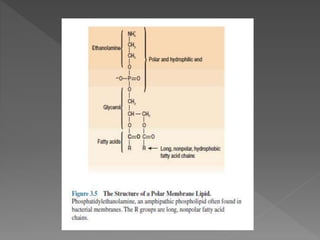
 Most membrane-associated lipids are structurally asymmetric
with polar and nonpolar ends (figure 3.5) and are called
amphipathic.
 The polar ends interact with water and are hydrophilic; the
nonpolar hydrophobic ends are insoluble in water and tend to
associate with one another.
 This property of lipids enables them to form a bilayer in
membranes.
 The outer surfaces are hydrophilic, whereas hydrophobic ends
are buried in the interior away from the surrounding water.
 Many of these am-phipathic lipids are phospholipids (figure 3.5).
 Bacterial membranes usually differ from eucaryotic membranes
in lacking sterols such as cholesterol
 However, many bacterial membranes do contain pentacyclic
sterol-like molecules called hopanoids and huge quantities of
hopanoids are present in our ecosystem
 Hopanoids are synthesized from the same precursors as
steroids.
 Like steroids in eucaryotes, they probably stabilize the bacterial
membrane.
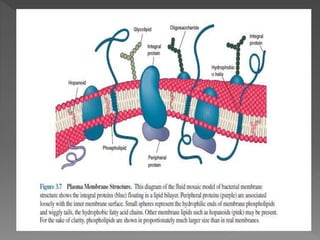
 The membrane lipid is organized in two layers, or sheets, of
molecules arranged end-to-end (figure 3.7).
 Cell membranes are very thin structures, about 5 to 10
nm thick, and can only be seen with the electron
microscope.
 The most widely accepted current model for membrane
structure is the fluid mosaic model of S. Jonathan
Singer and Garth Nicholson (figure 3.7).
 They distinguish between two types of membrane
proteins.
 Peripheral proteins are loosely connected to the
membrane and can be easily removed. They are soluble
in aqueous solutions and make up about 20 to 30% of
total membrane protein.
 About 70 to 80% of membrane proteins are integral
proteins. These are not easily extracted from
membranes and are insoluble in aqueous solutions
when freed of lipids.
 Often carbohydrates are attached to the outer
surface of plasma membrane proteins and seem
to have important functions.
 Although membranes apparently have a
common basic design, there are wide variations
in both their structure and functional capacities.
The differences are so large and characteristic
that membrane chemistry can be used in
bacterial identification.
 The plasma membranes of procaryotic cells must fill an incredible
variety of roles successfully.
 The plasma membrane retains the cytoplasm, particularly in cells
without cell walls, and separates it from the surroundings.

 The plasma membrane also serves as a selectively permeable
barrier: it allows particular ions and molecules to pass, either into or
out of the cell, while preventing the movement of others.

 Thus the membrane prevents the loss of essential components
through leakage while allowing the movement of other molecules.
 Because many substances cannot cross the plasma membrane
without assistance, it must aid such movement when necessary.
 Transport systems can be used for such tasks as nutrient uptake,
waste excretion, and protein secretion.
 The procaryotic plasma membrane also is the
location of a variety of crucial metabolic
processes: respiration, photosynthesis, the
synthesis of lipids and cell wall constituents, and
probably chromosome segregation.
 Finally, the membrane contains special receptor
molecules that help procaryotes detect and
respond to chemicals in their surroundings.
 Clearly the plasma membrane is essential to the
survival of microorganisms

bacterial cell membrane (lipid bilayer)pptx

  • 2.
    Plasma Membrane  Thecytoplasmic membrane of both gram- positive and gram-negative cells is a lipid bilayer composed of phospholipids, glycolipids, and a variety of proteins.  The proteins in the cytoplasmic membrane may extend through its entire thickness.  Some of these proteins provide structural support to the membrane while others function in the transport of sugars, amino acids, and other metabolites
  • 3.
     Gram-positive andgram-negative cells have somewhat different strategies for transporting materials across the membrane and into the cell  The cytoplasmic membrane of gram-positive organisms has immediate access to media components  However, chemicals and nutrients must first traverse the outer membrane of gram negative organisms before encountering the cytoplasmic membrane  Gram-negative cells have pores formed by protein triplets in their outer membrane that will permit passage of fairly large molecules into the periplasmic space  Subsequent transport across the inner or cytoplasmic membrane is similar in both gram-positive and gramnegative cells
  • 4.
     Membranes arean absolute requirement for all living organisms  Cells must interact in a selective fashion with their environment, whether it is the internal environment of a multicellular organism or a less protected and more variable external environment.   Cells must not only be able to acquire nutrients and eliminate wastes, but they also have to maintain their interior in a constant, highly organized state in the face of external changes.  The plasma membrane encompasses the cytoplasm of both procaryotic and eucaryotic cells.  Chief point of contact with the cell’s environment and thus is responsible for much of its relationship with the outside world.
  • 5.
     Membranes containboth proteins and lipids, although the exact proportions of protein and lipid vary widely.  Bacterial plasma membranes usually have a higher proportion of protein than do eucaryotic membranes, presumably because they fulfill so many different functions that are carried out by other organelle membranes in eucaryotes  Most membrane-associated lipids are structurally asymmetric with polar and nonpolar ends (figure 3.5) and are called amphipathic.  The polar ends interact with water and are hydrophilic; the nonpolar hydrophobic ends are insoluble in water and tend to associate with one another.  This property of lipids enables them to form a bilayer in membranes.
  • 7.
     The outersurfaces are hydrophilic, whereas hydrophobic ends are buried in the interior away from the surrounding water.  Many of these am-phipathic lipids are phospholipids (figure 3.5).  Bacterial membranes usually differ from eucaryotic membranes in lacking sterols such as cholesterol  However, many bacterial membranes do contain pentacyclic sterol-like molecules called hopanoids and huge quantities of hopanoids are present in our ecosystem  Hopanoids are synthesized from the same precursors as steroids.  Like steroids in eucaryotes, they probably stabilize the bacterial membrane.  The membrane lipid is organized in two layers, or sheets, of molecules arranged end-to-end (figure 3.7).
  • 9.
     Cell membranesare very thin structures, about 5 to 10 nm thick, and can only be seen with the electron microscope.  The most widely accepted current model for membrane structure is the fluid mosaic model of S. Jonathan Singer and Garth Nicholson (figure 3.7).  They distinguish between two types of membrane proteins.  Peripheral proteins are loosely connected to the membrane and can be easily removed. They are soluble in aqueous solutions and make up about 20 to 30% of total membrane protein.  About 70 to 80% of membrane proteins are integral proteins. These are not easily extracted from membranes and are insoluble in aqueous solutions when freed of lipids.
  • 10.
     Often carbohydratesare attached to the outer surface of plasma membrane proteins and seem to have important functions.  Although membranes apparently have a common basic design, there are wide variations in both their structure and functional capacities. The differences are so large and characteristic that membrane chemistry can be used in bacterial identification.
  • 11.
     The plasmamembranes of procaryotic cells must fill an incredible variety of roles successfully.  The plasma membrane retains the cytoplasm, particularly in cells without cell walls, and separates it from the surroundings.   The plasma membrane also serves as a selectively permeable barrier: it allows particular ions and molecules to pass, either into or out of the cell, while preventing the movement of others.   Thus the membrane prevents the loss of essential components through leakage while allowing the movement of other molecules.  Because many substances cannot cross the plasma membrane without assistance, it must aid such movement when necessary.  Transport systems can be used for such tasks as nutrient uptake, waste excretion, and protein secretion.
  • 12.
     The procaryoticplasma membrane also is the location of a variety of crucial metabolic processes: respiration, photosynthesis, the synthesis of lipids and cell wall constituents, and probably chromosome segregation.  Finally, the membrane contains special receptor molecules that help procaryotes detect and respond to chemicals in their surroundings.  Clearly the plasma membrane is essential to the survival of microorganisms