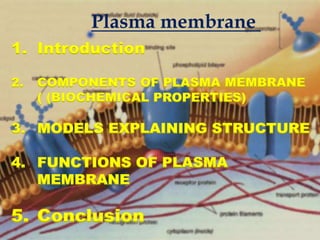
Plasma membrane
1. Introduction
2. COMPONENTS OF PLASMA MEMBRANE
( (BIOCHEMICAL PROPERTIES)
3. MODELS EXPLAINING STRUCTURE
4. FUNCTIONS OF PLASMA
MEMBRANE
5. Conclusion
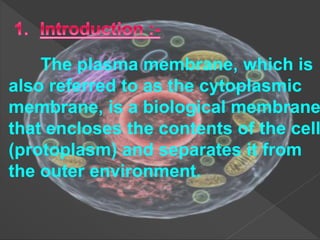
The plasma membrane, which is
also referred to as the cytoplasmic
membrane, is a biological membrane
that encloses the contents of the cell
(protoplasm) and separates it from
the outer environment.
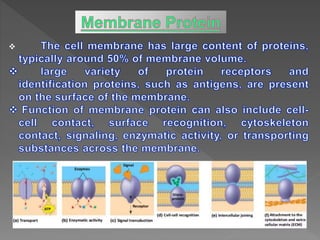
The molecular structure of cell membrane is
totally dependent on:
1. Membrane Lipids : 54% .
2. Membrane Proteins : 46% .
3. Membrane Carbohydrate : 5-10% .
Membrane
lipids
PHOSPHOLIPID
GLYCOLIPID
STEROL
ARCHEBACTERIAL ETHER LIPID
GLYCERO -
PHOSPHOLIPID
SPHINGO-
PHOSPOLIPID
SPHINGO -
LIPID
GALACTOLIPID

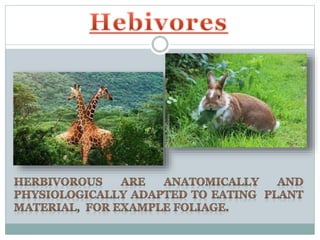
As a result of their plant diet,
Herbivorous animals typically
have mouth parts adapted to
rasping or grinding.
Their teeth and digestive system are
developed to grind and digest vegetable
matter. Cow, Goat, Deer and Giraffe are
some herbivores.
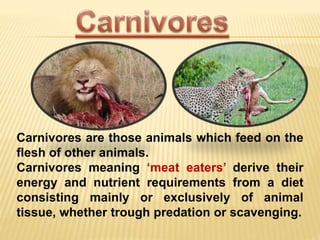
Carnivores are those animals which feed on the
flesh of other animals.
Carnivores meaning ‘meat eaters’ derive their
energy and nutrient requirements from a diet
consisting mainly or exclusively of animal
tissue, whether trough predation or scavenging.
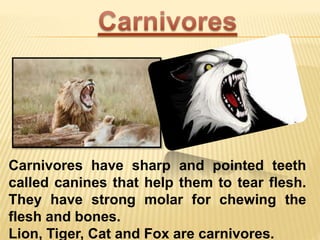
Carnivores have sharp and pointed teeth
called canines that help them to tear flesh.
They have strong molar for chewing the
flesh and bones.
Lion, Tiger, Cat and Fox are carnivores.
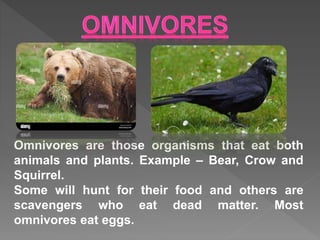
Omnivores are those organisms that eat both
animals and plants. Example – Bear, Crow and
Squirrel.
Some will hunt for their food and others are
scavengers who eat dead matter. Most
omnivores eat eggs.
OMNIVORES
Omnivores are often opportunistic, general
feeders that lack carnivore or herbivore
specialization for acquiring or processing
food, but which nevertheless consume
both animals and plants.
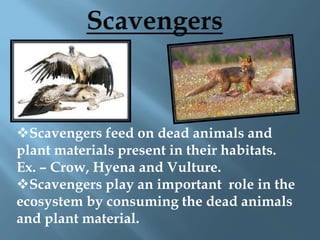
Scavengers feed on dead animals and
plant materials present in their habitats.
Ex. – Crow, Hyena and Vulture.
Scavengers play an important role in the
ecosystem by consuming the dead animals
and plant material.
Conclusion
plasma membrane FUNCTION AND STUCTURE..pptx

plasma membrane FUNCTION AND STUCTURE..pptx

  • 2.
    Plasma membrane 1. Introduction 2.COMPONENTS OF PLASMA MEMBRANE ( (BIOCHEMICAL PROPERTIES) 3. MODELS EXPLAINING STRUCTURE 4. FUNCTIONS OF PLASMA MEMBRANE 5. Conclusion
  • 3.
    The plasma membrane,which is also referred to as the cytoplasmic membrane, is a biological membrane that encloses the contents of the cell (protoplasm) and separates it from the outer environment.
  • 5.
    The molecular structureof cell membrane is totally dependent on: 1. Membrane Lipids : 54% . 2. Membrane Proteins : 46% . 3. Membrane Carbohydrate : 5-10% .
  • 7.
    Membrane lipids PHOSPHOLIPID GLYCOLIPID STEROL ARCHEBACTERIAL ETHER LIPID GLYCERO- PHOSPHOLIPID SPHINGO- PHOSPOLIPID SPHINGO - LIPID GALACTOLIPID
  • 8.
  • 9.
    As a resultof their plant diet, Herbivorous animals typically have mouth parts adapted to rasping or grinding.
  • 11.
    Their teeth anddigestive system are developed to grind and digest vegetable matter. Cow, Goat, Deer and Giraffe are some herbivores.
  • 12.
    Carnivores are thoseanimals which feed on the flesh of other animals. Carnivores meaning ‘meat eaters’ derive their energy and nutrient requirements from a diet consisting mainly or exclusively of animal tissue, whether trough predation or scavenging.
  • 13.
    Carnivores have sharpand pointed teeth called canines that help them to tear flesh. They have strong molar for chewing the flesh and bones. Lion, Tiger, Cat and Fox are carnivores.
  • 14.
    Omnivores are thoseorganisms that eat both animals and plants. Example – Bear, Crow and Squirrel. Some will hunt for their food and others are scavengers who eat dead matter. Most omnivores eat eggs.
  • 15.
    OMNIVORES Omnivores are oftenopportunistic, general feeders that lack carnivore or herbivore specialization for acquiring or processing food, but which nevertheless consume both animals and plants.
  • 16.
    Scavengers feed ondead animals and plant materials present in their habitats. Ex. – Crow, Hyena and Vulture. Scavengers play an important role in the ecosystem by consuming the dead animals and plant material.
  • 17.