Presentation
PLANT DENSITY
& Plant Geometry
Yahye Abdi Essa
Abdiasis Abdilahi Adam
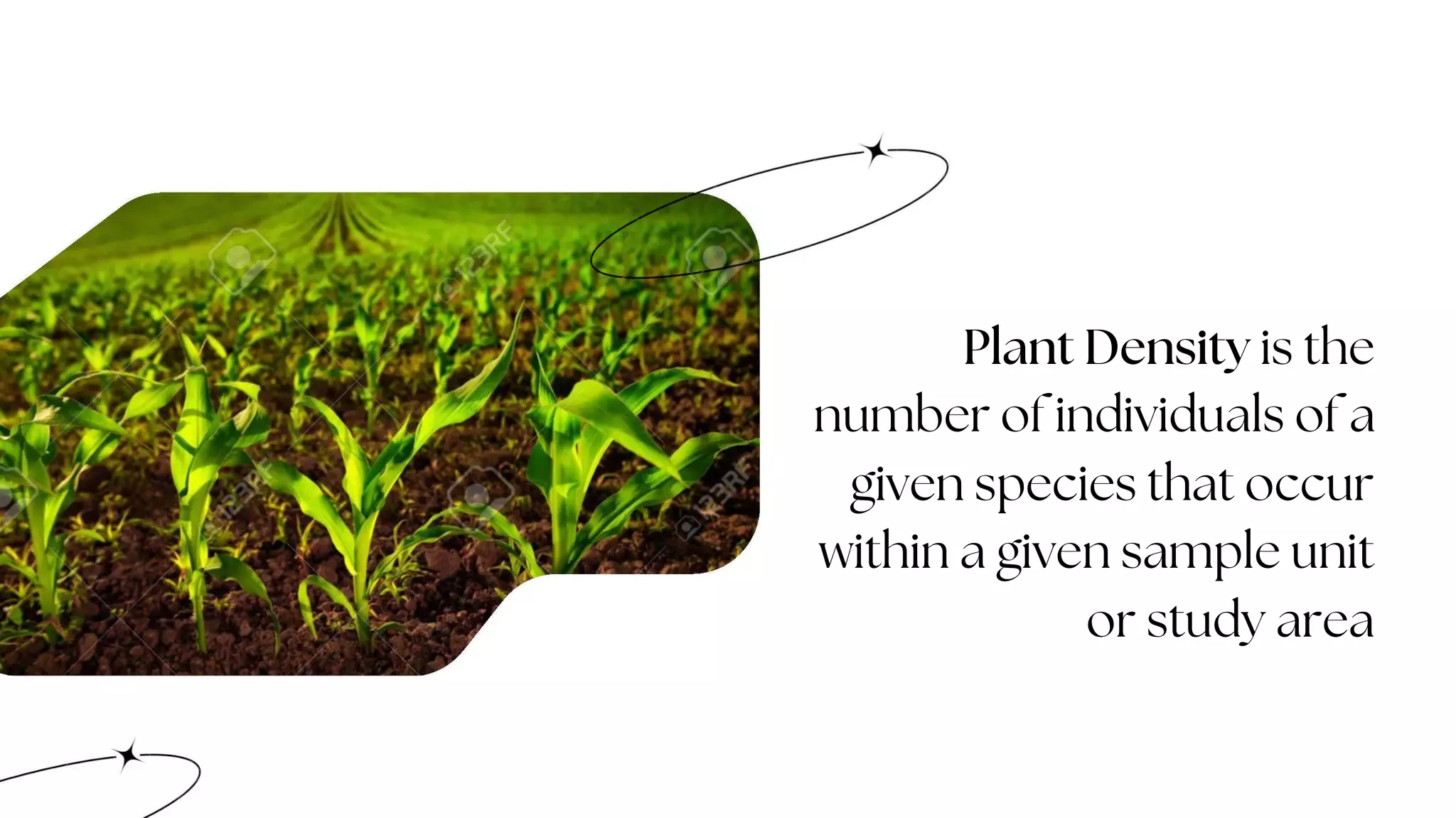
Plant Density is the
number of individuals of a
given species that occur
within a given sample unit
or study area
It is most easily interpreted
in the case of monospecific
stands, where all plants
belong to the same species
and have germinated at the
same time. However, it
Plant
Density
is the number of individual
plants present per unit of
ground area.
could also indicate the
number of individual plants
found at a given location.
ORTANCE OF C.D
Plant density manipulates the microenvironment of the field.
Plant density affects the absorption and utilization of radiation, water, and
nutrients in plants.
Affects the growth, development, and yield formation of crops.
Factors affecting plant
density are grouped
into two.
FACTORS
AFFECTING 1. Genetic factors
2. Environmental fa
PLANT
DENSITY
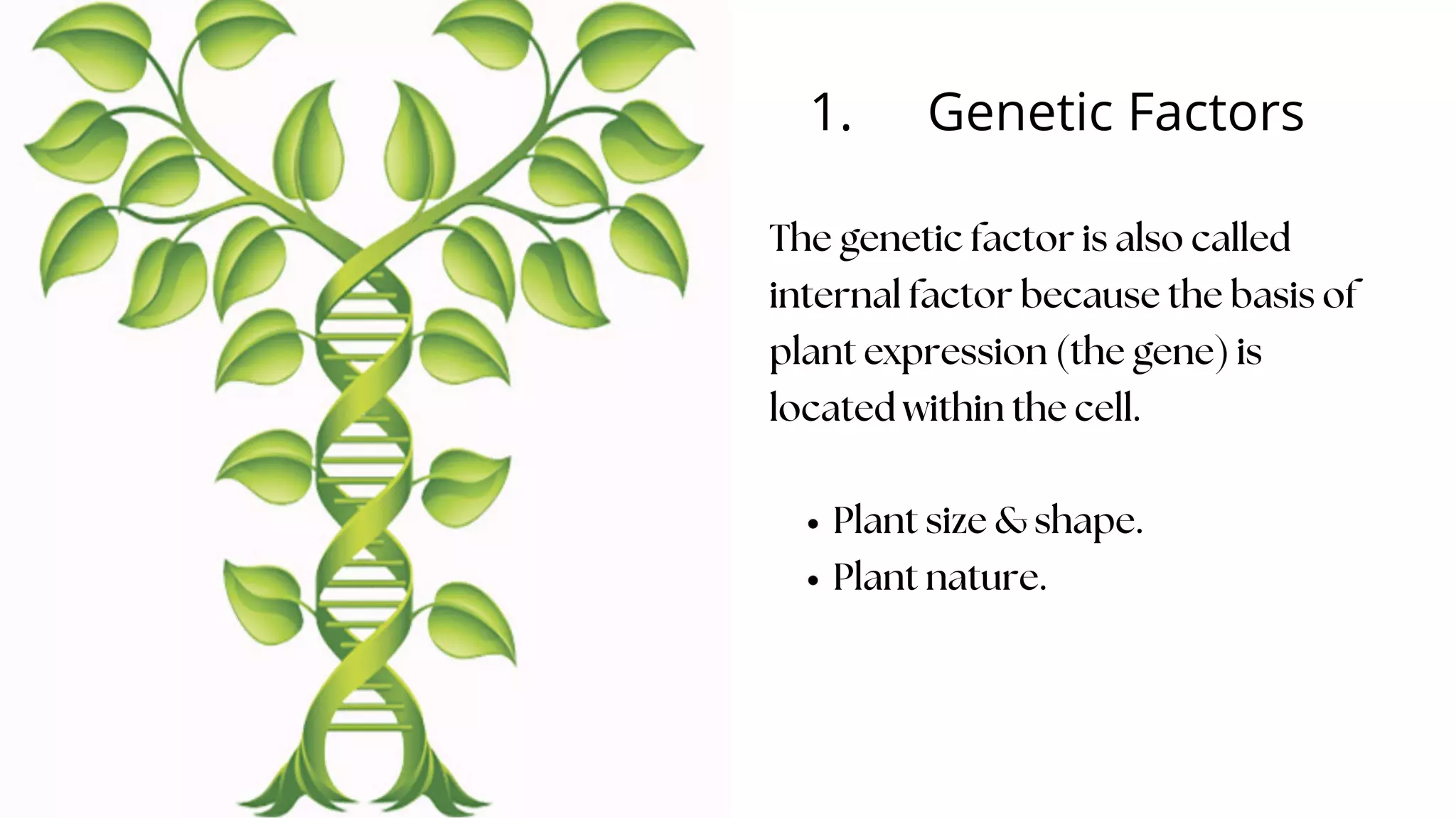
1. Genetic Factors
The genetic factor is also called
internal factor because the basis of
plant expression (the gene) is
located within the cell.
Plant size & shape.
Plant nature.
2. Environmental factors
A. Abiotic factors
Topography
lay of the land.
Soil
Soil is the outermost layer of the
surface of the earth in which plants
grow.
Climate
Humidity
Aeration
Light
1.
2.
3.
4.
5.
Temperature
Moisture
2. Environmental factors
B. Biotic factors
Mutualism is a species-to-species
interaction in which both the biotic factor
and the plant are benefited from the
relationship.
Herbivory plant-eating organisms called
herbivores, such as ruminant animals,
rodents (eg. Rats, squirrels), insects, and
mollusks feed on plant parts.
Parasitism Microorganisms such as fungi,
bacteria, and viruses injure crops by
causing diseases and are called
pathogens.
Crop Geometry
Crop geometry refers to the
shape of the space available for
individual plants or The
arrangement of the plants in
different rows and columns in an
area to utilize the natural
resources efficiently. It influences
crop yield through its influence on
light interception, rooting pattern,
and moisture extraction pattern.
Square
planting
Square arrangements of plants will
be more efficient in the utilization of
light, water, and nutrients available.
Rectangular
planting
Sowing the crop with a seed drill, wider
inter-row and closer intra-row and closer
intra-row spacing leads to rectangularity.
The rectangular arrangement facilitates
easy inter cultivation. Rectangular
planting mainly suits annual crops, crops
with closer spacing, etc., and the wider
section (row) is given for irrigation,
intercultural operation, etc.
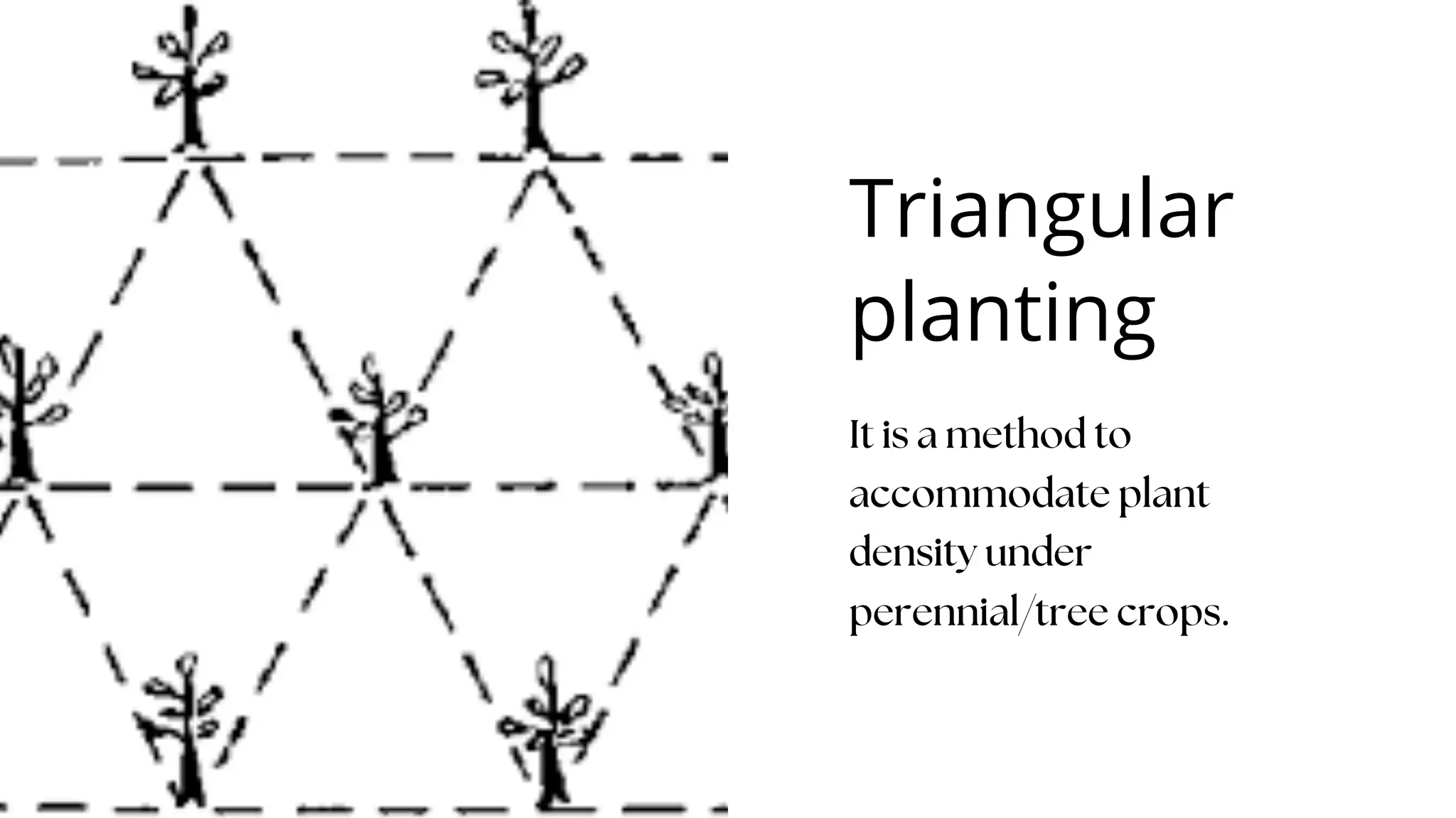
Triangular
planting
It is a method to
accommodate plant
density under
perennial/tree crops.
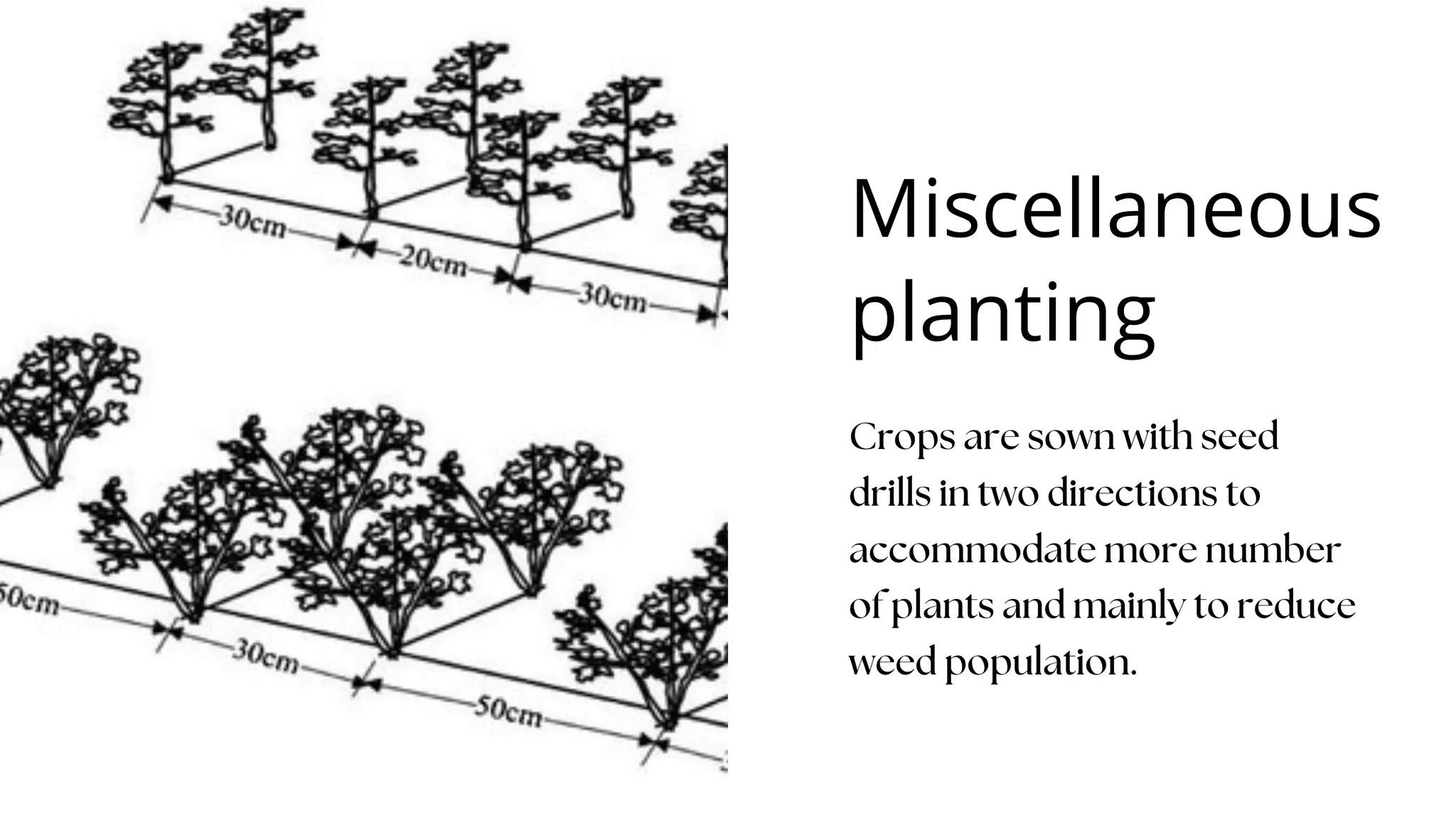
Miscellaneous
planting
Crops are sown with seed
drills in two directions to
accommodate more number
of plants and mainly to reduce
weed population.
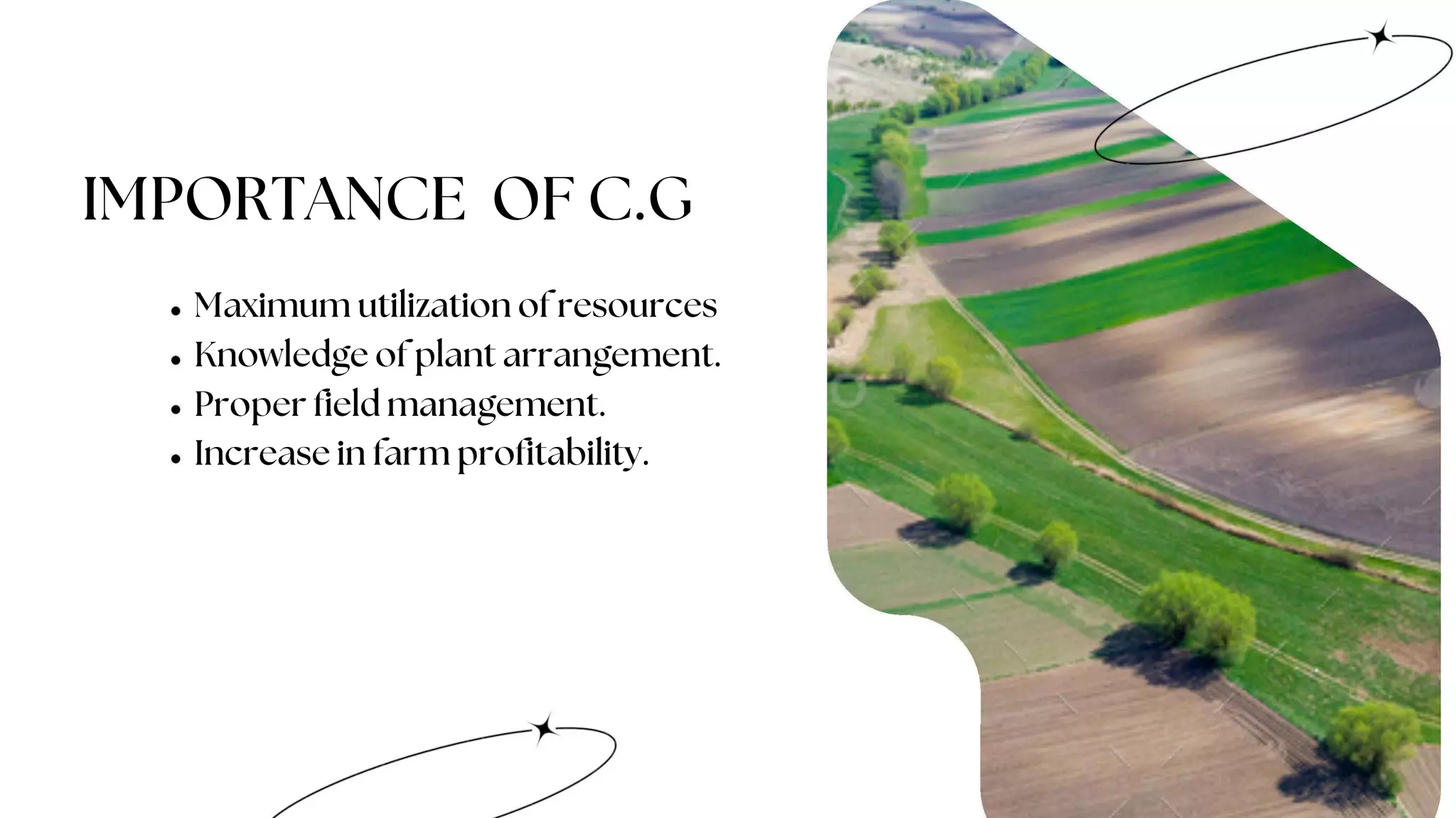
IMPORTANCE OF C.G
Maximum utilization of resources
Knowledge of plant arrangement.
Proper field management.
Increase in farm profitability.
THANK YOU

Plant density and Crop Geometry.pptx

  • 1.
    Presentation PLANT DENSITY & PlantGeometry Yahye Abdi Essa Abdiasis Abdilahi Adam
  • 2.
    Plant Density isthe number of individuals of a given species that occur within a given sample unit or study area
  • 3.
    It is mosteasily interpreted in the case of monospecific stands, where all plants belong to the same species and have germinated at the same time. However, it Plant Density is the number of individual plants present per unit of ground area. could also indicate the number of individual plants found at a given location.
  • 4.
    ORTANCE OF C.D Plantdensity manipulates the microenvironment of the field. Plant density affects the absorption and utilization of radiation, water, and nutrients in plants. Affects the growth, development, and yield formation of crops.
  • 5.
    Factors affecting plant densityare grouped into two. FACTORS AFFECTING 1. Genetic factors 2. Environmental fa PLANT DENSITY
  • 6.
    1. Genetic Factors Thegenetic factor is also called internal factor because the basis of plant expression (the gene) is located within the cell. Plant size & shape. Plant nature.
  • 7.
    2. Environmental factors A.Abiotic factors Topography lay of the land. Soil Soil is the outermost layer of the surface of the earth in which plants grow. Climate Humidity Aeration Light 1. 2. 3. 4. 5. Temperature Moisture
  • 8.
    2. Environmental factors B.Biotic factors Mutualism is a species-to-species interaction in which both the biotic factor and the plant are benefited from the relationship. Herbivory plant-eating organisms called herbivores, such as ruminant animals, rodents (eg. Rats, squirrels), insects, and mollusks feed on plant parts. Parasitism Microorganisms such as fungi, bacteria, and viruses injure crops by causing diseases and are called pathogens.
  • 9.
    Crop Geometry Crop geometryrefers to the shape of the space available for individual plants or The arrangement of the plants in different rows and columns in an area to utilize the natural resources efficiently. It influences crop yield through its influence on light interception, rooting pattern, and moisture extraction pattern.
  • 10.
    Square planting Square arrangements ofplants will be more efficient in the utilization of light, water, and nutrients available.
  • 11.
    Rectangular planting Sowing the cropwith a seed drill, wider inter-row and closer intra-row and closer intra-row spacing leads to rectangularity. The rectangular arrangement facilitates easy inter cultivation. Rectangular planting mainly suits annual crops, crops with closer spacing, etc., and the wider section (row) is given for irrigation, intercultural operation, etc.
  • 12.
    Triangular planting It is amethod to accommodate plant density under perennial/tree crops.
  • 13.
    Miscellaneous planting Crops are sownwith seed drills in two directions to accommodate more number of plants and mainly to reduce weed population.
  • 14.
    IMPORTANCE OF C.G Maximumutilization of resources Knowledge of plant arrangement. Proper field management. Increase in farm profitability.
  • 15.