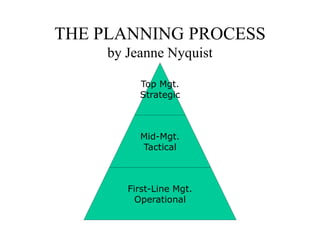
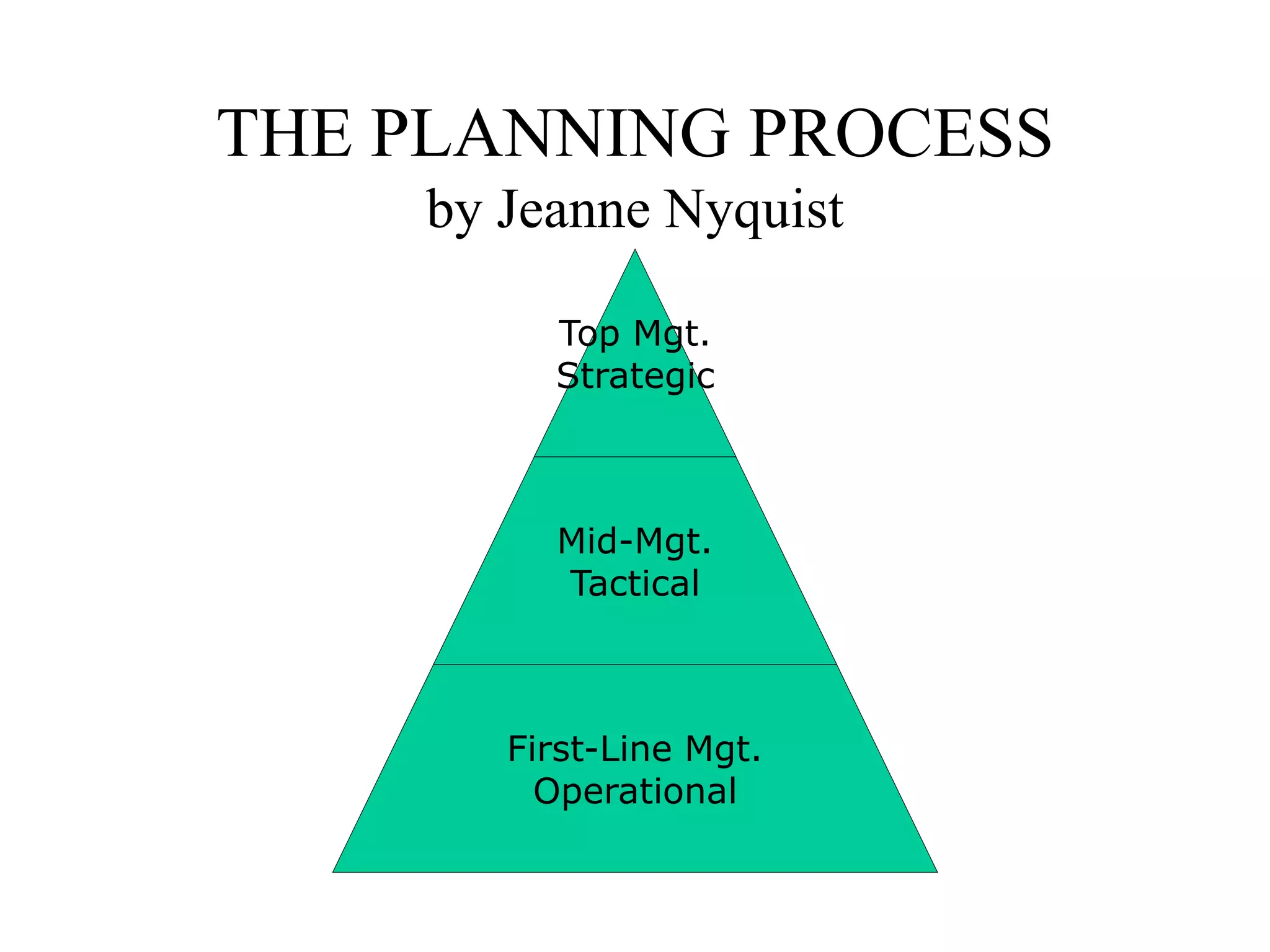
THE PLANNING PROCESS
by Jeanne Nyquist
Top Mgt.
Strategic
Mid-Mgt.
Tactical
First-Line Mgt.
Operational
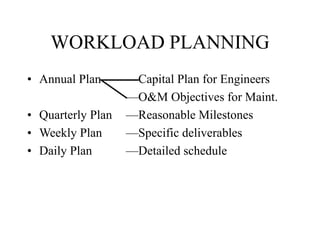
WORKLOAD PLANNING
• Annual Plan
• Quarterly Plan
• Weekly Plan
• Daily Plan
—Capital Plan for Engineers
—O&M Objectives for Maint.
—Reasonable Milestones
—Specific deliverables
—Detailed schedule
OPERATIONAL
MANAGEMENT
Work Planning Metrics:
• Inventory
• Annual Goal
• Performance Standard
• Resource Requirements
• Schedule
Annual Operational Planning
Determine requirements for:
• Annual maintenance cycle
• Standard daily accomplishments
• Seasonal/monthly goals
Annual Operational Planning
• Match resources to requirements
• Make choices – set priorities
• Reality check – are we meeting
requirements?
Work Scheduling: PM
• Geographically based
• Adjust cycles to physical characteristics &
conditions
• Determine consequence of failure
• Define responsibility for
planning/scheduling work
Work Scheduling: Repair
• Dig
• No–Dig
• Establish backlog standard
Work Scheduling:
Rehabilitation
• Establish threshold trigger for rehabilitation
• Use team approach – Ops & Engr
• Planning long-range to meet regulatory
requirements
Work Scheduling:
Special Projects
Manage demand for:
• Emergencies
• Backups
• Roots/FOG
• Engineering projects
• Political response
• Assistance to other depts./agencies
Tools: Project Concept
• Define Goal
• Define Major Steps
– List Resources Needed
• Define Obstacles
– List Solutions or Contingencies
• Identify Key Stakeholders
• Identify Team Members
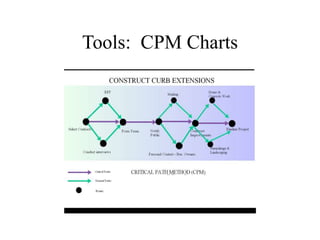
Tools: CPM Charts
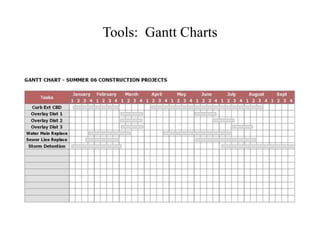
Tools: Gantt Charts
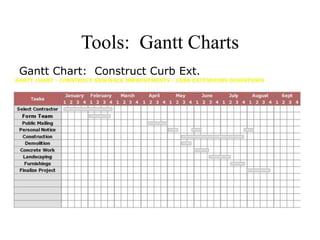
Gantt Chart: Construct Curb Ext.
Tools: Gantt Charts
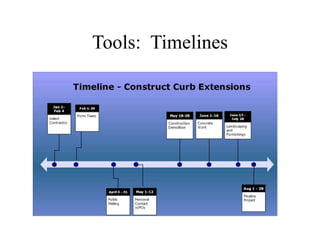
Tools: Timelines
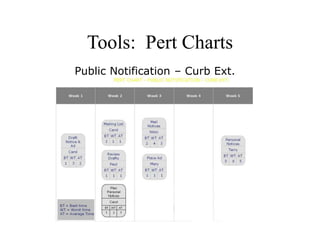
Tools: Pert Charts
Public Notification – Curb Ext.
Reporting Tools
• Work Order
• Crew Reports
• Management Reports (weekly/monthly)
• Design reports for the audience
• Ops, Engr. Mgt
• Get Buy-In
Work Management Problems
• Scope creep
• Managing stakeholder interests and
expectations
• Inadequate communication
• Blown timelines
• Material/equipment problems
• Unreliable contractor
PERFORMANCE MANAGEMENT &
EMPLOYEE EVALUATION
• What are we trying to accomplish?
– Output
– Behavior
• Quarterly Objectives
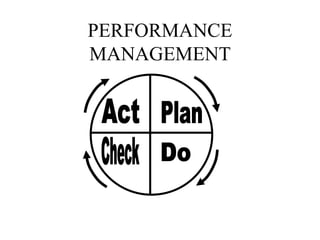
PERFORMANCE
MANAGEMENT
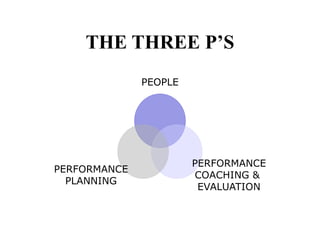
THE THREE P’S
PEOPLE
PERFORMANCE
COACHING &
EVALUATION
PERFORMANCE
PLANNING
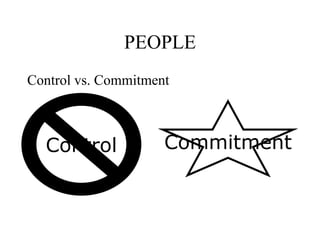
PEOPLE
Control vs. Commitment
Control Commitment
PEOPLE
• UNDERSTAND THE INDIVIDUAL
• UNLOCK HUMAN POTENTIAL
• COACH WITH EMPATHY
PERFORMANCE PLANNING
• ENCOURAGE SELF-MOTIVATION
• CONNECT INTERESTS
• SET GOALS
• FORGE A COMMITMENT
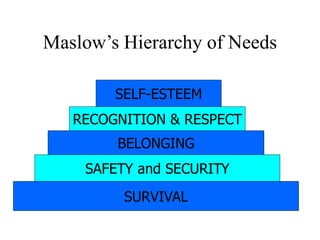
Maslow’s Hierarchy of Needs
SELF-ESTEEM
RECOGNITION & RESPECT
SAFETY and SECURITY
SURVIVAL
BELONGING
GOAL SETTING:
Involve employee in setting goals:
– Performance Development
– Project/Program Accomplishments
– Career Development
SET SMART GOALS:
• Specific
• Measurable
• Attainable
• Realistic
• Time-Sensitive
PERFORMANCE COACHING
MOLD EMPLOYEES TO:
• Think for Themselves
• Take Initiative
• Solve Problems
COACHABLE MOMENTS:
• Performance Results
• Job-Task Progression
• Innovation and Creativity
• Negative Performance Results
• Job-Task Retrogression
• Mistakes or Lapses
FEEDBACK MODEL
• State the expectation
• Describe what the employee did
– Describe specific behaviors
– Do not assume intent
• Describe the impact
• Describe the goal
• Determine what should happen next
FEEDBACK SKILLS
CORRECTIVE COACHING
• Use good judgment – don’t be judgmental
• Have civilized dialogue – don’t debate or berate
• Provide employee opportunity to solve problem
• Work toward a positive future outcome
FEEDBACK SKILLS
DELIVERING A DIFFICULT MESSAGE
• Modify feedback style for individual
• Be cognizant of tone & manner
• Keep anger out of the picture
• State the problem – be specific
• Determine the root of the problem
• Develop solutions
• State expectations & check for understanding
• Make a note of your discussion
WHEN IT ISN’T WORKING OUT . . .
• Consult with manager and HR
• Restate your expectations
• Establish corrective actions
• Check for understanding
• Observe implementation
• Document every step
• Terminate within probationary period if
performance is not acceptable
PERFORMANCE APPRAISAL
• Continual process
• Memorialized by periodic review
• Goal is to:
– Review past performance
– Set goals for future performance
– Plan for employee’s development
• Make the process participative
PREPARING TO APPRAISE
• Review appraisal form
• Have job responsibilities changed?
• How have circumstances impacted
performance?
• Check your performance notes
• Prepare to meet with employee
PREPARATORY MEETING
MEET WITH EMPLOYEE TO PREPARE:
• Explain collaborative process
• Acknowledge any changes in expectations
up front
• Ask employee to do self-rating
• Ask employee to identify goals
• Schedule appraisal meeting
APPRAISAL MEETING
REVIEW PAST PERFORMANCE:
• Job responsibilities
• Core competencies
• Progress on goals
APPRAISAL MEETING
PLAN FUTURE PERFORMANCE
• Agree on goals
– Program/Project Goals
– Performance Development Goals
– Personal Development Goals
• Complete Action Plan
– Identify resources, timelines, benchmarks
– Identify what support you’ll provide
APPRAISAL TIPS
• Schedule adequate time
• Prepare in advance
• Give the employee time to prepare
• Put the employee at ease
• Use the feedback model
• Check for agreement/understanding
• Adjust your style to the individual
APPRAISAL TIPS
• Make appraisal a continual process
• Use ongoing debriefing
• Check in periodically between formal
appraisal discussions
• Consider asking employee to give you
feedback
A PARTING THOUGHT . . .
The most rewarding work
is helping other people
realize their potential.

Planning Process.ppt

  • 1.
    THE PLANNING PROCESS byJeanne Nyquist Top Mgt. Strategic Mid-Mgt. Tactical First-Line Mgt. Operational
  • 2.
    WORKLOAD PLANNING • AnnualPlan • Quarterly Plan • Weekly Plan • Daily Plan —Capital Plan for Engineers —O&M Objectives for Maint. —Reasonable Milestones —Specific deliverables —Detailed schedule
  • 3.
    OPERATIONAL MANAGEMENT Work Planning Metrics: •Inventory • Annual Goal • Performance Standard • Resource Requirements • Schedule
  • 4.
    Annual Operational Planning Determinerequirements for: • Annual maintenance cycle • Standard daily accomplishments • Seasonal/monthly goals
  • 5.
    Annual Operational Planning •Match resources to requirements • Make choices – set priorities • Reality check – are we meeting requirements?
  • 6.
    Work Scheduling: PM •Geographically based • Adjust cycles to physical characteristics & conditions • Determine consequence of failure • Define responsibility for planning/scheduling work
  • 7.
    Work Scheduling: Repair •Dig • No–Dig • Establish backlog standard
  • 8.
    Work Scheduling: Rehabilitation • Establishthreshold trigger for rehabilitation • Use team approach – Ops & Engr • Planning long-range to meet regulatory requirements
  • 9.
    Work Scheduling: Special Projects Managedemand for: • Emergencies • Backups • Roots/FOG • Engineering projects • Political response • Assistance to other depts./agencies
  • 10.
    Tools: Project Concept •Define Goal • Define Major Steps – List Resources Needed • Define Obstacles – List Solutions or Contingencies • Identify Key Stakeholders • Identify Team Members
  • 11.
  • 12.
    Tools: Gantt Charts GanttChart: Construct Curb Ext.
  • 13.
  • 14.
  • 15.
    Tools: Pert Charts PublicNotification – Curb Ext.
  • 16.
    Reporting Tools • WorkOrder • Crew Reports • Management Reports (weekly/monthly) • Design reports for the audience • Ops, Engr. Mgt • Get Buy-In
  • 17.
    Work Management Problems •Scope creep • Managing stakeholder interests and expectations • Inadequate communication • Blown timelines • Material/equipment problems • Unreliable contractor
  • 18.
    PERFORMANCE MANAGEMENT & EMPLOYEEEVALUATION • What are we trying to accomplish? – Output – Behavior • Quarterly Objectives
  • 19.
  • 20.
    THE THREE P’S PEOPLE PERFORMANCE COACHING& EVALUATION PERFORMANCE PLANNING
  • 21.
  • 22.
    PEOPLE • UNDERSTAND THEINDIVIDUAL • UNLOCK HUMAN POTENTIAL • COACH WITH EMPATHY
  • 23.
    PERFORMANCE PLANNING • ENCOURAGESELF-MOTIVATION • CONNECT INTERESTS • SET GOALS • FORGE A COMMITMENT
  • 24.
    Maslow’s Hierarchy ofNeeds SELF-ESTEEM RECOGNITION & RESPECT SAFETY and SECURITY SURVIVAL BELONGING
  • 25.
    GOAL SETTING: Involve employeein setting goals: – Performance Development – Project/Program Accomplishments – Career Development
  • 26.
    SET SMART GOALS: •Specific • Measurable • Attainable • Realistic • Time-Sensitive
  • 27.
    PERFORMANCE COACHING MOLD EMPLOYEESTO: • Think for Themselves • Take Initiative • Solve Problems
  • 28.
    COACHABLE MOMENTS: • PerformanceResults • Job-Task Progression • Innovation and Creativity • Negative Performance Results • Job-Task Retrogression • Mistakes or Lapses
  • 29.
    FEEDBACK MODEL • Statethe expectation • Describe what the employee did – Describe specific behaviors – Do not assume intent • Describe the impact • Describe the goal • Determine what should happen next
  • 30.
    FEEDBACK SKILLS CORRECTIVE COACHING •Use good judgment – don’t be judgmental • Have civilized dialogue – don’t debate or berate • Provide employee opportunity to solve problem • Work toward a positive future outcome
  • 31.
    FEEDBACK SKILLS DELIVERING ADIFFICULT MESSAGE • Modify feedback style for individual • Be cognizant of tone & manner • Keep anger out of the picture • State the problem – be specific • Determine the root of the problem • Develop solutions • State expectations & check for understanding • Make a note of your discussion
  • 32.
    WHEN IT ISN’TWORKING OUT . . . • Consult with manager and HR • Restate your expectations • Establish corrective actions • Check for understanding • Observe implementation • Document every step • Terminate within probationary period if performance is not acceptable
  • 33.
    PERFORMANCE APPRAISAL • Continualprocess • Memorialized by periodic review • Goal is to: – Review past performance – Set goals for future performance – Plan for employee’s development • Make the process participative
  • 34.
    PREPARING TO APPRAISE •Review appraisal form • Have job responsibilities changed? • How have circumstances impacted performance? • Check your performance notes • Prepare to meet with employee
  • 35.
    PREPARATORY MEETING MEET WITHEMPLOYEE TO PREPARE: • Explain collaborative process • Acknowledge any changes in expectations up front • Ask employee to do self-rating • Ask employee to identify goals • Schedule appraisal meeting
  • 36.
    APPRAISAL MEETING REVIEW PASTPERFORMANCE: • Job responsibilities • Core competencies • Progress on goals
  • 37.
    APPRAISAL MEETING PLAN FUTUREPERFORMANCE • Agree on goals – Program/Project Goals – Performance Development Goals – Personal Development Goals • Complete Action Plan – Identify resources, timelines, benchmarks – Identify what support you’ll provide
  • 38.
    APPRAISAL TIPS • Scheduleadequate time • Prepare in advance • Give the employee time to prepare • Put the employee at ease • Use the feedback model • Check for agreement/understanding • Adjust your style to the individual
  • 39.
    APPRAISAL TIPS • Makeappraisal a continual process • Use ongoing debriefing • Check in periodically between formal appraisal discussions • Consider asking employee to give you feedback
  • 40.
    A PARTING THOUGHT. . . The most rewarding work is helping other people realize their potential.