Performance Management
A Continuous Process for Organizational Success
Introduction
This presentation explores the key aspects of performance management, emphasizing
its importance in aligning employee goals with organizational objectives and
enhancing overall productivity.
Setting Clear Expectations
Setting clear expectations is essential for effective performance management. This
involves outlining specific roles, responsibilities, and objectives for employees,
ensuring they understand what is expected of them. Clear expectations provide a
framework for accountability and help employees align their contributions with
organizational goals.
Monitoring Progress
Monitoring progress involves tracking employee performance regularly to ensure
alignment with set expectations. This includes checking in on goal achievement,
offering support, and using metrics to evaluate performance. Consistent monitoring
helps identify any challenges early on, allowing for timely interventions to enhance
productivity and effectiveness.
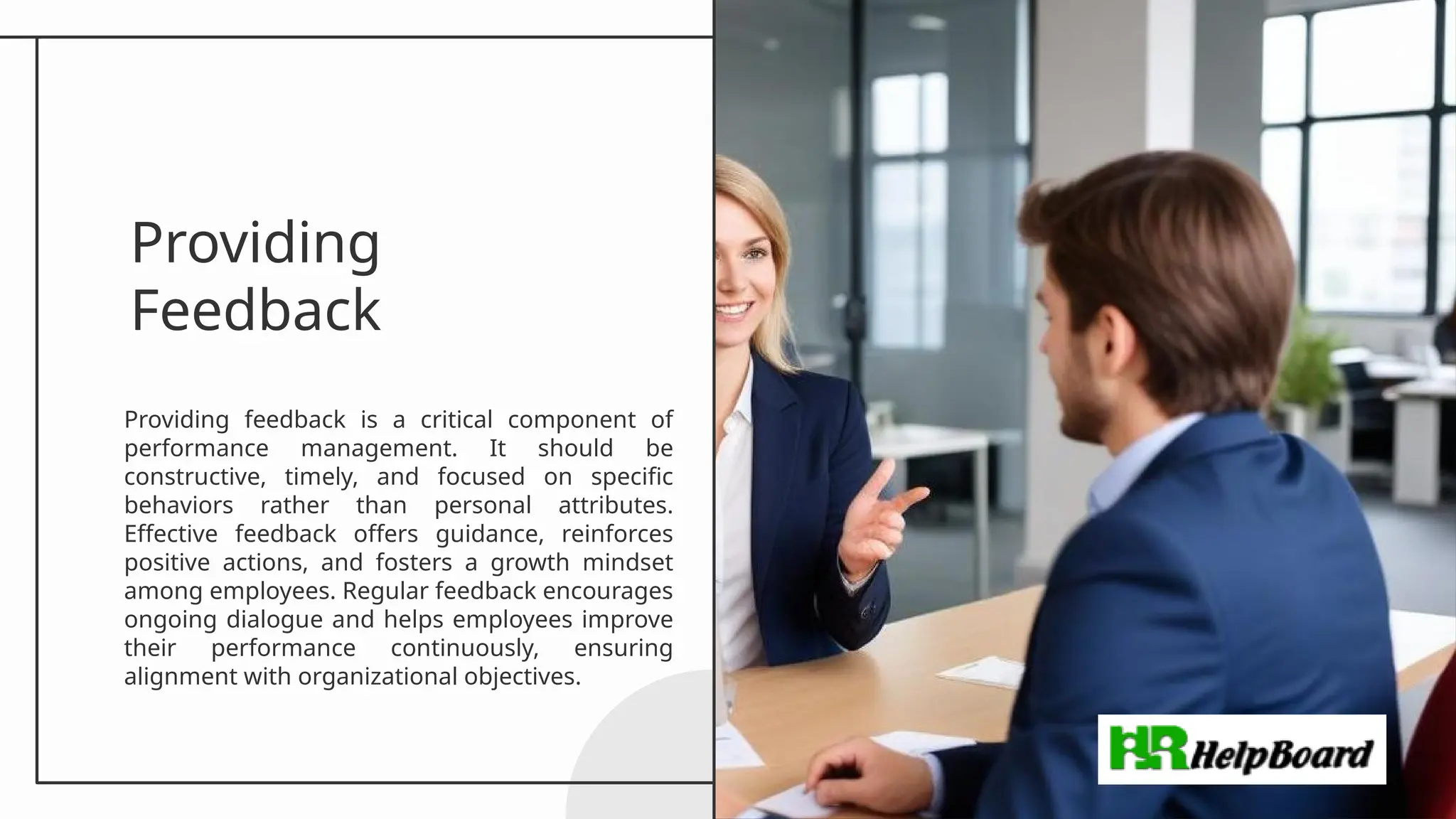
Providing
Feedback
Providing feedback is a critical component of
performance management. It should be
constructive, timely, and focused on specific
behaviors rather than personal attributes.
Effective feedback offers guidance, reinforces
positive actions, and fosters a growth mindset
among employees. Regular feedback encourages
ongoing dialogue and helps employees improve
their performance continuously, ensuring
alignment with organizational objectives.
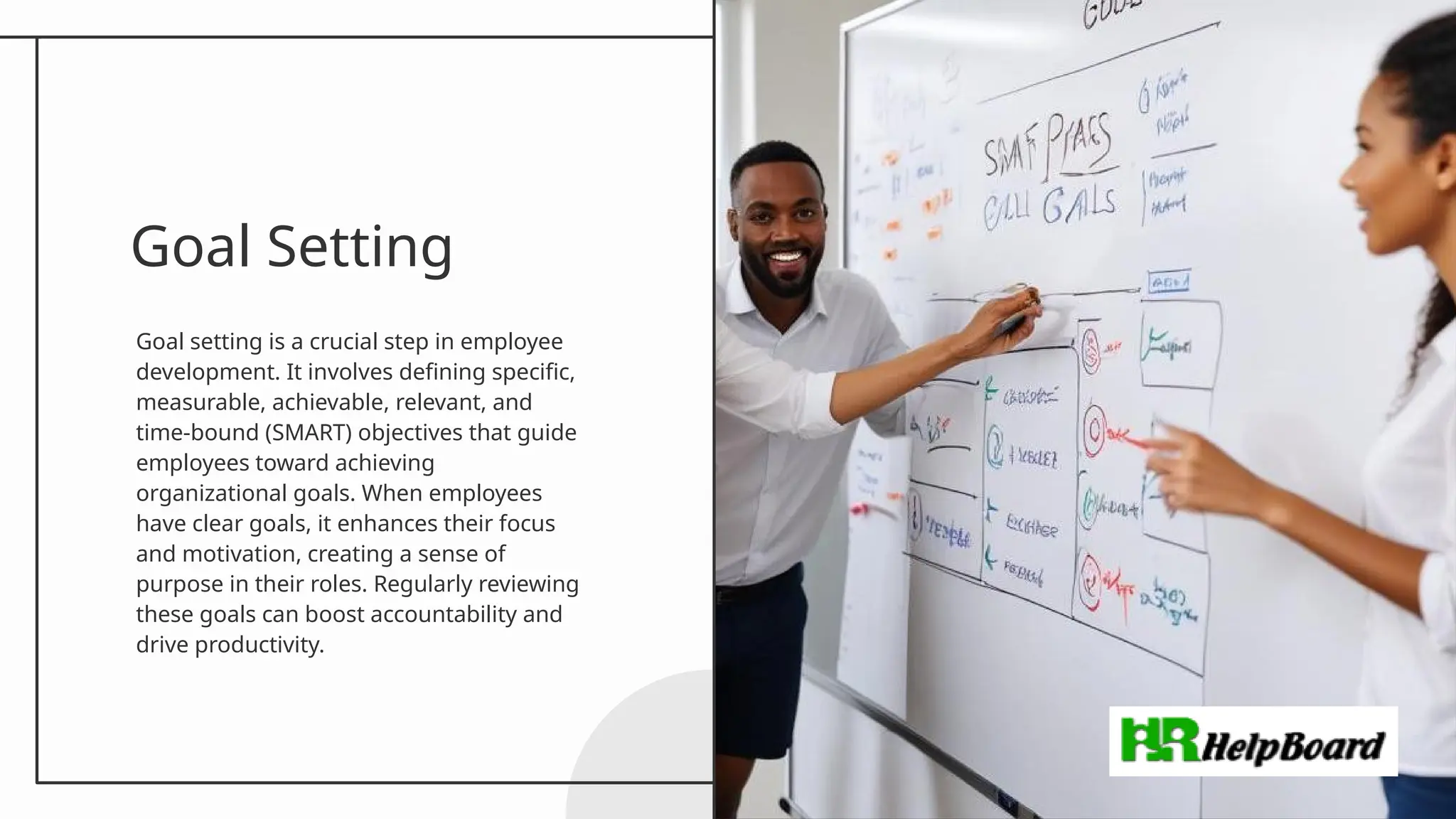
Goal Setting
Goal setting is a crucial step in employee
development. It involves defining specific,
measurable, achievable, relevant, and
time-bound (SMART) objectives that guide
employees toward achieving
organizational goals. When employees
have clear goals, it enhances their focus
and motivation, creating a sense of
purpose in their roles. Regularly reviewing
these goals can boost accountability and
drive productivity.
Regular Reviews
Regular performance reviews provide opportunities for assessing progress, recognizing
achievements, and adjusting goals as necessary. These reviews should be
constructive and focus on both strengths and areas for improvement. Conducting
regular reviews fosters open communication, builds stronger relationships between
managers and employees, and ensures that development needs are addressed
promptly, contributing to professional growth.
Development Plans
Development plans are personalized roadmaps designed to support employees' growth
within the organization. These plans should include targeted training, skill
development, mentorship opportunities, and timelines for achieving career
milestones. By investing in employee development, organizations can enhance
retention, promote internal mobility, and cultivate a motivated workforce ready to
take on new challenges.
Thank you!
• Do you have any questions?
• info@hrhelpboard.com
• +919899990261
• www.hrhelpboard.com
CREDITS: This presentation template was created by Slidesgo, and includes
icons, infographics & images by Freepik
Thank you!
Do you have any questions?

Performance Management Meaning , What is Performance Management

  • 1.
    Performance Management A ContinuousProcess for Organizational Success
  • 2.
    Introduction This presentation exploresthe key aspects of performance management, emphasizing its importance in aligning employee goals with organizational objectives and enhancing overall productivity.
  • 3.
    Setting Clear Expectations Settingclear expectations is essential for effective performance management. This involves outlining specific roles, responsibilities, and objectives for employees, ensuring they understand what is expected of them. Clear expectations provide a framework for accountability and help employees align their contributions with organizational goals.
  • 4.
    Monitoring Progress Monitoring progressinvolves tracking employee performance regularly to ensure alignment with set expectations. This includes checking in on goal achievement, offering support, and using metrics to evaluate performance. Consistent monitoring helps identify any challenges early on, allowing for timely interventions to enhance productivity and effectiveness.
  • 5.
    Providing Feedback Providing feedback isa critical component of performance management. It should be constructive, timely, and focused on specific behaviors rather than personal attributes. Effective feedback offers guidance, reinforces positive actions, and fosters a growth mindset among employees. Regular feedback encourages ongoing dialogue and helps employees improve their performance continuously, ensuring alignment with organizational objectives.
  • 6.
    Goal Setting Goal settingis a crucial step in employee development. It involves defining specific, measurable, achievable, relevant, and time-bound (SMART) objectives that guide employees toward achieving organizational goals. When employees have clear goals, it enhances their focus and motivation, creating a sense of purpose in their roles. Regularly reviewing these goals can boost accountability and drive productivity.
  • 7.
    Regular Reviews Regular performancereviews provide opportunities for assessing progress, recognizing achievements, and adjusting goals as necessary. These reviews should be constructive and focus on both strengths and areas for improvement. Conducting regular reviews fosters open communication, builds stronger relationships between managers and employees, and ensures that development needs are addressed promptly, contributing to professional growth.
  • 8.
    Development Plans Development plansare personalized roadmaps designed to support employees' growth within the organization. These plans should include targeted training, skill development, mentorship opportunities, and timelines for achieving career milestones. By investing in employee development, organizations can enhance retention, promote internal mobility, and cultivate a motivated workforce ready to take on new challenges.
  • 9.
    Thank you! • Doyou have any questions? • info@hrhelpboard.com • +919899990261 • www.hrhelpboard.com
  • 10.
    CREDITS: This presentationtemplate was created by Slidesgo, and includes icons, infographics & images by Freepik Thank you! Do you have any questions?