Planning for work experience Using information competently
Objectives Have basic information about the company my work experience placement is with Know how to get to my placement Understand the value of information to my company/job Be aware of the sensitivity of sharing information  Know where to go to find out more about careers/jobs
What questions will we answer? What information do I need before I start? What sort of information will I deal with when at work? Sharing my work experiences? Where should I go to find out more about jobs and careers?
What information do I need before I start? Who am I working for? What should I wear? What time will I be expected to work? Where am I going? How will I get there?
Who am I working for? General details company name location (Where are they? Do they have a main office?) contact name and telephone number Business type Public: school; council; library; museum; hospital; police Private: shop; mechanic’s garage; restaurant; solicitor; electrician Maybe the company has its own website?  Check  www.yell.com
What should I wear? Business environment and job role will dictate attire Where will you be working? Shop Office Sports centre School What will you be doing? Physical work Sport Fixing cars Fitting carpets Clerical
What time will I be expected to work? Different businesses have different working hours 9am to 5pm is, generally, normal working hours Businesses have to meet the needs of clients Teachers Nurses Mechanic
Where am I going and how will I get there? Plan your journey Bus/train/walk? Time your potential journey, allowing for traffic/delays Do a trial run Use  http://www.tfl.gov.uk/  and  http://maps.google.co.uk/  to help you plan
What sort of information will I deal with when at work? Client information Company information General, task-related information
Client information The Data Protection Act dictates that data/information is treated with confidentiality.  Telephone numbers Addresses DoBs Financial information (accounts numbers etc.)  Sensitive, personal information You must not share client details with other people outside of the organisation, and sometimes with others working with you
Client information: Examples Working in a school, you are trusted with confidential information about young people Working for a decorator, you might have information about the client’s valuable possessions in their home
Company information You may learn sensitive details about the company you work for Clients Financial/accounts information Employee information Profits
General, task-related information  Information is vital to effective running of a business People rely on information to fulfil their role/responsibilities The sharing of relevant information is essential for a company to be successful Make sure you pass on information when appropriate If you are not sure… ask!
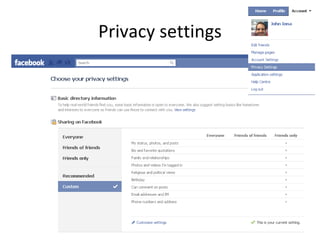
Sharing my work experiences? We like to share our day-to-day experiences, frustrations, successes with friends and family Think about how, in what way, you do this Many of us share information on the internet, through Facebook etc. Think about who can read the information you share online…  Do you want people you work with to read your status updates?
Privacy settings
Recording your success Recording your success will help you reflect on what you have learnt and achieved It will also help you when you come to begin writing your CV How can you do this? Reflective journal Diary Blog Facebook updates
Where should I go to find out more about jobs and careers? Library – careers sections School – teachers, careers advisor Internet – websites Connexions – careers service and advisors
Exploring careers and jobs What do I need to do to get a job as a … nurse/fireman/lawyer etc. Look at the career paths and plan what you need to achieve Do I need to get specific GCSEs? Is there a particular college course I should do? Do I need to go to university? Should I get an apprenticeship?
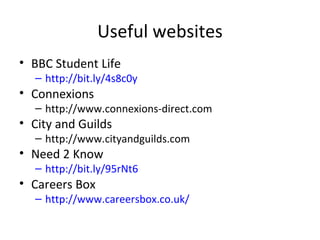
Useful websites BBC Student Life http://bit.ly/4s8c0y   Connexions http://www.connexions-direct.com City and Guilds http://www.cityandguilds.com Need 2 Know  http://bit.ly/95rNt6 Careers Box http://www.careersbox.co.uk/

Planning for work experience

  • 1.
    Planning for workexperience Using information competently
  • 2.
    Objectives Have basicinformation about the company my work experience placement is with Know how to get to my placement Understand the value of information to my company/job Be aware of the sensitivity of sharing information Know where to go to find out more about careers/jobs
  • 3.
    What questions willwe answer? What information do I need before I start? What sort of information will I deal with when at work? Sharing my work experiences? Where should I go to find out more about jobs and careers?
  • 4.
    What information doI need before I start? Who am I working for? What should I wear? What time will I be expected to work? Where am I going? How will I get there?
  • 5.
    Who am Iworking for? General details company name location (Where are they? Do they have a main office?) contact name and telephone number Business type Public: school; council; library; museum; hospital; police Private: shop; mechanic’s garage; restaurant; solicitor; electrician Maybe the company has its own website? Check www.yell.com
  • 6.
    What should Iwear? Business environment and job role will dictate attire Where will you be working? Shop Office Sports centre School What will you be doing? Physical work Sport Fixing cars Fitting carpets Clerical
  • 7.
    What time willI be expected to work? Different businesses have different working hours 9am to 5pm is, generally, normal working hours Businesses have to meet the needs of clients Teachers Nurses Mechanic
  • 8.
    Where am Igoing and how will I get there? Plan your journey Bus/train/walk? Time your potential journey, allowing for traffic/delays Do a trial run Use http://www.tfl.gov.uk/ and http://maps.google.co.uk/ to help you plan
  • 9.
    What sort ofinformation will I deal with when at work? Client information Company information General, task-related information
  • 10.
    Client information TheData Protection Act dictates that data/information is treated with confidentiality. Telephone numbers Addresses DoBs Financial information (accounts numbers etc.) Sensitive, personal information You must not share client details with other people outside of the organisation, and sometimes with others working with you
  • 11.
    Client information: ExamplesWorking in a school, you are trusted with confidential information about young people Working for a decorator, you might have information about the client’s valuable possessions in their home
  • 12.
    Company information Youmay learn sensitive details about the company you work for Clients Financial/accounts information Employee information Profits
  • 13.
    General, task-related information Information is vital to effective running of a business People rely on information to fulfil their role/responsibilities The sharing of relevant information is essential for a company to be successful Make sure you pass on information when appropriate If you are not sure… ask!
  • 14.
    Sharing my workexperiences? We like to share our day-to-day experiences, frustrations, successes with friends and family Think about how, in what way, you do this Many of us share information on the internet, through Facebook etc. Think about who can read the information you share online… Do you want people you work with to read your status updates?
  • 15.
  • 16.
    Recording your successRecording your success will help you reflect on what you have learnt and achieved It will also help you when you come to begin writing your CV How can you do this? Reflective journal Diary Blog Facebook updates
  • 17.
    Where should Igo to find out more about jobs and careers? Library – careers sections School – teachers, careers advisor Internet – websites Connexions – careers service and advisors
  • 18.
    Exploring careers andjobs What do I need to do to get a job as a … nurse/fireman/lawyer etc. Look at the career paths and plan what you need to achieve Do I need to get specific GCSEs? Is there a particular college course I should do? Do I need to go to university? Should I get an apprenticeship?
  • 19.
    Useful websites BBCStudent Life http://bit.ly/4s8c0y Connexions http://www.connexions-direct.com City and Guilds http://www.cityandguilds.com Need 2 Know http://bit.ly/95rNt6 Careers Box http://www.careersbox.co.uk/