Transportation	Plan	Update
Transportation Goals
Air	Quality	‐Transportation	Conformity
Transportation conformity rules require a conformity determination with 
every major update or change to the Long Range Transportation Plan.  
Conformity provides the link between the Regional Transportation Plan 
and the State Implementation Plan (SIP). SIPs establish control strategies 
and budgets for each pollutant and those budgets are then used to 
demonstrate conformity.
The regional emissions analyses indicate that the 2040 Plan demonstrates 
conformity to the PM and 8‐hour ozone standards.
0
50
100
150
200
250
300
350
400
450
2015
Budget
2020 2022
Budget
2022 2030 2040
404.4
238.2
261.3
215.9 190.6 193.4
Tons/year
Analysis Year
PM 2.5
0
2,000
4,000
6,000
8,000
10,000
12,000
14,000
2015
Budget
2020 2022
Budget
2022 2030 2040
12,865.5
6,284.6 6,270.6
5,246.3
3,662.6
3,251.4
Tons/year
Analysis Year
NOX
Fiscal	Constraint	Analysis
For each mode, the costs of the 2016 through 2040 
plan projects are balanced against projected revenues 
and, following the FAST Act requirements, are 
expressed in year of expenditure dollars.
The fiscal constraints for each transportation mode are 
summarized below in millions of dollars.
Safety	and	Congestion	
Conditions
Transportation	System	and	
Congestion	Analysis
Alternative	Transportation	Modes
Community	Impact	Assessment
Definition	of	Environmental	Justice
“The	fair	treatment	and	meaningful	involvement	of	all	people	
regardless	of	race,	color,	national	origin,	or	income	with	
respect	to	the	development,	implementation	and	enforcement	
of	environmental	laws,	regulations	and	policies.	Fair	
treatments	means	that	no	group	of	people,	including	racial,	
ethnic	or	socio‐economic	group	should	bear	a	
disproportionate	share	of	the	negative	environmental	
consequences	resulting	from	industrial,	municipal,	and	
commercial	operations	or	the	execution	of	federal,	state,	local	
and	tribal	programs	and	policies.”	(U.S.	EPA	Office	of	
Environmental	Justice)
MVRPC’s	Approach
The	methods	adopted	by	MVRPC	to	fulfill	EJ	requirements
follow	guidelines	by	the	Ohio	Department	of	Transportation	
(ODOT)	and	the	recommendations	of	the	Ohio	EJ	Task	Force.	
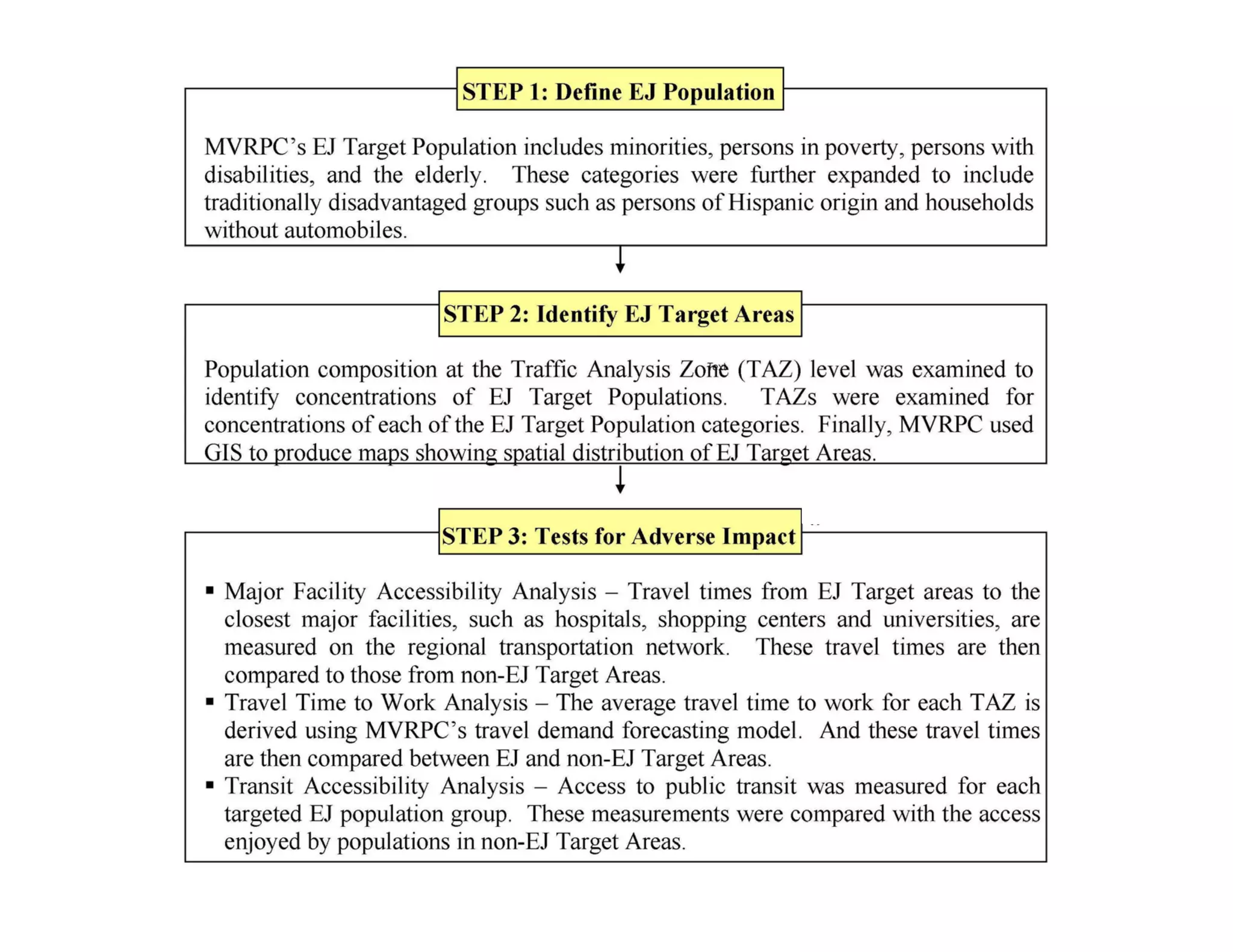
The	approach	adopts	a	three	step	process	to	measure	the	
impact	of	development	patterns	and	the	transportation	
system	on	disadvantaged	populations.
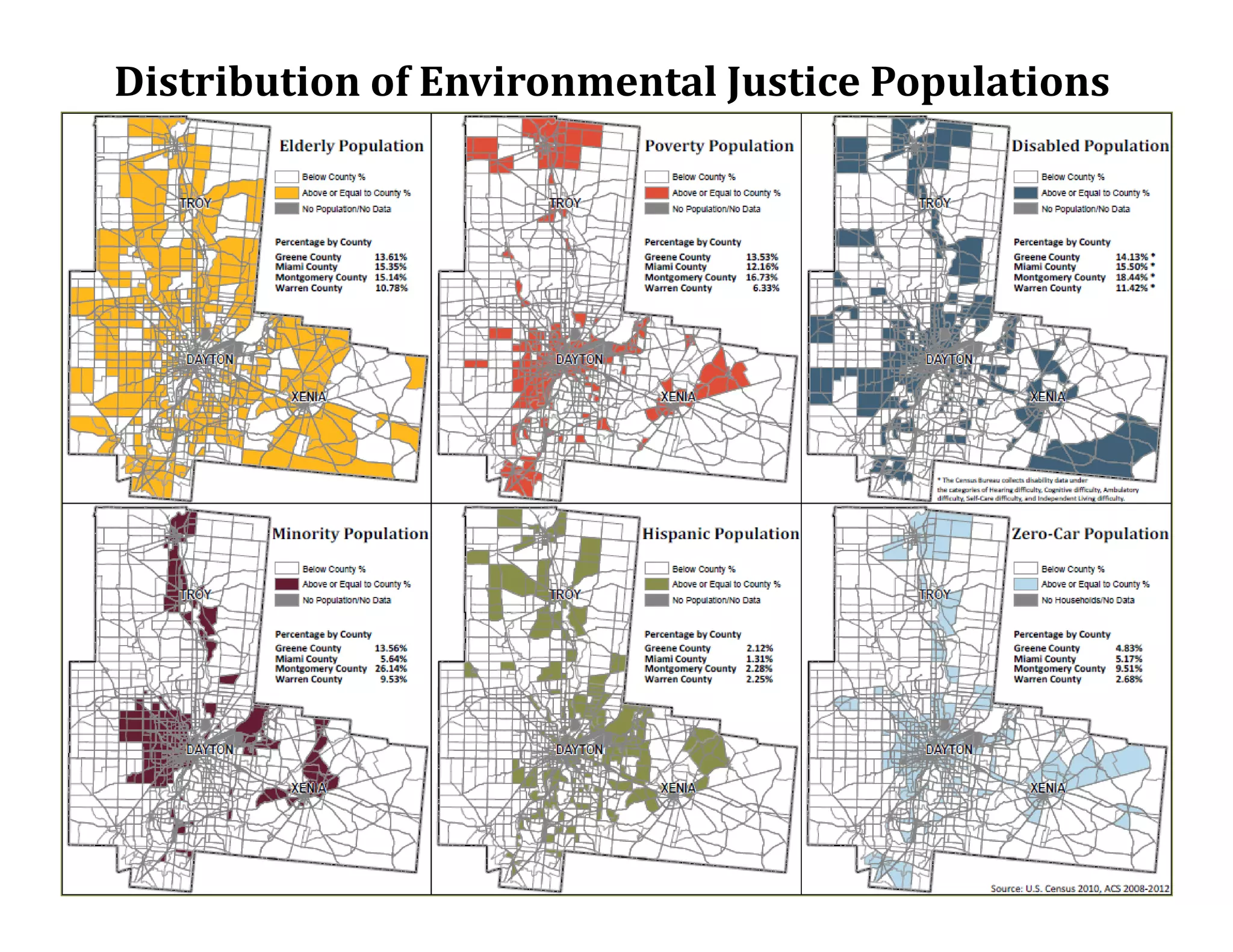
Distribution	of	Environmental	Justice	Populations
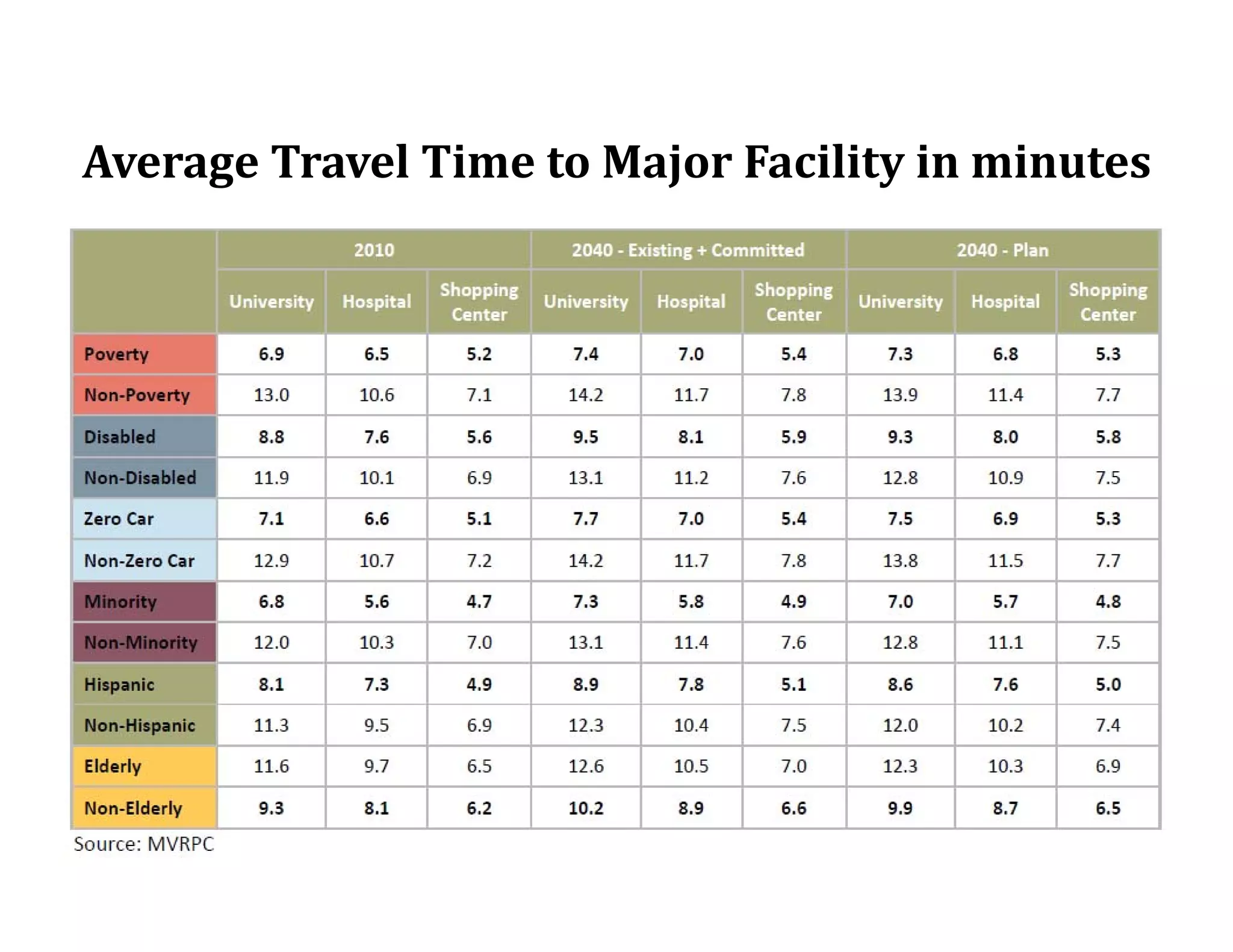
Average	Travel	Time	to	Major	Facility	in	minutes
Average	Travel	Time	to	Work	in	minutes
Environmental	Mitigation
Analysis
Environmental	Mitigation	Analysis
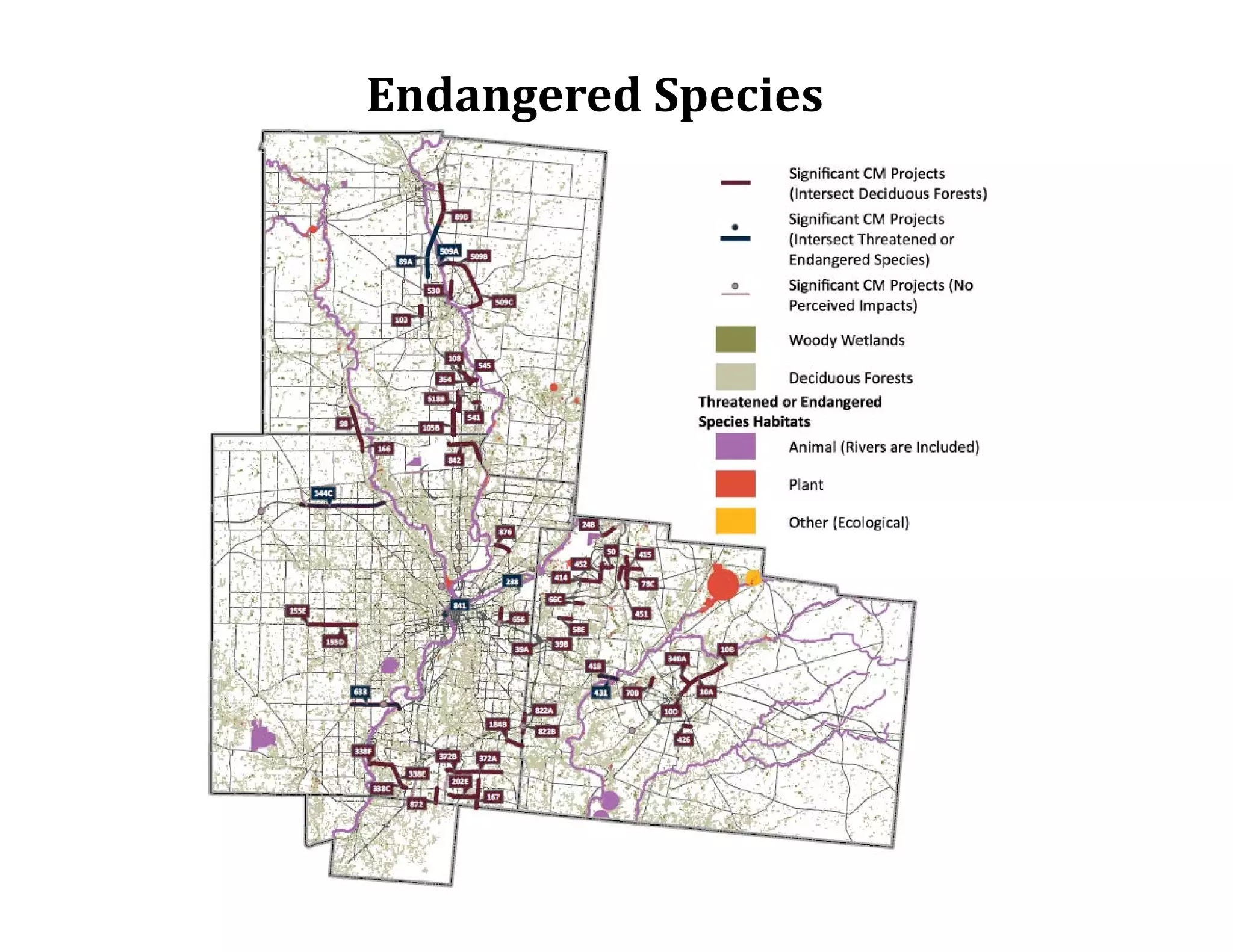
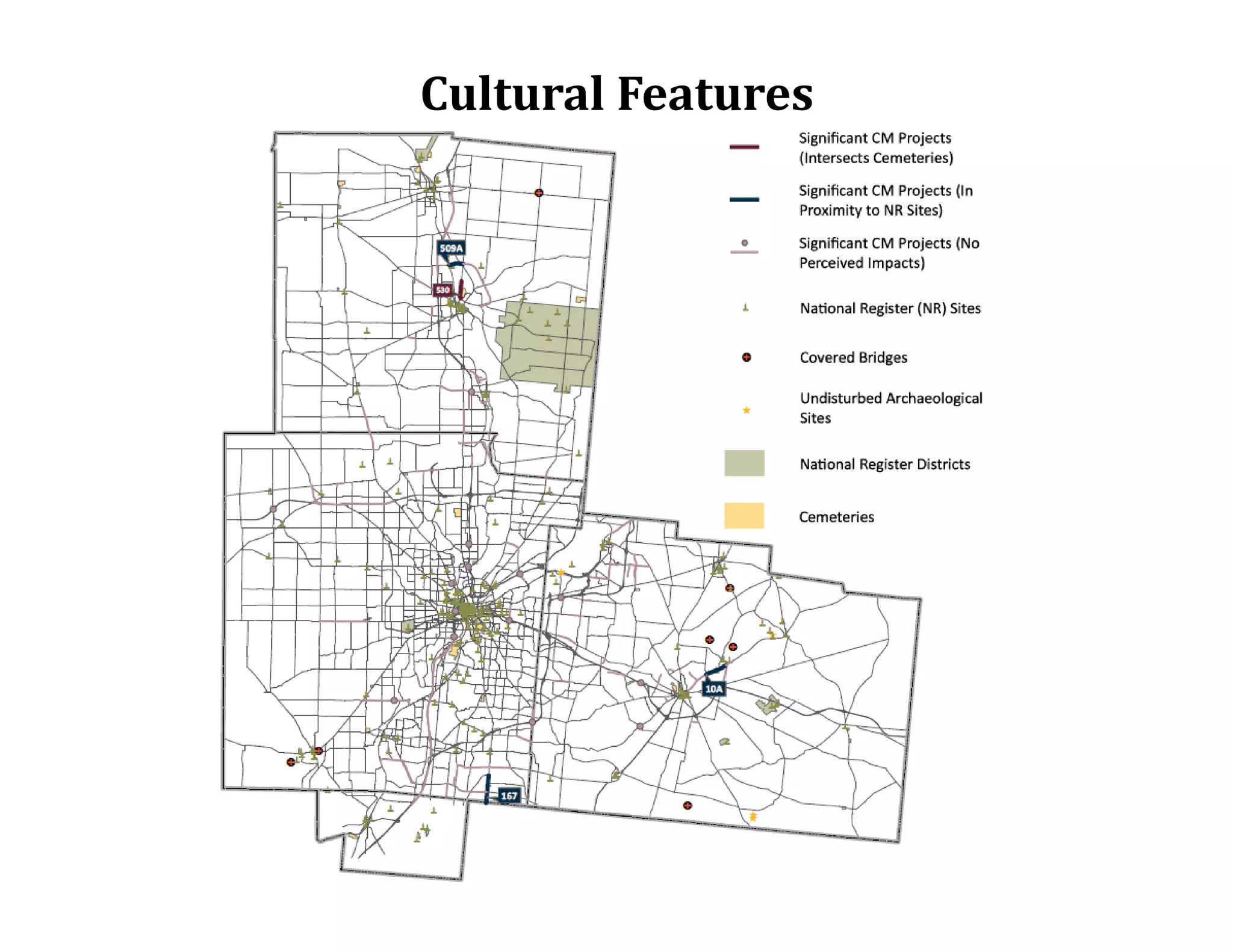
The Environmental Mitigation Analysis identifies the potential impacts of 
transportation projects proposed in the 2040 Long Range Transportation Plan 
(LRTP) on the Region’s environmental resources. 
The analysis began by categorizing the projects based on their significance for 
potential impacts on natural resources.
Significant Projects: road widening, new lanes, new interchanges, etc. 
Not Significant Projects: new turn lanes, traffic signals, realignments, etc.
Significant projects were analyzed for potential impacts and Not Significant ones 
were not. Significant projects that are included in the Transportation 
Improvement Program (TIP) and have environmental impact documentation 
were also excluded from this analysis as their actual impacts are already 
documented. 
Projects categorized as Significant and without environmental documentation on the 
TIP were mapped with various environmental resources. Projects that intersected 
these natural resources were identified as having the potential for environmental 
impact. 
Wetlands	and	Scenic	Rivers
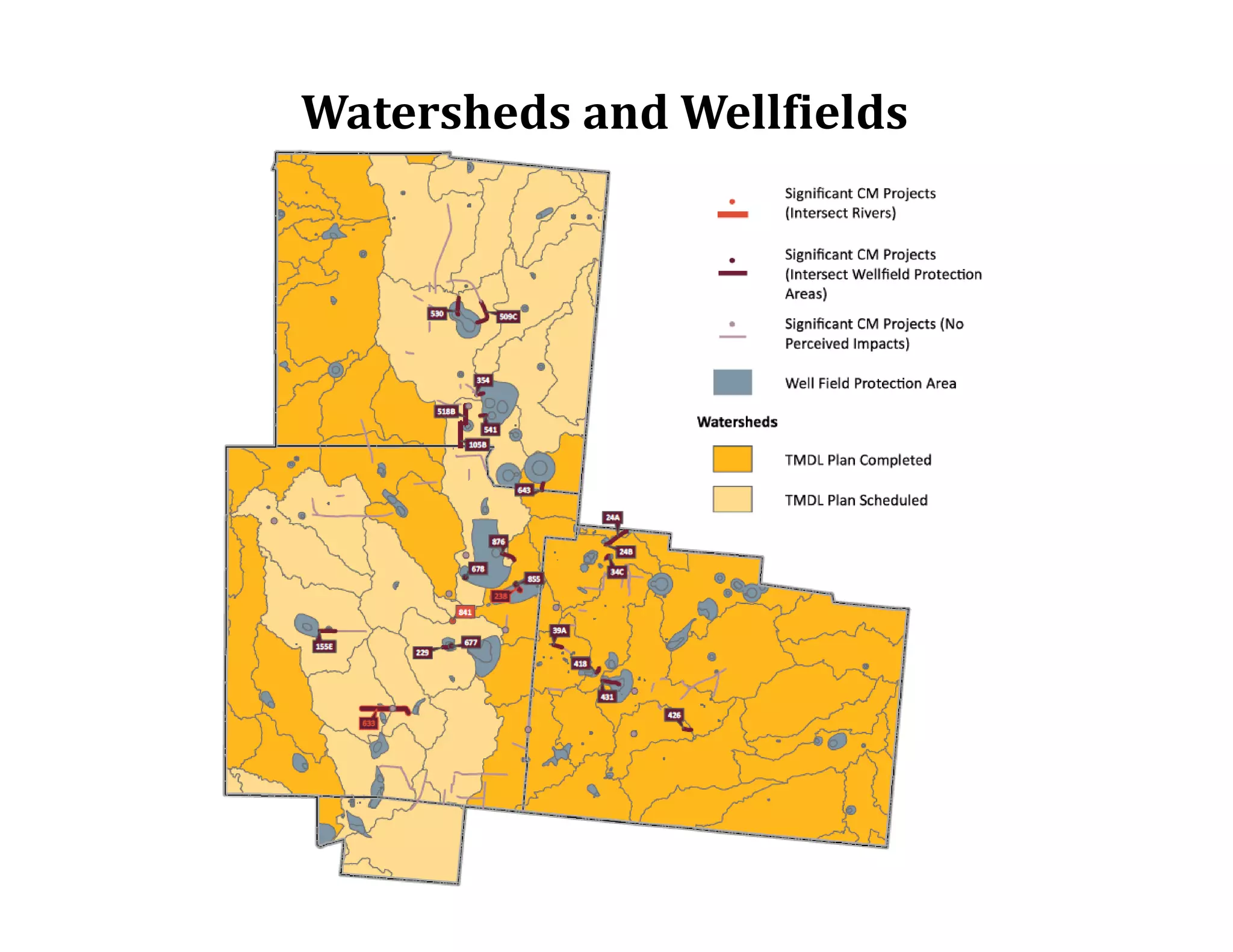
Watersheds	and	Wellfields
Endangered	Species
Cultural	Features
Parklands
Superfund	Locations
Environmental Analysis	Classification
Environmental Analysis	Results

Plan2040 Update - April Open House pres