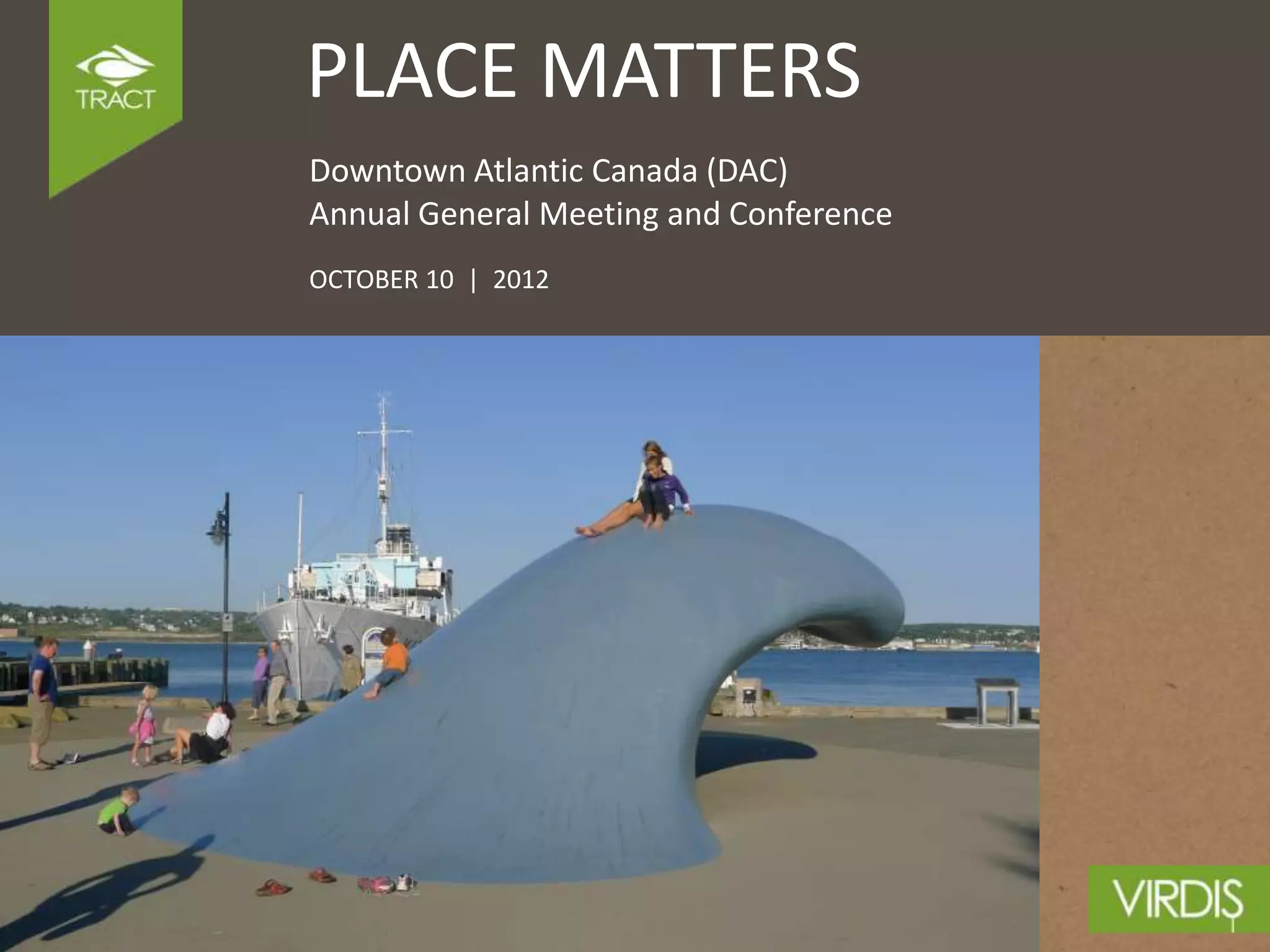


PLACE MATTERS
Downtown Atlantic Canada (DAC)
Annual General Meeting and Conference
OCTOBER 10 | 2012
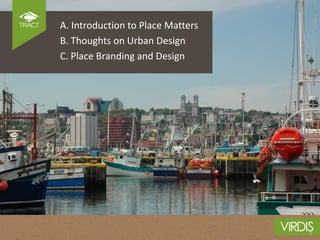
A. Introduction to Place Matters
B. Thoughts on Urban Design
C. Place Branding and Design
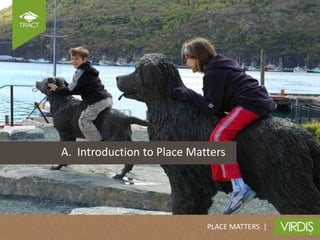
A. Introduction to Place Matters


                            PLACE MATTERS |
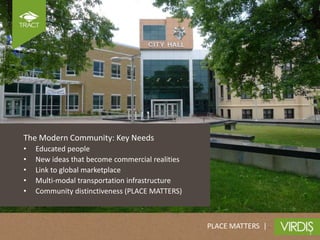
The Modern Community: Key Needs
•   Educated people
•   New ideas that become commercial realities
•   Link to global marketplace
•   Multi-modal transportation infrastructure
•   Community distinctiveness (PLACE MATTERS)


                                                 PLACE MATTERS |
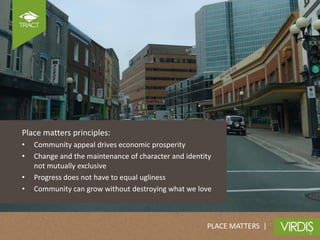
Place matters principles:
•   Community appeal drives economic prosperity
•   Change and the maintenance of character and identity
    not mutually exclusive
•   Progress does not have to equal ugliness
•   Community can grow without destroying what we love


                                                      PLACE MATTERS |
Place matters research:
KNIGHT FOUNDATION (2011)
Surveyed 46,000 people in 26 cities in U.S.


Determined:
   – WHY PEOPLE LOVE WHERE THEY LIVE.
   – WHAT ATTRACTS AND KEEPS PEOPLE.


                                              PLACE MATTERS |
Place matters findings:
THREE KEY NEEDS

1. SOCIAL OFFERINGS - opportunities for social interaction
2. AESTHETICS - natural and created beauty of a place.
3. PERCEIVED OPENNESS TO EVERYONE - the sense of
   welcomeness to a broad range of demographics in
   the community.


                                      PLACE MATTERS |
PLACE MATTERS: Economic Benefits

Highest level of attachment = highest rate of GDP and
stronger economics.

The study’s empirically based data linked quality of life
“place wellness” to GDP, or economic performance.


                                            PLACE MATTERS |
PLACE MATTERS DEFINED:

Unique qualities and characteristics - visual,
cultural, social, environmental.

Distinguishes communities, makes our physical
surroundings worth caring about.


                                             PLACE MATTERS |
PLACE MATTERS so we should,
• Focus on our identity to add economic and social value.
• Create distinct uplifting and memorable environments.
• Foster belonging and stewardship by residents.
• Look beyond density to values, customs, other
  characteristics that make place matter.
• Note that losing community distinctiveness has social
  and economic consequences.


                                         PLACE MATTERS |
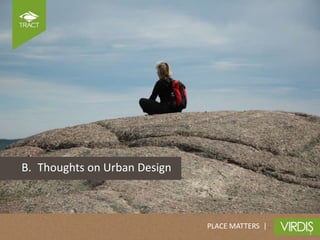
B. Thoughts on Urban Design


                              PLACE MATTERS |
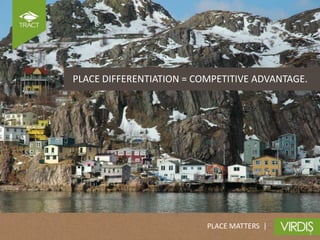
PLACE DIFFERENTIATION = COMPETITIVE ADVANTAGE.


                          PLACE MATTERS |
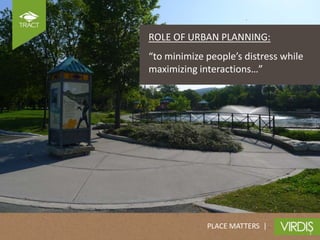
ROLE OF URBAN PLANNING:
“to minimize people’s distress while
maximizing interactions…”


             PLACE MATTERS |
Best first steps to Successful Urban Planning:

1. Identify, map and protect those assets that support
   community distinctiveness.
2. Build and maintain an integrated system of parks,
   trails and urban spaces (squares, streets, etc.)
3. Put an Open Space Management Plan in place to
   protect the resource.


                                          PLACE MATTERS |
Benefits of Parks, Trails and Urban Spaces:
•   Strengthens place brand
•   Appreciating asset
•   Supports population growth
•   Encourages housing starts
•   Promotes new business start-ups
•   Creates increased density
•   Enhances local municipal tax base
•   Protects environment and finite resources
•   Encourages social interaction
•   Creates beauty

                                         PLACE MATTERS |
Urban Research Findings (Geoffrey West):
   1. When people come together they are more likely
      to exchange ideas and are more productive.
   2. As the City grows things accelerate, becoming more
      productive and more innovative.
   3. Well designed urban spaces support random
      encounters and idea generation.
   4. Each City has local deviations that speak to
      community distinctiveness.


                                       PLACE MATTERS |
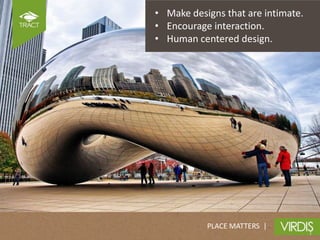
• Make designs that are intimate.
• Encourage interaction.
• Human centered design.


           PLACE MATTERS |
Local Deviations:
1. Deviations exist over time, they are not random
   or a fluke.
2. City deviations reveal hidden correlations of
   urban life.
3. Identifying these local deviations can influence
   urban design and create distinct authentic places.


                                         PLACE MATTERS |
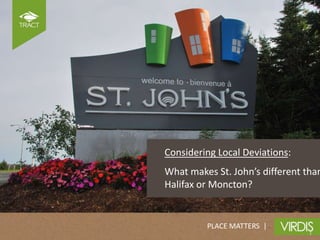
Considering Local Deviations:
What makes St. John’s different than
Halifax or Moncton?


         PLACE MATTERS |
Urban Design and Unlocking the Deviations:
1. Community engagement – identify key needs and
   perspectives on distinctiveness.
2. Your Downtown as a distinct differentiated place –
   specifically define.
3. Downtown Vision – informed by 1 and 2.


                                         PLACE MATTERS |
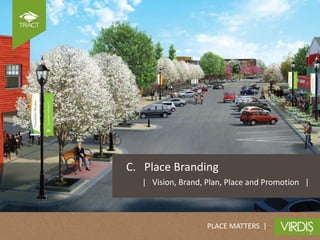
C. Place Branding
  | Vision, Brand, Plan, Place and Promotion |


                   PLACE MATTERS |
Vision:
•   Downtown Needs
•   Prespectives on Distinctiveness


            PLACE MATTERS |
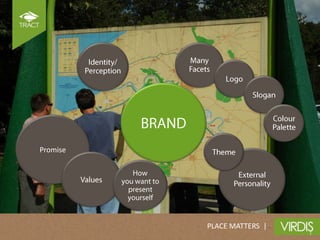
Promise


          PLACE MATTERS |
Plan


•   Identify the distinct attributes
•   Form a story / narrative around those attributes that resonates
•   Identify targets for story telling (who are you talking to?)


                                                  PLACE MATTERS |
Place
• Place equals experience.
• Good urban design supports
  the experience.


   PLACE MATTERS |
Promotion
Strategy to disperse your story. Identify communication elements
and vehicles that best tell that story of distinctiveness.


                                     PLACE MATTERS |
A Recap:
1. Place Matters: increases GDP and impacts business
   relocation. Builds on distinctiveness.
2. Trails and Parks System and Open Space
   Management Plan key to success.
3. Urban Design considerations: intimate, interactive,
   beautiful and fun.
4. Place distinctiveness differentiates and informs
   Place Branding and Design.


                                         PLACE MATTERS |
PLACE MATTERS
Downtown Atlantic Canada (DAC)
Annual General Meeting and Conference
OCTOBER 10 | 2012

Place Making- Place Matters

  • 1.
    PLACE MATTERS Downtown AtlanticCanada (DAC) Annual General Meeting and Conference OCTOBER 10 | 2012
  • 2.
    A. Introduction toPlace Matters B. Thoughts on Urban Design C. Place Branding and Design
  • 3.
    A. Introduction toPlace Matters PLACE MATTERS |
  • 4.
    The Modern Community:Key Needs • Educated people • New ideas that become commercial realities • Link to global marketplace • Multi-modal transportation infrastructure • Community distinctiveness (PLACE MATTERS) PLACE MATTERS |
  • 5.
    Place matters principles: • Community appeal drives economic prosperity • Change and the maintenance of character and identity not mutually exclusive • Progress does not have to equal ugliness • Community can grow without destroying what we love PLACE MATTERS |
  • 6.
    Place matters research: KNIGHTFOUNDATION (2011) Surveyed 46,000 people in 26 cities in U.S. Determined: – WHY PEOPLE LOVE WHERE THEY LIVE. – WHAT ATTRACTS AND KEEPS PEOPLE. PLACE MATTERS |
  • 7.
    Place matters findings: THREEKEY NEEDS 1. SOCIAL OFFERINGS - opportunities for social interaction 2. AESTHETICS - natural and created beauty of a place. 3. PERCEIVED OPENNESS TO EVERYONE - the sense of welcomeness to a broad range of demographics in the community. PLACE MATTERS |
  • 8.
    PLACE MATTERS: EconomicBenefits Highest level of attachment = highest rate of GDP and stronger economics. The study’s empirically based data linked quality of life “place wellness” to GDP, or economic performance. PLACE MATTERS |
  • 9.
    PLACE MATTERS DEFINED: Uniquequalities and characteristics - visual, cultural, social, environmental. Distinguishes communities, makes our physical surroundings worth caring about. PLACE MATTERS |
  • 10.
    PLACE MATTERS sowe should, • Focus on our identity to add economic and social value. • Create distinct uplifting and memorable environments. • Foster belonging and stewardship by residents. • Look beyond density to values, customs, other characteristics that make place matter. • Note that losing community distinctiveness has social and economic consequences. PLACE MATTERS |
  • 11.
    B. Thoughts onUrban Design PLACE MATTERS |
  • 12.
    PLACE DIFFERENTIATION =COMPETITIVE ADVANTAGE. PLACE MATTERS |
  • 13.
    ROLE OF URBANPLANNING: “to minimize people’s distress while maximizing interactions…” PLACE MATTERS |
  • 14.
    Best first stepsto Successful Urban Planning: 1. Identify, map and protect those assets that support community distinctiveness. 2. Build and maintain an integrated system of parks, trails and urban spaces (squares, streets, etc.) 3. Put an Open Space Management Plan in place to protect the resource. PLACE MATTERS |
  • 15.
    Benefits of Parks,Trails and Urban Spaces: • Strengthens place brand • Appreciating asset • Supports population growth • Encourages housing starts • Promotes new business start-ups • Creates increased density • Enhances local municipal tax base • Protects environment and finite resources • Encourages social interaction • Creates beauty PLACE MATTERS |
  • 16.
    Urban Research Findings(Geoffrey West): 1. When people come together they are more likely to exchange ideas and are more productive. 2. As the City grows things accelerate, becoming more productive and more innovative. 3. Well designed urban spaces support random encounters and idea generation. 4. Each City has local deviations that speak to community distinctiveness. PLACE MATTERS |
  • 17.
    • Make designsthat are intimate. • Encourage interaction. • Human centered design. PLACE MATTERS |
  • 18.
    Local Deviations: 1. Deviationsexist over time, they are not random or a fluke. 2. City deviations reveal hidden correlations of urban life. 3. Identifying these local deviations can influence urban design and create distinct authentic places. PLACE MATTERS |
  • 19.
    Considering Local Deviations: Whatmakes St. John’s different than Halifax or Moncton? PLACE MATTERS |
  • 20.
    Urban Design andUnlocking the Deviations: 1. Community engagement – identify key needs and perspectives on distinctiveness. 2. Your Downtown as a distinct differentiated place – specifically define. 3. Downtown Vision – informed by 1 and 2. PLACE MATTERS |
  • 21.
    C. Place Branding | Vision, Brand, Plan, Place and Promotion | PLACE MATTERS |
  • 22.
    Vision: • Downtown Needs • Prespectives on Distinctiveness PLACE MATTERS |
  • 23.
    Promise PLACE MATTERS |
  • 24.
    Plan • Identify the distinct attributes • Form a story / narrative around those attributes that resonates • Identify targets for story telling (who are you talking to?) PLACE MATTERS |
  • 25.
    Place • Place equalsexperience. • Good urban design supports the experience. PLACE MATTERS |
  • 26.
    Promotion Strategy to disperseyour story. Identify communication elements and vehicles that best tell that story of distinctiveness. PLACE MATTERS |
  • 27.
    A Recap: 1. PlaceMatters: increases GDP and impacts business relocation. Builds on distinctiveness. 2. Trails and Parks System and Open Space Management Plan key to success. 3. Urban Design considerations: intimate, interactive, beautiful and fun. 4. Place distinctiveness differentiates and informs Place Branding and Design. PLACE MATTERS |
  • 28.
    PLACE MATTERS Downtown AtlanticCanada (DAC) Annual General Meeting and Conference OCTOBER 10 | 2012

Editor's Notes

  • #2 I played around with the individual sizes of words. Not necessary.
  • #3 I played around with the individual sizes of words. Not necessary.