Department of Electronics and Telecommunication
Bhilai Institute of Technology, Bhilai House, Durg, 491001
Pipeline Rift Detector
Chandrakant Sahu
Vaibhav Soni
Shubham Chandravanshi
Supervised by
Mrs. Suchitra Pandey
Assisstant Professor
Project Incharge:
Dr. Atul Dwivedi
Assisstant Professor
Content
• Introduction
• Objectives
• Literature review
• Problems identified
• Proposed Methodology
• Expected results
Introduction
• The aim of this project is to automatically detect
and stop gas leakage in vulnerable premises.
• Gas leakage detection is the process of
identifying hazardous gas leaks by means of
various sensors.
• These sensors usually employ an audible alarm
to alert people when a dangerous gas has been
detected.
Objectives
• Detect gas leakage (like LPG leak, Butane leak,
Methane leak) or any such petroleum based
gaseous substance that can detected using MQ5
sensor.
• Setup an Bluetooth based mechanism and send 3
SMS(3 alert message) to specified mobile (input
inside the Arduino program).
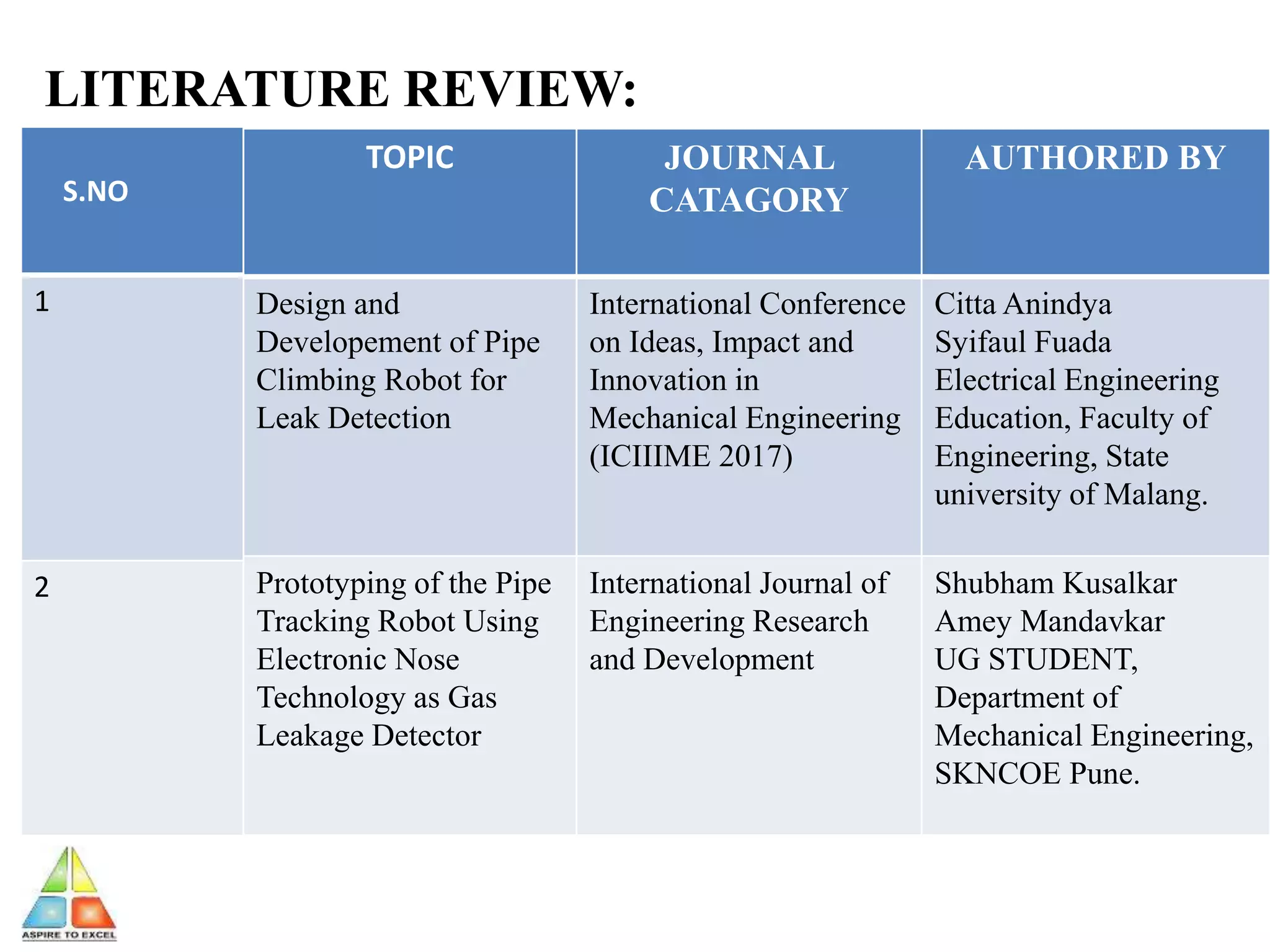
LITERATURE REVIEW:
TOPIC JOURNAL
CATAGORY
AUTHORED BY
Design and
Developement of Pipe
Climbing Robot for
Leak Detection
International Conference
on Ideas, Impact and
Innovation in
Mechanical Engineering
(ICIIIME 2017)
Citta Anindya
Syifaul Fuada
Electrical Engineering
Education, Faculty of
Engineering, State
university of Malang.
Prototyping of the Pipe
Tracking Robot Using
Electronic Nose
Technology as Gas
Leakage Detector
International Journal of
Engineering Research
and Development
Shubham Kusalkar
Amey Mandavkar
UG STUDENT,
Department of
Mechanical Engineering,
SKNCOE Pune.
S.NO
1
2
Oil Pipelines/Water
Pipeline Crawling
Robot for Leakage
Detection/Cleaning of
Pipes
Global Journal of
Researches in
Engineering Robotics
& Nano-Tech Volume
14 Issue 1 Version 1.0
Year 2014
Shyam Lal Sharma,
Abdul Qavi & Kamlesh
Kumari Al Falah School
of Engineering and
Technology, India
Wireless Sensor Node
To Detect Hazardous In
Gas Pipeline
International Journal
of Engineering
Research & Technology
(IJERT)
Prof. Madane Mugdha
R. Assistant Professor,
Department of
Electronics and
Telecommunication,
Dr.Daulatrao Aher
college of Engineering,
Karad Dist-Satara;
Maharashtra, India
An Android Based
Automatic Gas
Detection And
Indication Robot
International Journal
of Computer
Engineering and
Applications, Volume
VIII, Issue I, Oct 14
Ch.Manohar Raju and
N.Sushma Rani
Computer Science and
Engineering, MVGR
College of Engineering,
Vizianagaram, A.P,
INDIA
3
4
5
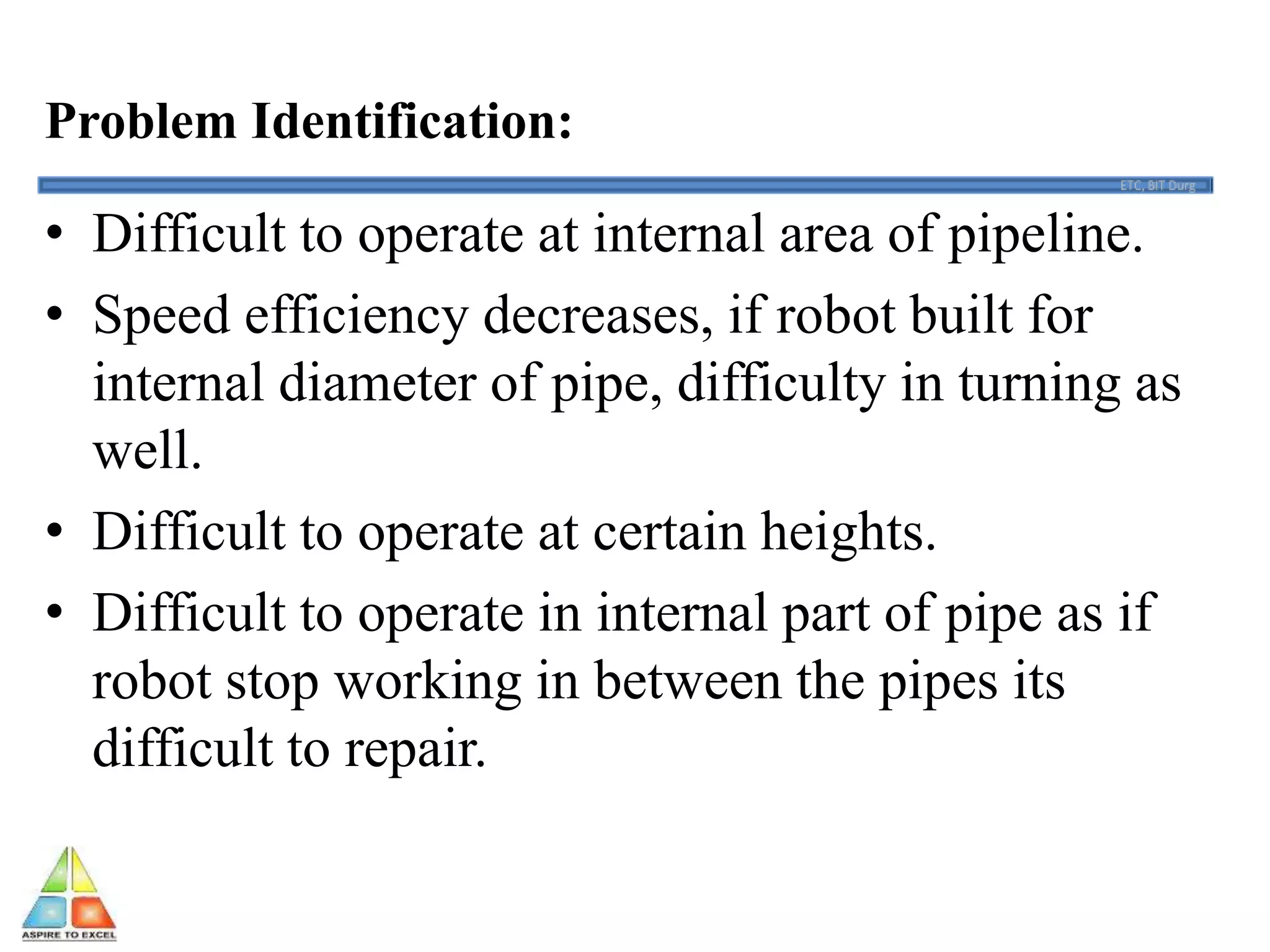
Problem Identification:
• Difficult to operate at internal area of pipeline.
• Speed efficiency decreases, if robot built for
internal diameter of pipe, difficulty in turning as
well.
• Difficult to operate at certain heights.
• Difficult to operate in internal part of pipe as if
robot stop working in between the pipes its
difficult to repair.
Proposed Methodology
1. The input is given from sensor to controller.
2. Controller communicate through Bluetooth to transmit
a message to mobile and mobile give response to
controller which action should perfrom.
3. It displays the result on LCD as well as mobile via
SMS.
4. It alerts the peoples in industry, lab, mill, by starting
buzzer and sending SMS.
5. It give instruction to off the main Gas supply.
Block diagram
Circuit Diagram
Expected Results
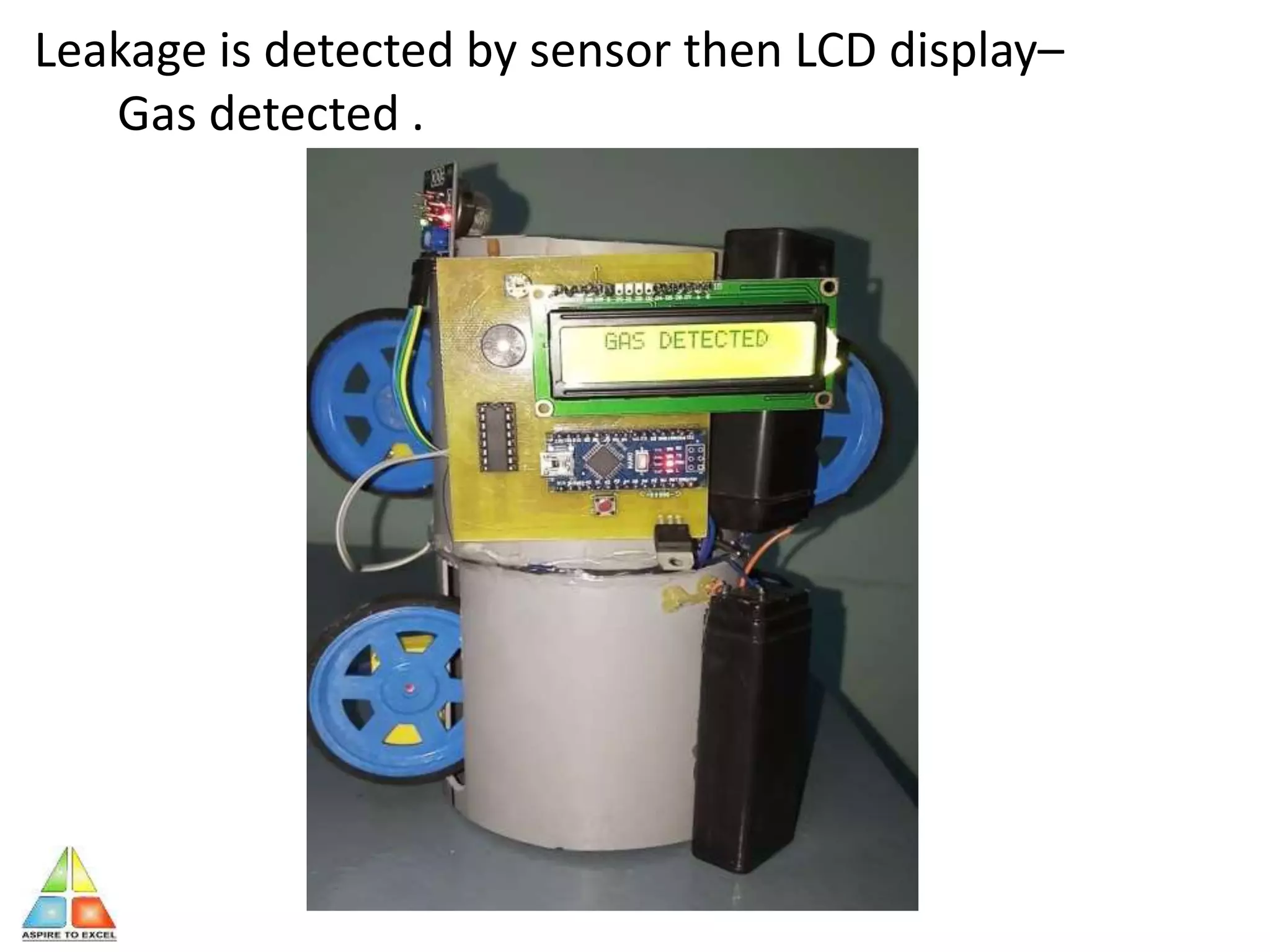
This system has been tested by lighter leak gas
near to sensor, MQ6 gas sensor will detect the
gas leakage and send signal to microcontroller
then microcontroller send an active signal to
other externally connected devices.
LCD display –
Pipe based LPG gas detector..
Leakage is detected by sensor then LCD display–
Gas detected .
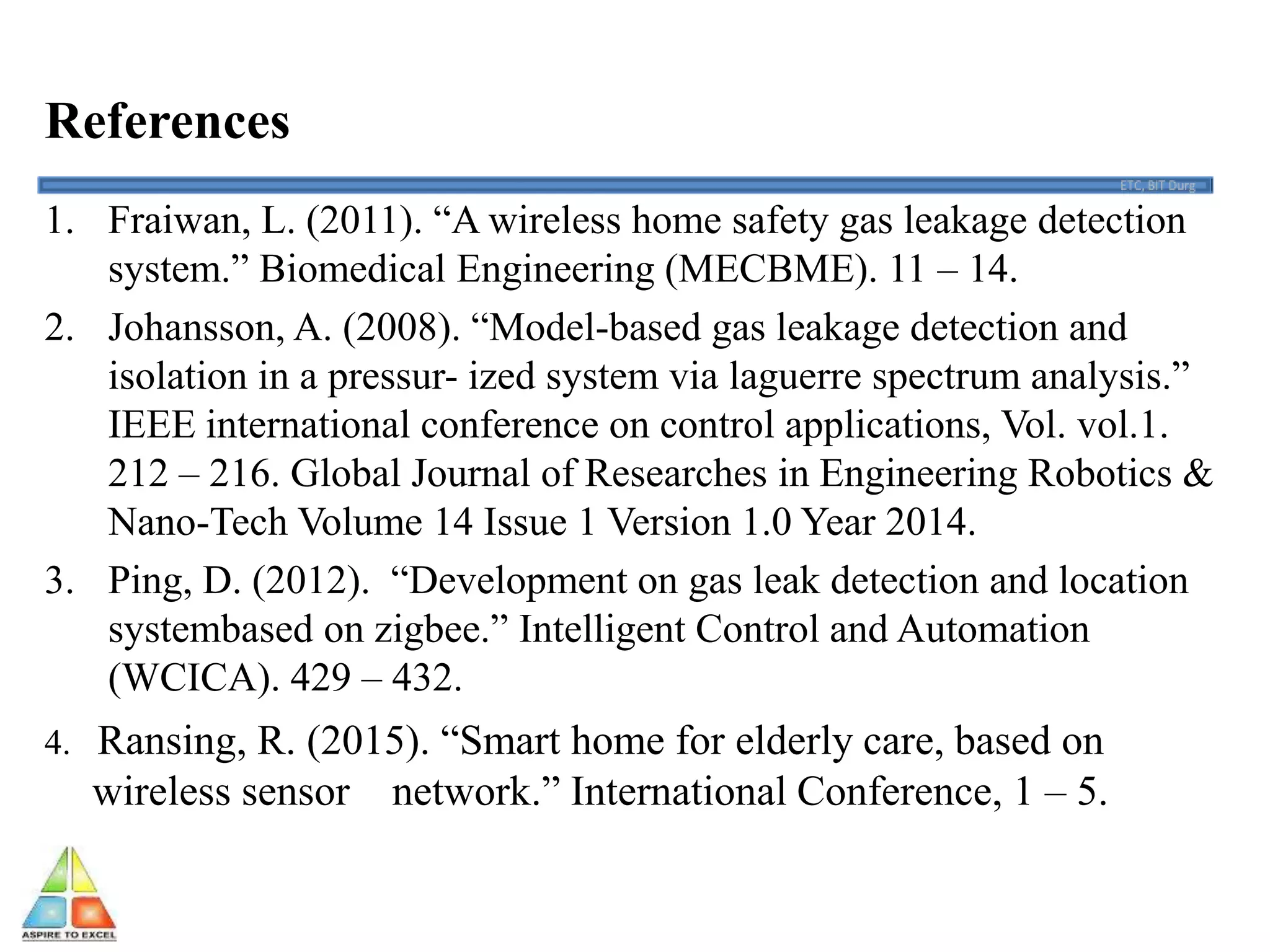
References
1. Fraiwan, L. (2011). “A wireless home safety gas leakage detection
system.” Biomedical Engineering (MECBME). 11 – 14.
2. Johansson, A. (2008). “Model-based gas leakage detection and
isolation in a pressur- ized system via laguerre spectrum analysis.”
IEEE international conference on control applications, Vol. vol.1.
212 – 216. Global Journal of Researches in Engineering Robotics &
Nano-Tech Volume 14 Issue 1 Version 1.0 Year 2014.
3. Ping, D. (2012). “Development on gas leak detection and location
systembased on zigbee.” Intelligent Control and Automation
(WCICA). 429 – 432.
4. Ransing, R. (2015). “Smart home for elderly care, based on
wireless sensor network.” International Conference, 1 – 5.
Pipeline rift detector

Pipeline rift detector

  • 1.
    Department of Electronicsand Telecommunication Bhilai Institute of Technology, Bhilai House, Durg, 491001 Pipeline Rift Detector Chandrakant Sahu Vaibhav Soni Shubham Chandravanshi Supervised by Mrs. Suchitra Pandey Assisstant Professor Project Incharge: Dr. Atul Dwivedi Assisstant Professor
  • 2.
    Content • Introduction • Objectives •Literature review • Problems identified • Proposed Methodology • Expected results
  • 3.
    Introduction • The aimof this project is to automatically detect and stop gas leakage in vulnerable premises. • Gas leakage detection is the process of identifying hazardous gas leaks by means of various sensors. • These sensors usually employ an audible alarm to alert people when a dangerous gas has been detected.
  • 4.
    Objectives • Detect gasleakage (like LPG leak, Butane leak, Methane leak) or any such petroleum based gaseous substance that can detected using MQ5 sensor. • Setup an Bluetooth based mechanism and send 3 SMS(3 alert message) to specified mobile (input inside the Arduino program).
  • 5.
    LITERATURE REVIEW: TOPIC JOURNAL CATAGORY AUTHOREDBY Design and Developement of Pipe Climbing Robot for Leak Detection International Conference on Ideas, Impact and Innovation in Mechanical Engineering (ICIIIME 2017) Citta Anindya Syifaul Fuada Electrical Engineering Education, Faculty of Engineering, State university of Malang. Prototyping of the Pipe Tracking Robot Using Electronic Nose Technology as Gas Leakage Detector International Journal of Engineering Research and Development Shubham Kusalkar Amey Mandavkar UG STUDENT, Department of Mechanical Engineering, SKNCOE Pune. S.NO 1 2
  • 6.
    Oil Pipelines/Water Pipeline Crawling Robotfor Leakage Detection/Cleaning of Pipes Global Journal of Researches in Engineering Robotics & Nano-Tech Volume 14 Issue 1 Version 1.0 Year 2014 Shyam Lal Sharma, Abdul Qavi & Kamlesh Kumari Al Falah School of Engineering and Technology, India Wireless Sensor Node To Detect Hazardous In Gas Pipeline International Journal of Engineering Research & Technology (IJERT) Prof. Madane Mugdha R. Assistant Professor, Department of Electronics and Telecommunication, Dr.Daulatrao Aher college of Engineering, Karad Dist-Satara; Maharashtra, India An Android Based Automatic Gas Detection And Indication Robot International Journal of Computer Engineering and Applications, Volume VIII, Issue I, Oct 14 Ch.Manohar Raju and N.Sushma Rani Computer Science and Engineering, MVGR College of Engineering, Vizianagaram, A.P, INDIA 3 4 5
  • 7.
    Problem Identification: • Difficultto operate at internal area of pipeline. • Speed efficiency decreases, if robot built for internal diameter of pipe, difficulty in turning as well. • Difficult to operate at certain heights. • Difficult to operate in internal part of pipe as if robot stop working in between the pipes its difficult to repair.
  • 8.
    Proposed Methodology 1. Theinput is given from sensor to controller. 2. Controller communicate through Bluetooth to transmit a message to mobile and mobile give response to controller which action should perfrom. 3. It displays the result on LCD as well as mobile via SMS. 4. It alerts the peoples in industry, lab, mill, by starting buzzer and sending SMS. 5. It give instruction to off the main Gas supply.
  • 9.
  • 10.
  • 11.
    Expected Results This systemhas been tested by lighter leak gas near to sensor, MQ6 gas sensor will detect the gas leakage and send signal to microcontroller then microcontroller send an active signal to other externally connected devices. LCD display – Pipe based LPG gas detector..
  • 13.
    Leakage is detectedby sensor then LCD display– Gas detected .
  • 14.
    References 1. Fraiwan, L.(2011). “A wireless home safety gas leakage detection system.” Biomedical Engineering (MECBME). 11 – 14. 2. Johansson, A. (2008). “Model-based gas leakage detection and isolation in a pressur- ized system via laguerre spectrum analysis.” IEEE international conference on control applications, Vol. vol.1. 212 – 216. Global Journal of Researches in Engineering Robotics & Nano-Tech Volume 14 Issue 1 Version 1.0 Year 2014. 3. Ping, D. (2012). “Development on gas leak detection and location systembased on zigbee.” Intelligent Control and Automation (WCICA). 429 – 432. 4. Ransing, R. (2015). “Smart home for elderly care, based on wireless sensor network.” International Conference, 1 – 5.