INTRODUCTION TO
THE DESIGN OF
PIPELAYING
VESSELS
CDT ANIMESH
PANDA
ROLL NO. 05
Scope
► CONCEPT OF PIPE LAYING VESSELS
► APPLICATIONS OF PIPE LAYING VESSELS
► TYPES OF PIPE LAYING VESSELS
► DYNAMIC POSITIONING SYSTEM
► PIPELINE ROUTE SURVEY
► PIPELINE COATING
► DESIRED VESSEL CHARACTERISTICS
► MISSION PROFILE
► CONCEPT OF PIPE LAYING VESSELS
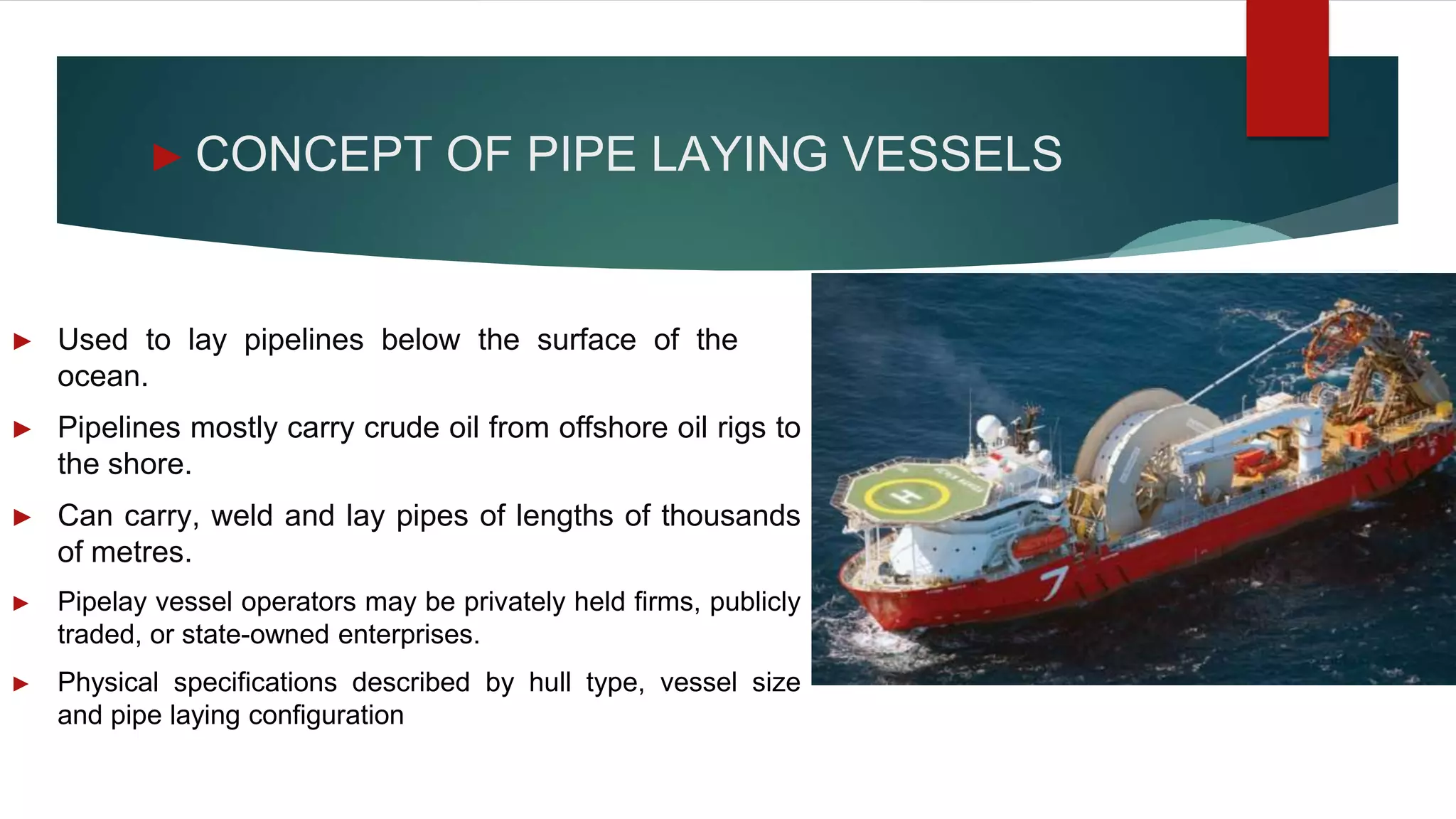
► Used to lay pipelines below the surface of the
ocean.
► Pipelines mostly carry crude oil from offshore oil rigs to
the shore.
► Can carry, weld and lay pipes of lengths of thousands
of metres.
► Pipelay vessel operators may be privately held firms, publicly
traded, or state-owned enterprises.
► Physical specifications described by hull type, vessel size
and pipe laying configuration
► APPLICATIONS OF PIPE LAYING VESSELS
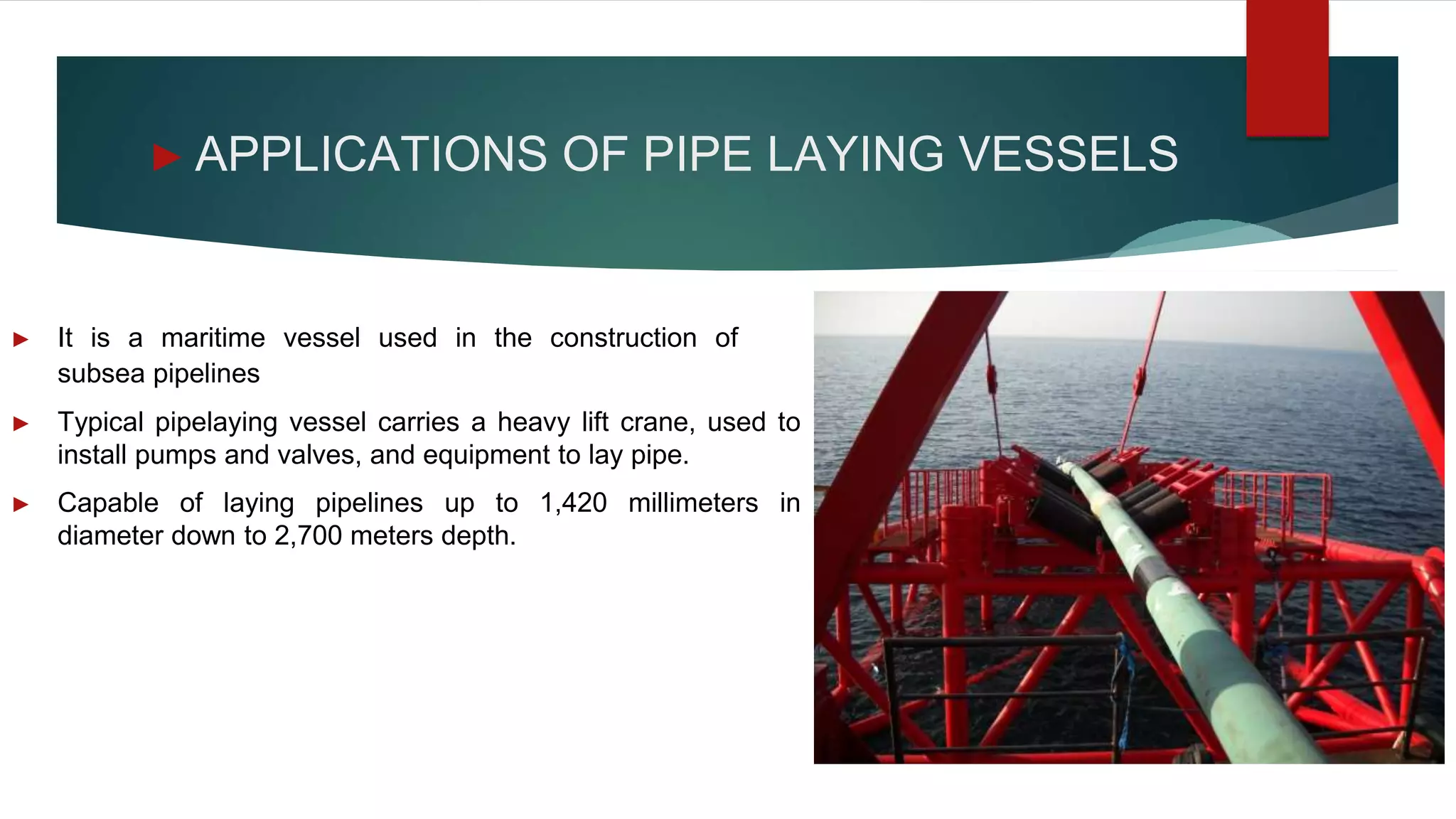
► It is a maritime vessel used in the construction of
subsea pipelines
► Typical pipelaying vessel carries a heavy lift crane, used to
install pumps and valves, and equipment to lay pipe.
► Capable of laying pipelines up to 1,420 millimeters in
diameter down to 2,700 meters depth.
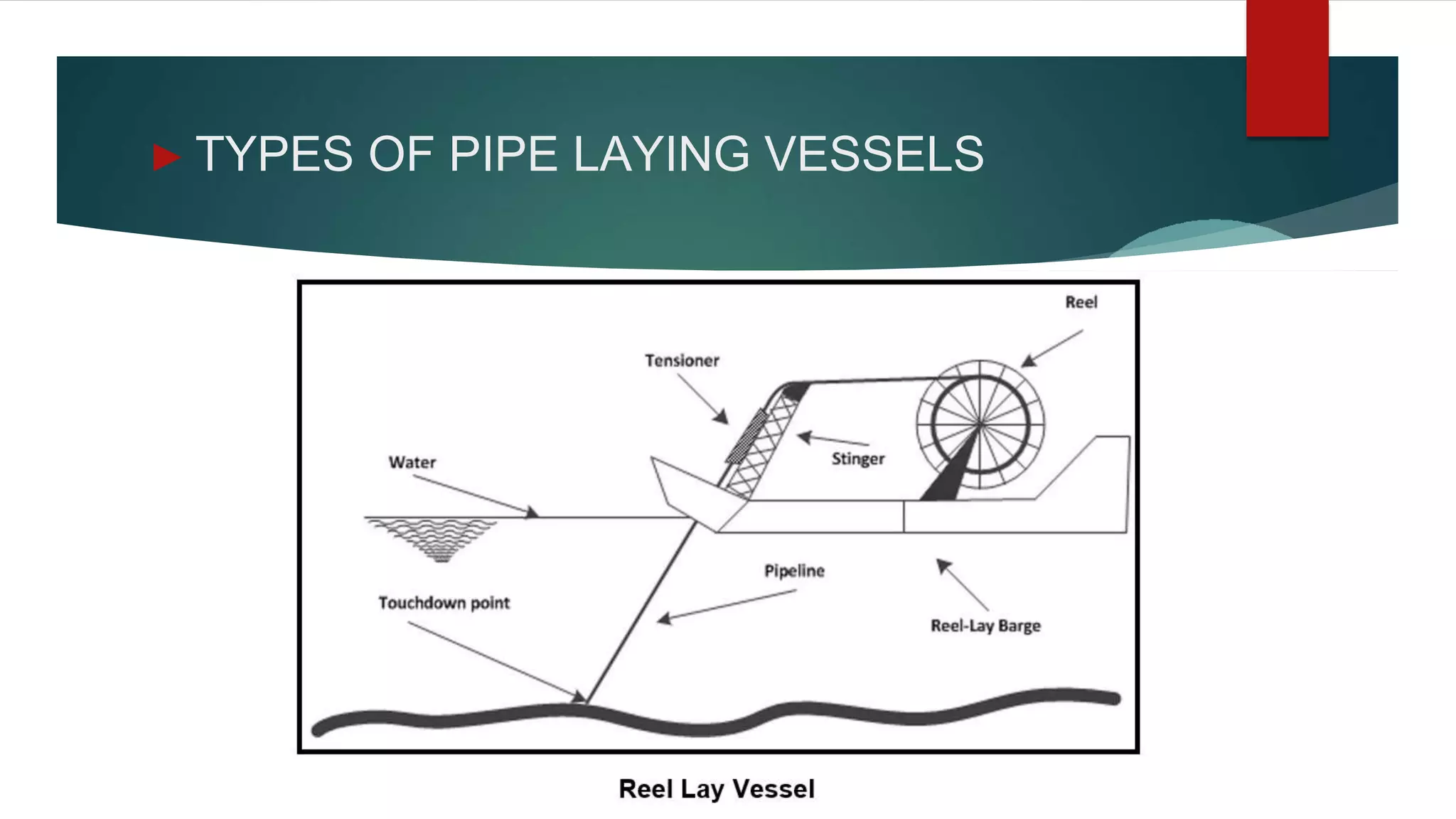
► TYPES OF PIPE LAYING VESSELS
► DYNAMIC POSITIONING SYSTEM
► Computer-controlled system to automatically maintain
a vessel’s position and heading by using its own
propellers and thrusters.
► Position reference sensors, combined with wind sensors,
motion sensors and gyrocompasses, provide information to
the computer.
► Fitted onboard mobile offshore drilling units (MODU),
oceanographic research vessels, cable layer ships and cruise
ships.
► PIPELINE ROUTE SURVEY
► Desired route is finalised on the basis of oil rig and
location of shore facilities.
► Route is surveyed by different vessels with
oceanographic survey capabilities.
► Data provided to pipelaying vessel for reference during
pipelaying operations.
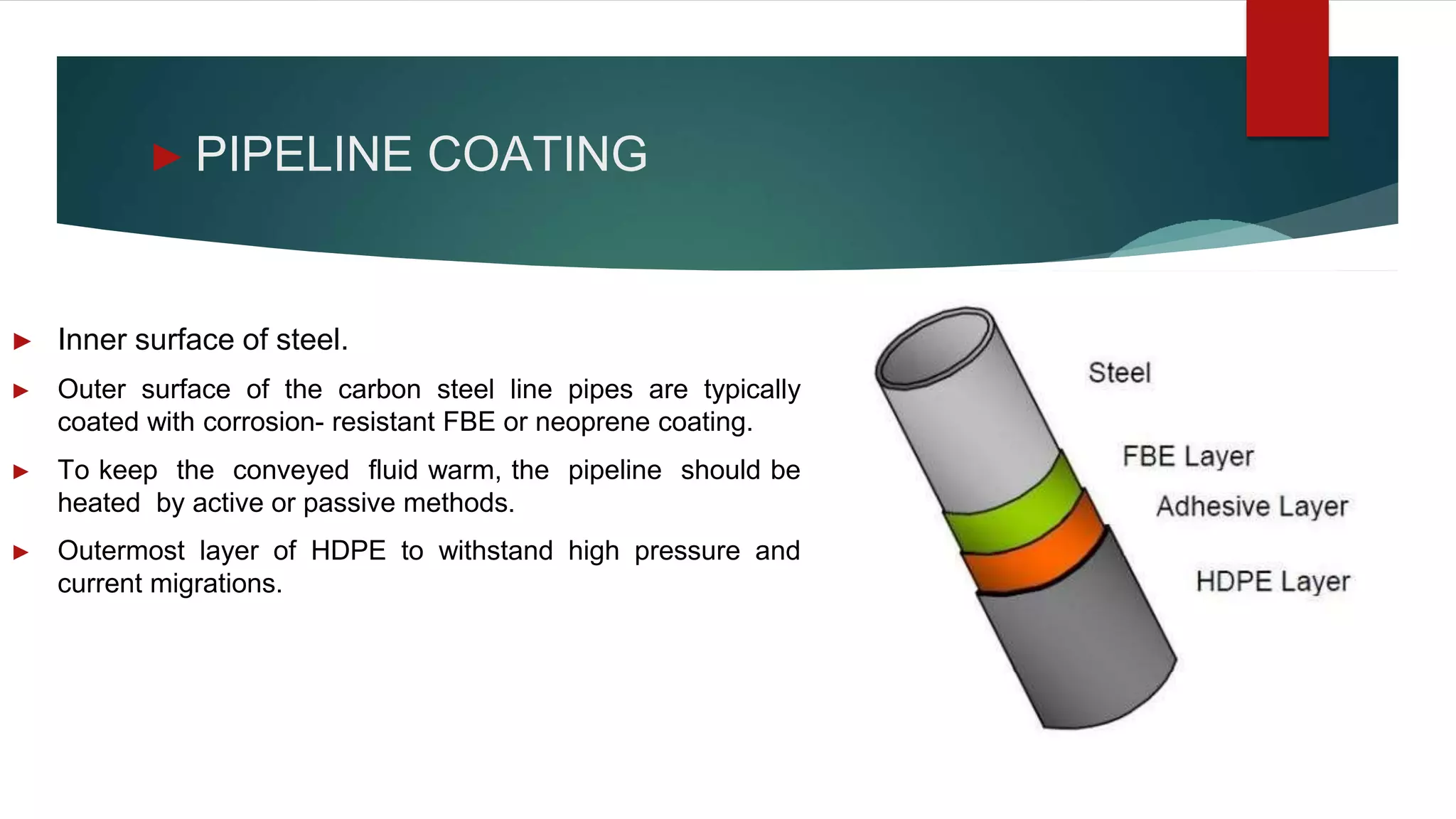
► PIPELINE COATING
► Inner surface of steel.
► Outer surface of the carbon steel line pipes are typically
coated with corrosion- resistant FBE or neoprene coating.
► To keep the conveyed fluid warm, the pipeline should be
heated by active or passive methods.
► Outermost layer of HDPE to withstand high pressure and
current migrations.
► DEIRED VESSEL CHARACTERISTICS
► Average depth of sea bed between Mumbai port and Mumbai high is 1355m.
► A typical pipelaying vessel is capable of carrying out operations for approximately 30
days at sea.
► Generally, the crew size required is about 140 to carry out the pipelaying operation.
► Mumbai high is 94 nautical miles off the coast of Mumbai.
► The service speed of all pipelaying vessels lays in the range of 10-14 knots.
► Pipes available in diameters in the range of 6-16 inches.
► The desired carrying capacity of the vessel is about 5000t of pipe in each voyage.
► OWNERS REQUIREMENTS
Water Depth : 1500m
Speed : 13 knots
Pipe Diameter : 6 - 16 inches
Radius of Action : 100nm
Choice of port : Mumbai port
Type of cargo : Subsea pipelines
Storage Capacity (Subsea Pipelines) : 5000 tons
Dwt : 10000 tons
Classification society : Lloyd’s Register
Thank You

pipe laying vesel.pptx

  • 1.
    INTRODUCTION TO THE DESIGNOF PIPELAYING VESSELS CDT ANIMESH PANDA ROLL NO. 05
  • 2.
    Scope ► CONCEPT OFPIPE LAYING VESSELS ► APPLICATIONS OF PIPE LAYING VESSELS ► TYPES OF PIPE LAYING VESSELS ► DYNAMIC POSITIONING SYSTEM ► PIPELINE ROUTE SURVEY ► PIPELINE COATING ► DESIRED VESSEL CHARACTERISTICS ► MISSION PROFILE
  • 3.
    ► CONCEPT OFPIPE LAYING VESSELS ► Used to lay pipelines below the surface of the ocean. ► Pipelines mostly carry crude oil from offshore oil rigs to the shore. ► Can carry, weld and lay pipes of lengths of thousands of metres. ► Pipelay vessel operators may be privately held firms, publicly traded, or state-owned enterprises. ► Physical specifications described by hull type, vessel size and pipe laying configuration
  • 4.
    ► APPLICATIONS OFPIPE LAYING VESSELS ► It is a maritime vessel used in the construction of subsea pipelines ► Typical pipelaying vessel carries a heavy lift crane, used to install pumps and valves, and equipment to lay pipe. ► Capable of laying pipelines up to 1,420 millimeters in diameter down to 2,700 meters depth.
  • 5.
    ► TYPES OFPIPE LAYING VESSELS
  • 6.
    ► TYPES OFPIPE LAYING VESSELS
  • 7.
    ► DYNAMIC POSITIONINGSYSTEM ► Computer-controlled system to automatically maintain a vessel’s position and heading by using its own propellers and thrusters. ► Position reference sensors, combined with wind sensors, motion sensors and gyrocompasses, provide information to the computer. ► Fitted onboard mobile offshore drilling units (MODU), oceanographic research vessels, cable layer ships and cruise ships.
  • 8.
    ► PIPELINE ROUTESURVEY ► Desired route is finalised on the basis of oil rig and location of shore facilities. ► Route is surveyed by different vessels with oceanographic survey capabilities. ► Data provided to pipelaying vessel for reference during pipelaying operations.
  • 9.
    ► PIPELINE COATING ►Inner surface of steel. ► Outer surface of the carbon steel line pipes are typically coated with corrosion- resistant FBE or neoprene coating. ► To keep the conveyed fluid warm, the pipeline should be heated by active or passive methods. ► Outermost layer of HDPE to withstand high pressure and current migrations.
  • 10.
    ► DEIRED VESSELCHARACTERISTICS ► Average depth of sea bed between Mumbai port and Mumbai high is 1355m. ► A typical pipelaying vessel is capable of carrying out operations for approximately 30 days at sea. ► Generally, the crew size required is about 140 to carry out the pipelaying operation. ► Mumbai high is 94 nautical miles off the coast of Mumbai. ► The service speed of all pipelaying vessels lays in the range of 10-14 knots. ► Pipes available in diameters in the range of 6-16 inches. ► The desired carrying capacity of the vessel is about 5000t of pipe in each voyage.
  • 11.
    ► OWNERS REQUIREMENTS WaterDepth : 1500m Speed : 13 knots Pipe Diameter : 6 - 16 inches Radius of Action : 100nm Choice of port : Mumbai port Type of cargo : Subsea pipelines Storage Capacity (Subsea Pipelines) : 5000 tons Dwt : 10000 tons Classification society : Lloyd’s Register
  • 12.