PILOERECTION AS A
RARE MANIFESTATION
IN EPILEPSY PATIENTS
Julio Cesar Hernandez M.D.
Introduction
 Subjective: Rare ictal manifestation
overlooked in epilepsy patients
 Objective: Evidence of piloerection is seldom
available due to limitations of video resolution
and the impracticality of continuous exposure
of involved body areas in the EMU
Ayman M and Abou-Khalil B. Epileptic Disord 2012; 14 (1): 76-9
 Reported in patients with temporal lobe
epilepsy
 420 patients with temporal lobe
farmacorresistant epilepsy, 1.2% had
piloerection (Stefan et al., 2002)
 12 of 14 patients had temporal lobe epilepsy
(Loddenkemper et al., 2004)
Loddenkemper et al. J Neurol Neurosurg Psychiatry 2004;75:879–883
Ayman M and Abou-Khalil B. Epileptic Disord 2012; 14 (1): 76-9
 Rarely associated with frontal lobe epilepsy
(Seo et al ., 2003)
 Classified as a subtype of autonomic seizure
and rarely as primarily ictal manifestation
Loddenkemper et al. J Neurol Neurosurg Psychiatry 2004;75:879–883
 3500 patients who underwent vEEG
monitoring at CCF between 1994 and 2001
 The patient population: 75% with focal
epilepsy (temporal: 48%; extratemporal: 19%; non-classifiable focal:
8%), 5% with generalised epilepsy, 1% with
multifocal epilepsy, and 19% with non-epileptic
seizures
Results
 14 right-handed patients with ictal piloerection
 Ictal piloerection was documented in 9 cases
by observation and video recordings and 5
cases by history
 12 cases (85%), the EZ was located in the
temporal lobe either by EEG, neuroimaging or
by seizure freedom after temporal lobectomy
Loddenkemper et al. J Neurol Neurosurg Psychiatry 2004;75:879–883
 7 patients (50%), the ictal EEG onset was located in
the RH and one patient independently from LH and
RH
 9 patients (64%) experienced bilateral ictal
piloerection and 5 patients had unilateral (or initially
unilateral) ictal piloerection
 5/9 patients (56%) with bilateral piloerection had right
TLE. 4/5patients (80%) with unilateral (or initially
unilateral) ictal piloerection had the ictal onset in the
hemisphere ipsilateral to the side of piloerection
Loddenkemper et al. J Neurol Neurosurg Psychiatry 2004;75:879–883
Associated clinical findings
Preceeding symptoms Following symptoms Autonomic findings
Fear (3 patients),
nausea (3 patients), loss
of consciousness (3
patients), olfactory
auras, gustatory
auras, cephalic auras,
loneliness, and
automatisms
Automatisms (5
patients),
loss of consciousness (2
patients), nausea,
unilateral tonic seizures,
cephalic auras, bilateral
somatosensory aura,
and
perioral or nasal
paresthesias
Shortness of breath
and hyperventilation (6
patients), tachycardia (4
patients), ictal cold (3
patients), diaphoresis
(3), urinary urge (3
patients), pallor,
Salivation, and
hyperlacrimation
n=14
9 patients were aware of the piloerection during and after the seizure, whereas 5 patients did not notice the
‘‘goosebumps’’Loddenkemper et al. J Neurol Neurosurg Psychiatry 2004;75:879–883
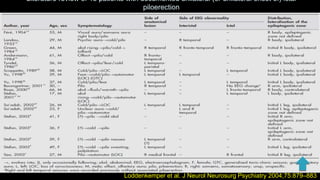
Literature review of 18 patients with documented unilateral (or unilateral onset of) ictal
piloerection
Loddenkemper et al. J Neurol Neurosurg Psychiatry 2004;75:879–883
Left hemispheric
predominance(?)
MRI
 Lesion in 11/14 cases:
 4 patients hippocampal atrophy
 2 had hippocampal atrophy associated with FP
encephalomalacya in one and multiple
bilateral tubers due to tuberous sclerosis in
another
 8 had other lesions
Loddenkemper et al. J Neurol Neurosurg Psychiatry 2004;75:879–883
Generator
 Insula and medial prefrontal cortex, central nucleus of the
amygdala, preoptic region, hypothalamus, midbrain
periaquaeductal grey matter, the pontine parabrachial region,
the nucleus of the solitary tract, and the intermediate reticular
zone of the medulla
 Electrical or pharmacological stimulation in humans and
animals at multiple sites: insula, hippocampus, amygdala,
hypothalamus, midbrain reticular core, and medial prefrontal
cortices
 Others: parahypocampal formation and anterior cingulate
Loddenkemper et al. J Neurol Neurosurg Psychiatry 2004;75:879–883
A. Interictal B. Ictal
Masnou et al. Epileptic Disorders. Volume 8, Number 3, 232-7, September
F7, T1, Sp1 F7, T1, Sp1
Conclusions: Piloerection as ictal phenomena
 Rare ictal manifestation
 Rare independently, frequently associated to other
ictal manifestations
 Predominantly in TLE (specially insula)
 Bilateral piloerection localize EZ in RH (?), LH
predominance (?), unilateral piloerection localize
EZ ipsilateral to the side of the piloerection (84%
of cases)
Nicaragua: The hot heart of Central
America

Piloerection in epilepsy

  • 1.
    PILOERECTION AS A RAREMANIFESTATION IN EPILEPSY PATIENTS Julio Cesar Hernandez M.D.
  • 2.
    Introduction  Subjective: Rareictal manifestation overlooked in epilepsy patients  Objective: Evidence of piloerection is seldom available due to limitations of video resolution and the impracticality of continuous exposure of involved body areas in the EMU Ayman M and Abou-Khalil B. Epileptic Disord 2012; 14 (1): 76-9
  • 3.
     Reported inpatients with temporal lobe epilepsy  420 patients with temporal lobe farmacorresistant epilepsy, 1.2% had piloerection (Stefan et al., 2002)  12 of 14 patients had temporal lobe epilepsy (Loddenkemper et al., 2004) Loddenkemper et al. J Neurol Neurosurg Psychiatry 2004;75:879–883 Ayman M and Abou-Khalil B. Epileptic Disord 2012; 14 (1): 76-9
  • 4.
     Rarely associatedwith frontal lobe epilepsy (Seo et al ., 2003)  Classified as a subtype of autonomic seizure and rarely as primarily ictal manifestation Loddenkemper et al. J Neurol Neurosurg Psychiatry 2004;75:879–883
  • 5.
     3500 patientswho underwent vEEG monitoring at CCF between 1994 and 2001  The patient population: 75% with focal epilepsy (temporal: 48%; extratemporal: 19%; non-classifiable focal: 8%), 5% with generalised epilepsy, 1% with multifocal epilepsy, and 19% with non-epileptic seizures
  • 6.
    Results  14 right-handedpatients with ictal piloerection  Ictal piloerection was documented in 9 cases by observation and video recordings and 5 cases by history  12 cases (85%), the EZ was located in the temporal lobe either by EEG, neuroimaging or by seizure freedom after temporal lobectomy Loddenkemper et al. J Neurol Neurosurg Psychiatry 2004;75:879–883
  • 7.
     7 patients(50%), the ictal EEG onset was located in the RH and one patient independently from LH and RH  9 patients (64%) experienced bilateral ictal piloerection and 5 patients had unilateral (or initially unilateral) ictal piloerection  5/9 patients (56%) with bilateral piloerection had right TLE. 4/5patients (80%) with unilateral (or initially unilateral) ictal piloerection had the ictal onset in the hemisphere ipsilateral to the side of piloerection Loddenkemper et al. J Neurol Neurosurg Psychiatry 2004;75:879–883
  • 8.
    Associated clinical findings Preceedingsymptoms Following symptoms Autonomic findings Fear (3 patients), nausea (3 patients), loss of consciousness (3 patients), olfactory auras, gustatory auras, cephalic auras, loneliness, and automatisms Automatisms (5 patients), loss of consciousness (2 patients), nausea, unilateral tonic seizures, cephalic auras, bilateral somatosensory aura, and perioral or nasal paresthesias Shortness of breath and hyperventilation (6 patients), tachycardia (4 patients), ictal cold (3 patients), diaphoresis (3), urinary urge (3 patients), pallor, Salivation, and hyperlacrimation n=14 9 patients were aware of the piloerection during and after the seizure, whereas 5 patients did not notice the ‘‘goosebumps’’Loddenkemper et al. J Neurol Neurosurg Psychiatry 2004;75:879–883
  • 9.
    Literature review of18 patients with documented unilateral (or unilateral onset of) ictal piloerection Loddenkemper et al. J Neurol Neurosurg Psychiatry 2004;75:879–883
  • 10.
  • 11.
    MRI  Lesion in11/14 cases:  4 patients hippocampal atrophy  2 had hippocampal atrophy associated with FP encephalomalacya in one and multiple bilateral tubers due to tuberous sclerosis in another  8 had other lesions Loddenkemper et al. J Neurol Neurosurg Psychiatry 2004;75:879–883
  • 12.
    Generator  Insula andmedial prefrontal cortex, central nucleus of the amygdala, preoptic region, hypothalamus, midbrain periaquaeductal grey matter, the pontine parabrachial region, the nucleus of the solitary tract, and the intermediate reticular zone of the medulla  Electrical or pharmacological stimulation in humans and animals at multiple sites: insula, hippocampus, amygdala, hypothalamus, midbrain reticular core, and medial prefrontal cortices  Others: parahypocampal formation and anterior cingulate Loddenkemper et al. J Neurol Neurosurg Psychiatry 2004;75:879–883
  • 13.
    A. Interictal B.Ictal Masnou et al. Epileptic Disorders. Volume 8, Number 3, 232-7, September F7, T1, Sp1 F7, T1, Sp1
  • 14.
    Conclusions: Piloerection asictal phenomena  Rare ictal manifestation  Rare independently, frequently associated to other ictal manifestations  Predominantly in TLE (specially insula)  Bilateral piloerection localize EZ in RH (?), LH predominance (?), unilateral piloerection localize EZ ipsilateral to the side of the piloerection (84% of cases)
  • 15.
    Nicaragua: The hotheart of Central America