 Epilepsy can effect anyone at any age

 Can effect both men and women, mostly women

 The parietal lobe epilepsy is the most rare type of epilepsy effecting
  about 5% of all epilepsy patients

 It may be a result of head trauma, birth difficulties, stroke, or
  tumor, though the cause is unknown in 20% of patients
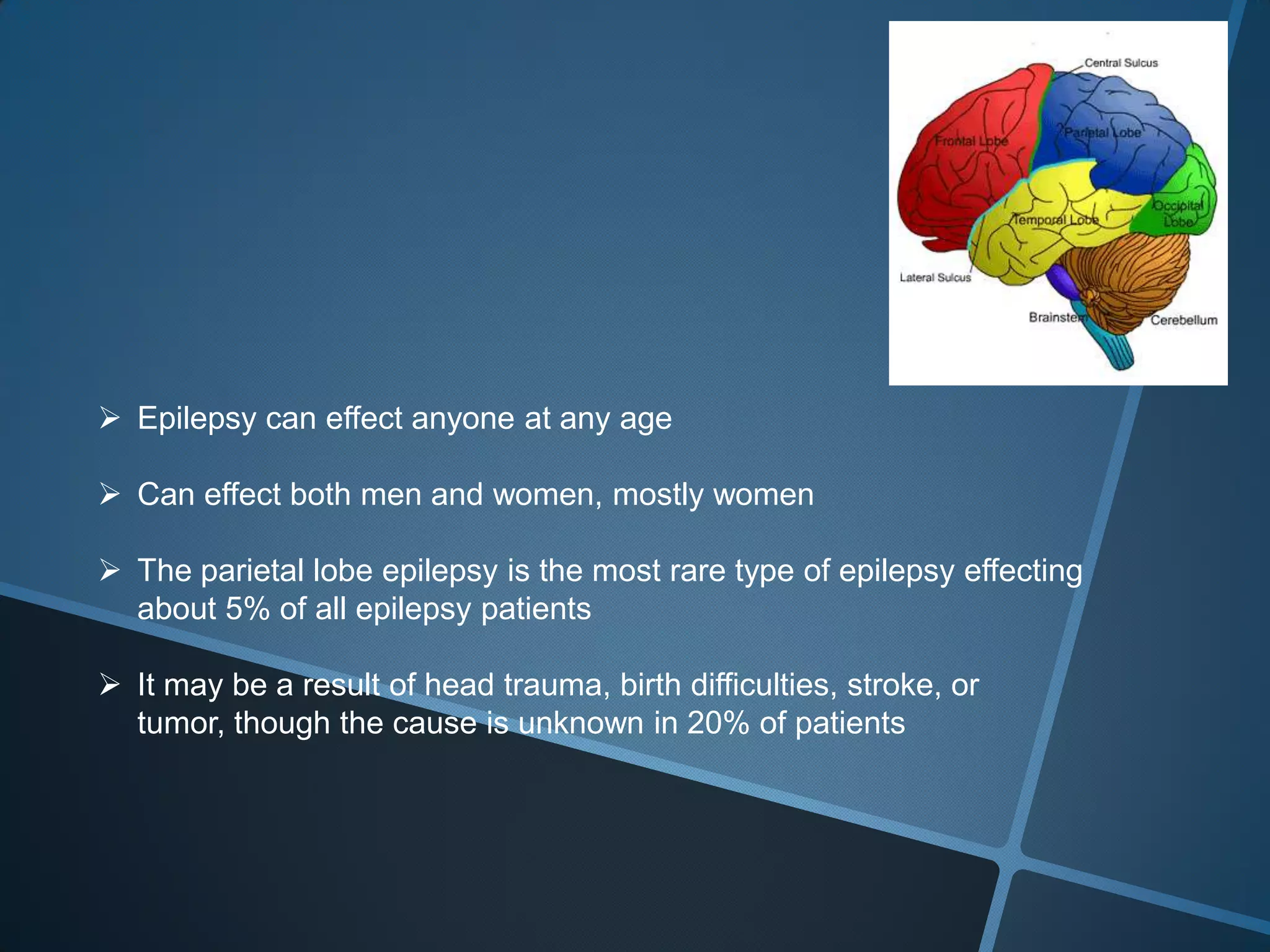
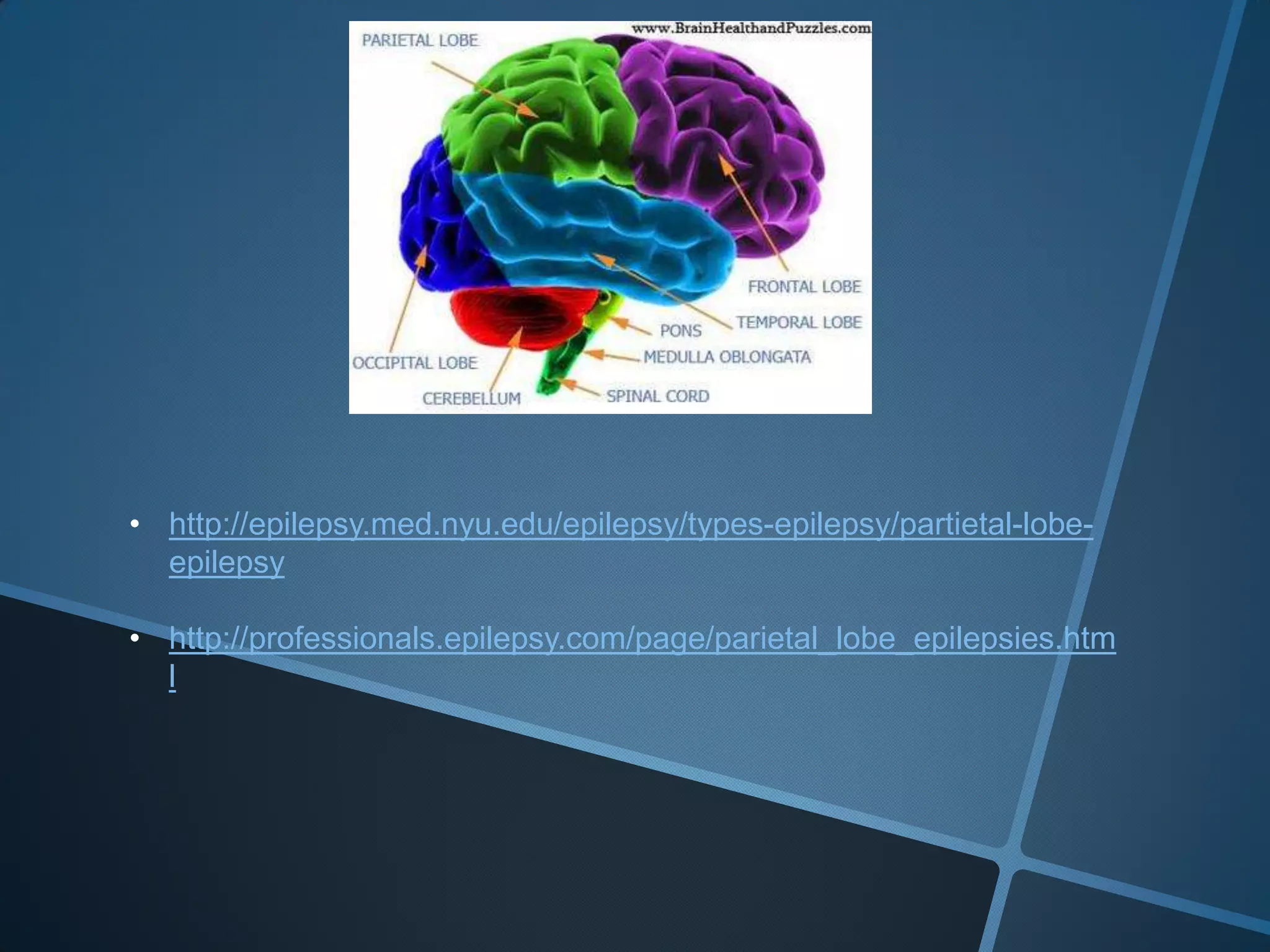
 The parietal lobe is located just behind the frontal lobe and it plays important roles
  in touch

 In the language dominant side of the brain (the left side for most right-handed
  individuals), the parietal lobe is also involved with language, planned movements
  such as writing, as well as mathematical skills

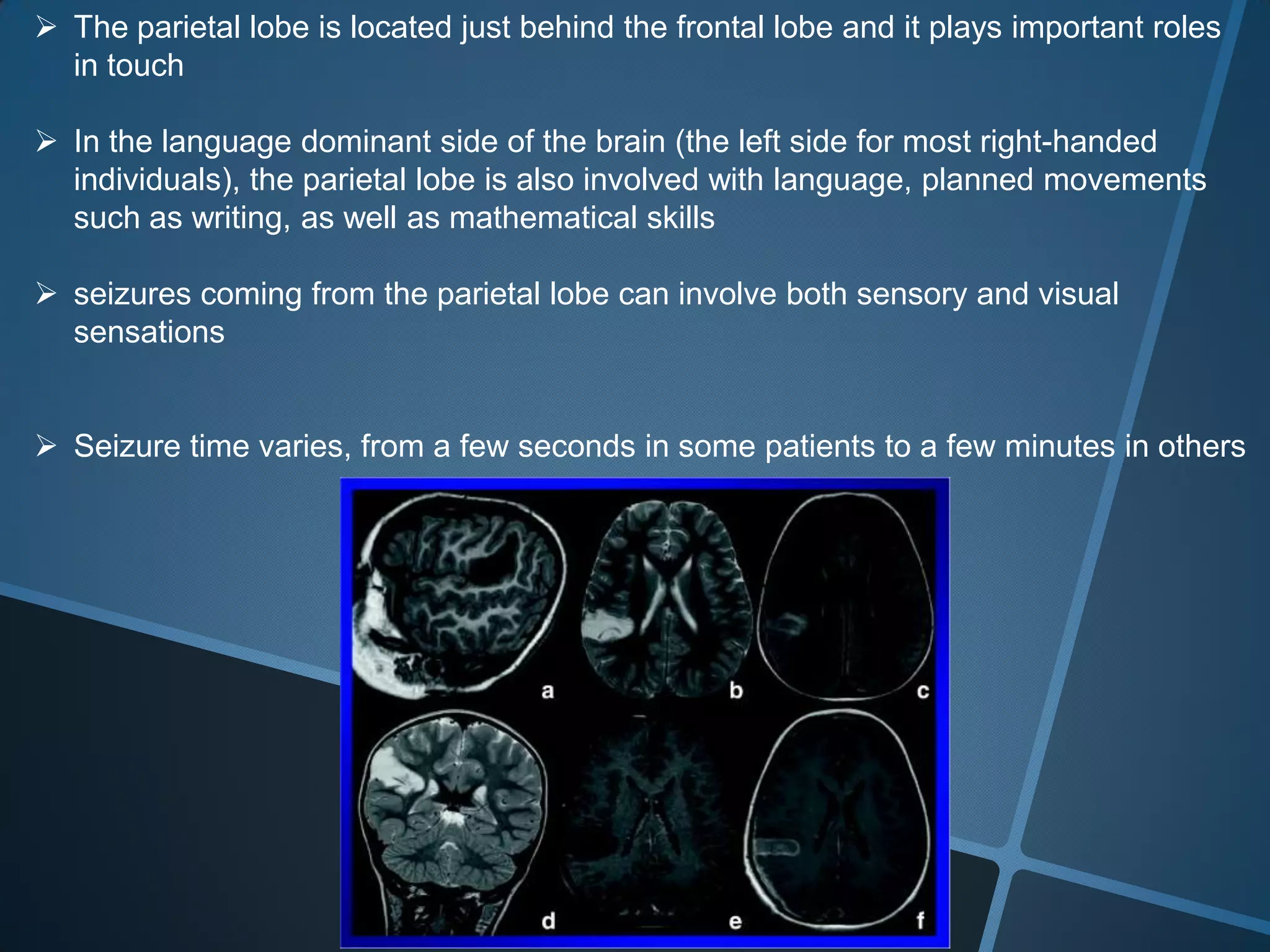
 seizures coming from the parietal lobe can involve both sensory and visual
  sensations


 Seizure time varies, from a few seconds in some patients to a few minutes in others
 most common type of seizure in parietal epilepsies

 Patients with these types of seizures describe feeling physical sensations of
  numbness and tingling, heat, pressure, electricity and/or pain

 Rarely, a patient will describe a sensation in the genitalia, occasionally leading to
  orgasm

 Some patients describe a typical “Jacksonian march”, in which the sensation
  “marches” in a predictable pattern from the face to the hand up the arm and down
  the leg
• http://epilepsy.med.nyu.edu/epilepsy/types-epilepsy/partietal-lobe-
  epilepsy

• http://professionals.epilepsy.com/page/parietal_lobe_epilepsies.htm
  l

How epilepsy effects the brain in parietal lobe

  • 2.
     Epilepsy caneffect anyone at any age  Can effect both men and women, mostly women  The parietal lobe epilepsy is the most rare type of epilepsy effecting about 5% of all epilepsy patients  It may be a result of head trauma, birth difficulties, stroke, or tumor, though the cause is unknown in 20% of patients
  • 3.
     The parietallobe is located just behind the frontal lobe and it plays important roles in touch  In the language dominant side of the brain (the left side for most right-handed individuals), the parietal lobe is also involved with language, planned movements such as writing, as well as mathematical skills  seizures coming from the parietal lobe can involve both sensory and visual sensations  Seizure time varies, from a few seconds in some patients to a few minutes in others
  • 4.
     most commontype of seizure in parietal epilepsies  Patients with these types of seizures describe feeling physical sensations of numbness and tingling, heat, pressure, electricity and/or pain  Rarely, a patient will describe a sensation in the genitalia, occasionally leading to orgasm  Some patients describe a typical “Jacksonian march”, in which the sensation “marches” in a predictable pattern from the face to the hand up the arm and down the leg
  • 5.
    • http://epilepsy.med.nyu.edu/epilepsy/types-epilepsy/partietal-lobe- epilepsy • http://professionals.epilepsy.com/page/parietal_lobe_epilepsies.htm l