PIED BEAUTY – GERARD MANLEY
HOPKINS
Line 1
Glory be to God for dappled things – 
The speaker says that we should give
glory to God for having created
"dappled," or spotted things.
If you're worried about not knowing
exactly what "dappled" looks like,
fear not: Hopkins is going to give
you lots of examples. The speaker
points to "dappled" things in
particular.
Line 2
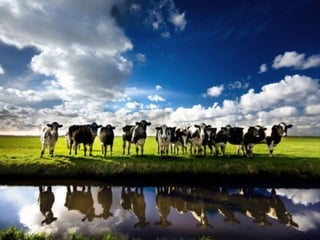
For skies of couple-colour as a brinded cow;
The speaker gives examples of "dappled things." In this
poem, at least, "dappled" refers to things with multiplied
colors.
Hopkins's first example is really two examples in one.
"Skies of couple-color" are skies that have two colors.
The most obvious possibilities are blue and white in a
clear sky that is "dappled" or streaked with clouds. This
image in turn reminds the speaker of a "brinded cow.“
Line 3
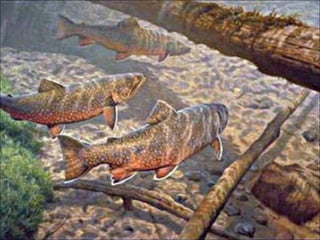
For rose-moles all in stipple upon trout that swim;
The small light-reddish dots or "rose-moles" on the side of trout
are another example of "dappled things." They look like they have
been drawn "in stipple" on the trout's body.
"Stipple" is a technique in arts like drawing, painting, and
sewing, to create texture through the use of small dots.
You may have noticed by now that Hopkins likes to use hyphens
to create new words. "Couple-color" was one example, and "rose-
moles" is another.
Line 4
Fresh-firecoal chestnut-falls; finches' wings;
And here come two more hyphenated words, along with two
more examples of "dappled things." The first example is "Fresh-
firecoal chestnut-falls."
This is probably the trickiest image in the poem, partly because
we're not nearly as familiar with chestnuts as 19th-century
English people would have been.
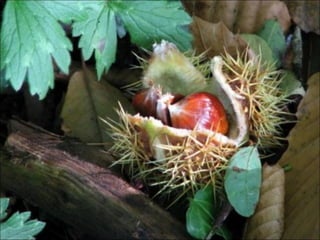
"Chestnut-falls" is not too hard to imagine. It refers to chestnuts
that have fallen off the chestnut tree. This hyphenated word
points to the specific chestnuts that have fallen from the tree.
When they are on a tree, chestnuts are covered by a spiky, light-
green covering, but the nuts themselves are reddish-brown.
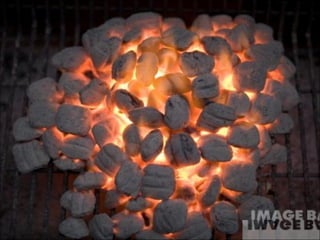
When the nuts fall, they are "fresh" from the tree. Because of
the contrast of red nuts with their outer covering, they look like
the burning of coals inside a fire.
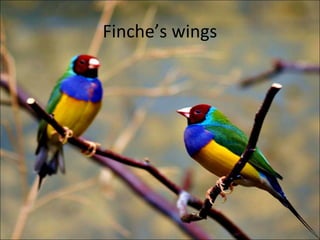
Finche’s wings
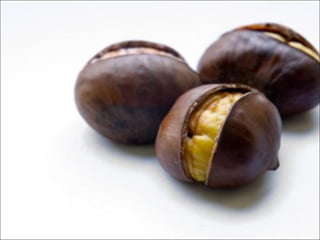
To add another layer to this chestnut
conundrum, people also like to cook these
delectable nuts over fire. When the nuts get
hot, they open up to reveal their "meat,"
inside. These opened chestnuts also look like
embers. (A small piece of burning or glowing
coal or wood in a dying fire)
We're almost certain you now know more
than you ever wanted to about chestnuts.
Fortunately, the second example
of a "dappled thing" in this line is
much easier.
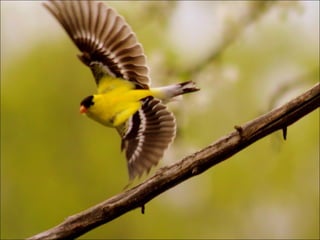
Finches are small birds with
streaks and spots.
The speaker focuses only on the
finches' wings – a sign of his
great attention to detail.
Line 5
Landscape plotted and pieced--fold,
fallow, and plough;
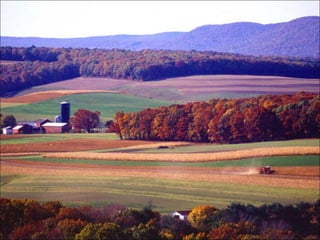
Another dappled thing: the English
landscape, divided up into different
"plots" and "pieces" for farming and
raising livestock.
A "fold" is a fenced-in area for sheep,
"fallow" describes a field that has been
left empty, and the "plough" is a tool used
to turn over the topsoil before planting
crops.
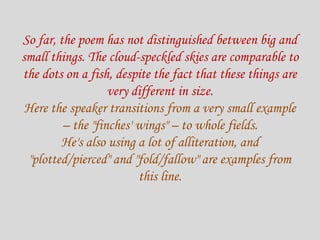
So far, the poem has not distinguished between big and
small things. The cloud-speckled skies are comparable to
the dots on a fish, despite the fact that these things are
very different in size.
Here the speaker transitions from a very small example
– the "finches' wings" – to whole fields.
He's also using a lot of alliteration, and
"plotted/pierced" and "fold/fallow" are examples from
this line.
Finally, the speaker makes no
distinction between untouched parts
of nature and the parts that have
been adapted by humans. According
to the speaker, farming is a part of
God's creation, just like the finches
and the fish.
Line 6
And all trades, their gear and tackle and trim.
The speaker widens his focus from a single trade, or
skilled job – farming – to all trades.
He chooses three to represent the tools or accessories of
all different kinds of jobs.
Without delving too deep into their many possible uses,
the words "gear and tackle and trim" point to fishing,
sailing, and clothes-making, among other trades.
"Trade" sounds old-fashioned now, but it suggests
a natural connection between a person and his or
her life's work.
In this line, the dappled or spotted appearance of
things becomes a metaphor for variety and
mixture. In other words, the poem sets up a
transition where "dappled" has a wider meaning in
the second stanza.
This meaning stands in direct contrast to the
scope of the first stanza, in which the speaker
focuses mainly on the visual.
Line 7
All things counter, original, spare, strange;
The speaker expands and elaborates upon his list of things for
which to praise God.
Rather than list specific objects, he uses adjectives
to describe their qualities.
The items in the list are characterized by their uniqueness. They
are "counter" to what is normal; they are original, they are "spare"
and don't appear in great numbers; and they are "strange" or
unusual.
Remember, in this poem, Hopkins is primarily concerned with
the quirky and unusual things in nature.
Line 8
Whatever is fickle, freckled (who knows how?)
fickle: Changing frequently
freckle: A small patch of light brown color on the skin, often
becoming more pronounced through exposure to the sun.
This line gives two more adjectives to add to our main adjective,
"dapple."
Surprise, surprise, they begin with the same letter: "fickle" means
something that changes a lot, and "freckled" returns to the topic
of spots or dots.
In other contexts, "fickle" can be a negative quality in a person
who changes his or her mind too often, but in nature, fickleness
brings about new things at which we can marvel.
In parentheses, the speaker voices his private wonder at how all
these things acquired their "pied beauty."
Line 9
With swift, slow; sweet, sour; adazzle, dim;
Check out the semi-colons in this line. They mark the
division between three pairs of opposites:
fast and slow, sweet and sour, and bright ("adazzle")
and dim.
The speaker doesn't know how it's possible for one thing
to be "freckled" with two opposite qualities.
Think of a slice of sugary lemon cake, which is both
sweet and sour.
Line 10
He fathers-forth whose beauty is past change:
The speaker says that God is the "father" of all
these beautiful things, but his own beauty never
changes.
We think that Hopkins must have read his
Shakespeare. The phrase "fathers-forth," which
means "to bring into existence," resembles a line
from Shakespeare's Hamlet.
Line 11
Praise Him.
The end of the poem circles back to the beginning
of the poem and the idea of praise and glory.
This simple declaration of humility contrasts with
the high-flying language and rhetoric that comes
before.
This statement could be a two-word summary for
the entire poem.

Pied beauty my ppt

  • 1.
    PIED BEAUTY –GERARD MANLEY HOPKINS
  • 2.
    Line 1 Glory beto God for dappled things –  The speaker says that we should give glory to God for having created "dappled," or spotted things. If you're worried about not knowing exactly what "dappled" looks like, fear not: Hopkins is going to give you lots of examples. The speaker points to "dappled" things in particular.
  • 3.
    Line 2 For skiesof couple-colour as a brinded cow; The speaker gives examples of "dappled things." In this poem, at least, "dappled" refers to things with multiplied colors. Hopkins's first example is really two examples in one. "Skies of couple-color" are skies that have two colors. The most obvious possibilities are blue and white in a clear sky that is "dappled" or streaked with clouds. This image in turn reminds the speaker of a "brinded cow.“
  • 6.
    Line 3 For rose-molesall in stipple upon trout that swim; The small light-reddish dots or "rose-moles" on the side of trout are another example of "dappled things." They look like they have been drawn "in stipple" on the trout's body. "Stipple" is a technique in arts like drawing, painting, and sewing, to create texture through the use of small dots. You may have noticed by now that Hopkins likes to use hyphens to create new words. "Couple-color" was one example, and "rose- moles" is another.
  • 8.
    Line 4 Fresh-firecoal chestnut-falls;finches' wings; And here come two more hyphenated words, along with two more examples of "dappled things." The first example is "Fresh- firecoal chestnut-falls." This is probably the trickiest image in the poem, partly because we're not nearly as familiar with chestnuts as 19th-century English people would have been. "Chestnut-falls" is not too hard to imagine. It refers to chestnuts that have fallen off the chestnut tree. This hyphenated word points to the specific chestnuts that have fallen from the tree. When they are on a tree, chestnuts are covered by a spiky, light- green covering, but the nuts themselves are reddish-brown. When the nuts fall, they are "fresh" from the tree. Because of the contrast of red nuts with their outer covering, they look like the burning of coals inside a fire.
  • 11.
  • 12.
    To add anotherlayer to this chestnut conundrum, people also like to cook these delectable nuts over fire. When the nuts get hot, they open up to reveal their "meat," inside. These opened chestnuts also look like embers. (A small piece of burning or glowing coal or wood in a dying fire) We're almost certain you now know more than you ever wanted to about chestnuts.
  • 15.
    Fortunately, the secondexample of a "dappled thing" in this line is much easier. Finches are small birds with streaks and spots. The speaker focuses only on the finches' wings – a sign of his great attention to detail.
  • 18.
    Line 5 Landscape plottedand pieced--fold, fallow, and plough; Another dappled thing: the English landscape, divided up into different "plots" and "pieces" for farming and raising livestock. A "fold" is a fenced-in area for sheep, "fallow" describes a field that has been left empty, and the "plough" is a tool used to turn over the topsoil before planting crops.
  • 21.
    So far, thepoem has not distinguished between big and small things. The cloud-speckled skies are comparable to the dots on a fish, despite the fact that these things are very different in size. Here the speaker transitions from a very small example – the "finches' wings" – to whole fields. He's also using a lot of alliteration, and "plotted/pierced" and "fold/fallow" are examples from this line.
  • 23.
    Finally, the speakermakes no distinction between untouched parts of nature and the parts that have been adapted by humans. According to the speaker, farming is a part of God's creation, just like the finches and the fish.
  • 24.
    Line 6 And alltrades, their gear and tackle and trim. The speaker widens his focus from a single trade, or skilled job – farming – to all trades. He chooses three to represent the tools or accessories of all different kinds of jobs. Without delving too deep into their many possible uses, the words "gear and tackle and trim" point to fishing, sailing, and clothes-making, among other trades.
  • 25.
    "Trade" sounds old-fashionednow, but it suggests a natural connection between a person and his or her life's work. In this line, the dappled or spotted appearance of things becomes a metaphor for variety and mixture. In other words, the poem sets up a transition where "dappled" has a wider meaning in the second stanza. This meaning stands in direct contrast to the scope of the first stanza, in which the speaker focuses mainly on the visual.
  • 26.
    Line 7 All thingscounter, original, spare, strange; The speaker expands and elaborates upon his list of things for which to praise God. Rather than list specific objects, he uses adjectives to describe their qualities. The items in the list are characterized by their uniqueness. They are "counter" to what is normal; they are original, they are "spare" and don't appear in great numbers; and they are "strange" or unusual. Remember, in this poem, Hopkins is primarily concerned with the quirky and unusual things in nature.
  • 28.
    Line 8 Whatever isfickle, freckled (who knows how?) fickle: Changing frequently freckle: A small patch of light brown color on the skin, often becoming more pronounced through exposure to the sun. This line gives two more adjectives to add to our main adjective, "dapple." Surprise, surprise, they begin with the same letter: "fickle" means something that changes a lot, and "freckled" returns to the topic of spots or dots. In other contexts, "fickle" can be a negative quality in a person who changes his or her mind too often, but in nature, fickleness brings about new things at which we can marvel. In parentheses, the speaker voices his private wonder at how all these things acquired their "pied beauty."
  • 29.
    Line 9 With swift,slow; sweet, sour; adazzle, dim; Check out the semi-colons in this line. They mark the division between three pairs of opposites: fast and slow, sweet and sour, and bright ("adazzle") and dim. The speaker doesn't know how it's possible for one thing to be "freckled" with two opposite qualities. Think of a slice of sugary lemon cake, which is both sweet and sour.
  • 30.
    Line 10 He fathers-forthwhose beauty is past change: The speaker says that God is the "father" of all these beautiful things, but his own beauty never changes. We think that Hopkins must have read his Shakespeare. The phrase "fathers-forth," which means "to bring into existence," resembles a line from Shakespeare's Hamlet.
  • 31.
    Line 11 Praise Him. Theend of the poem circles back to the beginning of the poem and the idea of praise and glory. This simple declaration of humility contrasts with the high-flying language and rhetoric that comes before. This statement could be a two-word summary for the entire poem.