PHYSIOLOGY OF STOMACH
BY: DR. BASIT ALI KHAN
Functions of Stomach
A. Secretory functions
 Production of acid,
 Pepsin,
 Intrinsic factor,
 Mucus,
 GI hormones.
Functions of Stomach
B. Motor functions
 Food storage (receptive relaxation and accommodation),
 Grinding and mixing,
 Controlled emptying of ingested food, and
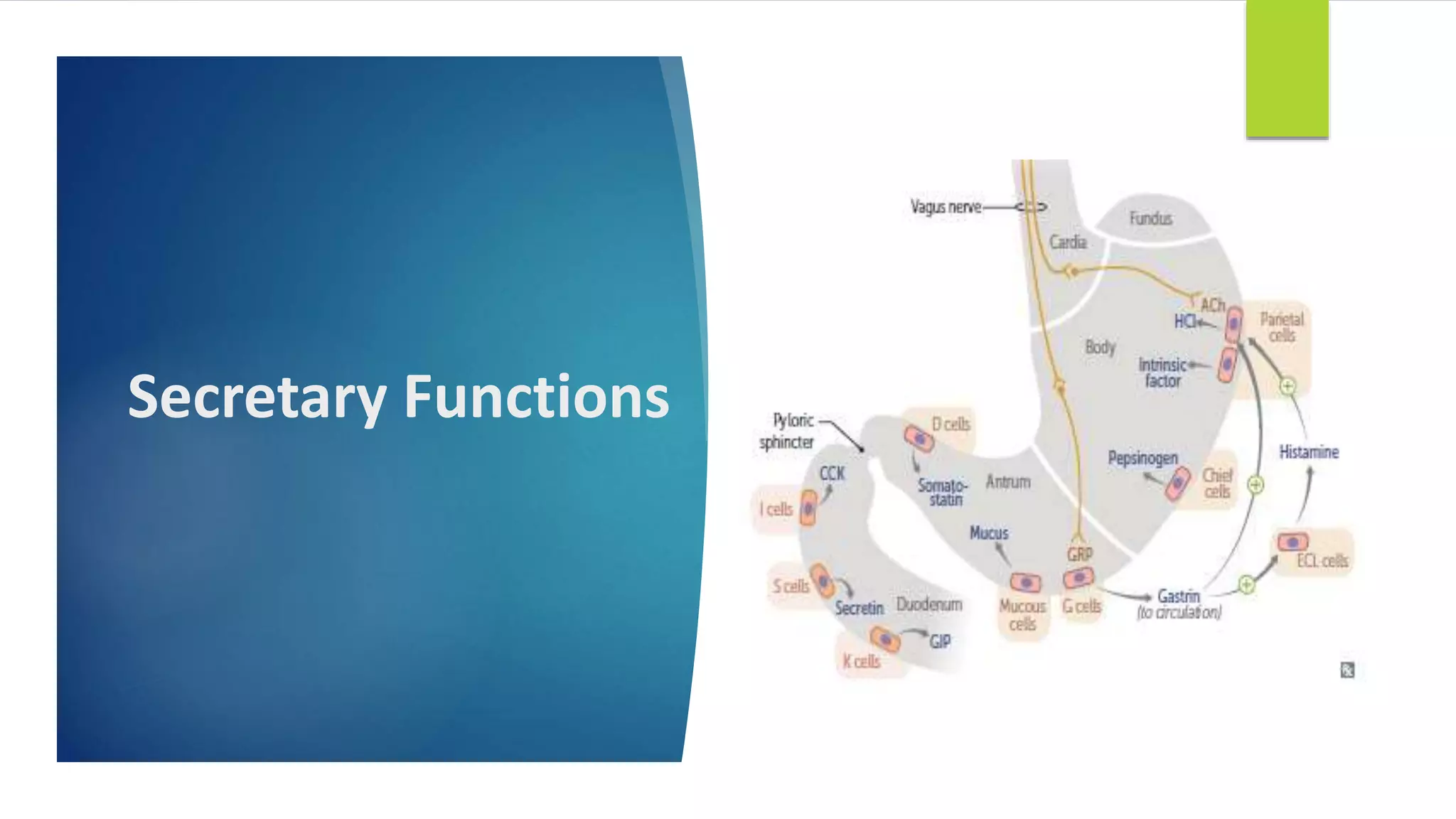
Secretary Functions
StructureofaGastricGlandfrom
thebodyofstomach
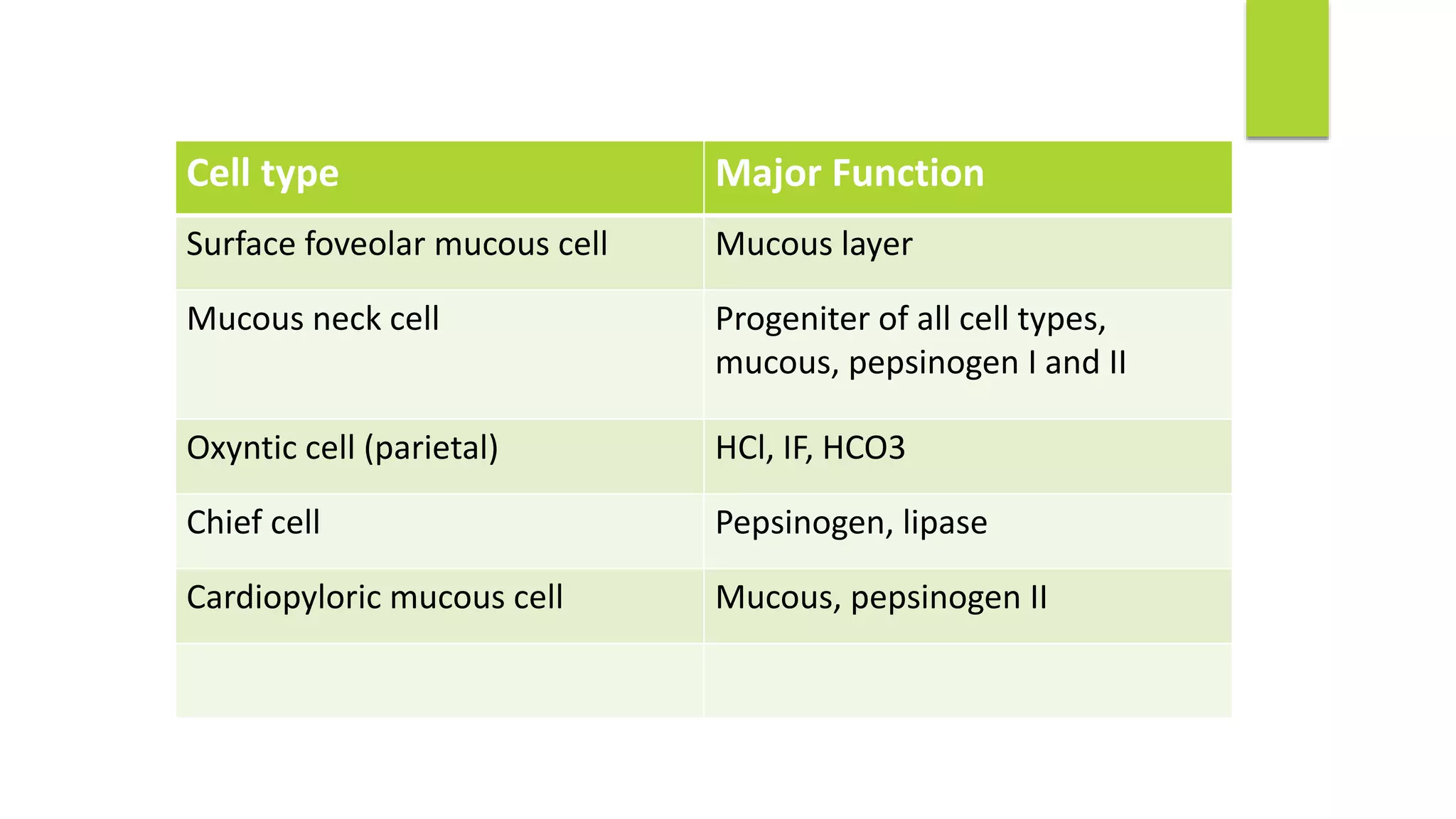
Cell type Major Function
Surface foveolar mucous cell Mucous layer
Mucous neck cell Progeniter of all cell types,
mucous, pepsinogen I and II
Oxyntic cell (parietal) HCl, IF, HCO3
Chief cell Pepsinogen, lipase
Cardiopyloric mucous cell Mucous, pepsinogen II
Endocrine cells
1. Acid Secretion
 Hastens both the physical and the biochemical breakdown
of ingested food.
 Inhibits the proliferation of ingested pathogens.
 APPLIED!
 Long-term acid suppression with proton
pump inhibitors (PPIs) has been associated
with an increased risk of community
acquired Clostridium difficile colitis and
other gastroenteritis.
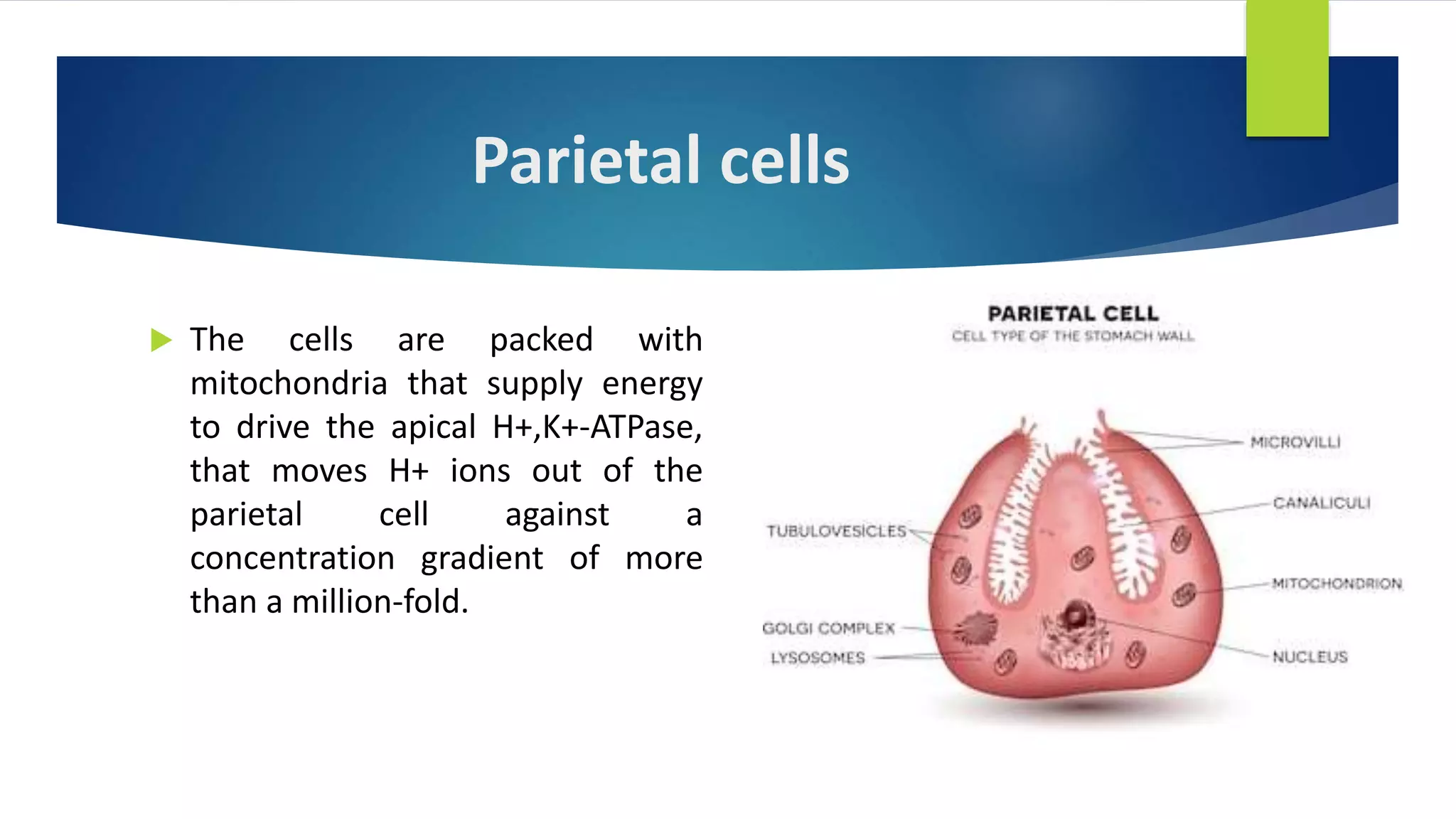
Parietal cells
 The cells are packed with
mitochondria that supply energy
to drive the apical H+,K+-ATPase,
that moves H+ ions out of the
parietal cell against a
concentration gradient of more
than a million-fold.
At rest, the proton pumps are sequestered within the parietal cell in a series of membrane
compartments known as tubulovesicles.
When the parietal cell begins to secrete, on the other hand, these vesicles fuse with
invaginations of the apical membrane.
Physiologic Acid Secretion
 Three phases:
 Cephalic
 Gastric, and
 Intestinal
a. Cephalic or Vagal Phase
 Cephalic or Vagal Phase (30%)
Thought, sight, smell, and/or taste of food.
Cortical and Hypothalamic centers
ECL cells + parietal cells.
Ach
Vagus
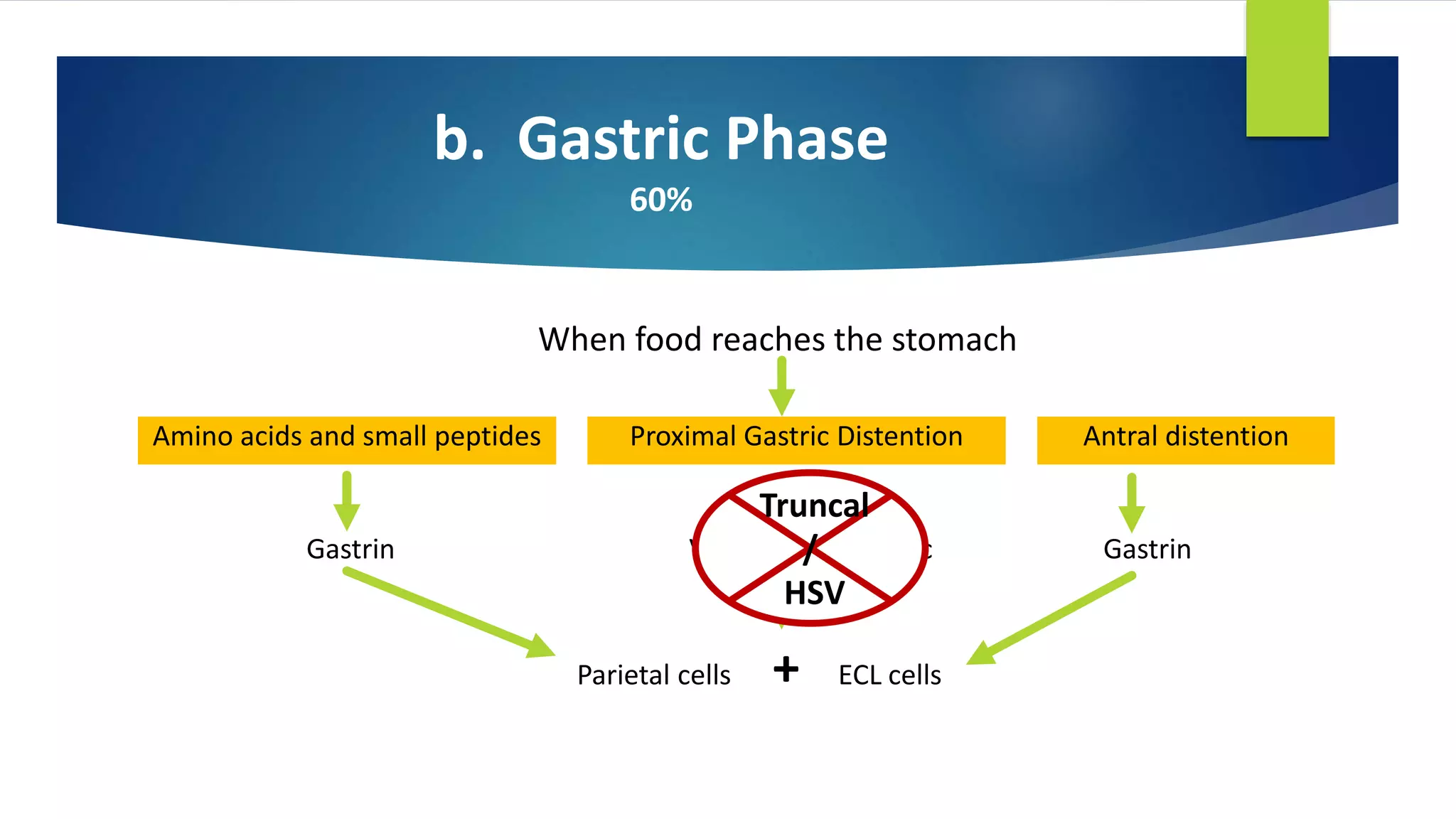
b. Gastric Phase
60%
When food reaches the stomach
Gastrin Vagovagal reflex arc Gastrin
Ac
Parietal cells + ECL cells
Amino acids and small peptides Proximal Gastric Distention Antral distention
Truncal
/
HSV
c. Intestinal Phase
10%
Food in proximal small intestines
Hormonal and neuronal reflexes
Acid secretion
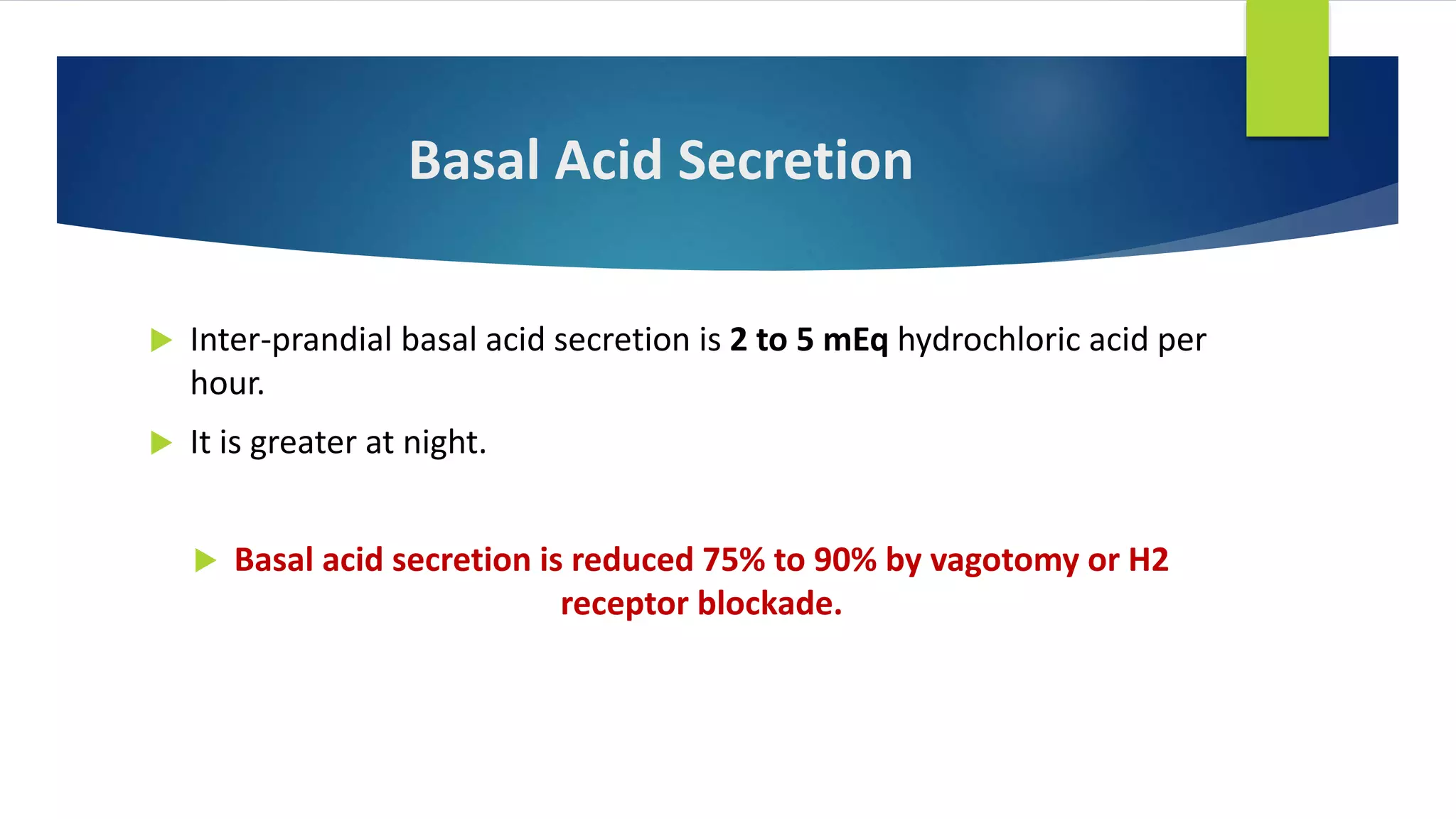
Basal Acid Secretion
 Inter-prandial basal acid secretion is 2 to 5 mEq hydrochloric acid per
hour.
 It is greater at night.
 Basal acid secretion is reduced 75% to 90% by vagotomy or H2
receptor blockade.
H.
pylori
H2RA
2. Pepsinogen Secretion
 Pepsinogen I is produced by chief cells.
 Pepsinogen II is produced in both acid producing and gastrin producing (i.e.,
antral) glands.
 Pepsinogen HCL (1.8 to 3.5) Pepsin
 Pepsin functions as an active proteolytic enzyme in a highly acid medium.
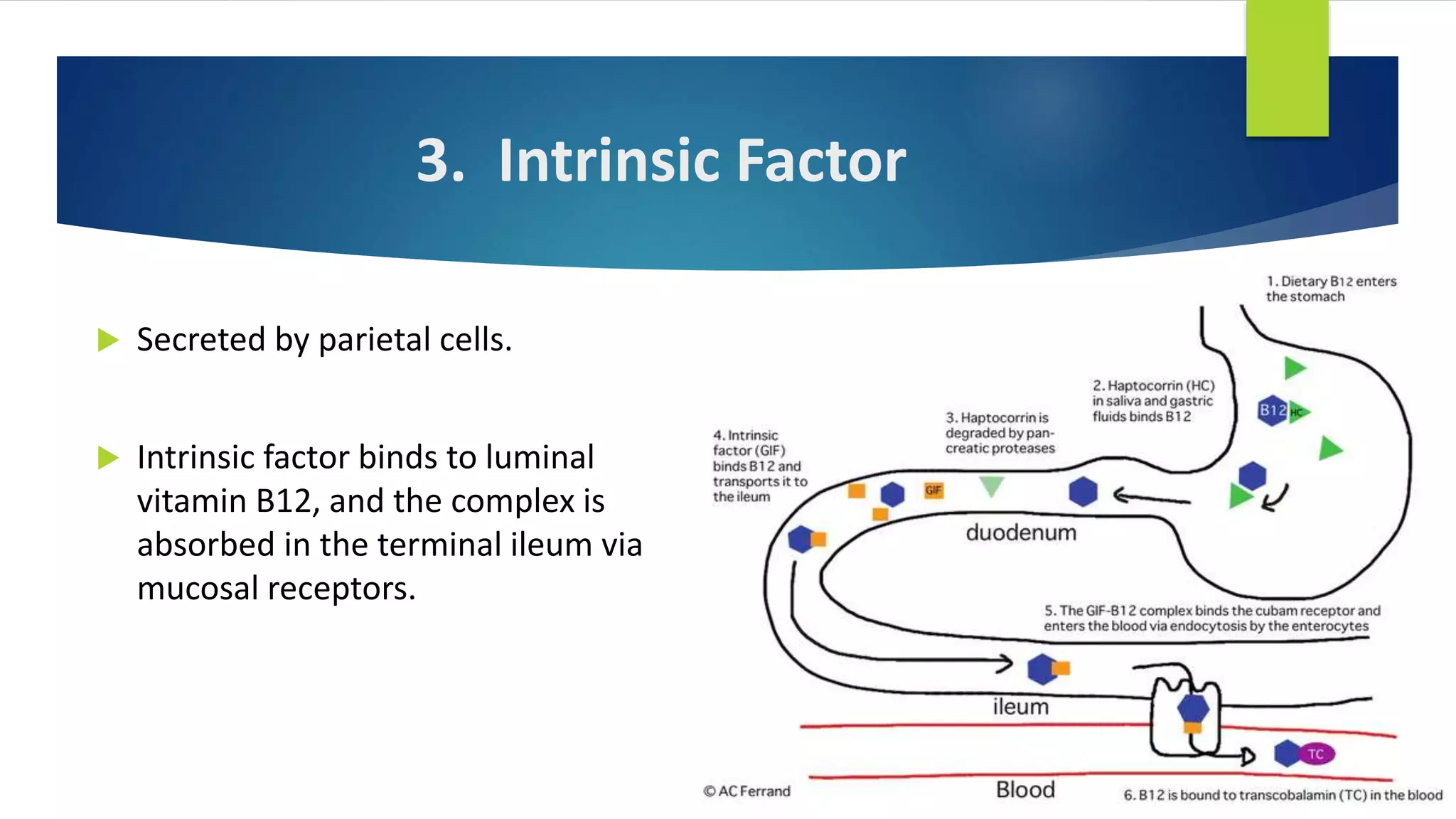
3. Intrinsic Factor
 Secreted by parietal cells.
 Intrinsic factor binds to luminal
vitamin B12, and the complex is
absorbed in the terminal ileum via
mucosal receptors.
Applied!
Patients with total gastrectomy or pernicious anemia require B12
supplementation by a non-enteric route.
4. Gastric Hormones
A. Gastrin is produced by antral G cells
 Molecular forms
 Big gastrin (34 amino acids; G34),
 Little gastrin (17 amino acids; G17)
[main]
 Mini-gastrin (14 amino acids; G14).
 Main stimulants : Luminal peptides
and amino acids.
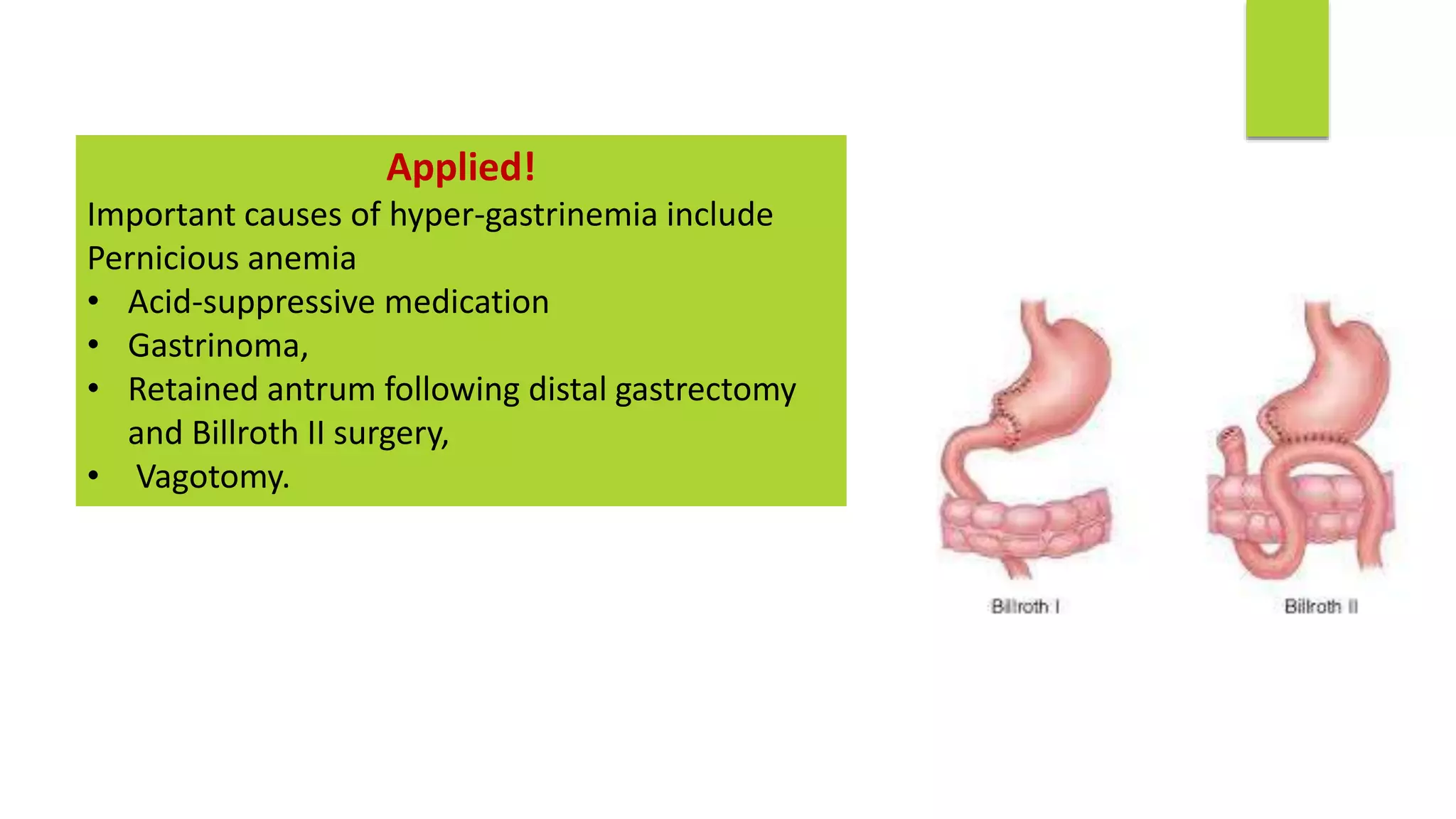
Applied!
Important causes of hyper-gastrinemia include
Pernicious anemia
• Acid-suppressive medication
• Gastrinoma,
• Retained antrum following distal gastrectomy
and Billroth II surgery,
• Vagotomy.
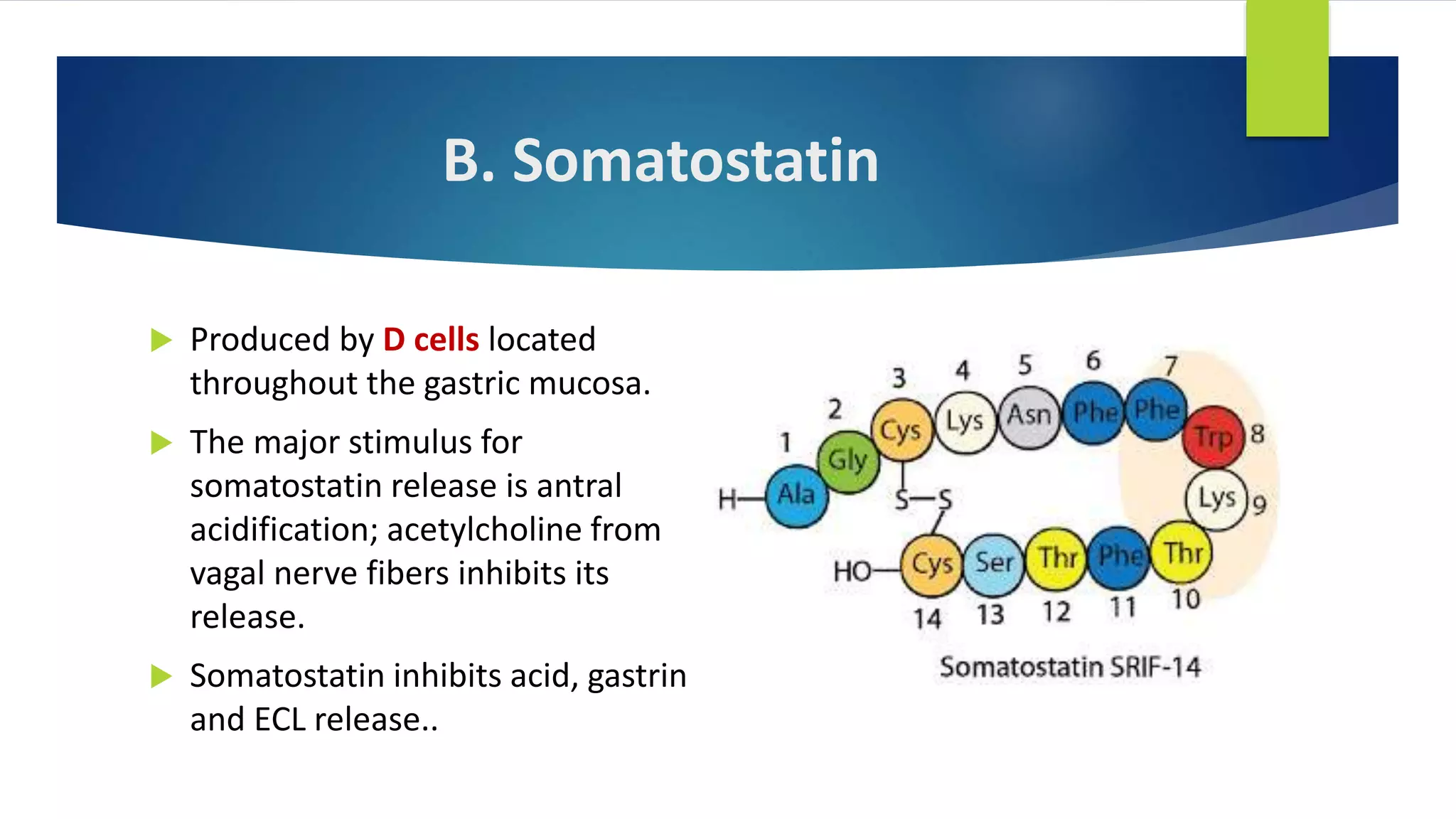
B. Somatostatin
 Produced by D cells located
throughout the gastric mucosa.
 The major stimulus for
somatostatin release is antral
acidification; acetylcholine from
vagal nerve fibers inhibits its
release.
 Somatostatin inhibits acid, gastrin
and ECL release..
C. Gastrin-Releasing Peptide
 In the antrum, GRP stimulates both gastrin and somatostatin
release.
 GRP is a mediator of gastroprotective increased mucosal blood
flow in response to luminal irritants.
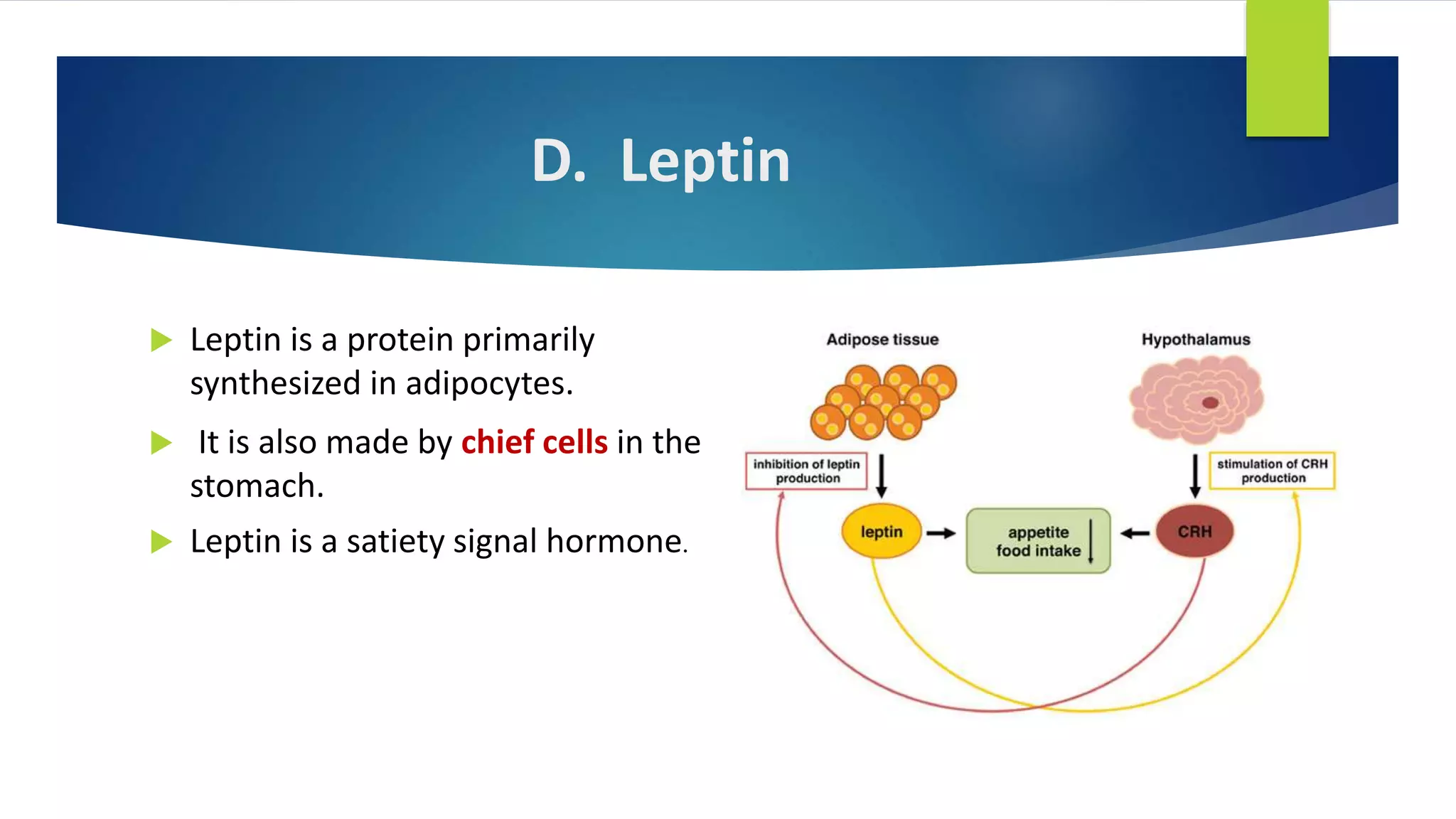
D. Leptin
 Leptin is a protein primarily
synthesized in adipocytes.
 It is also made by chief cells in the
stomach.
 Leptin is a satiety signal hormone.
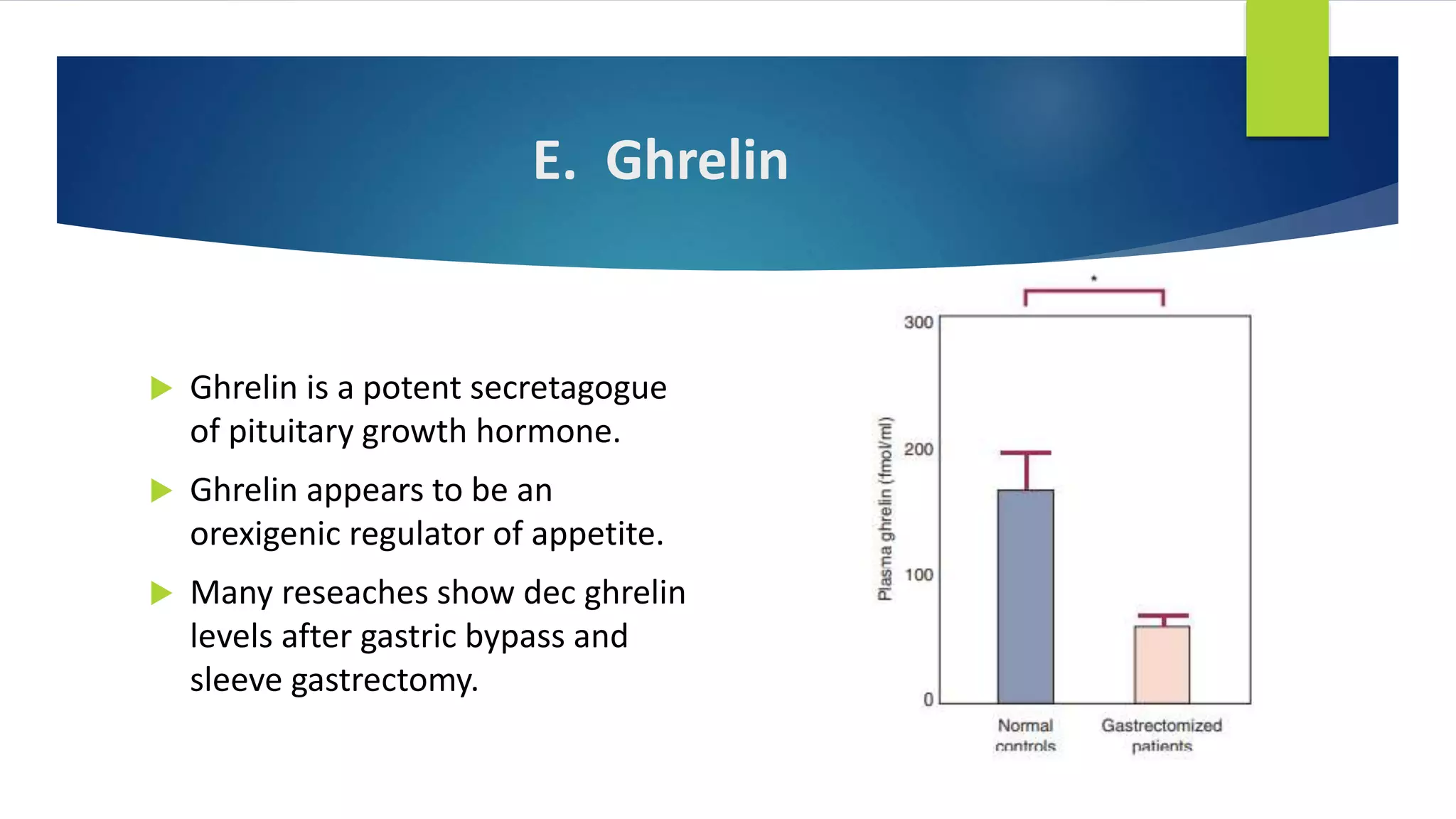
E. Ghrelin
 Ghrelin is a potent secretagogue
of pituitary growth hormone.
 Ghrelin appears to be an
orexigenic regulator of appetite.
 Many reseaches show dec ghrelin
levels after gastric bypass and
sleeve gastrectomy.
Gastric Motility
and Emptying
Functions of Gastric Motility
 Inter-prandial motor activity clears the stomach of undigested
debris, sloughed cells, and mucus.
 When feeding begins, the stomach relaxes to accommodate the
meal (receptive relaxation).
 Regulated motor activity then breaks down the food into small
particles and controls the output into the duodenum.
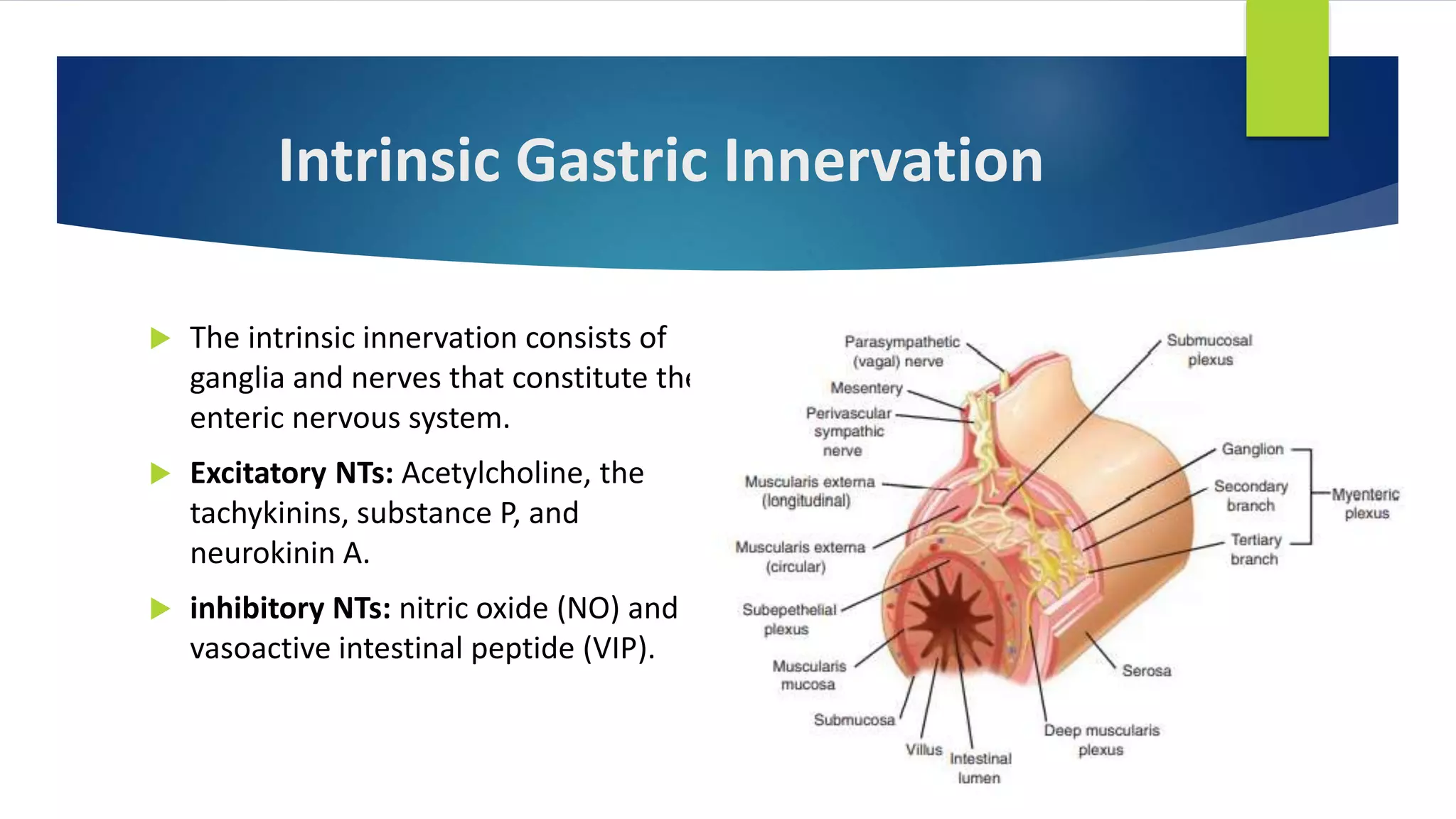
Intrinsic Gastric Innervation
 The intrinsic innervation consists of
ganglia and nerves that constitute the
enteric nervous system.
 Excitatory NTs: Acetylcholine, the
tachykinins, substance P, and
neurokinin A.
 inhibitory NTs: nitric oxide (NO) and
vasoactive intestinal peptide (VIP).
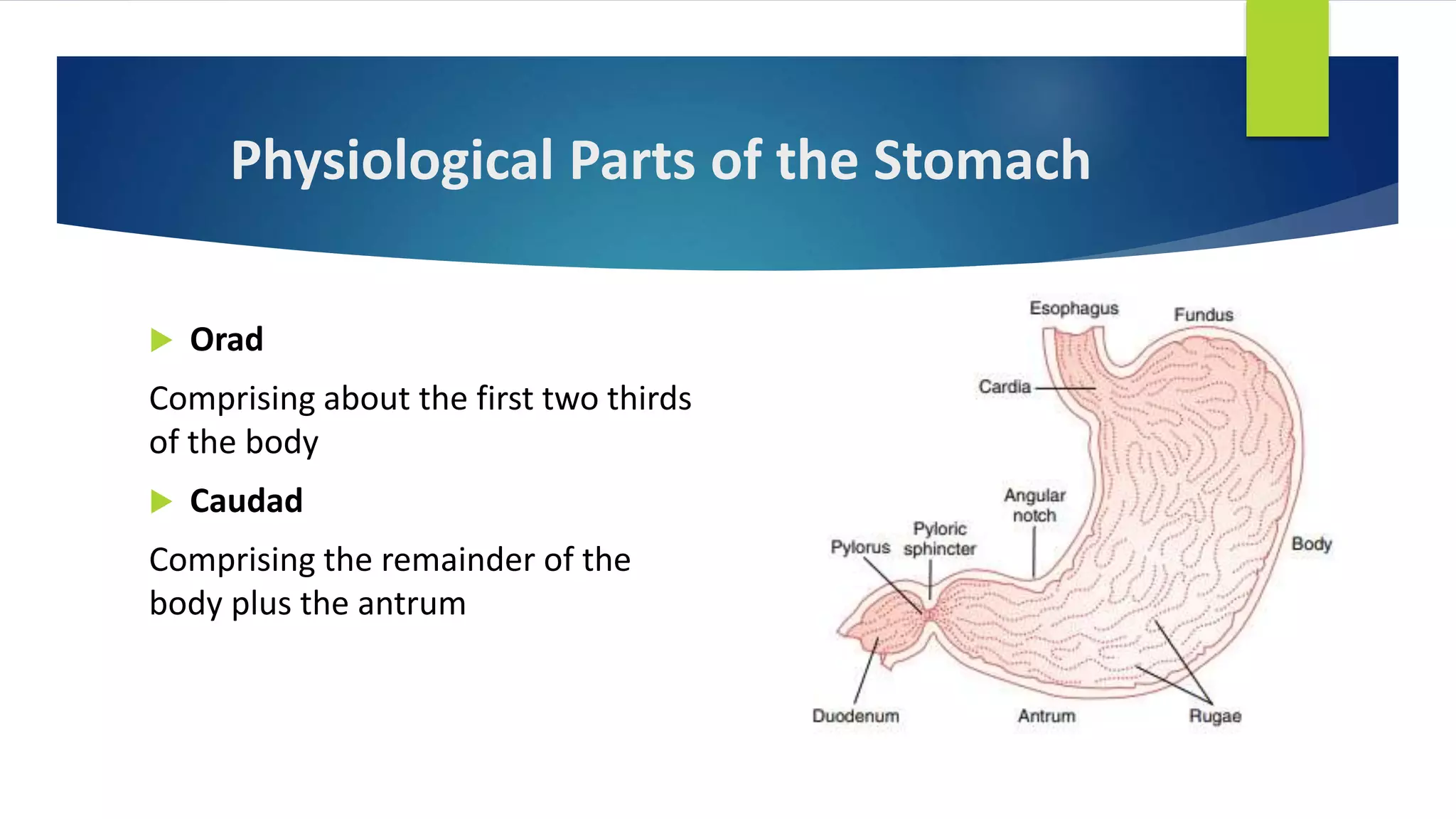
Physiological Parts of the Stomach
 Orad
Comprising about the first two thirds
of the body
 Caudad
Comprising the remainder of the
body plus the antrum
1. Storage Function
When food is ingested orad/ proximal stomach relaxes by two vagovagal reflexes
 Receptive relaxation
Reduction in proximal gastric tone associated with the act of swallowing. This occurs
before the food reaches the stomach.
 Gastric accommodation
Proximal gastric relaxation associated with distention of the stomach.
Accommodation is mediated through stretch receptors in the gastric wall.
Applied!
Receptive relaxation and accommodation
reflexes are significantly altered by truncal
and highly selective vagotomy resulting in
decrease compliance and increased intra
gastric pressure.
2. Mixing and Grinding
 As long as food is in the stomach, weak peristaltic constrictor waves, called mixing
waves, begin in the mid to upper portions of the stomach.
 As the constrictor waves progress from the body of the stomach into the antrum,
they become more intense.
 As each peristaltic wave approaches the pylorus, the pyloric muscle itself often
contracts, facilitating retropulsion of the solid food bolus back into the body of
the stomach for additional breakdown.
Migrating Motor Complex (MMC)
 During fasting, distal gastric motor activity is controlled by the
migrating motor complex (MMC).
 Function: sweep along any undigested food, debris etc.
Phases
Phase I: period of relative motor
inactivity.
Phase II : irregular, high-amplitude,
generally non-propulsive contractions.
Phase III, a period of intense, regular
propulsive contractions. (motilin
regulated; produced by duodenum)
Phase IV: is a transition period.
Applied!
1. Vagotomy abolishes phase II of the gastric
MMC.
2. Resection of the duodenum abolishes distal
gastric phase III in dogs, and resection of the
duodenum in humans (e.g., with
pancreaticoduodenectomy, the Whipple
procedure) commonly results in early
postoperative delayed gastric emptying.
Gastric Emptying
 Strong Antral contractions along with relaxation of pylorus under
neuro-hormonal control.
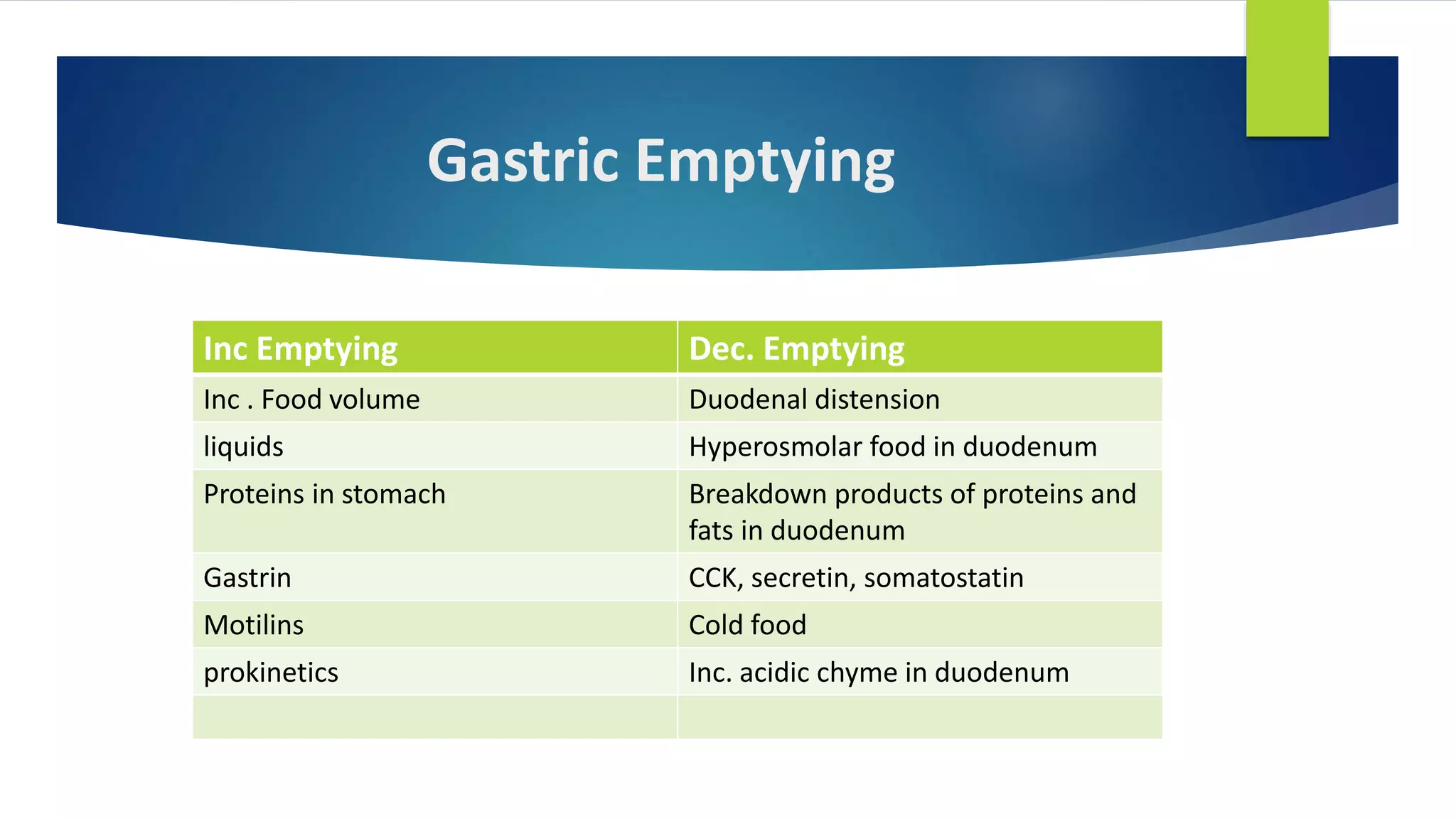
Gastric Emptying
Inc Emptying Dec. Emptying
Inc . Food volume Duodenal distension
liquids Hyperosmolar food in duodenum
Proteins in stomach Breakdown products of proteins and
fats in duodenum
Gastrin CCK, secretin, somatostatin
Motilins Cold food
prokinetics Inc. acidic chyme in duodenum
Thank you!

Physiology of stomach

  • 2.
    PHYSIOLOGY OF STOMACH BY:DR. BASIT ALI KHAN
  • 3.
    Functions of Stomach A.Secretory functions  Production of acid,  Pepsin,  Intrinsic factor,  Mucus,  GI hormones.
  • 4.
    Functions of Stomach B.Motor functions  Food storage (receptive relaxation and accommodation),  Grinding and mixing,  Controlled emptying of ingested food, and
  • 5.
  • 6.
  • 7.
    Cell type MajorFunction Surface foveolar mucous cell Mucous layer Mucous neck cell Progeniter of all cell types, mucous, pepsinogen I and II Oxyntic cell (parietal) HCl, IF, HCO3 Chief cell Pepsinogen, lipase Cardiopyloric mucous cell Mucous, pepsinogen II
  • 8.
  • 9.
    1. Acid Secretion Hastens both the physical and the biochemical breakdown of ingested food.  Inhibits the proliferation of ingested pathogens.
  • 10.
     APPLIED!  Long-termacid suppression with proton pump inhibitors (PPIs) has been associated with an increased risk of community acquired Clostridium difficile colitis and other gastroenteritis.
  • 11.
    Parietal cells  Thecells are packed with mitochondria that supply energy to drive the apical H+,K+-ATPase, that moves H+ ions out of the parietal cell against a concentration gradient of more than a million-fold.
  • 12.
    At rest, theproton pumps are sequestered within the parietal cell in a series of membrane compartments known as tubulovesicles. When the parietal cell begins to secrete, on the other hand, these vesicles fuse with invaginations of the apical membrane.
  • 14.
    Physiologic Acid Secretion Three phases:  Cephalic  Gastric, and  Intestinal
  • 15.
    a. Cephalic orVagal Phase  Cephalic or Vagal Phase (30%) Thought, sight, smell, and/or taste of food. Cortical and Hypothalamic centers ECL cells + parietal cells. Ach Vagus
  • 16.
    b. Gastric Phase 60% Whenfood reaches the stomach Gastrin Vagovagal reflex arc Gastrin Ac Parietal cells + ECL cells Amino acids and small peptides Proximal Gastric Distention Antral distention Truncal / HSV
  • 17.
    c. Intestinal Phase 10% Foodin proximal small intestines Hormonal and neuronal reflexes Acid secretion
  • 18.
    Basal Acid Secretion Inter-prandial basal acid secretion is 2 to 5 mEq hydrochloric acid per hour.  It is greater at night.  Basal acid secretion is reduced 75% to 90% by vagotomy or H2 receptor blockade.
  • 19.
  • 20.
    2. Pepsinogen Secretion Pepsinogen I is produced by chief cells.  Pepsinogen II is produced in both acid producing and gastrin producing (i.e., antral) glands.  Pepsinogen HCL (1.8 to 3.5) Pepsin  Pepsin functions as an active proteolytic enzyme in a highly acid medium.
  • 21.
    3. Intrinsic Factor Secreted by parietal cells.  Intrinsic factor binds to luminal vitamin B12, and the complex is absorbed in the terminal ileum via mucosal receptors.
  • 22.
    Applied! Patients with totalgastrectomy or pernicious anemia require B12 supplementation by a non-enteric route.
  • 23.
    4. Gastric Hormones A.Gastrin is produced by antral G cells  Molecular forms  Big gastrin (34 amino acids; G34),  Little gastrin (17 amino acids; G17) [main]  Mini-gastrin (14 amino acids; G14).  Main stimulants : Luminal peptides and amino acids.
  • 24.
    Applied! Important causes ofhyper-gastrinemia include Pernicious anemia • Acid-suppressive medication • Gastrinoma, • Retained antrum following distal gastrectomy and Billroth II surgery, • Vagotomy.
  • 25.
    B. Somatostatin  Producedby D cells located throughout the gastric mucosa.  The major stimulus for somatostatin release is antral acidification; acetylcholine from vagal nerve fibers inhibits its release.  Somatostatin inhibits acid, gastrin and ECL release..
  • 26.
    C. Gastrin-Releasing Peptide In the antrum, GRP stimulates both gastrin and somatostatin release.  GRP is a mediator of gastroprotective increased mucosal blood flow in response to luminal irritants.
  • 27.
    D. Leptin  Leptinis a protein primarily synthesized in adipocytes.  It is also made by chief cells in the stomach.  Leptin is a satiety signal hormone.
  • 28.
    E. Ghrelin  Ghrelinis a potent secretagogue of pituitary growth hormone.  Ghrelin appears to be an orexigenic regulator of appetite.  Many reseaches show dec ghrelin levels after gastric bypass and sleeve gastrectomy.
  • 29.
  • 30.
    Functions of GastricMotility  Inter-prandial motor activity clears the stomach of undigested debris, sloughed cells, and mucus.  When feeding begins, the stomach relaxes to accommodate the meal (receptive relaxation).  Regulated motor activity then breaks down the food into small particles and controls the output into the duodenum.
  • 31.
    Intrinsic Gastric Innervation The intrinsic innervation consists of ganglia and nerves that constitute the enteric nervous system.  Excitatory NTs: Acetylcholine, the tachykinins, substance P, and neurokinin A.  inhibitory NTs: nitric oxide (NO) and vasoactive intestinal peptide (VIP).
  • 32.
    Physiological Parts ofthe Stomach  Orad Comprising about the first two thirds of the body  Caudad Comprising the remainder of the body plus the antrum
  • 33.
    1. Storage Function Whenfood is ingested orad/ proximal stomach relaxes by two vagovagal reflexes  Receptive relaxation Reduction in proximal gastric tone associated with the act of swallowing. This occurs before the food reaches the stomach.  Gastric accommodation Proximal gastric relaxation associated with distention of the stomach. Accommodation is mediated through stretch receptors in the gastric wall.
  • 34.
    Applied! Receptive relaxation andaccommodation reflexes are significantly altered by truncal and highly selective vagotomy resulting in decrease compliance and increased intra gastric pressure.
  • 35.
    2. Mixing andGrinding  As long as food is in the stomach, weak peristaltic constrictor waves, called mixing waves, begin in the mid to upper portions of the stomach.  As the constrictor waves progress from the body of the stomach into the antrum, they become more intense.  As each peristaltic wave approaches the pylorus, the pyloric muscle itself often contracts, facilitating retropulsion of the solid food bolus back into the body of the stomach for additional breakdown.
  • 36.
    Migrating Motor Complex(MMC)  During fasting, distal gastric motor activity is controlled by the migrating motor complex (MMC).  Function: sweep along any undigested food, debris etc.
  • 37.
    Phases Phase I: periodof relative motor inactivity. Phase II : irregular, high-amplitude, generally non-propulsive contractions. Phase III, a period of intense, regular propulsive contractions. (motilin regulated; produced by duodenum) Phase IV: is a transition period.
  • 38.
    Applied! 1. Vagotomy abolishesphase II of the gastric MMC. 2. Resection of the duodenum abolishes distal gastric phase III in dogs, and resection of the duodenum in humans (e.g., with pancreaticoduodenectomy, the Whipple procedure) commonly results in early postoperative delayed gastric emptying.
  • 39.
    Gastric Emptying  StrongAntral contractions along with relaxation of pylorus under neuro-hormonal control.
  • 40.
    Gastric Emptying Inc EmptyingDec. Emptying Inc . Food volume Duodenal distension liquids Hyperosmolar food in duodenum Proteins in stomach Breakdown products of proteins and fats in duodenum Gastrin CCK, secretin, somatostatin Motilins Cold food prokinetics Inc. acidic chyme in duodenum
  • 41.