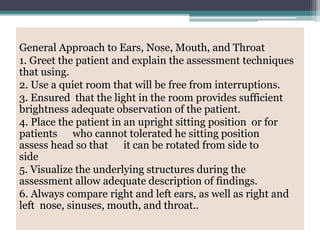
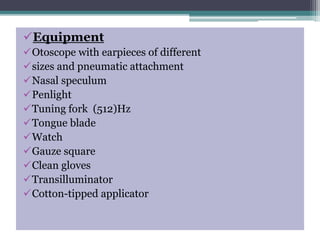
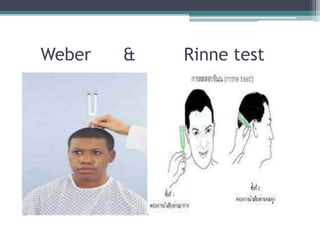
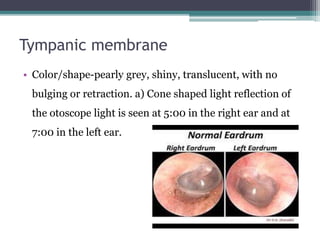
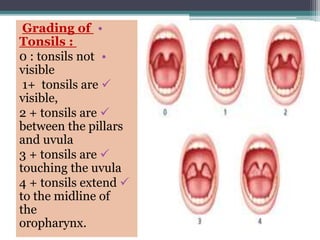
The document provides guidance on performing a physical examination of the ears, nose, mouth, and throat. It describes the normal findings and common abnormalities that may be assessed in each area. Key steps include greeting the patient, using adequate lighting, comparing both sides, and inspecting and palpating structures like the auricles, external ear canals, tympanic membranes, lips, gums, tongue, palate, oropharynx and tonsils. Common assessment techniques involve the use of an otoscope, nasal speculum, tuning fork, and visualization of structures. The goal is to evaluate for any abnormalities, lesions, discharges or other signs of potential illness or disease.