May 13 & 14, 2013
Julie Kittredge
Business Services Advisor
jkittredge@ahml.info
Why are good photos important?
 Pictures sell – think about how you shop on
Ebay or Craigslist.
 It indicates you took the time to present
yourself well.
 Quality pictures communicate quality products
 It’s a reflection of your branding
 It an education tool – to help customers
visualize how it will look in their home, on
their body, in use.
Do I need an awesome Camera?
 Use what you have
 Don’t invest in a new camera until what you
have is limiting you
 Even the iphone can give you decent results if
you use apps for basic editing
 A nice camera does help but is not imperative.
 Learning the rules of composition will help
your pictures look better immediately
Places to Share your Photos
 Website
 Blog posts
 Etsy shop, Ebay store, online e-commerce store,
decorating a physical bricks & morter shop.
 Event promotion or recap
 Facebook
 Instagram
 Pinterest
 Flickr
Choose your Subject
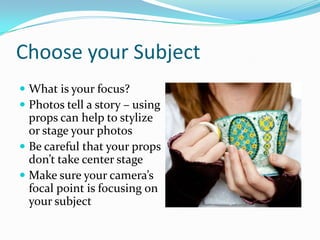
 What is your focus?
 Photos tell a story – using
props can help to stylize
or stage your photos
 Be careful that your props
don’t take center stage
 Make sure your camera’s
focal point is focusing on
your subject
What’s nearby?
 Be aware of your surroundings
 Watch your background
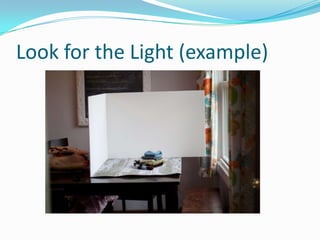
 Use a white foldable science presentation
board or sturdy foamcore as a clean base and
background
 Crop in tight to avoid distracting
backgrounds
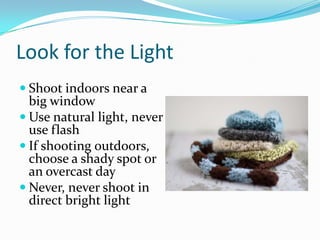
Look for the Light
 Shoot indoors near a
big window
 Use natural light, never
use flash
 If shooting outdoors,
choose a shady spot or
an overcast day
 Never, never shoot in
direct bright light
Look for the Light (example)
Composition
 Fill the Frame – zoom in tight!
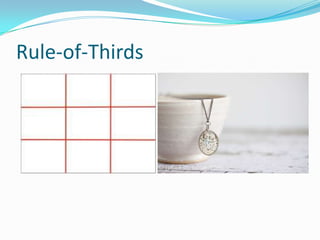
 Rule-of-thirds: focus and recompose if needed
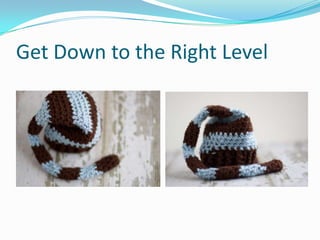
 Get down to the level of your subject
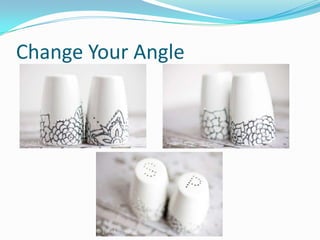
 Change your angle – up high, down low, from the side
 Capture the details
Fill the Frame
Rule-of-Thirds
Get Down to the Right Level
Change Your Angle
Capture the Details
Designers Style the Shot
 Show the item
 Show the details
 Shoot the item in use – illustrate what the item
might look like in real life
 Hang or frame the picture/painting
 Show clothes/scarves/jewelry on a model
 Display item beautifully
 Look at other shops for inspiration
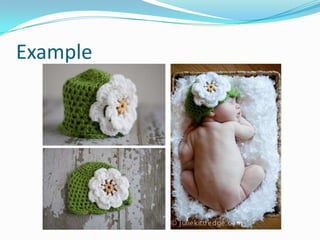
Example
Example
Examples of Photos That Sell
Minor photo editing is important
 To make professional looking images, light editing will
make your good pictures great!
 Picasa, Pixlr, Gimp (free - online)
 Photoshop Elements ($69 – Adobe software)
 Brighten
 Create depth by increasing contrast (slightly)
 Adjust the lighting or white balance (warm vs. cool)
 Crop
 Straighten
 Resize for the web
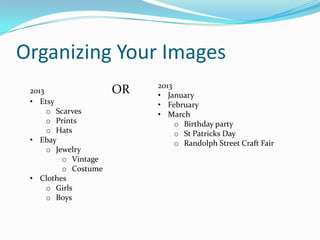
Organizing Your Images
2013
• January
• February
• March
o Birthday party
o St Patricks Day
o Randolph Street Craft Fair
2013 OR
• Etsy
o Scarves
o Prints
o Hats
• Ebay
o Jewelry
o Vintage
o Costume
• Clothes
o Girls
o Boys
Quote
“To consult the rules of composition before making
a picture is a little like consulting the law of
gravitation before going for a walk.”
~ Edward Weston

Photography for Your Business

  • 1.
    May 13 &14, 2013 Julie Kittredge Business Services Advisor jkittredge@ahml.info
  • 2.
    Why are goodphotos important?  Pictures sell – think about how you shop on Ebay or Craigslist.  It indicates you took the time to present yourself well.  Quality pictures communicate quality products  It’s a reflection of your branding  It an education tool – to help customers visualize how it will look in their home, on their body, in use.
  • 3.
    Do I needan awesome Camera?  Use what you have  Don’t invest in a new camera until what you have is limiting you  Even the iphone can give you decent results if you use apps for basic editing  A nice camera does help but is not imperative.  Learning the rules of composition will help your pictures look better immediately
  • 4.
    Places to Shareyour Photos  Website  Blog posts  Etsy shop, Ebay store, online e-commerce store, decorating a physical bricks & morter shop.  Event promotion or recap  Facebook  Instagram  Pinterest  Flickr
  • 5.
    Choose your Subject What is your focus?  Photos tell a story – using props can help to stylize or stage your photos  Be careful that your props don’t take center stage  Make sure your camera’s focal point is focusing on your subject
  • 6.
    What’s nearby?  Beaware of your surroundings  Watch your background  Use a white foldable science presentation board or sturdy foamcore as a clean base and background  Crop in tight to avoid distracting backgrounds
  • 7.
    Look for theLight  Shoot indoors near a big window  Use natural light, never use flash  If shooting outdoors, choose a shady spot or an overcast day  Never, never shoot in direct bright light
  • 8.
    Look for theLight (example)
  • 9.
    Composition  Fill theFrame – zoom in tight!  Rule-of-thirds: focus and recompose if needed  Get down to the level of your subject  Change your angle – up high, down low, from the side  Capture the details
  • 10.
  • 11.
  • 12.
    Get Down tothe Right Level
  • 13.
  • 14.
  • 15.
    Designers Style theShot  Show the item  Show the details  Shoot the item in use – illustrate what the item might look like in real life  Hang or frame the picture/painting  Show clothes/scarves/jewelry on a model  Display item beautifully  Look at other shops for inspiration
  • 16.
  • 17.
  • 18.
  • 19.
    Minor photo editingis important  To make professional looking images, light editing will make your good pictures great!  Picasa, Pixlr, Gimp (free - online)  Photoshop Elements ($69 – Adobe software)  Brighten  Create depth by increasing contrast (slightly)  Adjust the lighting or white balance (warm vs. cool)  Crop  Straighten  Resize for the web
  • 20.
    Organizing Your Images 2013 •January • February • March o Birthday party o St Patricks Day o Randolph Street Craft Fair 2013 OR • Etsy o Scarves o Prints o Hats • Ebay o Jewelry o Vintage o Costume • Clothes o Girls o Boys
  • 21.
    Quote “To consult therules of composition before making a picture is a little like consulting the law of gravitation before going for a walk.” ~ Edward Weston