Phonology for Teachers
By : Miss Areeya Hongsuwan ( 2EN )
Student ID 55010513039
Faculty of Education, English Major
Text
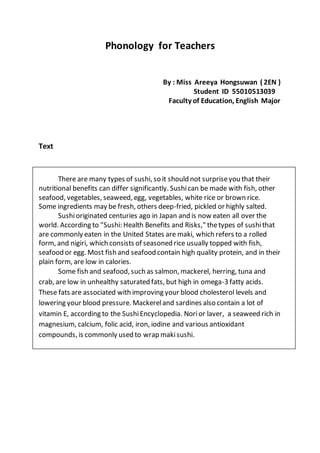
There are many types of sushi, so it should not surpriseyou that their
nutritional benefits can differ significantly. Sushican be made with fish, other
seafood, vegetables, seaweed, egg, vegetables, white rice or brown rice.
Some ingredients may be fresh, others deep-fried, pickled or highly salted.
Sushioriginated centuries ago in Japan and is now eaten all over the
world. According to "Sushi: Health Benefits and Risks," thetypes of sushithat
are commonly eaten in the United States are maki, which refers to a rolled
form, and nigiri, which consists of seasoned rice usually topped with fish,
seafood or egg. Most fish and seafood contain high quality protein, and in their
plain form, are low in calories.
Some fish and seafood, such as salmon, mackerel, herring, tuna and
crab, are low in unhealthy saturated fats, but high in omega-3 fatty acids.
These fats are associated with improving your blood cholesterol levels and
lowering your blood pressure. Mackereland sardines also contain a lot of
vitamin E, according to the SushiEncyclopedia. Norior laver, a seaweed rich in
magnesium, calcium, folic acid, iron, iodine and various antioxidant
compounds, is commonly used to wrap makisushi.
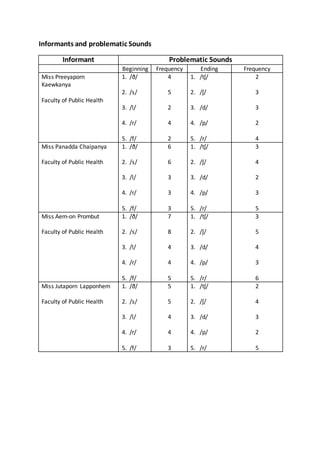
Informants and problematic Sounds
Informant Problematic Sounds
Beginning Frequency Ending Frequency
Miss Preeyaporn
Kaewkanya
Faculty of Public Health
1. /ð/
2. /s/
3. /l/
4. /r/
5. /f/
4
5
2
4
2
1. /tʃ/
2. /ʃ/
3. /d/
4. /p/
5. /r/
2
3
3
2
4
Miss Panadda Chaipanya
Faculty of Public Health
1. /ð/
2. /s/
3. /l/
4. /r/
5. /f/
6
6
3
3
3
1. /tʃ/
2. /ʃ/
3. /d/
4. /p/
5. /r/
3
4
2
3
5
Miss Aem-on Prombut
Faculty of Public Health
1. /ð/
2. /s/
3. /l/
4. /r/
5. /f/
7
8
4
4
5
1. /tʃ/
2. /ʃ/
3. /d/
4. /p/
5. /r/
3
5
4
3
6
Miss Jutaporn Lapponhem
Faculty of Public Health
1. /ð/
2. /s/
3. /l/
4. /r/
5. /f/
5
5
4
4
3
1. /tʃ/
2. /ʃ/
3. /d/
4. /p/
5. /r/
2
4
3
2
5
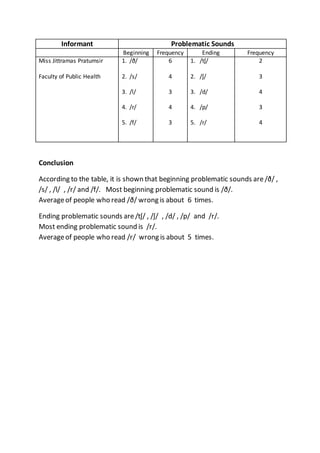
Informant Problematic Sounds
Beginning Frequency Ending Frequency
Miss Jittramas Pratumsir
Faculty of Public Health
1. /ð/
2. /s/
3. /l/
4. /r/
5. /f/
6
4
3
4
3
1. /tʃ/
2. /ʃ/
3. /d/
4. /p/
5. /r/
2
3
4
3
4
Conclusion
According to the table, it is shown that beginning problematic sounds are /ð/ ,
/s/ , /l/ , /r/ and /f/. Most beginning problematic sound is /ð/.
Averageof people who read /ð/ wrong is about 6 times.
Ending problematic sounds are/tʃ/ , /ʃ/ , /d/ , /p/ and /r/.
Most ending problematic sound is /r/.
Averageof people who read /r/ wrong is about 5 times.

Phonology areeya039

  • 1.
    Phonology for Teachers By: Miss Areeya Hongsuwan ( 2EN ) Student ID 55010513039 Faculty of Education, English Major Text There are many types of sushi, so it should not surpriseyou that their nutritional benefits can differ significantly. Sushican be made with fish, other seafood, vegetables, seaweed, egg, vegetables, white rice or brown rice. Some ingredients may be fresh, others deep-fried, pickled or highly salted. Sushioriginated centuries ago in Japan and is now eaten all over the world. According to "Sushi: Health Benefits and Risks," thetypes of sushithat are commonly eaten in the United States are maki, which refers to a rolled form, and nigiri, which consists of seasoned rice usually topped with fish, seafood or egg. Most fish and seafood contain high quality protein, and in their plain form, are low in calories. Some fish and seafood, such as salmon, mackerel, herring, tuna and crab, are low in unhealthy saturated fats, but high in omega-3 fatty acids. These fats are associated with improving your blood cholesterol levels and lowering your blood pressure. Mackereland sardines also contain a lot of vitamin E, according to the SushiEncyclopedia. Norior laver, a seaweed rich in magnesium, calcium, folic acid, iron, iodine and various antioxidant compounds, is commonly used to wrap makisushi.
  • 2.
    Informants and problematicSounds Informant Problematic Sounds Beginning Frequency Ending Frequency Miss Preeyaporn Kaewkanya Faculty of Public Health 1. /ð/ 2. /s/ 3. /l/ 4. /r/ 5. /f/ 4 5 2 4 2 1. /tʃ/ 2. /ʃ/ 3. /d/ 4. /p/ 5. /r/ 2 3 3 2 4 Miss Panadda Chaipanya Faculty of Public Health 1. /ð/ 2. /s/ 3. /l/ 4. /r/ 5. /f/ 6 6 3 3 3 1. /tʃ/ 2. /ʃ/ 3. /d/ 4. /p/ 5. /r/ 3 4 2 3 5 Miss Aem-on Prombut Faculty of Public Health 1. /ð/ 2. /s/ 3. /l/ 4. /r/ 5. /f/ 7 8 4 4 5 1. /tʃ/ 2. /ʃ/ 3. /d/ 4. /p/ 5. /r/ 3 5 4 3 6 Miss Jutaporn Lapponhem Faculty of Public Health 1. /ð/ 2. /s/ 3. /l/ 4. /r/ 5. /f/ 5 5 4 4 3 1. /tʃ/ 2. /ʃ/ 3. /d/ 4. /p/ 5. /r/ 2 4 3 2 5
  • 3.
    Informant Problematic Sounds BeginningFrequency Ending Frequency Miss Jittramas Pratumsir Faculty of Public Health 1. /ð/ 2. /s/ 3. /l/ 4. /r/ 5. /f/ 6 4 3 4 3 1. /tʃ/ 2. /ʃ/ 3. /d/ 4. /p/ 5. /r/ 2 3 4 3 4 Conclusion According to the table, it is shown that beginning problematic sounds are /ð/ , /s/ , /l/ , /r/ and /f/. Most beginning problematic sound is /ð/. Averageof people who read /ð/ wrong is about 6 times. Ending problematic sounds are/tʃ/ , /ʃ/ , /d/ , /p/ and /r/. Most ending problematic sound is /r/. Averageof people who read /r/ wrong is about 5 times.