THE PHILIPPINE GOVERNMENT
PROCUREMENT SYSTEM
An Overview
PROBLEMS REFORMS
• Confusion caused by
fragmented legal system
• Enactment of the
Government Procurement
Reform Act (GPRA)
• Inconsistent policies, rules,
and regulations due to lack
of standards
• Creation of the
Government Procurement
Policy Board (GPPB)
• Lack of transparency • Use of PhilGEPS
• Lack of check and balance • Participation of civil society
Problem Areas and Reform Measures
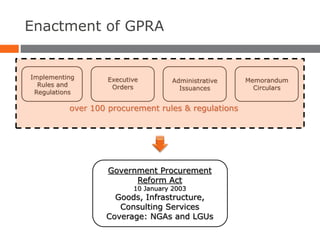
Implementing
Rules and
Regulations
Executive
Orders
Administrative
Issuances
Memorandum
Circulars
over 100 procurement rules & regulations
Government Procurement
Reform Act
10 January 2003
Goods, Infrastructure,
Consulting Services
Coverage: NGAs and LGUs
Enactment of GPRA
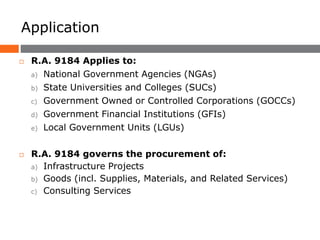
 R.A. 9184 Applies to:
a) National Government Agencies (NGAs)
b) State Universities and Colleges (SUCs)
c) Government Owned or Controlled Corporations (GOCCs)
d) Government Financial Institutions (GFIs)
e) Local Government Units (LGUs)
 R.A. 9184 governs the procurement of:
a) Infrastructure Projects
b) Goods (incl. Supplies, Materials, and Related Services)
c) Consulting Services
Application
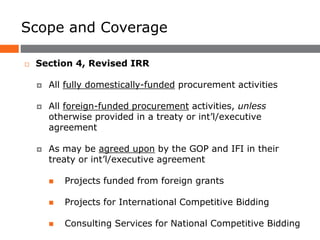
 Section 4, Revised IRR
 All fully domestically-funded procurement activities
 All foreign-funded procurement activities, unless
otherwise provided in a treaty or int’l/executive
agreement
 As may be agreed upon by the GOP and IFI in their
treaty or int’l/executive agreement
 Projects funded from foreign grants
 Projects for International Competitive Bidding
 Consulting Services for National Competitive Bidding
Scope and Coverage
 GOP negotiating panels shall:
 Adopt as default position, use of the IRR or selection
through competitive bidding
 Explain in writing if treaty or int’l/executive agreement
states otherwise
Scope and Coverage
 Transparency
 Wider dissemination of bid opportunities
 Competitiveness
 Equal opportunity to all eligible bidders
 Streamlined Process
 Uniformly applicable to all government agencies
 Effective and efficient method
 System of Accountability
 “Answerable”
 Public Monitoring
 Awareness and vigilance
Governing Principles
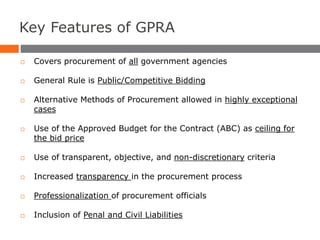
 Covers procurement of all government agencies
 General Rule is Public/Competitive Bidding
 Alternative Methods of Procurement allowed in highly exceptional
cases
 Use of the Approved Budget for the Contract (ABC) as ceiling for
the bid price
 Use of transparent, objective, and non-discretionary criteria
 Increased transparency in the procurement process
 Professionalization of procurement officials
 Inclusion of Penal and Civil Liabilities
Key Features of GPRA
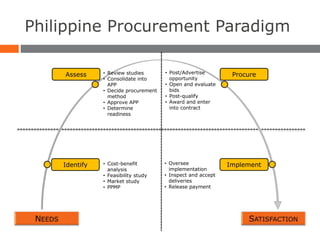
Identify
Assess Procure
Implement
• Cost-benefit
analysis
• Feasibility study
• Market study
• PPMP
• Review studies
• Consolidate into
APP
• Decide procurement
method
• Approve APP
• Determine
readiness
• Post/Advertise
opportunity
• Open and evaluate
bids
• Post-qualify
• Award and enter
into contract
• Oversee
implementation
• Inspect and accept
deliveries
• Release payment
Philippine Procurement Paradigm
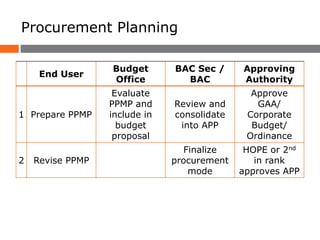
Procurement Planning
End User
Budget
Office
BAC Sec /
BAC
Approving
Authority
1 Prepare PPMP
Evaluate
PPMP and
include in
budget
proposal
Review and
consolidate
into APP
Approve
GAA/
Corporate
Budget/
Ordinance
2 Revise PPMP
Finalize
procurement
mode
HOPE or 2nd
in rank
approves APP
Procurement Planning
Actions Risks Identified
Needs Assessment,
Planning, and
Budgeting
• Purchase is unnecessary
• Necessary but overestimated
• Unrealistic/Deficient budget
• Not aligned with the overall program
• Interference of high-level officials
• Informal agreement on contract
• Insufficient time frame
Definition of Technical
Requirements and/or
Specifications
• Tailored for one company
• Too vague
• Not based on performance requirements
Choice of Procurement
Procedure
• Abuse of non-competitive procedures on the basis
of legal exceptions through:
a) Contract splitting;
b) Abuse of extreme urgency;
c) Abuse of other exceptions based on a
technicality or exclusive rights, etc.;
d) Untested continuation of existing contracts.
Source: Integrity in Public Procurement: Good Practice from A to Z published by the Organisation for Economic Co-operation and Development on 2007.
Procurement Methods
 All Procurement shall be done through competitive
bidding except as provided in R.A. 9184
 Resort to alternative methods shall be made
 Only in highly exceptional cases
 To promote economy and efficiency
 Justified by conditions specified in R.A. 9184 and its
IRR
Procurement Methods
Method Goods Infra Cons
1. Competitive Bidding   
2. Limited Source Bidding  
3. Direct Contracting 
4. Repeat Order 
5. Shopping 
6. Negotiated Procurement   
Pre-Bid
Conference
Opening of
Technical Proposal
(incl. eligibility docs)
Opening of
Financial Proposal
Bid Evaluation Post-qualification
Pre-
Procurement
Conference
Advertisement
and/or
Posting
Bid
Submission
Contract
Award
Bidding Process
THANK YOU

Philippine procurement system

  • 1.
  • 2.
    PROBLEMS REFORMS • Confusioncaused by fragmented legal system • Enactment of the Government Procurement Reform Act (GPRA) • Inconsistent policies, rules, and regulations due to lack of standards • Creation of the Government Procurement Policy Board (GPPB) • Lack of transparency • Use of PhilGEPS • Lack of check and balance • Participation of civil society Problem Areas and Reform Measures
  • 3.
    Implementing Rules and Regulations Executive Orders Administrative Issuances Memorandum Circulars over 100procurement rules & regulations Government Procurement Reform Act 10 January 2003 Goods, Infrastructure, Consulting Services Coverage: NGAs and LGUs Enactment of GPRA
  • 4.
     R.A. 9184Applies to: a) National Government Agencies (NGAs) b) State Universities and Colleges (SUCs) c) Government Owned or Controlled Corporations (GOCCs) d) Government Financial Institutions (GFIs) e) Local Government Units (LGUs)  R.A. 9184 governs the procurement of: a) Infrastructure Projects b) Goods (incl. Supplies, Materials, and Related Services) c) Consulting Services Application
  • 5.
     Section 4,Revised IRR  All fully domestically-funded procurement activities  All foreign-funded procurement activities, unless otherwise provided in a treaty or int’l/executive agreement  As may be agreed upon by the GOP and IFI in their treaty or int’l/executive agreement  Projects funded from foreign grants  Projects for International Competitive Bidding  Consulting Services for National Competitive Bidding Scope and Coverage
  • 6.
     GOP negotiatingpanels shall:  Adopt as default position, use of the IRR or selection through competitive bidding  Explain in writing if treaty or int’l/executive agreement states otherwise Scope and Coverage
  • 7.
     Transparency  Widerdissemination of bid opportunities  Competitiveness  Equal opportunity to all eligible bidders  Streamlined Process  Uniformly applicable to all government agencies  Effective and efficient method  System of Accountability  “Answerable”  Public Monitoring  Awareness and vigilance Governing Principles
  • 8.
     Covers procurementof all government agencies  General Rule is Public/Competitive Bidding  Alternative Methods of Procurement allowed in highly exceptional cases  Use of the Approved Budget for the Contract (ABC) as ceiling for the bid price  Use of transparent, objective, and non-discretionary criteria  Increased transparency in the procurement process  Professionalization of procurement officials  Inclusion of Penal and Civil Liabilities Key Features of GPRA
  • 9.
    Identify Assess Procure Implement • Cost-benefit analysis •Feasibility study • Market study • PPMP • Review studies • Consolidate into APP • Decide procurement method • Approve APP • Determine readiness • Post/Advertise opportunity • Open and evaluate bids • Post-qualify • Award and enter into contract • Oversee implementation • Inspect and accept deliveries • Release payment Philippine Procurement Paradigm
  • 10.
    Procurement Planning End User Budget Office BACSec / BAC Approving Authority 1 Prepare PPMP Evaluate PPMP and include in budget proposal Review and consolidate into APP Approve GAA/ Corporate Budget/ Ordinance 2 Revise PPMP Finalize procurement mode HOPE or 2nd in rank approves APP
  • 11.
    Procurement Planning Actions RisksIdentified Needs Assessment, Planning, and Budgeting • Purchase is unnecessary • Necessary but overestimated • Unrealistic/Deficient budget • Not aligned with the overall program • Interference of high-level officials • Informal agreement on contract • Insufficient time frame Definition of Technical Requirements and/or Specifications • Tailored for one company • Too vague • Not based on performance requirements Choice of Procurement Procedure • Abuse of non-competitive procedures on the basis of legal exceptions through: a) Contract splitting; b) Abuse of extreme urgency; c) Abuse of other exceptions based on a technicality or exclusive rights, etc.; d) Untested continuation of existing contracts. Source: Integrity in Public Procurement: Good Practice from A to Z published by the Organisation for Economic Co-operation and Development on 2007.
  • 12.
    Procurement Methods  AllProcurement shall be done through competitive bidding except as provided in R.A. 9184  Resort to alternative methods shall be made  Only in highly exceptional cases  To promote economy and efficiency  Justified by conditions specified in R.A. 9184 and its IRR
  • 13.
    Procurement Methods Method GoodsInfra Cons 1. Competitive Bidding    2. Limited Source Bidding   3. Direct Contracting  4. Repeat Order  5. Shopping  6. Negotiated Procurement   
  • 14.
    Pre-Bid Conference Opening of Technical Proposal (incl.eligibility docs) Opening of Financial Proposal Bid Evaluation Post-qualification Pre- Procurement Conference Advertisement and/or Posting Bid Submission Contract Award Bidding Process
  • 15.