Pharmacokinetic
Processes
By C Settley
Objectives
Discuss pharmacokinetics and the application thereof
under the following headings in terms of:
• Absorption
• Distribution
• Metabolism
• Excretion.
Definition of Pharmacokinetics
• Pharmacokinetics refers to the study of how a living organism
affects a drug after its administration.
• It encompasses the processes of absorption, distribution,
metabolism, and excretion (ADME) of a drug within the body.
• Pharmacokinetics seeks to understand how the body processes
a drug, including how it is absorbed into the bloodstream,
distributed to various tissues and organs, metabolized or
transformed, and finally eliminated from the body.
• These processes help determine the drug's concentration in the
blood over time, its bioavailability (the fraction of the
administered dose that reaches the systemic circulation), and
the duration and intensity of its therapeutic effects or potential
side effects.
• Pharmacokinetic studies are essential in determining
appropriate dosing regimens, understanding drug interactions,
and ensuring drug safety and efficacy.
The significance of understanding
pharmacokinetics in optimizing drug therapy,
dosing and minimizing side effects.
• Understanding pharmacokinetics is crucial in
optimizing drug therapy and dosing for several
reasons:
• 1. Individualized Dosing
• 2. Optimizing efficacy
• 3. Minimizing side effects
The significance of understanding
pharmacokinetics in optimizing drug therapy,
dosing and minimizing side effects.
• Predicting Drug Interactions
• Determining Bioavailability
• Optimizing Drug Development
• Enhancing Safety
1. Absorption:
• Absorption is a crucial pharmacokinetic process that
describes how a drug moves from its site of
administration (such as the gastrointestinal tract,
skin, lungs, or muscles) into the bloodstream.
• It's the initial step in the journey of a drug within the
body after it's administered.
1. Absorption:
• The process of drug absorption varies depending on
the route of administration:
– Oral
– Injection
– Topical
– Inhalation
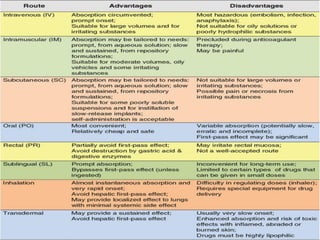
Medications can be administered through various routes
based on the drug's characteristics, the patient's condition,
and the desired onset of action.
Here are some common routes of medication administration:
• Oral (PO):
– Tablets, Capsules, Liquids: Administered through the mouth and swallowed.
This is one of the most common routes.
– Sublingual (SL) and Buccal: Medications dissolved or placed under the tongue
(sublingual) or against the cheek (buccal) for absorption through the mucous
membranes.
• Topical:
– Creams, Ointments, Gels: Applied to the skin for local effects.
– Patches: Deliver medication through the skin slowly over a specified period.
– Eye Drops, Ear Drops, Nasal Sprays: Administered directly into the eyes, ears,
or nose for local or systemic effects.
Medications can be administered through various routes
based on the drug's characteristics, the patient's condition,
and the desired onset of action.
Here are some common routes of medication administration:
• Inhalation:
– Metered-Dose Inhalers (MDIs), Nebulizers: Medications delivered directly to
the lungs for respiratory conditions.
– Vaporizers: Can also be used for specific medications for inhalation.
• Injection:
– Intramuscular (IM): Injected into a muscle.
– Subcutaneous (SC): Injected into the tissue layer between the skin and muscle.
– Intravenous (IV): Administered directly into a vein.
– Intradermal (ID): Injected into the skin layer.
– Intrathecal or Epidural: Administered into the spinal canal or epidural space for
specific purposes.
Medications can be administered through various routes
based on the drug's characteristics, the patient's condition,
and the desired onset of action.
Here are some common routes of medication administration:
• Rectal:
– Suppositories: Inserted into the rectum for local or
systemic effects.
• Vaginal:
– Creams, Tablets, Suppositories: Administered into the
vagina for local or systemic effects.
• Sublingual:
– Dissolvable tablets: Placed under the tongue for
absorption through the mucous membranes.
Factors affecting Absorption
• Drug Properties:
• Solubility: The solubility of a drug in body fluids at the
site of administration affects its absorption. Water-
soluble drugs typically absorb more readily than poorly
water-soluble ones.
• Molecular Size and Structure: Small molecules are
generally absorbed more easily than larger ones. Some
drugs require specific transport mechanisms or carriers
for absorption due to their structure.
Factors affecting Absorption
• Route of Administration:
• Different routes of administration have varied
absorption rates. For example, intravenous
administration bypasses the absorption phase,
providing immediate and complete drug availability,
whereas oral administration involves absorption
through the gastrointestinal tract, subject to various
influencing factors.
Factors affecting Absorption
• Gastrointestinal Factors (for oral drugs):
• pH Environment: The pH of the gastrointestinal tract
influences drug absorption. Acidic drugs may be better
absorbed in the stomach, while basic drugs may be
absorbed more readily in the intestines.
• Gastric Emptying Time: The rate at which the stomach
empties its contents can affect drug absorption. Food or
other medications can delay or enhance absorption by
affecting gastric emptying.
Factors affecting Absorption
• Blood Flow to the Site of Administration:
• Adequate blood circulation at the site of
administration is crucial for drug absorption.
Enhanced blood flow can improve absorption, while
decreased blood flow may hinder it.
Factors affecting Absorption
• Drug Formulation:
• Dosage Form: The formulation of a drug (e.g., tablets,
capsules, solutions) affects its dissolution and subsequent
absorption. Different formulations may have varying
rates of absorption.
• Co-administration with Food or Other Substances: Food,
beverages, or other medications can interact with a drug
and impact its absorption. Some drugs require
administration on an empty stomach for optimal
absorption, while others are better absorbed with food.
Factors affecting Absorption
• Physiological Factors:
• Surface Area for Absorption: Larger surface areas,
such as the lungs for inhalation or the skin for
transdermal absorption, can enhance drug
absorption.
• Presence of Enzymes and Transporters: Enzymes and
transporters in the gastrointestinal tract or cell
membranes can facilitate or hinder drug absorption.
Factors affecting Absorption
• Patient-Specific Factors:
• Age: Age-related changes in gastrointestinal
physiology or blood flow can affect drug absorption.
• Health Conditions: Gastrointestinal disorders,
malabsorption syndromes, or other health conditions
can impact drug absorption.
2. Distribution
• In pharmacology, distribution refers to the process by which a
drug spreads throughout the body after it enters the
bloodstream. Following absorption into the systemic
circulation, the drug gets distributed to various tissues,
organs, and compartments within the body.
• Key aspects of drug distribution include:
– Blood circulation
– Tissue perfusion
– Tissue composition
– Barriers to distribution
– Volume of distribution
2. Distribution
• Several factors significantly influence the distribution
of a drug within the body after it enters the
bloodstream.
• Understanding these factors is crucial as they can
impact the drug's concentration in various tissues
and organs, affecting its efficacy and potential for
side effects.
2. Distribution
• Some key factors affecting drug distribution include:
• Physicochemical Properties of the Drug:
– Lipid Solubility: Lipophilic (fat-soluble) drugs tend to distribute more
readily into tissues because they can pass through cell membranes
easily. Hydrophilic drugs may have limited distribution.
– Molecular Size: Smaller molecules often distribute more widely
throughout tissues compared to larger molecules.
• Plasma Protein Binding:
– Drugs can bind to plasma proteins (e.g., albumin) in the bloodstream.
Only the unbound (free) drug is generally able to leave the
bloodstream and enter tissues. If a drug is highly bound to plasma
proteins, its distribution into tissues may be limited.
2. Distribution
• Blood Flow to Tissues:
– Tissues with higher blood flow receive more significant
amounts of the drug. Organs such as the liver, kidneys,
heart, and brain, which have robust blood supplies, often
receive higher drug concentrations compared to less
vascularized tissues.
• Tissue Permeability and Barriers:
– Some drugs face barriers that limit their distribution to
certain sites, such as the blood-brain barrier, placental
barrier, or gastrointestinal mucosa. These barriers prevent
or restrict the passage of drugs into specific compartments
or tissues.
2. Distribution
• pH and Ionization:
– The pH gradient across membranes can influence the
ionization of drugs. For weak acids or bases, the
ionization state can affect their ability to pass through
cell membranes and distribute into tissues.
• Tissue Composition:
– Variations in tissue composition, such as differences in
fat content, water content, or the presence of specific
receptors, can affect the distribution of drugs into
different body compartments.
2. Distribution
• Disease States or Physiological Conditions:
– Pathological conditions that alter blood flow to
tissues, disrupt barriers, or change tissue composition
can impact drug distribution. Conditions like edema or
inflammation may affect drug distribution.
• Genetic Factors:
– Genetic variations in drug-metabolizing enzymes,
transporters, or plasma proteins can influence drug
distribution among individuals.
2. Distribution
Understanding these factors helps predict and
interpret the distribution patterns of drugs within
the body.
Pharmacokinetic studies consider these variables to
optimize drug therapy, predict potential
interactions, and ensure drugs reach their intended
target tissues at effective concentrations while
minimizing adverse effects in non-target tissues.
3. Metabolism (Biotransformation):
• Metabolism, in the context of pharmacology and
pharmacokinetics, refers to the biochemical
processes by which the body alters or transforms a
drug (also known as a xenobiotic) into different
chemical compounds.
• This transformation occurs primarily in the liver but
can also take place in other tissues or organs.
3. Metabolism (Biotransformation):
• The primary objectives of drug metabolism include:
• Inactivation or Detoxification: Metabolism often leads to the
conversion of active drugs into inactive or less active metabolites,
facilitating their elimination from the body. This helps in reducing
the pharmacological activity of the drug, preventing its prolonged
effects.
• Facilitating Elimination: Metabolism converts drugs into more
water-soluble compounds, making them easier to excrete from the
body through the kidneys or bile. Water-soluble metabolites are
generally more readily eliminated via urine or feces than the
original drug.
3. Metabolism (Biotransformation):
• The process of drug metabolism involves two phases:
• Phase I Metabolism (Functionalization Reactions): This phase involves chemical
reactions that aim to introduce or unmask functional groups on the drug molecule.
These reactions include oxidation, reduction, and hydrolysis, typically carried out
by enzymes such as cytochrome P450 enzymes. Phase I reactions can increase the
polarity of the drug molecule, making it more amenable to subsequent reactions in
phase II metabolism.
• Phase II Metabolism (Conjugation Reactions): Conjugation reactions involve the
addition of small molecules (e.g., glucuronic acid, sulfate, methyl groups) to the
functional groups introduced or unmasked in Phase I. This conjugation results in
the formation of highly water-soluble metabolites. Enzymes such as UDP-
glucuronosyltransferases (UGTs), sulfotransferases, and glutathione S-transferases
(GSTs) catalyze these reactions.
3. Metabolism (Biotransformation):
– The liver plays a central role in drug metabolism,
serving as the primary site where many drugs
undergo biotransformation into metabolites that
are more easily excreted from the body. The
hepatocytes (liver cells) contain a myriad of
enzymes involved in various phases of drug
metabolism, particularly Phase I and Phase II
reactions.
3. Metabolism (Biotransformation):
• Key points about the liver's role in drug metabolism include:
– Cytochrome P450 Enzymes (CYP450): Among the most significant enzyme
families involved in Phase I metabolism are the cytochrome P450 enzymes.
These enzymes catalyze various oxidation reactions, including hydroxylation,
dealkylation, and aromatic ring oxidation. CYP450 enzymes play a crucial role
in altering the chemical structure of drugs, often increasing their water
solubility to prepare them for subsequent conjugation reactions in Phase II
metabolism.
– Phase II Enzymes: After Phase I reactions, the metabolites generated are often
further modified by Phase II enzymes. These include enzymes like UDP-
glucuronosyltransferases (UGTs), sulfotransferases, glutathione S-transferases
(GSTs), and others. These enzymes catalyze conjugation reactions, adding
specific molecules (such as glucuronic acid, sulfate, or glutathione) to the drug
or its metabolites, further increasing their water solubility.
3. Metabolism (Biotransformation):
• Key points about the liver's role in drug metabolism include:
– Drug-Drug Interactions: The activity of these enzymes, especially the cytochrome P450
system, can be influenced or inhibited by various drugs or substances. Consequently,
interactions between drugs can affect the rate at which a particular drug is metabolized. Some
drugs may inhibit or induce specific CYP450 enzymes, leading to altered metabolism and
potential changes in drug efficacy or toxicity.
– Genetic Variability: Genetic polymorphisms in enzymes involved in drug metabolism can lead
to inter-individual variability in drug response. Certain individuals may have variations in these
enzymes, affecting their ability to metabolize drugs efficiently. This can result in differences in
drug efficacy or an increased risk of adverse effects.
– Biliary Excretion: Once metabolized, drugs or their metabolites are often excreted from the
liver into bile. From there, they may enter the intestines, where they can either be reabsorbed
or eliminated through feces. Biliary excretion is particularly relevant for drugs that undergo
enterohepatic circulation, where they are repeatedly absorbed from the intestines and re-
excreted via bile.
4. Excretion
• Excretion is the process by which drugs and their
metabolites are removed from the body.
• After drugs are metabolized and transformed into
more water-soluble compounds in the liver or other
tissues, they undergo elimination primarily through
the kidneys, as well as through other routes such as
bile, lungs, sweat, saliva, and breast milk.
4. Excretion
• Key pathways of drug excretion include:
• Renal Excretion: The kidneys play a crucial role in eliminating drugs and their
metabolites from the body. Water-soluble compounds formed during drug
metabolism are filtered from the blood by the kidneys into the urine.
Subsequently, these compounds can be actively or passively reabsorbed back into
the bloodstream or directly excreted in the urine. Drugs or metabolites that are
not reabsorbed become part of the urine and are eliminated from the body.
• Biliary Excretion: Some drugs and their metabolites are excreted via the bile into
the gastrointestinal tract. From there, they may be eliminated through feces. This
pathway is particularly relevant for drugs that undergo enterohepatic circulation,
where they are repeatedly secreted into the bile, reabsorbed in the intestines, and
re-excreted, prolonging their elimination process.
4. Excretion
• Pulmonary Excretion: Certain volatile or gaseous drugs
or their metabolites are eliminated through exhalation
via the lungs. This route is relevant for volatile
anesthetics or gases that can be inhaled and
subsequently exhaled.
• Sweat, Saliva, and Other Secretions: Minimal drug
excretion can occur through sweat, saliva, tears, and
other secretions, though this route usually contributes
only a small fraction to overall drug elimination.
4. Excretion
• Factors influencing drug excretion include:
• Kidney Function: Renal excretion is particularly dependent on proper kidney
function. Impaired kidney function can lead to slower drug elimination, potentially
leading to drug accumulation and increased risk of toxicity.
• pH of Urine: Urinary pH can affect the ionization and reabsorption of drugs. Acidic
drugs tend to be more readily excreted in alkaline urine, while basic drugs are
more easily excreted in acidic urine.
• Biliary Flow: Biliary excretion depends on proper bile flow. Issues affecting bile
secretion or flow can impact the excretion of drugs through this pathway.
• Drug Properties: Factors such as molecular size, polarity, and protein binding
influence the ease with which drugs and their metabolites are excreted through
various pathways.
Organs of excretion
• Renal Excretion (via Urine):
– The kidneys play a fundamental role in drug elimination through urine.
Water-soluble drug metabolites are filtered from the blood by the
kidneys and secreted into the urine. Some drugs and their metabolites
may undergo reabsorption back into the bloodstream before being
excreted in the urine. Urinary excretion is a crucial route for
eliminating many drugs, and factors such as renal function, urinary pH,
and drug properties influence this process.
• Biliary Excretion (via Bile):
– Bile, produced by the liver, contains waste products, including some
drugs and their metabolites. These substances are excreted into the
bile and then transported to the intestines. From there, they can be
eliminated in feces. Biliary excretion is particularly relevant for drugs
that undergo enterohepatic circulation, where they cycle between the
liver and intestines, extending their elimination process.
Organs of excretion
• Pulmonary Excretion (via Exhaled Air):
– Some volatile or gaseous drugs or their metabolites can be eliminated through
exhalation via the lungs. This route is significant for volatile anesthetics or
gases that are inhaled and subsequently exhaled as they leave the body.
• Sweat, Saliva, and Other Secretions:
– While not major routes of elimination, small amounts of drugs and their
metabolites can be excreted through sweat, saliva, tears, and other secretions.
This route contributes minimally to overall drug elimination.
• Breast Milk:
– Drugs and their metabolites can pass into breast milk, leading to their transfer
from the mother's body to the infant during breastfeeding. The extent of drug
excretion via breast milk varies depending on factors such as the drug's
properties, molecular size, lipid solubility, and breastfeeding frequency.
Understanding these processes is critical
• Drug dosing
• Drug interactions
• Individual variability
• Managing drug toxicity
• Optimising therapy in special populations
• Drug development and formulation
Case studies
• Case Study 1: Drug A - Oral Administration in Elderly
Patients
• Drug A is commonly prescribed for hypertension. It
has a narrow therapeutic window and is mainly
eliminated through renal excretion. In elderly
patients, alterations in kidney function and changes
in gastrointestinal absorption may affect its
pharmacokinetics.
Case studies
• Case Study 2: Drug B - Intravenous Administration in
Critically Ill Patients
• Drug B is a potent antibiotic used in critically ill
patients with severe infections. It undergoes hepatic
metabolism and has a high protein binding capacity.
However, these patients often have altered liver
function and changes in protein levels, impacting
drug metabolism and distribution.
Case studies
• Case Study 3: Drug C - Transdermal Administration
in Pediatric Patients
• Drug C is delivered transdermally to manage chronic
pain in pediatric patients. Its pharmacokinetics are
influenced by skin integrity, blood flow, and body
surface area. However, these factors can vary
significantly among pediatric populations, affecting
drug absorption and systemic exposure.
Case studies
• Case Study 4: Drug D - Inhaled Administration in
Patients with Lung Disease
• Drug D is an inhaled bronchodilator used in patients
with chronic obstructive pulmonary disease (COPD).
Its pharmacokinetics are affected by lung function,
disease severity, and inhalation technique. Variations
in lung capacity and disease progression impact drug
absorption and onset of action.
Case studies
• Case Study 5: Drug E - Pregnancy and
Pharmacokinetics
• Drug E is prescribed for epilepsy and requires careful
monitoring during pregnancy. Pregnancy-induced
changes in metabolism, renal function, and plasma
protein levels can significantly alter its
pharmacokinetics. Understanding these changes is
critical for maintaining therapeutic drug levels and
preventing adverse effects.
Reference list
• https://www.semanticscholar.org/paper/Chapter-2-
Drug-Administration-
Sim/46ccc01cd86637bfb03cd98f6d9bfcd9db952abe/
figure/1

Pharmacokinetic processes 07 February.pdf

  • 1.
  • 2.
    Objectives Discuss pharmacokinetics andthe application thereof under the following headings in terms of: • Absorption • Distribution • Metabolism • Excretion.
  • 3.
    Definition of Pharmacokinetics •Pharmacokinetics refers to the study of how a living organism affects a drug after its administration. • It encompasses the processes of absorption, distribution, metabolism, and excretion (ADME) of a drug within the body. • Pharmacokinetics seeks to understand how the body processes a drug, including how it is absorbed into the bloodstream, distributed to various tissues and organs, metabolized or transformed, and finally eliminated from the body. • These processes help determine the drug's concentration in the blood over time, its bioavailability (the fraction of the administered dose that reaches the systemic circulation), and the duration and intensity of its therapeutic effects or potential side effects. • Pharmacokinetic studies are essential in determining appropriate dosing regimens, understanding drug interactions, and ensuring drug safety and efficacy.
  • 4.
    The significance ofunderstanding pharmacokinetics in optimizing drug therapy, dosing and minimizing side effects. • Understanding pharmacokinetics is crucial in optimizing drug therapy and dosing for several reasons: • 1. Individualized Dosing • 2. Optimizing efficacy • 3. Minimizing side effects
  • 5.
    The significance ofunderstanding pharmacokinetics in optimizing drug therapy, dosing and minimizing side effects. • Predicting Drug Interactions • Determining Bioavailability • Optimizing Drug Development • Enhancing Safety
  • 6.
    1. Absorption: • Absorptionis a crucial pharmacokinetic process that describes how a drug moves from its site of administration (such as the gastrointestinal tract, skin, lungs, or muscles) into the bloodstream. • It's the initial step in the journey of a drug within the body after it's administered.
  • 7.
    1. Absorption: • Theprocess of drug absorption varies depending on the route of administration: – Oral – Injection – Topical – Inhalation
  • 8.
    Medications can beadministered through various routes based on the drug's characteristics, the patient's condition, and the desired onset of action. Here are some common routes of medication administration: • Oral (PO): – Tablets, Capsules, Liquids: Administered through the mouth and swallowed. This is one of the most common routes. – Sublingual (SL) and Buccal: Medications dissolved or placed under the tongue (sublingual) or against the cheek (buccal) for absorption through the mucous membranes. • Topical: – Creams, Ointments, Gels: Applied to the skin for local effects. – Patches: Deliver medication through the skin slowly over a specified period. – Eye Drops, Ear Drops, Nasal Sprays: Administered directly into the eyes, ears, or nose for local or systemic effects.
  • 9.
    Medications can beadministered through various routes based on the drug's characteristics, the patient's condition, and the desired onset of action. Here are some common routes of medication administration: • Inhalation: – Metered-Dose Inhalers (MDIs), Nebulizers: Medications delivered directly to the lungs for respiratory conditions. – Vaporizers: Can also be used for specific medications for inhalation. • Injection: – Intramuscular (IM): Injected into a muscle. – Subcutaneous (SC): Injected into the tissue layer between the skin and muscle. – Intravenous (IV): Administered directly into a vein. – Intradermal (ID): Injected into the skin layer. – Intrathecal or Epidural: Administered into the spinal canal or epidural space for specific purposes.
  • 10.
    Medications can beadministered through various routes based on the drug's characteristics, the patient's condition, and the desired onset of action. Here are some common routes of medication administration: • Rectal: – Suppositories: Inserted into the rectum for local or systemic effects. • Vaginal: – Creams, Tablets, Suppositories: Administered into the vagina for local or systemic effects. • Sublingual: – Dissolvable tablets: Placed under the tongue for absorption through the mucous membranes.
  • 12.
    Factors affecting Absorption •Drug Properties: • Solubility: The solubility of a drug in body fluids at the site of administration affects its absorption. Water- soluble drugs typically absorb more readily than poorly water-soluble ones. • Molecular Size and Structure: Small molecules are generally absorbed more easily than larger ones. Some drugs require specific transport mechanisms or carriers for absorption due to their structure.
  • 14.
    Factors affecting Absorption •Route of Administration: • Different routes of administration have varied absorption rates. For example, intravenous administration bypasses the absorption phase, providing immediate and complete drug availability, whereas oral administration involves absorption through the gastrointestinal tract, subject to various influencing factors.
  • 15.
    Factors affecting Absorption •Gastrointestinal Factors (for oral drugs): • pH Environment: The pH of the gastrointestinal tract influences drug absorption. Acidic drugs may be better absorbed in the stomach, while basic drugs may be absorbed more readily in the intestines. • Gastric Emptying Time: The rate at which the stomach empties its contents can affect drug absorption. Food or other medications can delay or enhance absorption by affecting gastric emptying.
  • 16.
    Factors affecting Absorption •Blood Flow to the Site of Administration: • Adequate blood circulation at the site of administration is crucial for drug absorption. Enhanced blood flow can improve absorption, while decreased blood flow may hinder it.
  • 17.
    Factors affecting Absorption •Drug Formulation: • Dosage Form: The formulation of a drug (e.g., tablets, capsules, solutions) affects its dissolution and subsequent absorption. Different formulations may have varying rates of absorption. • Co-administration with Food or Other Substances: Food, beverages, or other medications can interact with a drug and impact its absorption. Some drugs require administration on an empty stomach for optimal absorption, while others are better absorbed with food.
  • 18.
    Factors affecting Absorption •Physiological Factors: • Surface Area for Absorption: Larger surface areas, such as the lungs for inhalation or the skin for transdermal absorption, can enhance drug absorption. • Presence of Enzymes and Transporters: Enzymes and transporters in the gastrointestinal tract or cell membranes can facilitate or hinder drug absorption.
  • 19.
    Factors affecting Absorption •Patient-Specific Factors: • Age: Age-related changes in gastrointestinal physiology or blood flow can affect drug absorption. • Health Conditions: Gastrointestinal disorders, malabsorption syndromes, or other health conditions can impact drug absorption.
  • 20.
    2. Distribution • Inpharmacology, distribution refers to the process by which a drug spreads throughout the body after it enters the bloodstream. Following absorption into the systemic circulation, the drug gets distributed to various tissues, organs, and compartments within the body. • Key aspects of drug distribution include: – Blood circulation – Tissue perfusion – Tissue composition – Barriers to distribution – Volume of distribution
  • 21.
    2. Distribution • Severalfactors significantly influence the distribution of a drug within the body after it enters the bloodstream. • Understanding these factors is crucial as they can impact the drug's concentration in various tissues and organs, affecting its efficacy and potential for side effects.
  • 22.
    2. Distribution • Somekey factors affecting drug distribution include: • Physicochemical Properties of the Drug: – Lipid Solubility: Lipophilic (fat-soluble) drugs tend to distribute more readily into tissues because they can pass through cell membranes easily. Hydrophilic drugs may have limited distribution. – Molecular Size: Smaller molecules often distribute more widely throughout tissues compared to larger molecules. • Plasma Protein Binding: – Drugs can bind to plasma proteins (e.g., albumin) in the bloodstream. Only the unbound (free) drug is generally able to leave the bloodstream and enter tissues. If a drug is highly bound to plasma proteins, its distribution into tissues may be limited.
  • 23.
    2. Distribution • BloodFlow to Tissues: – Tissues with higher blood flow receive more significant amounts of the drug. Organs such as the liver, kidneys, heart, and brain, which have robust blood supplies, often receive higher drug concentrations compared to less vascularized tissues. • Tissue Permeability and Barriers: – Some drugs face barriers that limit their distribution to certain sites, such as the blood-brain barrier, placental barrier, or gastrointestinal mucosa. These barriers prevent or restrict the passage of drugs into specific compartments or tissues.
  • 24.
    2. Distribution • pHand Ionization: – The pH gradient across membranes can influence the ionization of drugs. For weak acids or bases, the ionization state can affect their ability to pass through cell membranes and distribute into tissues. • Tissue Composition: – Variations in tissue composition, such as differences in fat content, water content, or the presence of specific receptors, can affect the distribution of drugs into different body compartments.
  • 25.
    2. Distribution • DiseaseStates or Physiological Conditions: – Pathological conditions that alter blood flow to tissues, disrupt barriers, or change tissue composition can impact drug distribution. Conditions like edema or inflammation may affect drug distribution. • Genetic Factors: – Genetic variations in drug-metabolizing enzymes, transporters, or plasma proteins can influence drug distribution among individuals.
  • 26.
    2. Distribution Understanding thesefactors helps predict and interpret the distribution patterns of drugs within the body. Pharmacokinetic studies consider these variables to optimize drug therapy, predict potential interactions, and ensure drugs reach their intended target tissues at effective concentrations while minimizing adverse effects in non-target tissues.
  • 27.
    3. Metabolism (Biotransformation): •Metabolism, in the context of pharmacology and pharmacokinetics, refers to the biochemical processes by which the body alters or transforms a drug (also known as a xenobiotic) into different chemical compounds. • This transformation occurs primarily in the liver but can also take place in other tissues or organs.
  • 28.
    3. Metabolism (Biotransformation): •The primary objectives of drug metabolism include: • Inactivation or Detoxification: Metabolism often leads to the conversion of active drugs into inactive or less active metabolites, facilitating their elimination from the body. This helps in reducing the pharmacological activity of the drug, preventing its prolonged effects. • Facilitating Elimination: Metabolism converts drugs into more water-soluble compounds, making them easier to excrete from the body through the kidneys or bile. Water-soluble metabolites are generally more readily eliminated via urine or feces than the original drug.
  • 29.
    3. Metabolism (Biotransformation): •The process of drug metabolism involves two phases: • Phase I Metabolism (Functionalization Reactions): This phase involves chemical reactions that aim to introduce or unmask functional groups on the drug molecule. These reactions include oxidation, reduction, and hydrolysis, typically carried out by enzymes such as cytochrome P450 enzymes. Phase I reactions can increase the polarity of the drug molecule, making it more amenable to subsequent reactions in phase II metabolism. • Phase II Metabolism (Conjugation Reactions): Conjugation reactions involve the addition of small molecules (e.g., glucuronic acid, sulfate, methyl groups) to the functional groups introduced or unmasked in Phase I. This conjugation results in the formation of highly water-soluble metabolites. Enzymes such as UDP- glucuronosyltransferases (UGTs), sulfotransferases, and glutathione S-transferases (GSTs) catalyze these reactions.
  • 30.
    3. Metabolism (Biotransformation): –The liver plays a central role in drug metabolism, serving as the primary site where many drugs undergo biotransformation into metabolites that are more easily excreted from the body. The hepatocytes (liver cells) contain a myriad of enzymes involved in various phases of drug metabolism, particularly Phase I and Phase II reactions.
  • 31.
    3. Metabolism (Biotransformation): •Key points about the liver's role in drug metabolism include: – Cytochrome P450 Enzymes (CYP450): Among the most significant enzyme families involved in Phase I metabolism are the cytochrome P450 enzymes. These enzymes catalyze various oxidation reactions, including hydroxylation, dealkylation, and aromatic ring oxidation. CYP450 enzymes play a crucial role in altering the chemical structure of drugs, often increasing their water solubility to prepare them for subsequent conjugation reactions in Phase II metabolism. – Phase II Enzymes: After Phase I reactions, the metabolites generated are often further modified by Phase II enzymes. These include enzymes like UDP- glucuronosyltransferases (UGTs), sulfotransferases, glutathione S-transferases (GSTs), and others. These enzymes catalyze conjugation reactions, adding specific molecules (such as glucuronic acid, sulfate, or glutathione) to the drug or its metabolites, further increasing their water solubility.
  • 32.
    3. Metabolism (Biotransformation): •Key points about the liver's role in drug metabolism include: – Drug-Drug Interactions: The activity of these enzymes, especially the cytochrome P450 system, can be influenced or inhibited by various drugs or substances. Consequently, interactions between drugs can affect the rate at which a particular drug is metabolized. Some drugs may inhibit or induce specific CYP450 enzymes, leading to altered metabolism and potential changes in drug efficacy or toxicity. – Genetic Variability: Genetic polymorphisms in enzymes involved in drug metabolism can lead to inter-individual variability in drug response. Certain individuals may have variations in these enzymes, affecting their ability to metabolize drugs efficiently. This can result in differences in drug efficacy or an increased risk of adverse effects. – Biliary Excretion: Once metabolized, drugs or their metabolites are often excreted from the liver into bile. From there, they may enter the intestines, where they can either be reabsorbed or eliminated through feces. Biliary excretion is particularly relevant for drugs that undergo enterohepatic circulation, where they are repeatedly absorbed from the intestines and re- excreted via bile.
  • 33.
    4. Excretion • Excretionis the process by which drugs and their metabolites are removed from the body. • After drugs are metabolized and transformed into more water-soluble compounds in the liver or other tissues, they undergo elimination primarily through the kidneys, as well as through other routes such as bile, lungs, sweat, saliva, and breast milk.
  • 34.
    4. Excretion • Keypathways of drug excretion include: • Renal Excretion: The kidneys play a crucial role in eliminating drugs and their metabolites from the body. Water-soluble compounds formed during drug metabolism are filtered from the blood by the kidneys into the urine. Subsequently, these compounds can be actively or passively reabsorbed back into the bloodstream or directly excreted in the urine. Drugs or metabolites that are not reabsorbed become part of the urine and are eliminated from the body. • Biliary Excretion: Some drugs and their metabolites are excreted via the bile into the gastrointestinal tract. From there, they may be eliminated through feces. This pathway is particularly relevant for drugs that undergo enterohepatic circulation, where they are repeatedly secreted into the bile, reabsorbed in the intestines, and re-excreted, prolonging their elimination process.
  • 35.
    4. Excretion • PulmonaryExcretion: Certain volatile or gaseous drugs or their metabolites are eliminated through exhalation via the lungs. This route is relevant for volatile anesthetics or gases that can be inhaled and subsequently exhaled. • Sweat, Saliva, and Other Secretions: Minimal drug excretion can occur through sweat, saliva, tears, and other secretions, though this route usually contributes only a small fraction to overall drug elimination.
  • 36.
    4. Excretion • Factorsinfluencing drug excretion include: • Kidney Function: Renal excretion is particularly dependent on proper kidney function. Impaired kidney function can lead to slower drug elimination, potentially leading to drug accumulation and increased risk of toxicity. • pH of Urine: Urinary pH can affect the ionization and reabsorption of drugs. Acidic drugs tend to be more readily excreted in alkaline urine, while basic drugs are more easily excreted in acidic urine. • Biliary Flow: Biliary excretion depends on proper bile flow. Issues affecting bile secretion or flow can impact the excretion of drugs through this pathway. • Drug Properties: Factors such as molecular size, polarity, and protein binding influence the ease with which drugs and their metabolites are excreted through various pathways.
  • 37.
    Organs of excretion •Renal Excretion (via Urine): – The kidneys play a fundamental role in drug elimination through urine. Water-soluble drug metabolites are filtered from the blood by the kidneys and secreted into the urine. Some drugs and their metabolites may undergo reabsorption back into the bloodstream before being excreted in the urine. Urinary excretion is a crucial route for eliminating many drugs, and factors such as renal function, urinary pH, and drug properties influence this process. • Biliary Excretion (via Bile): – Bile, produced by the liver, contains waste products, including some drugs and their metabolites. These substances are excreted into the bile and then transported to the intestines. From there, they can be eliminated in feces. Biliary excretion is particularly relevant for drugs that undergo enterohepatic circulation, where they cycle between the liver and intestines, extending their elimination process.
  • 38.
    Organs of excretion •Pulmonary Excretion (via Exhaled Air): – Some volatile or gaseous drugs or their metabolites can be eliminated through exhalation via the lungs. This route is significant for volatile anesthetics or gases that are inhaled and subsequently exhaled as they leave the body. • Sweat, Saliva, and Other Secretions: – While not major routes of elimination, small amounts of drugs and their metabolites can be excreted through sweat, saliva, tears, and other secretions. This route contributes minimally to overall drug elimination. • Breast Milk: – Drugs and their metabolites can pass into breast milk, leading to their transfer from the mother's body to the infant during breastfeeding. The extent of drug excretion via breast milk varies depending on factors such as the drug's properties, molecular size, lipid solubility, and breastfeeding frequency.
  • 39.
    Understanding these processesis critical • Drug dosing • Drug interactions • Individual variability • Managing drug toxicity • Optimising therapy in special populations • Drug development and formulation
  • 40.
    Case studies • CaseStudy 1: Drug A - Oral Administration in Elderly Patients • Drug A is commonly prescribed for hypertension. It has a narrow therapeutic window and is mainly eliminated through renal excretion. In elderly patients, alterations in kidney function and changes in gastrointestinal absorption may affect its pharmacokinetics.
  • 41.
    Case studies • CaseStudy 2: Drug B - Intravenous Administration in Critically Ill Patients • Drug B is a potent antibiotic used in critically ill patients with severe infections. It undergoes hepatic metabolism and has a high protein binding capacity. However, these patients often have altered liver function and changes in protein levels, impacting drug metabolism and distribution.
  • 42.
    Case studies • CaseStudy 3: Drug C - Transdermal Administration in Pediatric Patients • Drug C is delivered transdermally to manage chronic pain in pediatric patients. Its pharmacokinetics are influenced by skin integrity, blood flow, and body surface area. However, these factors can vary significantly among pediatric populations, affecting drug absorption and systemic exposure.
  • 43.
    Case studies • CaseStudy 4: Drug D - Inhaled Administration in Patients with Lung Disease • Drug D is an inhaled bronchodilator used in patients with chronic obstructive pulmonary disease (COPD). Its pharmacokinetics are affected by lung function, disease severity, and inhalation technique. Variations in lung capacity and disease progression impact drug absorption and onset of action.
  • 44.
    Case studies • CaseStudy 5: Drug E - Pregnancy and Pharmacokinetics • Drug E is prescribed for epilepsy and requires careful monitoring during pregnancy. Pregnancy-induced changes in metabolism, renal function, and plasma protein levels can significantly alter its pharmacokinetics. Understanding these changes is critical for maintaining therapeutic drug levels and preventing adverse effects.
  • 45.