Prepared by: Medical –Surgical Nursing
Staff
Pharmacokinetics, Pharmacodynamics,
Drug Interactions
Master of Science in Nursing
Clinical Pharmacology & Therapeutics
Outlines
 Pharmacokinetics
 Pharmacodynamics
 Drug Interactions
Pharmacokinetics
 The term pharmacokinetics is derived from two
Greek words: pharmakon (drug or poison) and
kinesis (motion).
 Pharmacokinetics: is the study of drug movement
throughout the body.
 Pharmacokinetics also includes drug metabolism
and drug excretion.
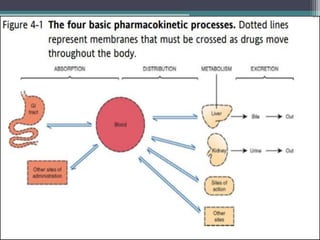
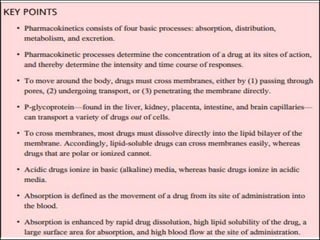
There are four basic pharmacokinetic
processes:
Absorption: is the movement of a drug from its site of
administration into the blood.
Distribution: Drug movement from the blood to the
interstitial space of tissues and from there into cells.
Metabolism (biotransformation): Enzymatically
mediated alteration of drug structure.
Excretion: Is the movement of drugs and their
metabolites out of the body.
The combination of metabolism plus excretion is
called elimination. The four pharmacokinetic
processes, acting in concert, determine the
concentration of a drug at its sites of action.
Application of Pharmacokinetics in Therapeutics
 By applying knowledge of pharmacokinetics to drug
therapy, we can help maximize beneficial effects and
minimize harm.
 Recall that the intensity of the response to a drug is directly
related to the concentration of the drug at its site of action.
 To maximize beneficial effects, we must achieve
concentrations that are high enough to elicit desired
responses; to minimize harm, we must avoid concentrations
that are too high. This balance is achieved by selecting the
most appropriate route, dosage, and dosing schedule. The
only way we can rationally choose the most effective route,
dosage, and schedule is by considering pharmacokinetic
factors.
Application of Pharmacokinetics in Therapeutics
 As a nurse, you will have ample opportunity to apply
knowledge of pharmacokinetics in clinical practice.
 For example, by understanding the reasons behind selection
of route, dosage, and dosing schedule, you will be less
likely to commit medication errors.
 Knowledge of pharmacokinetics can increase job
satisfaction.
 Knowledge of pharmacokinetics can decrease some of the
stress of nursing practice and can increase intellectual and
professional satisfaction.
Passage of Drugs Across Membranes
 All four phases of pharmacokinetics involve drug
movement. To move throughout the body, drugs must cross
membranes to enter the blood from their site of
administration.
 Once in the blood, drugs must cross membranes to leave the
vascular system and reach their sites of action.
 In addition, drugs must cross membranes to undergo
metabolism and excretion. Accordingly, the factors that
determine the passage of drugs across biologic membranes
have a profound influence on all aspects of
pharmacokinetics.
 All four phases of pharmacokinetics involve drug
movement. To move throughout the body, drugs must cross
membranes to enter the blood from their site of
administration.
 Once in the blood, drugs must cross membranes to leave the
vascular system and reach their sites of action.
 Drugs must cross membranes to undergo metabolism and
excretion. Accordingly, the factors that determine the
passage of drugs across biologic membranes have a
profound influence on all aspects of pharmacokinetics.
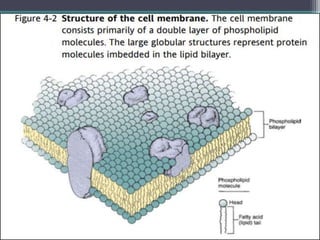
 The basic structure of the cell membrane consists of a
double layer of molecules known as phospholipids (simply
lipids (fats) that contain an atom of phosphate.
Ways by which drugs cross cell membranes
The three most important ways by which drugs cross cell
membranes are:
• (1) passage through channels or pores.
• (2) passage with the aid of a transport system.
• (3) direct penetration of the membrane itself.
Of the three, direct penetration of the membrane is most
common.
1. Channels and Pores
 Very few drugs cross membranes via channels or
pores. The channels in membranes are extremely
small (approximately 4 angstroms), and are specific
for certain molecules.
 Consequently, only the smallest of compounds
(molecular weight <200) can pass through these
channels, and then only if the channel is the right
one.
 Compounds with the ability to cross membranes via
channels include small ions, such as potassium and
sodium.
2. Transport Systems
 Transport systems are carriers that can move drugs
from one side of the cell membrane to the other.
 All transport systems are selective: They will not
carry just any drug. Whether a transporter will carry
a particular drug depends on the drug's structure.
 Transport systems are an important means of drug
transit. For example, certain oral drugs could not be
absorbed unless there were transport systems to
move them across the membranes that separate the
lumen of the intestine from the blood.
3. Direct Penetration of the Membrane
 For most drugs, movement throughout the body is
dependent on the ability to penetrate membranes directly.
Why? Because:
1.Most drugs are too large to pass through channels or pores
2.Most drugs lack transport systems to help them cross all of
the membranes that separate them from their sites of action,
metabolism, and excretion.
 In order to directly penetrate membranes, a drug must be
lipid soluble (lipophilic).
 Certain kinds of molecules are not lipid soluble and
therefore cannot penetrate membranes.
 This group consists of polar molecules and ions.
ABSORPTION
 Absorption is defined as the movement of a drug from its
site of administration into the blood.
 The rate of absorption determines how soon effects will
begin.
 The amount of absorption helps determine how intense
effects will be.
Factors Affecting Drug Absorption:
 The rate at which a drug undergoes absorption is influenced
by the physical and chemical properties of the drug itself
and by physiologic and anatomic factors at the site of
absorption.
Factors Affecting Drug Absorption:
 Rate of Dissolution: Before a drug can be absorbed, it must first
dissolve. Drugs in formulations that allow rapid dissolution have a
faster onset than drugs formulated for slow dissolution.
 Surface Area: The larger the surface area, the faster
absorption will be.
 Blood Flow: Drugs are absorbed most rapidly from sites
where blood flow is high.
 Lipid Solubility: As a rule, highly lipid-soluble drugs are
absorbed more rapidly.
 pH Partitioning: Absorption will be enhanced when the
difference between the pH of plasma and the pH at the site
of administration is such that drug molecules will have a
greater tendency to be ionized in the plasma.
Characteristics of Commonly Used Routes of
Administration
 The routes of administration that are used most commonly
fall into two major groups: Enteral (via GIT) and parenteral.
 The literal definition of parenteral is outside the GI tract.
However, in common parlance, the term parenteral is used
to mean by injection.
 The principal parenteral routes are intravenous,
subcutaneous, and intramuscular.
 For each of the major routes of administration: oral (PO),
intravenous (IV), intramuscular (IM), and subcutaneous
(subQ), the pattern of drug absorption is unique.
 Consequently, the route by which a drug is administered
will significantly affect both the onset and the intensity of
effects.
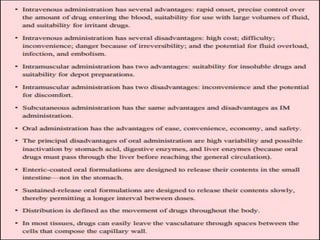
Intravenous
 Barriers to Absorption: There are no barriers to absorption
when a drug is administered IV.
 Absorption Pattern: Instantaneous (the blood directly) and
complete (all of the administered dose reaches the blood).
 Advantages: Rapid onset, control, use of large fluid
volumes, use of irritant drugs.
 Disadvantages:
oHigh cost, difficulty, and inconvenience.
oIrreversibility: Can be dangerous.
oFluid Overload.
oInfection.
oEmbolism.
oThe Importance of Reading Labels
Intramuscular
 Barriers to Absorption: the only barrier in IM to absorption
is the capillary wall.
 Absorption Pattern: The rate of absorption is determined
largely by two factors: (1) water solubility of the drug and
(2) blood flow to the site of injection.
 Advantages:
oCan be used for parenteral administration of poorly
soluble drugs.
oCan be used to administer depot preparations which
persist for days, weeks, or even months
 Disadvantages:
o Discomfort (painful)
o Inconvenience (cannot be used for patients receiving
anticoagulant therapy)
Oral
 Barriers to Absorption: There are two barriers to cross:
(1) the layer of epithelial cells that lines the GI tract, and
(2) the capillary wall.
 Absorption Pattern: Because of multiple factors, the rate
and extent of drug absorption following oral administration
can be highly variable.
Factors that can influence absorption include:
o Solubility and stability of the drug
o Gastric and intestinal pH
o Gastric emptying time
o Food in the gut
o Co-administration of other drugs
o Special coatings on the drug
Oral (Cont.)
 Advantages:
o Easy.
oConvenient.
oInexpensive
oPotentially reversible
oSafe
 Disadvantages:
o Variability: Drug may be absorbed rapidly and completely,
whereas the same drug may be absorbed slowly and
incompletely. This variability makes it difficult to control
onset, intensity, and duration of responses.
o Inactivation: Oral route can lead to inactivation of certain
drugs. Penicillin G, for example, can't be taken orally because
it would be destroyed by stomach acid.
Oral (Cont.)
 Disadvantages (cont.):
o Patient Requirements: Oral drug administration requires
a conscious, cooperative patient. Drugs cannot be
administered PO to comatose individuals or to individuals
who, for whatever reason (eg, psychosis, seizure, obstinacy,
nausea),
o Local Irritation: Some oral preparations cause local
irritation of the GI tract, which can result in discomfort,
nausea, and vomiting.
DISTRIBUTION
 Distribution is defined as the movement of drugs
throughout the body.
 Drug distribution is determined by three major factors:
A.blood flow to tissues
B.The ability of a drug to exit the vascular system.
C.The ability of a drug to enter cells.
A. Blood Flow to Tissues
 In the first phase of distribution, drugs are carried by the
blood to the tissues and organs of the body.
 Since most tissues are well perfused, regional blood flow is
rarely a limiting factor in drug distribution.
 There are two pathologic conditions:
 Abscesses: Because abscesses lack a blood supply,
antibiotics cannot reach the bacteria within. Accordingly, if
drug therapy is to be effective, the abscess must first be
surgically drained.
 Tumors: Solid tumors have a limited blood supply.
Although blood flow to the outer regions of tumors is
relatively high, blood flow becomes progressively lower
toward the core. Tumors are resistant to drug therapy
B. Exiting the Vascular System
 After a drug has been delivered to an organ or tissue via the
blood, the next step is to exit the vasculature.
 Since most drugs do not produce their effects within the
blood, the ability to leave the vascular system is an
important determinant of drug actions.
 Exiting the vascular system is also necessary for drugs to
undergo metabolism and excretion.
 Drugs in the vascular system leave the blood at capillary
beds.
B. Exiting the Vascular System
 Typical Capillary Beds: Most capillary beds offer no
resistance to the departure of drugs because, in most tissues,
drugs can leave the vasculature simply by passing through
pores in the capillary wall.
 The Blood-Brain Barrier The term (BBB) refers to the
unique anatomy of capillaries in the CNS. There are tight
junctions between the cells that compose the walls of most
capillaries in the CNS. These junctions are so tight that they
prevent drug passage. Consequently, it can be a significant
obstacle to therapy of CNS disorders.
 Placental Drug Transfer: The membranes of the placenta do
NOT constitute an absolute barrier to the passage of drugs.
C. Entering Cells
 Some drugs must enter cells to reach their sites of action,
and practically all drugs must enter cells to undergo
metabolism and excretion.
 The factors that determine the ability of a drug to cross cell
membranes are the same factors that determine the passage
of drugs across all other membranes, namely, lipid
solubility, the presence of a transport system, or both.
 Many drugs produce their effects by binding with receptors
located on the external surface of the cell membrane.
Obviously, these drugs do not need to cross the cell
membrane to act.
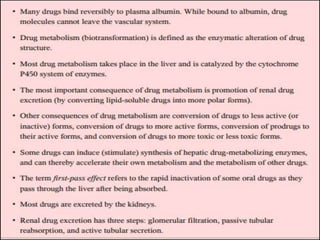
METABOLISM
 Drug metabolism, also known as biotransformation, is
defined as the enzymatic alteration of drug structure.
 Most drug metabolism that takes place in the liver is
performed by the hepatic microsomal enzyme system, also
known as the P450 system. The term P450 refers to
cytochrome P450, a key component of this enzyme system.
 Drug metabolism has six possible consequences of therapeutic
significance:
o Accelerated renal excretion of drugs
o Drug inactivation
o Increased therapeutic action
o Activation of “prodrugs”
o Increased toxicity
o Decreased toxicity
Special Considerations in Drug Metabolism
Several factors can influence the rate at which drugs are
metabolized. These must be accounted for in drug therapy.
Age: The drug-metabolizing capacity of infants is limited. The liver
does not develop its full capacity to metabolize drugs until about 1 year
after birth. During the time prior to hepatic maturation, infants are
especially sensitive to drugs, and care must be taken to avoid injury.
Induction of Drug-Metabolizing Enzymes: Some drugs act on
the liver to increase rates of drug metabolism. For example, when
phenobarbital is administered for several days, it can cause the
drug-metabolizing capacity of the liver to double by causing the
liver to synthesize drug metabolizing enzymes.
First-Pass Effect: The term first-pass effect refers to the rapid
hepatic inactivation of certain oral drugs.
Special Considerations in Drug Metabolism (cont.)
 Nutritional Status: Hepatic drug-metabolizing enzymes
require a number of cofactors to function. In the
malnourished patient, these cofactors may be deficient,
causing drug metabolism to be compromised.
 Competition Between Drugs: When two drugs are
metabolized by the same metabolic pathway, they may
compete with each other for metabolism, and thereby
decrease the rate at which one or both agents are
metabolized. If metabolism is depressed enough, a drug can
accumulate to dangerous levels.
EXCRETION
 Drug excretion is defined as the removal of drugs from the
body. Drugs and their metabolites can exit the body in
urine, bile, sweat, saliva, breast milk, and expired air.
 The most important organ for drug excretion is the kidney.
Renal Drug Excretion
 The kidneys account for the majority of drug excretion.
When the kidneys are healthy, they serve to limit the
duration of action of many drugs. Conversely, if renal
failure occurs, both the duration and intensity of drug
responses may increase.
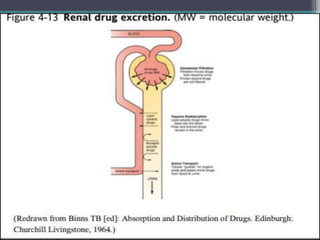
 Urinary excretion is the net result of three processes: (1)
glomerular filtration, (2) passive tubular reabsorption, and
(3) active tubular secretion
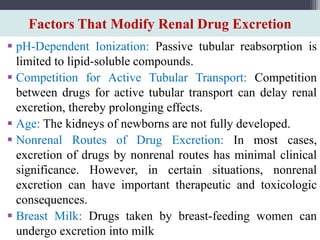
Factors That Modify Renal Drug Excretion
 pH-Dependent Ionization: Passive tubular reabsorption is
limited to lipid-soluble compounds.
 Competition for Active Tubular Transport: Competition
between drugs for active tubular transport can delay renal
excretion, thereby prolonging effects.
 Age: The kidneys of newborns are not fully developed.
 Nonrenal Routes of Drug Excretion: In most cases,
excretion of drugs by nonrenal routes has minimal clinical
significance. However, in certain situations, nonrenal
excretion can have important therapeutic and toxicologic
consequences.
 Breast Milk: Drugs taken by breast-feeding women can
undergo excretion into milk
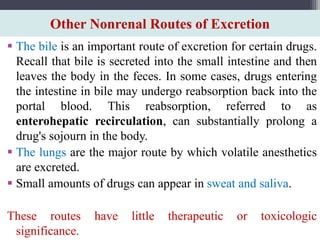
Other Nonrenal Routes of Excretion
 The bile is an important route of excretion for certain drugs.
Recall that bile is secreted into the small intestine and then
leaves the body in the feces. In some cases, drugs entering
the intestine in bile may undergo reabsorption back into the
portal blood. This reabsorption, referred to as
enterohepatic recirculation, can substantially prolong a
drug's sojourn in the body.
 The lungs are the major route by which volatile anesthetics
are excreted.
 Small amounts of drugs can appear in sweat and saliva.
These routes have little therapeutic or toxicologic
significance.
TIME COURSE OF DRUG RESPONSES
 To achieve the therapeutic objective, we must control the
time course of drug responses.
 We need to regulate the time at which drug responses start,
the time they are most intense, and the time they cease.
 Because the four pharmacokinetic processes; absorption,
distribution, metabolism, and excretion determine how
much drug will be at its sites of action at any given time,
these processes are the major determinants of the time
course over which drug responses take place.
TIME COURSE OF DRUG RESPONSES
Plasma Drug Levels: In most cases, the time course of drug
action bears a direct relationship to the concentration of a
drug in the blood.
Clinical Significance of Plasma Drug Levels: Clinicians
frequently monitor plasma drug levels in efforts to regulate
drug responses. When measurements indicate that drug levels
are inappropriate, these levels can be adjusted up or down by
changing the dosage, administration timing, or both.
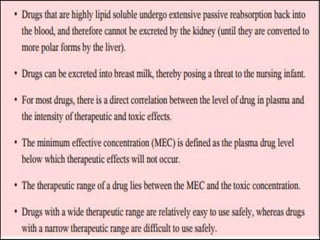
Two plasma drug levels are of special importance:
(1) the minimum effective concentration MEC and
(2) the toxic concentration.
TIME COURSE OF DRUG RESPONSES
 Single-Dose Time Course: Drug levels rise as the medicine
undergoes absorption. Drug levels then decline as
metabolism and excretion eliminate the drug from the body.
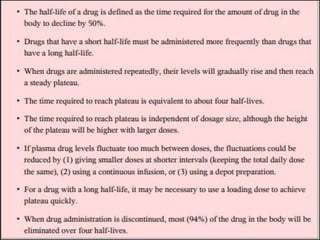
 Drug Half-Life: The half-life of a drug is an index of just
how rapidly that decline occurs.
 Drug half-life is defined as the time required for the amount
of drug in the body to decrease by 50%.
 A few drugs have half-lives that are extremely short on the
order of minutes. In contrast, the half-lives of some drugs
exceed 1 week.
 Drugs with short half-lives leave the body quickly.
 Drugs with long half-lives leave slowly.
Drug Levels Produced with Repeated Doses
 Multiple dosing leads to drug accumulation. When a patient
takes a single dose of a drug, plasma levels simply go up
and then come back down.
 In contrast, when a patient takes repeated doses of a drug,
the process is more complex and results in drug
accumulation.
The Process by Which Plateau Drug Levels Are Achieved
 Administering repeated doses will cause a drug to build up
in the body until a plateau (steady level) has been achieved.
 What causes drug levels to reach plateau? if a second dose
of a drug is administered before all of the prior dose has
been eliminated, total body stores of that drug will be higher
after the second dose than after the initial dose.
 As succeeding doses are administered, drug levels will
climb even higher. The drug will continue to accumulate
until a state has been achieved in which the amount of drug
eliminated between doses equals the amount administered.
When the amount of drug eliminated between doses equals
the dose administered, average drug levels will remain
constant and plateau will have been reached
Time to Plateau
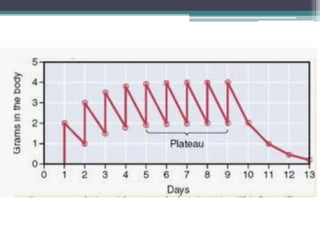
 When a drug is administered repeatedly in the same dose,
plateau will be reached in approximately four half-lives.
 Total body stores approached their peak near the beginning
of day 5, or approximately 4 full days after treatment began.
 Because the half-life of this drug is 1 day, reaching plateau
in 4 days is equivalent to reaching plateau in four half-lives.
 As long as dosage remains constant, the time required to
reach plateau is independent of dosage size.
 Put another way, the time required to reach plateau when
giving repeated large doses of a particular drug is identical
to the time required to reach plateau when giving repeated
small doses of that drug.
Time to Plateau
 When a dose of 2 gm was administered daily, it would also
take four half-lives to reach plateau if a dose of 4 gm were
administered daily.
 It is true that the height of the plateau would be greater if a
4-gm dose were given, but the time required to reach
plateau would not be altered by the increase in dosage.
 To confirm this statement, substitute a dose of 4 gm in the
exercise we just went through and see when plateau is
reached.
Techniques for Reducing Fluctuations in Drug Levels
 When a drug is administered repeatedly, its level will
fluctuate between doses.
 The highest level is referred to as the peak concentration,
and the lowest level is referred to as the trough
concentration.
 The peaks must be kept below the toxic concentration, and
the troughs must be kept above the MEC.
 Three techniques can be employed to reduce fluctuations in
drug levels:
1. Administer drugs by continuous infusion.
2. Administer a depot preparation, which releases the drug
slowly and steadily.
3. Reduce both the size of each dose and the dosing interval
Loading Doses Versus Maintenance Doses
 If we administer a drug in repeated doses of equal size, an
interval equivalent to about four half-lives is required to
achieve plateau.
 For drugs whose half-lives are long, achieving plateau
could take days or even weeks. When plateau must be
achieved more quickly, a large initial dose can be
administered. This large initial dose is called a loading dose.
 After high drug levels have been established with a loading
dose, plateau can be maintained by giving smaller doses.
These smaller doses are referred to as maintenance doses.
 The claim that use of a loading dose will shorten the time to
plateau may appear to contradict an earlier statement, which
said that the time to plateau is not affected by dosage size.
Loading Doses Versus Maintenance Doses
 However, there is no contradiction. For any specified
dosage, it will always take about four half-lives to reach
plateau.
 When a loading dose is administered followed by
maintenance doses, we have not reached plateau for the
loading dose. Rather, we have simply used the loading dose
to rapidly produce a drug level equivalent to the plateau
level for a smaller dose.
 If we wished to achieve plateau level for the loading dose,
we would be obliged to either administer repeated doses
equivalent to the loading dose for a period of four half-lives
or administer a dose even larger than the original loading
dose.
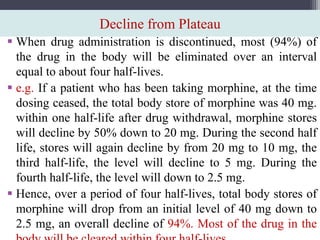
Decline from Plateau
 When drug administration is discontinued, most (94%) of
the drug in the body will be eliminated over an interval
equal to about four half-lives.
 e.g. If a patient who has been taking morphine, at the time
dosing ceased, the total body store of morphine was 40 mg.
within one half-life after drug withdrawal, morphine stores
will decline by 50% down to 20 mg. During the second half
life, stores will again decline by from 20 mg to 10 mg, the
third half-life, the level will decline to 5 mg. During the
fourth half-life, the level will down to 2.5 mg.
 Hence, over a period of four half-lives, total body stores of
morphine will drop from an initial level of 40 mg down to
2.5 mg, an overall decline of 94%. Most of the drug in the
CHAPTER 5
Pharmacodynamics
Pharmacodynamics
 Pharmacodynamics is defined as the study of the
biochemical and physiologic effects of drugs and the
molecular mechanisms by which those effects are produced.
 In short, pharmacodynamics is the study of what drugs do
to the body and how they do it.
 In order to participate rationally in achieving the therapeutic
objective, nurses need a basic understanding of
pharmacodynamics.
 You must know about drug actions in order to educate
patients about their medication, make PRN decisions, and
evaluate patients for drug responses, both beneficial and
harmful.
 You also need to understand drug actions when conferring
with prescribers about drug therapy
DOSE-RESPONSE RELATIONSHIPS
 The dose-response relationship (ie, the relationship between
the size of an administered dose and the intensity of the
response produced) is a fundamental concern in
therapeutics.
 Dose-response relationships determine the minimum
amount of drug we can use, the maximum response a drug
can elicit, and how much we need to increase the dosage in
order to produce the desired increase in response.
Basic Features of Dose-response Relationships
 Because drug responses are graded, therapeutic effects can
be adjusted to fit the needs of each patient. To tailor
treatment to a particular patient, all we need do is raise or
lower the dosage until a response of the desired intensity is
achieved.
 If drug responses were all-or nothing instead of graded,
drugs could produce only one intensity of response. If that
response were too strong or too weak for a particular
patient, there would be nothing we could do to adjust the
intensity to better suit the patient.
 Clearly, the graded nature of the dose-response relationship
is essential for successful drug therapy.
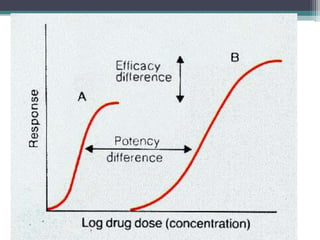
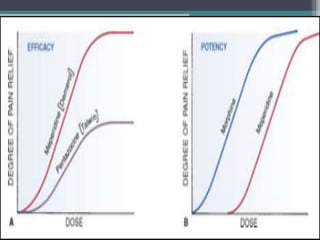
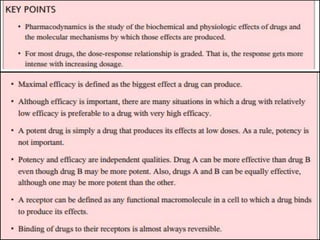
Maximal Efficacy and Relative Potency
 Maximal Efficacy: is defined as the largest effect
that a drug can produce. Maximal efficacy is
indicated by the height of the dose-response curve.
 Relative Potency: The term potency refers to the
amount of drug we must give to elicit an effect.
Potency is indicated by the relative position of the
dose-response curve along the x (dose) axis.
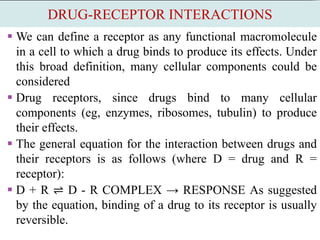
DRUG-RECEPTOR INTERACTIONS
 We can define a receptor as any functional macromolecule
in a cell to which a drug binds to produce its effects. Under
this broad definition, many cellular components could be
considered
 Drug receptors, since drugs bind to many cellular
components (eg, enzymes, ribosomes, tubulin) to produce
their effects.
 The general equation for the interaction between drugs and
their receptors is as follows (where D = drug and R =
receptor):
 D + R ⇌ D - R COMPLEX → RESPONSE As suggested
by the equation, binding of a drug to its receptor is usually
reversible.
DRUG-RECEPTOR INTERACTIONS
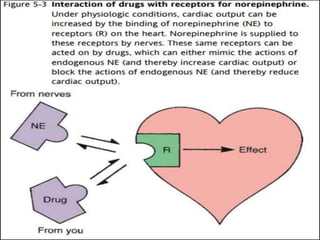
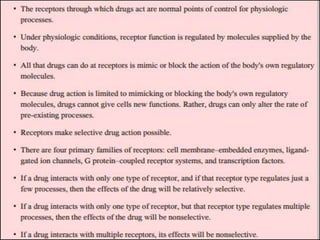
 Several important properties of receptors and drug receptor
interactions are illustrated by this example:
 The receptors through which drugs act are normal points of
control of physiologic processes.
 Under physiologic conditions, receptor function is regulated
by molecules supplied by the body.
 All that drugs can do at receptors is mimic or block the
action of the body's own regulatory molecules.
 Drugs cannot make the body do anything that it is not
already capable of doing.*
 Drugs produce their therapeutic effects by helping the body
use its pre-existing capabilities to the patient's best
advantage.
The Four Primary Receptor Families
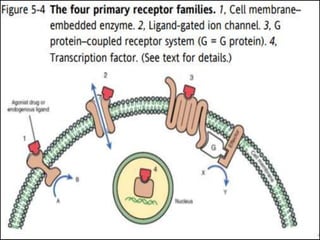
1. Cell Membrane–Embedded Enzymes.
Receptors of this type span the cell membrane. The ligand-
binding domain is located on the cell surface, and the
enzyme's catalytic site is inside. Responses to activation of
these receptors occur in seconds. Insulin is a good example of
an endogenous ligand that acts through this type of receptor.
2. Ligand-Gated Ion Channels.
Span the cell membrane. The function of these receptors is
to regulate flow of ions into and out of cells.
The Four Primary Receptor Families
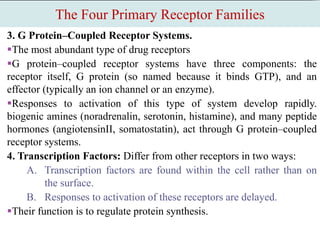
3. G Protein–Coupled Receptor Systems.
The most abundant type of drug receptors
G protein–coupled receptor systems have three components: the
receptor itself, G protein (so named because it binds GTP), and an
effector (typically an ion channel or an enzyme).
Responses to activation of this type of system develop rapidly.
biogenic amines (noradrenalin, serotonin, histamine), and many peptide
hormones (angiotensinII, somatostatin), act through G protein–coupled
receptor systems.
4. Transcription Factors: Differ from other receptors in two ways:
A. Transcription factors are found within the cell rather than on
the surface.
B. Responses to activation of these receptors are delayed.
Their function is to regulate protein synthesis.
Receptors and Selectivity of Drug Action
 Selective drug action is made possible by the existence of
many types of receptors, each regulating just a few
processes.
 If a drug interacts with only one type of receptor, and if that
receptor type regulates just a few processes, then the effects
of the drug will be limited.
 Selectivity does not guarantee safety. A compound can be
highly selective for a particular receptor and still be
dangerous
Theories of Drug-Receptor Interaction
We consider two theories of drug receptor interaction:
1.The simple occupancy theory: states that (1) the intensity
of the response to a drug is proportional to the number of
receptors occupied by that drug, and (2) a maximal response
will occur when all available receptors have been occupied.
2.The modified occupancy theory: Explains certain
observations that cannot be accounted for with the simple
occupancy theory. It assumes that all drugs acting at a
particular receptor are identical with respect to (1) the ability
to bind to the receptor and (2) the ability to influence receptor
function once binding has taken place
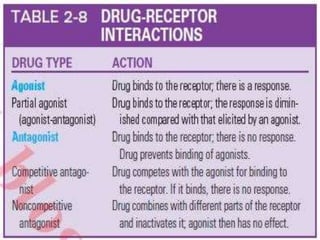
Agonists, Antagonists, and Partial Agonists
 When drugs bind to receptors they can do one of two things:
they can either mimic the action of endogenous regulatory
molecules or they can block the action of endogenous
regulatory molecules.
 Drugs that mimic the body's own regulatory molecules are
called agonists.
 Drugs that block the actions of endogenous regulators are
called antagonists.
 Like agonists, partial agonists also mimic the actions of
endogenous regulatory molecules, but they produce
responses of intermediate intensity
Regulation of Receptor Sensitivity
 Receptors are dynamic components of the cell. In response
to continuous activation or continuous inhibition, the
number of receptors on the cell surface can change, as can
their sensitivity to agonist molecules (drugs and endogenous
ligands).
 When this occurs, the cell is said to be desensitized or
refractory, or to have undergone down-regulation.
 Several mechanisms may be responsible, including:
1-destruction of receptors by the cell
2- modification of receptors such that they respond less fully.
3- Continuous exposure to antagonists has the opposite
effect, causing the cell to become hypersensitive (also
referred to as supersensitive).
Drug Responses That Do Not Involve Receptors
 Although the effects of most drugs result from drug-
receptor interactions, some drugs do not act through
receptors. Rather, they act through simple physical or
chemical interactions with other small molecules.
 Common examples of “receptorless drugs” include antacids,
antiseptics, saline laxatives, and chelating agents.
 Magnesium sulfate, a powerful laxative, acts by retaining
water in the intestinal lumen through an osmotic effect.
 All of these pharmacologic effects are the result of simple
physical or chemical interactions, and not interactions with
cellular receptors.
Interpatient Variability In Drug Responses
 The dose required to produce a therapeutic response can vary
substantially among patients because people differ from one another.
 The specific kinds of differences that underlie variability in drug
responses.
 In order to promote the therapeutic objective, you must be alert to
interpatient variation in drug responses.
 It is not possible to predict exactly how an individual patient will
respond to medication. Hence, each patient must be evaluated to
determine his or her actual response to treatment.
 The nurse who appreciates the reality of interpatient variability will
be better prepared to anticipate, evaluate, and respond appropriately to
each patient's therapeutic needs.
Measurement of Interpatient Variability
 An example of how interpatient variability is measured will
facilitate discussion.
 Let's assume we've just developed a drug that suppresses
production of stomach acid, and now want to evaluate
variability in patient responses.
 To make this evaluation, we must first define a specific
therapeutic objective or endpoint. Because our drug reduces
gastric acidity, an appropriate endpoint is elevation of
gastric pH to a value of 5.
The ED50
 The ED50 is defined as the dose that is required to produce
a defined therapeutic response in 50% of the population.
 The ED50 can be considered a “standard” dose and, as
such, is frequently the dose selected for initial treatment.
 After evaluating a patient's response to this “standard” dose,
we can then adjust subsequent doses up or down to meet the
patient's needs.
Clinical Implications of Interpatient Variability
Interpatient variation has four important clinical
consequences.
The initial dose of a drug is necessarily an approximation.
Subsequent doses must be “fine tuned” based on the patient's
response.
When given an average effective dose (ED50), some patients
will be undertreated, whereas others will have received more
drug than they need.
Because drug responses are not completely predictable, you
must look at the patient to determine if too much or too little
medication has been administered.
Because of variability in responses, nurses, patients, and
other concerned individuals must evaluate actual responses.
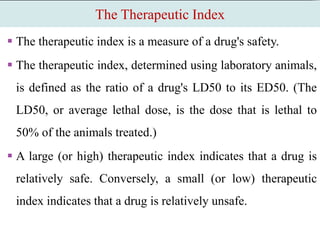
The Therapeutic Index
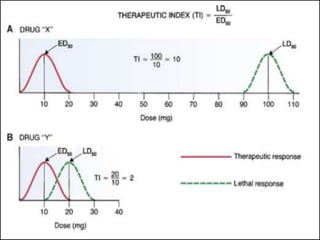
 The therapeutic index is a measure of a drug's safety.
 The therapeutic index, determined using laboratory animals,
is defined as the ratio of a drug's LD50 to its ED50. (The
LD50, or average lethal dose, is the dose that is lethal to
50% of the animals treated.)
 A large (or high) therapeutic index indicates that a drug is
relatively safe. Conversely, a small (or low) therapeutic
index indicates that a drug is relatively unsafe.
2- Pharmacokinetics & Pharmacodynamics.pptx

2- Pharmacokinetics & Pharmacodynamics.pptx

  • 1.
    Prepared by: Medical–Surgical Nursing Staff Pharmacokinetics, Pharmacodynamics, Drug Interactions Master of Science in Nursing Clinical Pharmacology & Therapeutics
  • 2.
  • 3.
    Pharmacokinetics  The termpharmacokinetics is derived from two Greek words: pharmakon (drug or poison) and kinesis (motion).  Pharmacokinetics: is the study of drug movement throughout the body.  Pharmacokinetics also includes drug metabolism and drug excretion.
  • 4.
    There are fourbasic pharmacokinetic processes: Absorption: is the movement of a drug from its site of administration into the blood. Distribution: Drug movement from the blood to the interstitial space of tissues and from there into cells. Metabolism (biotransformation): Enzymatically mediated alteration of drug structure. Excretion: Is the movement of drugs and their metabolites out of the body. The combination of metabolism plus excretion is called elimination. The four pharmacokinetic processes, acting in concert, determine the concentration of a drug at its sites of action.
  • 6.
    Application of Pharmacokineticsin Therapeutics  By applying knowledge of pharmacokinetics to drug therapy, we can help maximize beneficial effects and minimize harm.  Recall that the intensity of the response to a drug is directly related to the concentration of the drug at its site of action.  To maximize beneficial effects, we must achieve concentrations that are high enough to elicit desired responses; to minimize harm, we must avoid concentrations that are too high. This balance is achieved by selecting the most appropriate route, dosage, and dosing schedule. The only way we can rationally choose the most effective route, dosage, and schedule is by considering pharmacokinetic factors.
  • 7.
    Application of Pharmacokineticsin Therapeutics  As a nurse, you will have ample opportunity to apply knowledge of pharmacokinetics in clinical practice.  For example, by understanding the reasons behind selection of route, dosage, and dosing schedule, you will be less likely to commit medication errors.  Knowledge of pharmacokinetics can increase job satisfaction.  Knowledge of pharmacokinetics can decrease some of the stress of nursing practice and can increase intellectual and professional satisfaction.
  • 8.
    Passage of DrugsAcross Membranes  All four phases of pharmacokinetics involve drug movement. To move throughout the body, drugs must cross membranes to enter the blood from their site of administration.  Once in the blood, drugs must cross membranes to leave the vascular system and reach their sites of action.  In addition, drugs must cross membranes to undergo metabolism and excretion. Accordingly, the factors that determine the passage of drugs across biologic membranes have a profound influence on all aspects of pharmacokinetics.
  • 10.
     All fourphases of pharmacokinetics involve drug movement. To move throughout the body, drugs must cross membranes to enter the blood from their site of administration.  Once in the blood, drugs must cross membranes to leave the vascular system and reach their sites of action.  Drugs must cross membranes to undergo metabolism and excretion. Accordingly, the factors that determine the passage of drugs across biologic membranes have a profound influence on all aspects of pharmacokinetics.  The basic structure of the cell membrane consists of a double layer of molecules known as phospholipids (simply lipids (fats) that contain an atom of phosphate.
  • 11.
    Ways by whichdrugs cross cell membranes The three most important ways by which drugs cross cell membranes are: • (1) passage through channels or pores. • (2) passage with the aid of a transport system. • (3) direct penetration of the membrane itself. Of the three, direct penetration of the membrane is most common.
  • 12.
    1. Channels andPores  Very few drugs cross membranes via channels or pores. The channels in membranes are extremely small (approximately 4 angstroms), and are specific for certain molecules.  Consequently, only the smallest of compounds (molecular weight <200) can pass through these channels, and then only if the channel is the right one.  Compounds with the ability to cross membranes via channels include small ions, such as potassium and sodium.
  • 13.
    2. Transport Systems Transport systems are carriers that can move drugs from one side of the cell membrane to the other.  All transport systems are selective: They will not carry just any drug. Whether a transporter will carry a particular drug depends on the drug's structure.  Transport systems are an important means of drug transit. For example, certain oral drugs could not be absorbed unless there were transport systems to move them across the membranes that separate the lumen of the intestine from the blood.
  • 14.
    3. Direct Penetrationof the Membrane  For most drugs, movement throughout the body is dependent on the ability to penetrate membranes directly. Why? Because: 1.Most drugs are too large to pass through channels or pores 2.Most drugs lack transport systems to help them cross all of the membranes that separate them from their sites of action, metabolism, and excretion.  In order to directly penetrate membranes, a drug must be lipid soluble (lipophilic).  Certain kinds of molecules are not lipid soluble and therefore cannot penetrate membranes.  This group consists of polar molecules and ions.
  • 15.
    ABSORPTION  Absorption isdefined as the movement of a drug from its site of administration into the blood.  The rate of absorption determines how soon effects will begin.  The amount of absorption helps determine how intense effects will be. Factors Affecting Drug Absorption:  The rate at which a drug undergoes absorption is influenced by the physical and chemical properties of the drug itself and by physiologic and anatomic factors at the site of absorption.
  • 16.
    Factors Affecting DrugAbsorption:  Rate of Dissolution: Before a drug can be absorbed, it must first dissolve. Drugs in formulations that allow rapid dissolution have a faster onset than drugs formulated for slow dissolution.  Surface Area: The larger the surface area, the faster absorption will be.  Blood Flow: Drugs are absorbed most rapidly from sites where blood flow is high.  Lipid Solubility: As a rule, highly lipid-soluble drugs are absorbed more rapidly.  pH Partitioning: Absorption will be enhanced when the difference between the pH of plasma and the pH at the site of administration is such that drug molecules will have a greater tendency to be ionized in the plasma.
  • 17.
    Characteristics of CommonlyUsed Routes of Administration  The routes of administration that are used most commonly fall into two major groups: Enteral (via GIT) and parenteral.  The literal definition of parenteral is outside the GI tract. However, in common parlance, the term parenteral is used to mean by injection.  The principal parenteral routes are intravenous, subcutaneous, and intramuscular.  For each of the major routes of administration: oral (PO), intravenous (IV), intramuscular (IM), and subcutaneous (subQ), the pattern of drug absorption is unique.  Consequently, the route by which a drug is administered will significantly affect both the onset and the intensity of effects.
  • 19.
    Intravenous  Barriers toAbsorption: There are no barriers to absorption when a drug is administered IV.  Absorption Pattern: Instantaneous (the blood directly) and complete (all of the administered dose reaches the blood).  Advantages: Rapid onset, control, use of large fluid volumes, use of irritant drugs.  Disadvantages: oHigh cost, difficulty, and inconvenience. oIrreversibility: Can be dangerous. oFluid Overload. oInfection. oEmbolism. oThe Importance of Reading Labels
  • 20.
    Intramuscular  Barriers toAbsorption: the only barrier in IM to absorption is the capillary wall.  Absorption Pattern: The rate of absorption is determined largely by two factors: (1) water solubility of the drug and (2) blood flow to the site of injection.  Advantages: oCan be used for parenteral administration of poorly soluble drugs. oCan be used to administer depot preparations which persist for days, weeks, or even months  Disadvantages: o Discomfort (painful) o Inconvenience (cannot be used for patients receiving anticoagulant therapy)
  • 21.
    Oral  Barriers toAbsorption: There are two barriers to cross: (1) the layer of epithelial cells that lines the GI tract, and (2) the capillary wall.  Absorption Pattern: Because of multiple factors, the rate and extent of drug absorption following oral administration can be highly variable. Factors that can influence absorption include: o Solubility and stability of the drug o Gastric and intestinal pH o Gastric emptying time o Food in the gut o Co-administration of other drugs o Special coatings on the drug
  • 22.
    Oral (Cont.)  Advantages: oEasy. oConvenient. oInexpensive oPotentially reversible oSafe  Disadvantages: o Variability: Drug may be absorbed rapidly and completely, whereas the same drug may be absorbed slowly and incompletely. This variability makes it difficult to control onset, intensity, and duration of responses. o Inactivation: Oral route can lead to inactivation of certain drugs. Penicillin G, for example, can't be taken orally because it would be destroyed by stomach acid.
  • 23.
    Oral (Cont.)  Disadvantages(cont.): o Patient Requirements: Oral drug administration requires a conscious, cooperative patient. Drugs cannot be administered PO to comatose individuals or to individuals who, for whatever reason (eg, psychosis, seizure, obstinacy, nausea), o Local Irritation: Some oral preparations cause local irritation of the GI tract, which can result in discomfort, nausea, and vomiting.
  • 24.
    DISTRIBUTION  Distribution isdefined as the movement of drugs throughout the body.  Drug distribution is determined by three major factors: A.blood flow to tissues B.The ability of a drug to exit the vascular system. C.The ability of a drug to enter cells.
  • 25.
    A. Blood Flowto Tissues  In the first phase of distribution, drugs are carried by the blood to the tissues and organs of the body.  Since most tissues are well perfused, regional blood flow is rarely a limiting factor in drug distribution.  There are two pathologic conditions:  Abscesses: Because abscesses lack a blood supply, antibiotics cannot reach the bacteria within. Accordingly, if drug therapy is to be effective, the abscess must first be surgically drained.  Tumors: Solid tumors have a limited blood supply. Although blood flow to the outer regions of tumors is relatively high, blood flow becomes progressively lower toward the core. Tumors are resistant to drug therapy
  • 26.
    B. Exiting theVascular System  After a drug has been delivered to an organ or tissue via the blood, the next step is to exit the vasculature.  Since most drugs do not produce their effects within the blood, the ability to leave the vascular system is an important determinant of drug actions.  Exiting the vascular system is also necessary for drugs to undergo metabolism and excretion.  Drugs in the vascular system leave the blood at capillary beds.
  • 27.
    B. Exiting theVascular System  Typical Capillary Beds: Most capillary beds offer no resistance to the departure of drugs because, in most tissues, drugs can leave the vasculature simply by passing through pores in the capillary wall.  The Blood-Brain Barrier The term (BBB) refers to the unique anatomy of capillaries in the CNS. There are tight junctions between the cells that compose the walls of most capillaries in the CNS. These junctions are so tight that they prevent drug passage. Consequently, it can be a significant obstacle to therapy of CNS disorders.  Placental Drug Transfer: The membranes of the placenta do NOT constitute an absolute barrier to the passage of drugs.
  • 28.
    C. Entering Cells Some drugs must enter cells to reach their sites of action, and practically all drugs must enter cells to undergo metabolism and excretion.  The factors that determine the ability of a drug to cross cell membranes are the same factors that determine the passage of drugs across all other membranes, namely, lipid solubility, the presence of a transport system, or both.  Many drugs produce their effects by binding with receptors located on the external surface of the cell membrane. Obviously, these drugs do not need to cross the cell membrane to act.
  • 29.
    METABOLISM  Drug metabolism,also known as biotransformation, is defined as the enzymatic alteration of drug structure.  Most drug metabolism that takes place in the liver is performed by the hepatic microsomal enzyme system, also known as the P450 system. The term P450 refers to cytochrome P450, a key component of this enzyme system.  Drug metabolism has six possible consequences of therapeutic significance: o Accelerated renal excretion of drugs o Drug inactivation o Increased therapeutic action o Activation of “prodrugs” o Increased toxicity o Decreased toxicity
  • 30.
    Special Considerations inDrug Metabolism Several factors can influence the rate at which drugs are metabolized. These must be accounted for in drug therapy. Age: The drug-metabolizing capacity of infants is limited. The liver does not develop its full capacity to metabolize drugs until about 1 year after birth. During the time prior to hepatic maturation, infants are especially sensitive to drugs, and care must be taken to avoid injury. Induction of Drug-Metabolizing Enzymes: Some drugs act on the liver to increase rates of drug metabolism. For example, when phenobarbital is administered for several days, it can cause the drug-metabolizing capacity of the liver to double by causing the liver to synthesize drug metabolizing enzymes. First-Pass Effect: The term first-pass effect refers to the rapid hepatic inactivation of certain oral drugs.
  • 31.
    Special Considerations inDrug Metabolism (cont.)  Nutritional Status: Hepatic drug-metabolizing enzymes require a number of cofactors to function. In the malnourished patient, these cofactors may be deficient, causing drug metabolism to be compromised.  Competition Between Drugs: When two drugs are metabolized by the same metabolic pathway, they may compete with each other for metabolism, and thereby decrease the rate at which one or both agents are metabolized. If metabolism is depressed enough, a drug can accumulate to dangerous levels.
  • 32.
    EXCRETION  Drug excretionis defined as the removal of drugs from the body. Drugs and their metabolites can exit the body in urine, bile, sweat, saliva, breast milk, and expired air.  The most important organ for drug excretion is the kidney. Renal Drug Excretion  The kidneys account for the majority of drug excretion. When the kidneys are healthy, they serve to limit the duration of action of many drugs. Conversely, if renal failure occurs, both the duration and intensity of drug responses may increase.  Urinary excretion is the net result of three processes: (1) glomerular filtration, (2) passive tubular reabsorption, and (3) active tubular secretion
  • 34.
    Factors That ModifyRenal Drug Excretion  pH-Dependent Ionization: Passive tubular reabsorption is limited to lipid-soluble compounds.  Competition for Active Tubular Transport: Competition between drugs for active tubular transport can delay renal excretion, thereby prolonging effects.  Age: The kidneys of newborns are not fully developed.  Nonrenal Routes of Drug Excretion: In most cases, excretion of drugs by nonrenal routes has minimal clinical significance. However, in certain situations, nonrenal excretion can have important therapeutic and toxicologic consequences.  Breast Milk: Drugs taken by breast-feeding women can undergo excretion into milk
  • 35.
    Other Nonrenal Routesof Excretion  The bile is an important route of excretion for certain drugs. Recall that bile is secreted into the small intestine and then leaves the body in the feces. In some cases, drugs entering the intestine in bile may undergo reabsorption back into the portal blood. This reabsorption, referred to as enterohepatic recirculation, can substantially prolong a drug's sojourn in the body.  The lungs are the major route by which volatile anesthetics are excreted.  Small amounts of drugs can appear in sweat and saliva. These routes have little therapeutic or toxicologic significance.
  • 36.
    TIME COURSE OFDRUG RESPONSES  To achieve the therapeutic objective, we must control the time course of drug responses.  We need to regulate the time at which drug responses start, the time they are most intense, and the time they cease.  Because the four pharmacokinetic processes; absorption, distribution, metabolism, and excretion determine how much drug will be at its sites of action at any given time, these processes are the major determinants of the time course over which drug responses take place.
  • 37.
    TIME COURSE OFDRUG RESPONSES Plasma Drug Levels: In most cases, the time course of drug action bears a direct relationship to the concentration of a drug in the blood. Clinical Significance of Plasma Drug Levels: Clinicians frequently monitor plasma drug levels in efforts to regulate drug responses. When measurements indicate that drug levels are inappropriate, these levels can be adjusted up or down by changing the dosage, administration timing, or both. Two plasma drug levels are of special importance: (1) the minimum effective concentration MEC and (2) the toxic concentration.
  • 38.
    TIME COURSE OFDRUG RESPONSES  Single-Dose Time Course: Drug levels rise as the medicine undergoes absorption. Drug levels then decline as metabolism and excretion eliminate the drug from the body.  Drug Half-Life: The half-life of a drug is an index of just how rapidly that decline occurs.  Drug half-life is defined as the time required for the amount of drug in the body to decrease by 50%.  A few drugs have half-lives that are extremely short on the order of minutes. In contrast, the half-lives of some drugs exceed 1 week.  Drugs with short half-lives leave the body quickly.  Drugs with long half-lives leave slowly.
  • 39.
    Drug Levels Producedwith Repeated Doses  Multiple dosing leads to drug accumulation. When a patient takes a single dose of a drug, plasma levels simply go up and then come back down.  In contrast, when a patient takes repeated doses of a drug, the process is more complex and results in drug accumulation.
  • 40.
    The Process byWhich Plateau Drug Levels Are Achieved  Administering repeated doses will cause a drug to build up in the body until a plateau (steady level) has been achieved.  What causes drug levels to reach plateau? if a second dose of a drug is administered before all of the prior dose has been eliminated, total body stores of that drug will be higher after the second dose than after the initial dose.  As succeeding doses are administered, drug levels will climb even higher. The drug will continue to accumulate until a state has been achieved in which the amount of drug eliminated between doses equals the amount administered. When the amount of drug eliminated between doses equals the dose administered, average drug levels will remain constant and plateau will have been reached
  • 41.
    Time to Plateau When a drug is administered repeatedly in the same dose, plateau will be reached in approximately four half-lives.  Total body stores approached their peak near the beginning of day 5, or approximately 4 full days after treatment began.  Because the half-life of this drug is 1 day, reaching plateau in 4 days is equivalent to reaching plateau in four half-lives.  As long as dosage remains constant, the time required to reach plateau is independent of dosage size.  Put another way, the time required to reach plateau when giving repeated large doses of a particular drug is identical to the time required to reach plateau when giving repeated small doses of that drug.
  • 42.
    Time to Plateau When a dose of 2 gm was administered daily, it would also take four half-lives to reach plateau if a dose of 4 gm were administered daily.  It is true that the height of the plateau would be greater if a 4-gm dose were given, but the time required to reach plateau would not be altered by the increase in dosage.  To confirm this statement, substitute a dose of 4 gm in the exercise we just went through and see when plateau is reached.
  • 44.
    Techniques for ReducingFluctuations in Drug Levels  When a drug is administered repeatedly, its level will fluctuate between doses.  The highest level is referred to as the peak concentration, and the lowest level is referred to as the trough concentration.  The peaks must be kept below the toxic concentration, and the troughs must be kept above the MEC.  Three techniques can be employed to reduce fluctuations in drug levels: 1. Administer drugs by continuous infusion. 2. Administer a depot preparation, which releases the drug slowly and steadily. 3. Reduce both the size of each dose and the dosing interval
  • 46.
    Loading Doses VersusMaintenance Doses  If we administer a drug in repeated doses of equal size, an interval equivalent to about four half-lives is required to achieve plateau.  For drugs whose half-lives are long, achieving plateau could take days or even weeks. When plateau must be achieved more quickly, a large initial dose can be administered. This large initial dose is called a loading dose.  After high drug levels have been established with a loading dose, plateau can be maintained by giving smaller doses. These smaller doses are referred to as maintenance doses.  The claim that use of a loading dose will shorten the time to plateau may appear to contradict an earlier statement, which said that the time to plateau is not affected by dosage size.
  • 47.
    Loading Doses VersusMaintenance Doses  However, there is no contradiction. For any specified dosage, it will always take about four half-lives to reach plateau.  When a loading dose is administered followed by maintenance doses, we have not reached plateau for the loading dose. Rather, we have simply used the loading dose to rapidly produce a drug level equivalent to the plateau level for a smaller dose.  If we wished to achieve plateau level for the loading dose, we would be obliged to either administer repeated doses equivalent to the loading dose for a period of four half-lives or administer a dose even larger than the original loading dose.
  • 49.
    Decline from Plateau When drug administration is discontinued, most (94%) of the drug in the body will be eliminated over an interval equal to about four half-lives.  e.g. If a patient who has been taking morphine, at the time dosing ceased, the total body store of morphine was 40 mg. within one half-life after drug withdrawal, morphine stores will decline by 50% down to 20 mg. During the second half life, stores will again decline by from 20 mg to 10 mg, the third half-life, the level will decline to 5 mg. During the fourth half-life, the level will down to 2.5 mg.  Hence, over a period of four half-lives, total body stores of morphine will drop from an initial level of 40 mg down to 2.5 mg, an overall decline of 94%. Most of the drug in the
  • 55.
  • 56.
    Pharmacodynamics  Pharmacodynamics isdefined as the study of the biochemical and physiologic effects of drugs and the molecular mechanisms by which those effects are produced.  In short, pharmacodynamics is the study of what drugs do to the body and how they do it.  In order to participate rationally in achieving the therapeutic objective, nurses need a basic understanding of pharmacodynamics.  You must know about drug actions in order to educate patients about their medication, make PRN decisions, and evaluate patients for drug responses, both beneficial and harmful.  You also need to understand drug actions when conferring with prescribers about drug therapy
  • 57.
    DOSE-RESPONSE RELATIONSHIPS  Thedose-response relationship (ie, the relationship between the size of an administered dose and the intensity of the response produced) is a fundamental concern in therapeutics.  Dose-response relationships determine the minimum amount of drug we can use, the maximum response a drug can elicit, and how much we need to increase the dosage in order to produce the desired increase in response.
  • 58.
    Basic Features ofDose-response Relationships  Because drug responses are graded, therapeutic effects can be adjusted to fit the needs of each patient. To tailor treatment to a particular patient, all we need do is raise or lower the dosage until a response of the desired intensity is achieved.  If drug responses were all-or nothing instead of graded, drugs could produce only one intensity of response. If that response were too strong or too weak for a particular patient, there would be nothing we could do to adjust the intensity to better suit the patient.  Clearly, the graded nature of the dose-response relationship is essential for successful drug therapy.
  • 59.
    Maximal Efficacy andRelative Potency  Maximal Efficacy: is defined as the largest effect that a drug can produce. Maximal efficacy is indicated by the height of the dose-response curve.  Relative Potency: The term potency refers to the amount of drug we must give to elicit an effect. Potency is indicated by the relative position of the dose-response curve along the x (dose) axis.
  • 62.
    DRUG-RECEPTOR INTERACTIONS  Wecan define a receptor as any functional macromolecule in a cell to which a drug binds to produce its effects. Under this broad definition, many cellular components could be considered  Drug receptors, since drugs bind to many cellular components (eg, enzymes, ribosomes, tubulin) to produce their effects.  The general equation for the interaction between drugs and their receptors is as follows (where D = drug and R = receptor):  D + R ⇌ D - R COMPLEX → RESPONSE As suggested by the equation, binding of a drug to its receptor is usually reversible.
  • 64.
    DRUG-RECEPTOR INTERACTIONS  Severalimportant properties of receptors and drug receptor interactions are illustrated by this example:  The receptors through which drugs act are normal points of control of physiologic processes.  Under physiologic conditions, receptor function is regulated by molecules supplied by the body.  All that drugs can do at receptors is mimic or block the action of the body's own regulatory molecules.  Drugs cannot make the body do anything that it is not already capable of doing.*  Drugs produce their therapeutic effects by helping the body use its pre-existing capabilities to the patient's best advantage.
  • 65.
    The Four PrimaryReceptor Families 1. Cell Membrane–Embedded Enzymes. Receptors of this type span the cell membrane. The ligand- binding domain is located on the cell surface, and the enzyme's catalytic site is inside. Responses to activation of these receptors occur in seconds. Insulin is a good example of an endogenous ligand that acts through this type of receptor. 2. Ligand-Gated Ion Channels. Span the cell membrane. The function of these receptors is to regulate flow of ions into and out of cells.
  • 66.
    The Four PrimaryReceptor Families 3. G Protein–Coupled Receptor Systems. The most abundant type of drug receptors G protein–coupled receptor systems have three components: the receptor itself, G protein (so named because it binds GTP), and an effector (typically an ion channel or an enzyme). Responses to activation of this type of system develop rapidly. biogenic amines (noradrenalin, serotonin, histamine), and many peptide hormones (angiotensinII, somatostatin), act through G protein–coupled receptor systems. 4. Transcription Factors: Differ from other receptors in two ways: A. Transcription factors are found within the cell rather than on the surface. B. Responses to activation of these receptors are delayed. Their function is to regulate protein synthesis.
  • 68.
    Receptors and Selectivityof Drug Action  Selective drug action is made possible by the existence of many types of receptors, each regulating just a few processes.  If a drug interacts with only one type of receptor, and if that receptor type regulates just a few processes, then the effects of the drug will be limited.  Selectivity does not guarantee safety. A compound can be highly selective for a particular receptor and still be dangerous
  • 69.
    Theories of Drug-ReceptorInteraction We consider two theories of drug receptor interaction: 1.The simple occupancy theory: states that (1) the intensity of the response to a drug is proportional to the number of receptors occupied by that drug, and (2) a maximal response will occur when all available receptors have been occupied. 2.The modified occupancy theory: Explains certain observations that cannot be accounted for with the simple occupancy theory. It assumes that all drugs acting at a particular receptor are identical with respect to (1) the ability to bind to the receptor and (2) the ability to influence receptor function once binding has taken place
  • 70.
    Agonists, Antagonists, andPartial Agonists  When drugs bind to receptors they can do one of two things: they can either mimic the action of endogenous regulatory molecules or they can block the action of endogenous regulatory molecules.  Drugs that mimic the body's own regulatory molecules are called agonists.  Drugs that block the actions of endogenous regulators are called antagonists.  Like agonists, partial agonists also mimic the actions of endogenous regulatory molecules, but they produce responses of intermediate intensity
  • 72.
    Regulation of ReceptorSensitivity  Receptors are dynamic components of the cell. In response to continuous activation or continuous inhibition, the number of receptors on the cell surface can change, as can their sensitivity to agonist molecules (drugs and endogenous ligands).  When this occurs, the cell is said to be desensitized or refractory, or to have undergone down-regulation.  Several mechanisms may be responsible, including: 1-destruction of receptors by the cell 2- modification of receptors such that they respond less fully. 3- Continuous exposure to antagonists has the opposite effect, causing the cell to become hypersensitive (also referred to as supersensitive).
  • 73.
    Drug Responses ThatDo Not Involve Receptors  Although the effects of most drugs result from drug- receptor interactions, some drugs do not act through receptors. Rather, they act through simple physical or chemical interactions with other small molecules.  Common examples of “receptorless drugs” include antacids, antiseptics, saline laxatives, and chelating agents.  Magnesium sulfate, a powerful laxative, acts by retaining water in the intestinal lumen through an osmotic effect.  All of these pharmacologic effects are the result of simple physical or chemical interactions, and not interactions with cellular receptors.
  • 74.
    Interpatient Variability InDrug Responses  The dose required to produce a therapeutic response can vary substantially among patients because people differ from one another.  The specific kinds of differences that underlie variability in drug responses.  In order to promote the therapeutic objective, you must be alert to interpatient variation in drug responses.  It is not possible to predict exactly how an individual patient will respond to medication. Hence, each patient must be evaluated to determine his or her actual response to treatment.  The nurse who appreciates the reality of interpatient variability will be better prepared to anticipate, evaluate, and respond appropriately to each patient's therapeutic needs.
  • 75.
    Measurement of InterpatientVariability  An example of how interpatient variability is measured will facilitate discussion.  Let's assume we've just developed a drug that suppresses production of stomach acid, and now want to evaluate variability in patient responses.  To make this evaluation, we must first define a specific therapeutic objective or endpoint. Because our drug reduces gastric acidity, an appropriate endpoint is elevation of gastric pH to a value of 5.
  • 76.
    The ED50  TheED50 is defined as the dose that is required to produce a defined therapeutic response in 50% of the population.  The ED50 can be considered a “standard” dose and, as such, is frequently the dose selected for initial treatment.  After evaluating a patient's response to this “standard” dose, we can then adjust subsequent doses up or down to meet the patient's needs.
  • 77.
    Clinical Implications ofInterpatient Variability Interpatient variation has four important clinical consequences. The initial dose of a drug is necessarily an approximation. Subsequent doses must be “fine tuned” based on the patient's response. When given an average effective dose (ED50), some patients will be undertreated, whereas others will have received more drug than they need. Because drug responses are not completely predictable, you must look at the patient to determine if too much or too little medication has been administered. Because of variability in responses, nurses, patients, and other concerned individuals must evaluate actual responses.
  • 78.
    The Therapeutic Index The therapeutic index is a measure of a drug's safety.  The therapeutic index, determined using laboratory animals, is defined as the ratio of a drug's LD50 to its ED50. (The LD50, or average lethal dose, is the dose that is lethal to 50% of the animals treated.)  A large (or high) therapeutic index indicates that a drug is relatively safe. Conversely, a small (or low) therapeutic index indicates that a drug is relatively unsafe.

Editor's Notes

  • #14 https://www.vedantu.com/biology/cell-transport-and-its-types https://www.inspiritvr.com/ap-bio/unit-2/mechanisms-of-transport-study-guide
  • #17 https://www.pharmatutor.org/pharmacology/general-pharmacology/physical-properties-drugs.html https://www.msdmanuals.com/professional/clinical-pharmacology/pharmacokinetics/drug-absorption Theoretically, weakly acidic drugs (eg, aspirin) are more readily absorbed from an acid medium (stomach) than are weakly basic drugs (eg, quinidine). However, whether a drug is acidic or basic, most absorption occurs in the small intestine because the surface area is larger and membranes are more permeable 
  • #21 A depot injection is a slow-release form of medication. The injection uses a liquid that releases the medication slowly, so it lasts a lot longer. Depot injections can be used for various types of drug, including some antipsychotics. The medication used in depot injections is the same as other forms of the drug, such as tablets or liquid.
  • #33 Active tubular secretion is a carrier-mediated transport system, located in the proximal renal tubule. It requires energy input because the drug is moved against a concentration gradient. Two active tubular secretion systems have been identified: anion secretion for acids and cation secretion for bases.
  • #66 https://www.ncbi.nlm.nih.gov/pmc/articles/PMC4975341/
  • #67  https://www.ncbi.nlm.nih.gov/pmc/articles/PMC4975341/  guanosine triphosphate (GTP) 
  • #74 Specific chelating agents bind iron, lead, or copper in the blood and can be used to treat excessively high levels of these metals. Chelating agents may also be used in the treatment of heavy metal poisoning. Exjade (Pro) Generic name: deferasirox
  • #77 ED Effective dose