Presented By:
Manish Pannu
MBA-Finance
Power of Attorney & Will
Source of data: kindlycare.com
WILL
Will
A Declaration of how a person wants
his or her property distributed after
death.
Key Terms
• Testator – the person who makes a will.
• Beneficiary – a person or organization
designated in the will that receives all or a
portion of the testator’s property at the time of
the testator’s death.
Special Types of Wills
• Holographic Will
–Will that is entirely handwritten and
signed by the testator.
• Noncupative Will
–Oral will that is made before a witness
during the testator’s last illness.
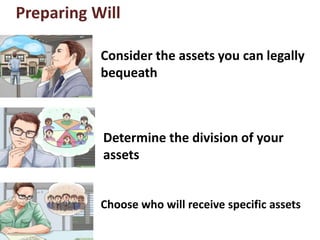
Preparing Will
Consider the assets you can legally
bequeath
Determine the division of your
assets
Choose who will receive specific assets
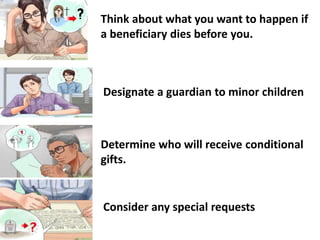
Think about what you want to happen if
a beneficiary dies before you.
Designate a guardian to minor children
Determine who will receive conditional
gifts.
Consider any special requests
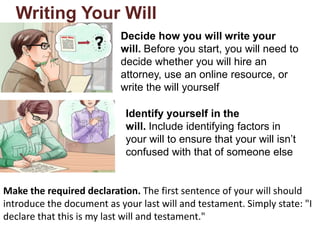
Writing Your Will
Decide how you will write your
will. Before you start, you will need to
decide whether you will hire an
attorney, use an online resource, or
write the will yourself
Identify yourself in the
will. Include identifying factors in
your will to ensure that your will isn’t
confused with that of someone else
Make the required declaration. The first sentence of your will should
introduce the document as your last will and testament. Simply state: "I
declare that this is my last will and testament."
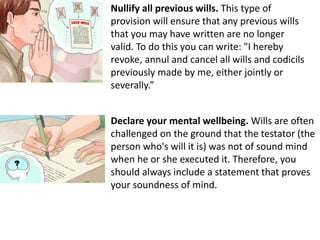
Nullify all previous wills. This type of
provision will ensure that any previous wills
that you may have written are no longer
valid. To do this you can write: "I hereby
revoke, annul and cancel all wills and codicils
previously made by me, either jointly or
severally.”
Declare your mental wellbeing. Wills are often
challenged on the ground that the testator (the
person who's will it is) was not of sound mind
when he or she executed it. Therefore, you
should always include a statement that proves
your soundness of mind.
Do not edit your will once it has been
signed
Use a codicil for minor changes. A codicil
is a document that refers to your original will
and states that you are making changes to
that original will Once you create your
codicil, you will keep it with your original
will.
Make a new will if you have substantial
changes
From simple man’s language perspective, a nominee is
somebody who receives the asset upon death of a person.
However, the nominee cannot own it.
Say, if a husband has nominated his mother in life insurance
policy. Upon his death, the entire proceeds of life insurance
will go to the mother, but the mother can’t own it if a will has
something contrary written. If the will says that a portion of or
the entire asset should go to his wife and children then the
mother will have to part with that.
Nomination, in simple language, is the right to receive. But a
will shall decide who will eventually own the asset. In case
there is no will then there is Indian Succession Act, Hindu
Law, etc. Summing up, nomination is the right to receive, will
is the right to own except in case of equity shares where
nomination prevails.
Difference between a will and a nomination
If a person were to nominate for all his assets, would he
then need a will?
For example, a person has said that he is nominating all his
assets to his brother, but in a will, he writes something
different or if there is no will then based on the Indian
Succession Act, Hindu Law, the brother will receive all the
assets but he will have to distribute it. If there is a will and it
says that the entire asset will go to his brother, then the
brother will own it. But if the will says anything contrary, the
brother will probably more act as a trustee holding onto
assets till the final will is out. If there is no will then the
nominee will hold onto the assets and it becomes his.
THANKU

Personnel finance manish

  • 2.
  • 11.
    Source of data:kindlycare.com
  • 12.
  • 13.
    Will A Declaration ofhow a person wants his or her property distributed after death.
  • 14.
    Key Terms • Testator– the person who makes a will. • Beneficiary – a person or organization designated in the will that receives all or a portion of the testator’s property at the time of the testator’s death.
  • 15.
    Special Types ofWills • Holographic Will –Will that is entirely handwritten and signed by the testator. • Noncupative Will –Oral will that is made before a witness during the testator’s last illness.
  • 16.
    Preparing Will Consider theassets you can legally bequeath Determine the division of your assets Choose who will receive specific assets
  • 17.
    Think about whatyou want to happen if a beneficiary dies before you. Designate a guardian to minor children Determine who will receive conditional gifts. Consider any special requests
  • 18.
    Writing Your Will Decidehow you will write your will. Before you start, you will need to decide whether you will hire an attorney, use an online resource, or write the will yourself Identify yourself in the will. Include identifying factors in your will to ensure that your will isn’t confused with that of someone else Make the required declaration. The first sentence of your will should introduce the document as your last will and testament. Simply state: "I declare that this is my last will and testament."
  • 19.
    Nullify all previouswills. This type of provision will ensure that any previous wills that you may have written are no longer valid. To do this you can write: "I hereby revoke, annul and cancel all wills and codicils previously made by me, either jointly or severally.” Declare your mental wellbeing. Wills are often challenged on the ground that the testator (the person who's will it is) was not of sound mind when he or she executed it. Therefore, you should always include a statement that proves your soundness of mind.
  • 20.
    Do not edityour will once it has been signed Use a codicil for minor changes. A codicil is a document that refers to your original will and states that you are making changes to that original will Once you create your codicil, you will keep it with your original will. Make a new will if you have substantial changes
  • 21.
    From simple man’slanguage perspective, a nominee is somebody who receives the asset upon death of a person. However, the nominee cannot own it. Say, if a husband has nominated his mother in life insurance policy. Upon his death, the entire proceeds of life insurance will go to the mother, but the mother can’t own it if a will has something contrary written. If the will says that a portion of or the entire asset should go to his wife and children then the mother will have to part with that. Nomination, in simple language, is the right to receive. But a will shall decide who will eventually own the asset. In case there is no will then there is Indian Succession Act, Hindu Law, etc. Summing up, nomination is the right to receive, will is the right to own except in case of equity shares where nomination prevails. Difference between a will and a nomination
  • 22.
    If a personwere to nominate for all his assets, would he then need a will? For example, a person has said that he is nominating all his assets to his brother, but in a will, he writes something different or if there is no will then based on the Indian Succession Act, Hindu Law, the brother will receive all the assets but he will have to distribute it. If there is a will and it says that the entire asset will go to his brother, then the brother will own it. But if the will says anything contrary, the brother will probably more act as a trustee holding onto assets till the final will is out. If there is no will then the nominee will hold onto the assets and it becomes his.
  • 23.