PERSONAL VOICE
ASSISTANT IN
PYTHON
1
Submitted By:
Vikas Kumar
Utkarsh sengar
Yash Jauhri
Yash Tripathi
Contents
 Introduction
 How does an intelligent personal assistant work?
 Existing system and proposed system
 Dataflow diagrams
 Automatic Speech Recognition System Model in Google AP
 Use case diagrams
 Modules
 screenshots
 Requirements
 Conclusion
2
Introduction
 A virtual assistant is a technology based on artificial intelligence. The
software uses a device’s microphone to receive voice requests while the
voice output takes place at the speaker. But the most exciting thing
happens between these two actions.
 It is a combination of several different technologies: voice recognition,
voice analysis and language processing.
 It is completely developed using one of the most powerful language
python.
3
How does an intelligent personal assistant
work?
 User asks a personal assistant to perform a task.
 The natural language audio signal is converted into digital data that can
be analyzed by the software.
 Compared with a database of the software using an innovative algorithm
to find a suitable answer.
 This database is located on distributed servers in cloud networks. For this
reason ,it must have a reliable Internet connection.
4
EXISTING SYSTEM V/S PROPOSED SYSTEM 5
Existing System Proposed System
Usage statistics and user data are sent to
the developer
Does not collect any user data
Installation required Installation required
User cannot edit or change the modules User can edit and add new modules
Not a free Software Free Software
lightweight
Simple User interface
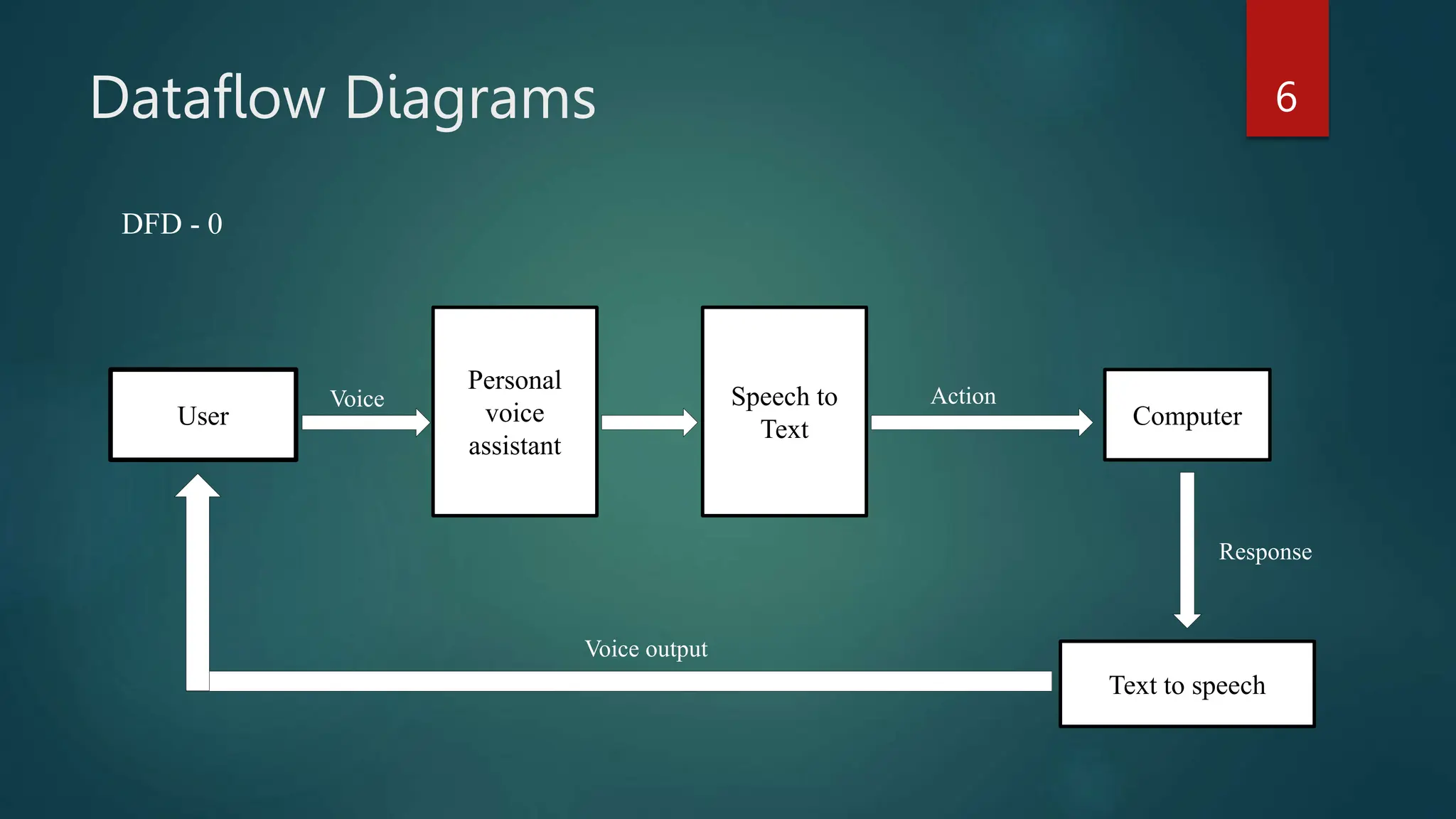
Dataflow Diagrams 6
User
Personal
voice
assistant
Computer
Text to speech
Speech to
Text
Voice Action
Response
Voice output
DFD - 0
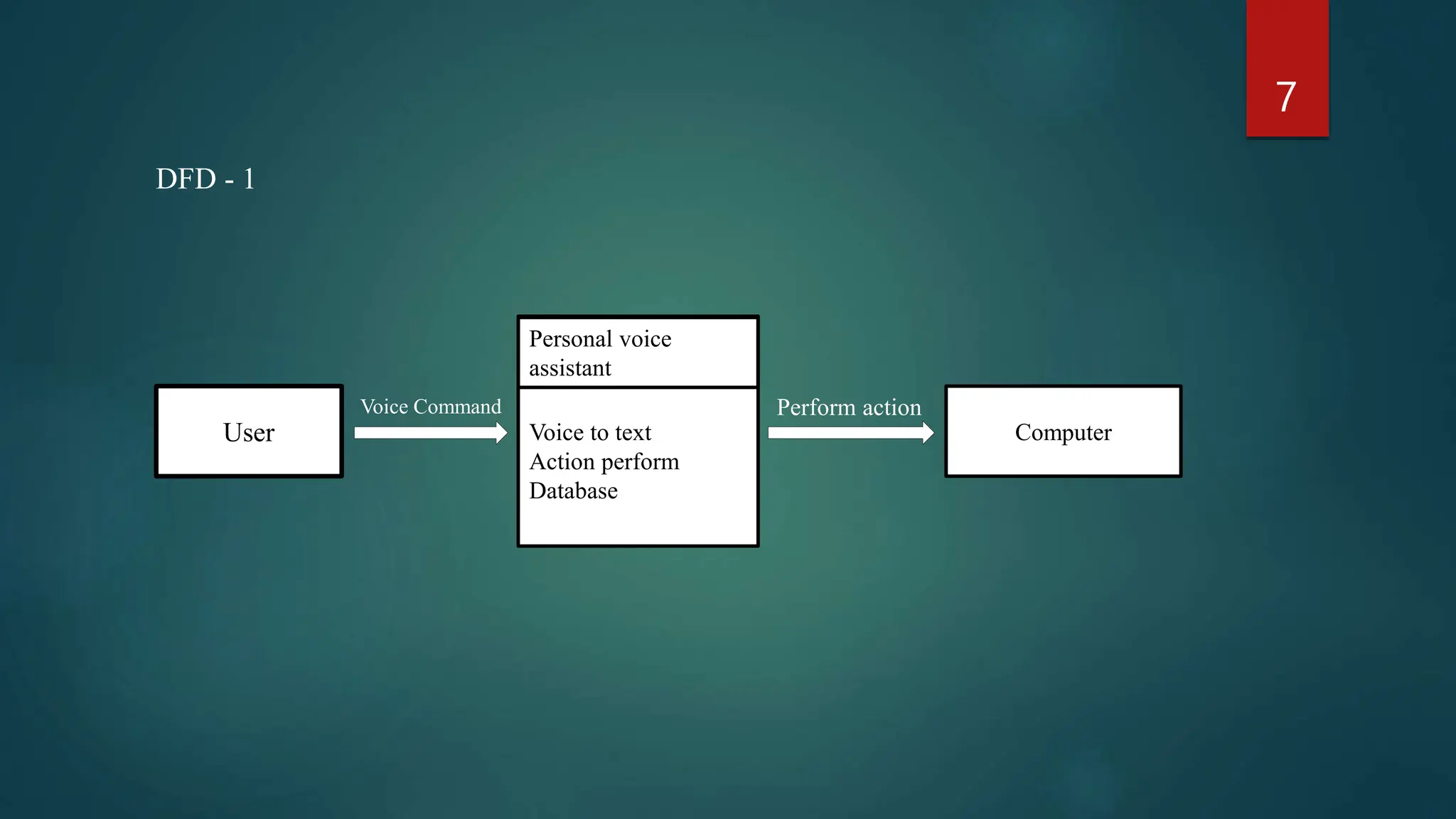
User Voice to text
Action perform
Database
Personal voice
assistant
Computer
Voice Command Perform action
DFD - 1
7
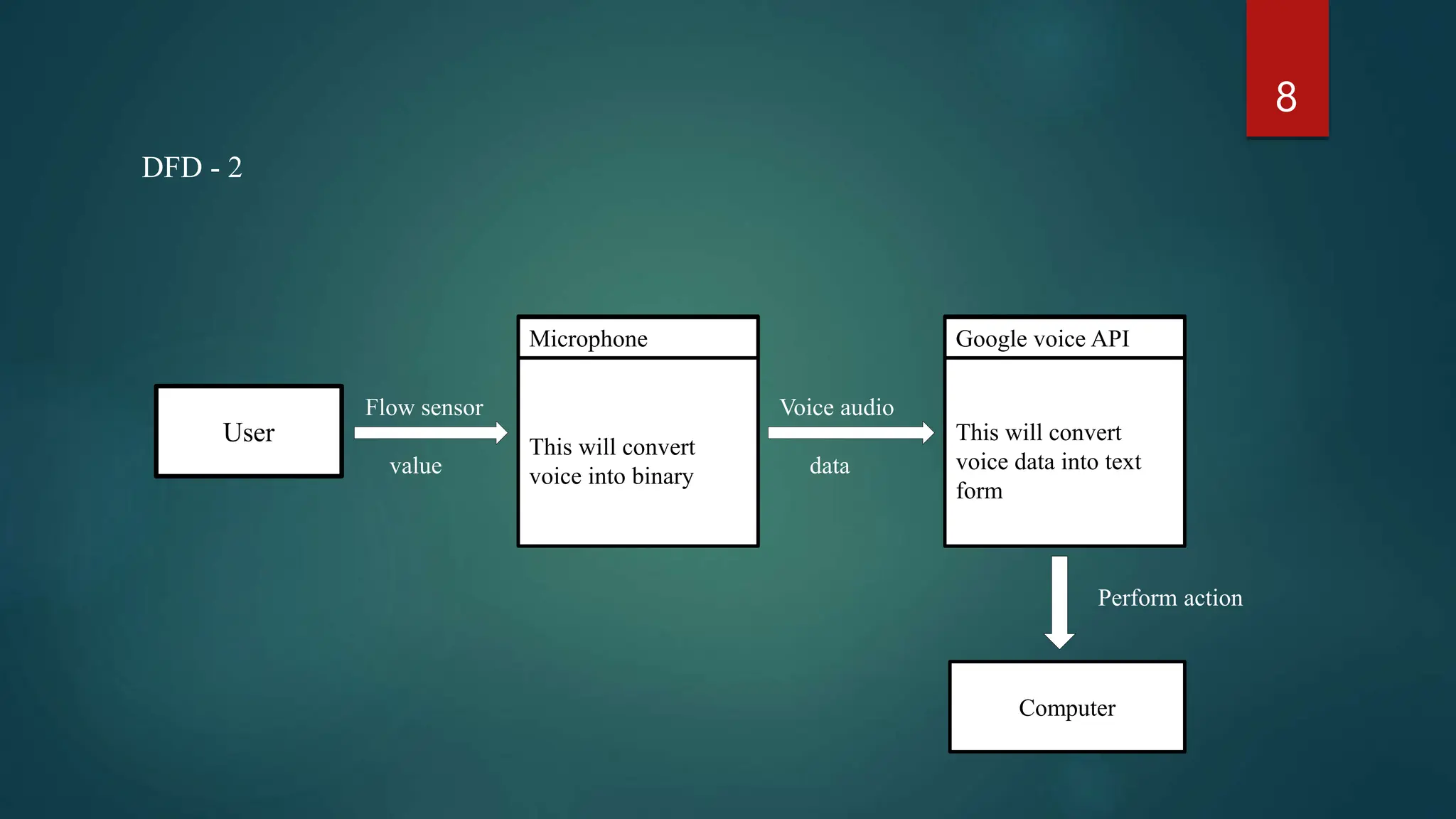
User This will convert
voice into binary
Microphone
Computer
This will convert
voice data into text
form
Google voice API
Flow sensor
value
Voice audio
data
Perform action
DFD - 2
8
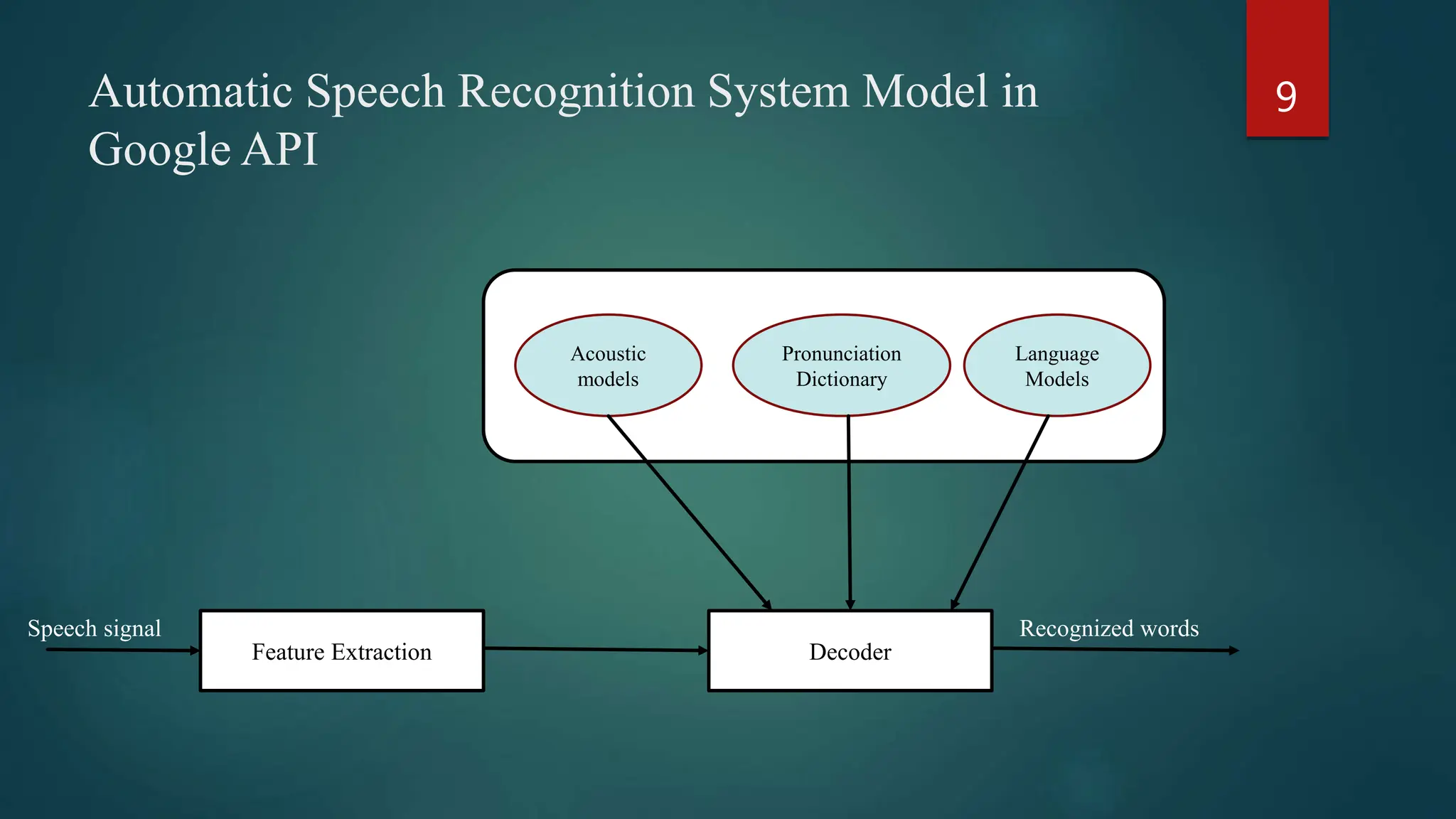
Automatic Speech Recognition System Model in
Google API
9
Feature Extraction Decoder
Acoustic
models
Pronunciation
Dictionary
Language
Models
Speech signal Recognized words
Feature Extraction
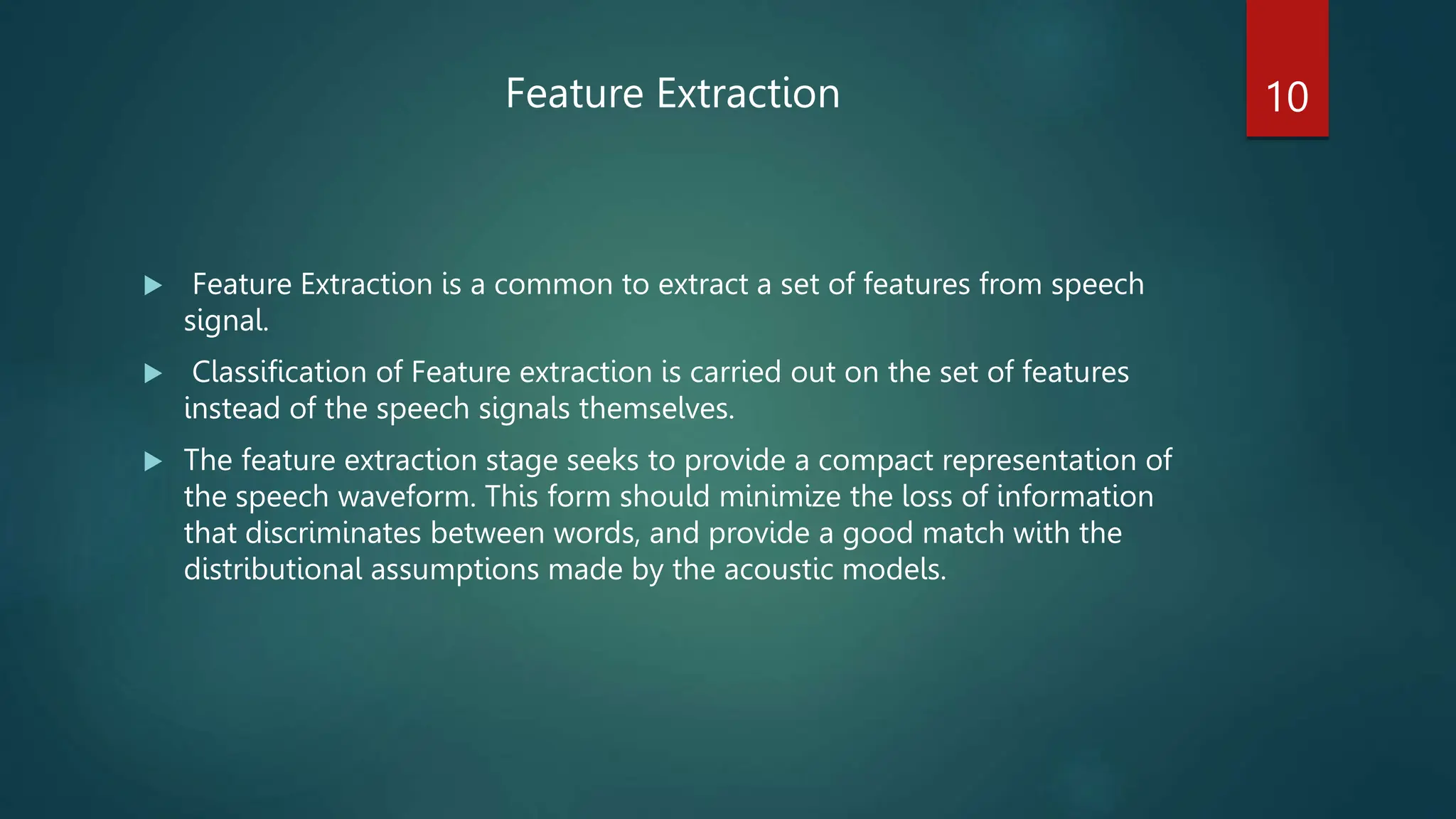
 Feature Extraction is a common to extract a set of features from speech
signal.
 Classification of Feature extraction is carried out on the set of features
instead of the speech signals themselves.
 The feature extraction stage seeks to provide a compact representation of
the speech waveform. This form should minimize the loss of information
that discriminates between words, and provide a good match with the
distributional assumptions made by the acoustic models.
10
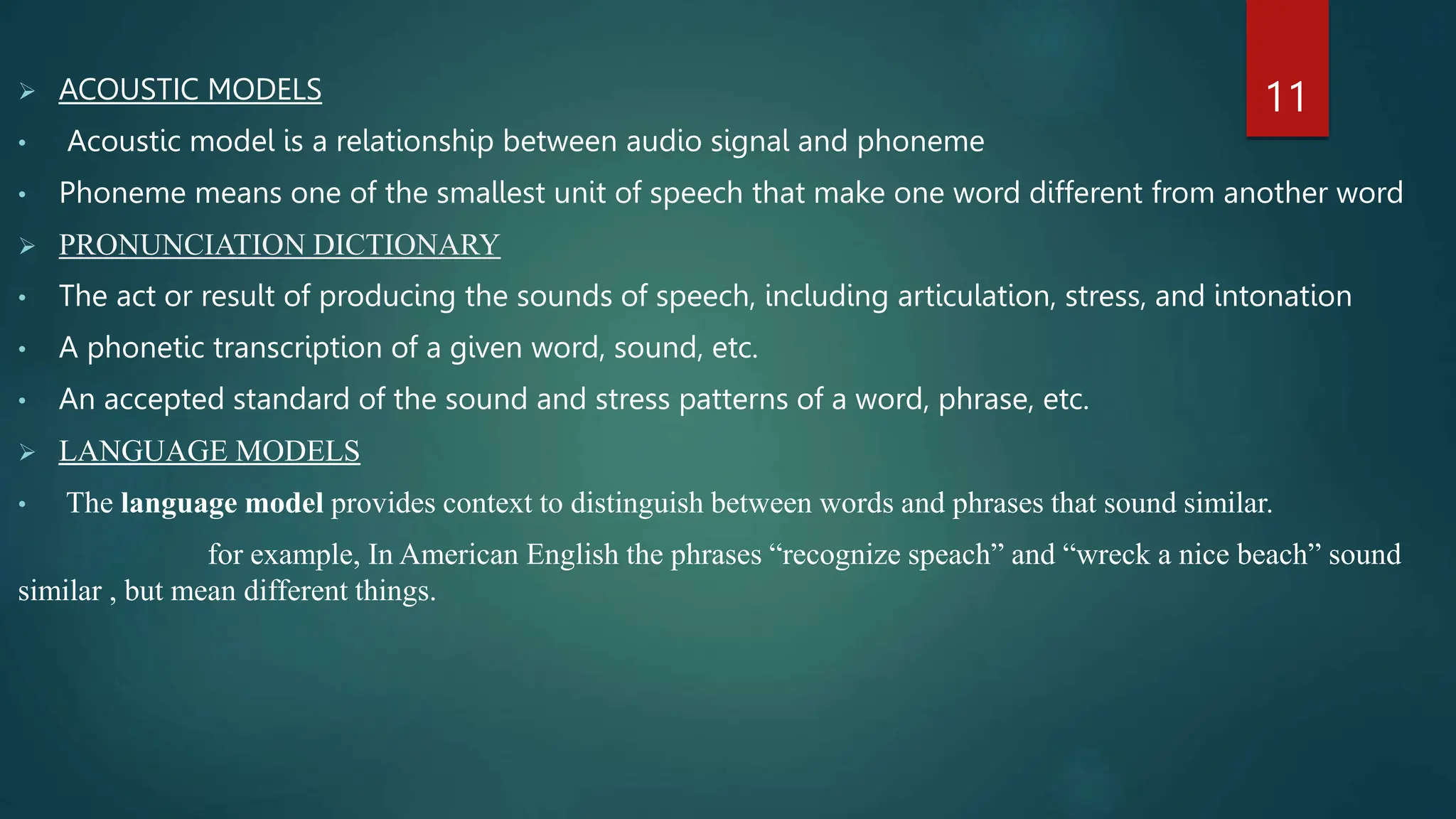
 ACOUSTIC MODELS
• Acoustic model is a relationship between audio signal and phoneme
• Phoneme means one of the smallest unit of speech that make one word different from another word
 PRONUNCIATION DICTIONARY
• The act or result of producing the sounds of speech, including articulation, stress, and intonation
• A phonetic transcription of a given word, sound, etc.
• An accepted standard of the sound and stress patterns of a word, phrase, etc.
 LANGUAGE MODELS
• The language model provides context to distinguish between words and phrases that sound similar.
for example, In American English the phrases “recognize speach” and “wreck a nice beach” sound
similar , but mean different things.
11
Use case diagrams 12
Input
voice
Sent
mail
Turn
on/off
Wi Fi
Wikipedia
Read
search
User
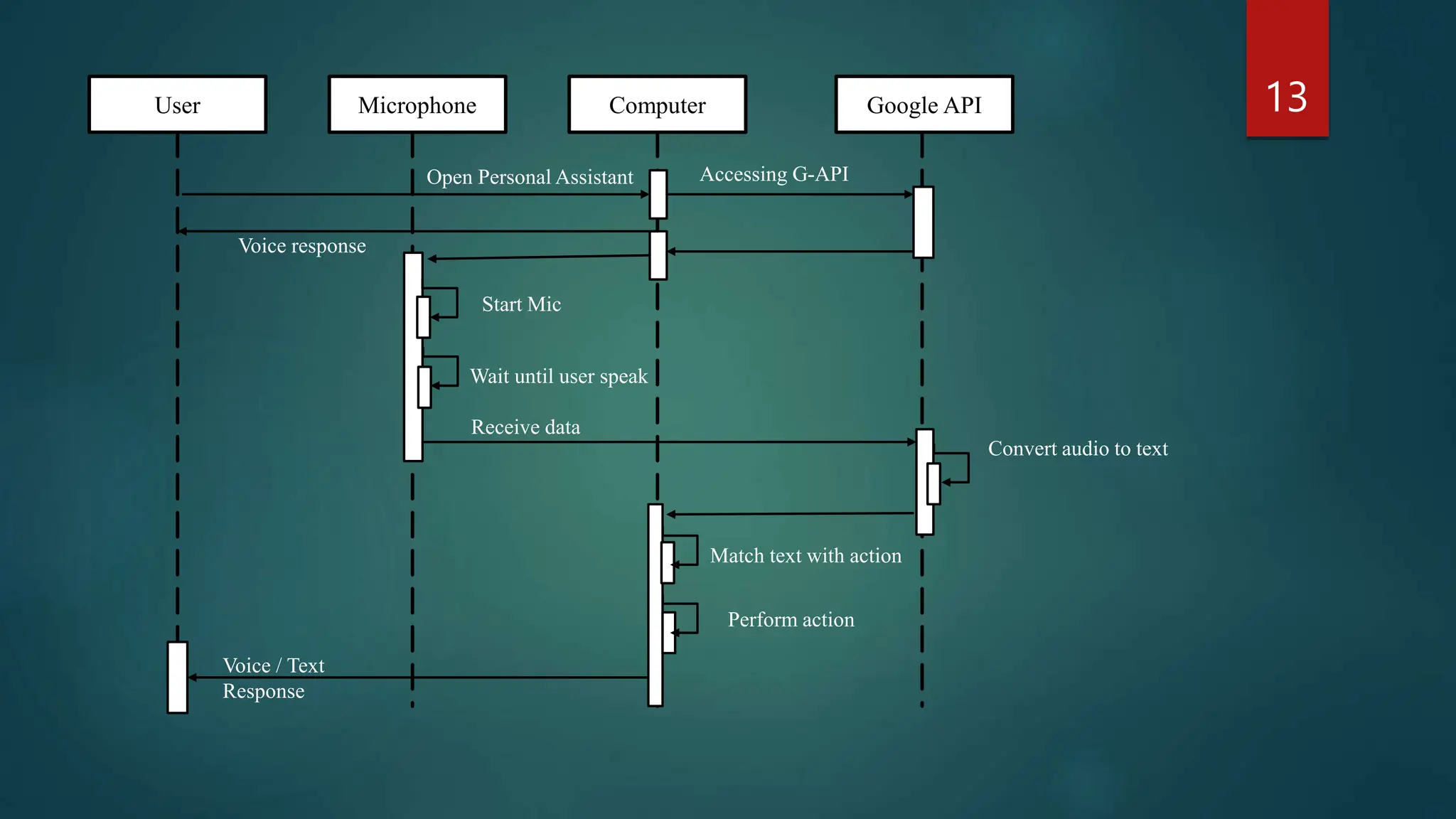
User Microphone Google API
Computer
Open Personal Assistant Accessing G-API
Voice response
Start Mic
Wait until user speak
Receive data
Convert audio to text
Match text with action
Perform action
Voice / Text
Response
13
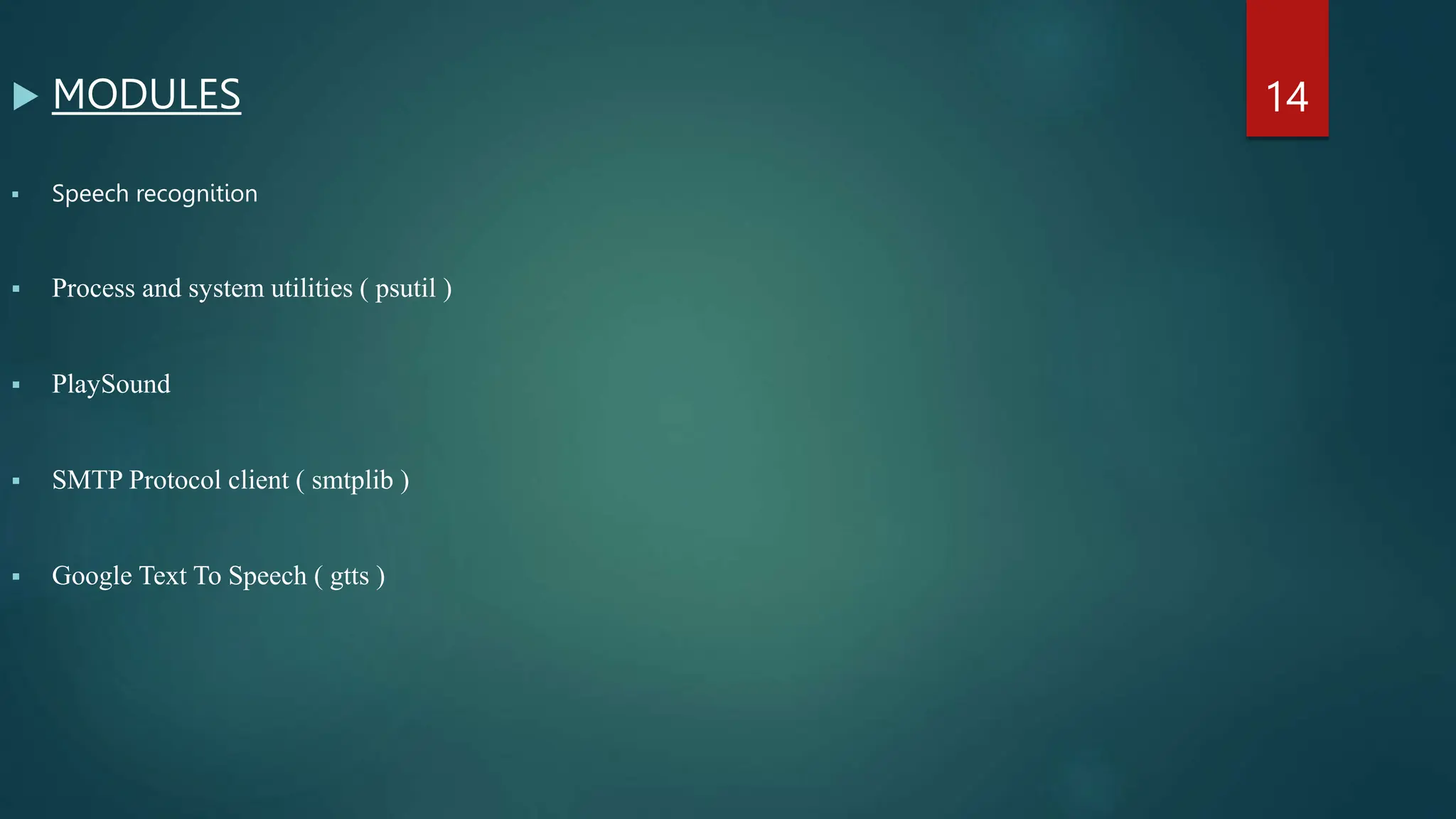
 MODULES
 Speech recognition
 Process and system utilities ( psutil )
 PlaySound
 SMTP Protocol client ( smtplib )
 Google Text To Speech ( gtts )
14
Requirements
 Software requirements
 Pycharm IDE/visual studio code
 Inno Setup Compiler
 Pyinstaller
 Python 3.8.2 and its Sub modules
 Hardware requirements
 Intel core i3
 4gb RAM
 30 Gb Hard drive space
15
Conclusion
Voice Controlled Personal Assistant System will use the Natural language
processing and can be integrated with artificial intelligence techniques to
achieve a smart assistant that can control the computer and applications and
even solve user queries using web searches.. It can be designed to minimize
the human efforts to interact with many other subsystems, which would
otherwise have to be performed manually. By achieving this, the system will
make human life comfortable
16
THANK YOU
17

Personal Voice Assistant using python.pptx

  • 1.
    PERSONAL VOICE ASSISTANT IN PYTHON 1 SubmittedBy: Vikas Kumar Utkarsh sengar Yash Jauhri Yash Tripathi
  • 2.
    Contents  Introduction  Howdoes an intelligent personal assistant work?  Existing system and proposed system  Dataflow diagrams  Automatic Speech Recognition System Model in Google AP  Use case diagrams  Modules  screenshots  Requirements  Conclusion 2
  • 3.
    Introduction  A virtualassistant is a technology based on artificial intelligence. The software uses a device’s microphone to receive voice requests while the voice output takes place at the speaker. But the most exciting thing happens between these two actions.  It is a combination of several different technologies: voice recognition, voice analysis and language processing.  It is completely developed using one of the most powerful language python. 3
  • 4.
    How does anintelligent personal assistant work?  User asks a personal assistant to perform a task.  The natural language audio signal is converted into digital data that can be analyzed by the software.  Compared with a database of the software using an innovative algorithm to find a suitable answer.  This database is located on distributed servers in cloud networks. For this reason ,it must have a reliable Internet connection. 4
  • 5.
    EXISTING SYSTEM V/SPROPOSED SYSTEM 5 Existing System Proposed System Usage statistics and user data are sent to the developer Does not collect any user data Installation required Installation required User cannot edit or change the modules User can edit and add new modules Not a free Software Free Software lightweight Simple User interface
  • 6.
    Dataflow Diagrams 6 User Personal voice assistant Computer Textto speech Speech to Text Voice Action Response Voice output DFD - 0
  • 7.
    User Voice totext Action perform Database Personal voice assistant Computer Voice Command Perform action DFD - 1 7
  • 8.
    User This willconvert voice into binary Microphone Computer This will convert voice data into text form Google voice API Flow sensor value Voice audio data Perform action DFD - 2 8
  • 9.
    Automatic Speech RecognitionSystem Model in Google API 9 Feature Extraction Decoder Acoustic models Pronunciation Dictionary Language Models Speech signal Recognized words
  • 10.
    Feature Extraction  FeatureExtraction is a common to extract a set of features from speech signal.  Classification of Feature extraction is carried out on the set of features instead of the speech signals themselves.  The feature extraction stage seeks to provide a compact representation of the speech waveform. This form should minimize the loss of information that discriminates between words, and provide a good match with the distributional assumptions made by the acoustic models. 10
  • 11.
     ACOUSTIC MODELS •Acoustic model is a relationship between audio signal and phoneme • Phoneme means one of the smallest unit of speech that make one word different from another word  PRONUNCIATION DICTIONARY • The act or result of producing the sounds of speech, including articulation, stress, and intonation • A phonetic transcription of a given word, sound, etc. • An accepted standard of the sound and stress patterns of a word, phrase, etc.  LANGUAGE MODELS • The language model provides context to distinguish between words and phrases that sound similar. for example, In American English the phrases “recognize speach” and “wreck a nice beach” sound similar , but mean different things. 11
  • 12.
    Use case diagrams12 Input voice Sent mail Turn on/off Wi Fi Wikipedia Read search User
  • 13.
    User Microphone GoogleAPI Computer Open Personal Assistant Accessing G-API Voice response Start Mic Wait until user speak Receive data Convert audio to text Match text with action Perform action Voice / Text Response 13
  • 14.
     MODULES  Speechrecognition  Process and system utilities ( psutil )  PlaySound  SMTP Protocol client ( smtplib )  Google Text To Speech ( gtts ) 14
  • 15.
    Requirements  Software requirements Pycharm IDE/visual studio code  Inno Setup Compiler  Pyinstaller  Python 3.8.2 and its Sub modules  Hardware requirements  Intel core i3  4gb RAM  30 Gb Hard drive space 15
  • 16.
    Conclusion Voice Controlled PersonalAssistant System will use the Natural language processing and can be integrated with artificial intelligence techniques to achieve a smart assistant that can control the computer and applications and even solve user queries using web searches.. It can be designed to minimize the human efforts to interact with many other subsystems, which would otherwise have to be performed manually. By achieving this, the system will make human life comfortable 16
  • 17.