Yu Kyoung Park
WFED 597A
ykpark@psu.edu
What are the issues?


       Fierce Global Competition
         Economic Uncertainty


                                   2
What are the issues?


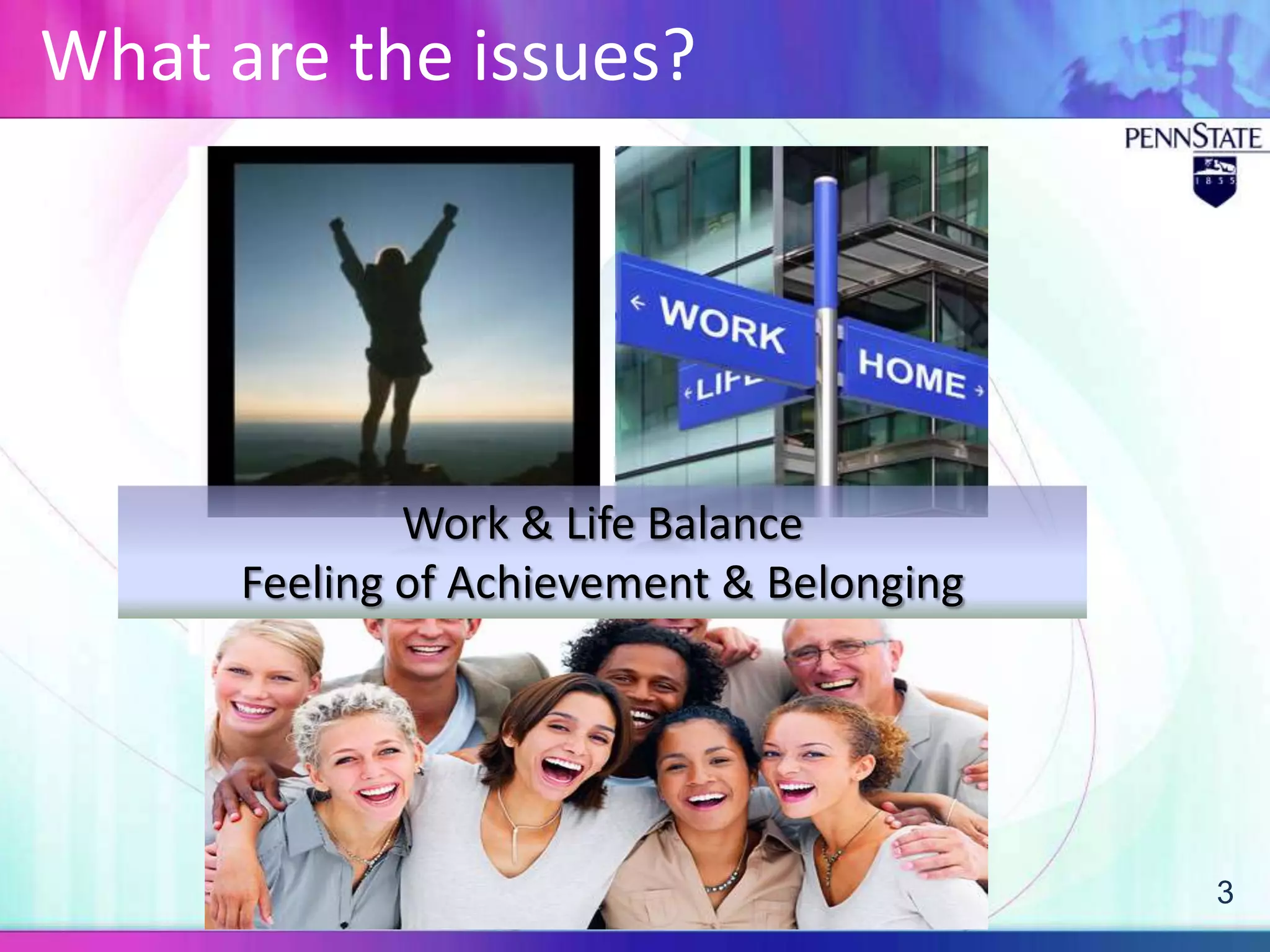
              Work & Life Balance
      Feeling of Achievement & Belonging


                                           3
What are the issues?


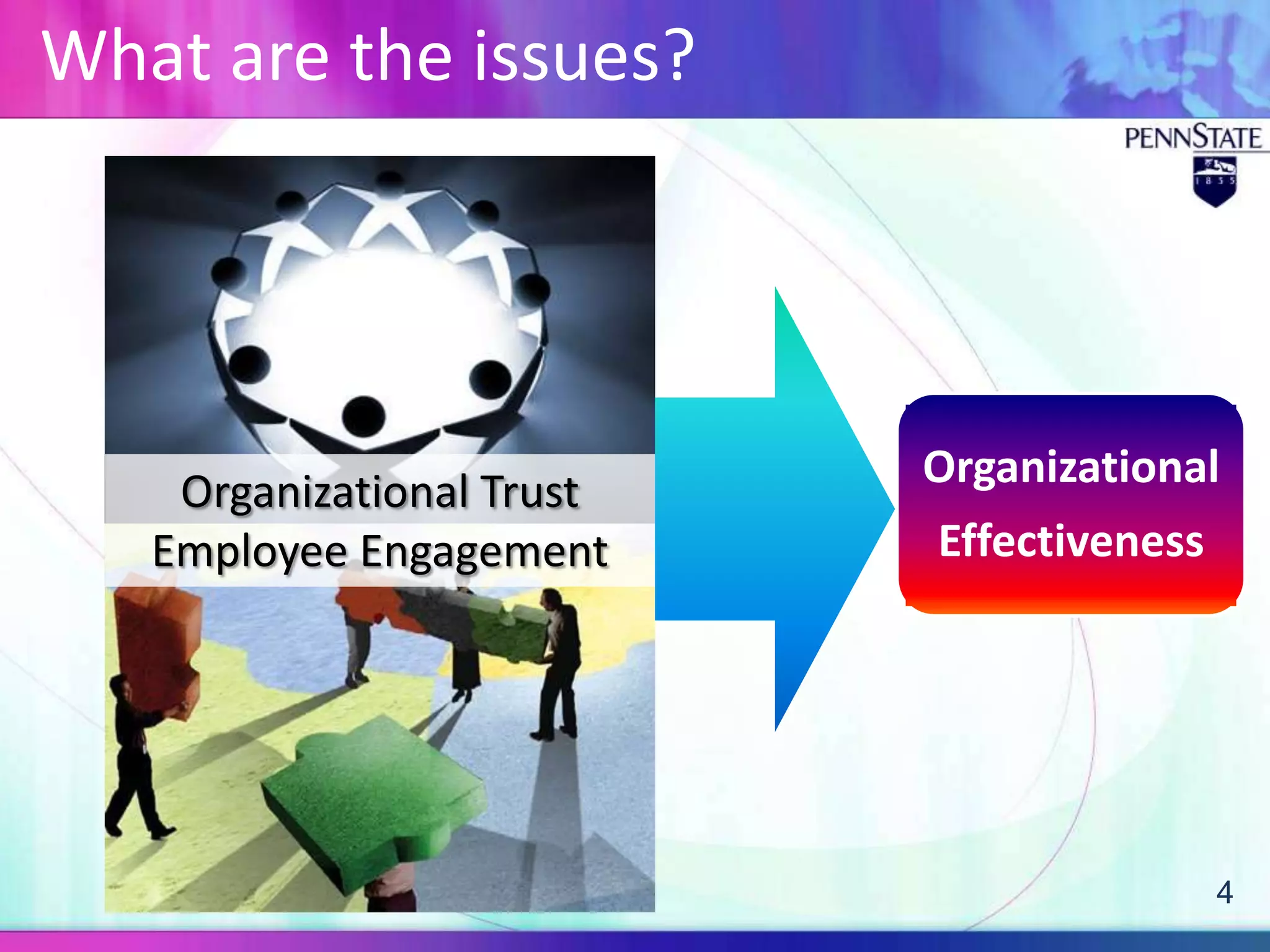
                           Organizational
    Organizational Trust
   Employee Engagement     Effectiveness


                                           4
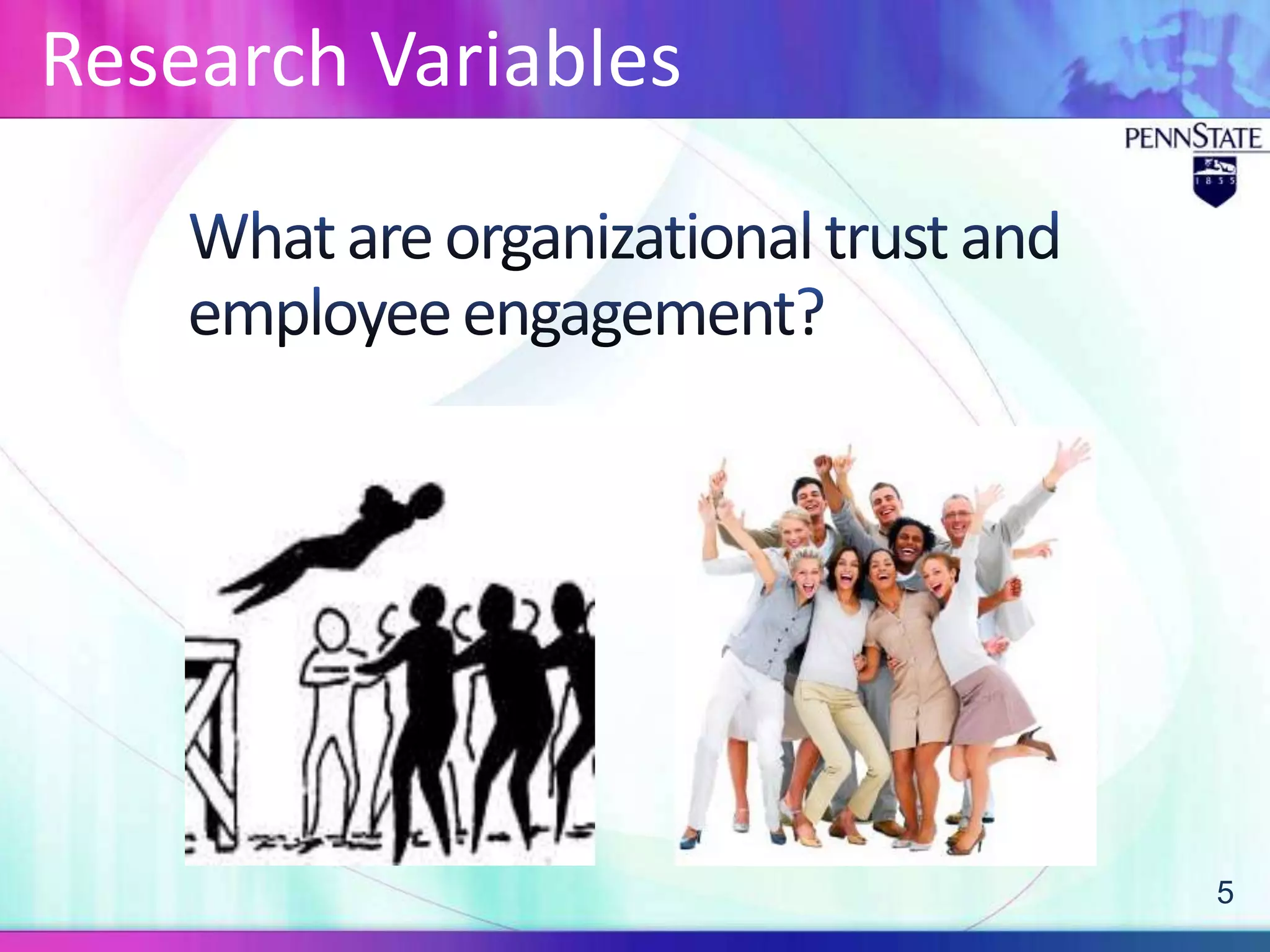
Research Variables


                     5
What is organizational trust?

   Definition of organizational trust

   “an employee’s feeling of confidence that
   the organization will perform actions that
   are beneficial, or at least not detrimental,
   to him or her” (Tan & Tan, 2000, p. 243)


                                                  6
What is employee engagement?

  Definition of employee engagement

   “a positive, fulfilling, work-related state
   of mind that is characterized by vigor,
   dedication, and absorption”
   (Schaufeli, Salanova, Gonzalez-Roma, & Bakker, 2002b, p. 74)


                                                                  7
Significance
  Why organizational trust matters?
     For many years trust has been associated with effective
     organizations (Barnes, 1983; Boss, 1978; Dwivedi, 1983;
     French & Raven, 1968; Zand, 1972).

     Today’s business environment – driven by a global
     economy, increased competition, emerging technologies,
     and rapid product development – brings constant change,
     requiring new measurements of organizational
     effectiveness.


                                                               8
Significance
  Why organizational trust matters?
     Trust is important in a range of organizational activities
     and processes such as team work, leadership, goal
     setting, performance appraisal, and in general,
     cooperative behaviors (Axelrod, 1984; Elangovan &
     Shapiro, 1998; Gambetta, 1988; Jones & George, 1998;
     Mayer, Davis, & Schoorman, 1995; McAllister, 1995).


                                                                  9
Significance
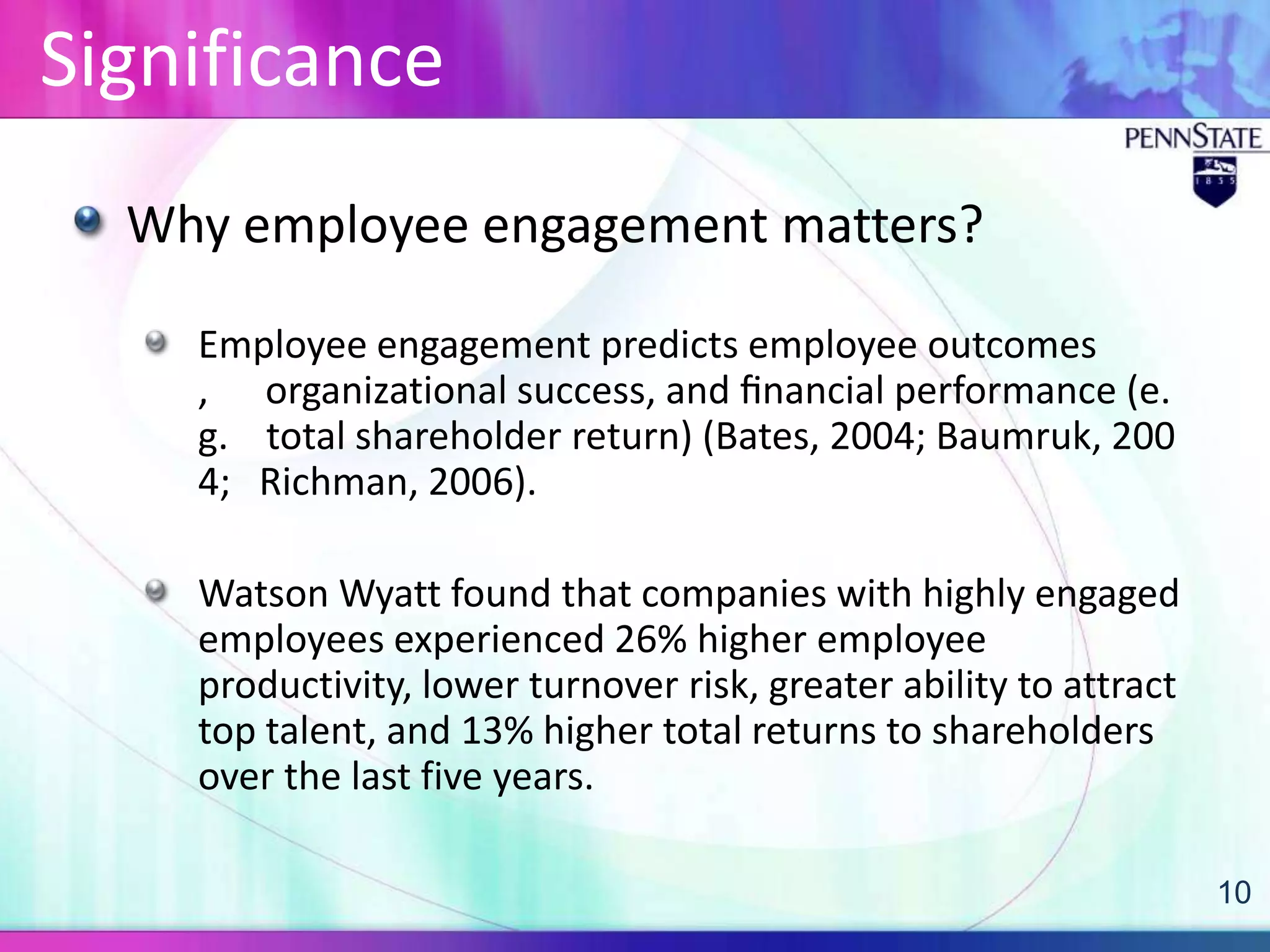
  Why employee engagement matters?

    Employee engagement predicts employee outcomes
    , organizational success, and financial performance (e.
    g. total shareholder return) (Bates, 2004; Baumruk, 200
    4; Richman, 2006).

    Watson Wyatt found that companies with highly engaged
    employees experienced 26% higher employee
    productivity, lower turnover risk, greater ability to attract
    top talent, and 13% higher total returns to shareholders
    over the last five years.

                                                                    10
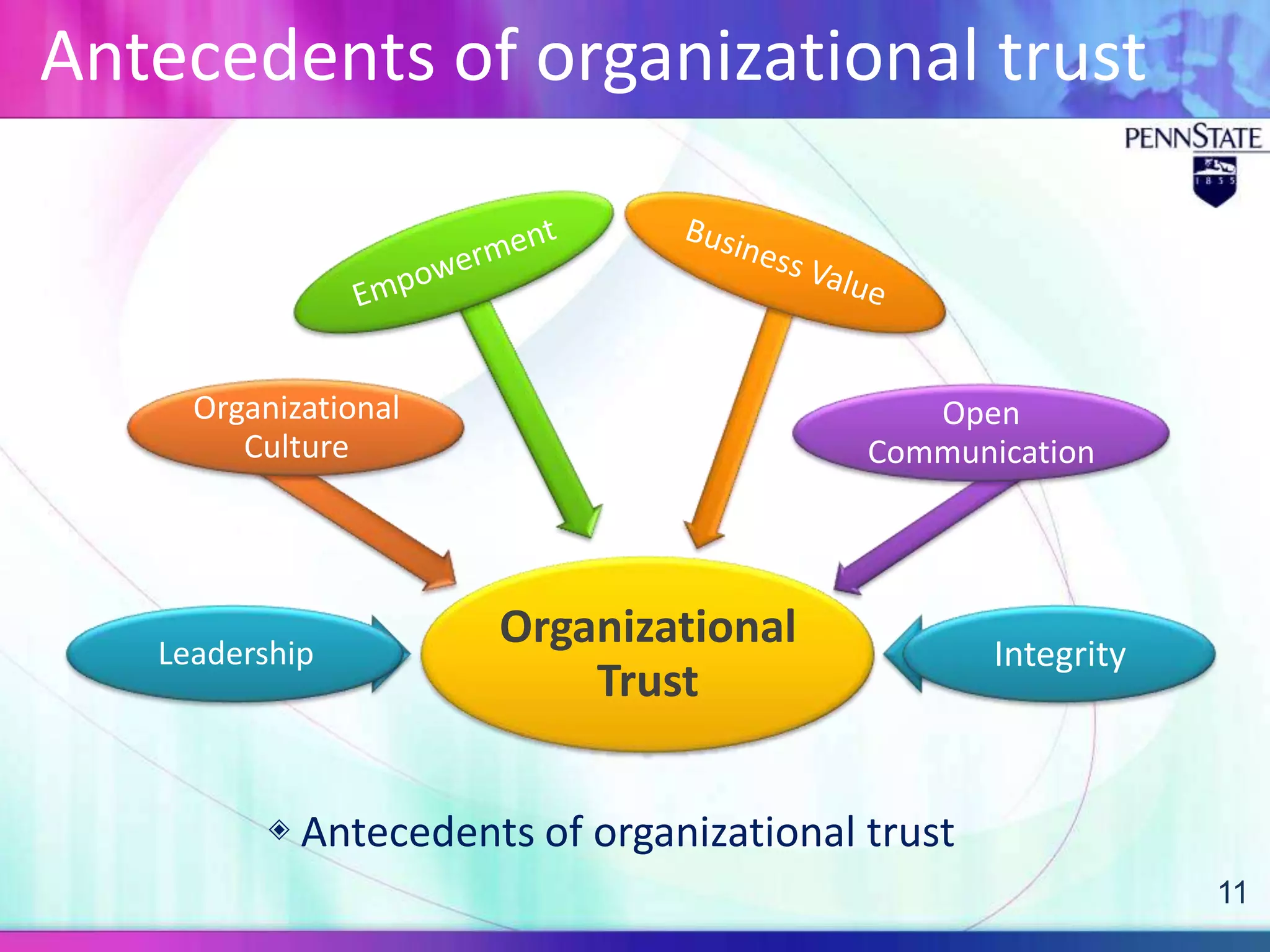
Antecedents of organizational trust


     Organizational                          Open
        Culture                           Communication


   Leadership
                      Organizational              Integrity
                          Trust


          ◈ Antecedents of organizational trust
                                                              11
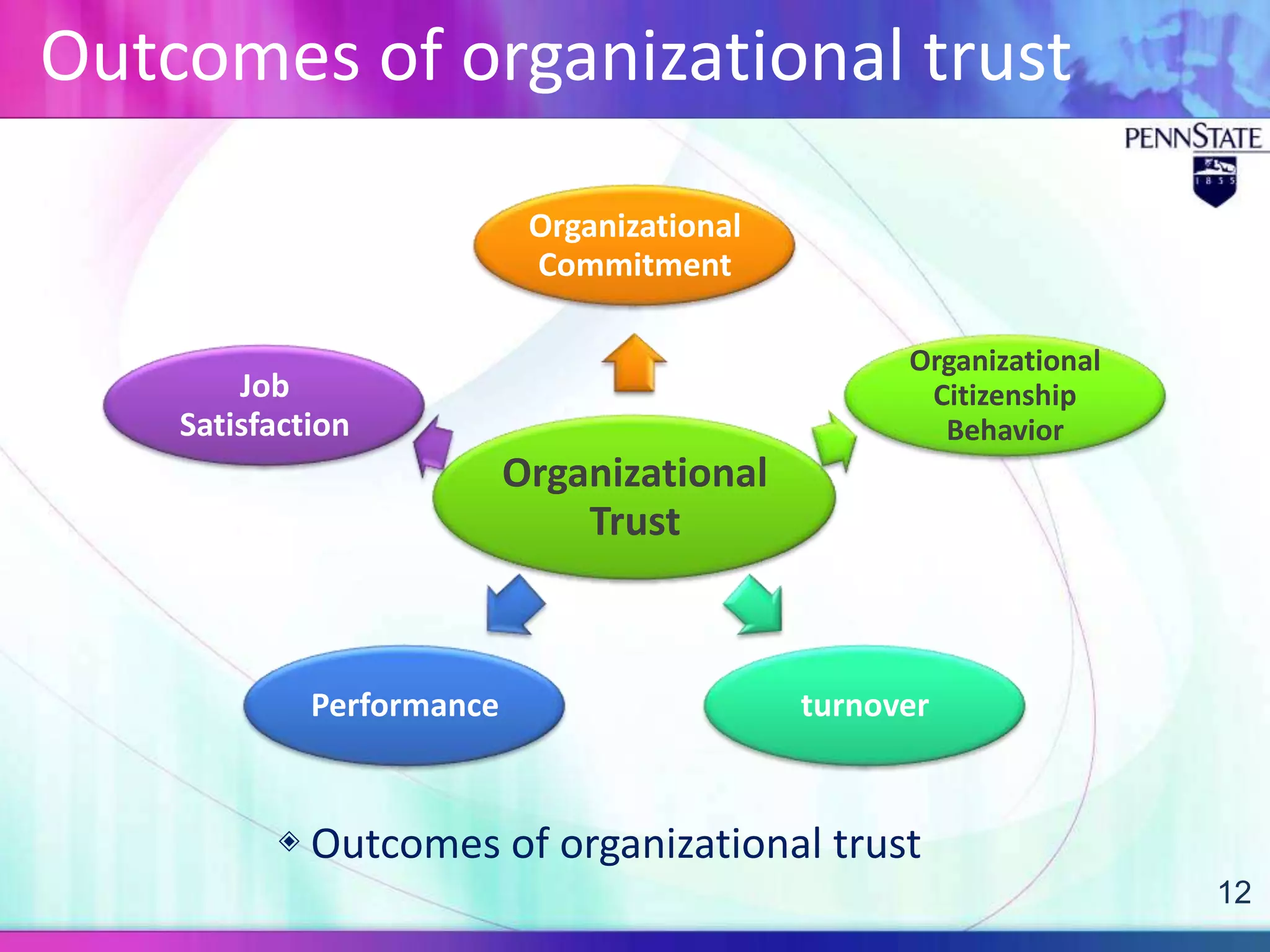
Outcomes of organizational trust

                            Organizational
                            Commitment

                                                   Organizational
        Job                                         Citizenship
    Satisfaction                                     Behavior
                           Organizational
                               Trust


             Performance                     turnover


          ◈ Outcomes of organizational trust
                                                                    12
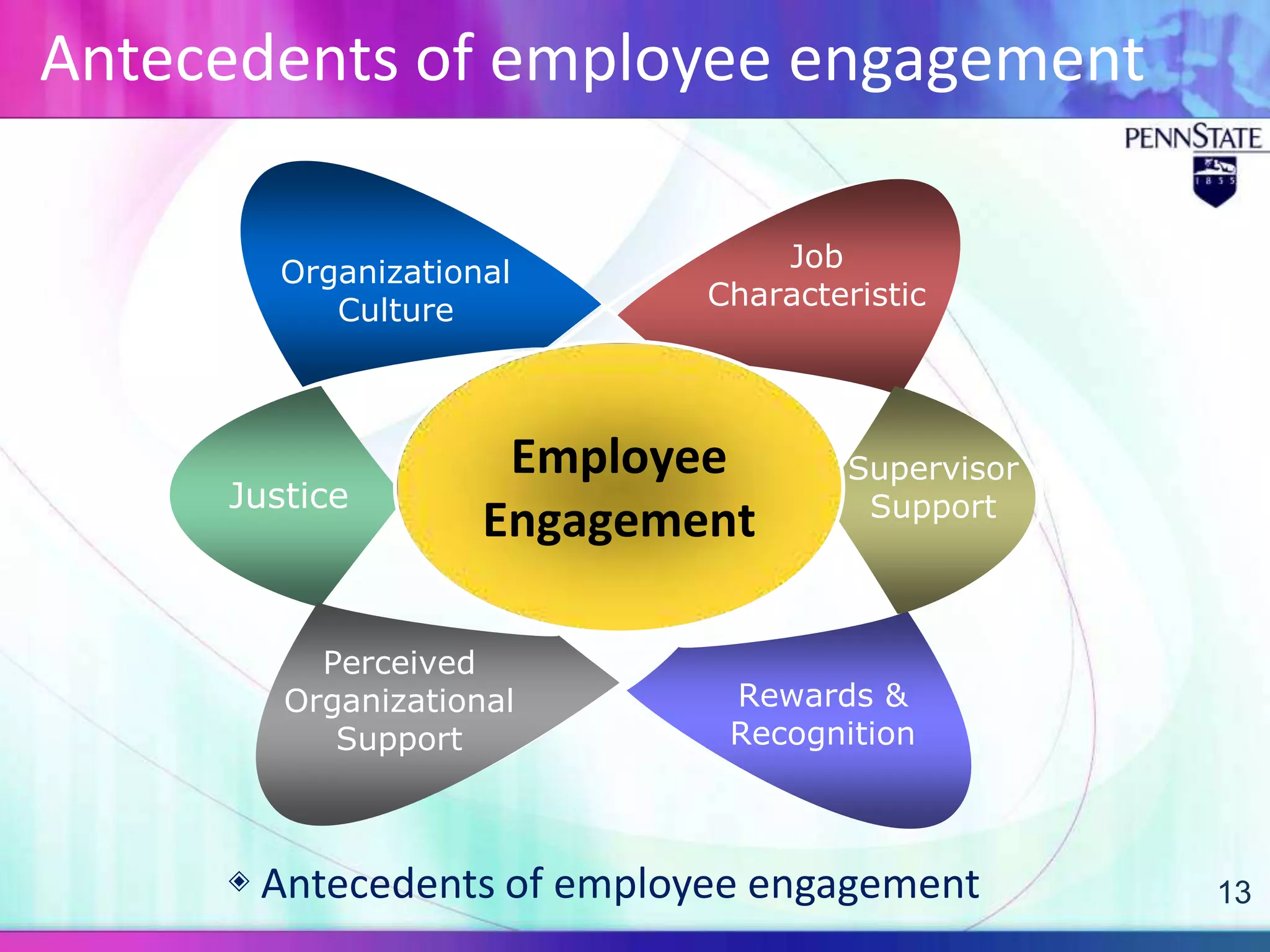
Antecedents of employee engagement

        Organizational          Job
           Culture          Characteristic


                     Employee       Supervisor
     Justice                         Support
                    Engagement

          Perceived
        Organizational       Rewards &
           Support           Recognition


     ◈ Antecedents of employee engagement        13
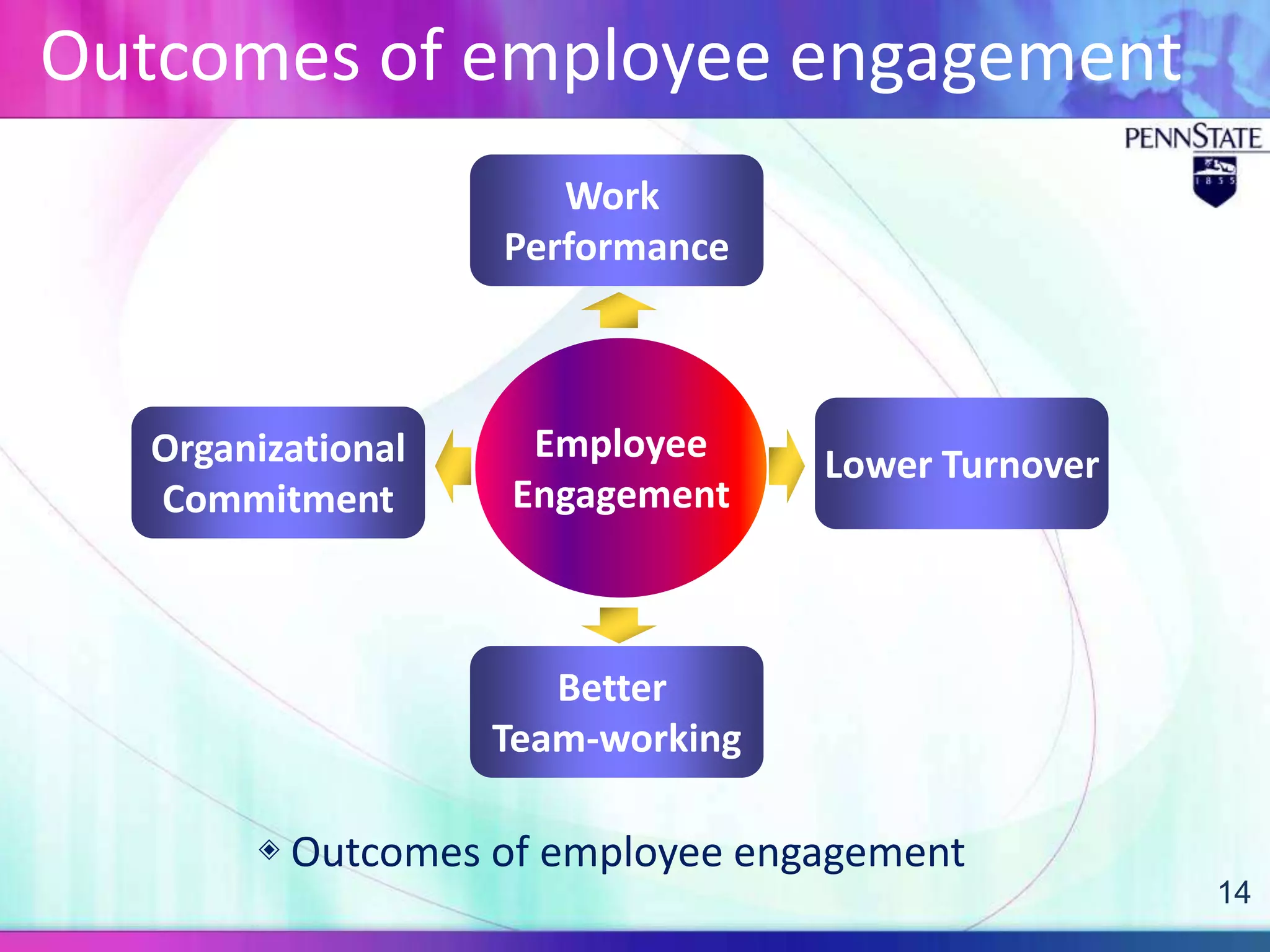
Outcomes of employee engagement
                       Work
                    Performance


   Organizational    Employee      Lower Turnover
   Commitment       Engagement


                       Better
                    Team-working

        ◈ Outcomes of employee engagement
                                                    14
Research question

 Research Question

 What is the relationship
 between organizational trust
 and employee engagement
 in Korean business context?


                                15
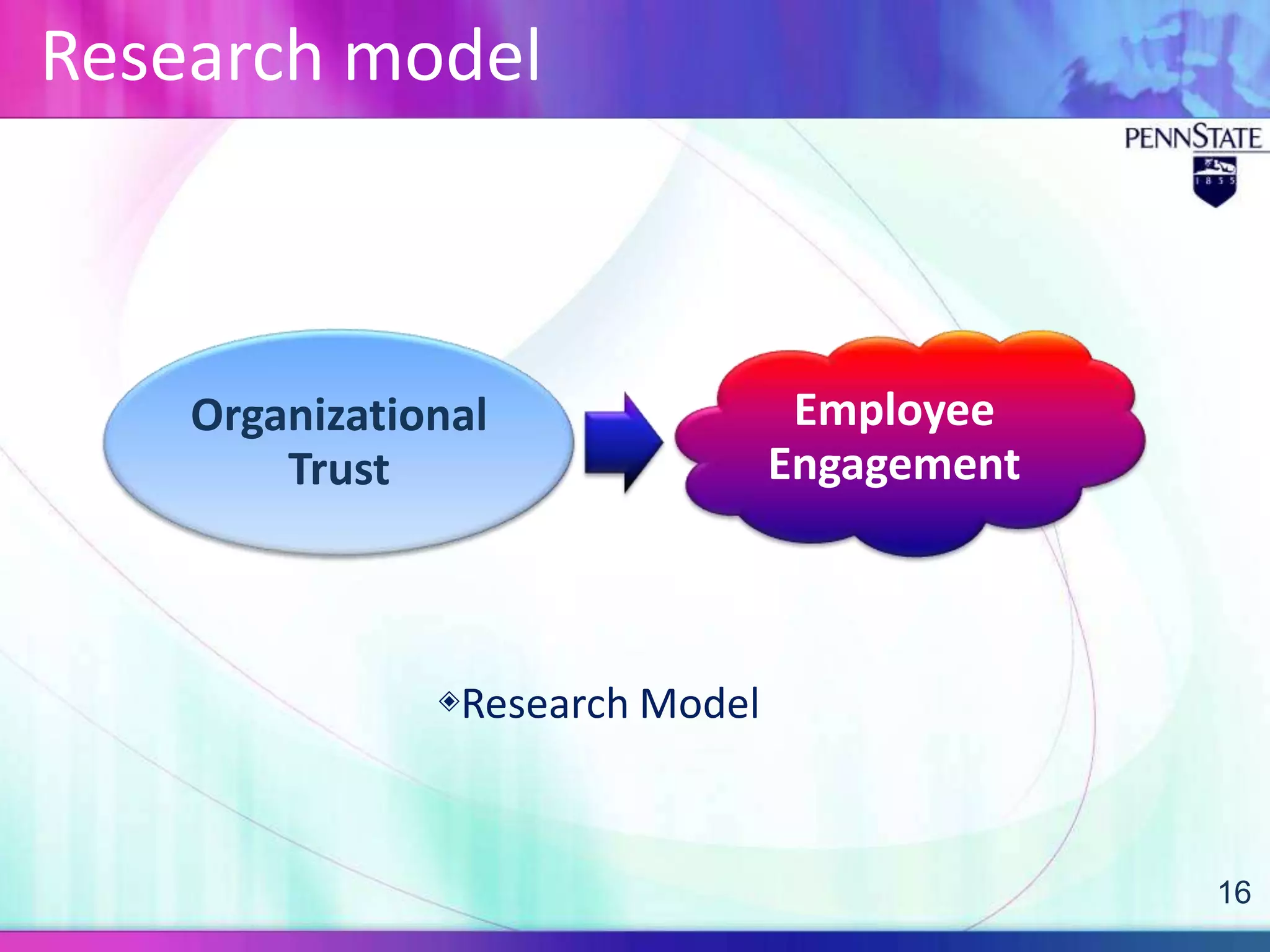
Research model


    Organizational                Employee
        Trust                    Engagement


               ◈Research Model


                                              16
Practical implication

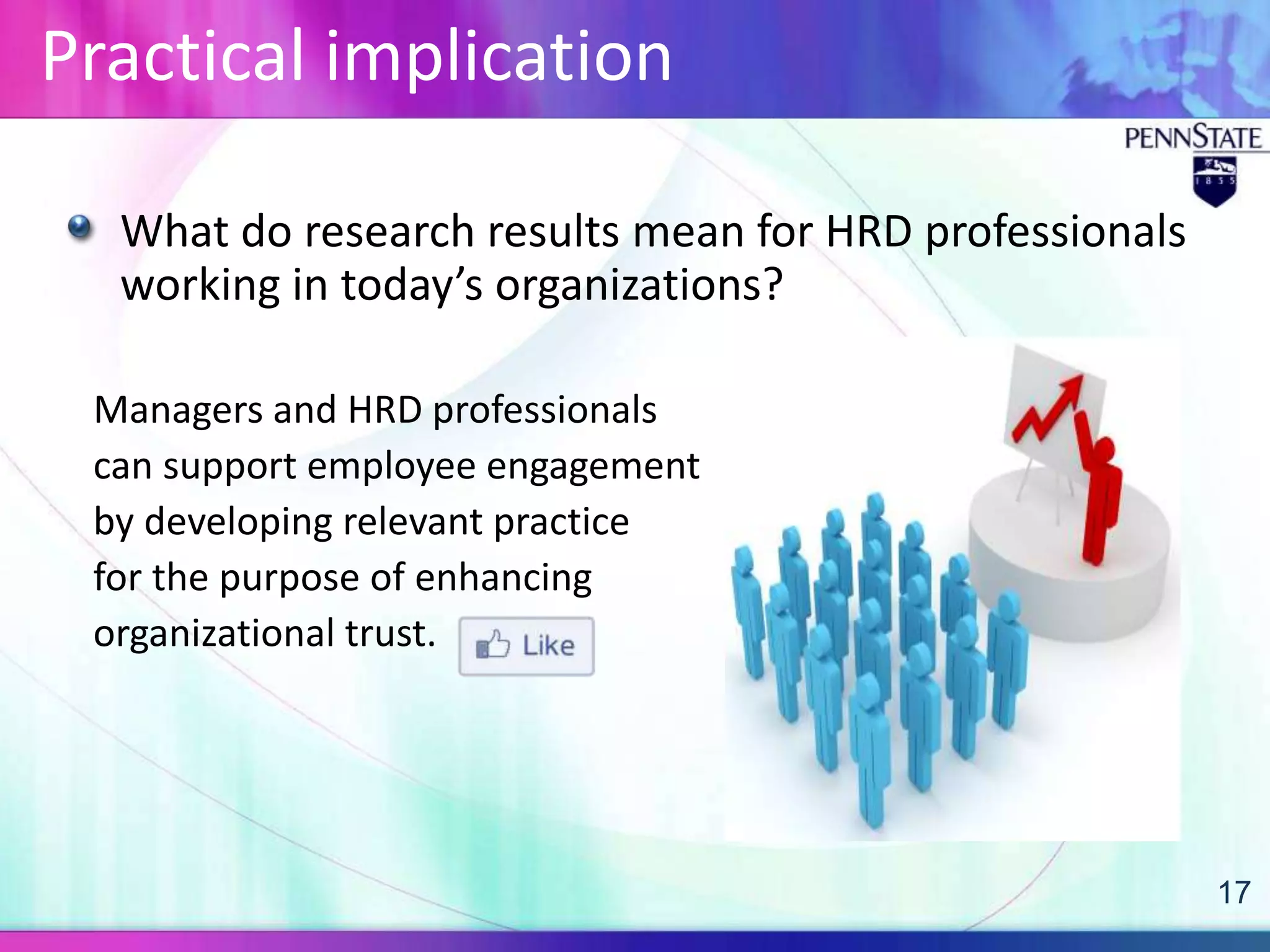
  What do research results mean for HRD professionals
  working in today’s organizations?

 Managers and HRD professionals
 can support employee engagement
 by developing relevant practice
 for the purpose of enhancing
 organizational trust.


                                                        17
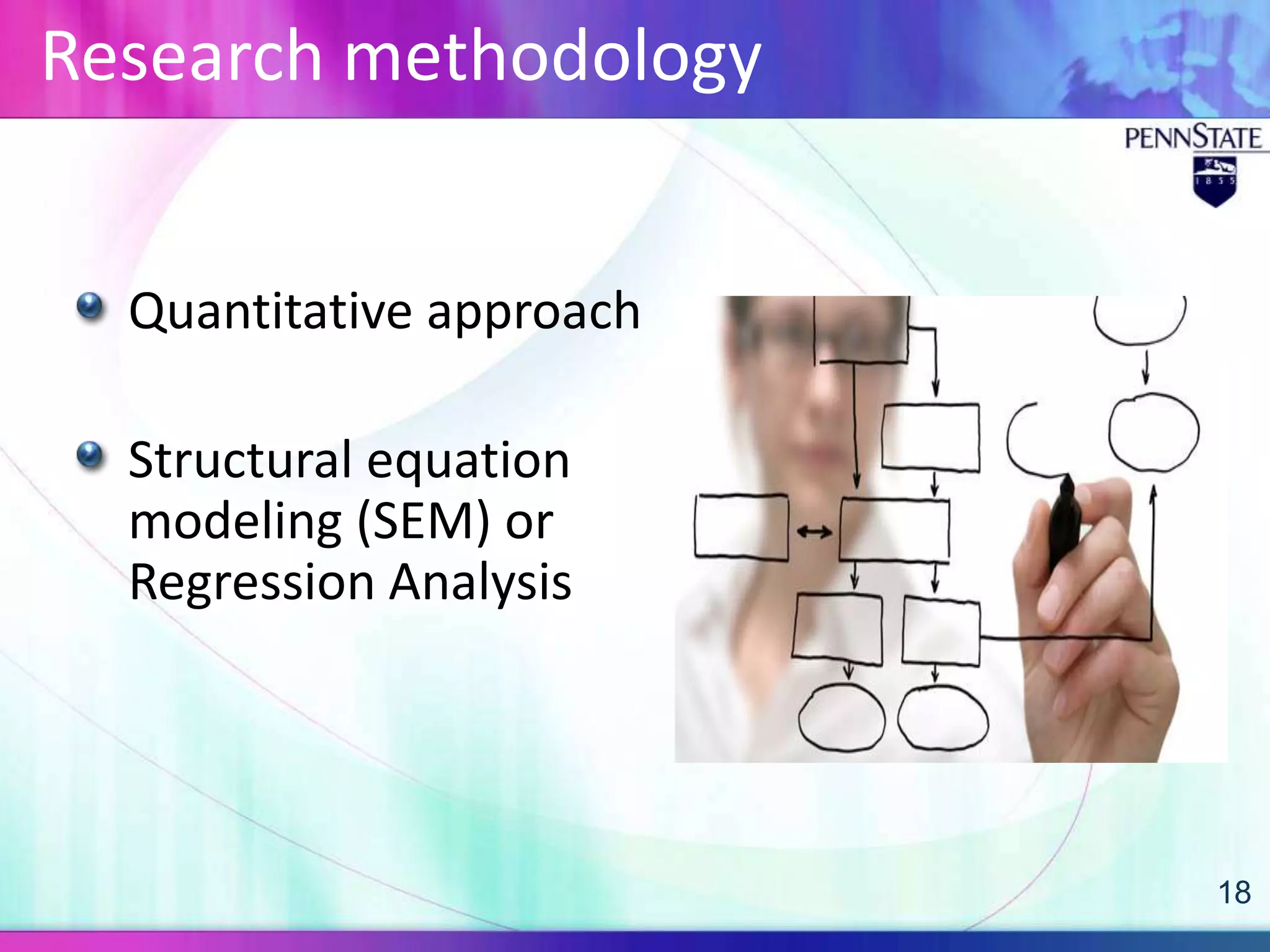
Research methodology


  Quantitative approach

  Structural equation
  modeling (SEM) or
  Regression Analysis


                          18
References

 Barnes, L. B. (1983). Managing the Paradox of Organizational Trust. Harvard
      Business Review, 107-116.
 Bates, S. (2004). Getting engaged. HR Magazine, 49(2), 44-51.
 Baumruk, R. (2004). The missing link: the role of employee engagement in
     business success. Workspan, 47, 48-52.
 Boss, R. W. (1978). Trust and Managerial Problem-Solving Revisited. Group and
      Organizational Studies, 3, 331-342.
 Cummings, L. L., & Bromiley, P. (1996). The Organizational Trust Inventory:
    Development and Validation. In R. M. Kramer, & T. R. Tyler (Eds.), Trust in
    Organizations: Frontiers of Theory and Research (pp. 302-330). Thousand
    Oaks, CA: Sage.
 Dwivedi, R. S. (1983). Management by Trust: A Conceptual Model. Group and
     Organizational Studies, 8, 375-402.
                                                                                  19
References

 Kahn, W. A. (1990). Psychological conditions of personal engagement and
      disengagement at work. Academy of Management Journal, 33, 692-724.
 Maslach, C., Schaufelli, W. B., & Leiter, M. P. (2001). Job burnout. Annual Review of
     Psychology, 52, 397-422.
 Richman, A. (2006). Everyone wants an engaged workforce how can you create it?.
      Workspan, 49, 36-9.
 Schaufeli, W. B., Salanova, M., Gonzalez-Roma, V., & Bakker, A. B. (2002b). The
      measurement of engagement and burnout: a two sample confirmatory factor
      analytic approach. Journal of Happiness Studies, 3, 71-92.
 Tan, H. H., & Tan, C. S. (2000). Toward the differentiation of trust in supervisor and
      trust in organization. Genetic, Social, and General Psychology
      Monographs, 126(2), 241-260.

                                                                                          20

Personal research focus yu kyoung park

  • 1.
    Yu Kyoung Park WFED597A ykpark@psu.edu
  • 2.
    What are theissues? Fierce Global Competition Economic Uncertainty 2
  • 3.
    What are theissues? Work & Life Balance Feeling of Achievement & Belonging 3
  • 4.
    What are theissues? Organizational Organizational Trust Employee Engagement Effectiveness 4
  • 5.
  • 6.
    What is organizationaltrust? Definition of organizational trust “an employee’s feeling of confidence that the organization will perform actions that are beneficial, or at least not detrimental, to him or her” (Tan & Tan, 2000, p. 243) 6
  • 7.
    What is employeeengagement? Definition of employee engagement “a positive, fulfilling, work-related state of mind that is characterized by vigor, dedication, and absorption” (Schaufeli, Salanova, Gonzalez-Roma, & Bakker, 2002b, p. 74) 7
  • 8.
    Significance Whyorganizational trust matters? For many years trust has been associated with effective organizations (Barnes, 1983; Boss, 1978; Dwivedi, 1983; French & Raven, 1968; Zand, 1972). Today’s business environment – driven by a global economy, increased competition, emerging technologies, and rapid product development – brings constant change, requiring new measurements of organizational effectiveness. 8
  • 9.
    Significance Whyorganizational trust matters? Trust is important in a range of organizational activities and processes such as team work, leadership, goal setting, performance appraisal, and in general, cooperative behaviors (Axelrod, 1984; Elangovan & Shapiro, 1998; Gambetta, 1988; Jones & George, 1998; Mayer, Davis, & Schoorman, 1995; McAllister, 1995). 9
  • 10.
    Significance Whyemployee engagement matters? Employee engagement predicts employee outcomes , organizational success, and financial performance (e. g. total shareholder return) (Bates, 2004; Baumruk, 200 4; Richman, 2006). Watson Wyatt found that companies with highly engaged employees experienced 26% higher employee productivity, lower turnover risk, greater ability to attract top talent, and 13% higher total returns to shareholders over the last five years. 10
  • 11.
    Antecedents of organizationaltrust Organizational Open Culture Communication Leadership Organizational Integrity Trust ◈ Antecedents of organizational trust 11
  • 12.
    Outcomes of organizationaltrust Organizational Commitment Organizational Job Citizenship Satisfaction Behavior Organizational Trust Performance turnover ◈ Outcomes of organizational trust 12
  • 13.
    Antecedents of employeeengagement Organizational Job Culture Characteristic Employee Supervisor Justice Support Engagement Perceived Organizational Rewards & Support Recognition ◈ Antecedents of employee engagement 13
  • 14.
    Outcomes of employeeengagement Work Performance Organizational Employee Lower Turnover Commitment Engagement Better Team-working ◈ Outcomes of employee engagement 14
  • 15.
    Research question ResearchQuestion What is the relationship between organizational trust and employee engagement in Korean business context? 15
  • 16.
    Research model Organizational Employee Trust Engagement ◈Research Model 16
  • 17.
    Practical implication What do research results mean for HRD professionals working in today’s organizations? Managers and HRD professionals can support employee engagement by developing relevant practice for the purpose of enhancing organizational trust. 17
  • 18.
    Research methodology Quantitative approach Structural equation modeling (SEM) or Regression Analysis 18
  • 19.
    References Barnes, L.B. (1983). Managing the Paradox of Organizational Trust. Harvard Business Review, 107-116. Bates, S. (2004). Getting engaged. HR Magazine, 49(2), 44-51. Baumruk, R. (2004). The missing link: the role of employee engagement in business success. Workspan, 47, 48-52. Boss, R. W. (1978). Trust and Managerial Problem-Solving Revisited. Group and Organizational Studies, 3, 331-342. Cummings, L. L., & Bromiley, P. (1996). The Organizational Trust Inventory: Development and Validation. In R. M. Kramer, & T. R. Tyler (Eds.), Trust in Organizations: Frontiers of Theory and Research (pp. 302-330). Thousand Oaks, CA: Sage. Dwivedi, R. S. (1983). Management by Trust: A Conceptual Model. Group and Organizational Studies, 8, 375-402. 19
  • 20.
    References Kahn, W.A. (1990). Psychological conditions of personal engagement and disengagement at work. Academy of Management Journal, 33, 692-724. Maslach, C., Schaufelli, W. B., & Leiter, M. P. (2001). Job burnout. Annual Review of Psychology, 52, 397-422. Richman, A. (2006). Everyone wants an engaged workforce how can you create it?. Workspan, 49, 36-9. Schaufeli, W. B., Salanova, M., Gonzalez-Roma, V., & Bakker, A. B. (2002b). The measurement of engagement and burnout: a two sample confirmatory factor analytic approach. Journal of Happiness Studies, 3, 71-92. Tan, H. H., & Tan, C. S. (2000). Toward the differentiation of trust in supervisor and trust in organization. Genetic, Social, and General Psychology Monographs, 126(2), 241-260. 20