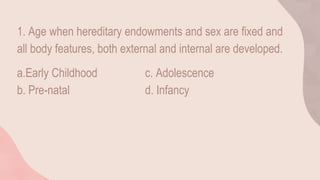
1. Age when hereditary endowments and sex are fixed and
all body features, both external and internal are developed.
a.Early Childhood c. Adolescence
b. Pre-natal d. Infancy
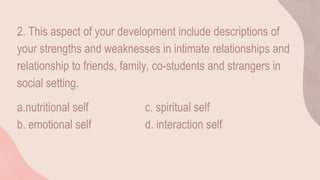
2. This aspect of your development include descriptions of
your strengths and weaknesses in intimate relationships and
relationship to friends, family, co-students and strangers in
social setting.
a.nutritional self c. spiritual self
b. emotional self d. interaction self
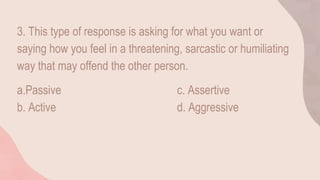
3. This type of response is asking for what you want or
saying how you feel in a threatening, sarcastic or humiliating
way that may offend the other person.
a.Passive c. Assertive
b. Active d. Aggressive
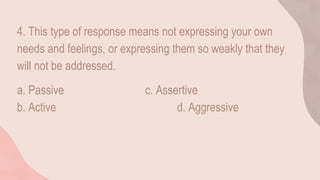
4. This type of response means not expressing your own
needs and feelings, or expressing them so weakly that they
will not be addressed.
a. Passive c. Assertive
b. Active d. Aggressive
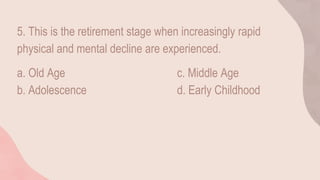
5. This is the retirement stage when increasingly rapid
physical and mental decline are experienced.
a. Old Age c. Middle Age
b. Adolescence d. Early Childhood
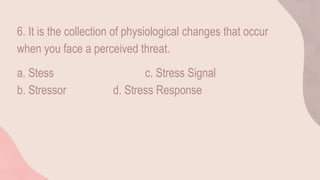
6. It is the collection of physiological changes that occur
when you face a perceived threat.
a. Stess c. Stress Signal
b. Stressor d. Stress Response
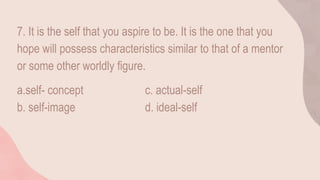
7. It is the self that you aspire to be. It is the one that you
hope will possess characteristics similar to that of a mentor
or some other worldly figure.
a.self- concept c. actual-self
b. self-image d. ideal-self
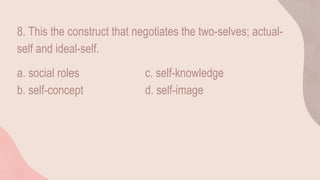
8. This the construct that negotiates the two-selves; actual-
self and ideal-self.
a. social roles c. self-knowledge
b. self-concept d. self-image
9. These are the typical feelings you have, feelings you
seldom have, feelings you try to avoid, feelings you
especially enjoy, and feelings which are associated with each
other.
a.nutritional self c. spiritual self
b. emotional self d. interaction self
10. It is derived from social interactions that provide insight
into how others react to you.
a.social roles c. self-knowledge
b. self-concept d. self-image
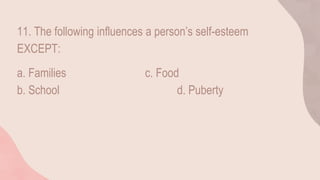
11. The following influences a person’s self-esteem
EXCEPT:
a. Families c. Food
b. School d. Puberty
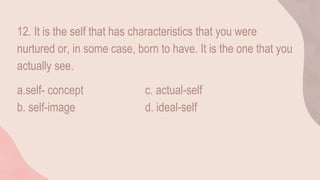
12. It is the self that has characteristics that you were
nurtured or, in some case, born to have. It is the one that you
actually see.
a.self- concept c. actual-self
b. self-image d. ideal-self
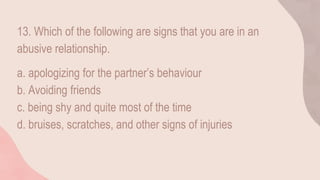
13. Which of the following are signs that you are in an
abusive relationship.
a. apologizing for the partner’s behaviour
b. Avoiding friends
c. being shy and quite most of the time
d. bruises, scratches, and other signs of injuries
14. It is the ability to understand, use, and manage our
emotions.
a. Emotions c. Intellectual Intelligence
b. Mood d. Emotional Intelligence
15. This is an aspect of yourself that describes what senses
you use most; sight, hearing, speaking, smelling or touching.
a.Contextual Self c. Physical Self
b. Sensual Self d. Intellectual Self
16. These emotions are feeling worried about what other may
think.
a. Glad c. Embarrassed
b. Angry d. Afraid
17. Friends become more important.
a. Emotional Development
b. Social Development
c. Mental Development
d. Physical Development
18. What skills do you need to make a healthy decisions in a
relationship?
a. Passive communication
b. ability to persuade others love
c. Intelligence and sharp memory
d. Assertive communication, active listening and negotiation
skills
19. This include descriptions of your height, weight, facial
appearances, and quality of skin, hair and descriptions of
body areas.
a.Contextual Self c. Physical Self
b. Sensual Self d. Intellectual Self
20. Which of the following is NOT an element of a healthy
relationship?
a.one person makes all the decisions
b.trust one another
c.respect one another
d.open and honest communication
21. Has a better understanding of complex problems and
issues.
a.Emotional Development
b. Social Development
c. Mental Development
d. Physical Development
22. It is a romantic partnership where the close relationships
formed between persons are built upon affection, trust,
intimacy and romantic love.
a.partners c. friends
b. family d. relatives
23. It is a graphical map of family’s history that traces and
illustrates patterns in its structure and characteristics using
special symbols.
a. genogram c. timeline
b. family map d. family tree
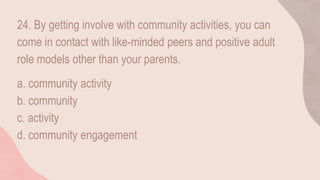
24. By getting involve with community activities, you can
come in contact with like-minded peers and positive adult
role models other than your parents.
a. community activity
b. community
c. activity
d. community engagement
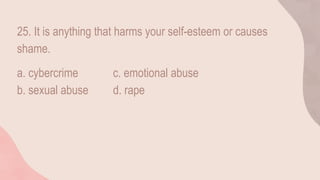
25. It is anything that harms your self-esteem or causes
shame.
a. cybercrime c. emotional abuse
b. sexual abuse d. rape
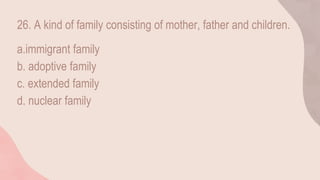
26. A kind of family consisting of mother, father and children.
a.immigrant family
b. adoptive family
c. extended family
d. nuclear family
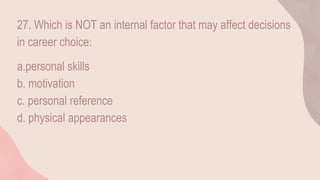
27. Which is NOT an internal factor that may affect decisions
in career choice:
a.personal skills
b. motivation
c. personal reference
d. physical appearances
28. The following are low social support which linked to a
number of health consequences EXCEPT:
a.depression
b. anxiety
c. high blood pressure
d. sexual violence
29. Anna is looking for a job that matches her skills, values
and personality characteristics. Which career development
theory fits this description?
a. Motivation c. Competency factor
b. Trait factor d. none of the above
30. It shows initiative and develop to manage free time.
a.role models
b. confidence
c. skills
d. talents
PERSONAL DEVELOPMENT DIAGNOSTIC TEST.pptx

PERSONAL DEVELOPMENT DIAGNOSTIC TEST.pptx

  • 2.
    1. Age whenhereditary endowments and sex are fixed and all body features, both external and internal are developed. a.Early Childhood c. Adolescence b. Pre-natal d. Infancy
  • 3.
    2. This aspectof your development include descriptions of your strengths and weaknesses in intimate relationships and relationship to friends, family, co-students and strangers in social setting. a.nutritional self c. spiritual self b. emotional self d. interaction self
  • 4.
    3. This typeof response is asking for what you want or saying how you feel in a threatening, sarcastic or humiliating way that may offend the other person. a.Passive c. Assertive b. Active d. Aggressive
  • 5.
    4. This typeof response means not expressing your own needs and feelings, or expressing them so weakly that they will not be addressed. a. Passive c. Assertive b. Active d. Aggressive
  • 6.
    5. This isthe retirement stage when increasingly rapid physical and mental decline are experienced. a. Old Age c. Middle Age b. Adolescence d. Early Childhood
  • 7.
    6. It isthe collection of physiological changes that occur when you face a perceived threat. a. Stess c. Stress Signal b. Stressor d. Stress Response
  • 8.
    7. It isthe self that you aspire to be. It is the one that you hope will possess characteristics similar to that of a mentor or some other worldly figure. a.self- concept c. actual-self b. self-image d. ideal-self
  • 9.
    8. This theconstruct that negotiates the two-selves; actual- self and ideal-self. a. social roles c. self-knowledge b. self-concept d. self-image
  • 10.
    9. These arethe typical feelings you have, feelings you seldom have, feelings you try to avoid, feelings you especially enjoy, and feelings which are associated with each other. a.nutritional self c. spiritual self b. emotional self d. interaction self
  • 11.
    10. It isderived from social interactions that provide insight into how others react to you. a.social roles c. self-knowledge b. self-concept d. self-image
  • 12.
    11. The followinginfluences a person’s self-esteem EXCEPT: a. Families c. Food b. School d. Puberty
  • 13.
    12. It isthe self that has characteristics that you were nurtured or, in some case, born to have. It is the one that you actually see. a.self- concept c. actual-self b. self-image d. ideal-self
  • 14.
    13. Which ofthe following are signs that you are in an abusive relationship. a. apologizing for the partner’s behaviour b. Avoiding friends c. being shy and quite most of the time d. bruises, scratches, and other signs of injuries
  • 15.
    14. It isthe ability to understand, use, and manage our emotions. a. Emotions c. Intellectual Intelligence b. Mood d. Emotional Intelligence
  • 16.
    15. This isan aspect of yourself that describes what senses you use most; sight, hearing, speaking, smelling or touching. a.Contextual Self c. Physical Self b. Sensual Self d. Intellectual Self
  • 17.
    16. These emotionsare feeling worried about what other may think. a. Glad c. Embarrassed b. Angry d. Afraid
  • 18.
    17. Friends becomemore important. a. Emotional Development b. Social Development c. Mental Development d. Physical Development
  • 19.
    18. What skillsdo you need to make a healthy decisions in a relationship? a. Passive communication b. ability to persuade others love c. Intelligence and sharp memory d. Assertive communication, active listening and negotiation skills
  • 20.
    19. This includedescriptions of your height, weight, facial appearances, and quality of skin, hair and descriptions of body areas. a.Contextual Self c. Physical Self b. Sensual Self d. Intellectual Self
  • 21.
    20. Which ofthe following is NOT an element of a healthy relationship? a.one person makes all the decisions b.trust one another c.respect one another d.open and honest communication
  • 22.
    21. Has abetter understanding of complex problems and issues. a.Emotional Development b. Social Development c. Mental Development d. Physical Development
  • 23.
    22. It isa romantic partnership where the close relationships formed between persons are built upon affection, trust, intimacy and romantic love. a.partners c. friends b. family d. relatives
  • 24.
    23. It isa graphical map of family’s history that traces and illustrates patterns in its structure and characteristics using special symbols. a. genogram c. timeline b. family map d. family tree
  • 25.
    24. By gettinginvolve with community activities, you can come in contact with like-minded peers and positive adult role models other than your parents. a. community activity b. community c. activity d. community engagement
  • 26.
    25. It isanything that harms your self-esteem or causes shame. a. cybercrime c. emotional abuse b. sexual abuse d. rape
  • 27.
    26. A kindof family consisting of mother, father and children. a.immigrant family b. adoptive family c. extended family d. nuclear family
  • 28.
    27. Which isNOT an internal factor that may affect decisions in career choice: a.personal skills b. motivation c. personal reference d. physical appearances
  • 29.
    28. The followingare low social support which linked to a number of health consequences EXCEPT: a.depression b. anxiety c. high blood pressure d. sexual violence
  • 30.
    29. Anna islooking for a job that matches her skills, values and personality characteristics. Which career development theory fits this description? a. Motivation c. Competency factor b. Trait factor d. none of the above
  • 31.
    30. It showsinitiative and develop to manage free time. a.role models b. confidence c. skills d. talents