GROUP NO 4
IDNO10BSCAGOO5;PRIYANSHU
O3O;MICHELLE
040;ELLA WAR
061;SHIPRA
071;WAQAR
101;ANJANA
114;GAUTAM
116;WANDA
136;ROSHAN
147;SATYAM
155;HIMANSHU
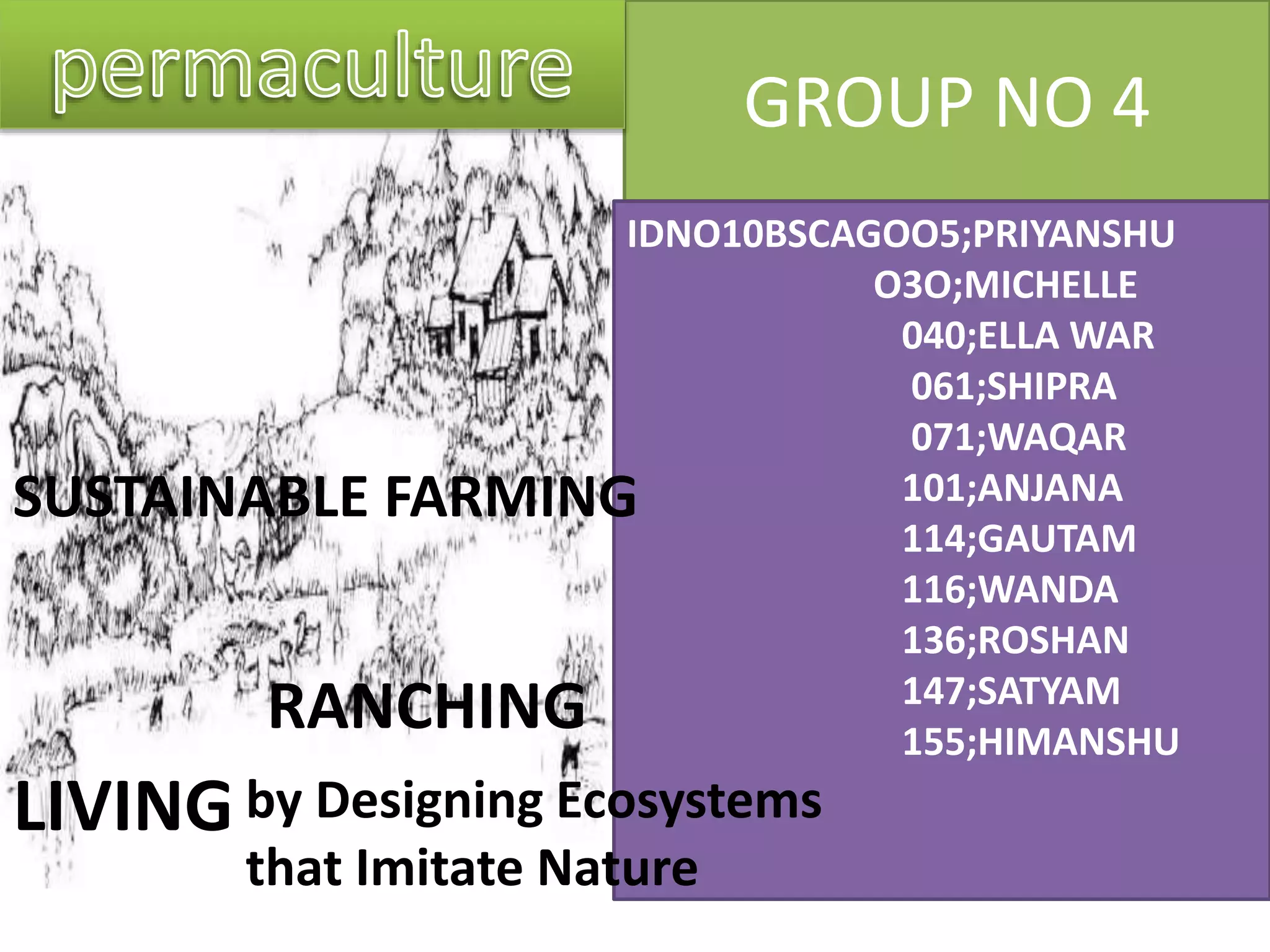
SUSTAINABLE FARMING
RANCHING
LIVING by Designing Ecosystems
that Imitate Nature
It is time to treate all the creatures of the earth and its components as
they have souls.
It is in our hand how to manage earths resources and make a leap of
understanding to make differences
It is us who become part of the change by become part of solution
It is we ,who protects the beautiful creation of the almighty so called
earth.
'Consciously designed landscapes which mimic the patterns
and relationships found in nature, while yielding an
abundance of food, fiber and energy for provision of local
needs. People, their buildings and the ways in which they
organize themselves are central to permaculture. Thus the
permaculture vision of permanent or sustainable agriculture
has evolved to one of permanent or sustainable culture. It is
the locally suited form of agriculture
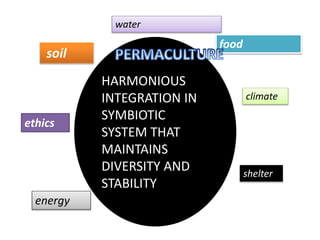
food
HARMONIOUS
INTEGRATION IN
SYMBIOTIC
SYSTEM THAT
MAINTAINS
DIVERSITY AND
STABILITY
soil
shelter
energy
ethics
climate
water
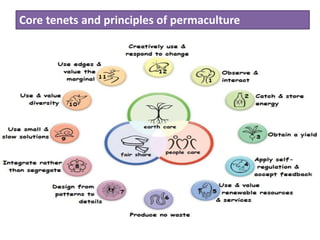
Core tenets and principles of permaculture
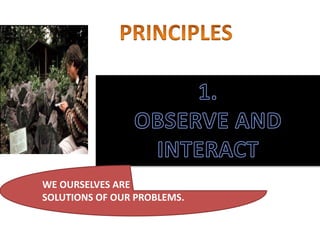
WE OURSELVES ARE THE BEST
SOLUTIONS OF OUR PROBLEMS.
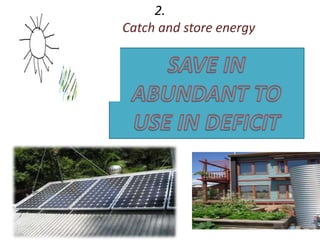
2.
Catch and store energy
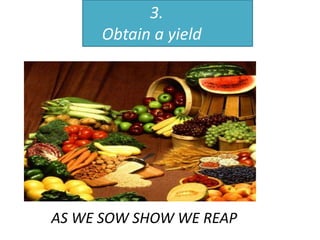
3.
Obtain a yield
AS WE SOW SHOW WE REAP
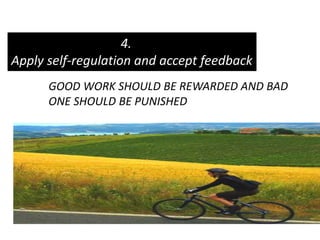
4.
Apply self-regulation and accept feedback
GOOD WORK SHOULD BE REWARDED AND BAD
ONE SHOULD BE PUNISHED
5.
Use and value renewable
resources and services
NATURE ITSELF IS THE BEST MODEL
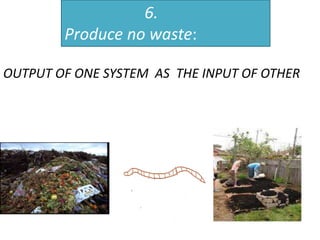
6.
Produce no waste:
OUTPUT OF ONE SYSTEM AS THE INPUT OF OTHER
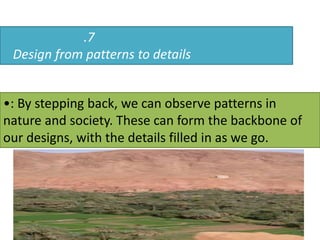
.7
Design from patterns to details
•: By stepping back, we can observe patterns in
nature and society. These can form the backbone of
our designs, with the details filled in as we go.
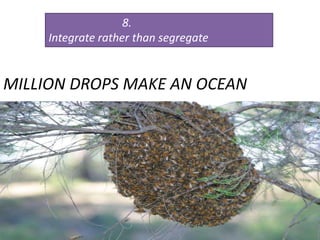
8.
Integrate rather than segregate
MILLION DROPS MAKE AN OCEAN
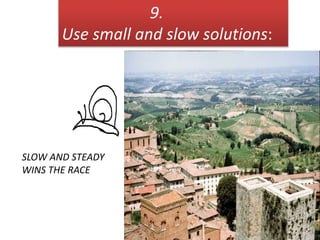
9.
Use small and slow solutions:
SLOW AND STEADY
WINS THE RACE
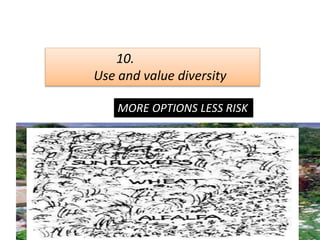
10.
Use and value diversity
MORE OPTIONS LESS RISK
11.
Use edges and value the marginal
•The interface between
things is where the most
interesting events take
place. These are often the
most valuable, diverse and
productive elements in the
system.
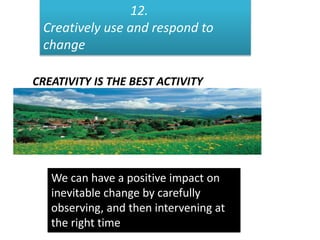
12.
Creatively use and respond to
change
CREATIVITY IS THE BEST ACTIVITY
We can have a positive impact on
inevitable change by carefully
observing, and then intervening at
the right time
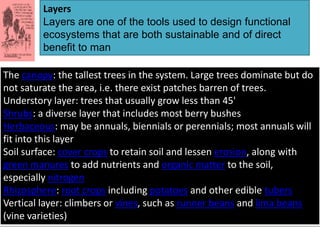
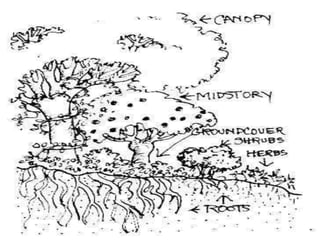
Layers
Layers are one of the tools used to design functional
ecosystems that are both sustainable and of direct
benefit to man
The canopy: the tallest trees in the system. Large trees dominate but do
not saturate the area, i.e. there exist patches barren of trees.
Understory layer: trees that usually grow less than 45'
Shrubs: a diverse layer that includes most berry bushes
Herbaceous: may be annuals, biennials or perennials; most annuals will
fit into this layer
Soil surface: cover crops to retain soil and lessen erosion, along with
green manures to add nutrients and organic matter to the soil,
especially nitrogen
Rhizosphere: root crops including potatoes and other edible tubers
Vertical layer: climbers or vines, such as runner beans and lima beans
(vine varieties)
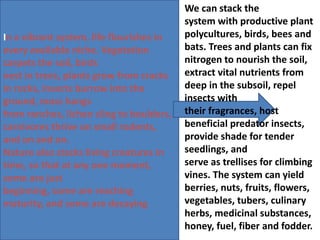
In a vibrant system, life flourishes in
every available niche. Vegetation
carpets the soil, birds
nest in trees, plants grow from cracks
in rocks, insects burrow into the
ground, moss hangs
from ranches, lichen cling to boulders,
carnivores thrive on small rodents,
and on and on.
Nature also stacks living creatures in
time, so that at any one moment,
some are just
beginning, some are reaching
maturity, and some are decaying
We can stack the
system with productive plant
polycultures, birds, bees and
bats. Trees and plants can fix
nitrogen to nourish the soil,
extract vital nutrients from
deep in the subsoil, repel
insects with
their fragrances, host
beneficial predator insects,
provide shade for tender
seedlings, and
serve as trellises for climbing
vines. The system can yield
berries, nuts, fruits, flowers,
vegetables, tubers, culinary
herbs, medicinal substances,
honey, fuel, fiber and fodder.
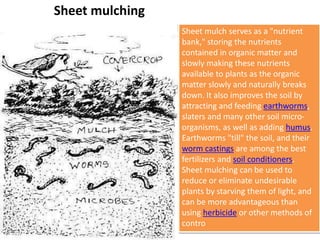
Sheet mulching
Sheet mulch serves as a "nutrient
bank," storing the nutrients
contained in organic matter and
slowly making these nutrients
available to plants as the organic
matter slowly and naturally breaks
down. It also improves the soil by
attracting and feeding earthworms,
slaters and many other soil micro-
organisms, as well as adding humus.
Earthworms "till" the soil, and their
worm castings are among the best
fertilizers and soil conditioners.
Sheet mulching can be used to
reduce or eliminate undesirable
plants by starving them of light, and
can be more advantageous than
using herbicide or other methods of
contro
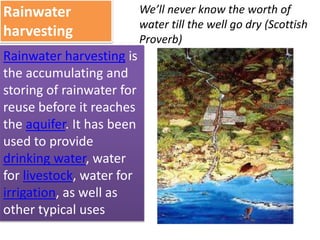
Rainwater
harvesting
Rainwater harvesting is
the accumulating and
storing of rainwater for
reuse before it reaches
the aquifer. It has been
used to provide
drinking water, water
for livestock, water for
irrigation, as well as
other typical uses
We’ll never know the worth of
water till the well go dry (Scottish
Proverb)
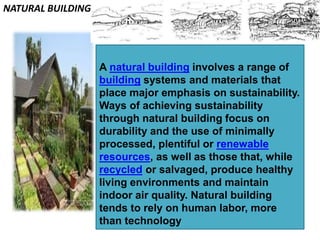
A natural building involves a range of
building systems and materials that
place major emphasis on sustainability.
Ways of achieving sustainability
through natural building focus on
durability and the use of minimally
processed, plentiful or renewable
resources, as well as those that, while
recycled or salvaged, produce healthy
living environments and maintain
indoor air quality. Natural building
tends to rely on human labor, more
than technology
NATURAL BUILDING
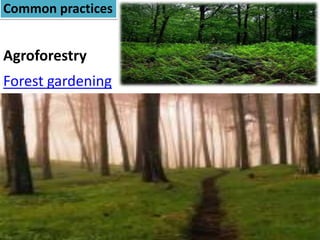
Common practices
Agroforestry
Forest gardening
Hügelkultur
Hügelkultur is the practice of burying large
volumes of wood to increase soil water
retention. The porous structure of wood acts
as a sponge when decomposing underground.
During the rainy season, masses of buried
wood can absorb enough water to sustain
crops through the dry season
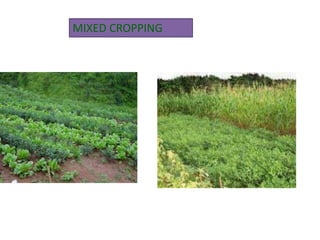
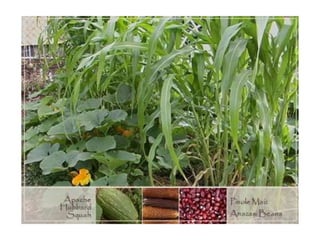
MIXED CROPPING
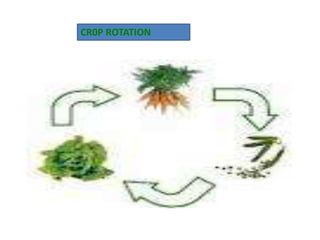
CR0P ROTATION
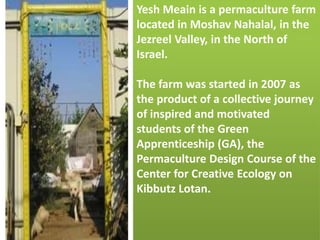
Yesh Meain is a permaculture farm
located in Moshav Nahalal, in the
Jezreel Valley, in the North of
Israel.
The farm was started in 2007 as
the product of a collective journey
of inspired and motivated
students of the Green
Apprenticeship (GA), the
Permaculture Design Course of the
Center for Creative Ecology on
Kibbutz Lotan.
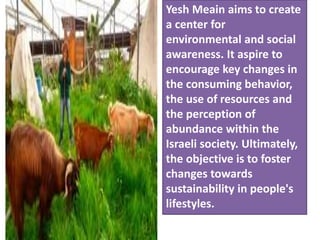
Yesh Meain aims to create
a center for
environmental and social
awareness. It aspire to
encourage key changes in
the consuming behavior,
the use of resources and
the perception of
abundance within the
Israeli society. Ultimately,
the objective is to foster
changes towards
sustainability in people's
lifestyles.
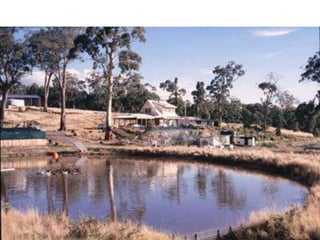
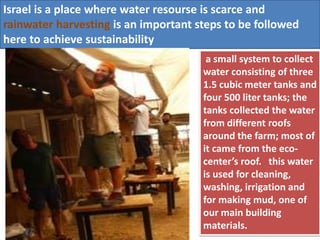
Israel is a place where water resourse is scarce and
rainwater harvesting is an important steps to be followed
here to achieve sustainability
a small system to collect
water consisting of three
1.5 cubic meter tanks and
four 500 liter tanks; the
tanks collected the water
from different roofs
around the farm; most of
it came from the eco-
center’s roof. this water
is used for cleaning,
washing, irrigation and
for making mud, one of
our main building
materials.
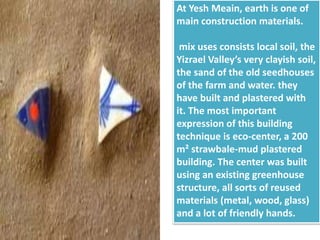
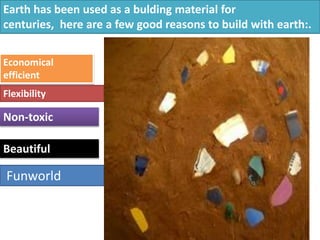
At Yesh Meain, earth is one of
main construction materials.
mix uses consists local soil, the
Yizrael Valley’s very clayish soil,
the sand of the old seedhouses
of the farm and water. they
have built and plastered with
it. The most important
expression of this building
technique is eco-center, a 200
m² strawbale-mud plastered
building. The center was built
using an existing greenhouse
structure, all sorts of reused
materials (metal, wood, glass)
and a lot of friendly hands.
Non-toxic
Economical
efficient
Flexibility
Beautiful
Funworld
Earth has been used as a bulding material for
centuries, here are a few good reasons to build with earth:.
Exchange market
recycling Edible garden
A Rare Find: An Organic Farm in India!
Parsekar
Organic
Farm
Northern Goa below Mumbai on the
West Coast
phone number ; (0832) 2247281
email darnample@gmail.com
owner; Anant M
Parsekar
here is a little description followed by some
photos
They had developed the farm by trial and
error over about 18 years and knew
nothing about permaculture by that
name, but were doing almost everything:
mulch everywhere, all organic matter
returned, drip-feed irrigation, food forest
(based around mangoes, coconuts,
bananas), promoting beneficial insects,
compost toileting, and generally just
massive polyculture planting something
everywhere possible – what they called it
“harvesting sunlight.”
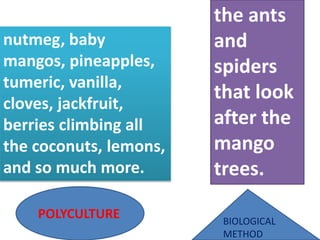
nutmeg, baby
mangos, pineapples,
tumeric, vanilla,
cloves, jackfruit,
berries climbing all
the coconuts, lemons,
and so much more.
the ants
and
spiders
that look
after the
mango
trees.
POLYCULTURE BIOLOGICAL
METHOD
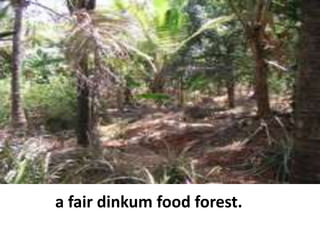
a fair dinkum food forest.
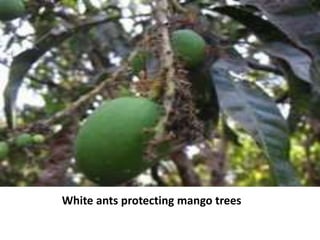
White ants protecting mango trees
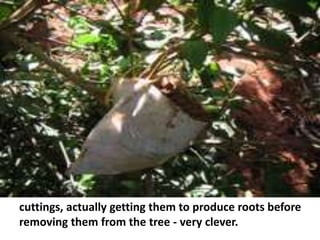
cuttings, actually getting them to produce roots before
removing them from the tree - very clever.
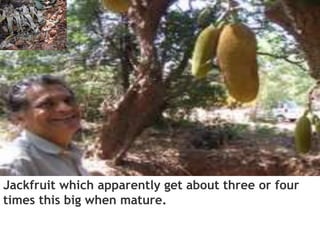
Jackfruit which apparently get about three or four
times this big when mature.
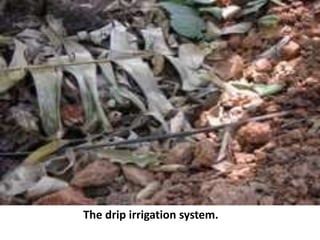
The drip irrigation system.
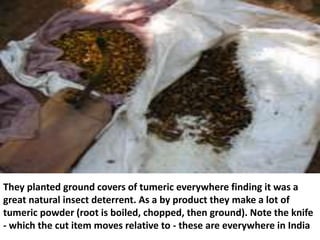
They planted ground covers of tumeric everywhere finding it was a
great natural insect deterrent. As a by product they make a lot of
tumeric powder (root is boiled, chopped, then ground). Note the knife
- which the cut item moves relative to - these are everywhere in India
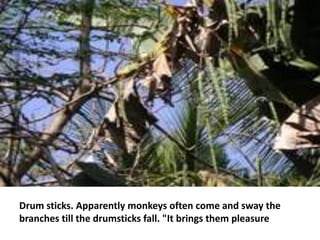
Drum sticks. Apparently monkeys often come and sway the
branches till the drumsticks fall. "It brings them pleasure
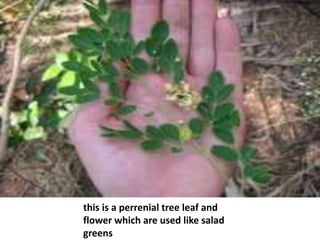
this is a perrenial tree leaf and
flower which are used like salad
greens
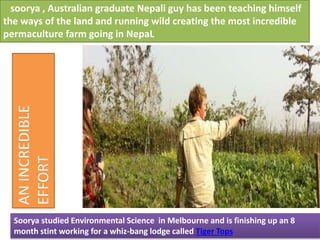
Soorya studied Environmental Science in Melbourne and is finishing up an 8
month stint working for a whiz-bang lodge called Tiger Tops
soorya , Australian graduate Nepali guy has been teaching himself
the ways of the land and running wild creating the most incredible
permaculture farm going in NepaL
ANINCREDIBLE
EFFORT
composting to the locals. NB: mixing the
different layers of dry grasses with
manure and bamboo leaves (to provide
silica to the leached soils), inoculated with
fresh green clippings (that act as a trap for
all the bacteria fungi), help to break down
organic matter into a fertile base for
growing anything
How Soorya practicing
permaculture in his farm?
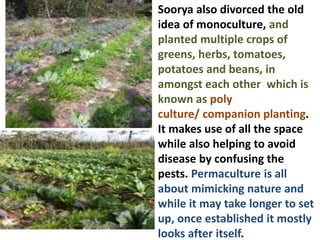
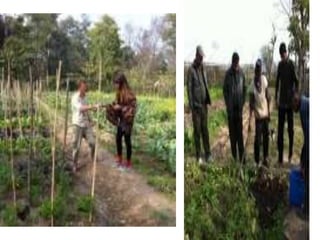
Soorya also divorced the old
idea of monoculture, and
planted multiple crops of
greens, herbs, tomatoes,
potatoes and beans, in
amongst each other which is
known as poly
culture/ companion planting.
It makes use of all the space
while also helping to avoid
disease by confusing the
pests. Permaculture is all
about mimicking nature and
while it may take longer to set
up, once established it mostly
looks after itself.
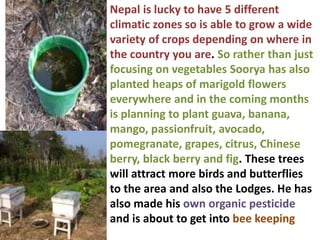
Nepal is lucky to have 5 different
climatic zones so is able to grow a wide
variety of crops depending on where in
the country you are. So rather than just
focusing on vegetables Soorya has also
planted heaps of marigold flowers
everywhere and in the coming months
is planning to plant guava, banana,
mango, passionfruit, avocado,
pomegranate, grapes, citrus, Chinese
berry, black berry and fig. These trees
will attract more birds and butterflies
to the area and also the Lodges. He has
also made his own organic pesticide
and is about to get into bee keeping
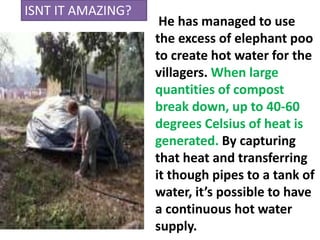
He has managed to use
the excess of elephant poo
to create hot water for the
villagers. When large
quantities of compost
break down, up to 40-60
degrees Celsius of heat is
generated. By capturing
that heat and transferring
it though pipes to a tank of
water, it’s possible to have
a continuous hot water
supply.
ISNT IT AMAZING?
In a similar fashion, Soorya’s next
project is to build a reed bed that will
filter the water that comes from the
lodge showers and sinks by absorbing
the nitrate in the water while also
producing oxygen. This water will then
be used to irrigate the farm. How cool
is that.
In a nutshell, permaculture is a way to
radically change humans’ relationship
to the environment so that we can
survive and thrive without destroying
our fellow earthlings or the planet. In
other words, it’s about
sustainability. It demands simple yet
profound changes in the ways we
produce our food.
Core of permaculture
1. Cooperation not competition (in work,
communications and economics)
2. See solutions not problems
3. Use everything to its highest capacity
4. Each element has many functions
5. Let nature do the work. Least amount of
intervention for maximum effect
6. Minimum inputs maximum yields
what you see depends
upon what you thought
before you looked“, M
Tribus
You Don’t Have To Do
It All!
Just Do Something!!
We’re only truly secure when we can look out
our kitchen window and see our food growing
and our friends working nearby” (Bill Mollison,
co-founder of Permaculture)
Grow Your Own Food

Permaculture group no 4

  • 1.
    GROUP NO 4 IDNO10BSCAGOO5;PRIYANSHU O3O;MICHELLE 040;ELLAWAR 061;SHIPRA 071;WAQAR 101;ANJANA 114;GAUTAM 116;WANDA 136;ROSHAN 147;SATYAM 155;HIMANSHU SUSTAINABLE FARMING RANCHING LIVING by Designing Ecosystems that Imitate Nature
  • 2.
    It is timeto treate all the creatures of the earth and its components as they have souls. It is in our hand how to manage earths resources and make a leap of understanding to make differences It is us who become part of the change by become part of solution It is we ,who protects the beautiful creation of the almighty so called earth.
  • 3.
    'Consciously designed landscapeswhich mimic the patterns and relationships found in nature, while yielding an abundance of food, fiber and energy for provision of local needs. People, their buildings and the ways in which they organize themselves are central to permaculture. Thus the permaculture vision of permanent or sustainable agriculture has evolved to one of permanent or sustainable culture. It is the locally suited form of agriculture
  • 4.
    food HARMONIOUS INTEGRATION IN SYMBIOTIC SYSTEM THAT MAINTAINS DIVERSITYAND STABILITY soil shelter energy ethics climate water
  • 5.
    Core tenets andprinciples of permaculture
  • 6.
    WE OURSELVES ARETHE BEST SOLUTIONS OF OUR PROBLEMS.
  • 7.
  • 8.
    3. Obtain a yield ASWE SOW SHOW WE REAP
  • 9.
    4. Apply self-regulation andaccept feedback GOOD WORK SHOULD BE REWARDED AND BAD ONE SHOULD BE PUNISHED
  • 10.
    5. Use and valuerenewable resources and services NATURE ITSELF IS THE BEST MODEL
  • 11.
    6. Produce no waste: OUTPUTOF ONE SYSTEM AS THE INPUT OF OTHER
  • 12.
    .7 Design from patternsto details •: By stepping back, we can observe patterns in nature and society. These can form the backbone of our designs, with the details filled in as we go.
  • 13.
    8. Integrate rather thansegregate MILLION DROPS MAKE AN OCEAN
  • 14.
    9. Use small andslow solutions: SLOW AND STEADY WINS THE RACE
  • 15.
    10. Use and valuediversity MORE OPTIONS LESS RISK
  • 16.
    11. Use edges andvalue the marginal •The interface between things is where the most interesting events take place. These are often the most valuable, diverse and productive elements in the system.
  • 17.
    12. Creatively use andrespond to change CREATIVITY IS THE BEST ACTIVITY We can have a positive impact on inevitable change by carefully observing, and then intervening at the right time
  • 18.
    Layers Layers are oneof the tools used to design functional ecosystems that are both sustainable and of direct benefit to man The canopy: the tallest trees in the system. Large trees dominate but do not saturate the area, i.e. there exist patches barren of trees. Understory layer: trees that usually grow less than 45' Shrubs: a diverse layer that includes most berry bushes Herbaceous: may be annuals, biennials or perennials; most annuals will fit into this layer Soil surface: cover crops to retain soil and lessen erosion, along with green manures to add nutrients and organic matter to the soil, especially nitrogen Rhizosphere: root crops including potatoes and other edible tubers Vertical layer: climbers or vines, such as runner beans and lima beans (vine varieties)
  • 20.
    In a vibrantsystem, life flourishes in every available niche. Vegetation carpets the soil, birds nest in trees, plants grow from cracks in rocks, insects burrow into the ground, moss hangs from ranches, lichen cling to boulders, carnivores thrive on small rodents, and on and on. Nature also stacks living creatures in time, so that at any one moment, some are just beginning, some are reaching maturity, and some are decaying We can stack the system with productive plant polycultures, birds, bees and bats. Trees and plants can fix nitrogen to nourish the soil, extract vital nutrients from deep in the subsoil, repel insects with their fragrances, host beneficial predator insects, provide shade for tender seedlings, and serve as trellises for climbing vines. The system can yield berries, nuts, fruits, flowers, vegetables, tubers, culinary herbs, medicinal substances, honey, fuel, fiber and fodder.
  • 22.
    Sheet mulching Sheet mulchserves as a "nutrient bank," storing the nutrients contained in organic matter and slowly making these nutrients available to plants as the organic matter slowly and naturally breaks down. It also improves the soil by attracting and feeding earthworms, slaters and many other soil micro- organisms, as well as adding humus. Earthworms "till" the soil, and their worm castings are among the best fertilizers and soil conditioners. Sheet mulching can be used to reduce or eliminate undesirable plants by starving them of light, and can be more advantageous than using herbicide or other methods of contro
  • 23.
    Rainwater harvesting Rainwater harvesting is theaccumulating and storing of rainwater for reuse before it reaches the aquifer. It has been used to provide drinking water, water for livestock, water for irrigation, as well as other typical uses We’ll never know the worth of water till the well go dry (Scottish Proverb)
  • 25.
    A natural buildinginvolves a range of building systems and materials that place major emphasis on sustainability. Ways of achieving sustainability through natural building focus on durability and the use of minimally processed, plentiful or renewable resources, as well as those that, while recycled or salvaged, produce healthy living environments and maintain indoor air quality. Natural building tends to rely on human labor, more than technology NATURAL BUILDING
  • 26.
  • 29.
    Hügelkultur Hügelkultur is thepractice of burying large volumes of wood to increase soil water retention. The porous structure of wood acts as a sponge when decomposing underground. During the rainy season, masses of buried wood can absorb enough water to sustain crops through the dry season
  • 30.
  • 32.
  • 33.
    Yesh Meain isa permaculture farm located in Moshav Nahalal, in the Jezreel Valley, in the North of Israel. The farm was started in 2007 as the product of a collective journey of inspired and motivated students of the Green Apprenticeship (GA), the Permaculture Design Course of the Center for Creative Ecology on Kibbutz Lotan.
  • 34.
    Yesh Meain aimsto create a center for environmental and social awareness. It aspire to encourage key changes in the consuming behavior, the use of resources and the perception of abundance within the Israeli society. Ultimately, the objective is to foster changes towards sustainability in people's lifestyles.
  • 35.
    Israel is aplace where water resourse is scarce and rainwater harvesting is an important steps to be followed here to achieve sustainability a small system to collect water consisting of three 1.5 cubic meter tanks and four 500 liter tanks; the tanks collected the water from different roofs around the farm; most of it came from the eco- center’s roof. this water is used for cleaning, washing, irrigation and for making mud, one of our main building materials.
  • 36.
    At Yesh Meain,earth is one of main construction materials. mix uses consists local soil, the Yizrael Valley’s very clayish soil, the sand of the old seedhouses of the farm and water. they have built and plastered with it. The most important expression of this building technique is eco-center, a 200 m² strawbale-mud plastered building. The center was built using an existing greenhouse structure, all sorts of reused materials (metal, wood, glass) and a lot of friendly hands.
  • 37.
    Non-toxic Economical efficient Flexibility Beautiful Funworld Earth has beenused as a bulding material for centuries, here are a few good reasons to build with earth:.
  • 38.
  • 39.
    A Rare Find:An Organic Farm in India! Parsekar Organic Farm Northern Goa below Mumbai on the West Coast phone number ; (0832) 2247281 email darnample@gmail.com owner; Anant M Parsekar here is a little description followed by some photos
  • 40.
    They had developedthe farm by trial and error over about 18 years and knew nothing about permaculture by that name, but were doing almost everything: mulch everywhere, all organic matter returned, drip-feed irrigation, food forest (based around mangoes, coconuts, bananas), promoting beneficial insects, compost toileting, and generally just massive polyculture planting something everywhere possible – what they called it “harvesting sunlight.”
  • 41.
    nutmeg, baby mangos, pineapples, tumeric,vanilla, cloves, jackfruit, berries climbing all the coconuts, lemons, and so much more. the ants and spiders that look after the mango trees. POLYCULTURE BIOLOGICAL METHOD
  • 42.
    a fair dinkumfood forest.
  • 43.
  • 44.
    cuttings, actually gettingthem to produce roots before removing them from the tree - very clever.
  • 45.
    Jackfruit which apparentlyget about three or four times this big when mature.
  • 46.
  • 47.
    They planted groundcovers of tumeric everywhere finding it was a great natural insect deterrent. As a by product they make a lot of tumeric powder (root is boiled, chopped, then ground). Note the knife - which the cut item moves relative to - these are everywhere in India
  • 48.
    Drum sticks. Apparentlymonkeys often come and sway the branches till the drumsticks fall. "It brings them pleasure
  • 49.
    this is aperrenial tree leaf and flower which are used like salad greens
  • 50.
    Soorya studied EnvironmentalScience in Melbourne and is finishing up an 8 month stint working for a whiz-bang lodge called Tiger Tops soorya , Australian graduate Nepali guy has been teaching himself the ways of the land and running wild creating the most incredible permaculture farm going in NepaL ANINCREDIBLE EFFORT
  • 51.
    composting to thelocals. NB: mixing the different layers of dry grasses with manure and bamboo leaves (to provide silica to the leached soils), inoculated with fresh green clippings (that act as a trap for all the bacteria fungi), help to break down organic matter into a fertile base for growing anything How Soorya practicing permaculture in his farm?
  • 52.
    Soorya also divorcedthe old idea of monoculture, and planted multiple crops of greens, herbs, tomatoes, potatoes and beans, in amongst each other which is known as poly culture/ companion planting. It makes use of all the space while also helping to avoid disease by confusing the pests. Permaculture is all about mimicking nature and while it may take longer to set up, once established it mostly looks after itself.
  • 53.
    Nepal is luckyto have 5 different climatic zones so is able to grow a wide variety of crops depending on where in the country you are. So rather than just focusing on vegetables Soorya has also planted heaps of marigold flowers everywhere and in the coming months is planning to plant guava, banana, mango, passionfruit, avocado, pomegranate, grapes, citrus, Chinese berry, black berry and fig. These trees will attract more birds and butterflies to the area and also the Lodges. He has also made his own organic pesticide and is about to get into bee keeping
  • 54.
    He has managedto use the excess of elephant poo to create hot water for the villagers. When large quantities of compost break down, up to 40-60 degrees Celsius of heat is generated. By capturing that heat and transferring it though pipes to a tank of water, it’s possible to have a continuous hot water supply. ISNT IT AMAZING?
  • 55.
    In a similarfashion, Soorya’s next project is to build a reed bed that will filter the water that comes from the lodge showers and sinks by absorbing the nitrate in the water while also producing oxygen. This water will then be used to irrigate the farm. How cool is that.
  • 57.
    In a nutshell,permaculture is a way to radically change humans’ relationship to the environment so that we can survive and thrive without destroying our fellow earthlings or the planet. In other words, it’s about sustainability. It demands simple yet profound changes in the ways we produce our food.
  • 58.
    Core of permaculture 1.Cooperation not competition (in work, communications and economics) 2. See solutions not problems 3. Use everything to its highest capacity 4. Each element has many functions 5. Let nature do the work. Least amount of intervention for maximum effect 6. Minimum inputs maximum yields
  • 59.
    what you seedepends upon what you thought before you looked“, M Tribus You Don’t Have To Do It All! Just Do Something!! We’re only truly secure when we can look out our kitchen window and see our food growing and our friends working nearby” (Bill Mollison, co-founder of Permaculture) Grow Your Own Food