Peripheral Chronic Total
Occlusion (CTO) Crossing Devices
1980-2015
Anonymous. Portraits in radiology: Charles T.
Dotter, MD. Appl Radiol 1981;10(Jan-Feb):28,116
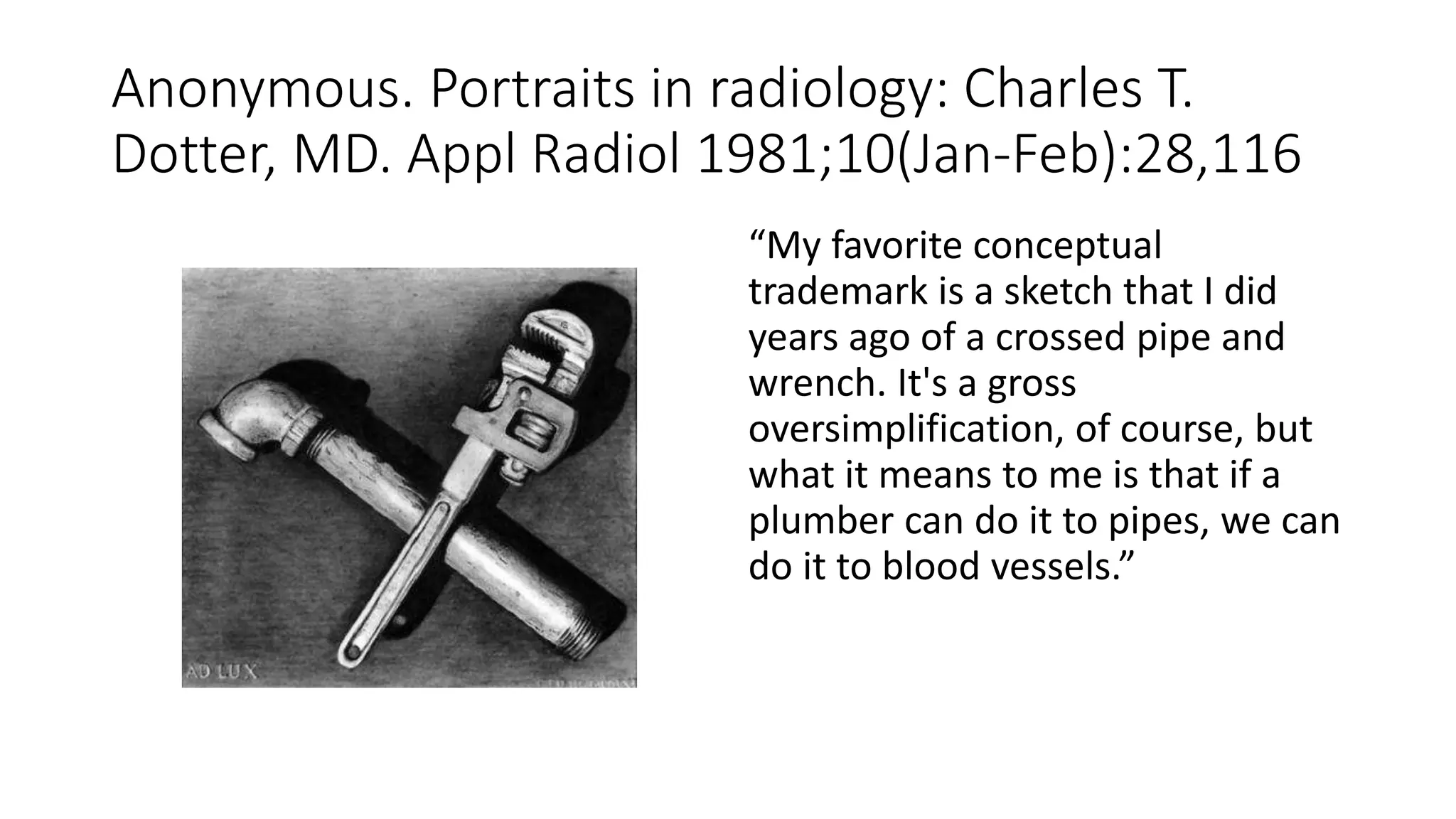
“My favorite conceptual
trademark is a sketch that I did
years ago of a crossed pipe and
wrench. It's a gross
oversimplification, of course, but
what it means to me is that if a
plumber can do it to pipes, we can
do it to blood vessels.”
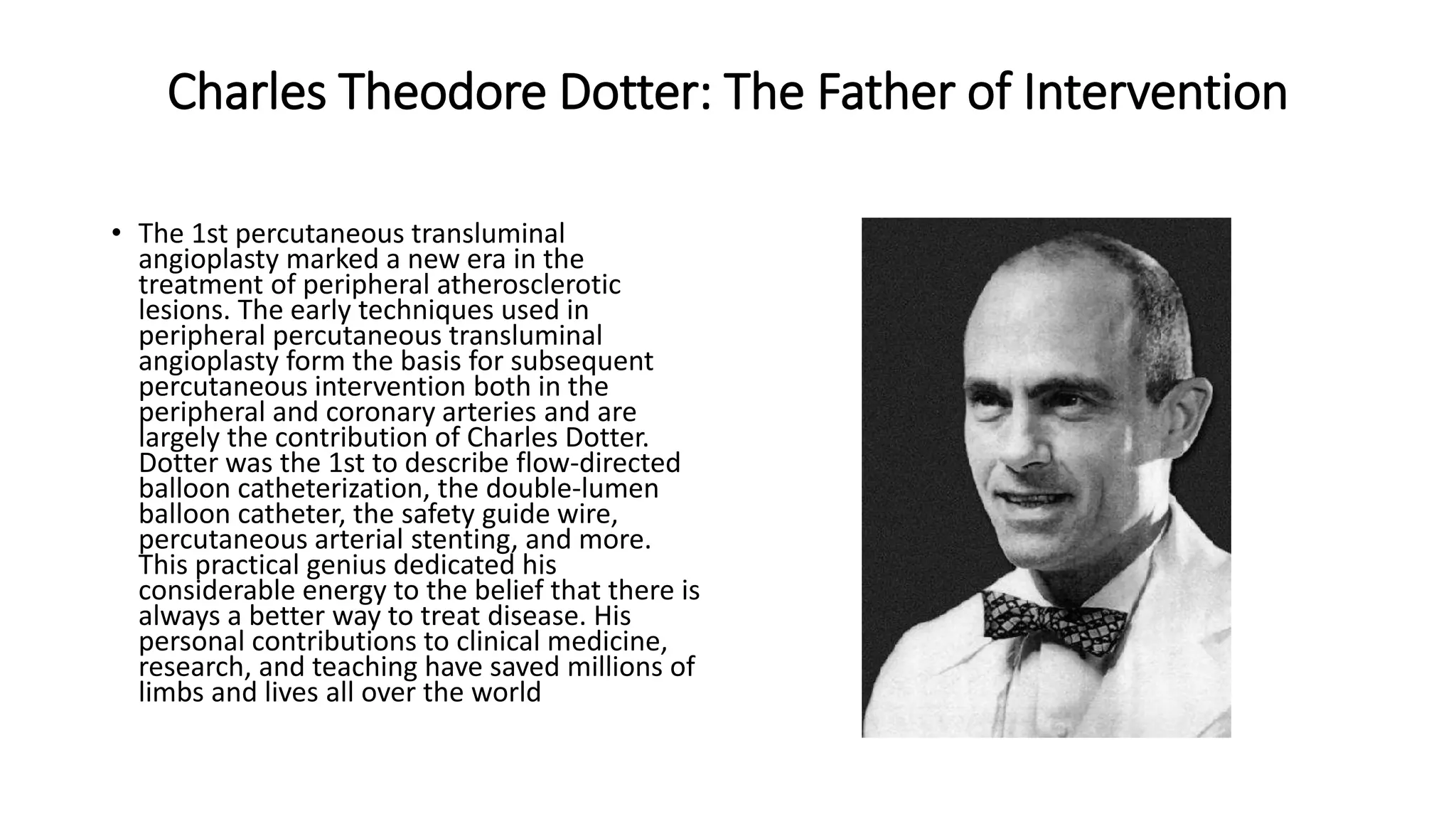
Charles Theodore Dotter: The Father of Intervention
• The 1st percutaneous transluminal
angioplasty marked a new era in the
treatment of peripheral atherosclerotic
lesions. The early techniques used in
peripheral percutaneous transluminal
angioplasty form the basis for subsequent
percutaneous intervention both in the
peripheral and coronary arteries and are
largely the contribution of Charles Dotter.
Dotter was the 1st to describe flow-directed
balloon catheterization, the double-lumen
balloon catheter, the safety guide wire,
percutaneous arterial stenting, and more.
This practical genius dedicated his
considerable energy to the belief that there is
always a better way to treat disease. His
personal contributions to clinical medicine,
research, and teaching have saved millions of
limbs and lives all over the world

Peripheral chronic total occlusion (cto) crossing

  • 1.
    Peripheral Chronic Total Occlusion(CTO) Crossing Devices 1980-2015
  • 2.
    Anonymous. Portraits inradiology: Charles T. Dotter, MD. Appl Radiol 1981;10(Jan-Feb):28,116 “My favorite conceptual trademark is a sketch that I did years ago of a crossed pipe and wrench. It's a gross oversimplification, of course, but what it means to me is that if a plumber can do it to pipes, we can do it to blood vessels.”
  • 6.
    Charles Theodore Dotter:The Father of Intervention • The 1st percutaneous transluminal angioplasty marked a new era in the treatment of peripheral atherosclerotic lesions. The early techniques used in peripheral percutaneous transluminal angioplasty form the basis for subsequent percutaneous intervention both in the peripheral and coronary arteries and are largely the contribution of Charles Dotter. Dotter was the 1st to describe flow-directed balloon catheterization, the double-lumen balloon catheter, the safety guide wire, percutaneous arterial stenting, and more. This practical genius dedicated his considerable energy to the belief that there is always a better way to treat disease. His personal contributions to clinical medicine, research, and teaching have saved millions of limbs and lives all over the world